
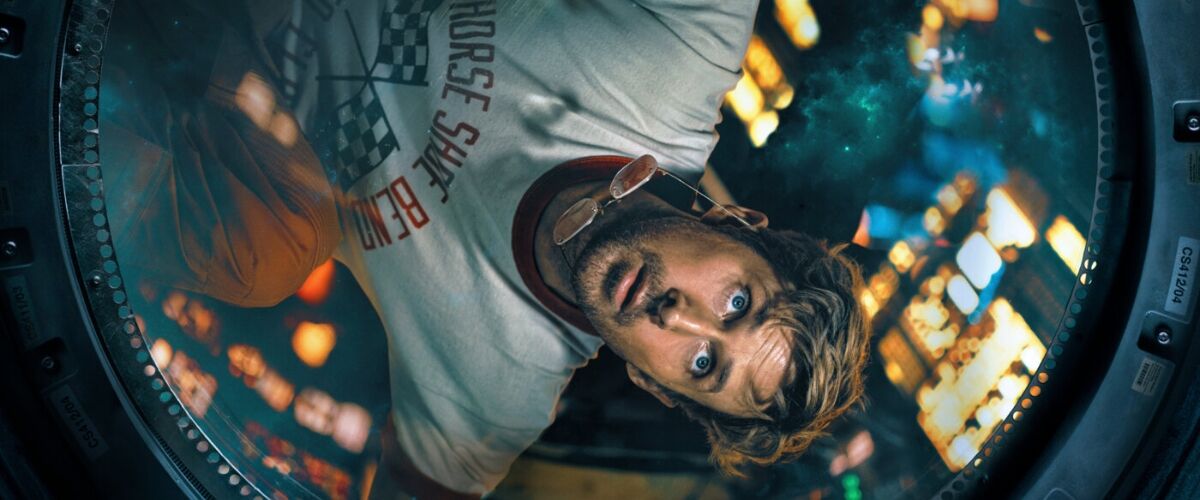
“Good. Proud. I am scary space monster. You are leaky space blob,” is a line that reads absurd on the page, but in science fiction author Andy Weir’s Project Hail Mary, it carries a surprising warmth, an awkward, endearing attempt at connection across impossible boundaries.
That blend of sincerity and oddball humour defines the story – the third by Weir after The Martian (2011) and Artemis (2017), and his second to be adapted by Hollywood – at its core, one that pairs extraterrestrial first contact with an unlikely friendship. Imagining Arrival (2016) as a buddy comedy sounds like a joke, but here the combination holds, grounded by a genuine curiosity about communication, survival, and trust.
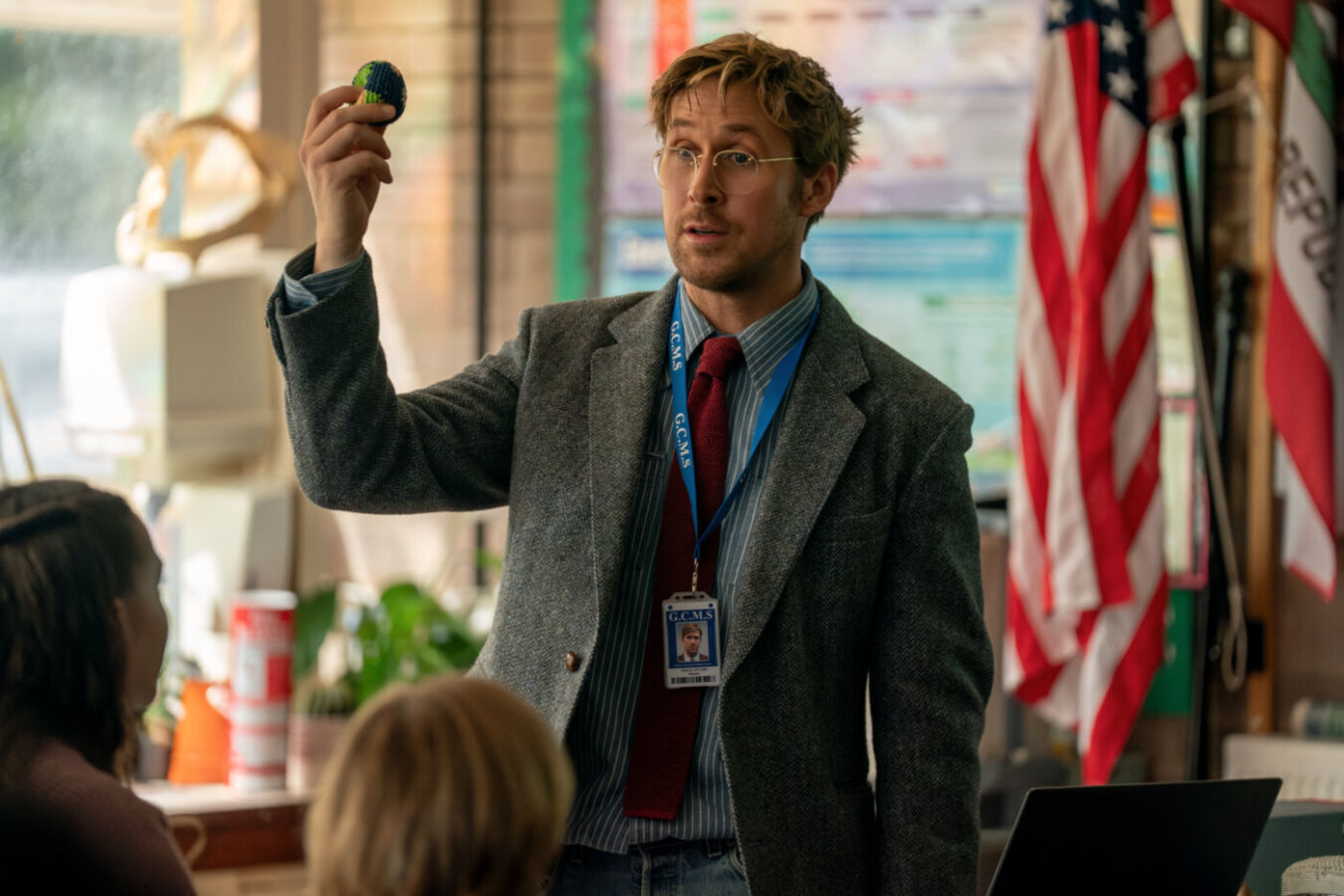
Project Hail Mary, published in 2021, arrives with the weight of its influences firmly in tow (after all, science fiction has long been shaped by its giants). Echoes of The Martian (2015) adaptation are front and centre, especially in its premise of a lone man solving problems in deep space, and also in its DNA – Weir’s writing once again adapted for the screen, with Drew Goddard (Cloverfield, World War Z) returning for scripting duties. Familiar traces of Interstellar (2014), Gravity (2013), and 2001: A Space Odyssey (1968) drift through its construction, alongside softer notes reminiscent of E.T. the Extra-Terrestrial (1982) and Close Encounters of the Third Kind (1977). Originality becomes a tall order in a genre so well-trodden, and Project Hail Mary approaches that challenge with a clear understanding of what makes it distinct – less concerned with spectacle or existential dread, and more invested in unlikely companionship under extreme circumstances.
Much of that balance comes down to directors Phil Lord and Christopher Miller, the directing duo (Cloudy with a Chance of Meatballs, 21 Jump Street) turned producers (Spider-Man: Into the Spider-Verse, The Mitchells vs. the Machines) who return to the director’s chair with a steady hand and a clear sense of tone. Known for their sharp comedic instincts in films like The Lego Movie (2014) and 22 Jump Street (2014), their presence is felt in the film’s lighter moments, but there’s a noticeable restraint here – humour becomes a way to make the vast emptiness of space feel more human. After years spent producing projects like the Spider-Verse films, their return feels assured, delivering a film that understands both the scale of its mission and the intimacy required to make it land.
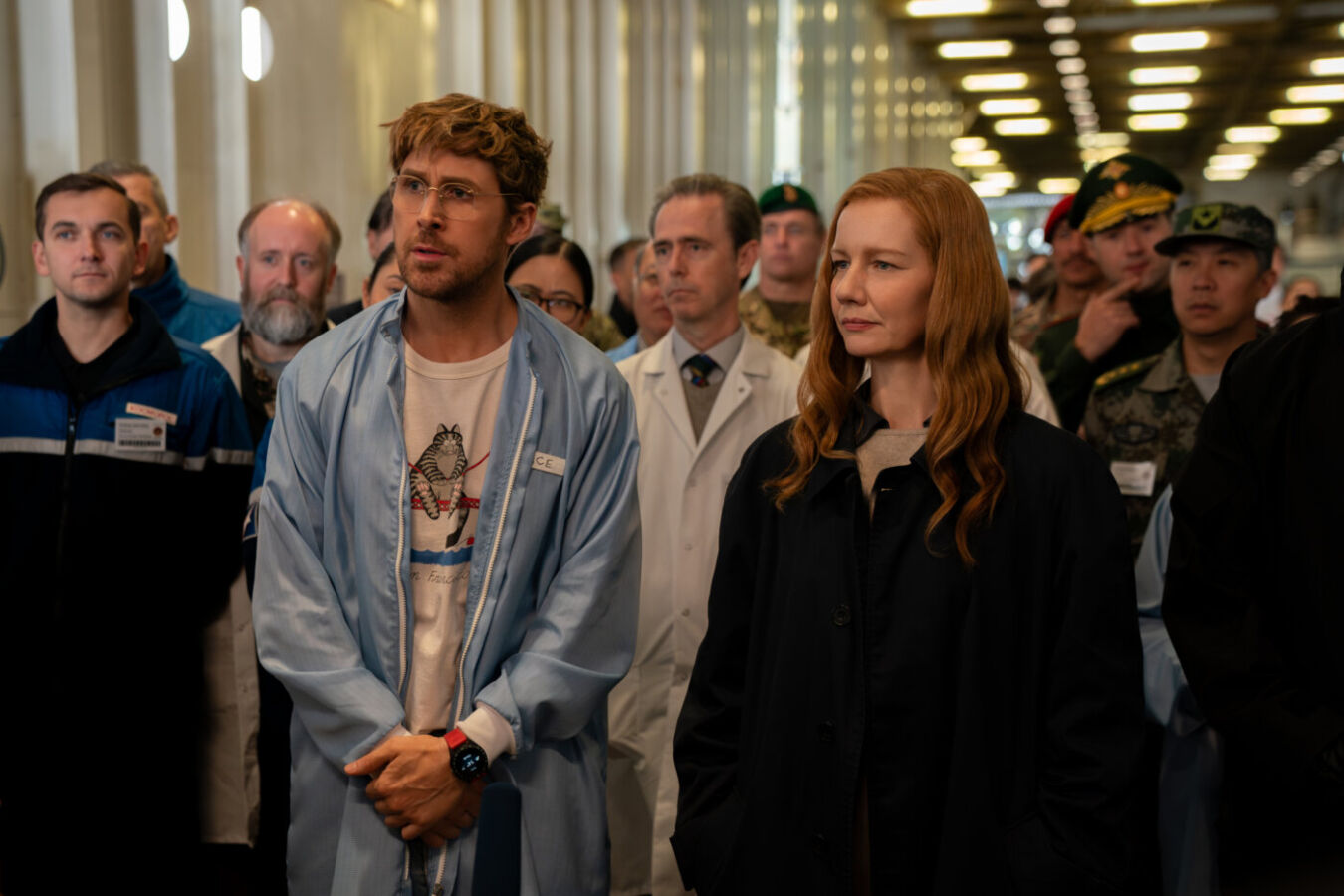
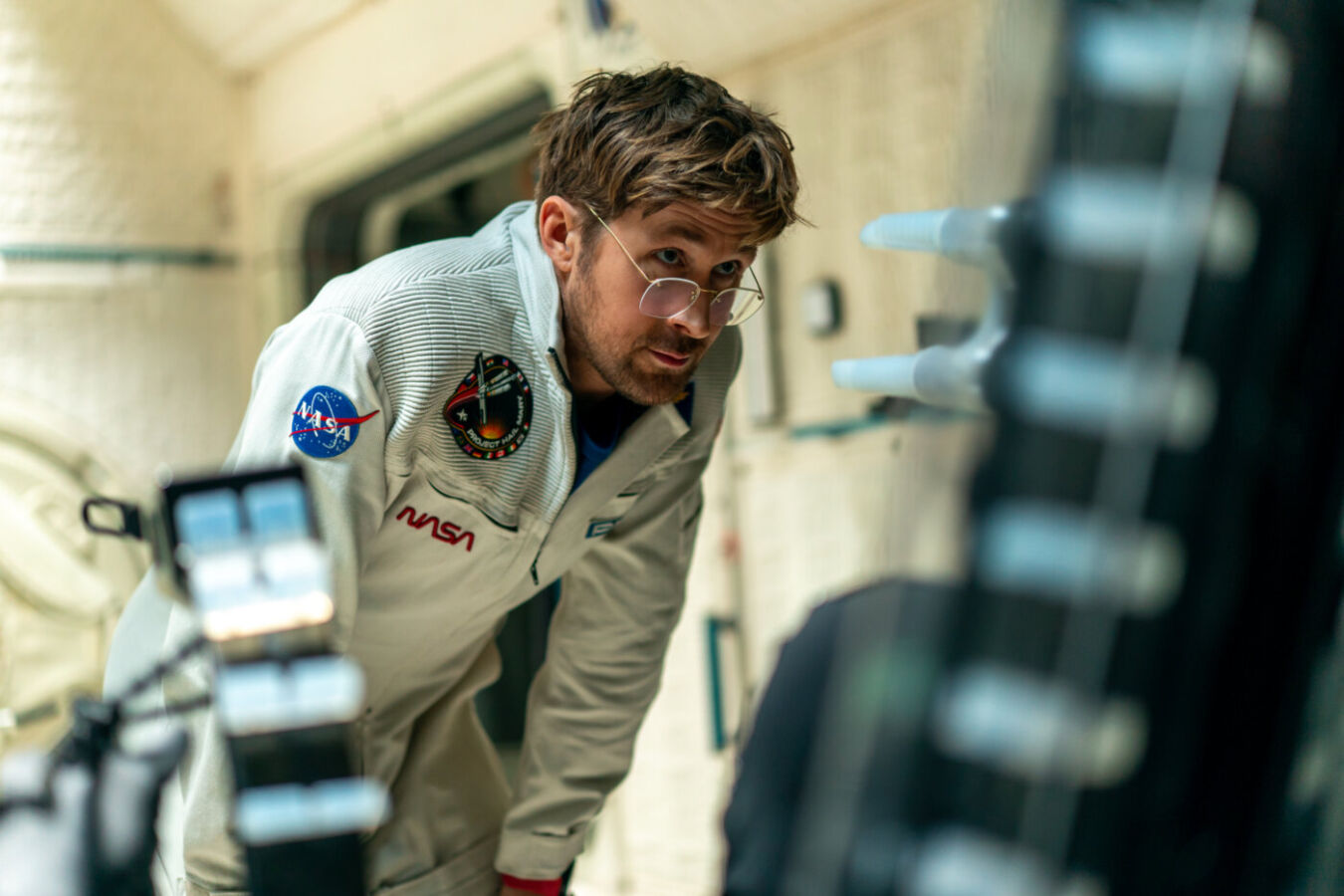
At the centre is Ryland Grace (Ryan Gosling, The Fall Guy), first glimpsed alone aboard his spacecraft, unkempt and moving through routines that suggest prolonged isolation, hardly fitting the mould of a conventional hero. Before all this, Grace was a science teacher on Earth, a former molecular biologist whose career faltered after pushing ideas about extraterrestrial life that few took seriously. When a strange phenomenon begins dimming the sun, along with stars across the galaxy, those same ideas suddenly become valuable. Sandra Hüller’s (Anatomy of a Fall) Eva Stratt enters as the government official willing to take that risk, pulling Grace into a mission that carries no real expectation of survival, only the faint hope of saving Earth.
The story unfolds through a non-linear structure, piecing together Grace’s journey through fragments of memory and discovery. Flashbacks trace his recruitment and the global scramble to understand ‘astrophage’, a microorganism feeding on solar energy and consuming stars – all except Tau Ceti. At a distance of just under 12 light-years from Earth, it emerges as the lone anomaly, setting the stage for a mission unlike any attempted before – study the microbe, find a weakness, and save the planet. By the time he awakens from cryosleep alone and disoriented, the film shifts into something more urgent. With no crew left and no margin for error, survival and success become one and the same, forcing him to carry the weight of a dying planet on his own.
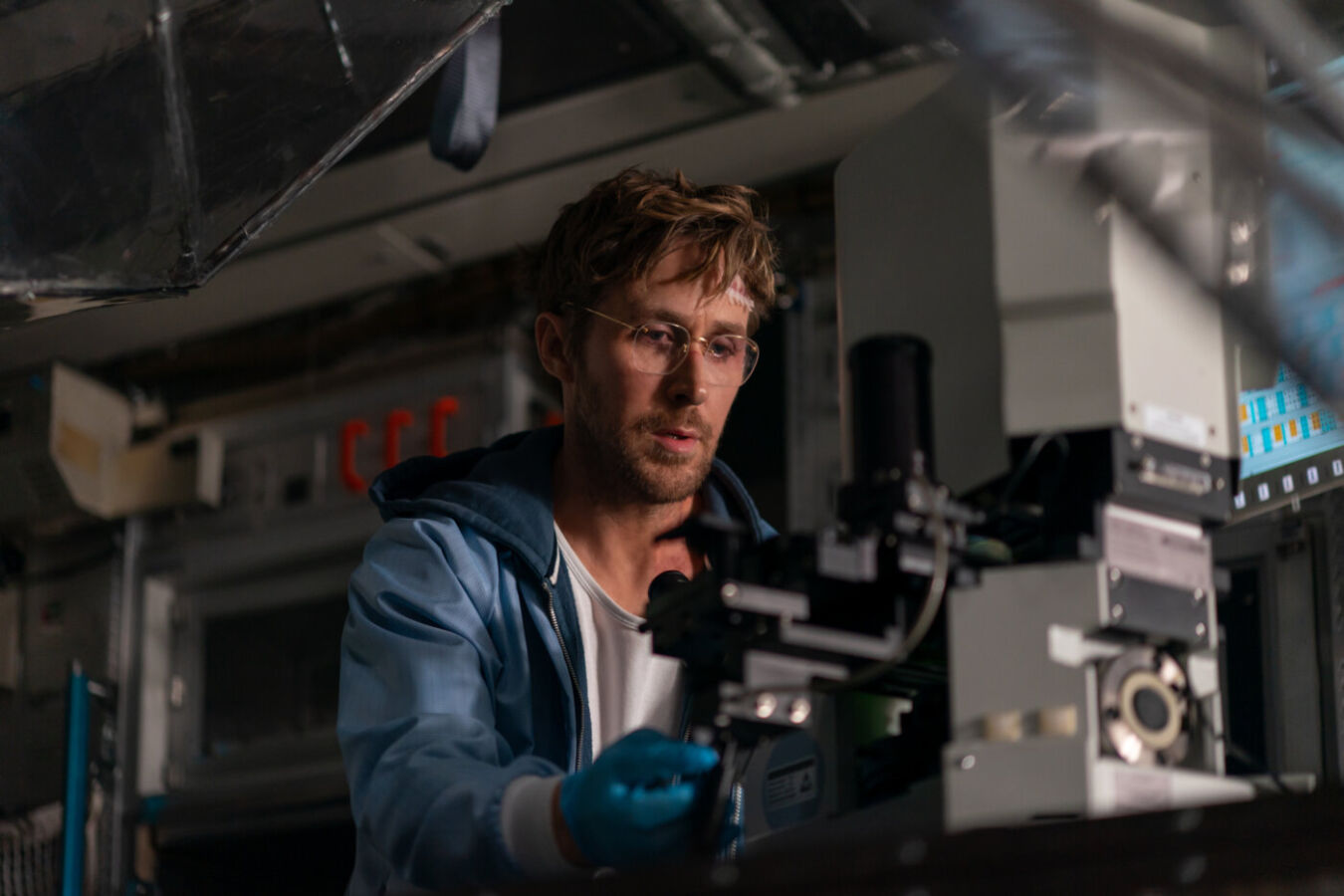
Early stretches settle into a familiar rhythm for fans of Weir’s work – scientific problem-solving drives much of the tension, with equations, experiments, and careful observation replacing traditional action beats. Flashbacks weave in and out of the present, translating Grace’s internal, introspective monologue in the novel into something more dynamic on screen.
And Gosling’s presence proves crucial in holding it all together. Far removed from the stoic astronaut he once played in First Man (2018), he leans into the role of an ordinary man caught in circumstances far beyond his control. A wry sense of humour masks fear and uncertainty, allowing vulnerability to slip through without ever feeling forced. Watching him navigate isolation, failure, and triumph keeps the film emotionally anchored, especially during long stretches where he carries scenes alone. Every small victory and setback lands because he makes them matter.
Everything shifts once Grace reaches his destination and discovers he isn’t the only one searching for answers. Another ship drifts nearby, carrying a lone occupant with the same desperate mission. Rocky, an alien resembling a rock-like spider, changes the film’s trajectory, introducing a partnership that reshapes the second half entirely. Isolation gives way to interaction, and the tone loosens as the story finds new energy in their growing connection. Communication doesn’t come easily at first, drawing early comparisons to first-contact stories like Arrival. Differences in biology and perception create initial barriers, though solutions arrive with surprising speed (perhaps too conveniently) with a makeshift translation system. What follows matters more than the mechanics – watching Grace and Rocky learn to coexist, experiment, and rely on each other brings a sense of warmth that offsets the film’s more technical focus.
Rocky himself emerges as an unlikely standout – equal parts curious, endearing, and occasionally exasperating, he recalls the charm of classic alien companions while carving out his own identity. Small details like his fascination with building models, his improvised ways of moving through the ship, give him personality beyond novelty. Bringing such a character to life requires more than digital wizardry, and puppeteer James Ortiz (The Woodsman) deserves significant credit for turning what could have been a static visual concept into something expressive and tactile, supported by Paul Lambert’s (Dune: Part Two) visual effects team and creature designer Neal Scanlan (Star Wars: The Force Awakens).
Music quietly reinforces that connection, with Daniel Pemberton delivering a score that moves fluidly between playfulness and tension, often mirroring the shifting rhythms of Grace and Rocky’s partnership. Lighter cues carry a buoyant energy that complements their interactions, lending a sense of levity to sequences that might otherwise feel weighed down by scientific exposition, while more restrained passages guide the film through its more urgent stretches without overwhelming them. Familiarity with Pemberton’s earlier work in Spider-Man: Into the Spider-Verse (2018) and The Bad Guys (2022) suggests an ability to pivot between tone and emotion with ease, and that same versatility is evident here, even if the themes don’t announce themselves as loudly as more iconic science fiction scores.
Scale, however, is where Project Hail Mary quietly distinguishes itself. Shot with IMAX in mind, the film uses shifting aspect ratios to differentiate between timelines, with present-day sequences unfolding in the expanded frame while flashbacks contract into a more conventional 2:39:1 scope. Sequences within the Tau Ceti system stand out in particular, filled with striking colour and composition that feel designed for a cinema screen rather than a smaller display. Watching Grace and Rocky navigate those environments carries a sense of immersion that feels increasingly rare, a reminder of how much scale can shape experience when used with intent.
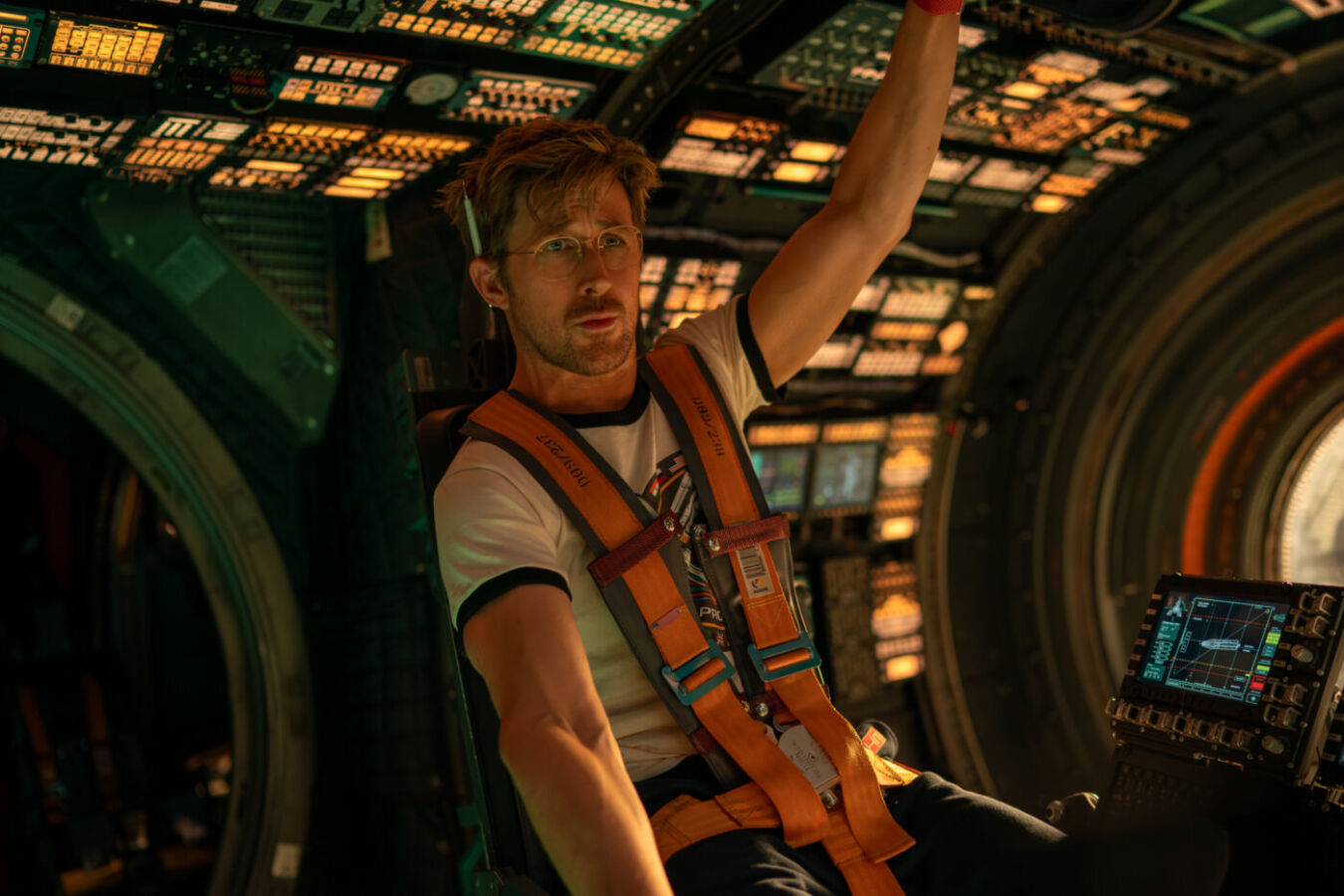
A more action-driven final stretch introduces sequences that lean into tension and momentum, offering a satisfying release after the film’s more measured build-up. Lord and Miller handle these moments with confidence, maintaining clarity while allowing the set pieces to unfold without excess. There’s a clear affection for classic blockbuster craftsmanship in how these sequences are staged, balanced by an understanding of when to pull back and let the character take precedence. Anyone still wondering what a Lord and Miller Star Wars film might have looked like (the duo were famously fired from Solo: A Star Wars Story) will find flashes of that answer here.
Lingering on every detail risks missing the point. Much of the film’s pleasure lies in discovery, in watching solutions emerge, in following a mission that feels uncertain right up until its final beats. In many ways, Project Hail Mary earns its name, embracing the idea of a last-ditch attempt as a leap taken in hope, one that suggests even in the cold silence of space, connection remains possible, and sometimes, against all odds, someone answers back with a quiet, insistent “amaze, amaze, amaze!” And what an amazing movie indeed. Lord and Miller should fist their bumps.
GEEK REVIEW SCORE
Summary
Stranded in space stories often hinge on isolation, but Project Hail Mary finds its spark in companionship, turning equations and extinction-level stakes into something unexpectedly warm and human.
Overall
8.9/10-
Story - 8/10
8/10
-
Direction - 9/10
9/10
-
Characterisation - 9.5/10
9.5/10
-
Geek Satisfaction - 9/10
9/10

Natalie is a big fan of anything related to movies, TV shows, and anime — you name it. When she’s not reading or being a dedicated cinephile, she’s probably playing gacha and tabletop games, or daydreaming of Caleb from Love and Deepspace.

 Si Jia
 Kevin Low