
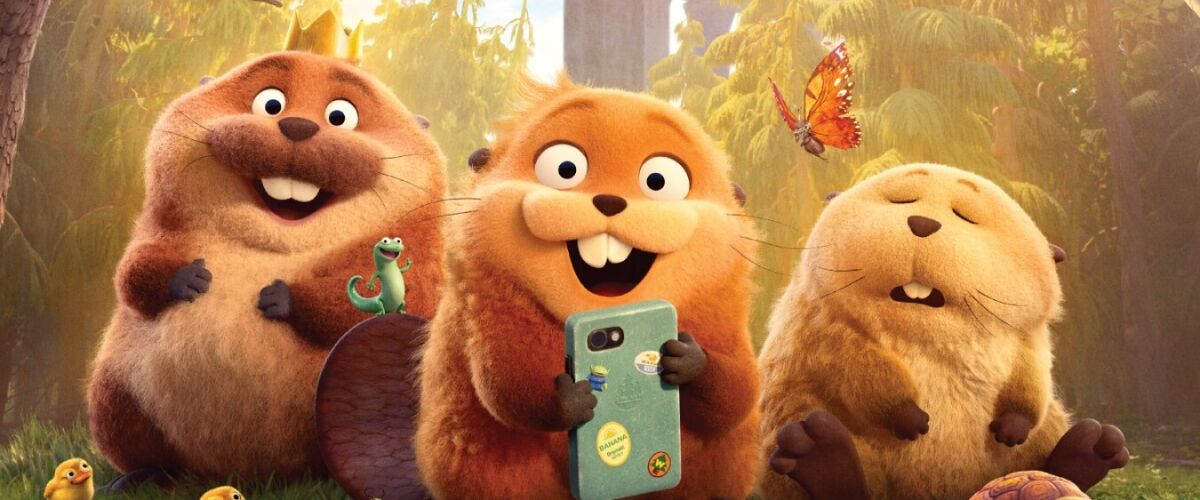
Animated animals have been speaking fluent human for decades now, and audiences have rarely questioned it. A fawn learning the ways of the forest in Bambi (1942), lions debating destiny on the savannah in The Lion King (1994), a rat critiquing haute cuisine in Ratatouille (2007)… anthropomorphic storytelling has long been one of animation’s most reliable tricks, an easy bridge between human emotion and the wild unknown. Give a creature a voice, a goal, and a slightly expressive eyebrow, and suddenly the natural world becomes a stage for familiar hopes, fears, and ambitions.
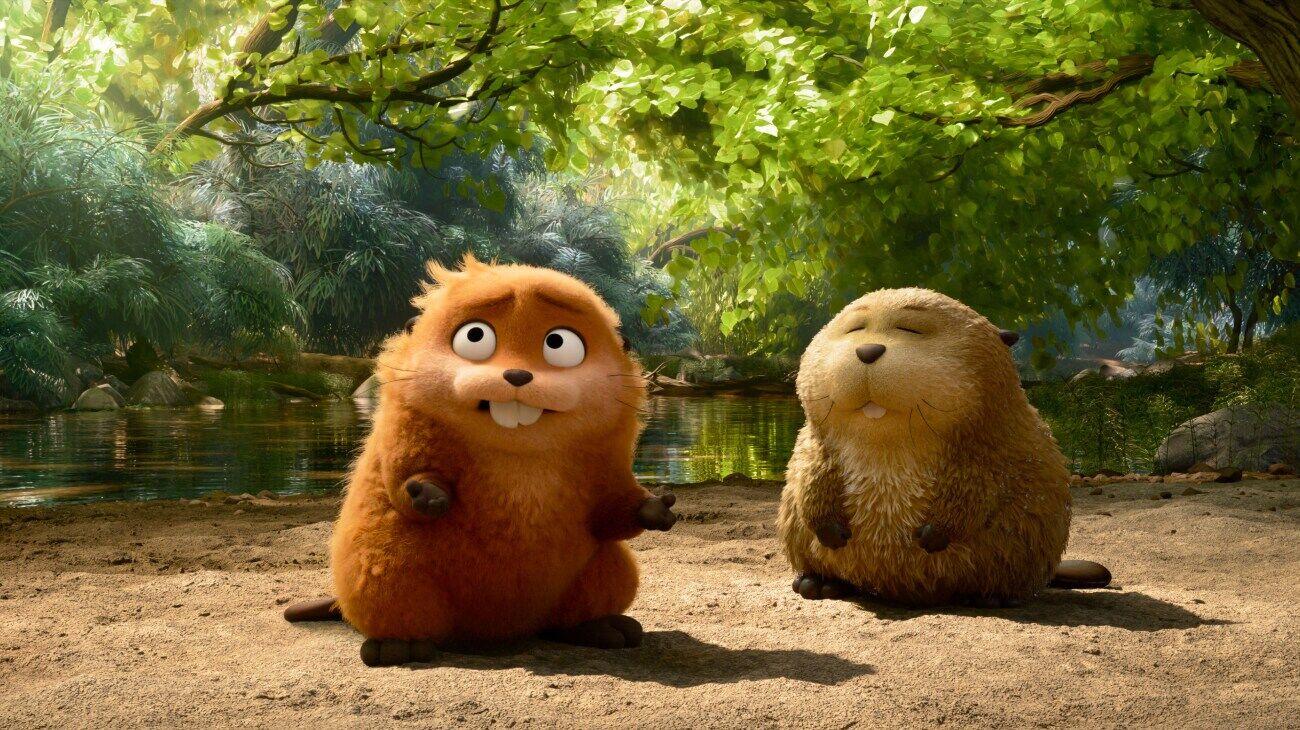
For all the species that have wandered across animated screens, one oddly persistent omission remained – the humble beaver, arguably one of nature’s most industrious architects, somehow slipped through the cracks of family entertainment history. Pixar finally corrects that omission with Hoppers, the studio’s 30th feature film and a project that marks something of a return to Pixar’s more grounded storytelling instincts after the cosmic ambition of Elio (2025) that struggled to find its footing at the box office.
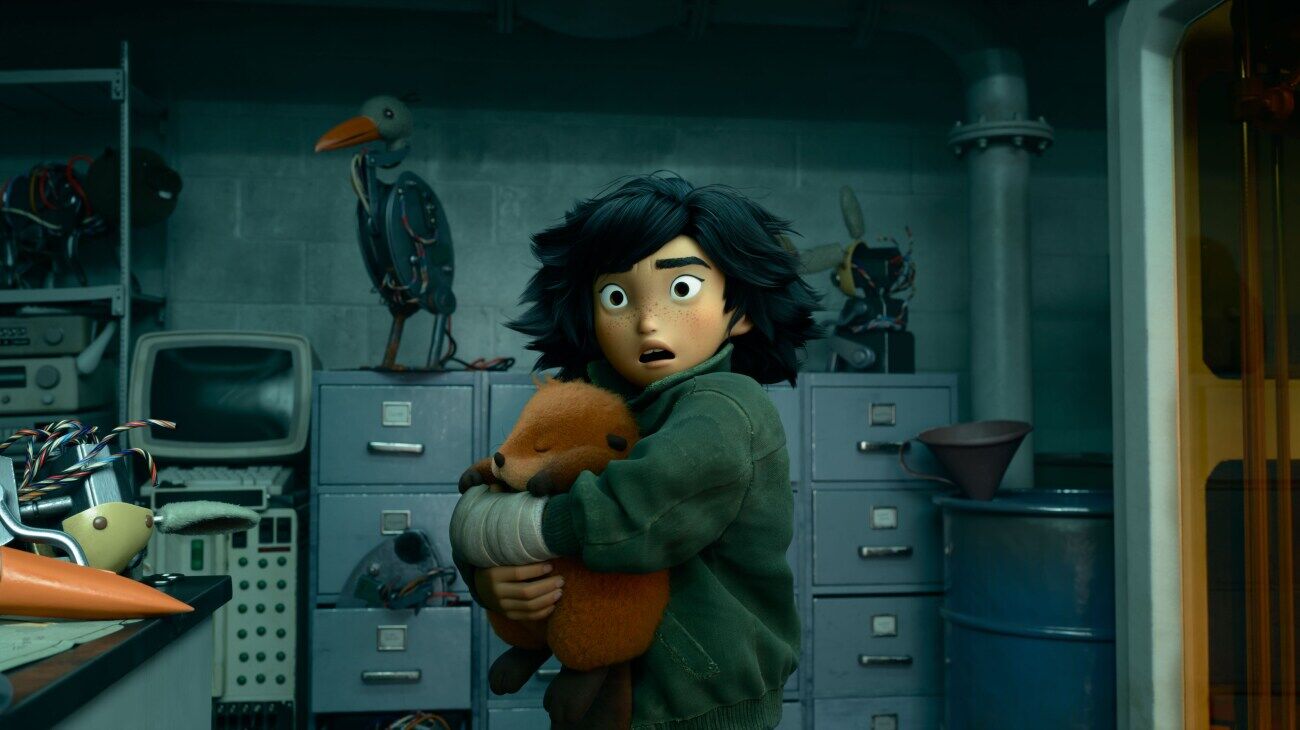
Our heroine is Mabel Tanaka (Piper Curda, A.N.T. Farm), introduced as a stubborn elementary school kid with messy anime hair and an even messier sense of justice – she believes animals deserve freedom, even if her attempts to liberate them usually end with a backpack full of squeaking fugitives and a stern lecture from the principal. One of them, a turtle named Crush, will raise an eyebrow for longtime fans of Finding Nemo (2003). Her childhood in the town of Beaverton is defined by two things – constant trouble at school and long afternoons with her Grandma Tanaka, voiced with gentle warmth by Karen Huie (Abominable), the quiet centre of Mabel’s life. Their shared refuge is a forest glade near home, where the two sit on a rock and simply observe birds moving through branches, wind rippling across water, and insects humming unseen. Those early moments in Hoppers carry a gentle emotional charge, evoking the kind of reflective opening Pixar perfected with 2009’s Up, where a few quiet scenes establish the bonds that will shape everything that follows.
Years pass, and the girl who once sat quietly beside her grandmother grows into a young woman with a defiant streak and a cause. Punk aesthetics and righteous fury now define her public persona as a ferocious animal-rights activist attending Beaverton University but beneath the spiky hair and megaphone slogans sits the same child who once watched birds in that forest clearing. Her beloved glade is still there, but it’s now under threat. Local politics personified by the smooth-talking but deeply opportunistic Mayor Jerry, voiced with oily charm by Jon Hamm (Top Gun: Maverick), has plans for progress – a new beltway cutting straight through the forest promises economic growth, traffic relief, and the complete destruction of Mabel’s sanctuary.
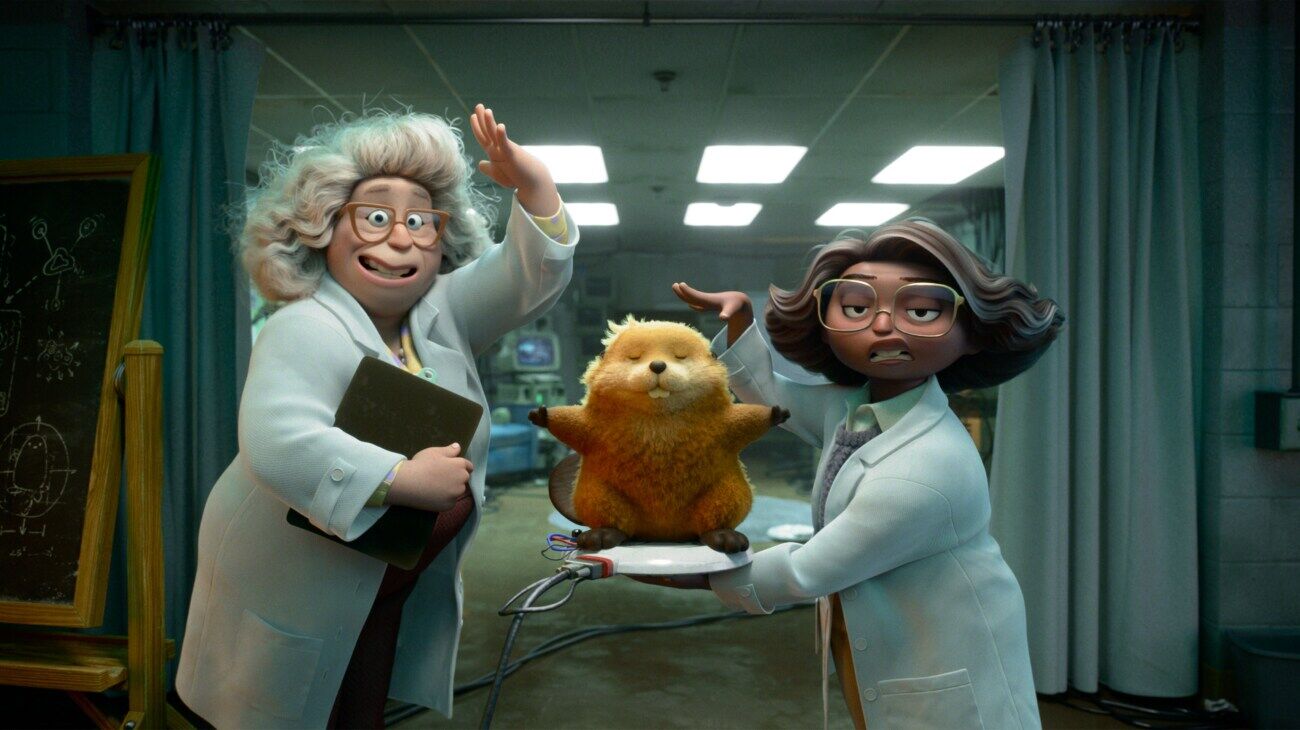
Faced with a political machine far bigger than anything a student protest can derail, Mabel stumbles into a piece of experimental technology hidden inside her university’s biology department led by her professor Dr. Sam, played with gleeful eccentricity by Kathy Najimy (Hocus Pocus). Her breakthrough, dubbed ‘hopping’, allows a human consciousness to be transferred directly into the body of a robotic animal. Operation requires nothing more complicated than sitting beneath a retro-futuristic contraption that looks suspiciously like an oversized hair dryer and moments later, the operator wakes up inside a mechanical critter wandering freely through the forest. If the premise sounds suspiciously familiar, the film doesn’t shy away from the comparison – Mabel even jokes that it’s essentially “Avatar” (2009), while audiences will find story beats similar to 2024’s The Wild Robot.
Director Daniel Chong, best known for the delightfully offbeat We Bare Bears (2014-2019), embraces the premise with a kind of mischievous confidence. What could have been a tidy conservation fable instead evolves into a constantly shifting adventure about identity, empathy, and the strange ecosystems that exist between humans and the natural world. At times it feels like someone dropped the emotional DNA of Bambi into a blender with slapstick absurdity and let it spin, and somehow, against all odds, it works. Much of that energy comes from the screenplay by Luca’s Jesse Andrews, who piles one twist atop another as the story barrels forward with reckless enthusiasm: rival animal factions, ecological sabotage, political intrigue, and the small matter of a human consciousness trying to pass as wildlife. That speed is both a strength and a weakness as Hoppers rarely risks losing its audience’s attention, but emotional moments occasionally feel rushed, as if the story is too eager to leap toward the next scene.
Helping Mabel navigate this strange new world is King George, voiced with cheerful sincerity by Bobby Moynihan (The Secret Life of Pets), the well-meaning ruler of the forest’s mammal community. George believes, sometimes naively, that everyone deserves the benefit of the doubt, even when circumstances suggest otherwise. Moynihan’s performance gives George an unexpectedly rich presence – there’s a gentle melancholy beneath the humour, something reminiscent of Paul Giamatti’s world-weary sincerity. His optimism provides a counterbalance to Mabel’s frantic determination, grounding the film whenever its premise threatens to spiral into total cartoon madness. Their partnership follows familiar beats of doubt, frustration, and eventual understanding, but the performances give those moments warmth that carries the film through its busiest stretches.
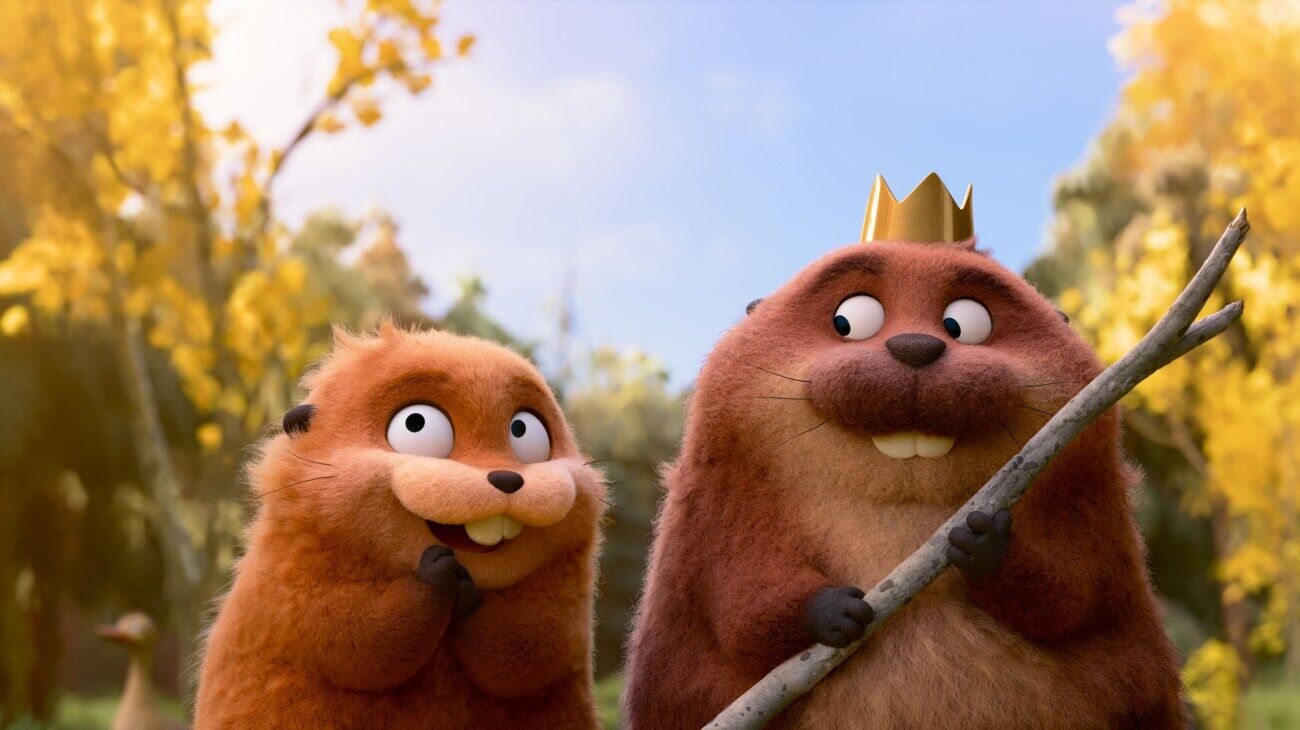
Chaos arrives the moment the broader Animal Council enters the story. What begins as a quirky woodland society quickly morphs into a miniature parliament of egos, each creature more self-important than the last: Meryl Streep (Mamma Mia!) steals her brief appearance as the Insect Queen, delivering every line with icy authority. Dave Franco (Now You See Me) voices her son Titus with a slippery nervous energy, turning him into the council’s most entertaining wildcard. Even a brief sequence involving a great white shark named Diane becomes a showcase for the film’s gleeful absurdity. Snatched from the ocean by a squadron of birds and dragged across a freeway like a living muscle car, Diane barrels through the scene with toothy enthusiasm, Vanessa Bayer (Saturday Night Live) giving the character a growling sweetness that fits the film’s off-kilter humour well. Scenes like this reveal the film’s preferred rhythm: chaotic, a little surreal, and never shy about pushing its premise into outright silliness.
No one is likely to confuse Hoppers with the towering achievements of Pixar’s golden years – that remains rarefied air. Still, what emerges here feels refreshingly confident: the studio seems comfortable embracing oddball humour, strange visual ideas, and an ensemble that doesn’t always behave politely. Even when the story veers into familiar territory, the execution carries enough personality to keep things lively.
GEEK REVIEW SCORE
Summary
Every time Hoppers appears ready to settle into something familiar, it hops (quite literally) gleefully off the rails. That restless spirit may leave some wishing for quieter moments of reflection, yet it also gives the film a rambunctious identity all its own.
Overall
8/10-
Story - 7.5/10
7.5/10
-
Direction - 8.5/10
8.5/10
-
Characterisation - 8/10
8/10
-
Geek Satisfaction - 8/10
8/10

Natalie is a big fan of anything related to movies, TV shows, and anime — you name it. When she’s not reading or being a dedicated cinephile, she’s probably playing gacha and tabletop games, or daydreaming of Caleb from Love and Deepspace.
 Kevin Low
 HSALS
HSALS