
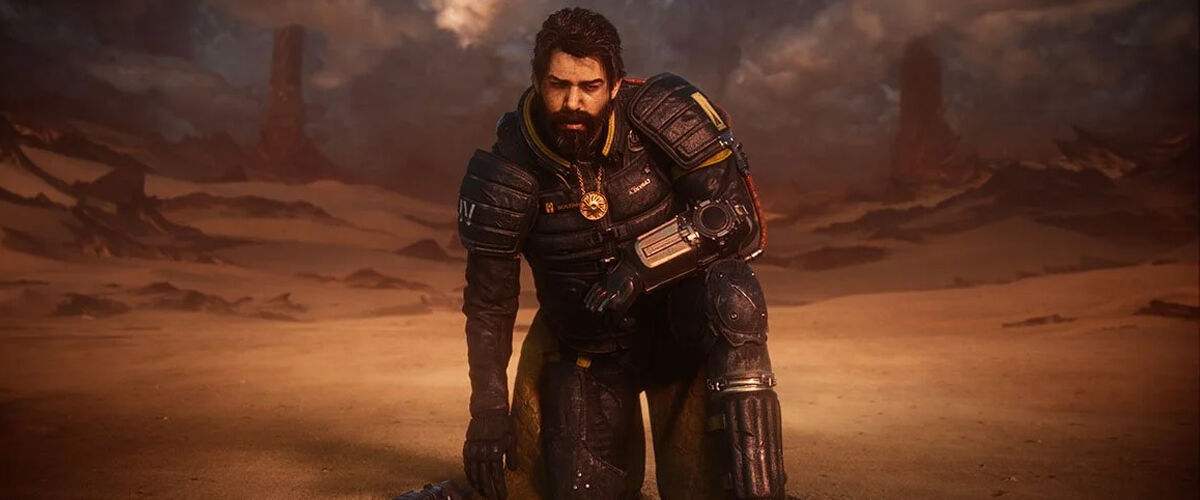
A hail of multi-coloured projectiles, a dark, almost Lovecraftian sci-fi aesthetic, and a traveller stuck on a peculiar world, forced to die over and over again in a bid to uncover its mysteries. These elements were the hallmark of Finnish game developer Housemarque’s 2023 roguelike shooter, Returnal, but after near-perfecting the third-person “Bullet Ballet” genre, the studio is now looking to expand upon its core concepts with Saros, its upcoming spiritual successor.
On the surface, Saros seems like just Returnal with a fresh coat of paint and new characters, but while most of what made the latter so compelling to begin with are almost identical to the upcoming title, look a little deeper, and you’ll find certain systems that seem rudimentary at first, but effectively shake up the experience to ensure Saros is seen as more than just Returnal 2.0.
With the title fast approaching its release on 30 April, Geek Culture was able to spend close to three hours with a near-final build of the game, offering us a better understanding of how it sets itself apart from its predecessor, and it all boils down to one massive change – actual permanent gameplay progression.
For comparison’s sake, Returnal was touted as the first AAA roguelike shooter in a genre mostly dominated by smaller, indie titles. This means that the studio was able to make use of a more substantial budget to introduce the roguelike genre to the mainstream shooter market, combining crisp visuals and immersive worldbuilding with a satisfying gameplay loop of tight shooter mechanics and meaningful procedural exploration.
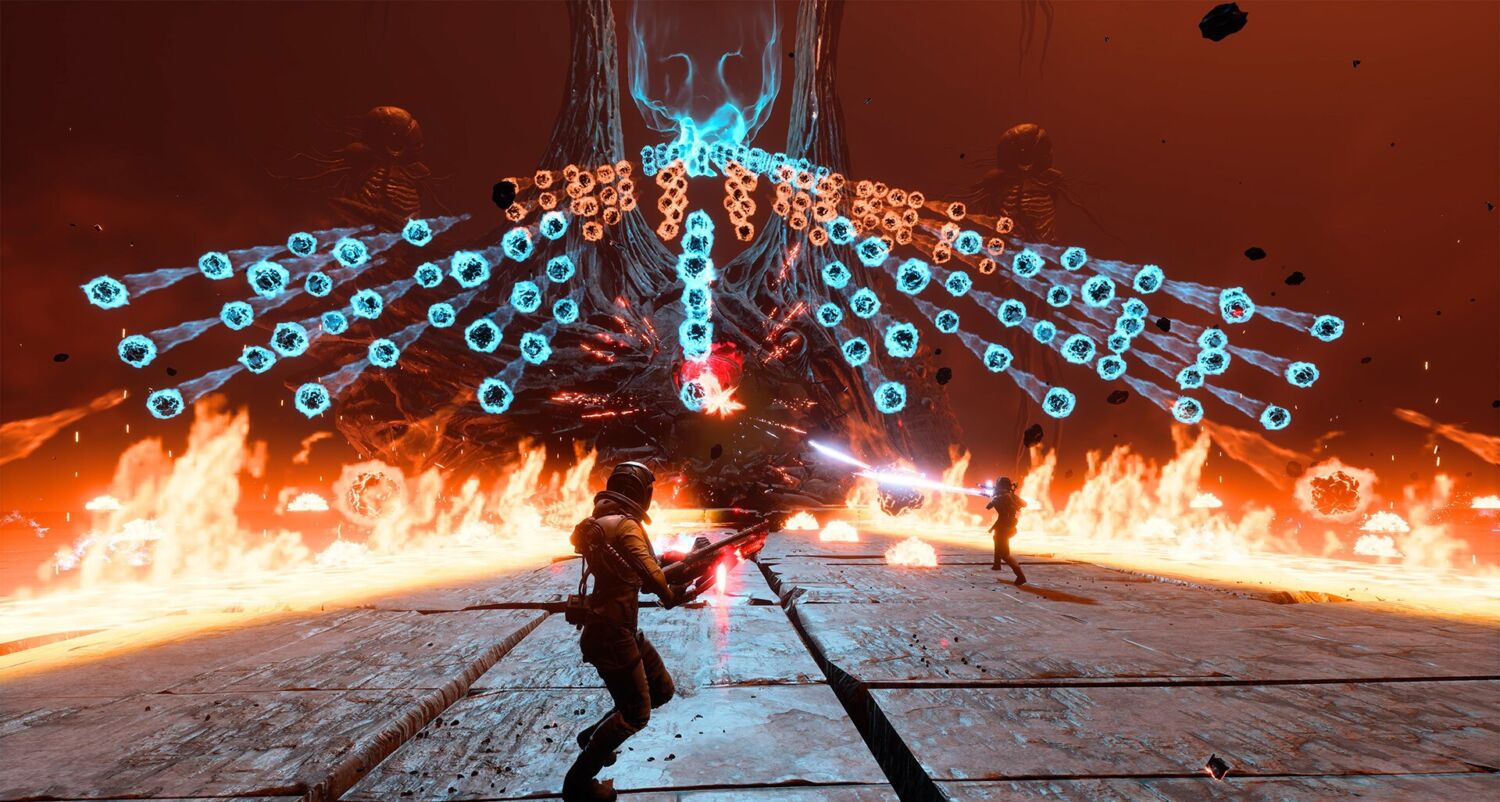
While the above was enough to garner interest from fans of the roguelike genre, Returnal did introduce a rather hefty hurdle to overcome – its punishing difficulty. Death came quickly and often, and for those not used to such challenges, this meant constantly having to retry runs (the roguelike term for each procedurally generated gameplay session) over and over again from scratch, with little to no assistance to make each run more manageable.
Players either had to lock in and study enemy attack patterns and gradually hone their reaction speeds, or rely on pure luck that the procedurally generated world would offer powerful rewards to make that run easier.
That’s not to say that Saros has completely retconned this core concept entirely, as its gameplay is still as punishing as Returnal veterans will remember. But this time, Housemarque has added a way to ease newcomers into the experience in the form of a permanent upgrade system.
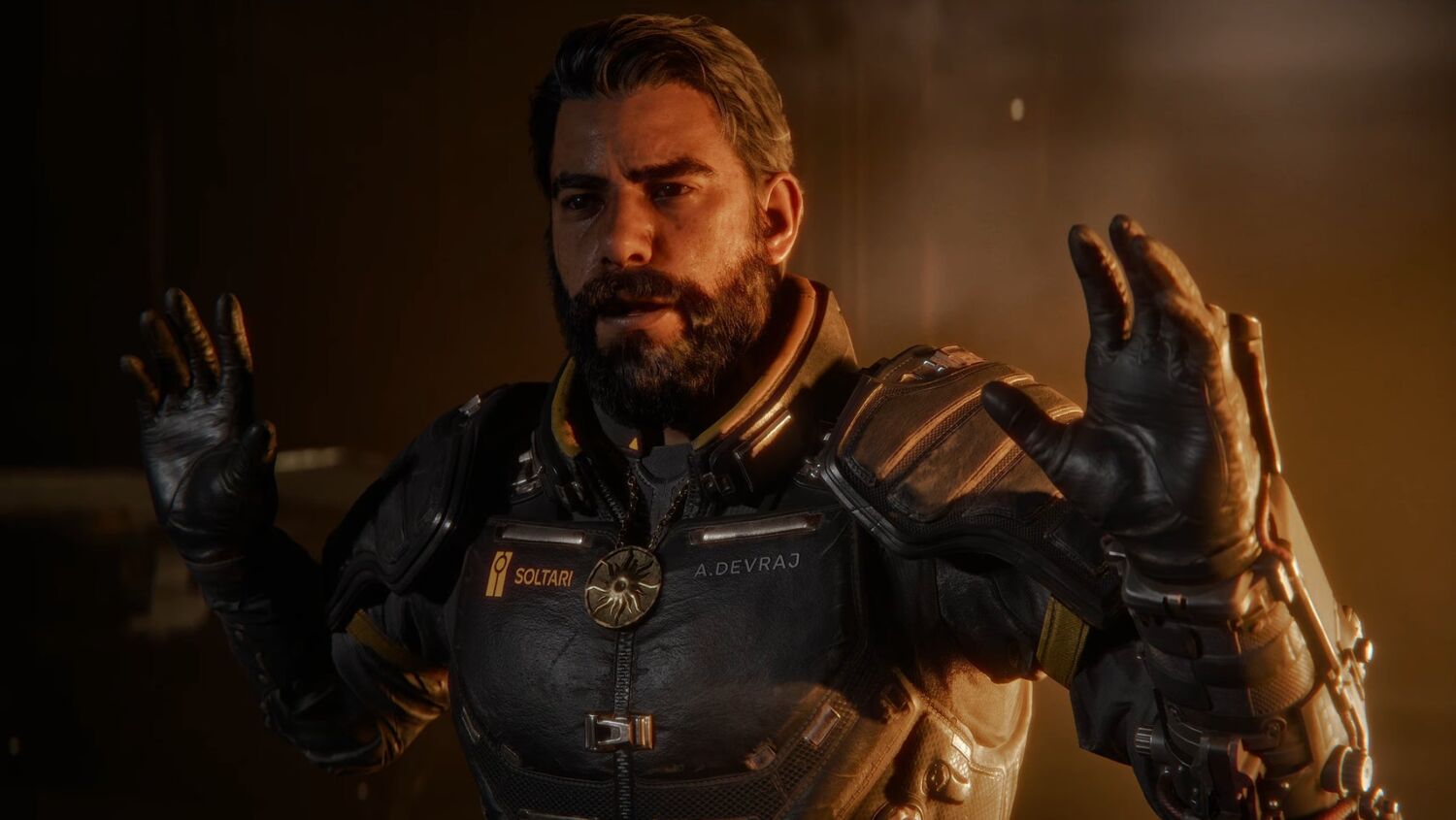
But first, a bit about the game’s narrative. In Saros, players step into the shoes of Arjun Devraj (played by iZombie’s Rahul Kohli), an enforcer for the mega-corporation Soltari, sent to a lost off-world colony on the planet Carcosa with his team after communications between a prior team are cut.
Of course, as it always is when exploring mysterious planets, Arjun and his team soon encounter a mysterious phenomenon known as the Eclipse that gradually drives those who stare at the eclipsed sun mad, forcing them to adapt to the otherworldly threat as they explore the planet for answers. For Arjun, this mission also holds a personal stake, as he is not just searching for the missing Soltari team, but someone close to him as well.
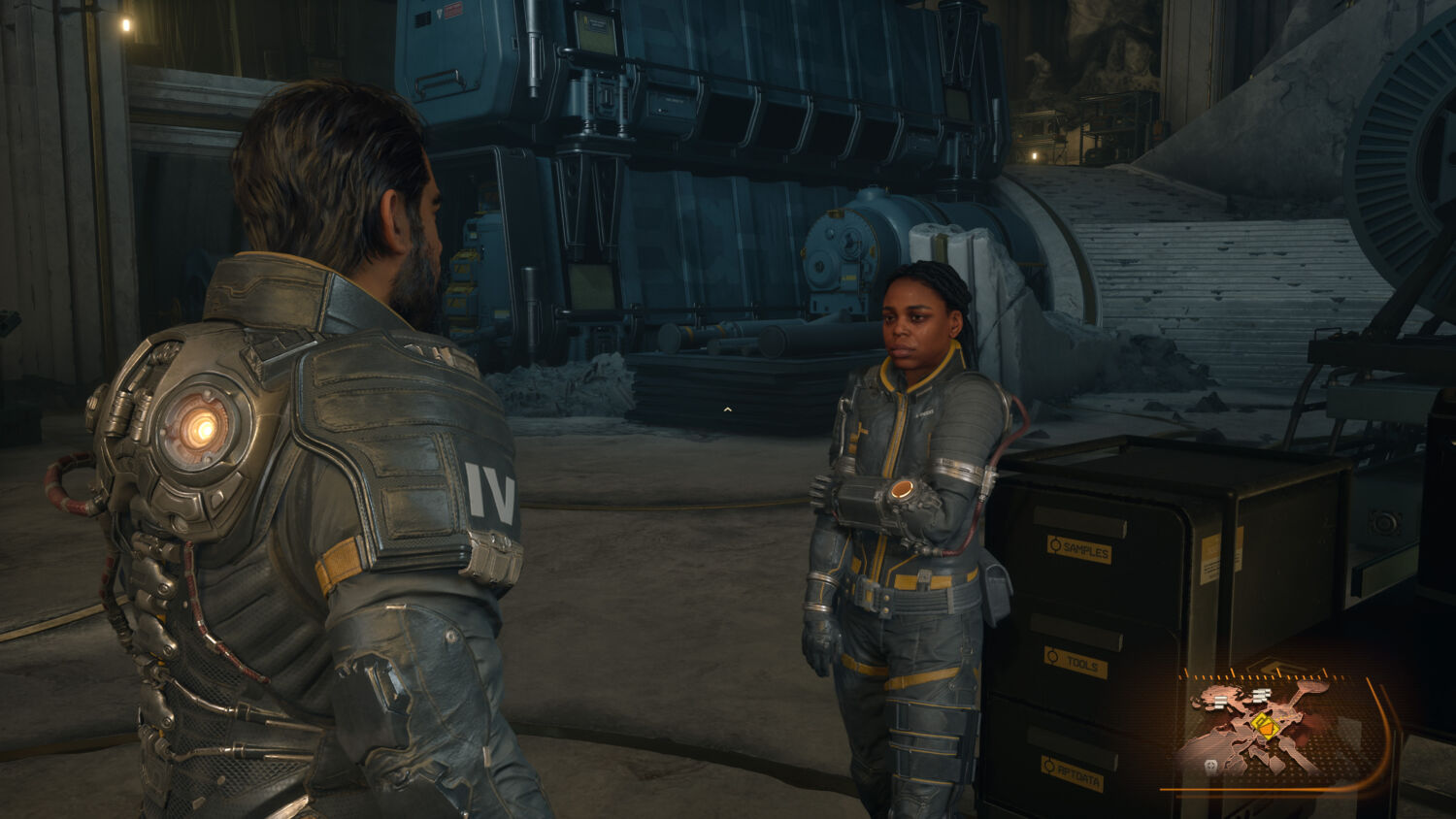
From the brief snippet of narrative we were able to glimpse in our preview session, it’s clear that Housemarque is taking a different approach this time around. Unlike in Returnal, where it was just its protagonist, Selene, by her lonesome self, Arjun isn’t alone in his adventures and has a team he can interact with back in The Passage, the game’s hub area. The addition of other characters this time around marks a notable change in tone, with Saros’ narrative leaning more towards the cinematic aspect compared to Returnal’s deeply personal tale told mostly through player discovery. Whether this would be an improvement or a detriment, however, remains to be seen.
While Saros has experimented in terms of its storytelling, its gameplay will feel largely familiar to anyone who has at least tried its 2023 predecessor. Players will still embark on procedurally generated runs and come face-to-face with monstrous creatures that attack with hails of multi-coloured projectiles in true “Bullet Hell” fashion, or in this case, “Bullet Ballet”, as Housemarque describes, as players will often have to “dance” their way through the swarm of enemy projectiles.
Most of Saros’ core gameplay concepts are ripped straight out of Returnal, from its unique, futuristic weapons that make effective use of the PlayStation 5’s DualSense Controller adaptive trigger features for primary and secondary fire modes, to artefacts players can come across that not just provide boosts, but sometimes handicaps in exchange too. Although at least in our playthrough of the game’s first two biomes, items with “cursed” properties are clearly stated this time around, unlike Returnal’s entirely chance-based Parasite system, meaning players can better weigh their options before deciding what to pick up.
Perhaps the game’s biggest change during moment-to-moment gameplay, then, lies in its new energy shield system. Apart from having a standard dodge, Arjun also has access to a bubble shield that he can deploy around himself in exchange for energy. With the shield up, he can then absorb projectiles of certain colours to not only recharge energy, but also unleash a power attack when he hits certain energy thresholds.
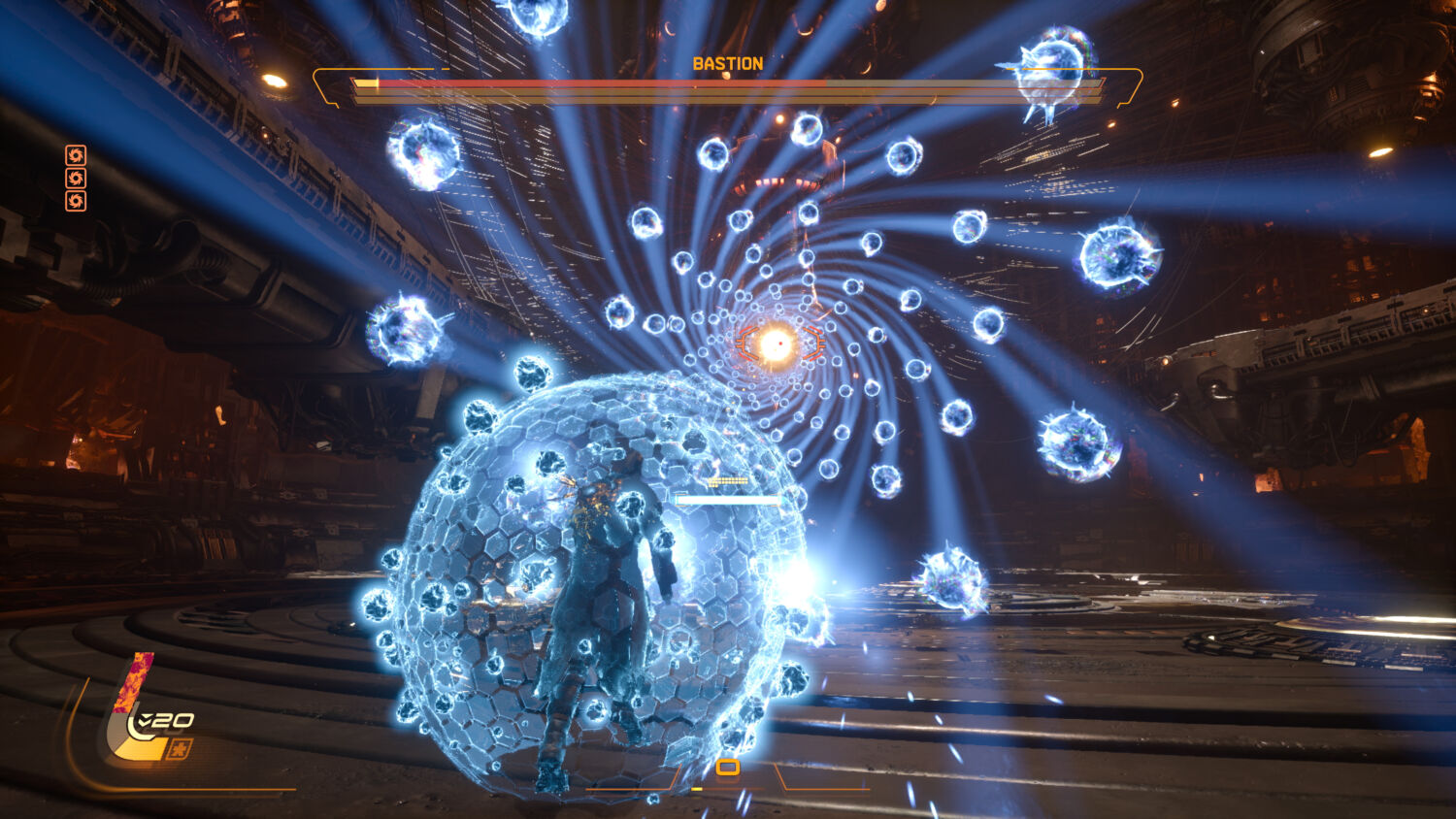
With this system, Saros essentially encourages players to adopt a more aggressive approach, charging headfirst into battle with their shields up, as opposed to dodging or kiting foes around the arena. It’s a satisfying risk-versus-reward system considering how devastating the power attack can be.
Of course, the energy shield does have its limits, as apart from only being able to absorb a set amount of bullets before it breaks, the game also throws a spanner in the works in the form of Eclipses. This feature, activated by interacting with certain objects in the game, completely transforms how combat plays out, as not only does it shroud the entire map in a red haze, but it also buffs all foes in the process. As a tradeoff, however, all currency picked up when Eclipse is in effect is also increased.
That’s not all, as during an Eclipse, enemy projectiles also turn yellow, as opposed to the initial blue ones. These projectiles can’t be absorbed by the shield and will also deplete a portion of Arjun’s maximum armour in addition to dealing damage, with the only way to regain it being to perform a power attack. With these systems combined, juggling between absorbing blue attacks, avoiding yellow ones, and firing off power shots to regain lost armour becomes Saros’ core combat loop, a dance true to its “Bullet Ballet” namesake.
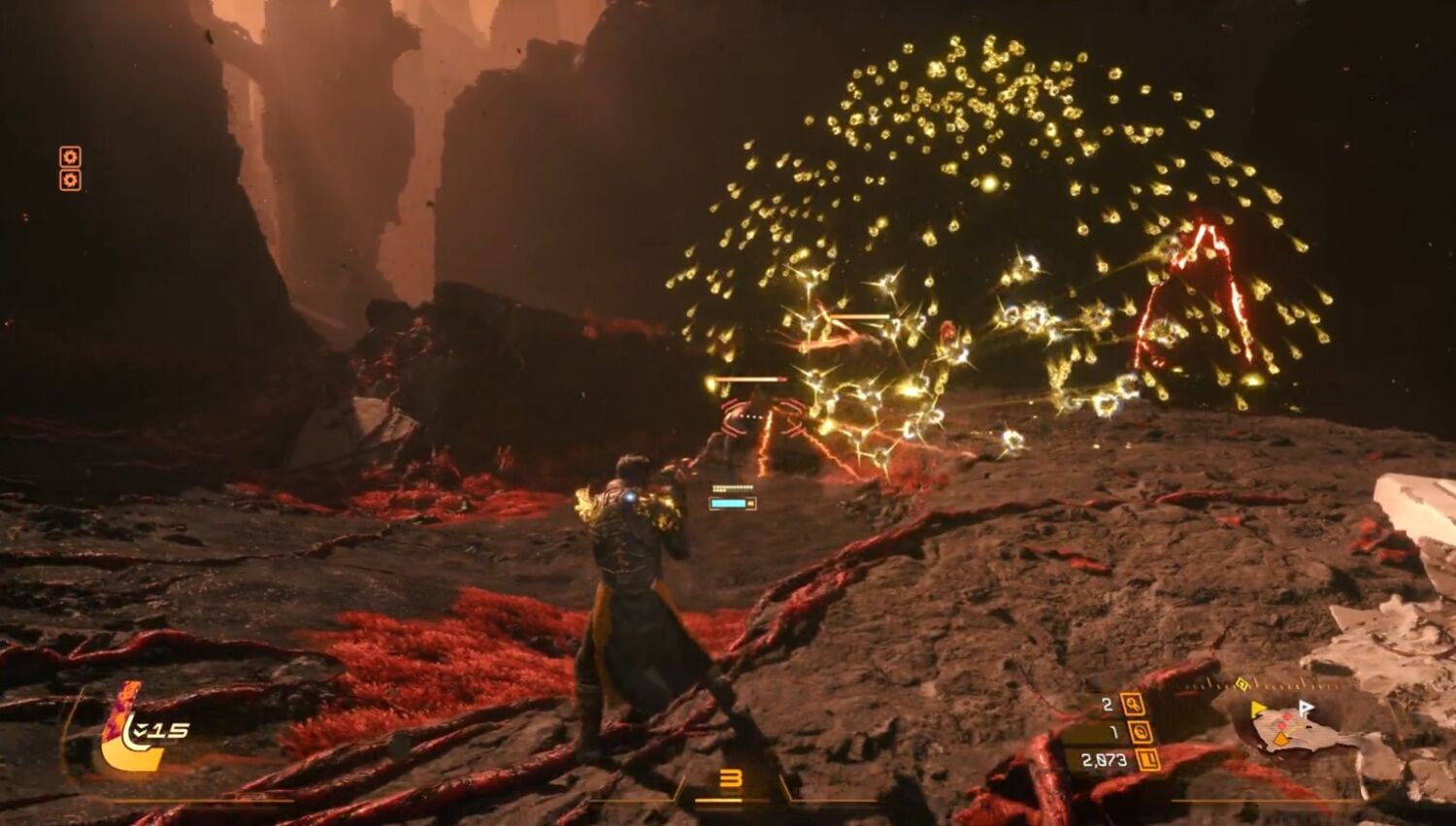
Herein lies the balance in difficulty, as while regular combat encounters are mostly manageable thanks to the energy shield system, things are dialled up to eleven once an Eclipse is in effect. Furthermore, the first two biomes require players to activate an Eclipse to progress, and since it exists permanently after, this also means they will have to face the biome’s end boss with it in effect, and in true Housemarque fashion, these fights are immensely tough.
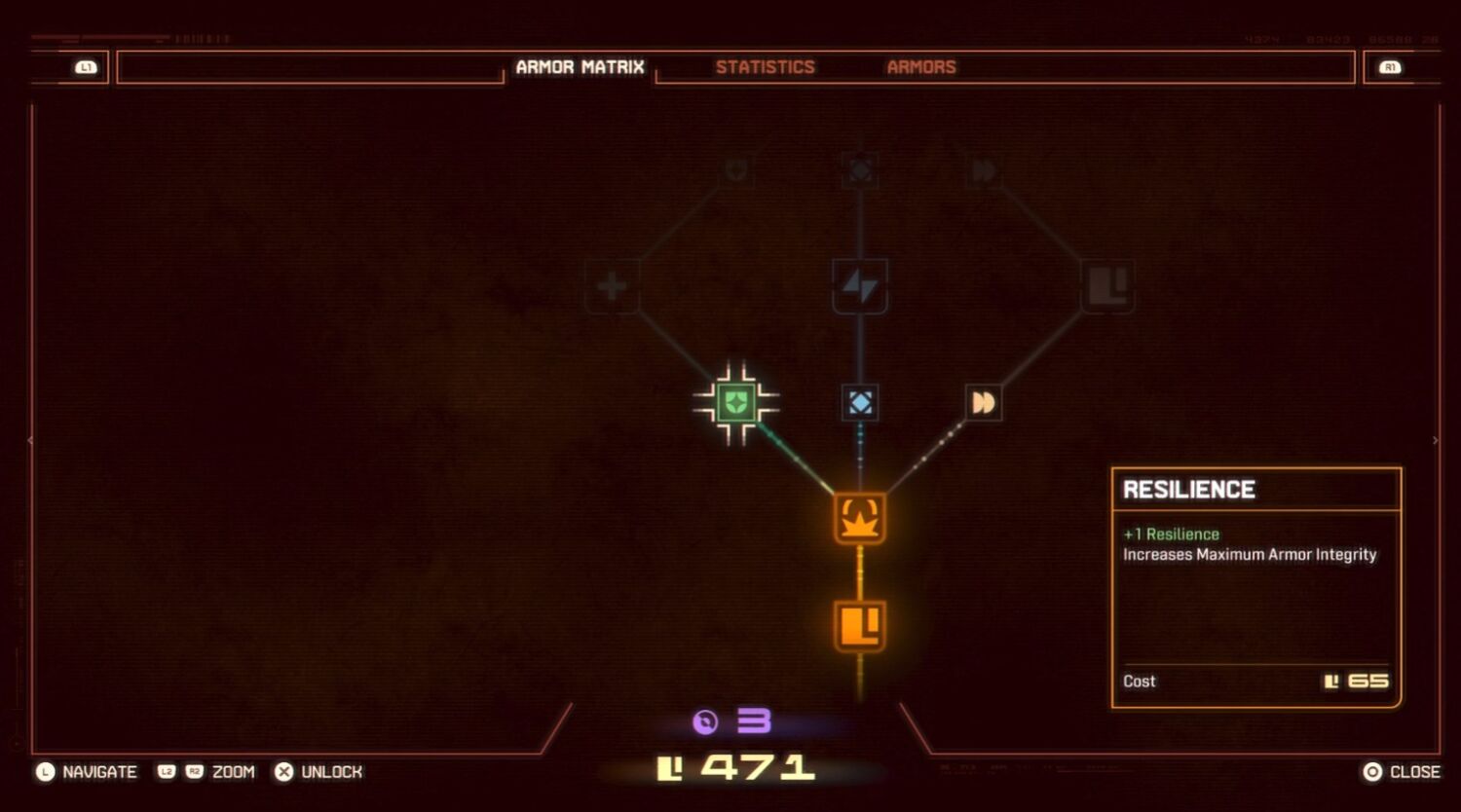
To help even the odds, Saros introduces another major shakeup, the aforementioned progression system. Unlike in Returnal, where runs are mostly started from scratch, Arjun can pick up Proficiency points during runs, the game’s core currency. Upon death, he is then transported back to The Passage, where he can use these points to purchase permanent upgrades in a skill tree that will help boost his chances of survival for the next run, with skills ranging from the standard armour and energy boosts, to more game-changing ones, like the ability to absorb yellow projectiles (while still receiving the max armour damage), or being able to revive once upon death for every run.
This way, death feels less like a hurdle and more like an opportunity to “level up” and come back stronger, with meaningful progression this time around that effectively makes players feel more powerful each time they attempt a run. Roguelike purists may disagree with this addition, but one can’t argue that this makes the game more approachable, and perhaps even more enjoyable for a wider range of players.
Another way Saros sets out to streamline its rougelike experience is the added ability to start each run from different unlocked biomes. While death in Returnal meant starting from the very beginning and running through each biome again, players can now choose to start from any previously unlocked biome. This, coupled with the game’s Modifier system, which allows players to further tweak their experience by balancing out certain positive and negative gameplay modifiers (which we were unable to test out during our preview), means Saros will offer plenty more ways to tailor the experience to each player’s needs compared to its predecessor.
Even with just this initial look at the game’s first two biomes, Saros is already shaping up to be a much more approachable roguelike bullet hell shooter compared to its predecessor. For those looking to scratch that roguelike itch, or if you are one of those interested in Returnal’s core concepts, but gave it a miss in 2023 due to its steep difficulty curve, Saros’ fine balance between familiar gameplay concepts and meaningful new additions means it might be the perfect starting point.
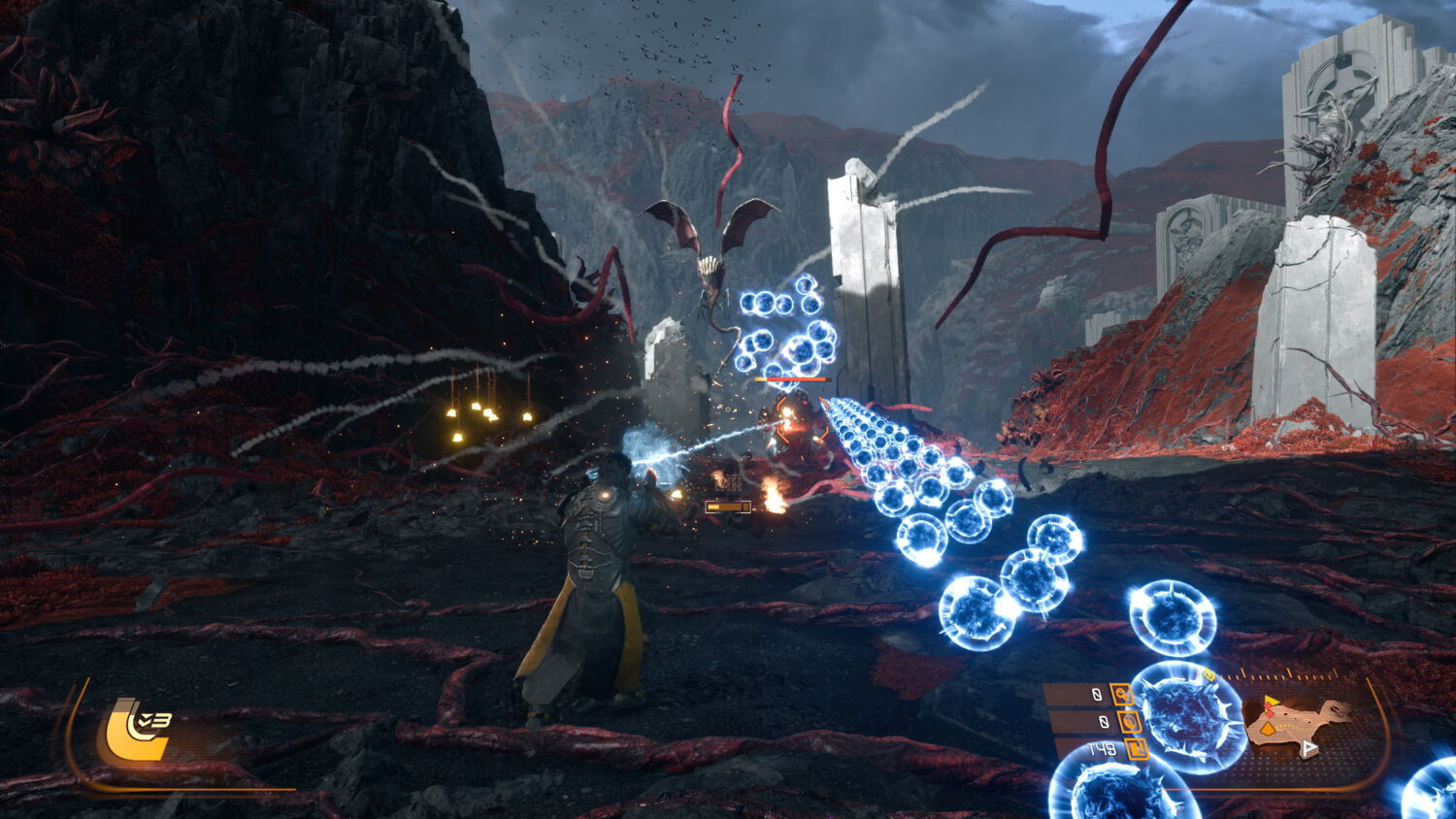
Saros will kick off the multi-coloured Bullet Ballet when it launches on 30 April 2026, exclusively for the PlayStation 5.

Kevin is a reformed PC Master Race gamer with a penchant for franchise “duds” like Darksiders III and Dead Space 3. He has made it his life-long mission to play every single major game release – lest his wallet dies trying.
 Si Jia