
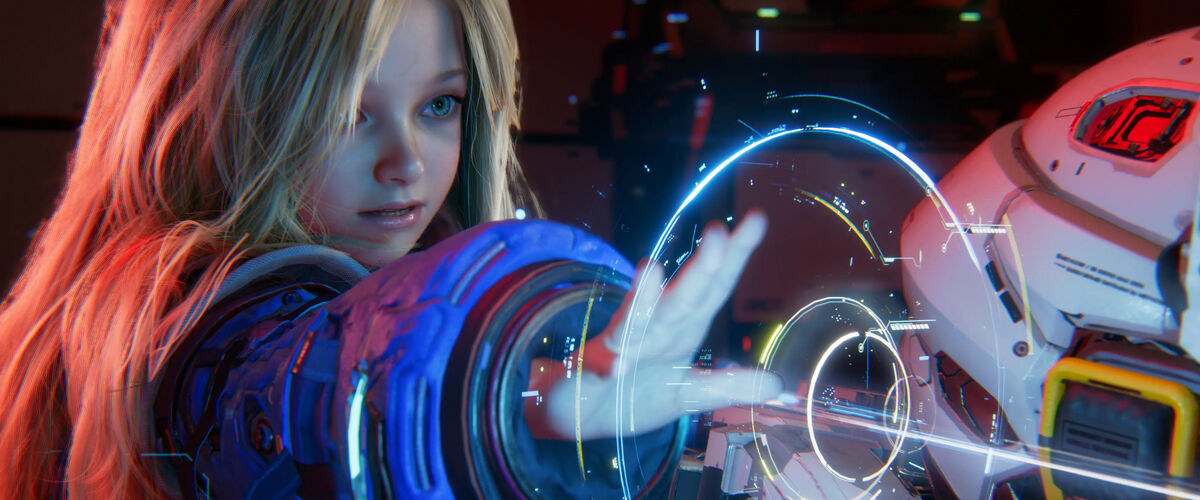
Every developer has its own flagship franchises and genre mainstays, but Capcom is in a league few can match. The creative force behind crowd favourites such as Resident Evil, Street Fighter, Monster Hunter, and Mega Man, it’s hardly a stranger to diversification, with the cult-classic, underrepresented likes of Kunitsu-Gami: Path of the Goddess, Okami, and Ghost Trick: Phantom Detective representing efforts to break the mould.
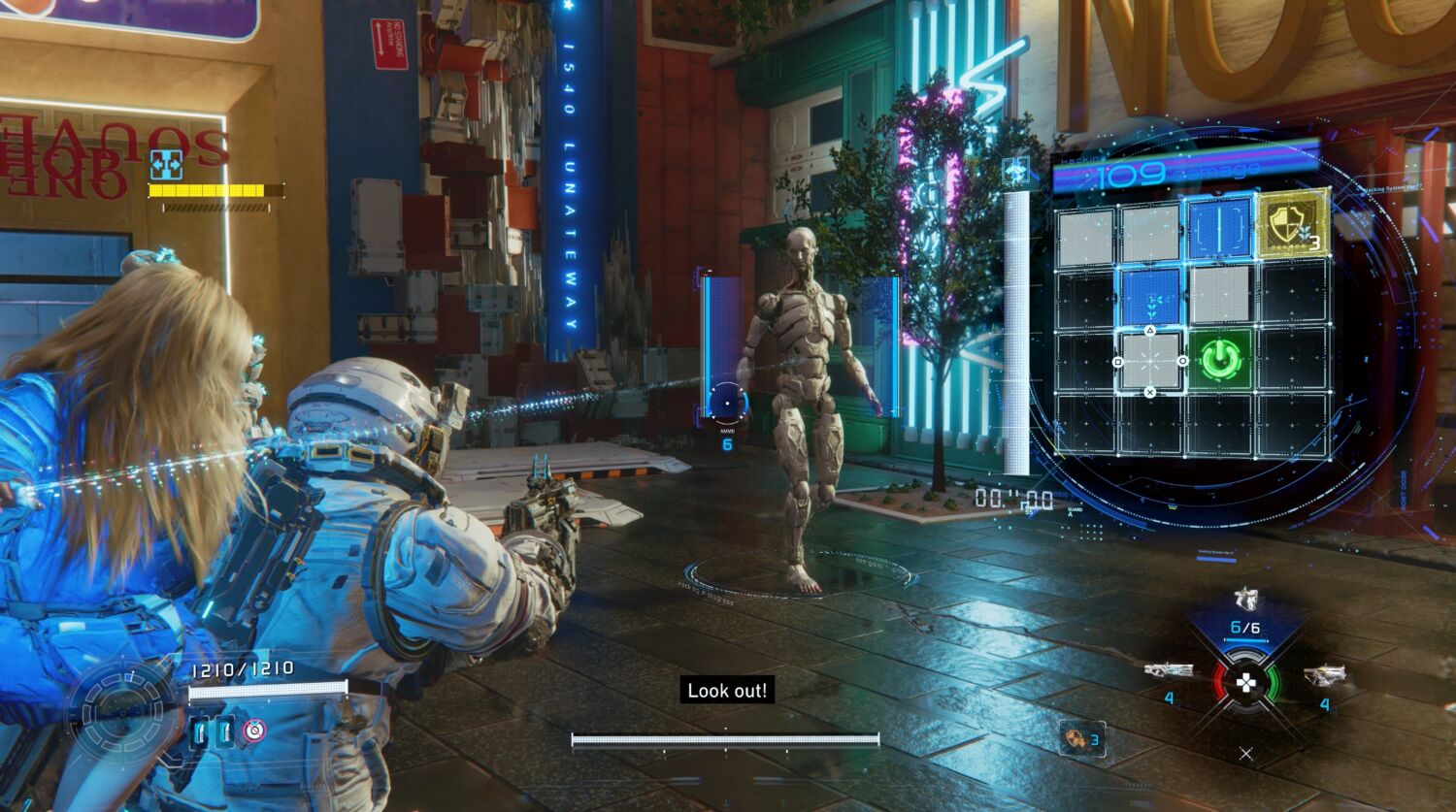
Even the four leading titles are fairly different from one another, occupying the survival horror, fighting game, action role-playing game, and 2D side-scroller space, respectively. In comes Pragmata, another ambitious outing that continues to be a proponent of innovation, featuring an unconventional mashup of hacking puzzles, third-person shooter mechanics, and real-time dodging. Yet, it somehow manages to march to its own beat, turning the gameplay loop into a natural – though likely overwhelming for first-timers – rhythm that delivers a fresh breath of air, and a two-hour hands-on preview only reinforced that impression.
Following previous demos and the most recent Sketchbook build, the sci-fi title takes spacefarer Hugh Williams and his young android companion, Diana, to the streets of a New York-inspired stage. It’s unclear where this fits within the larger story, which centres on the oddball pair working together to fight the hostile AI controlling a lunar research station and return to Earth, but the objective here is to contact Earth from the Comms Tower, accessed by hacking five beacons.
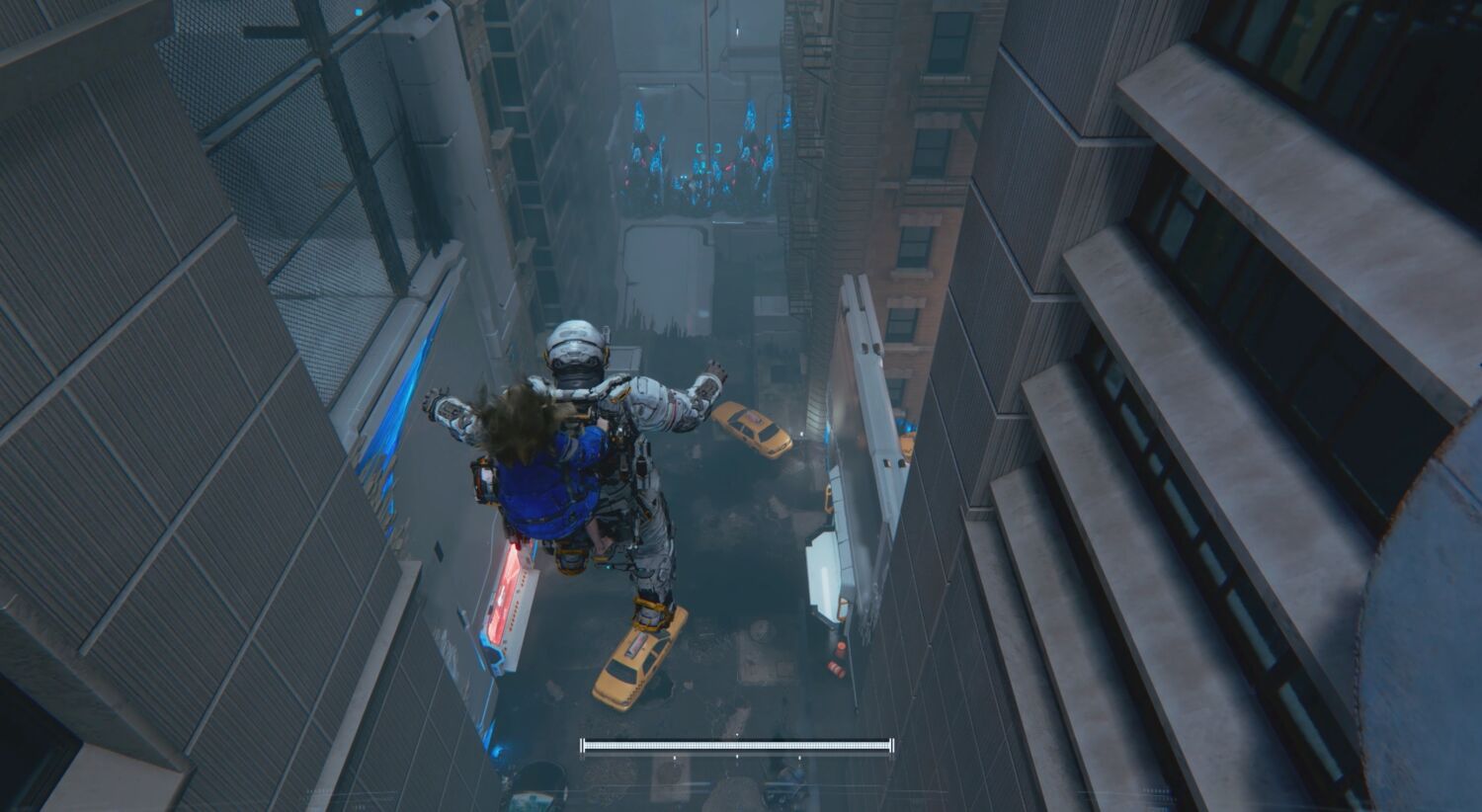
If only it was so easy. Scattered across the map, these structures are found both on level and high ground, introducing a layer of verticality that lends itself well to the more open setting than was previously shown. The weight of Hugh’s spacesuit is conveyed through the slight drag to his movements, be it running or leaping across a small gap, with the hovering duration tied to a gauge. Similar to a stamina bar, it depletes whenever the thrusters are in effect, including quick dashing and evading enemy attacks, requiring players to manage their energy and get used to the maximum travel distance from one end to another.
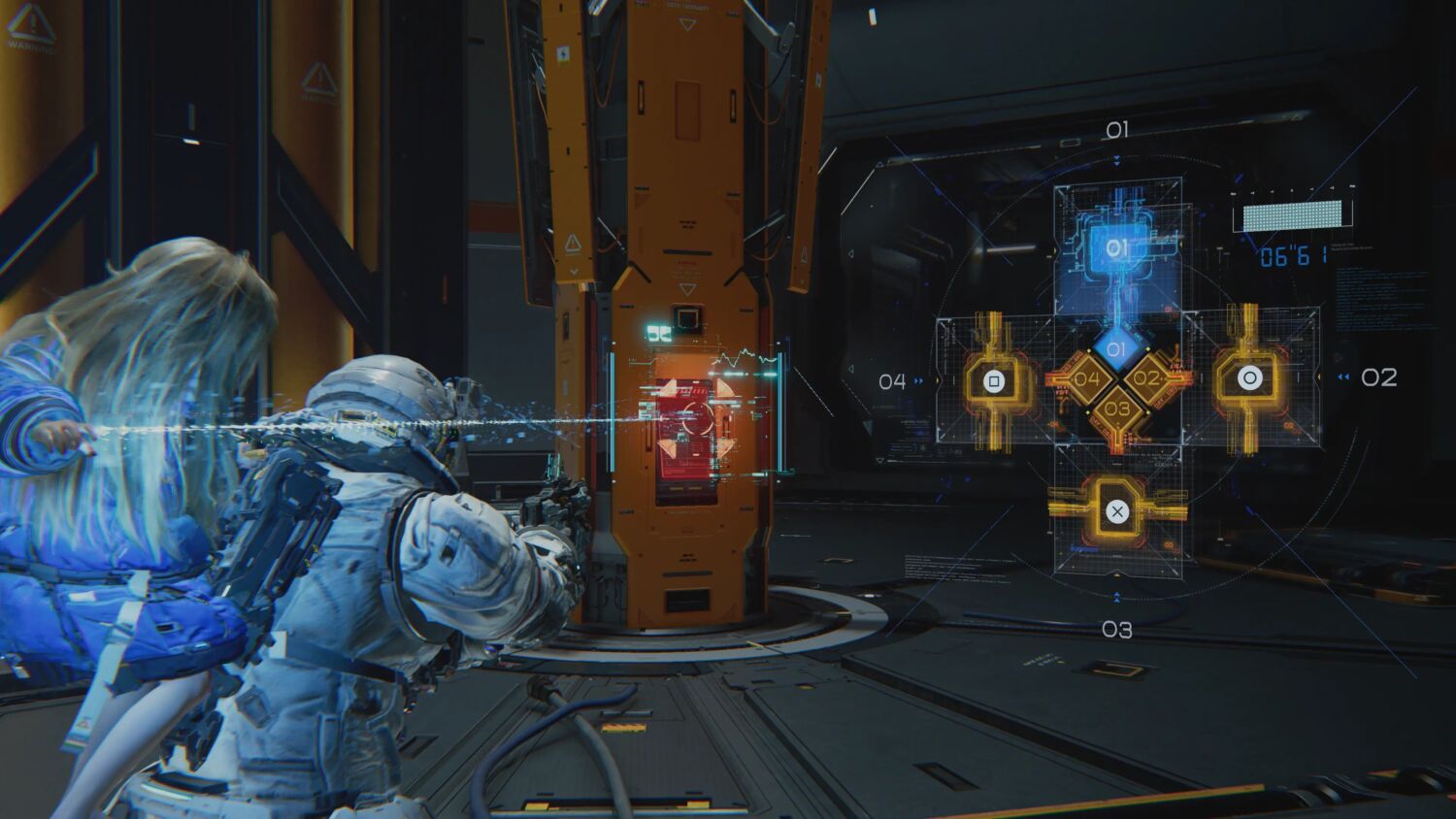
Along the way are chests and locked areas or control panels, spelling Diana’s time to shine. Hacking into the defense system is simple – rotate pentagonal pieces with their corresponding face buttons and connect them to the numbered parts, creating a design that’s reminiscent of a circuit board. Lifts and other machinery can also be unlocked in the same way, and should wayfinding in Pragmata prove difficult, Diana’s scan ability highlights the right path forward.
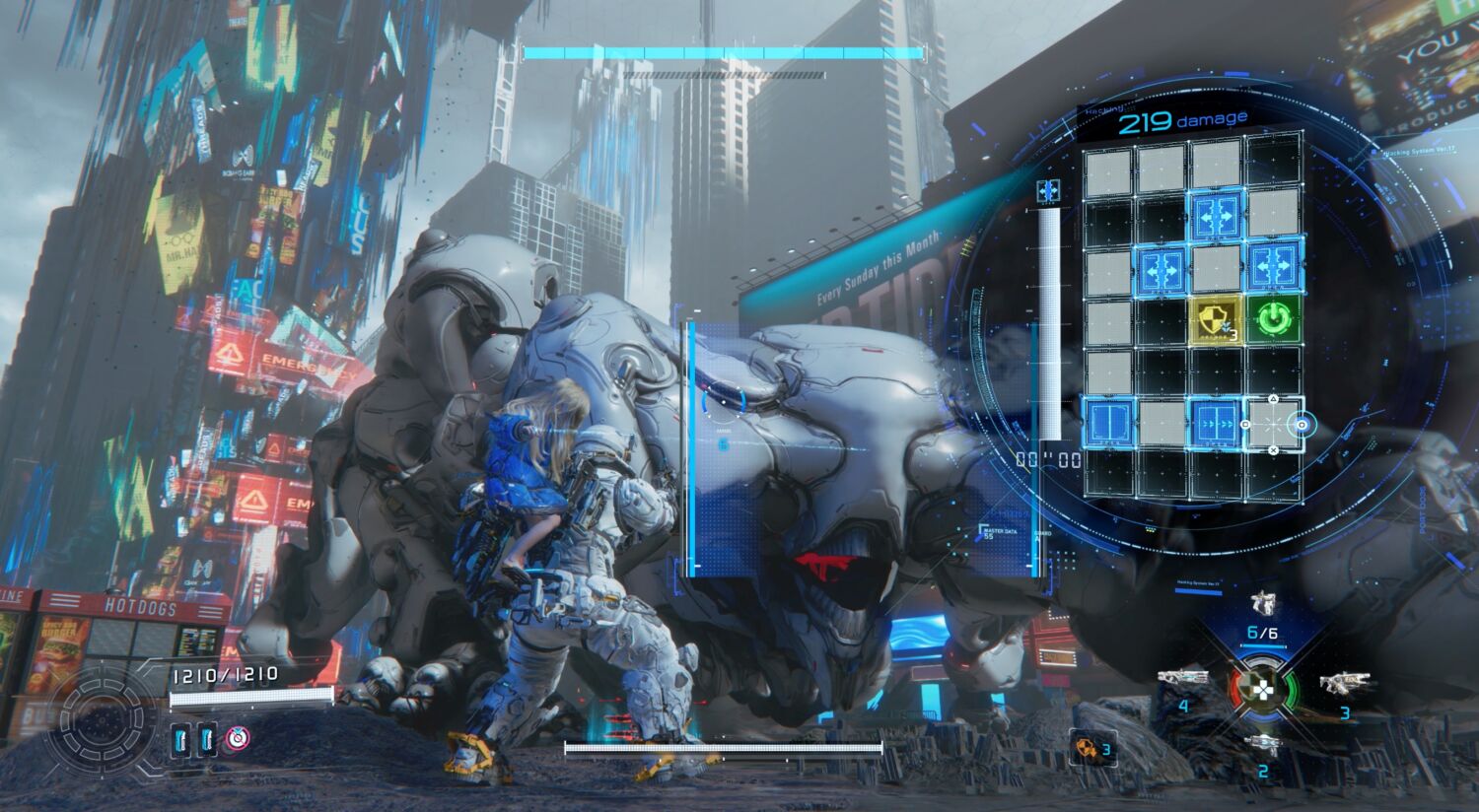
In combat, hacking becomes a whole different beast. When the puzzle pops up, players have to guide the cursor across a grid layout to reach the target tile, while avoiding obstacles and toggling optional bonus nodes – think of them as temporary buffs and perks – that grant additional advantages, such as increased damage or the ability to link foes together. Doing so exposes a robot’s weak point, allowing Hugh to deal damage as he dodges attacks simultaneously.
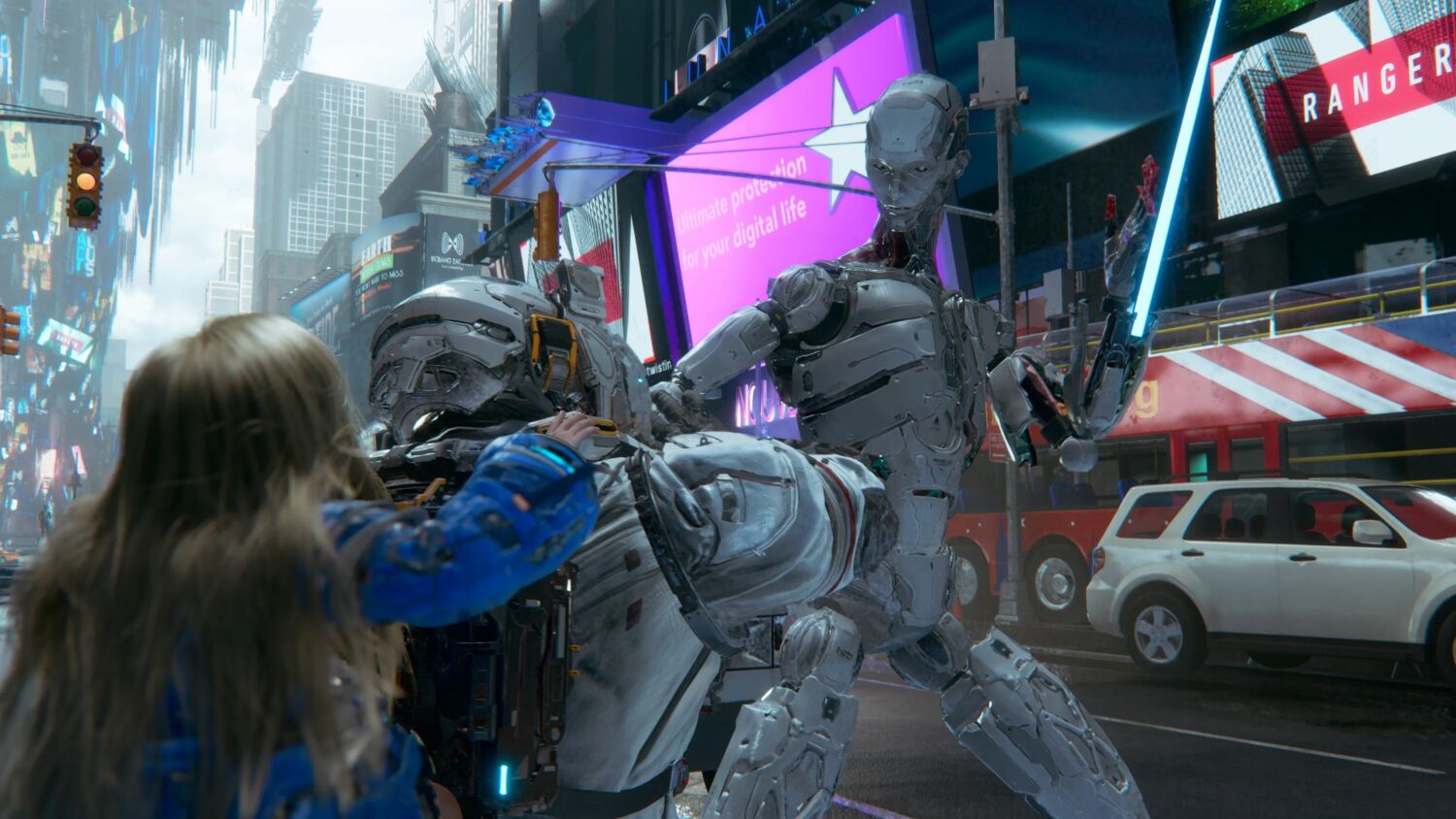
If the constant activity sounds overwhelming, that’s because it can be. Pragmata thrives in chaos of dexterity, and having grasped the fundamentals during earlier previews, the stress has never been more fun and exhilarating. However, the starting stages of gameplay may paint a different picture, as controlling both Hugh and Diana at the same time won’t always feel natural, and according to game director Yonghee Cho, the initial clumsiness is deliberate. Once everything clicks into place, there will be a fluid, rhythmic flow to the transition from one play style to another.
For those intending to shoot their way through, tough luck – since bullets cannot penetrate a robot’s armour, gunplay has to go hand-in-hand with the hacking. Players can cycle through four different weapons, including a standard pistol (referred to as Grip Gun), with each of the remaining three limited-use types tied to different firing characteristics. The Shockwave Gun, for instance, functions like a shotgun and is most effective at close range, while the Stasis Net shoots out a web that traps enemies. An interesting weapon is the Decoy Generator, which creates a clone of Hugh to direct attention away from him and Diana.
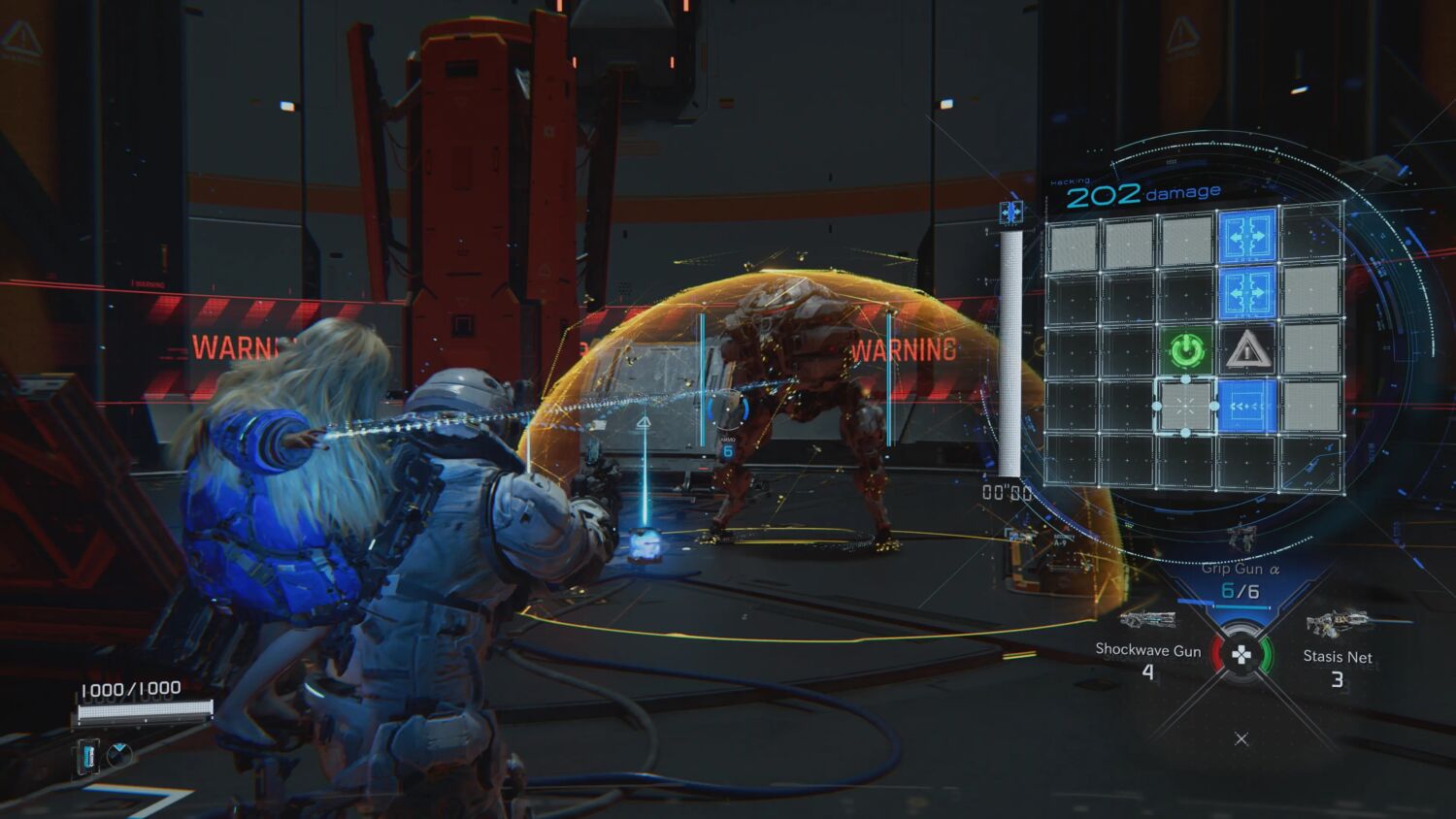
Depending on the type and quantity of automata, certain firearms will work better than others. In Pragmata, it’s easy to be swarmed by hostile forces, especially if players let down their guard, so area-of-effect (AoE) offerings like the Riot Blaster would be more ideal than the Charge Piercer or other single-target weapons here, and the same principle applies in reverse. The preview build showcased several variations, from pesky, missile-firing drones and spinning blade-wielding orbs to a towering baby robot, with their size determining how big the grid for the hacking puzzle is: 3×3, 3×4, 4×4, 5×5, and more.
To that end, the boss fight at the end of this stage introduces a 4×7 panel, requiring more precise input and quicker thinking than all previous encounters. It turbocharges the shooting-and-hacking loop, and throws in a handful of curveballs for good measure, such as antennae that must be destroyed for hacking to happen and avoiding super-wide AoE attacks by heading to higher ground, forcing players to strategise on the fly. The high-octane energy and larger-than-life action make for some intense moments, but the subsequent victory feels hard-earned and rewarding.
The other kind of challenge, albeit on a smaller scale, are Red Zone areas, unlocked with a Red Key. Before starting, a pop-up appears to warn of extremely dangerous threats that spawn in waves, with movement limited to a confined space. Once defeated, players are awarded the various currencies from an orange storage box – Lunafilament, used to improve gear and hacking effects, Golden Cubes for raising specific attributes, and large amounts of Lim.
These tougher encounters highlight the importance of returning to the shelter, the central hub in Pragmata where upgrades are managed, from checkpoints midway through a level. Alongside the Firmware Updater that gives access to Hugh’s suit and primary unit, as well as Diana’s capabilities, it also houses the Unit Printer, with new and souped-up options for weapons, hacking nodes, abilities, and firearm attachments, all of which can be manufactured from blueprints collected during exploration. Bringing an extra dose of liveliness is Cabin, a quirky support robot who lets players exchange Cabin Coins for prizes on the stamp board, with additional bonuses for completing rows.
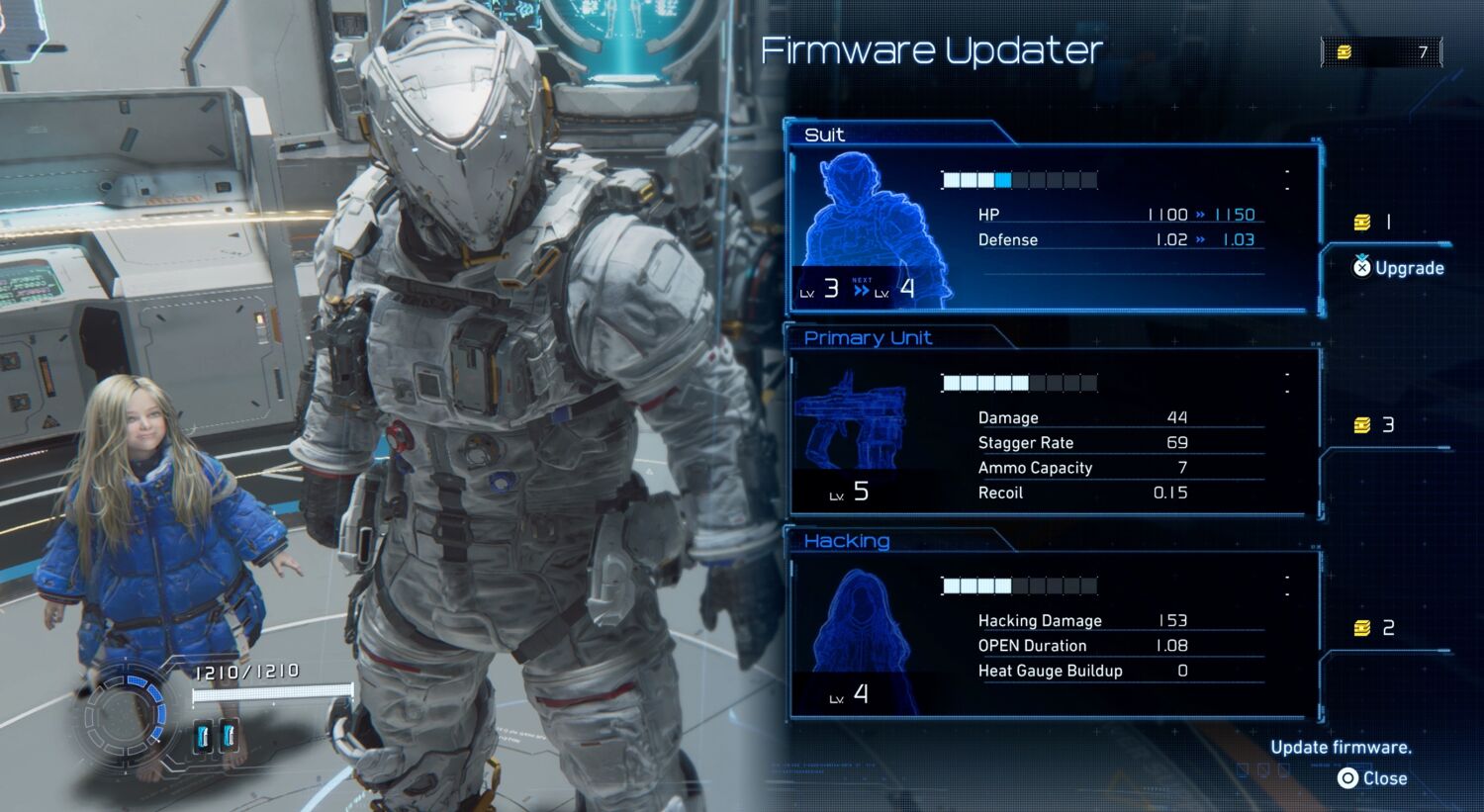
Beyond the element of practicality, the shelter presents an opportunity for Hugh and Diana to strengthen their bond. While the pair does engage in conversations out in the field, the lull here allows them to exist as two separate individuals, instead of a unit, and get to know each other better through more personal exchanges.
The second way is to give Diana memorabilia found along the way, opening up additional dialogue that shows more hints of her personality, and having her offer Hugh another item in exchange makes for a nice little touch. Some may view the return-to-base mechanic as disruptive to the gameplay experience, but a choice is always better than none, especially as a welcome reprieve from the battle action.
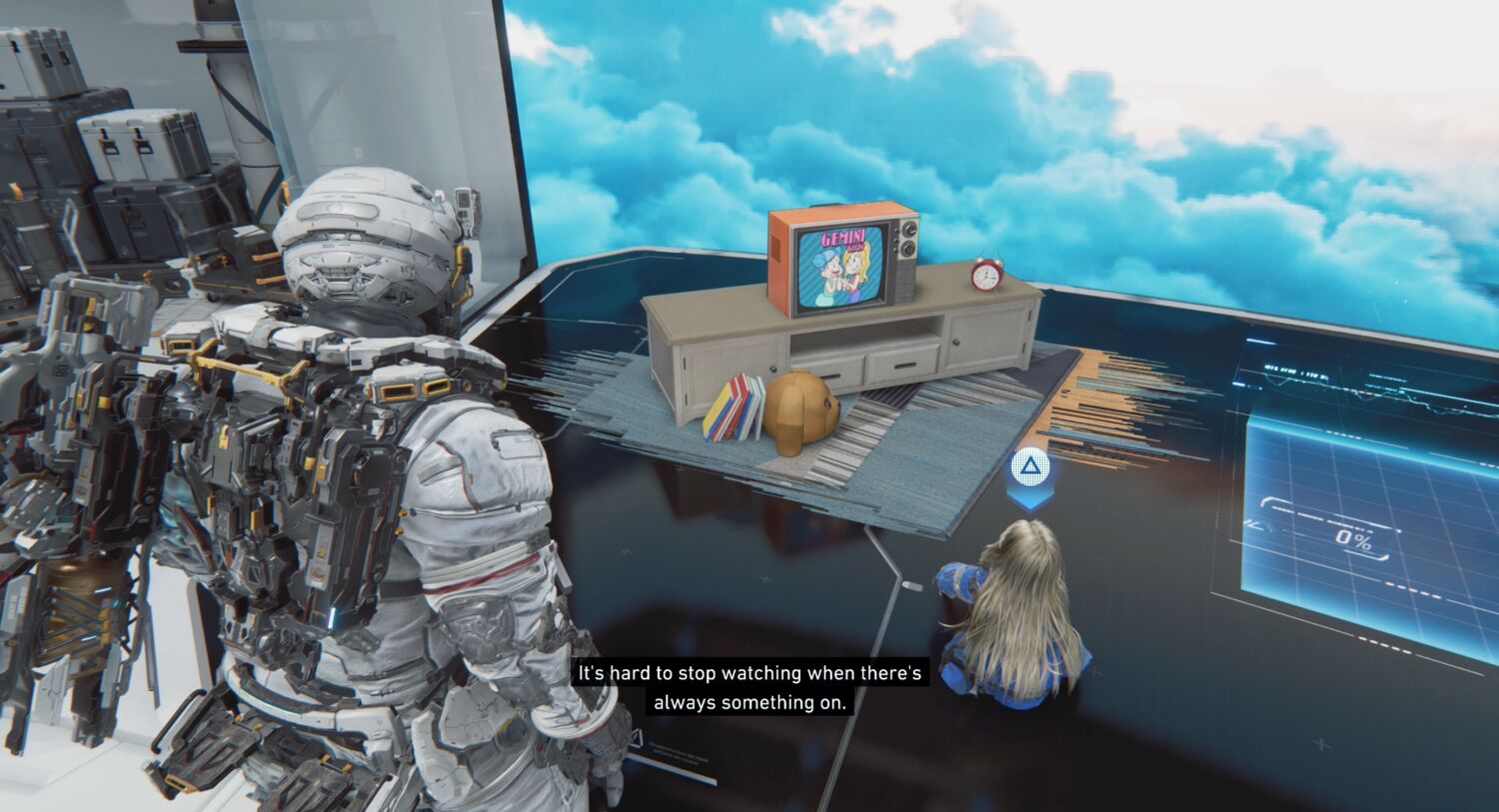
In the two hours of gameplay, the pair’s relationship came across as endearing – similar to the “forced to foster” trope, involving characters unwillingly, unexpectedly, or reluctantly taking in a ward, often leading to forced bonding, personal growth, and a found family dynamic – and Hugh makes no secret of his appreciation for Diana’s presence. His patient, calm nature complements the latter’s inquisitive and excitable character; at one point, she points to the bot database for an enemy and quips, “Floating around like that looks so fun! Wish I could do that too!”
The sense of connection extends to environmental design, too. Where the shelter is characterised by its metallic, sterile presentation, the preview’s New York-inspired stage comes drenched in striking futuristic flair, and the accompanying glitching effect serves as a thematic reflection of the pervasive 3D printing technology in Pragmata, as represented by the Unit Printer in the shelter. Here’s a friendly tip: keep your eyes open, and you just might spot a nod to the Resident Evil series.
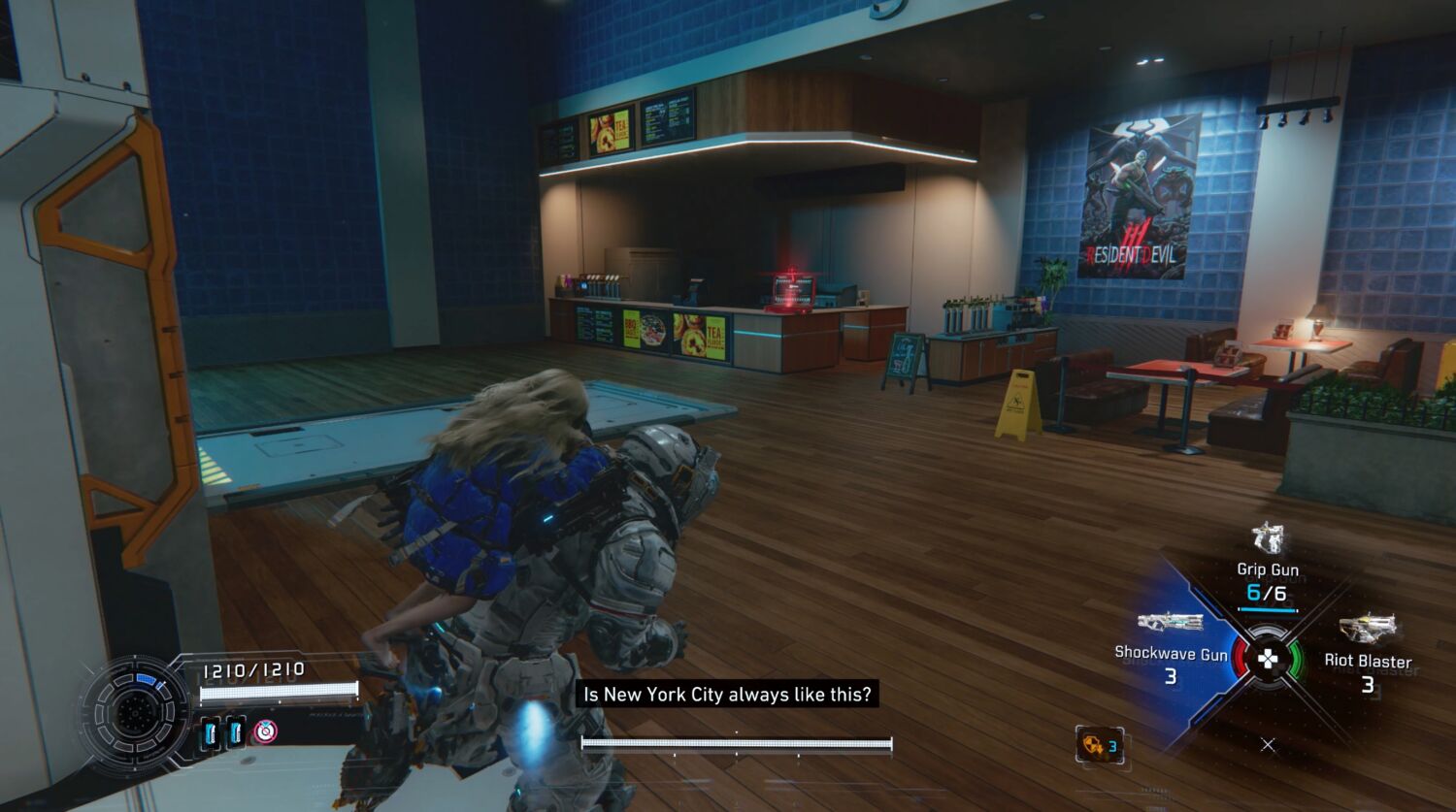
“I think if we actually made it look like New York as it is in real life, it would lose the sci-fi touch that is key to the game,” shares Cho in a separate interview, adding that 3D printing is one of the important world elements. “One way we chose to implement this was through the 3D printing errors encountered in the stage, where there are half-printed taxis or vehicles that are printed into the ground.”
Pragmata is a lot of things, and boring certainly isn’t one of them. It’s never easy bringing diverse elements together, so there’s plenty to marvel over the impressively smooth melding of its hacking, gunplay, and movement mechanics. As with most maverick endeavours, Capcom’s forthcoming adventure won’t be everyone’s cup of tea, but it’s off to a promising start, and the whiff of ambition has been enthralling so far.
Pragmata releases for PS5, Xbox Series X|S, and PC via Steam on 17 April, while the Nintendo Switch 2 version will launch in Southeast Asia on 24 April as originally scheduled.

Si Jia is a casual geek at heart – or as casual as someone with Sephiroth’s theme on her Spotify playlist can get. A fan of movies, games, and Japanese culture, Si Jia’s greatest weakness is the Steam Summer Sale. Or any Steam sale, really.

 Kevin Low