The modern gamer lives in an age where titles have stopped being about creativity but instead are more of a constant focus on chasing trends, where it’s about who’s going to make the next big, punishingly difficult Soulslike title or how many Roguelike elements can fit into a game that doesn’t actually need them. Much like the Battle Royale craze of the late 2010’s, things have frankly grown incredibly tiring at this point.
In comes long-time game developer Capcom, which presumably looked at all the possible video game trends to follow for an easy win, but has instead decided to go in a completely different direction. Their stroke of creative genius? Taking the most basic of video game concepts – the third-person shooter genre – and switching it up in a way that has never been done before, resulting in Pragmata, a new sci-fi shooter/puzzle action hybrid that offers one of the most unique and original gameplay ideas in modern gaming history.
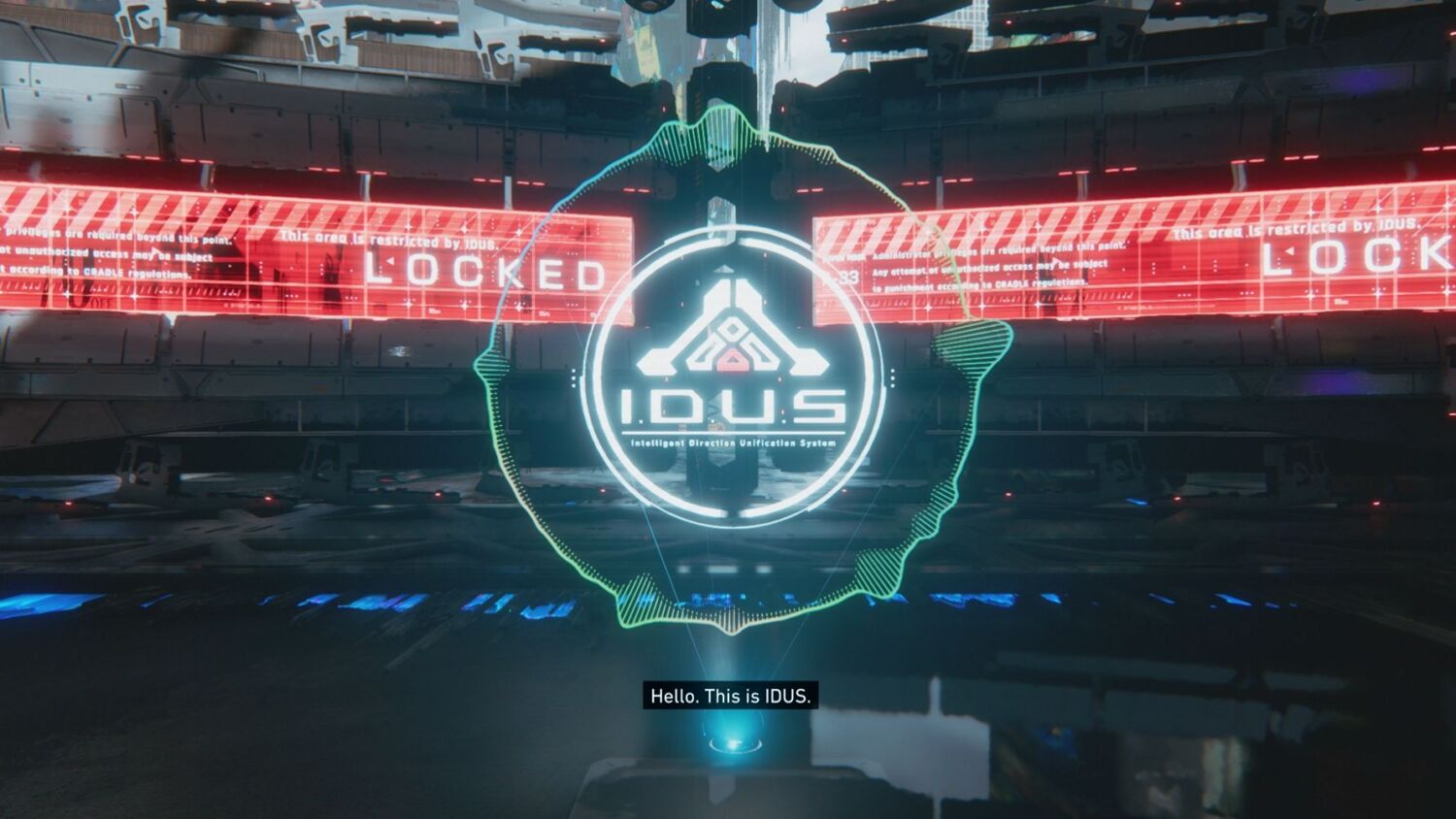
Pragmata’s premise begins simply enough – set in the distant future, the research vessel Eurotas heads to the lunar base of the megacorporation Delphi, known as the Cradle, following a sudden cease of communications. Systems Engineer Hugh Williams and his team enter the now-desolate moon station, which is entirely run by autonomous robots and the IDUS (Intelligent Direction Unification System) AI system, but things quickly go awry when the facility is hit by sudden seismic activity, wiping out Hugh’s entire team and leaving him for dead in the depths of the Cradle.
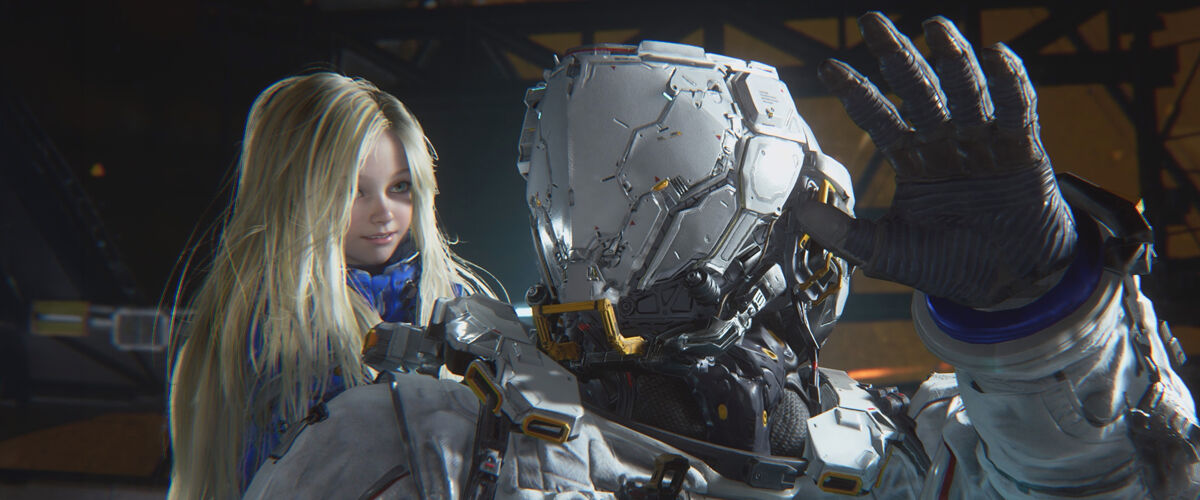
On the verge of death, Hugh is brought back by D-I-0336-7, a state-of-the-art “Pragmata” unit (a high-functioning autonomous prosthetic body with a simulated organic structure) in the shape of a young girl. After renaming his new companion “Diana”, the pair form an unlikely bond once they realise that IDUS has turned on them by unleashing waves of murderous androids, and that Diana’s hacking abilities are the only effective way to deal with the newfound threat. This thrusts them into an adventure across the Cradle to shut IDUS down and secure safe passage back to Earth.
While its main narrative beats are nothing new, Diana is by far the heart and soul of Pragmata. Her boundless energy, curiosity and child-like innocence make her a constantly endearing companion character, and provide some of the best protagonist interactions of the type since Joel and Ellie in Naughty Dog’s 2013 adventure The Last of Us. Capcom has found its new star, and it’s not afraid to show it, with most of the game’s major story and gameplay elements directly tied to fostering the found family dynamic between Hugh and Diana.
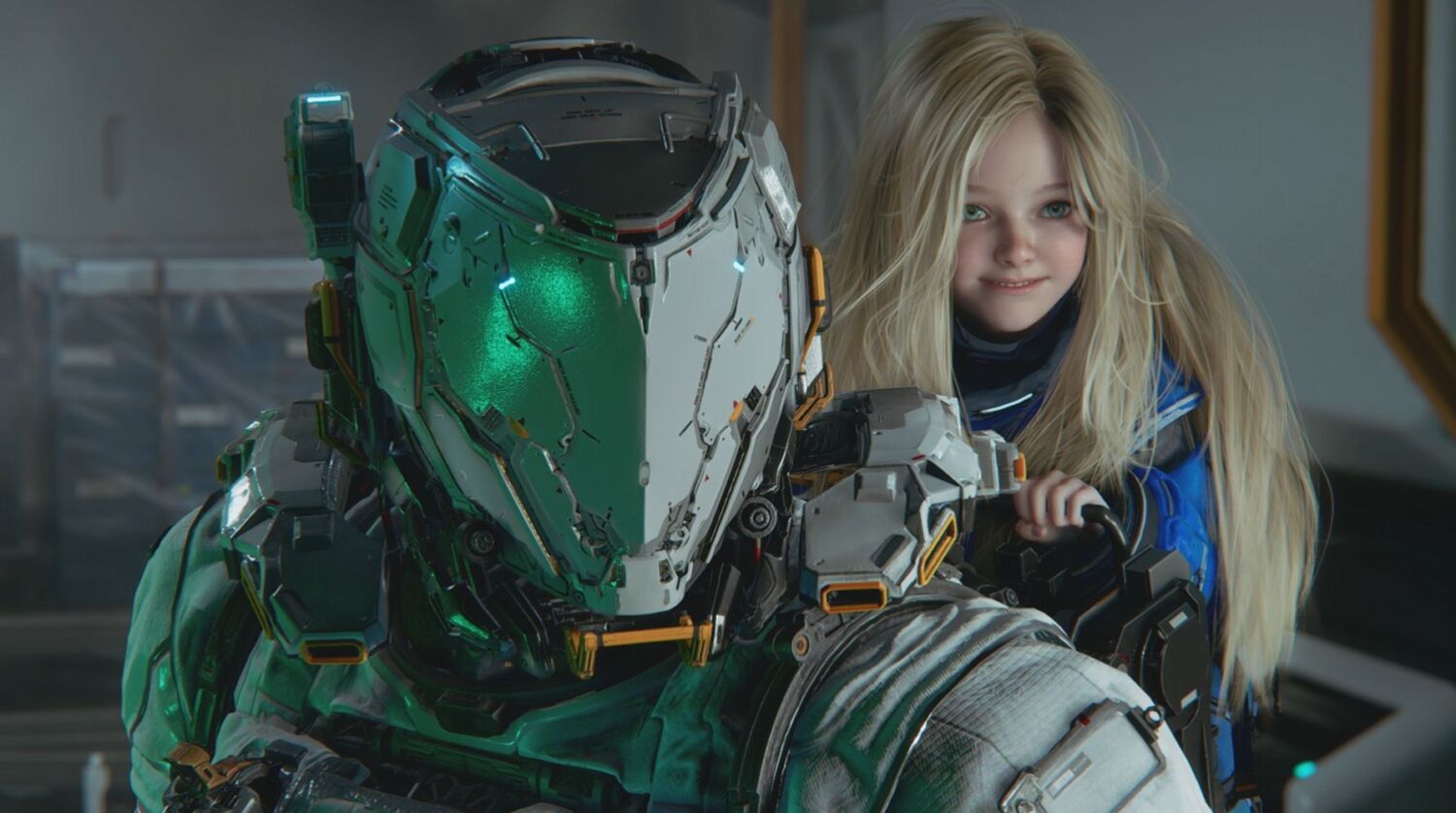
Having such a memorable companion character does bring some slight downsides, however, as main hero Hugh doesn’t really get the opportunity to shine as an individual, with his traits crafted to shift the spotlight on Diana instead. Hugh possesses the age-old trope of a character who doesn’t trust robots, but is forced to work with one, and he’s also an orphan, which conveniently helps to drive home the themes that family is one that’s formed by people who share genuine affection, and not by blood. He might be the main playable protagonist, but ends up being overshadowed by Diana instead.
Despite some inconsistencies, having Diana alone is enough to carry Pragmata’s narrative experience, keeping players engaged as they discover the truth of her existence, learning more about the wider universe and what it means to be human along the way.
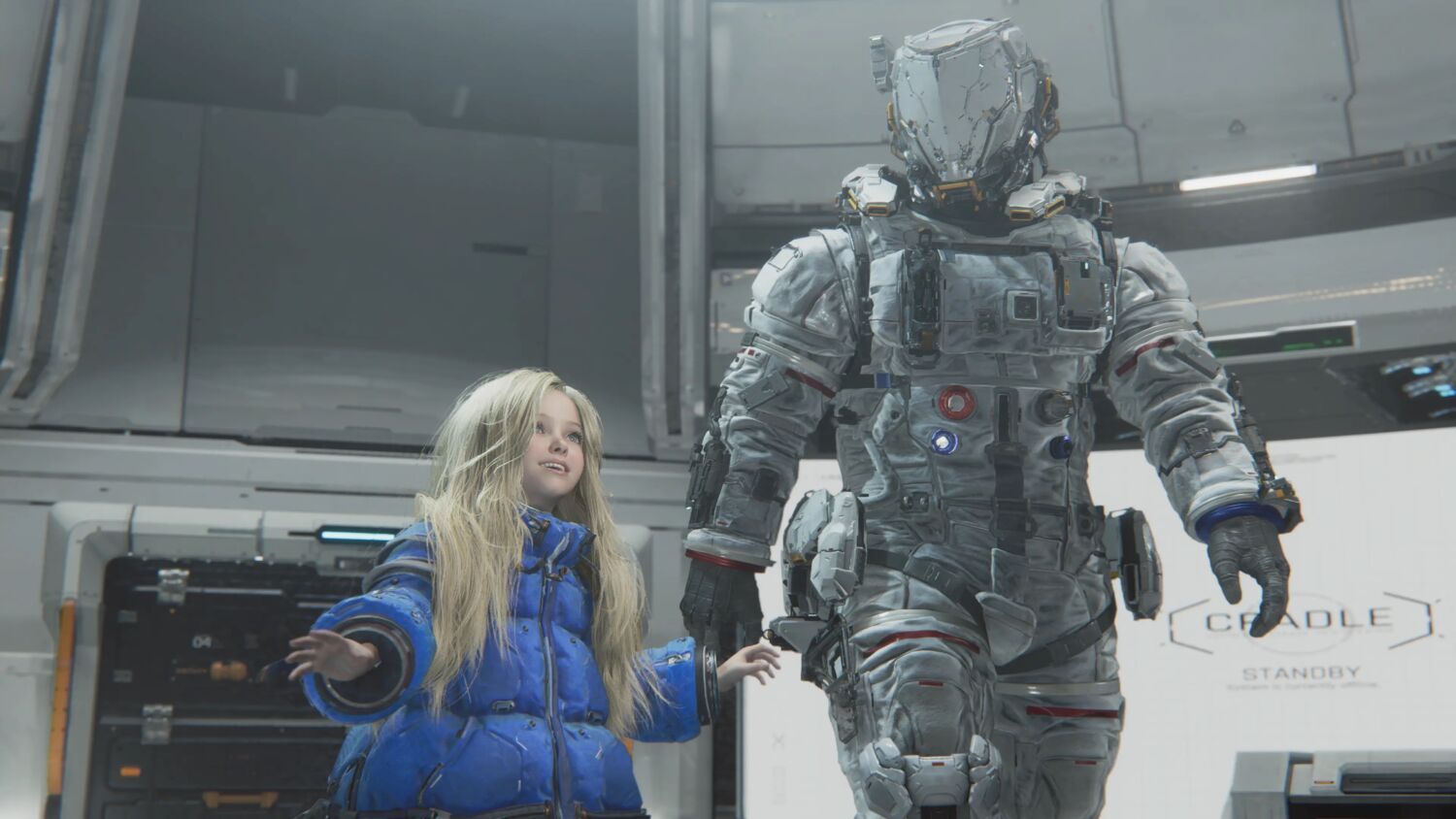
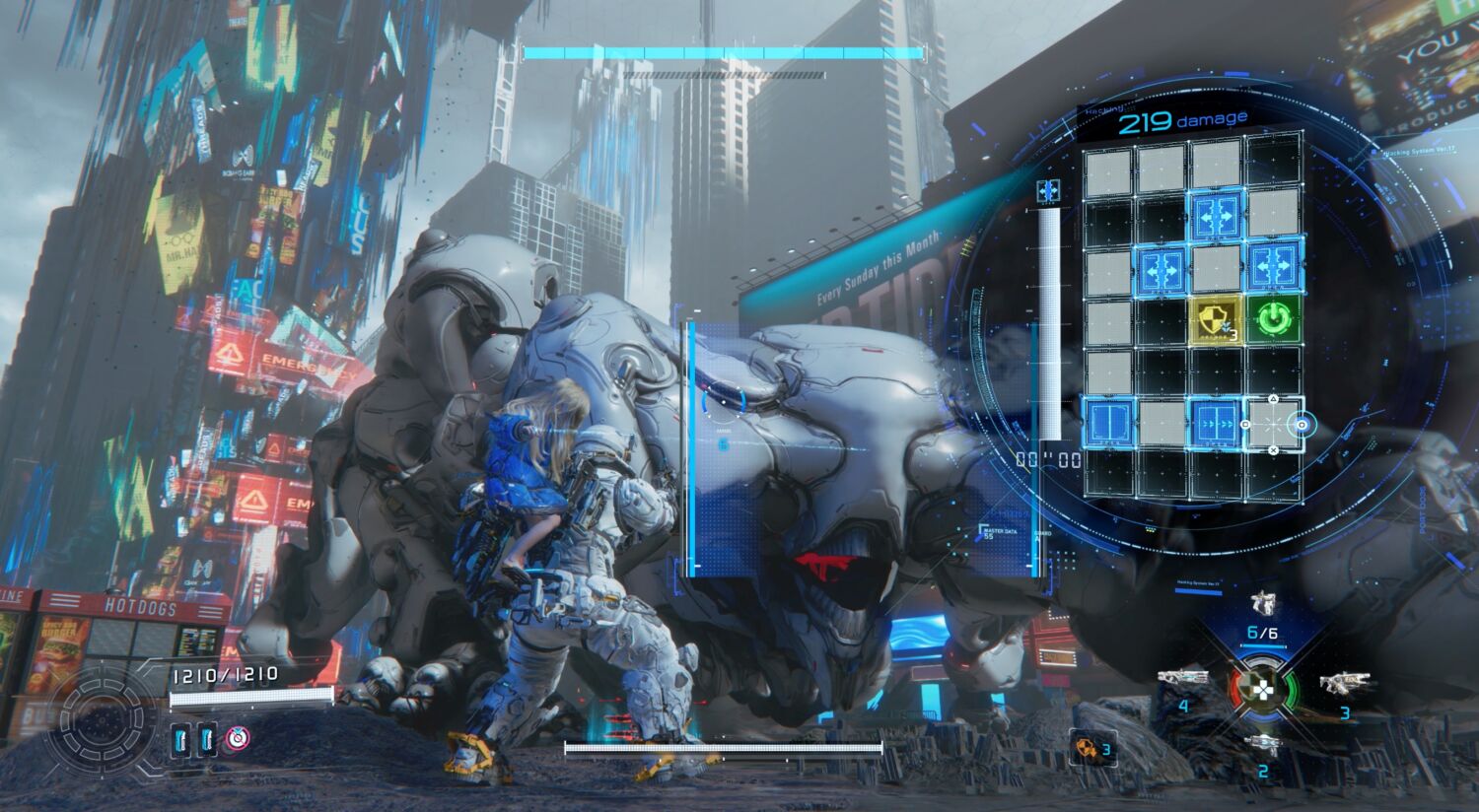
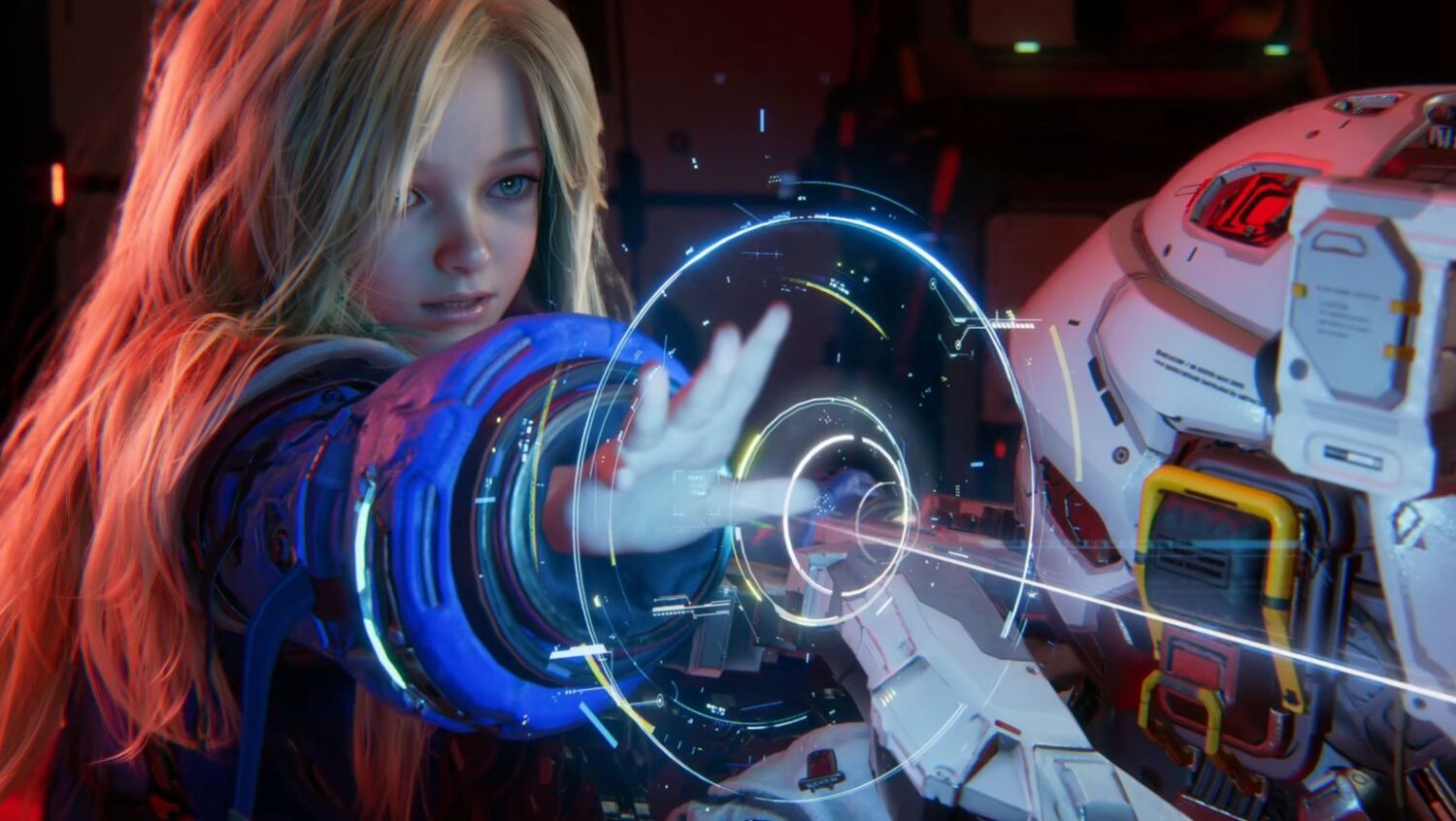
And learning is something that most players, especially those not too familiar with the third-person shooter genre, will have to do pretty quickly, as Pragmata features one of the most complex and unique core gameplay systems in recent memory. We’ve already covered the basics of its hacker/shooter loop in our early game preview, but the gist is that every enemy in the game is protected by a near-impenetrable armoured shell, and to do any form of effective damage, players must first utilise Diana’s hacking abilities to “open” their defences via a grid-based puzzle mini-game.
The kicker here is that everything happens in real-time, which means players will need to use their controller’s face buttons (or their mouse cursor on the PC) to navigate an icon through various nodes on a grid while simultaneously watching enemy placements and movements to avoid incoming attacks. With multiple systems and controls to manage during every single combat encounter, things can get frenetic fast, especially since puzzle grids get bigger and more complex as the game progresses, and enemy attack patterns get more unpredictable.

Truth be told, this unique system might not sit well with everyone at first, but once players overcome the initial learning curve, the puzzle-combat hybrid system is actually pretty intuitive and adds a layer of unpredictability to every encounter. Puzzle grids don’t just differ between enemy types, but the locations of damage-dealing nodes are also randomised, and are re-generated when taking damage or failing a hack.
This keeps things consistently fresh, and with the addition of limited-use special nodes that grant buffs, or error nodes that immediately fail a hack, being added as Hugh and Diana encounter more dangerous foes throughout their journey, this further adds to the intensity of even basic combat encounters. At any moment, the pair can be faced with large android groups consisting of multiple fodder “Walkers” with basic puzzle grids and defences, enemies that shoot from afar, or tankier robots with powerful AoE attacks all at once, making positioning, enemy awareness, and a quick puzzle-solving finger vital for survival. It gets intense, yes, but it’s also a consistently engaging and rewarding experience.
Of course, the pair aren’t powerless against the growing threat, as Pragmata drip-feeds the player a steady stream of new weapons and power-ups every step of the way. Apart from his trusty basic sidearm, Hugh will also gain access to multiple weapons within three categories – offensive ones such as the sniper-like Charge Piercer that sacrifices firing speed for massive damage at range, defensive tools such as a deployable net that traps foes in place, or a Riot Blaster that knocks them down, and tactical tools that can control the battlefield, such as a decoy hologram to draw attention, or drones that attack enemies automatically.
Apart from weapons, the game also features a traditional upgrade system to beef up Hugh’s health, the effectiveness of his basic sidearm, or Diana’s hacking abilities, alongside the aforementioned special node system, to which there are dozens of unique hacking abilities to unlock, such as ones that enable enemy possession or disable their movement for a set time. Finally, there’s also a mod system, allowing Hugh to find and equip a select number of traits that can improve his offensive, defensive or hacking abilities.
Attaining these upgrades ties directly to Pragmata’s exploration system. Set within the massive Cradle moon station, the game plays out on multiple mostly-linear areas with environmental puzzles spread throughout and multiple paths for optional exploration. In between these levels, players will be directed to the Shelter, the game’s hub area, where players can outfit themselves for the journey ahead.
The Shelter doesn’t serve as just a glorified equipment menu, however, as here is also where players can build up the relationship between Hugh and Diana. In their travels, players can find and obtain REMs (Read Earth Memory), virtual representations of items on Earth, such as old-school TVs, slides or even outdoor installations like tree swings or sandcastles, allowing Hugh to then print them out back at the Shelter for Diana to play with. This not only serves as a heartwarming way to see Diana interact with such novelties (at least for someone who has only known the confines of the space station), but it also awards gameplay benefits via Cabin Coins.
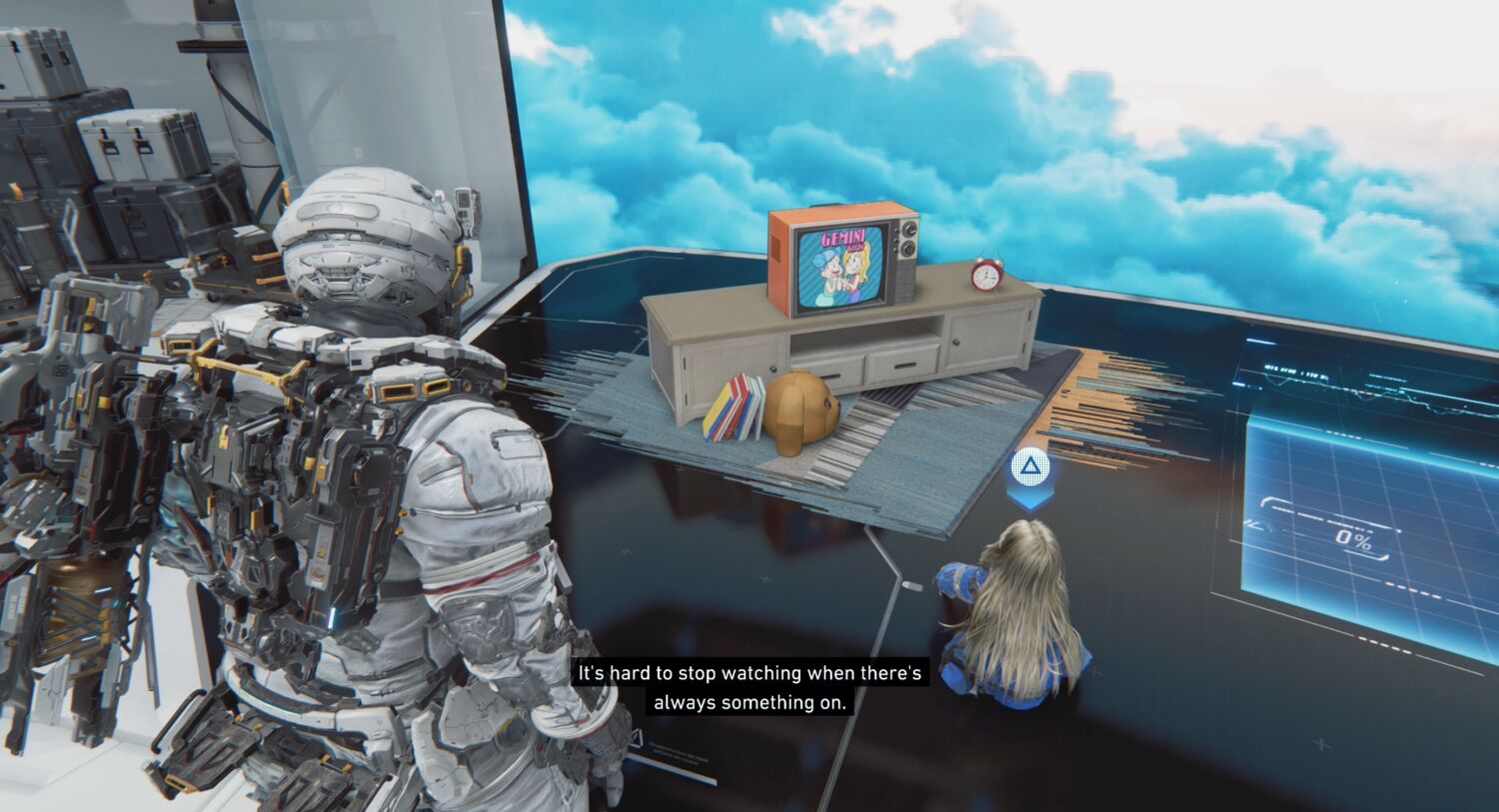
These coins can then be cashed in via its namesake, Cabin, the friendly Shelter robot caretaker, and used to unlock sections of a Bingo-like stamp board for useful rewards like additional health stims, Red Zone key cards to unlock dangerous sections of certain levels that house tough combat encounters with big rewards at the end, or outfits to dress up both Hugh and Diana.
Outside of that, the Shelter is also the place where the pair can enjoy some downtime and engage in conversation, allowing Diana to learn from Hugh’s insight into the wider world or reflect upon the game’s events. Hugh can also participate in a charming hide-and-seek mini-game with Diana, offering more reasons to take a break from the action other than just stocking up on items and upgrades.

Overall, it’s an excellent gameplay loop that helps cement the fact that not all games need an expansive open world filled with things to see and side missions ot complete to remain engaging, and harkens back to the glory days of linear, tightly crafted 12-hour single-player experiences that don’t overstay their welcome.
Pragamata’s gameplay systems aren’t perfect, however, as some design decisions leave much room for improvement. Take weapons, for example, as with such a high-tech sci-fi world on offer, it’s disappointing that all the game’s main damage-dealing guns end up falling under generic video game categories like shotguns or missile launchers instead of utilising the game’s themes of 3D printing to craft something more unique. Hugh’s main sidearm also operates on a gradual bullet-charging feature instead of a traditional magazine reloading system, and since bullets refill one by one, the downtime between landing shots and dealing damage can sometimes be jarring.
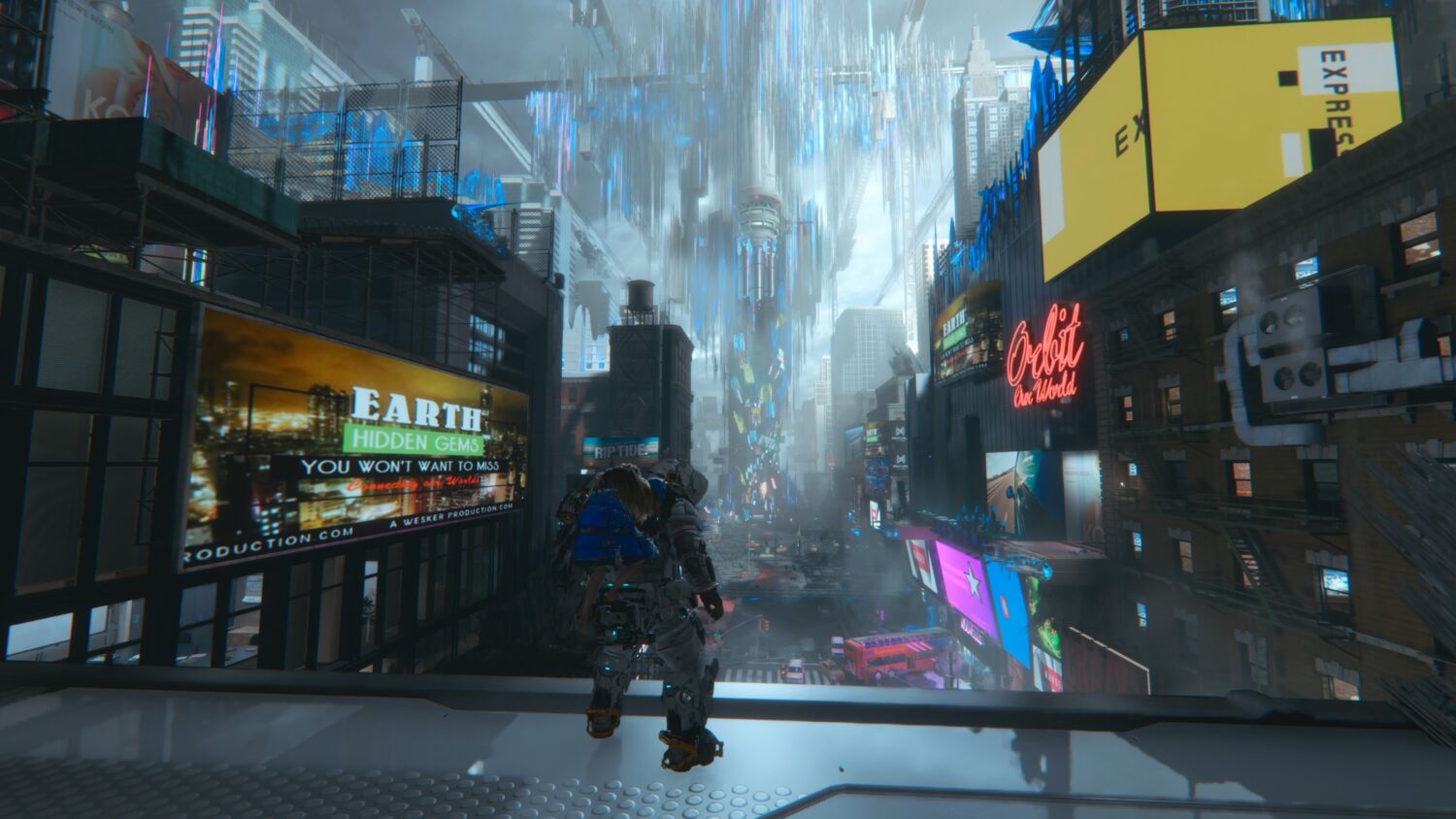
Exploration isn’t as intuitive as it could be, too, as the game does feature a Metroidvania-esque backtracking system for additional upgrades and currency, but its in-game map is sorely lacking, providing a simple overlay of the map with just the total number of collectables listed instead of more detailed layouts of explored paths, meaning backtracking and trying to remember where the previously-blocked paths where can end up being a frustrating affair, especially for completionists.
While critiques of Pragmata’s gameplay are minor and mostly just nitpicking, the same unfortunately can’t be said about its visuals, which leave much to be desired overall. Basic textures look decent from afar, but their low-resolution nature, especially those seen on Hugh’s space suit or the metallic armour plating seen on most enemies, is extremely noticeable up close, such as during the game’s many cutscenes.
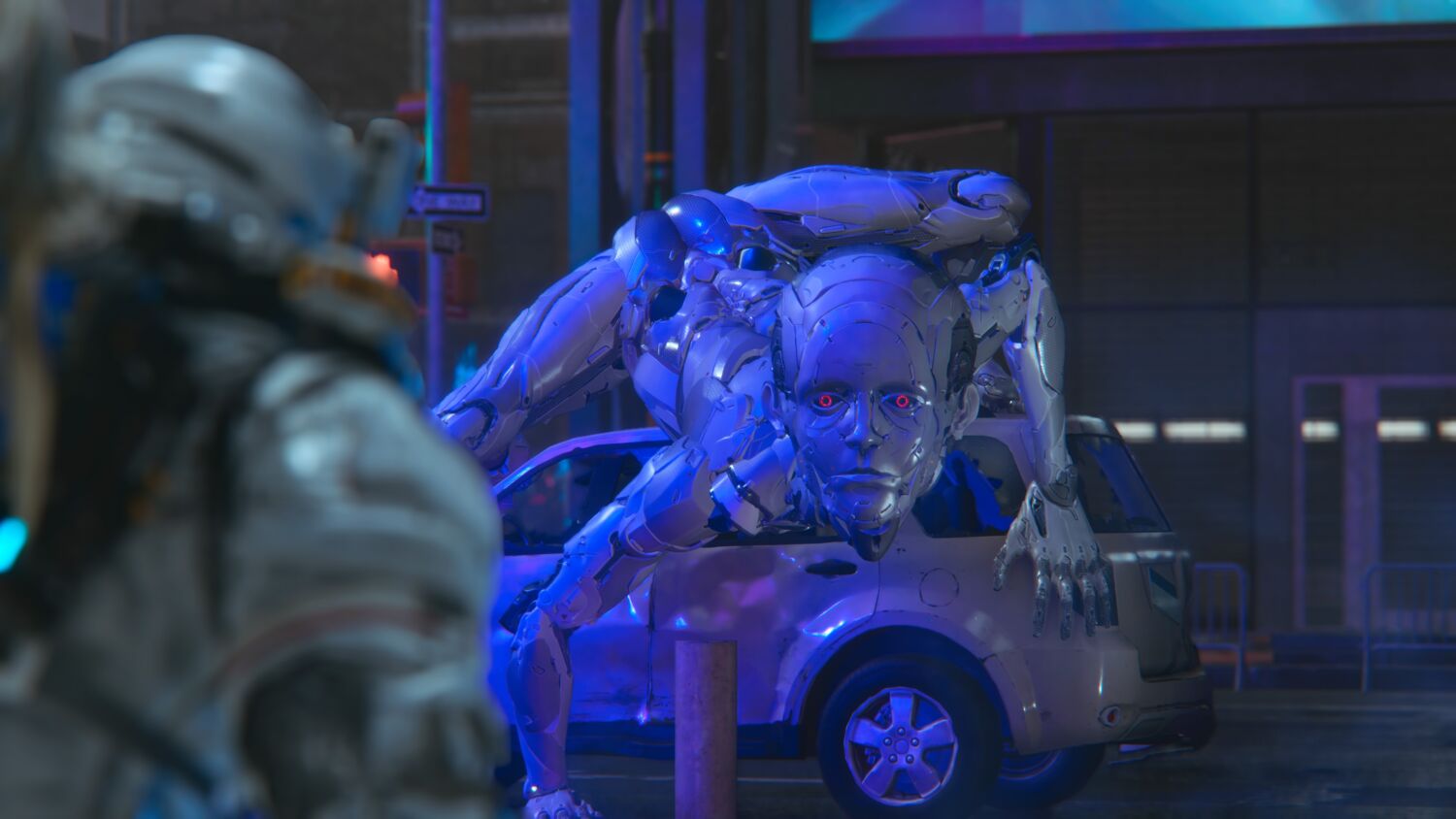
The game is also built on Capcom’s proprietary RE Engine, meaning it brings many of the same faults seen in other games (like the modern Resident Evil titles) that use it, such as notable upscaling artifacting, washed-out reflection quality, especially on metallic surfaces, and blotchy, low-resolution shadows.
The apparent upside to this is that the game runs near-flawlessly on the PlayStation 5 Pro. Throughout our entire 12-hour playthrough on Default Mode (with a further option for High Frame Rate mode that uncaps the FPS in exchange for a lower resolution), the framerate only dipped from its locked 60fps in one brief instance when particle effects were firing on all cylinders. This tradeoff, while not ideal, still ends up being the preferred outcome over the opposite, especially since Pragmata demands split-second decision-making that benefits from fluid performance. The base PS5, on the other hand, has two traditional graphics modes, a performance mode which mostly sticks to its 60fps target, and a resolution mode that averages around 50fps.

It’s rare nowadays for any gaming studio to take risks and deviate from industry trends, and while not perfect, Pragmata absolutely smashes it out of the park. With such a fundamentally basic yet utterly game-changing hybrid gameplay idea, complemented by one of the most endearing companion characters of the modern gaming generation, Capcom has struck gold here, and hopefully, this marks the start of a fresh, long-running IP for the studio, and the birth of a new “mascot” alongside Mega Man and Leon S. Kennedy.
GEEK REVIEW SCORE
Summary
Capcom has already crafted something special with Pragmata’s original hybrid puzzle-shooter concept, but adding a lovable companion character into the mix to carry its story through? Pure video game making gold.
Overall
8.7/10-
Story - 9.5/10
9.5/10
-
Gameplay - 9/10
9/10
-
Presentation - 8/10
8/10
-
Value - 8/10
8/10
-
Geek Satisfaction - 9/10
9/10

Kevin is a reformed PC Master Race gamer with a penchant for franchise “duds” like Darksiders III and Dead Space 3. He has made it his life-long mission to play every single major game release – lest his wallet dies trying.