
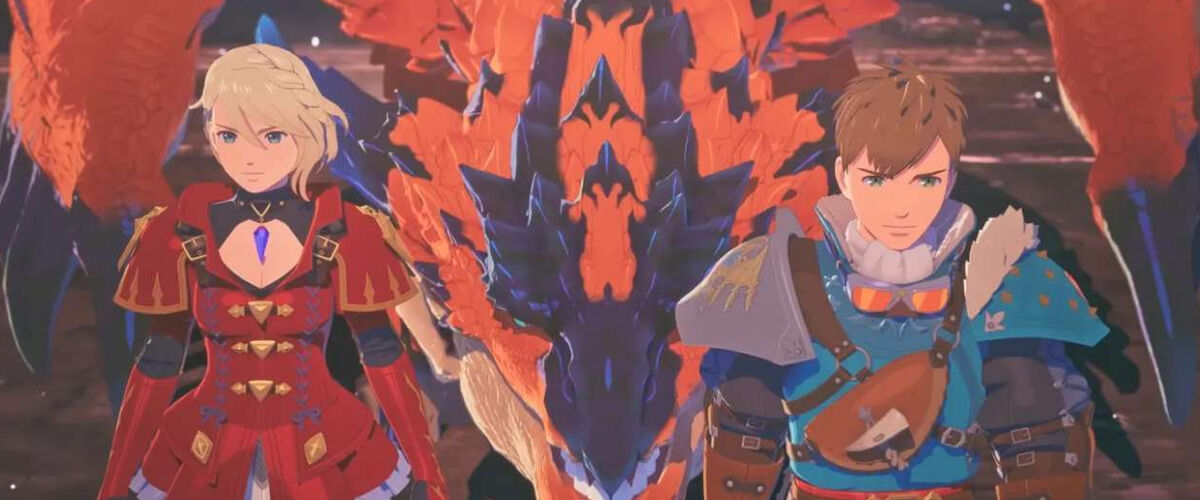
There’s a lot of love for Capcom’s Monster Hunter franchise, and with good reason, but the complexity of its systems and steep learning curve may be daunting to some. On the surface, the gameplay loop sounds straightforward – hunting monsters (it’s in the name, after all), chipping away at their body for parts, crafting and upgrading gear to defeat larger threats, and repeating the process over and over again. But between the unique behaviour of each beast, weapon-specific movesets, intense resource management, and the lack of comprehensive onboarding, it can be difficult to keep up with the juggling act.

While recent entries, including 2021’s Monster Hunter Rise and Wilds, have embraced the shift to accessibility, the gap persists for those unaccustomed to the action genre or who aren’t the biggest fans of the grind. Enter the Monster Hunter Stories sub-series that flips established tradition on its head, putting players into the role of a rider who befriends monsters, or Monsties, by stealing eggs and hatching them.
The most prominent difference, however, is the revamped gameplay structure. In place of real-time combat and carefully-timed attacks, it introduces a turn-based battle system that operates on a rock-paper-scissors framework: Power triumphs over Technical, Technical wins against Speed, and Speed counters Power. Both the rider and their Monstie will attack during the player’s turn, and if the character targeted by an enemy attempts to strike it, a Head-to-Head occurs, pitting their two attacking types against each other, with the dominant type emerging victorious.

All of these core elements return in Monster Hunter Stories 3: Twisted Reflection, the most ambitious entry in the spin-off series to date. In many ways, it feels like a homecoming for returning veterans, but the addition of new and improved mechanics elevates it to a level that eclipses its predecessors. As observed from a hands-on preview, the sequel feels fresh and isn’t afraid to embrace the best parts of its identity, giving it enough distinctive flair to stand on its own two feet. Or more, if you count monster limbs.
Even in the opening moments, it makes no secret of a more mature, serious tone. The latest adventure follows a rider, whom the player controls, and their twin Rathalos, which hatched amid an ecological disaster called “Crystal Encroachment” and mounting tensions between the warring kingdoms of Azuria and Vermeil. To combat the threat and improve the fractured relations, you, also the heir to Azuria, join forces with Eleanor, the princess of Vermeil, on a journey seemingly centred on the existence of Rathalos, a species thought to be extinct.

Gone, too, is the silent protagonist of before and series staple Navirou. The main character is now voiced, with a more authentic and nuanced portrayal that lends itself well to self-expression and a deeper sense of emotional connection. Rudy, the player’s trusty Felyne companion, also has its own personality, and the combined voice work brings an immersive touch to animated cutscenes and heart-to-heart moments.
Unlike some of its RPG contemporaries, Monster Hunter Stories 3: Twisted Reflection doesn’t offer voice variations, but its character creator goes beyond bare-bones customisation with sliders for specific features, such as skin tone, eyebrow colour, and cosmetics. It can be accessed from the Ranger’s base, which includes basic wardrobe changes for Rudy and all party members, over the course of the game, although the inability to personalise the childhood look is a bit of a bummer, especially since the tab is already nested within the menu.
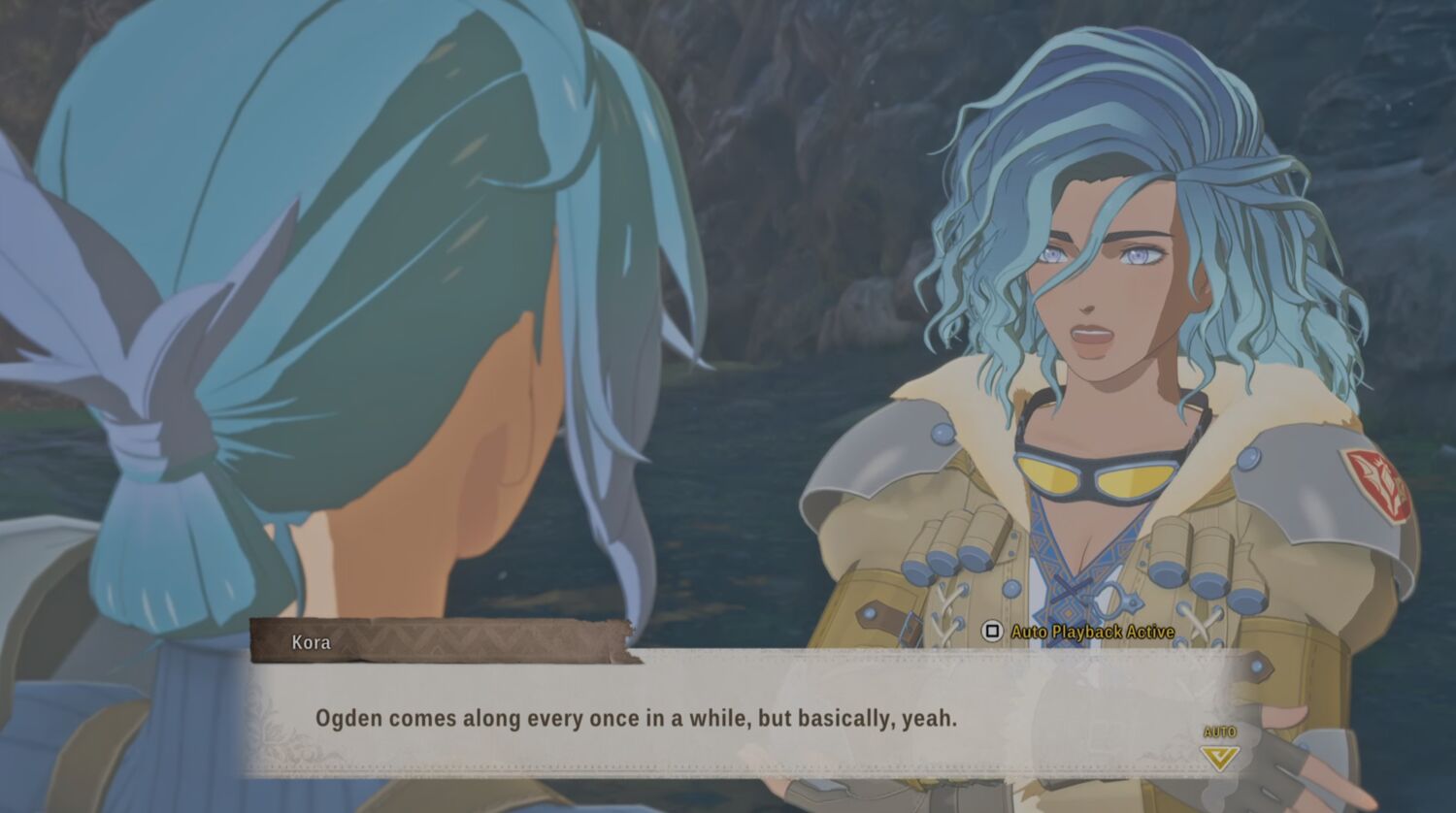
As captain of the Rangers, the protagonist is often accompanied by their squadmates – Simon, Thea, Gaul, Ogden, and Kora – in addition to Eleanor, and each brings a different flavour to the overall team dynamic. Kora, for instance, is a cool-as-cucumber and reliable presence, while Thea is a youth-sized bundle of enthusiasm who’s just happy to be out on the field. The banter between them also feels more organic, and it helps that their individual outings (known as Side Stories) delve deeper into their respective motivations and personalities, some of which are more serious in tone than others.
Completing Side Stories unlocks new skills, weapon options, and Monstie partners for the characters, who can be swapped out at any time. Depending on the pick, tag-team attacks and party synergy will play out differently in combat, which may, in turn, affect your own equipment loadout. Like before, skills and attack types (slashing, blunt, or piercing) are determined by the weapon used, three of which can be wielded at a time and switched around to exploit monster weaknesses, and target or sever parts. Not all of the 14 weapons from the mainline games are available in Monster Hunter Stories 3: Twisted Reflection, but the selection pool is sizable enough to spice things up, if needed.
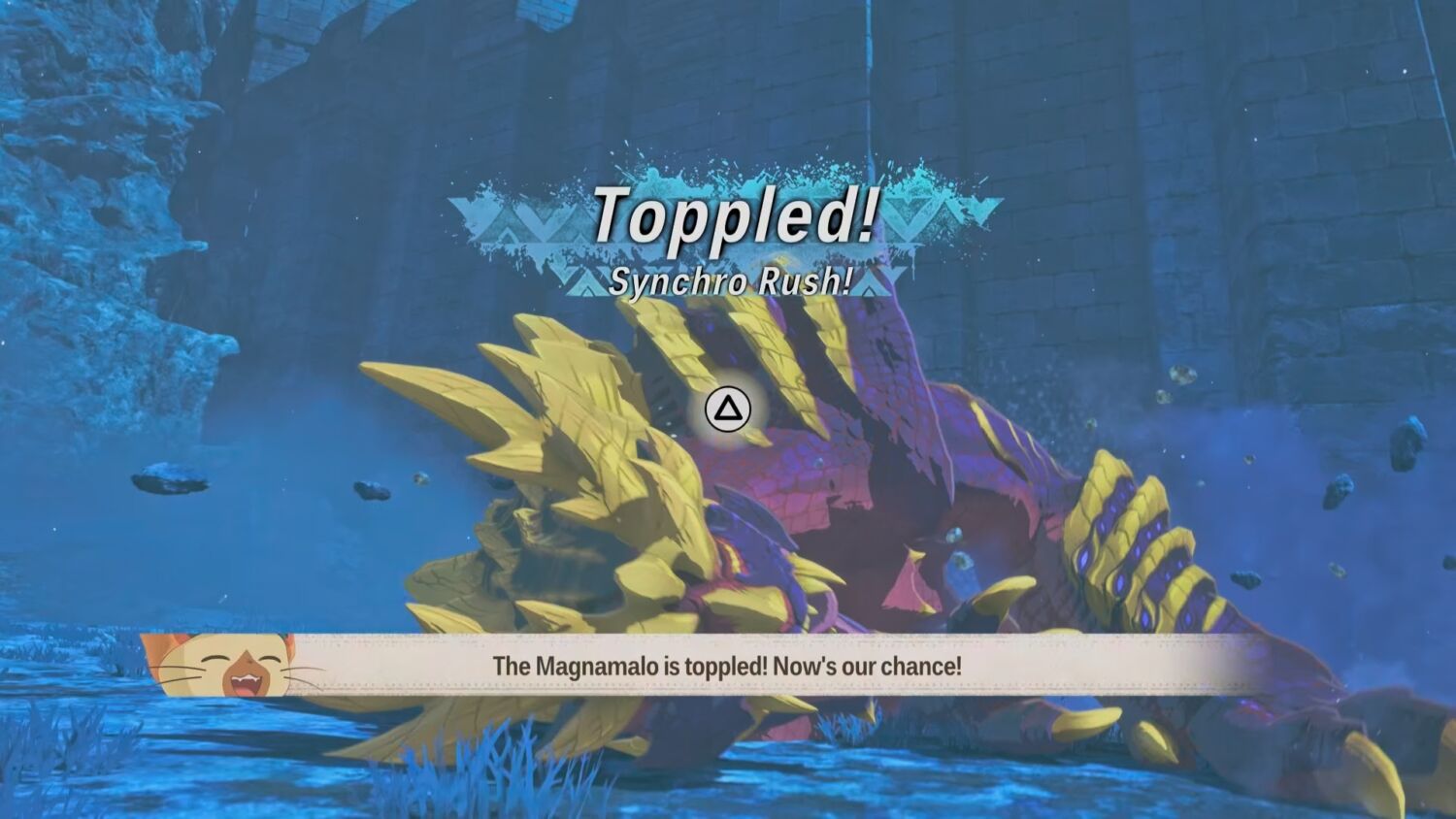
Not all attacks are built the same, either. Alongside health-depleting standard strikes, specific attacks can be chipped away at an enemy’s Wyvernsoul gauge, a new mechanic that, when broken, leaves the monster in a staggered and fatigued state. Drain it completely, and it will topple, opening up a window of opportunity to initiate a Synchro Rush, where the entire party unleashes devastating damage. The secondary benefit is that it rapidly fills up the Kinship Gauge, bringing players one step closer to activating Kinship Skills, now updated with enhanced flashy animations, and it’s always satisfying seeing everything come together.
The other major addition takes the form of Feral Monsters, which have crystallised parts called Blightstones on their body. Simply applying brute force won’t be sufficient, however – while breaking them weakens the beast, an ill-timed attack can trigger powerful counterattacks, and rage phases disable weaknesses. The unpredictable nature of these encounters requires some getting used to, as it introduces yet another layer of strategy, but here’s the good news: companions who lose all three hearts will now return after a few rounds. No more game over, baby!

Should the battles prove challenging, Monster Hunter Stories 3: Twisted Reflection presents several familiar workarounds, starting with cooking meals. Food has always been a core part of the Monster Hunter experience, and here, Eleanor is responsible for whipping up mouthwatering dishes that grant temporary stat boosts or passive buffs (keep an eye out for the gorgeous animated sequence!). Upgrading armour and gear is next, with rarer, better materials needed for higher upgrade levels, followed by the newly introduced Decorations, the game’s take on gem sockets, a recurring feature in RPGs, that can modify attacks, offer passive bonuses, increase elemental resistances, and more.

Monstie partners, too, are customisable. Marking a return to monster-raising eugenics, The Rite of Channeling allows genes, which determine a Monstie’s skill, attack, move, and element, to be transferred from one critter to another. Lining them up in a row of three (either vertically, horizontally, or diagonally) unlocks an elemental or non-elemental Bingo Bonus, depending on typing, so there’s a fair bit of freedom to mix-and-match combinations.
A fresh touch to the formula is Egg Skills, elemental abilities tied to another new feature and the main part of a Ranger’s responsibilities: Habitat Restoration. In Monster Hunter Stories 3: Twisted Reflection, finding Monstie eggs in dens and hatching them are still part of the gameplay loop, except they can now be released into regions associated with a particular element. What this means is that critters are no longer assigned to their natural element; setting a Tobi-Kadachi free in a water habitat, for instance, adds a second water attribute to the standard lightning.
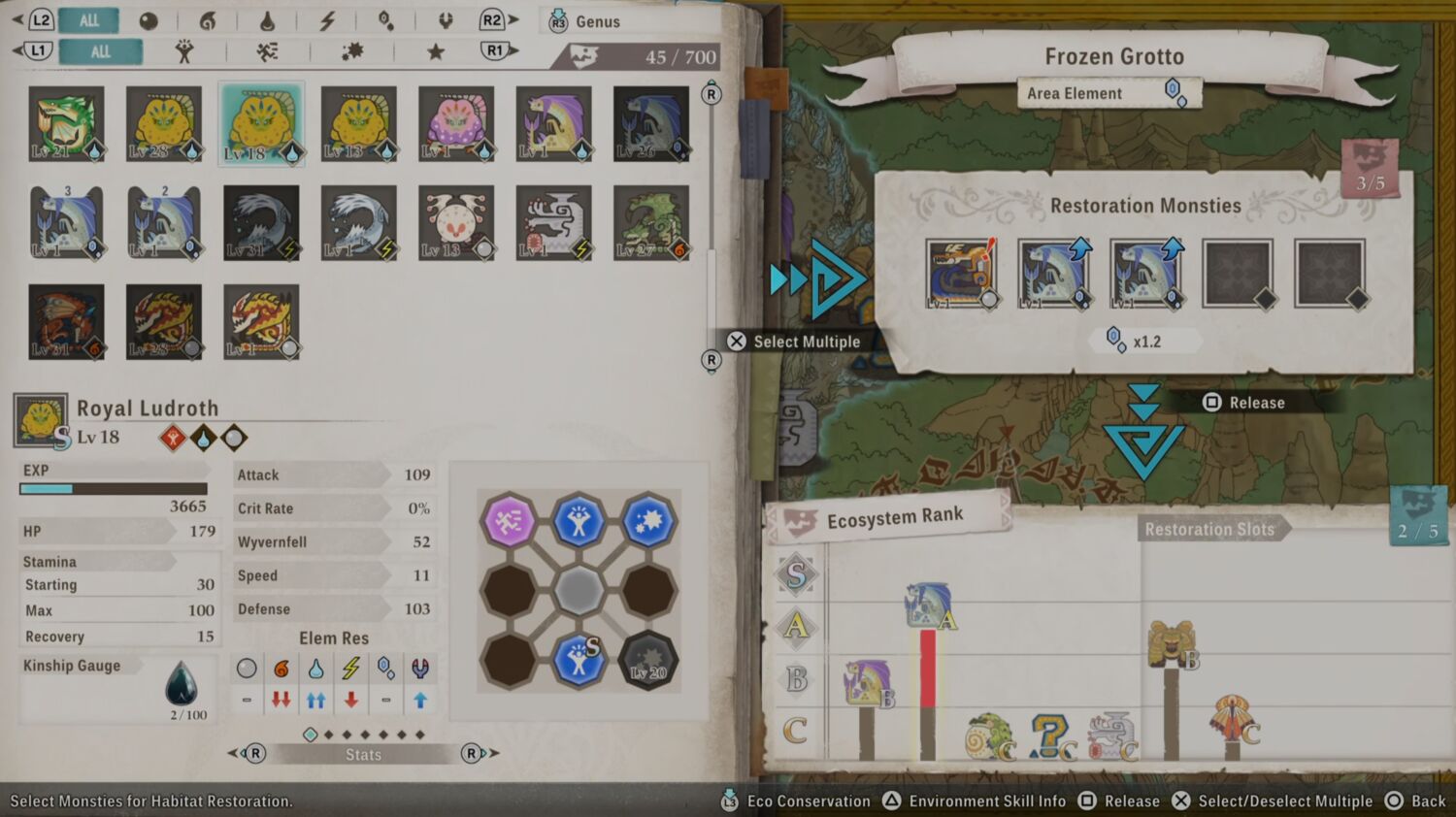
The more beasts released back into the wild, the higher the ecosystem rank, and that will factor into egg quality, environment skills, and related traits. Players have to do the legwork first, though, as Habitat Restoration for a region is only available after driving the Invasive Monster – aggressive, empowered beasts that disrupt ecosystems – back to its den, allowing the protagonist to sneak in and steal the endangered egg it was guarding.
As expected of a Monster Hunter spin-off title, Twisted Reflection promises a slew of familiar creatures, from the previously mentioned Tobi-Kadachi and Gravious, whose roots go all the way back to the very first game, to the Yian Kut-Ku and Monster Hunter World’s Magnamalo. Assigned to the Power, Speed, or Technical attacking types, they are equipped with their own movesets in battle; outside of it, Monsties offer various means to traverse the world – the livelist and most open it’s ever been.

Where the Rathalos can glide through the air and use updrafts to reach greater heights, the Canyne has wall-climbing and burrowing capabilities. Similarly, the Ludroth’s swimming ability proves handy for water navigation, and the upcoming adventure holds everything together with an intuitive, seamless monster-changing system, also applicable while mid-air. It’s an impressive first for the series that makes exploration enjoyable and liberating, even if the mini-map doesn’t always accurately reflect its actual topography, and despite the lack of information in the quest menu and sometimes, markers on the map for companion stories.
The cel-shaded, anime-styled presentation of Monster Hunter Stories 3: Twisted Reflection may be jarring compared to the photorealistic visuals in its mainline counterparts, but it’s no less charming – just in a different way. Although a preview often isn’t representative of the entire package, this hours-long romp with deeper mechanics, versatile customisation, a distinct narrative tone, and smooth navigation appears to be a promising, well, reflection of how high it can potentially soar.

Monster Hunter Stories 3: Twisted Reflection will bow on the Nintendo Switch 2, PS5, Xbox Series X|S, and PC on 13 March.
Si Jia is a casual geek at heart – or as casual as someone with Sephiroth’s theme on her Spotify playlist can get. A fan of movies, games, and Japanese culture, Si Jia’s greatest weakness is the Steam Summer Sale. Or any Steam sale, really.
 Kevin Low