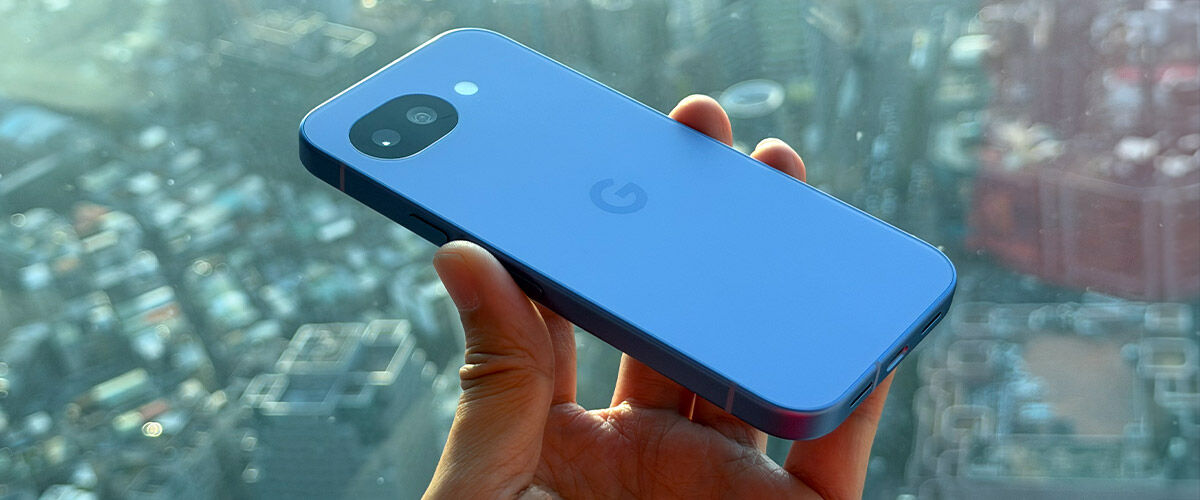
In many ways, the modern smartphone is like a fairytale – where magical elements or enchanted settings transform the lives it touches. Your alarm rings but it’s a gentle tone coming off the watch on your wrist that has been monitoring your sleep cycle. You reach for the phone and before you’ve even made a morning cuppa, it tells you about the important emails that came in, and the meetings you have lined up for the morning. Small alerts also notify you about incoming messages through your chat apps, along with alerts on your phone, be it from your calendar or social media platforms – you’re not really sure where from – but it’s a friend’s birthday today, so you send a morning greeting.
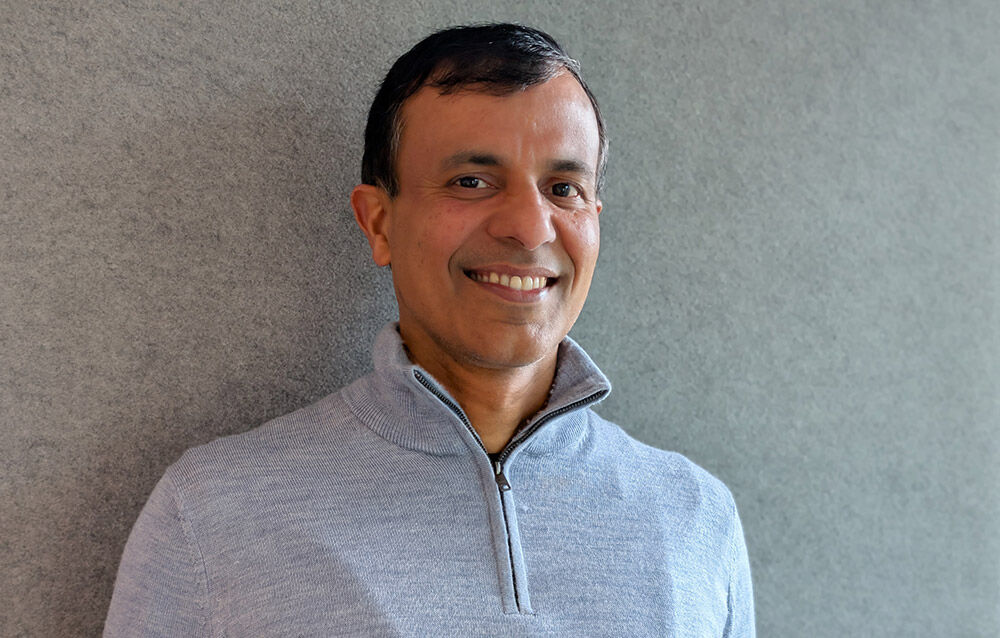
Modern consumers know it’s not magic, but a result from years of hardware and software engineering, mixing electronics, a robust mobile operating system, and the rise in artificial intelligence, and if we were to extend the fairytale analogy a little further, it’s what Venkat Rapaka, Vice President of Product Management for Google’s Pixel Ecosystems, calls the “Goldilocks form factor”. Your smartphone is packed with features that are not too big, and not too small, is capable of almost everything, but it’s also up to each individual to find that perfect fit for their needs.
“It does so many things so well. Entertainment, productivity, connectivity, communication, it’s compute in your pocket,” he says, in an exclusive interview with Geek Culture during an exclusive Pixel Labs Tour in Taipei, Taiwan.
“But I also agree, like I think over time, especially as we are in the Gemini era, I think it can evolve to be a lot, lot more,” he continues.
“One of the trends we are seeing is, how can it be a lot more helpful to you, by understanding the context that you’re in, context around you, and take away some of the distractions and just be much more helpful?”
And he would be the best person to know, having spent two stints with Google, the company behind the powerful and defining Android operating system, and among the first few to work on the first Pixel when it was first mooted as a series of Google-built devices, a successor to the Google Nexus family of Google-branded devices, the last one which Rapaka also worked on, made with original equipment manufacturers.
And in the last decade, one thing that still surprises him is how much users love the Pixel camera, because of the work put in by the Pixel team since day one, when computational photography was still a wild idea.

“Back then, we were pioneering computational photography to go beyond physics. That was not a thing before we started doing that on the first Pixel,” he recalls, and 10 years later, “it’s surprising and delightful for me that that still means something very unique for Pixel. That our users love our camera, and we still continue to lead the way in what imaging means for a smartphone.”
But even as the company celebrates the 10th anniversary of the Google Pixel hardware family that comprises phones, tablets, watches and accessories, Rapaka believes that the company is only at the beginning of what these devices can do.
Features like Magic Cue, an AI-powered feature that proactively brings up relevant information from within apps, emails, and notes to help with tasks without switching apps, aim to handle the “digital laundry” of everyday life, surfacing the right information at the right moment. Then there is Camera Coach, which detects how users compose a shot in real time and offers simple yet effective guidance, to tilt the camera slightly, or have the user move or even wait for the light, to improve the type of photos taken.
“We’re reaching a point where smartphones can be the true assistant, where they provide you exactly what’s needed the time you need it, and ideally take care of all the other distractions.”
And this philosophy has worked well for the company that provides a suite of services that come together neatly on Android – apps, services, cloud computing, hardware and more recently, Gemini AI (artificial intelligence).
“Ever since Pixel existed, it was always about bringing the best of Google apps and services and AI to everyone,” Rapaka explains. Pixel leans heavily on a full-stack strategy, the best that Google has to offer, including custom silicon like Tensor Processing Units (TPUs) and Google Cloud, all designed to work together with a string of apps and services.
“The investments we’ve been making for many years and that we continue to make on the full stack will actually help us realise that vision in a very uniquely positioned way compared to everybody else,” he adds.
But Google is also bringing Gemini to other handset makers, won’t this dilute Pixel’s edge? Rapaka disagrees, explaining, “Short answer is, I don’t think so, and that’s because I think the DNA of Google is to serve everyone,” he says, pointing to Google Search and Google Maps as precedents that have benefitted millions globally, and are now ubiquitous across dozens of hardware brands around the world. What sets Pixel apart, he argues, is deep integration across Google’s teams.

“There are very few teams that build smartphones that have all of these assets that they can deeply collaborate with,” he notes. From Android to apps to cloud and silicon, Pixel is designed with a long-term view and the decision to build Tensor is a prime example.
“To truly deliver that next level of helpfulness, we have to go further down the stack and make deeper investments.”
But even as companies push the hardware, there’s also the challenge of not using AI as a buzzword to drive demand, as Rapaka is clear that Pixel isn’t about “AI for AI’s sake”. In fact, “the most sophisticated thing about the Pixel’s AI is how rarely you notice it”.
“A user should not think, ‘Is this AI?'” he explains. “It should just be, ‘I’m trying to do something, and I got it done’.”
Looking ahead, Rapaka believes personal computing is on the verge of a major shift, and the phone will play an even bigger role with users, even as some have predicted the death of the mobile device. “I think personal computing is going to completely change over the next few years. It’s already changing around us,” he notes, and the smartphone isn’t going anywhere.
“I actually don’t think the phone will disappear because it’s too capable of a device with too much muscle memory for users.” Instead, more devices, like the smartwatch will join it, even as new device types “built in the Gemini era” will emerge, and workloads will move fluidly between them.

“I might invoke Gemini using my watch, not my phone,” noting that the rise of the smartphone almost two decades ago didn’t mark the death of the laptop.
“Laptop sales have almost doubled since phones were introduced,” so the ecosystem just expanded.
All of this raises a familiar product question, of how tech brands can keep things simple while packing in advanced technology and features, and this, Rapaka admits, is a constant struggle.
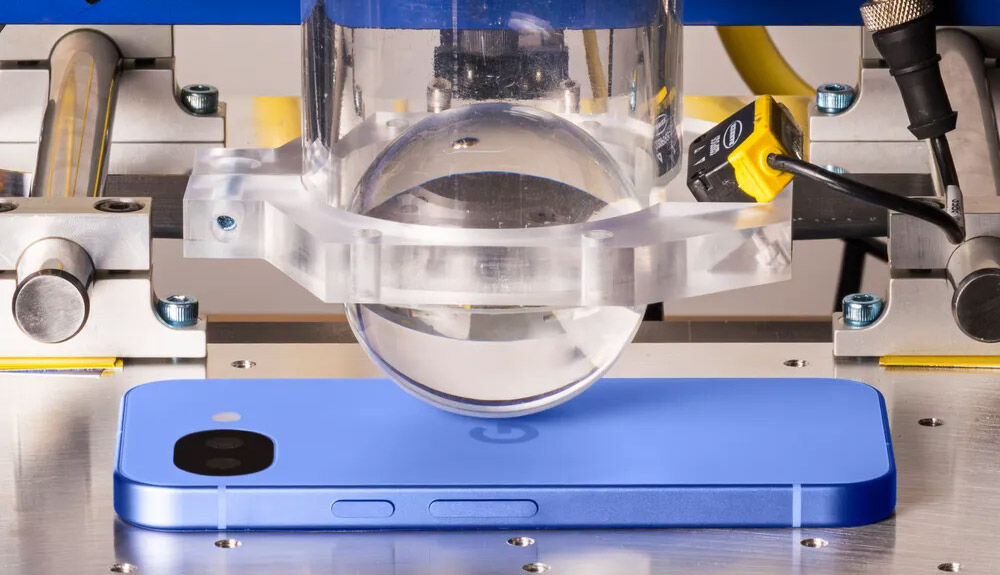
“A lot of times we think of these amazing new capabilities that we can build, and the goal then is, how do you build them in a way that they are seamless, ideally, even invisible to users,” he says. Behind the scenes, that can mean heavy engineering that users never see, like building a foldable device durable enough to withstand years of use, because, as he puts it, “It should just work flawlessly for me for as long as I keep my phone, and it’s okay they don’t know what we did under the hood.”
For Rapaka, success for the Pixel ecosystem comes down to impact, not just specs or geography.
“If you can help and delight more users than we have today, I think I would call that a success,” he says.
@geekculture Take an exclusive sneak peek inside the new Google Pixel Labs in Taipei 🇹🇼 where all the magic✨happens. All the latest Pixel devices, including its upcoming flagship and Google Pixel 10a, undergo rigorous durability and reliability tests within these walls, to deliver on the best Android experience to users every year. #Google #GooglePixel #TaipeiWithGoogle #MadeByGoogle #Tech ♬ Future Technology – Alexiaction
That means “bringing the best of Google in a very simple, helpful, delightful way” across devices, even as he acknowledges that Google still has room for improvement, especially around global availability, where rivals like Apple, Samsung, Xiaomi and Oppo have a head start in launching a key product across multiple markets at the same time. Meanwhile, Google is taking a measured approach.
“We believe in responsibly scaling over time,” he explains. In the beginning, Google Pixel phones were only made available in select countries. Last year’s Pixel 10 shipped in 33 countries last August, though its presence in Asia was limited to Japan, India, Singapore, and Malaysia.
“[With the Pixel 10], we added Mexico to the list of regions that are supported. And over time, we are obviously continuously looking at, how do we continue to provide our products in more markets and sooner? So it’s an ongoing journey for us.”
At the very least, Google is providing a more detailed picture of its plans for Android and its devices in the next decade, one Pixel at a time.

Yonk is a geek who is fortunate enough to have an equally geeky Star Wars fan for a wife, who owns a LEGO Millennium Falcon encased in a glass coffee table as their home’s centre-piece.

 Si Jia