This interview has been edited for clarity.
The significance of two extends beyond a mere numerical count, with its presence long entrenched in language and culture. From a representation of harmony to a tool for expressing duality, its ability to fulfil roles on both ends of the spectrum has become a thematic framework across various media over the years.

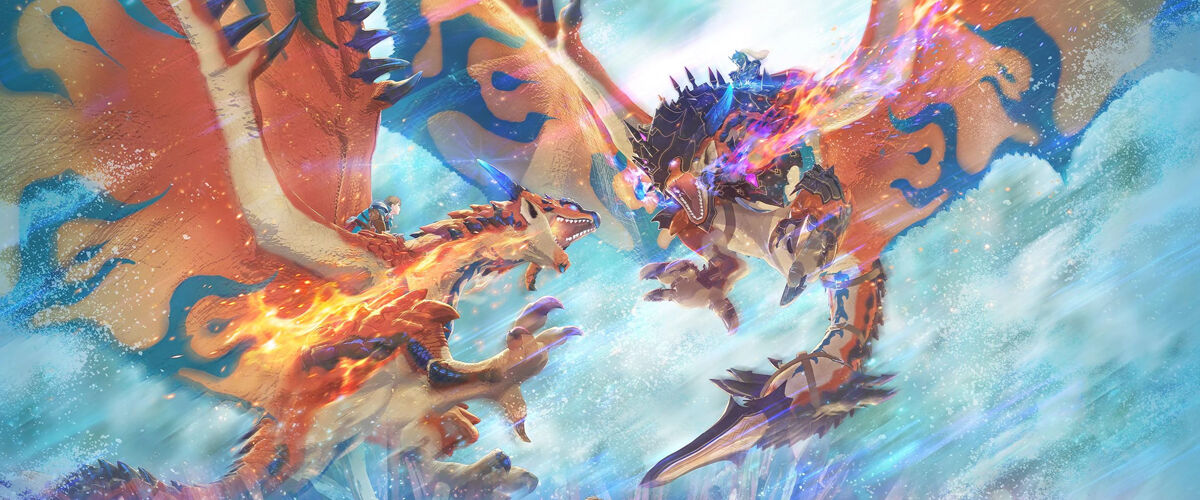
Contrary to the figure in its name, Monster Hunter Stories 3: Twisted Reflection is all about two, too. The latest sequel in Capcom’s sub-series follows a Rider and their Rathalos, an all-too-familiar critter from the franchise, that hatched amid an environmental disaster, referred to as “Crystal Encroachment,” which is threatening the warring kingdoms of Azuria and Vermeil. Together, the player joins forces with Eleanor, the princess of Vermeil, to combat the calamity and improve relations between the fractured nations.
While hardly a new concept, the dichotomy of reconciliation and opposition marks a first for the turn-based outing, which retains its spin on befriending monsters, or Monsties, and fighting alongside, not against, them. Unlike the previous instalments, however, the Rathalos is introduced here as a thought-to-be-extinct species, until one was born from a crystalised egg. Except it’s not a sole offspring, but twins.
In an exclusive virtual interview with Geek Culture, director Oguro Kenji shares that he couldn’t remember where the original idea came from, but a conversation about the potential interest of having two Rathalos hatching from the same egg planted the seeds for this narrative pivot.
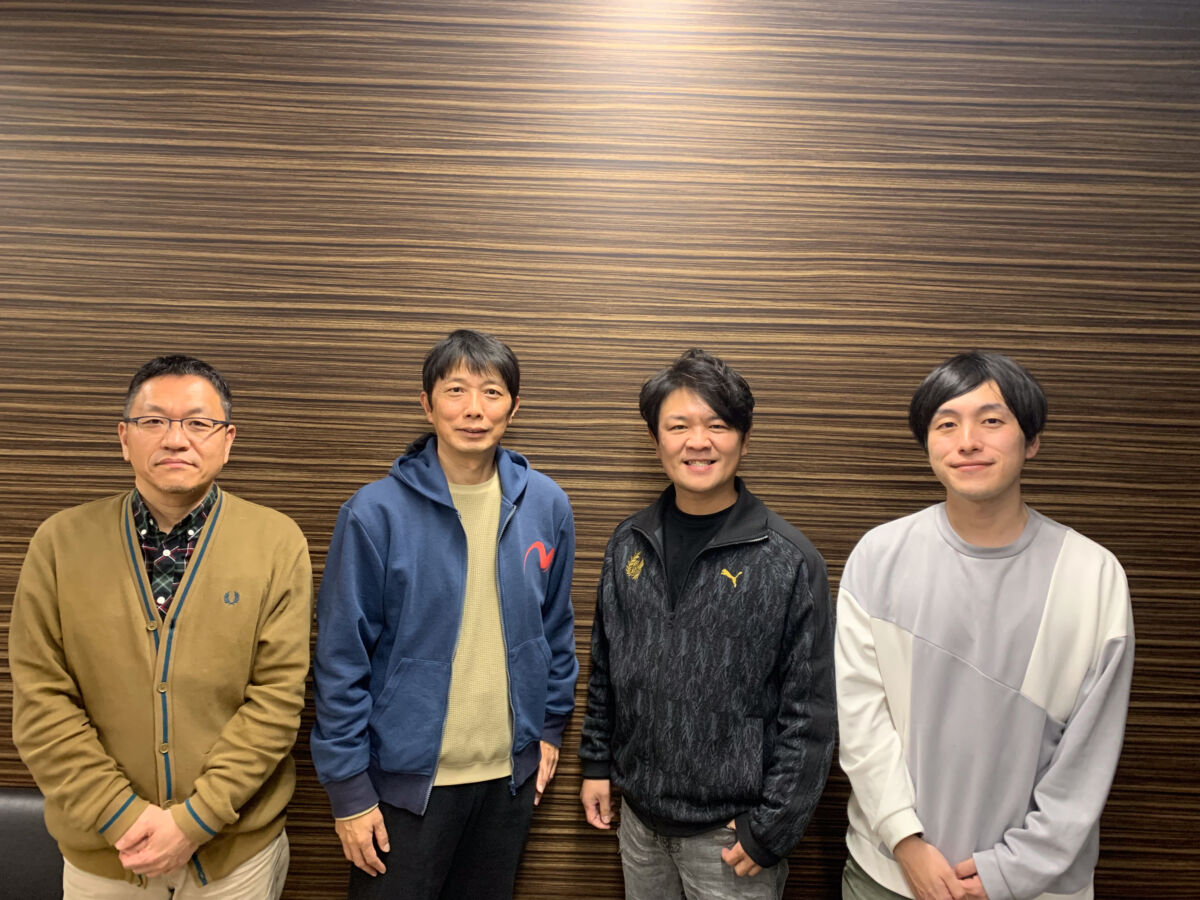
“Since there are two of everything, we thought it might be interesting if the story centred around the elements of having two. Based on that course, that’s how we planned out the rest of the story,” he adds.
The other complementary force comes in the form of partnerships. Alongside combat tweaks, including improvements to its existing rock-paper-scissors battle system, Monster Hunter Stories 3: Twisted Reflection presents more strategic options to win enemy encounters, one of which is Synchro Rush. A tag-team attack that players can perform after toppling a monster through various means, it dishes out a great deal of damage once a quick-time event is pressed, causing the Kinship Gauge to fill significantly.
It serves as a welcome adrenaline boost for the more leisurely gameplay, and includes a brief animated sequence that changes based on the selected companion and their respective Monstie. To create maximum impact, both aesthetically and in terms of feel, the team focused on nailing down the designs of the beasts.
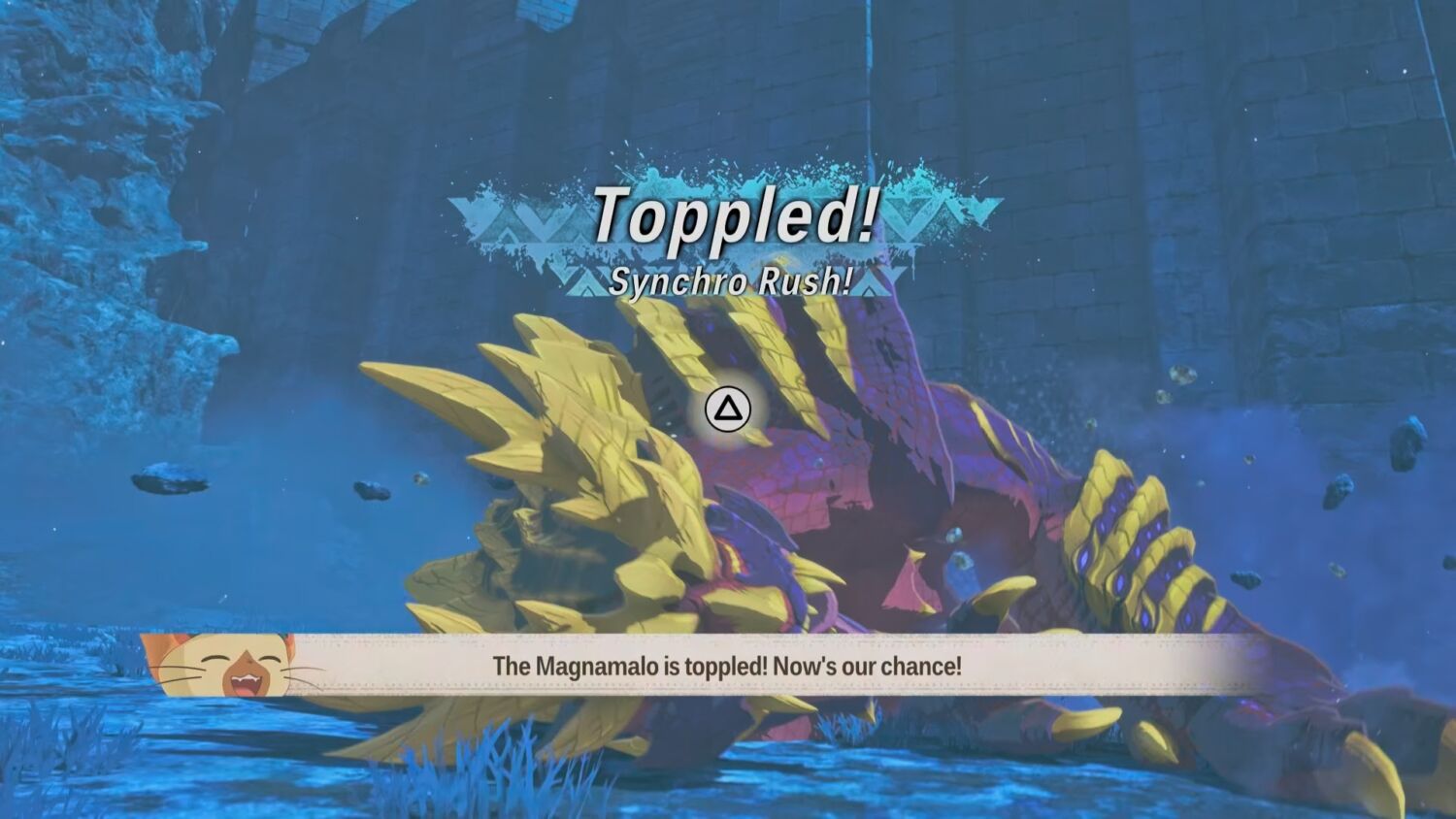
“As all your party members are going to be attacking together, it’s important that Synchro Rush feels like a combination attack,” explains art director Kawano Takahiro. “Of course, the most important thing is to make sure that the monsters are cool and awesome, and the visuals need to be based on that.”
The final touch is a “nice and concise” cutscene, which, alongside the newly enhanced Kinship Skill – a cinematic ultimate move unleashed while riding a Monstie – animations, evokes a greater sense of grandeur. Indeed, Hunter Stories 3: Twisted Reflection is bigger in scope, with Kenji highlighting the expanded setting from “within a village” to “within an entire city”.
This ambition carries through to a departure from series tradition, where storytelling will take a turn into darker, more mature territory, starting with the loss and destruction brought on by war. In doing so, more adventure elements can be introduced to the game, cementing the role-playing game (RPG) experience further.
“I really wanted players to understand the growth of the Rider into an elite or veteran Rider,” executive producer Tsujimoto Ryozo reveals. “When you think about how to build a world in an RPG, you also want to make sure there are elements such as growing together with your comrades, as well as going on a big and grand adventure.”

Kenji tacks on, “In the earlier entries, you had a senior who was teaching and helping you grow, but here, you’re the one teaching the younger, new members, and that’s where you feel the growth.”
In fact, progress applies to the game world in more ways than one. Like its predecessors, Monster Hunter Stories 3: Twisted Reflection features various critters across the franchise, including the Tobi-Kadachi, which debuted in 2018’s Monster Hunter World, Magnamalo (Monster Hunter Rise), and Gravious from the first game. What’s different here is the ability for monsters to be born with dual elements – again, the number ‘2’ comes to mind – through Habitat Restoration, achieved by finding eggs for the desired Monstie and releasing them into the region associated with a particular element.
Essentially, this means hatching Tobi-Kadachi eggs and setting them free in a water habitat can unlock a secondary water attribute, in addition to the standard thunder. Colouration, modelled after the type of habitat and ecosystem they belong to, serves as the primary method of identification, while natural-element monsters will look just like fans remember them, complete with anime shaders, cel-shading, and all.

The more dangerous threat, though, is Feral Monsters, beasts with Blightstones on their body, that, when attacked, trigger a powerful counterattack. It’s a reminder that although Monster Hunter Stories focuses on connecting with monsters, the hunting spirit is never really gone, and lead game designer Wakahara Daisuke sums it up well:
“The most important thing would be the feeling of being a rider and going on expeditions to hunt monsters, so it was very important for us to bring these elements to the game.”
Monster Hunter Stories 3: Twisted Reflection launches on 13 March for Nintendo Switch 2, PS5, Xbox Series X|S, and PC.
Si Jia is a casual geek at heart – or as casual as someone with Sephiroth’s theme on her Spotify playlist can get. A fan of movies, games, and Japanese culture, Si Jia’s greatest weakness is the Steam Summer Sale. Or any Steam sale, really.
 Kevin Low