
Let’s get one thing out of the way – Clive Barker’s Hellraiser: Revival isn’t for the faint of heart. True to its source material, the supernatural horror franchise, based on Barker’s 1986 novella The Hellbound Heart, marks a video game adaptation that doesn’t shy away from mature themes like sex, gore, and body horror but instead revels in it. In fact, the 2026 game excels so much that it brings to life its grotesque imagery and elements in ways that would make even the original films blush.
But extreme imagery alone isn’t enough to make an experience, especially when it comes to an interactive medium like video games. And in a genre dominated by lazy, copy-pasted asymmetrical multiplayer titles that brought to life horror classics like Halloween and Friday the 13th, Hellraiser: Revival dares to be different, with the franchise’s video game debut offering a single-player survival horror experience packed with a proper narrative.
And while the game ultimately struggles under the weight of its own ambitions, combining a series of logically sound but poorly implemented game systems for an uneven experience overall, it succeeds in the most important way of all – being an actually decent horror film game adaptation that understands its source material, and that alone is worth a trip into the depths of the Labyrinth.
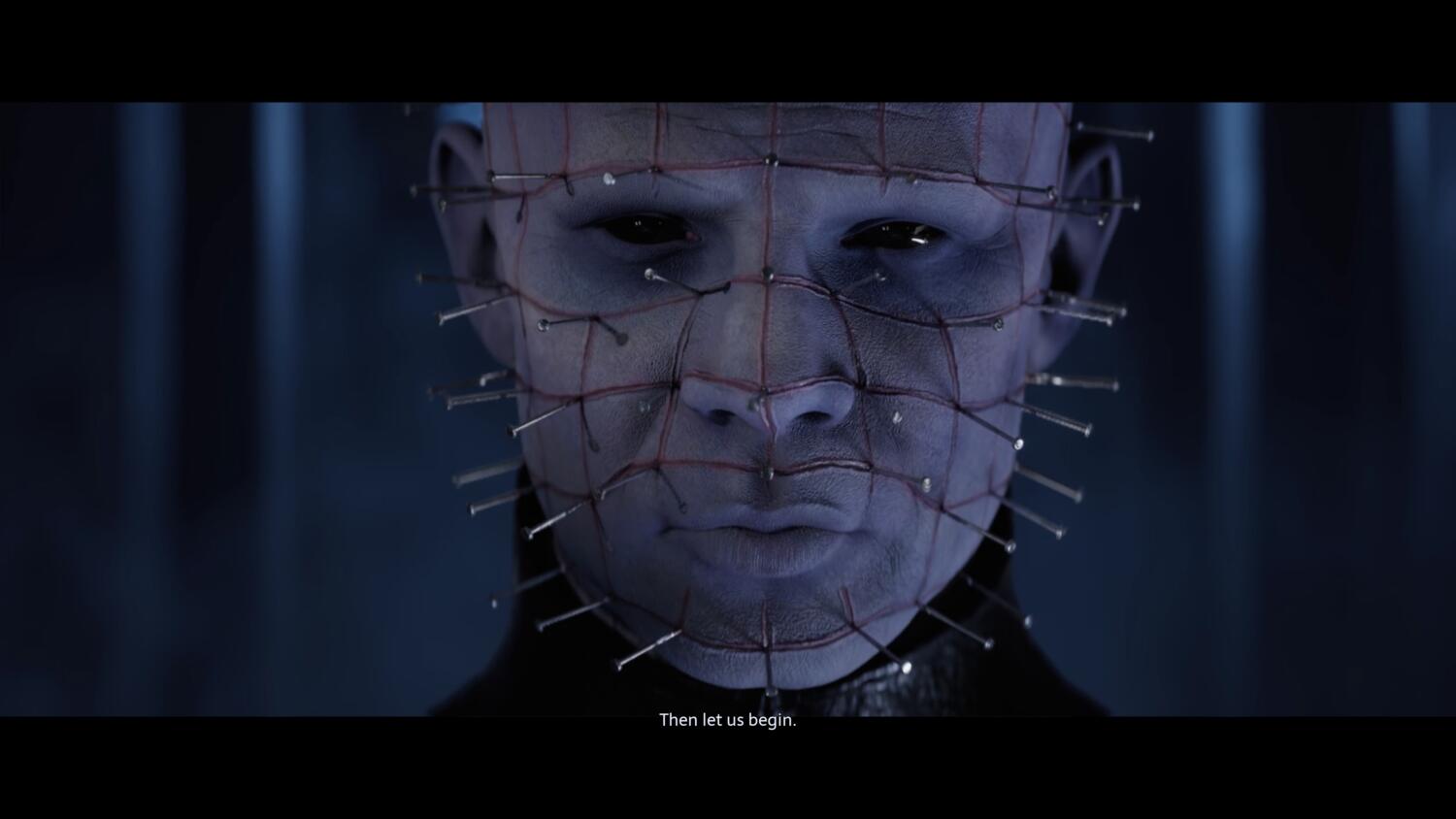
Clive Barker’s Hellraiser: Revival wastes no time getting it on, literally, as the game opens with biker gang member Aidan Lynch and his girlfriend Yoon “Sunny” Sun-Hee having sex. This isn’t even vanilla intercourse, either, but one of the sadomasochistic kind – think piercing skin with needles, scratching, and all that fun stuff. Wanting to take things to another level, Sunny pulls out a mysterious cube, and when Aiden cuts her skin with it, this opens up a portal to an otherworldly realm known as The Labyrinth, and out pops the iconic extradimensional, sadomasochistic beings of franchise fame – The Cenobites Pinhead, Chatterer, Deepthroat (named Open Throat in the game, because we can’t have nice things in 2026), and Butterball.
Fans of the original franchise would know the drill from here – Pinhead asks Sunny if she is ready to ascend to the next level of pain and pleasure, and when she agrees, he summons hooked chains that promptly tear her apart in one of the most graphic depictions of body horror seen in a video game, dragging her into hell and knocking Aiden out in the process.
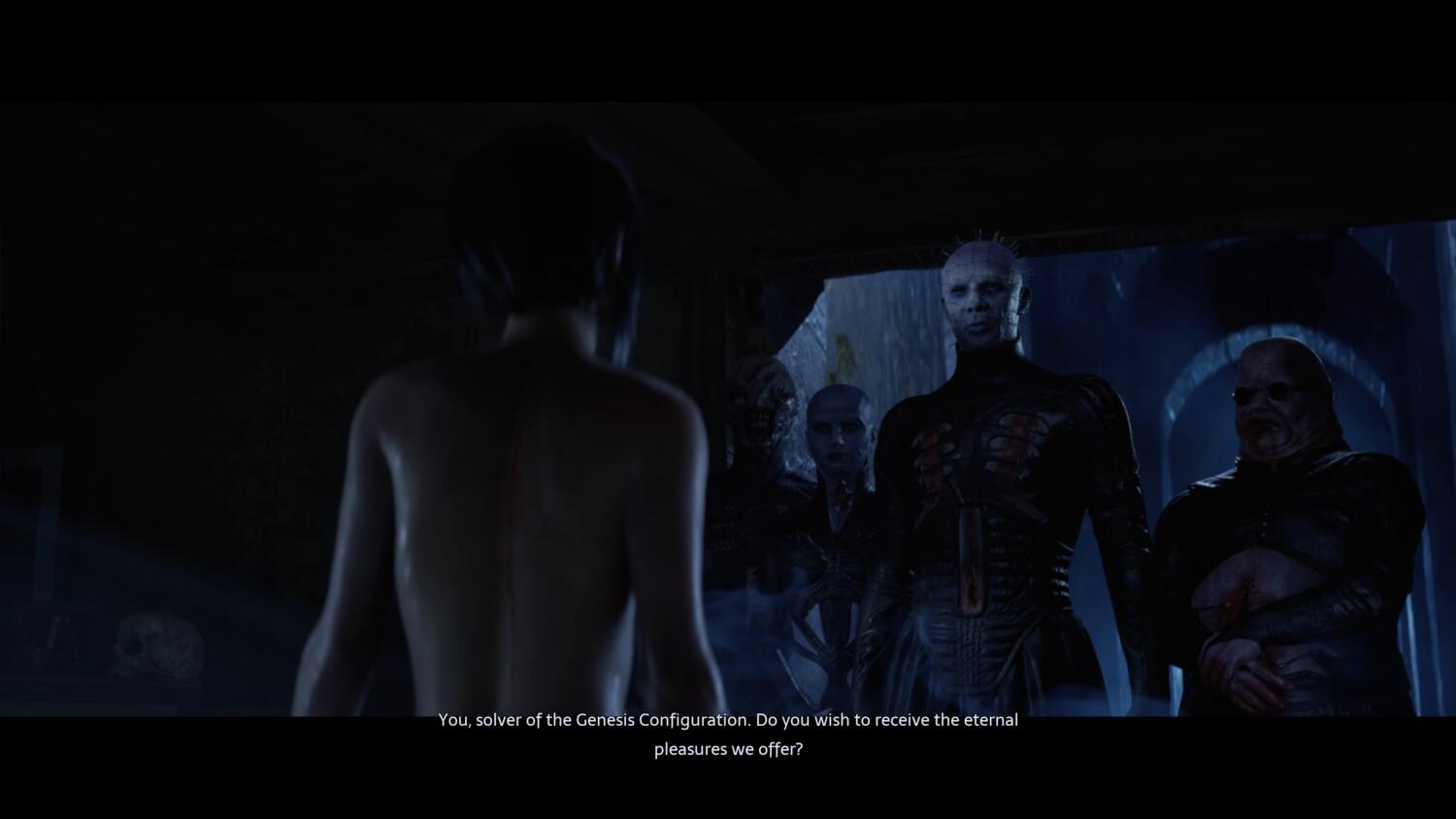
Awakening with the mysterious cube in hand, Aiden learns that this is the Genesis Configuration, a supernatural puzzle box capable of opening the doorway to the Labyrinth for those it deems worthy, propelling him on a journey to get Sunny back, confronting the supernatural entities of the Labyrinth unleashed onto the world by the Scarlet Church, a sadistic cult that worships the Cenobites and their god, Leviathan, in the process.
Its narrative might sound straightforward enough, but Clive Barker’s Hellraiser: Revival still makes the effort for actual character development for not just its human protagonists, but the Cenobites too. Aiden and Sunny, initially presented as simply degenerates obsessed with chasing highs through drugs and sex, each get their own arcs to explain the motivations for their actions, especially for Aiden, who gradually understands that what he loves isn’t necessarily what he needs throughout the course of his journey.
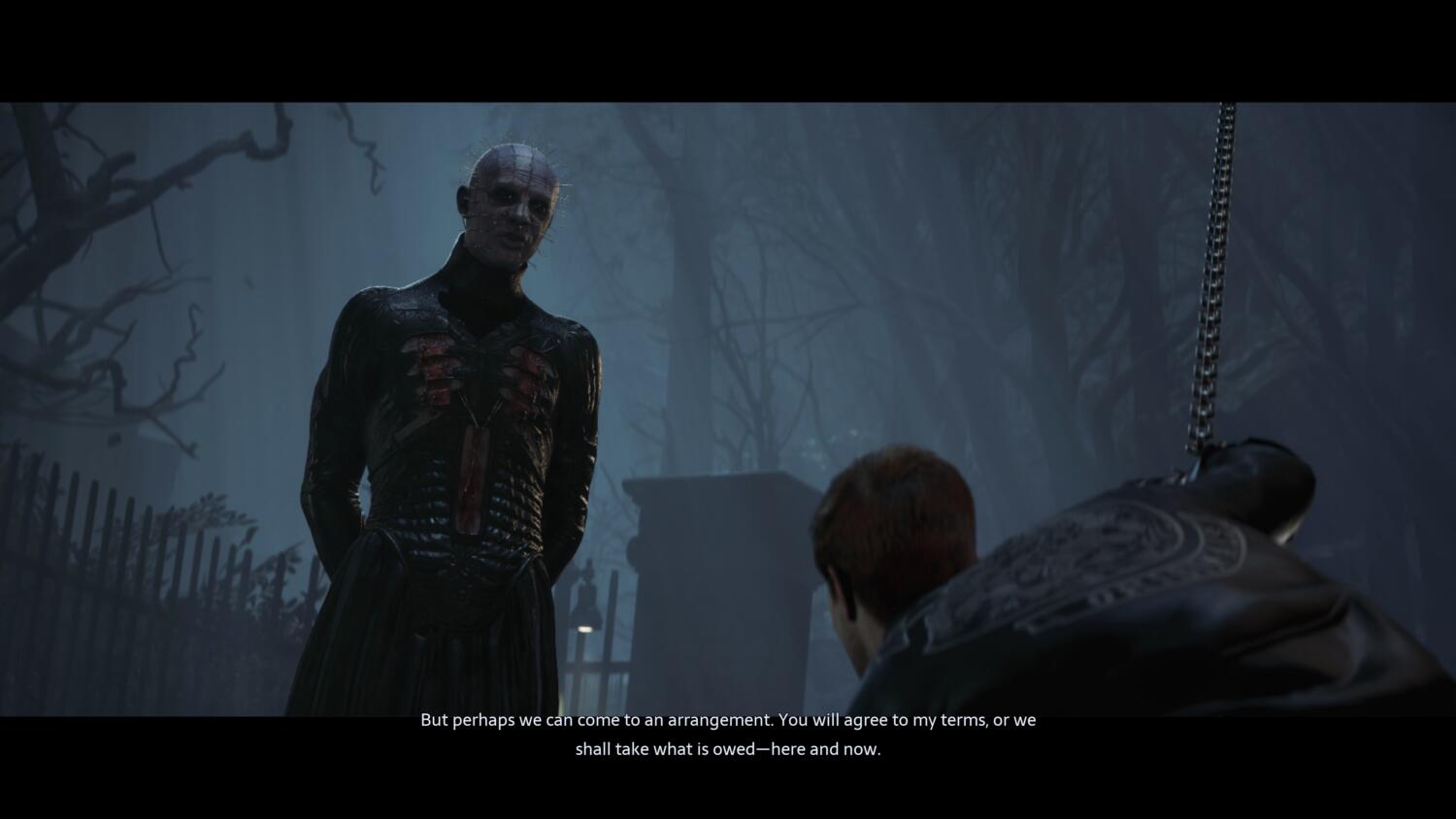
As for the Cenobites, they have always existed in a morally grey area, specifically in the first two films, and here it’s no different. Despite their antagonistic appearance, the Cenobites are merely a bridge between humans and hell, only offering their deals of otherworldly pain and pleasure to those who inherently seek them out by activating the Configuration. This point is made clear in the game as Aiden converses with Deepthroat and Pinhead, helping players understand that the literal hell on Earth occurring before their eyes wasn’t caused by the Cenobites or Leviathan, but rather invited into the world by the malicious actions of humanity.
As the game takes place in both the real world and the Labyrinth, its gameplay is also divided into two distinct styles – a more traditional survival horror experience and a more puzzle-centric platformer, respectively.
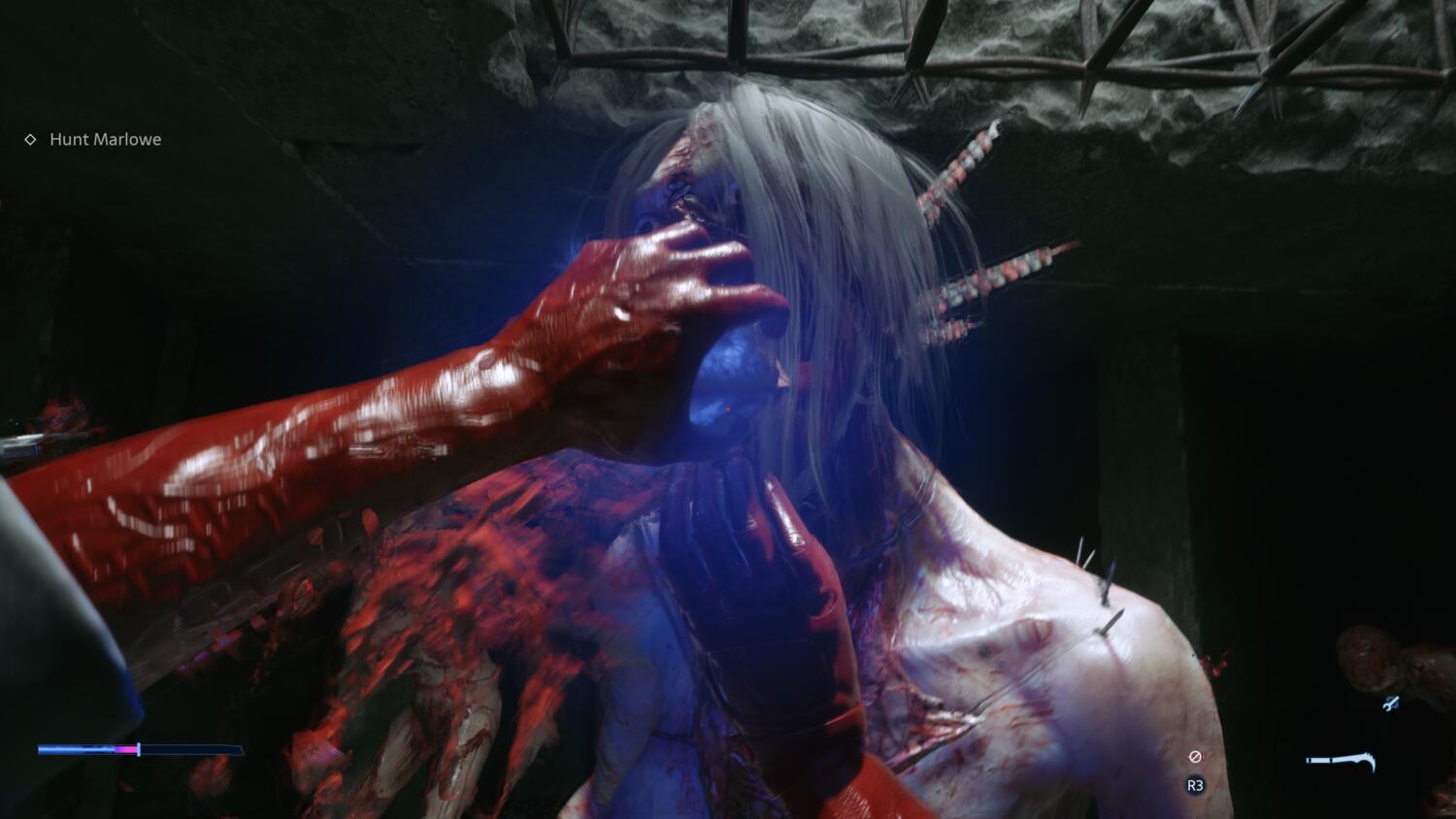
In the real world, players will find themselves facing Scarlet Church cult members and demons alike, making use of either stealth, melee combat, firearms, or any combination of the three to deal with threats. While having such a flexible approach seems intriguing at the start, things quickly fall apart when you realise that, while serviceable, each combat style is held back by its fair share of jank.
Stealth is extremely basic, consisting of the standard loop of crouch-walking behind cover to avoid an enemy’s gaze, or sneaking behind them for a stealth kill. The issue here is just how unfair the system can be at times, with enemies often spotting a player immediately from across the room, and the game doesn’t provide any warning elements like detection gauges to let players know how close they are to being spotted. To make matters worse, some of the most climactic moments in the game, such as the introduction of grotesque bosses, end up being forced stealth sequences where the player has no means to fight back, where detection leads to instant death, and the overreliance on such encounters means gameplay pacing always takes a hit when such sequences occur.

Of course, Aiden isn’t completely powerless most of the time, and can always choose to face his foes head-on in melee or at range. Still, both styles come with their own set of issues. Melee combat, for example, looks satisfyingly grotesque, with dynamic damage on enemy bodies like cuts, bloody bruises, and glorious decapitations, but engaging in melee combat never truly clicks due to how floaty the attack animations feel.
Weapons tend to phase through foes instead of properly connecting with their bodies, and Aiden’s only way of defence, a dodge move, isn’t properly implemented. Instead of being able to dodge in all directions depending on where the player points the right stick like most other games, Aiden can only dodge in three pre-set directions – backwards and to both sides – and since the game will default to the backwards dodge if a player has his control stick pointed in any other direction, this can lead to many instances of dodging in the wrong direction during combat; it’s extremely clunky.
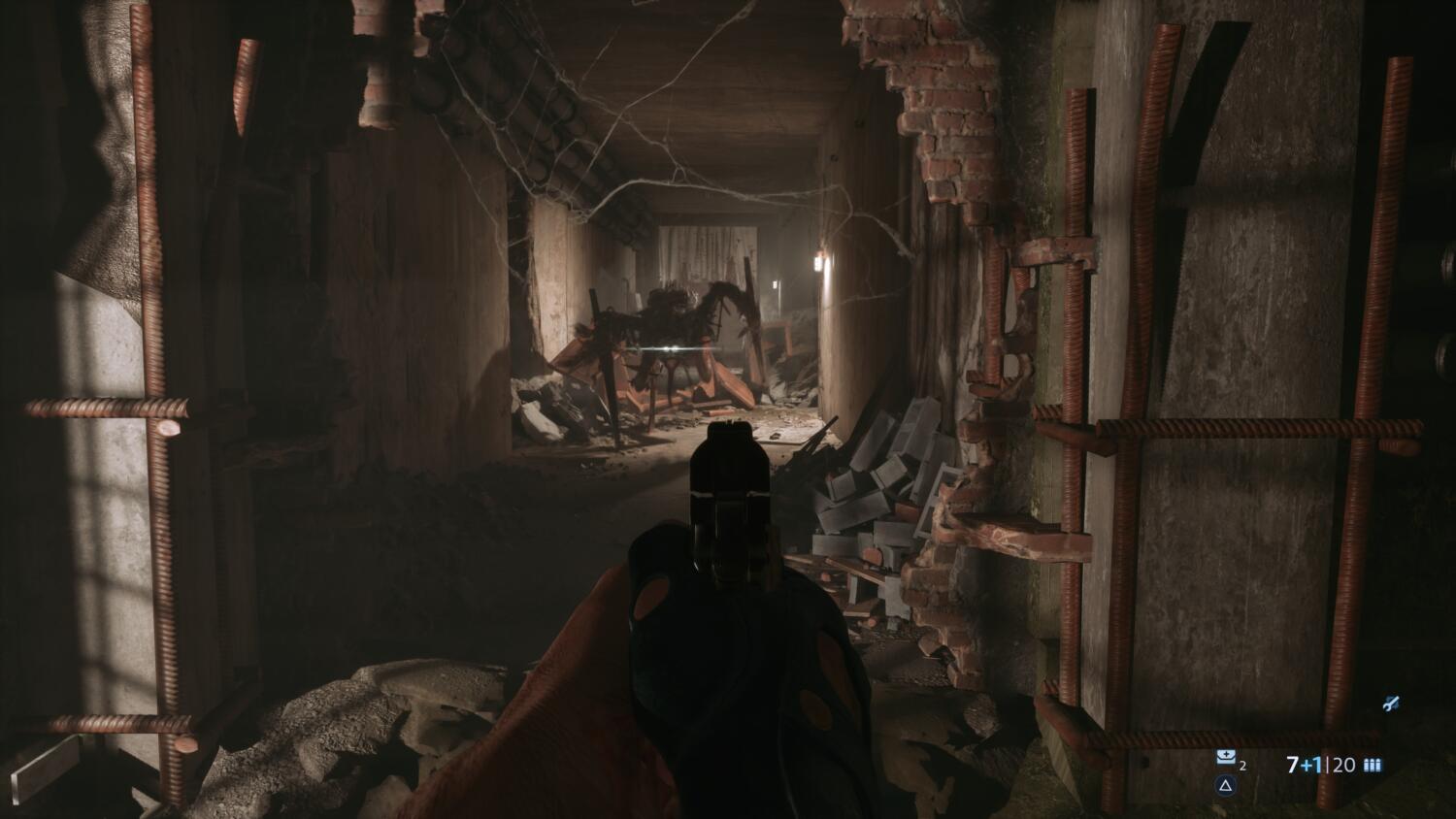
Firearms, on the other hand, fare slightly better, but are also not free of their own annoyances. Aiden will have access to a variety of guns, such as a pistol, a shotgun, or a submachine gun throughout his journey, and while these are by far the most efficient way to take out foes, none of them actually feel good to use thanks to a near lack of recoil and unsatisfying audio feedback. There’s nothing less satisfying than firing off a shot from a Colt 1911 pistol, only for it to feel and sound like a BB gun, and this is pretty much the same for all the game’s five firearms.
Tying all these systems together is Clive Barker’s Hellraiser: Revival’s survival horror design, and here, it’s the whole shebang, from limited inventory space to crafting essential items like health hits and valuable ammo, and locked doors requiring incredibly complex steps to unlock. Again, while these systems all function adequately, they can’t help but feel tacked on. Take locked doors, for example, which mostly require players to scour the map in search of a key item instead of requiring a more involved puzzle-solving solution, making it feel like a wasted opportunity for clever environmental design.

Finally, there’s the Genesis Configuration itself, which is arguably the most interesting component of combat. With the box in hand, Aiden can harness its power by dealing damage to foes and unleashing special abilities in turn.
From telekinetically lifting objects and throwing them at foes à la the Gravity Gun from Half-Life, to absorbing fire from the environment to engulf foes in flames from afar or unleashing an ultimate move that summons hellish chains to completely decimate all foes in the area, the Genesis Configuration can feel like an absolute power trip, so it’s even more disappointing that the game only gives players a couple of powers to play around with, and that it doles them out at a frustratingly slow pace across the entire 10-hour campaign.
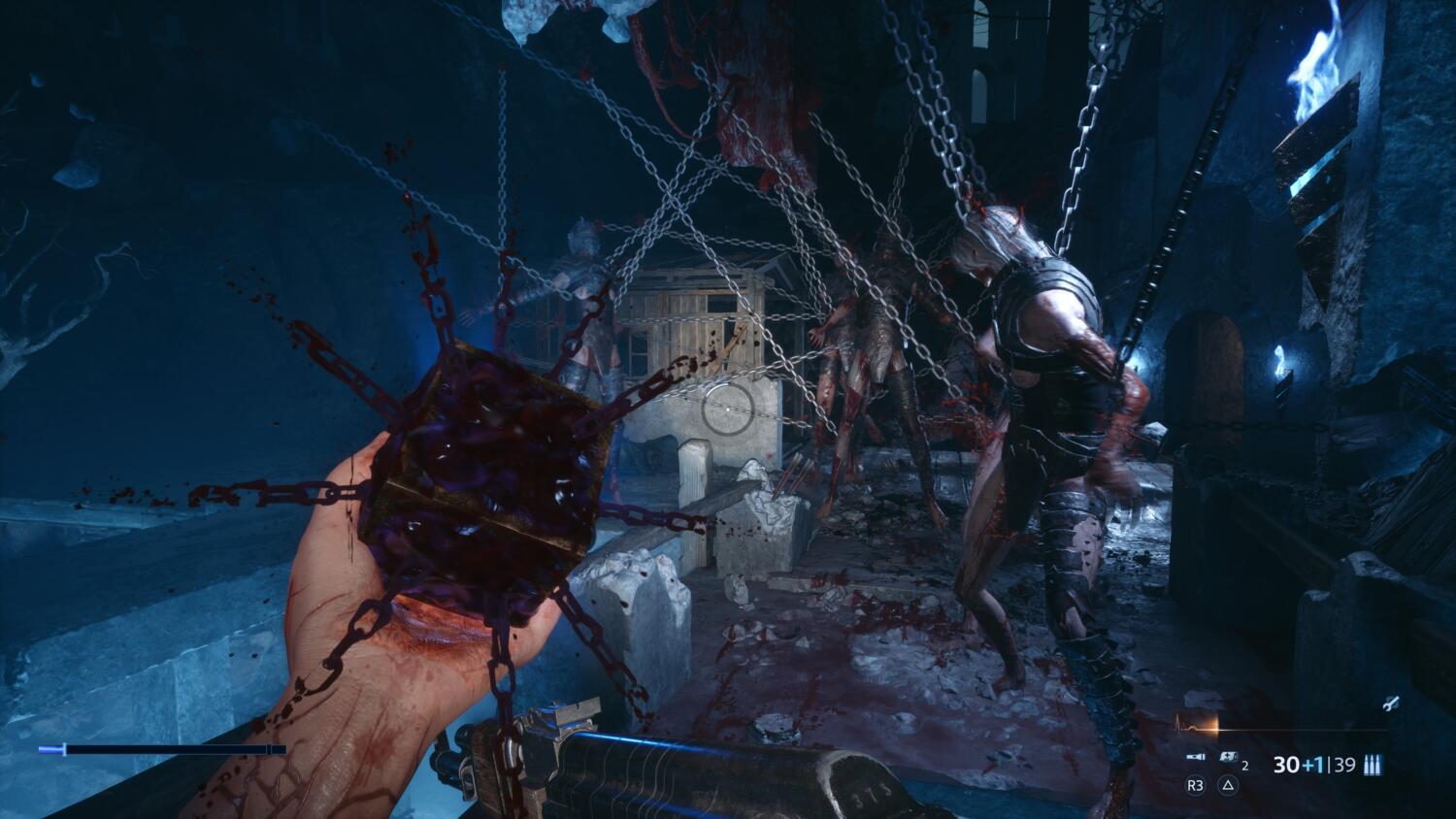
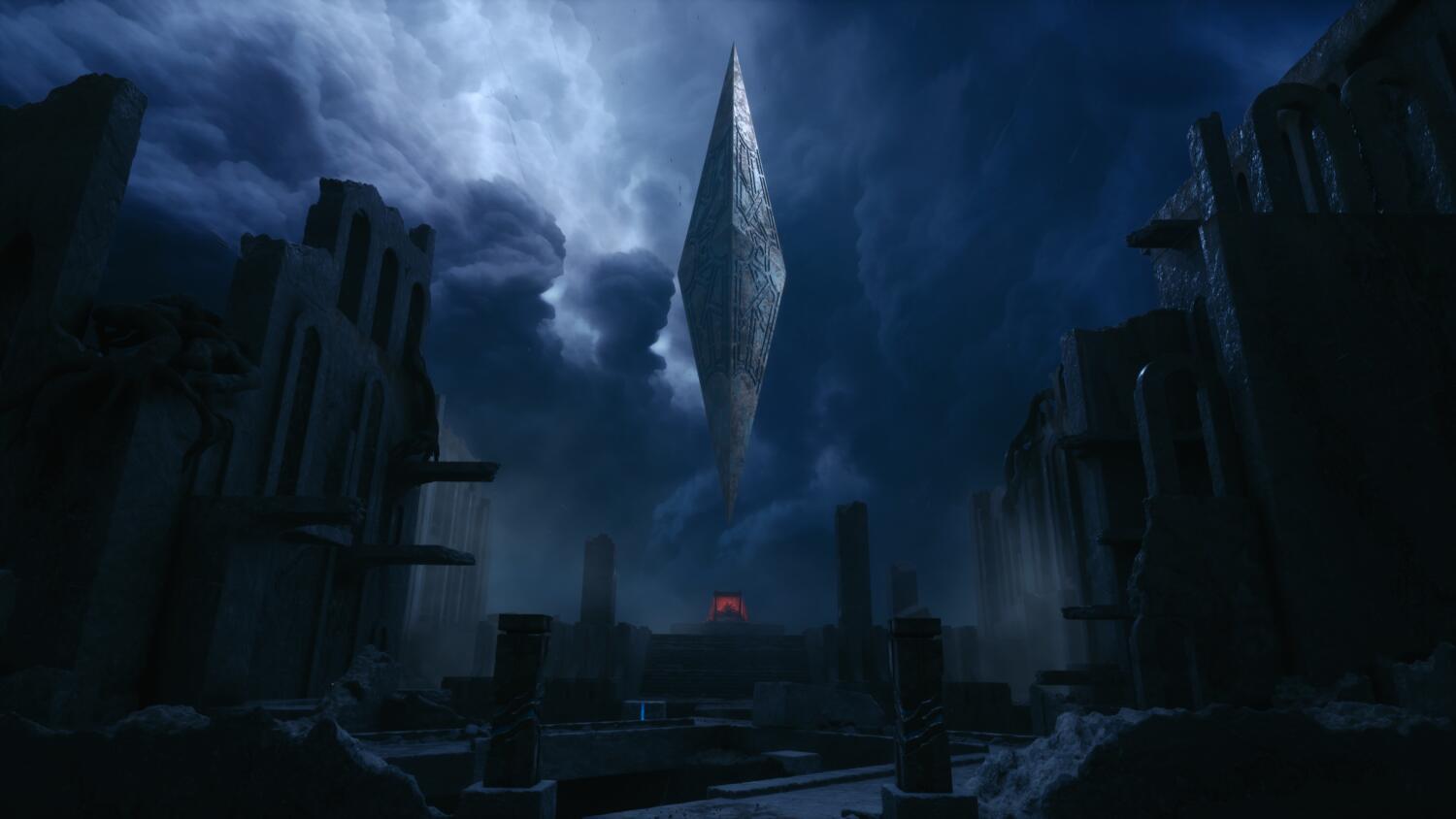
It’s not often that hell is presented as a silver lining, but that’s the case in Clive Barker’s Hellraiser: Revival, at least from a gameplay standpoint. Over the course of his journey, Aiden will be pulled into the Labyrinth, which switches up gameplay considerably. In its depths, he no longer has access to any weapon, instead relying on the powers of the Genesis Configuration to manipulate the environment as he explores its maze-like corridors.
These sequences offer a welcome change of pace thanks to the absurdity of the Labyrinth itself, as players will never know what traps or puzzles lie beyond every corridor, and in some instances, the game even becomes pure terror fuel as Aiden is confronted by the spine-chilling sounds of chattering teeth, which signal the arrival of the Chatterer and the start of its many exhilarating chases, where players will have to make split-second decisions and navigate the Labyrinth’s winding corridors to avoid the clutches of the teleporting entity.
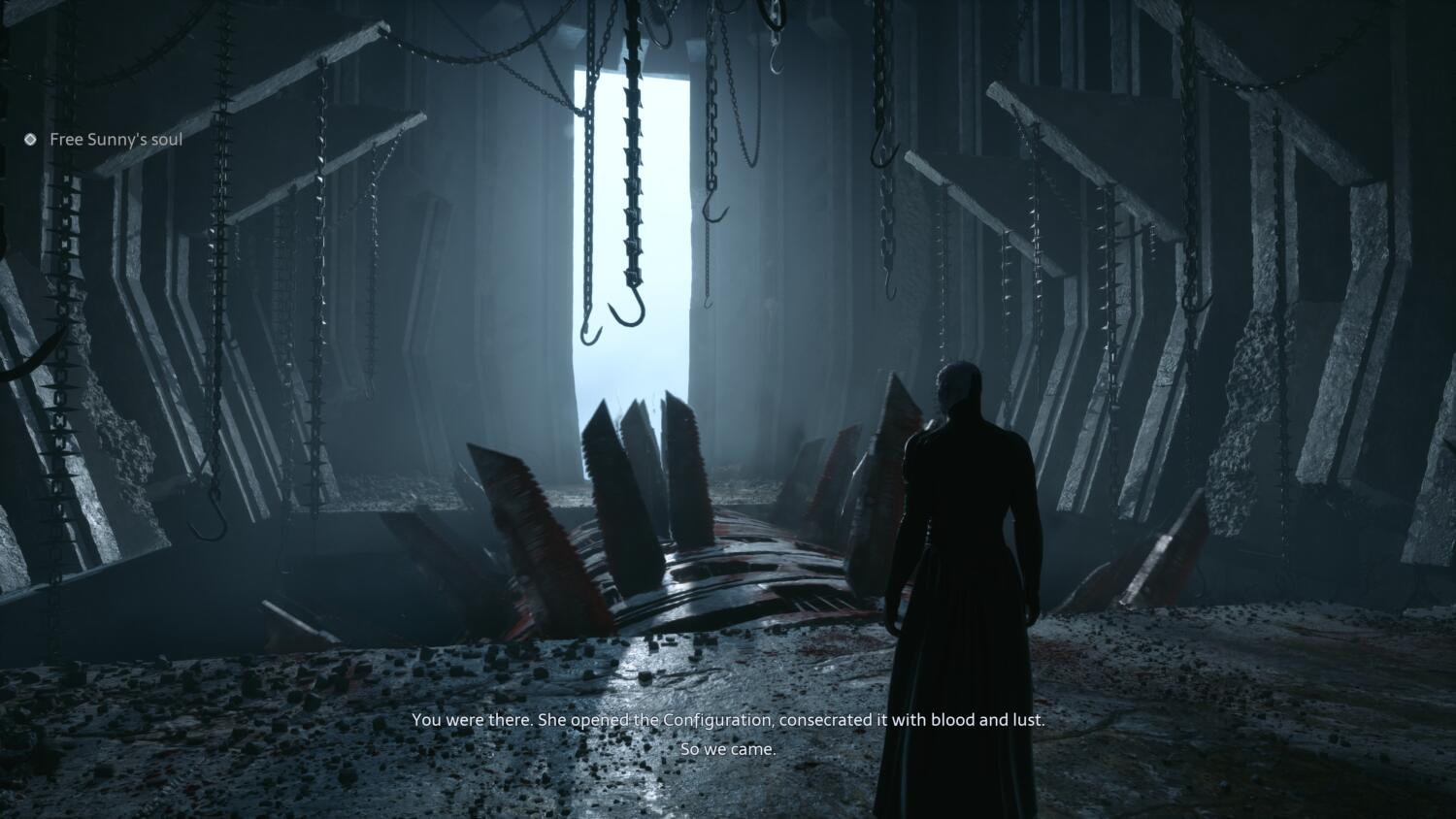
Still, it has to be noted that the game is far from a AAA project. This is clearly a love letter to the franchise built by fans with deep respect for the source material, just on a tighter budget. With this in mind, and considering that the game is almost half the price of most modern releases nowadays, it’s easy to look past its various shortcomings, especially since it offers a decent, albeit unpolished, survival horror experience that offers something fresh by being set in the Hellraiser universe.
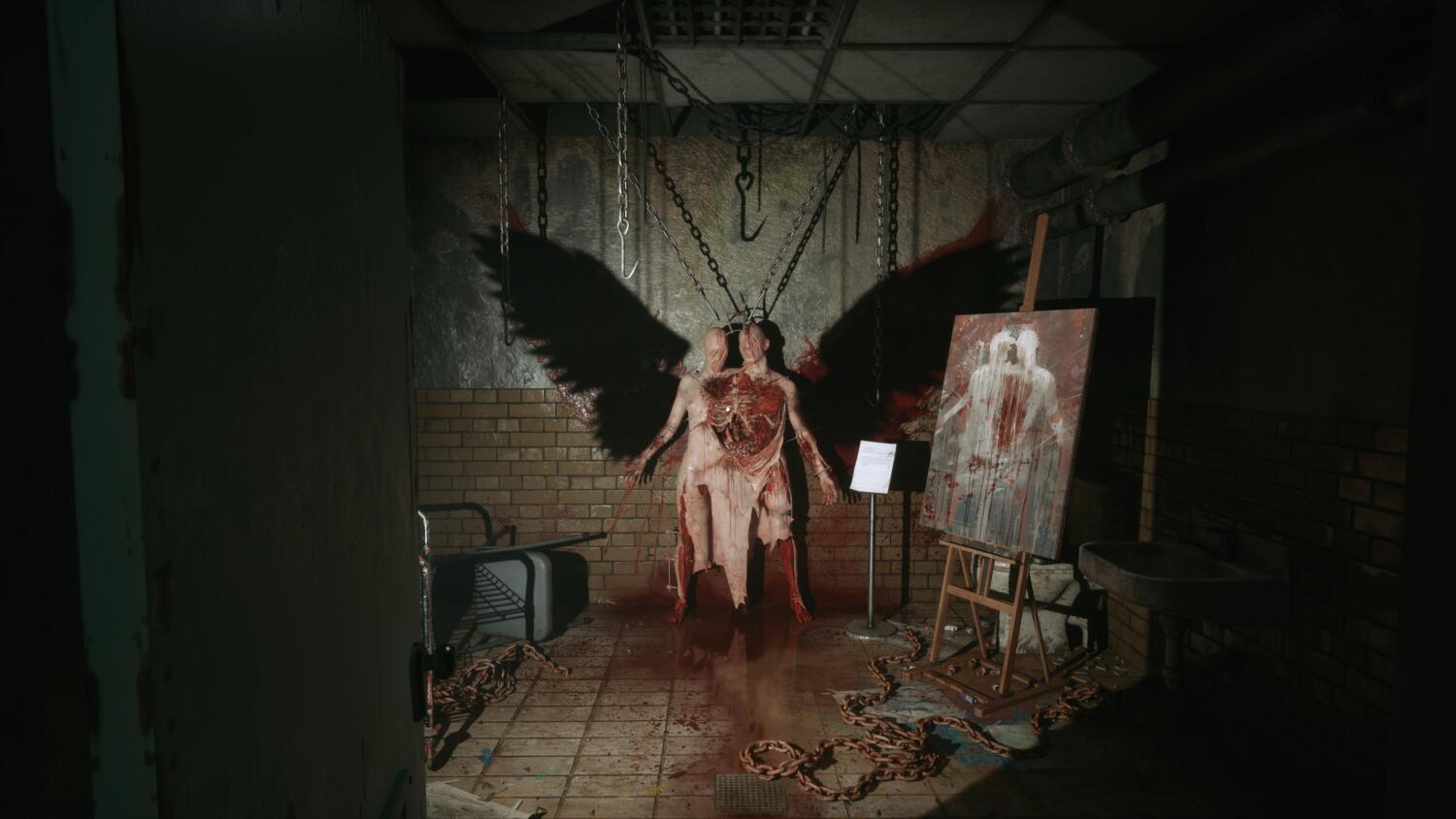
Whether it be in the real world or the Labyrinth, one thing the game consistently nails is its portrayal of mature themes. While its presentation of gore and nudity is plentiful, it never feels too gratuitous, and behind every shocking scene lies a deeper meaning to the madness, such as the mutilated body parts stitched together to form “art” by the fanatical Scarlet Church as a way to worship the Cenobites, and its portrayal of BDSM culture, which is presented respectfully as less of a kink and more of a way for oftentimes innocent people to satiate their deepest desires, a thoughtful in-game reflection of the very real subculture.
Clive Barker’s Hellraiser: Revival is at its best when it’s trying to be a Hellraiser game, presenting players with the unapologetically grotesque scenes of violence and sex that most modern games shy away from. Take away the initial shock factor, however, and the game starts to show its cracks with various gameplay systems that never come together as cohesively as they should. Still, in an age where mainstream gaming titles are taking fewer risks, Clive Barker’s Hellraiser: Revival shines through by staying true to its roots, reminding fans why the original film was so compelling to begin with, and letting them experience it firsthand by effectively translating it into a playable format.
GEEK REVIEW SCORE
Summary
Clive Barker’s Hellraiser: Revival might mask its uneven gameplay systems behind the shock factor of its plentiful depiction of explicit nudity and gore, but at the end of the day, that’s what the Hellraiser franchise always was – a fun but flawed journey to the depths of human depravity and desire.
Overall
7.3/10-
Gameplay - 6/10
6/10
-
Story - 7.5/10
7.5/10
-
Presentation - 8/10
8/10
-
Value - 8/10
8/10
-
Geek Satisfaction - 7/10
7/10

Kevin is a reformed PC Master Race gamer with a penchant for franchise “duds” like Darksiders III and Dead Space 3. He has made it his life-long mission to play every single major game release – lest his wallet dies trying.