
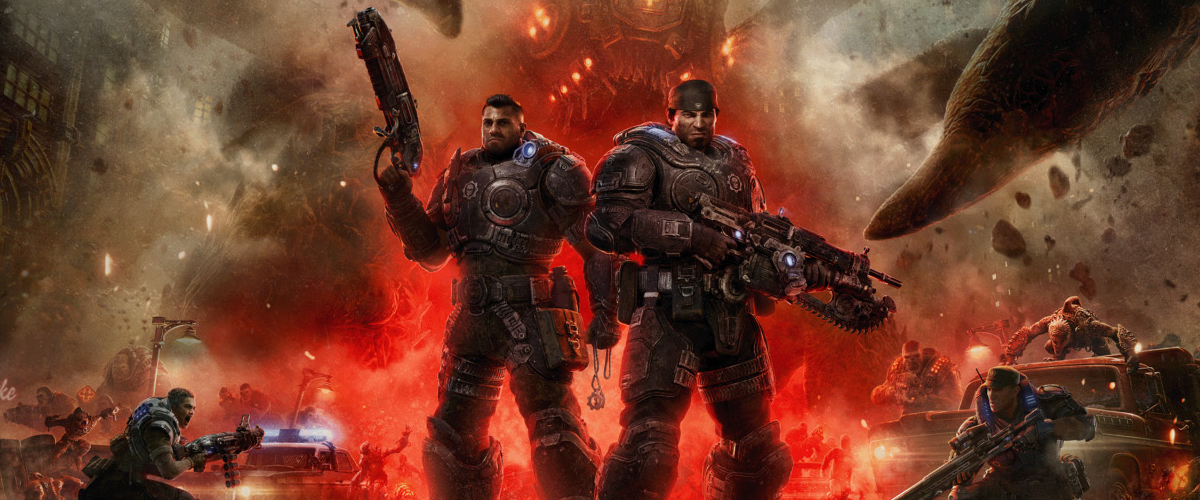
There was a time when cover shooters were all the rage, and almost every third-person shooter title in the Xbox 360 and PlayStation 3 era featured some variation of a system where characters could crouch behind conveniently placed spots to avoid enemy fire, giving rise to the infamous “chest-high walls” phenomenon. This system might seem simple, but it fundamentally changed how players interacted with combat scenarios, forcing them to change their mindset and actively scan the battlefield for suitable cover spots instead of running and gunning like the games that came before.
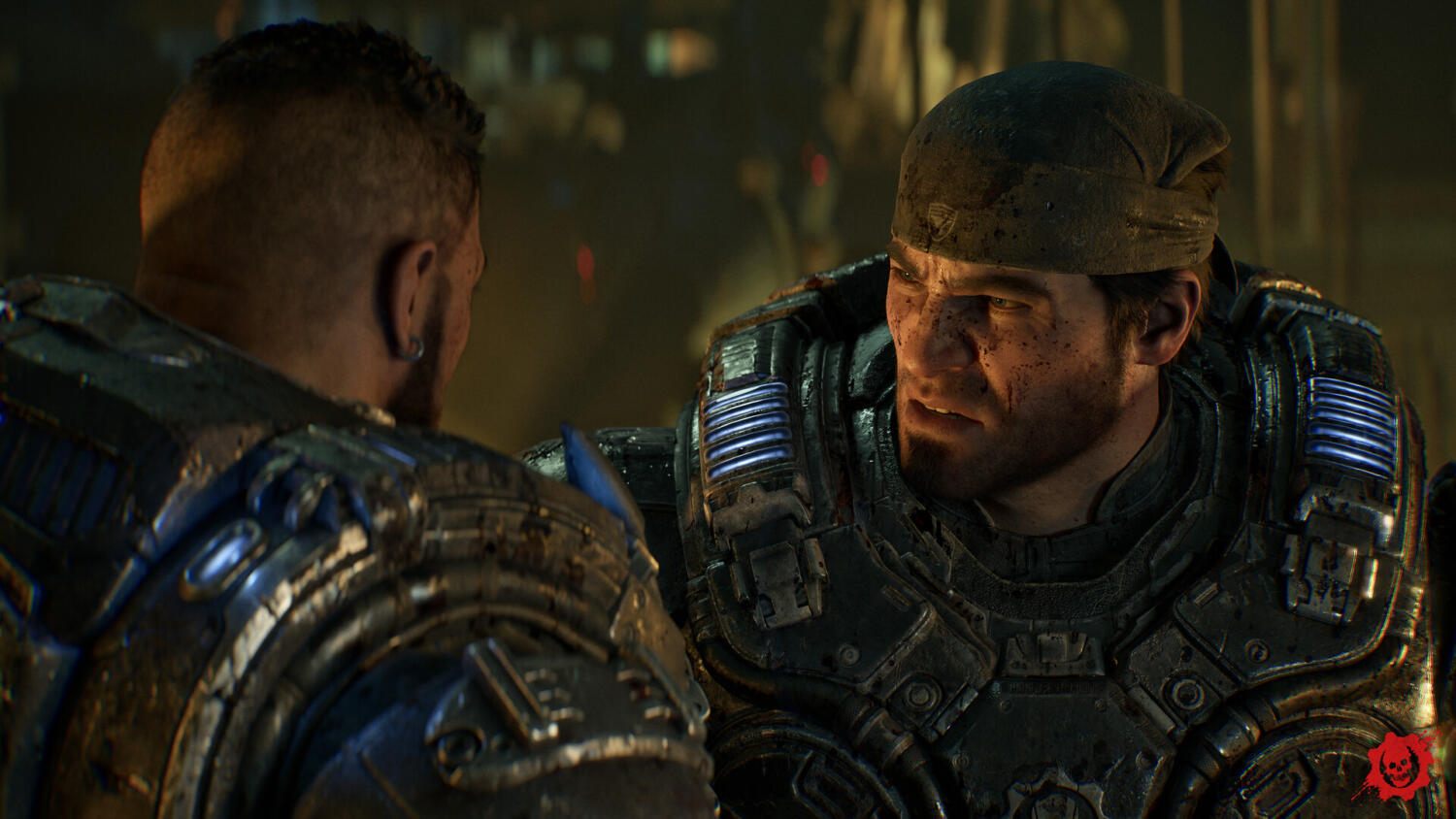
And at the centre of it all was a little game by the name of Gears of War, developed by Epic Games in 2006. Granted, the third-person cover shooter was actually pioneered by Namco Hometek’s Kill Switch three years prior, but it was Gears that would eventually refine and popularise the system and propel it into the mainstream.
The franchise’s original trilogy, which comprised the original 2006 title and its two sequels, 2008’s Gears of War 2 and 2011’s Gears of War 3, would go on to become one of Xbox’s flagship game franchises, beloved for their weightly movement and combat, emotional narratives, and legendary characters like Marcus Fenix and Dominic ‘Dom’ Santiago. While later games like 2013’s Gears of War: Judgment and new developer The Coalition’s modern reboots failed to hit the same heights as the originals, the franchise as a whole still stands as one of the most well-known cover shooters of all time.
Sadly, the gaming industry as a whole seemed to have largely moved away from the cover shooter formula in recent years (the last notable true cover shooter was 2019’s Tom Clancy’s The Division 2), instead favouring more reactive systems like those seen in the recent Ghost Recon games like Wildlands and Breakpoint. But now, seven years after the last entry in the series, The Coalition is aiming to bring back the glory days of the cover shooter, while also recapturing the magic of the franchise by taking things back to where it all began with Gears of War: E-Day.
With a narrative set in such a pivotal moment for the franchise as Emergence Day, expectations are unsurprisingly high for this latest entry. And while the prequel delivers on the narrative front, finally offering a first-hand look at the devastation caused by the Locust invasion and the initial fall of Kalona, its gameplay is where things start to get tricky, as even though the prequel fleshes out the core shooting and movement systems for some of the most fluid action seen from the franchise to date, it unfortunately loses the spark that defines a Gears title in the process.
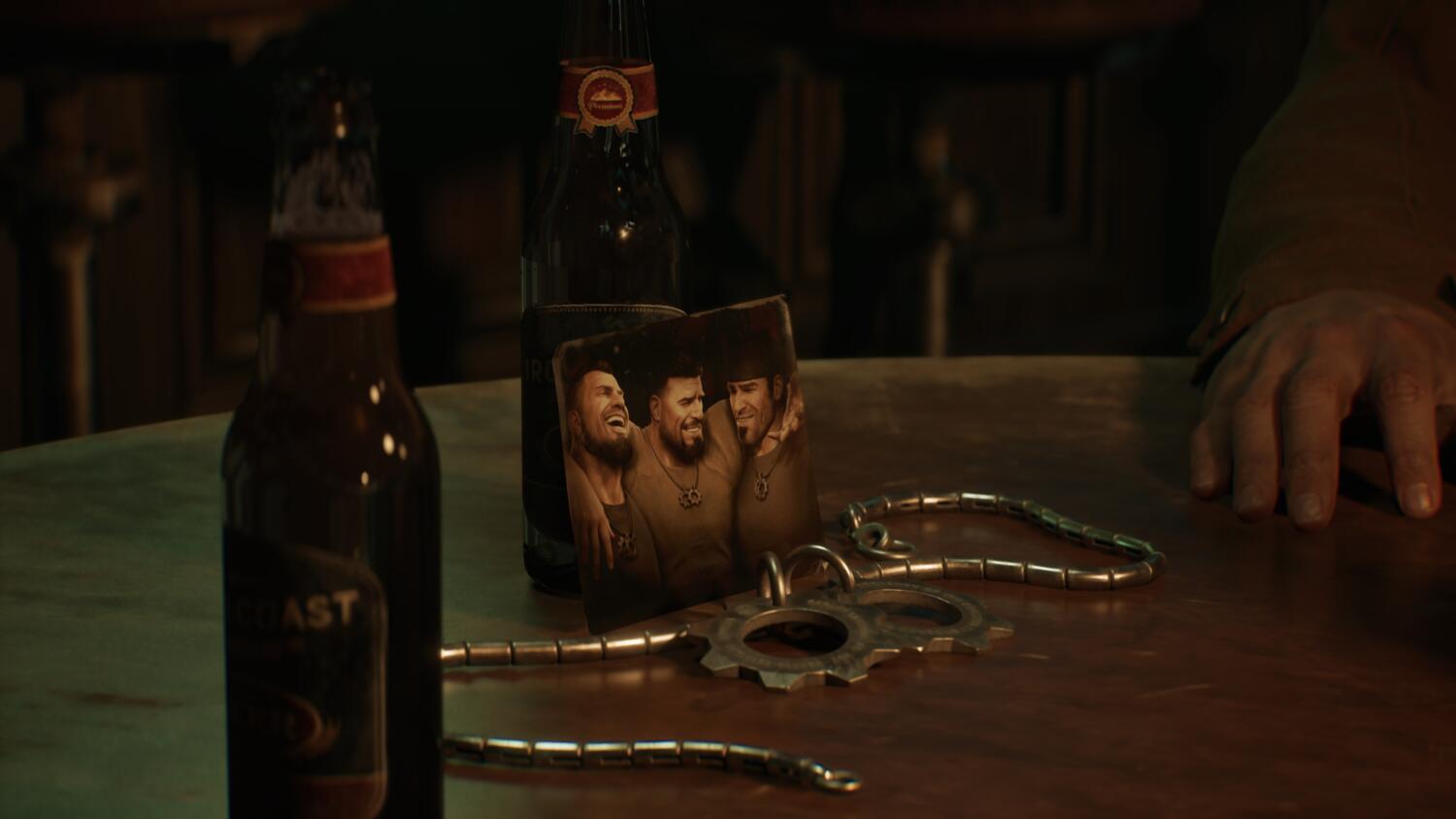
Like its name suggests, Gears of War: E-Day centres on Emergence Day, the unprecedented planet-wide invasion of Sera by a subterranean race known as the Locust, whose massive numbers and ability to breach the surface at any location via emergence holes took the Serans completely by surprise, wiping out 25 per cent of the Human population within the first 26 hours, and kickstarting the Locust War in the original trilogy.
Players once again take on the role of Marcus Fenix, a Sergeant in the COG (Coalition of Ordered Governments) army. Sera has just recovered from the Pendulum Wars, a massive conflict between the COG and the Union of Independent Republics (UIR) over the planet’s supply of a valuable resource known as Imulsion, and for a brief moment, the world seems to finally be at peace.
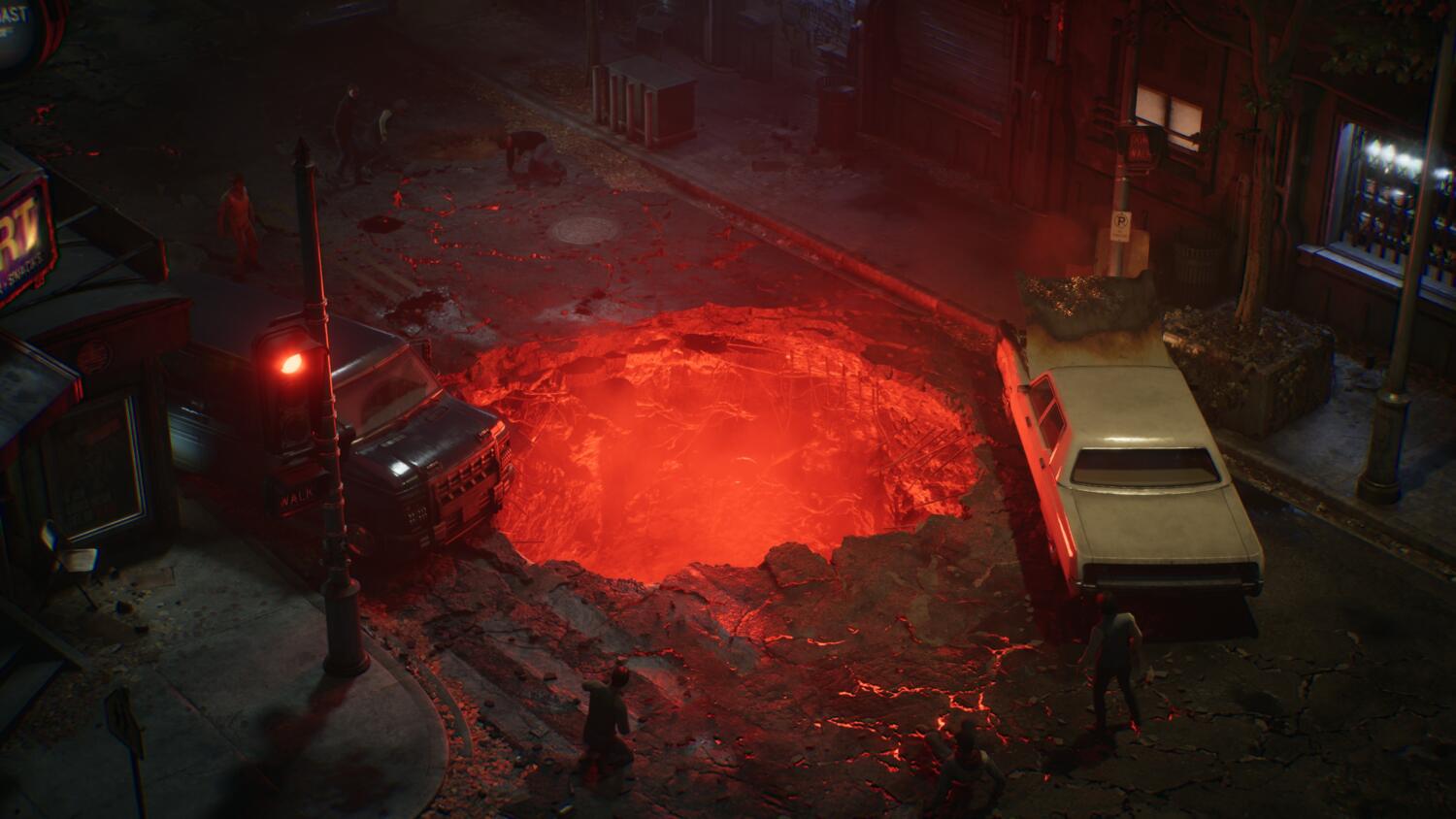
With the conflict finally over, Marcus and his best friend Dom are now able to properly grieve the loss of Carlos Santiago, the latter’s brother, who sacrificed himself to save Marcus during the war, but the moment is immediately shattered when massive holes start to appear across the major COG city of Kalona, unleashing the Locust horde on the population and the wholly unprepared army that was still licking its wounds.
In a chance encounter, Marcus and Dom soon meet up with Lucas Reyes, a fresh COG recruit and communications specialist, and Mags Carter, a retired soldier with a distinguished track record, with the four eventually forming Bravo Squad and taking part in the losing battle against the Locust to secure a foothold in Kalona.
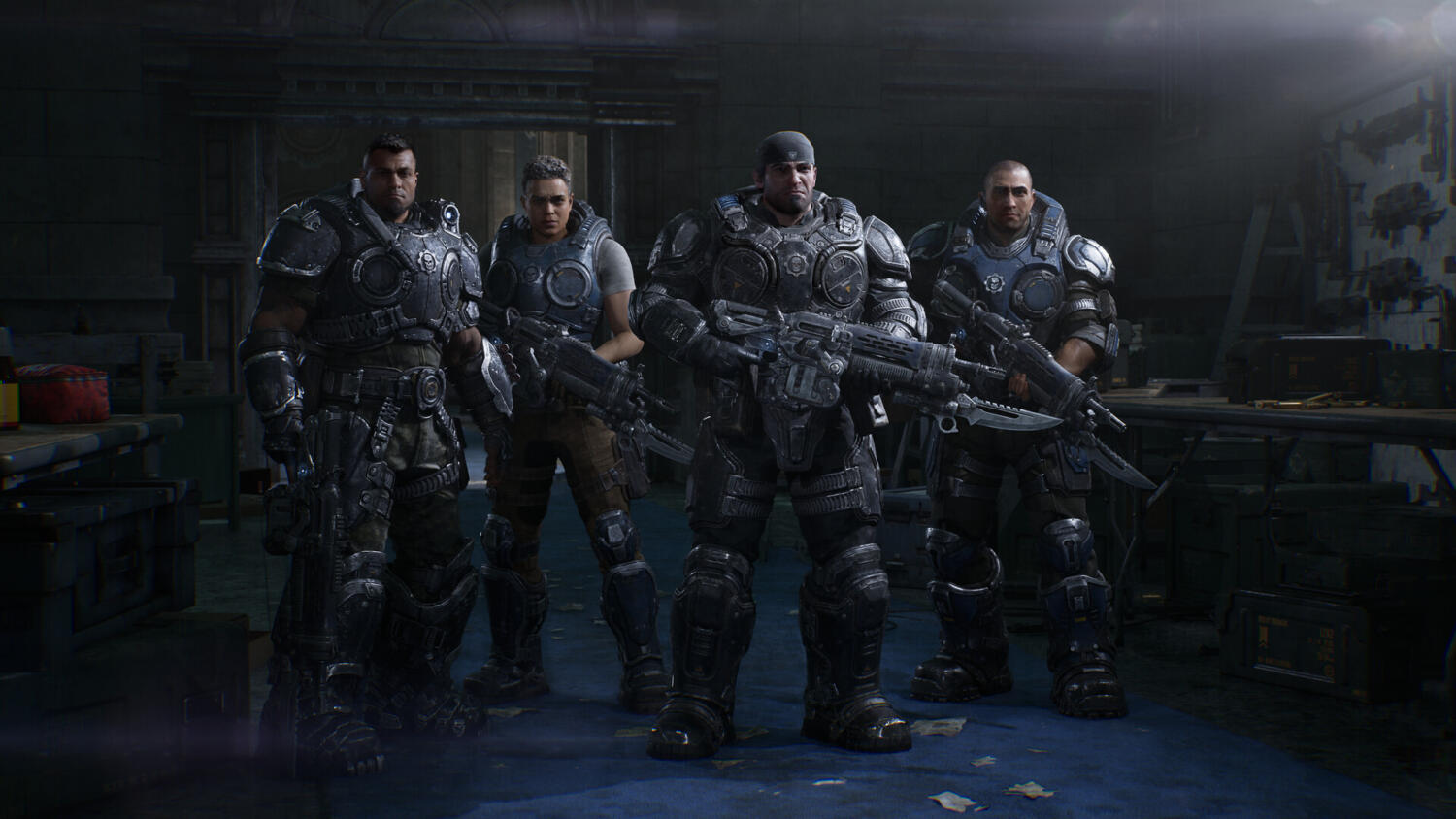
While Gears of War: E-Day doesn’t offer many surprises in terms of its narrative – after all, fans of the franchise already know how Kalona fell to the Locust hordes in just two days – what it excels in is its environmental storytelling, as players will now get to see the sheer devastation of the invasion and the damage inflicted on the city over the fateful two days. Watching the once magnificent high-rise structures of the city slowly fall into ruin as the fighting progresses never fails to instil a sense of hopelessness, an apt feeling for an army fighting a downhill battle.
In terms of its characters, the game is unsurprisingly carried by its two main heroes, Marcus and Dom, whose tale of brotherhood continues to be the heart and soul of the franchise. While newcomers Lucas and Mags each have their own backstories, they are as predictable as they come, and aren’t as interesting as the OG duo. Over their journey, Bravo Squad will also come across other faces, both familiar, like Tai Kaliso, and new, like the twin Theta Squad fighters Mako and Manu Kemura, but knowing the tragic events of E-Day and the eventual fall of Kaliso, it’s best that fans don’t get too attached.
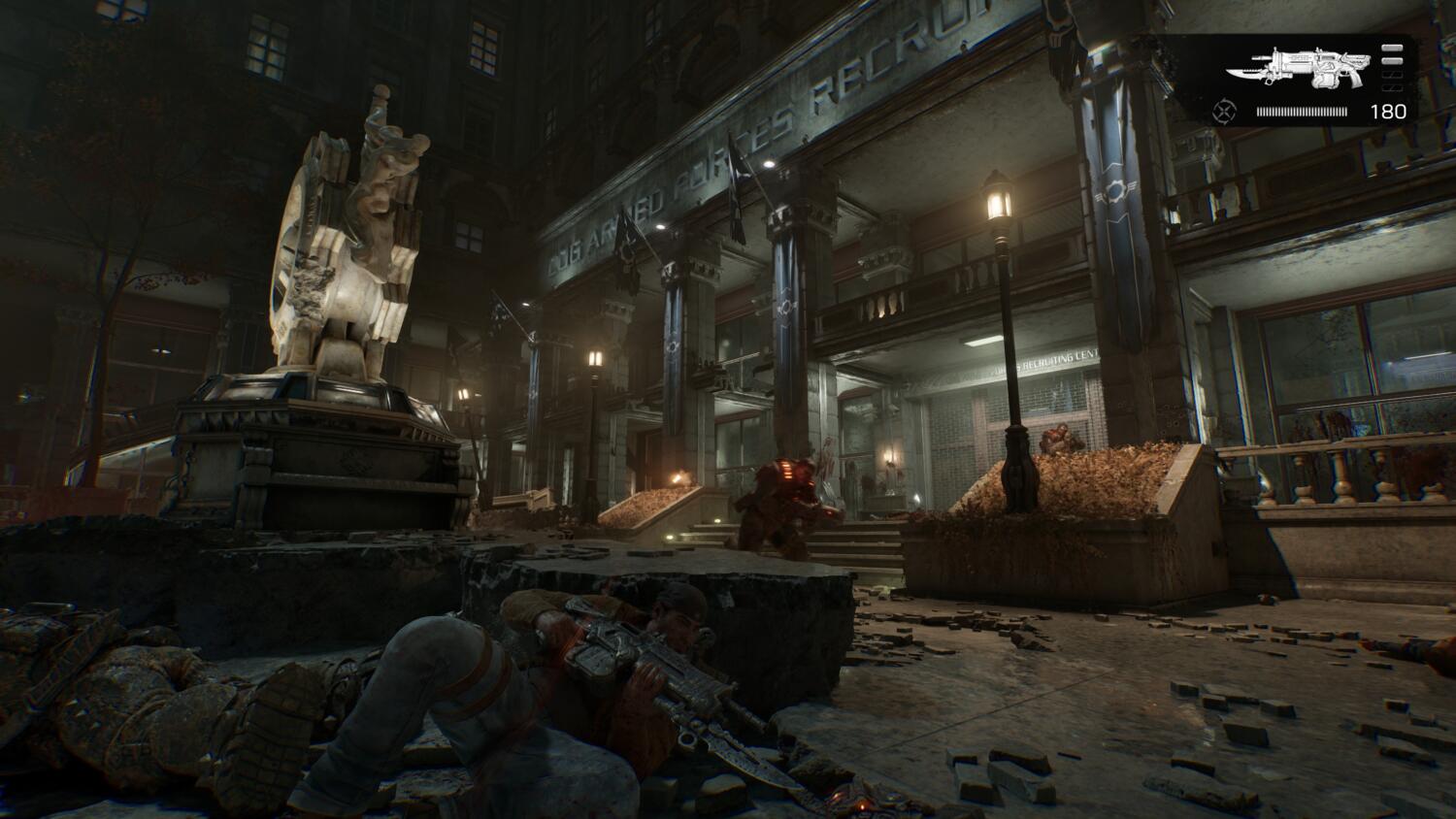
As the latest entry in the franchise, Gears of War: E-Day makes significant strides in its gameplay. While the original games were well-known for their chunky movement and weighty gunplay, later titles beginning with 2016’s Gears of War 4 made things much smoother with the ability to scale walls or leap across cover, and this latest title further adds to the fluidity of combat.
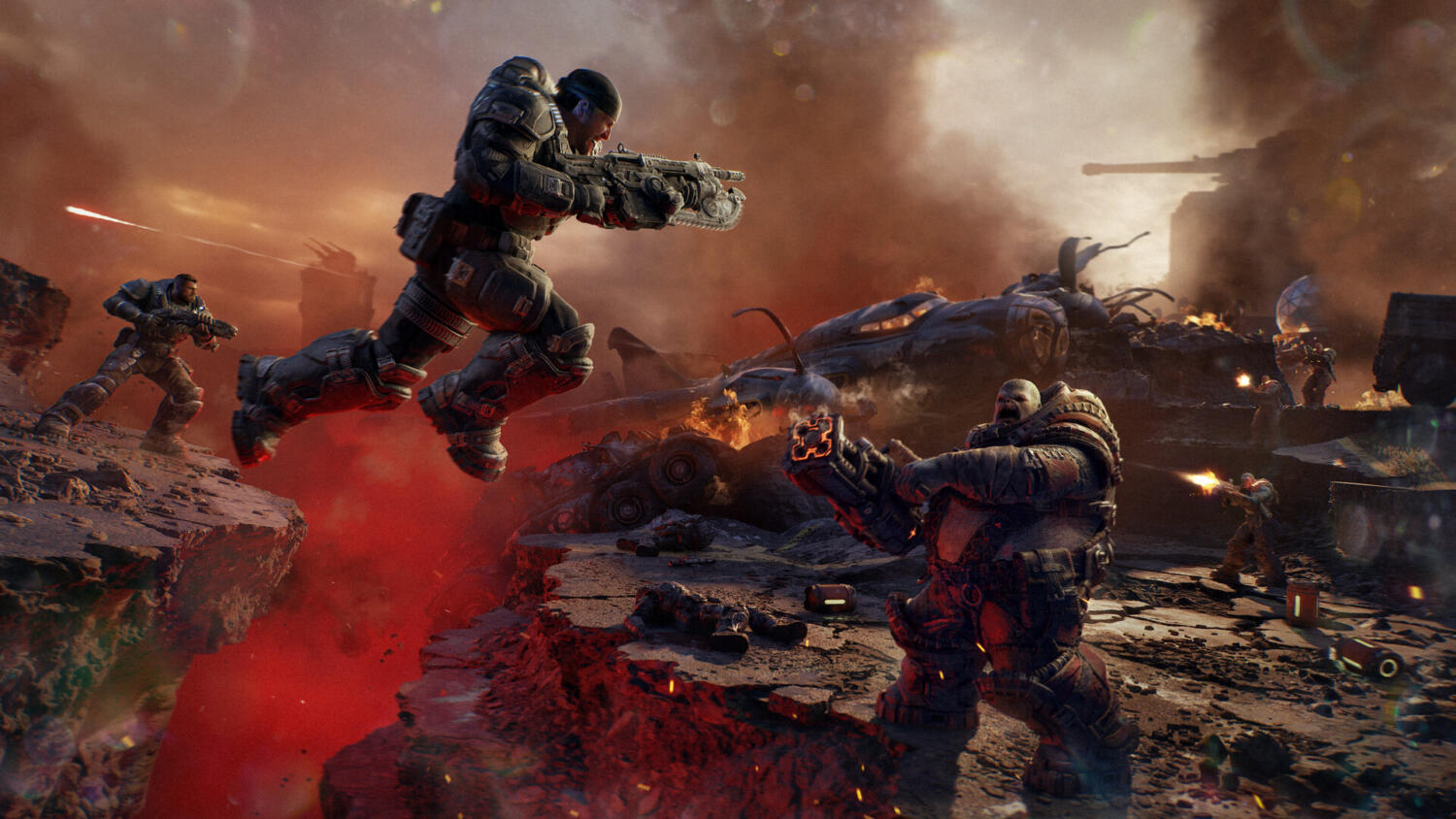
These come in the form of two major additions – the ability to take cover behind lower, knee-height objects, and the addition of a dedicated jump button. Yes, Bravo Squad might be decked out in armour like walking tanks, but they are somehow still able to leap across massive gaps with little effort. In the same vein, they can also perform a combat slide to smoothly transition into cover, or to quickly traverse below small gaps.

Granted, these additions do wonders for the tried-and-true cover-shooting formula, as most combat encounters now take place in locations that present multiple points of approach. Players can still choose to face their foes head-on using the traditional method of advancing from cover to cover, but now, there are many more flanking opportunities, such as climbing up to higher ground and jumping between rooftops to get the drop on foes, or sliding under holes in the walls of large trucks for alternate routes to attack the enemy from the rear.
Gears of War: E-Day might feature some of the smoothest shooting seen in the franchise to date, but in the process, it loses the same spark that defined the series. Fans of the games would undoubtedly be familiar with the “Roadie Run”, the iconic sprint system pioneered by the Gears franchise, which saw the character crouching low and sprinting for a limited duration to the next cover spot. While intentionally clunky, this system did fit well within the lore of the games, as it made sense for characters to have a limited sprint distance due to their heavy armour, and for them to crouch down while doing so to avoid enemy fire.
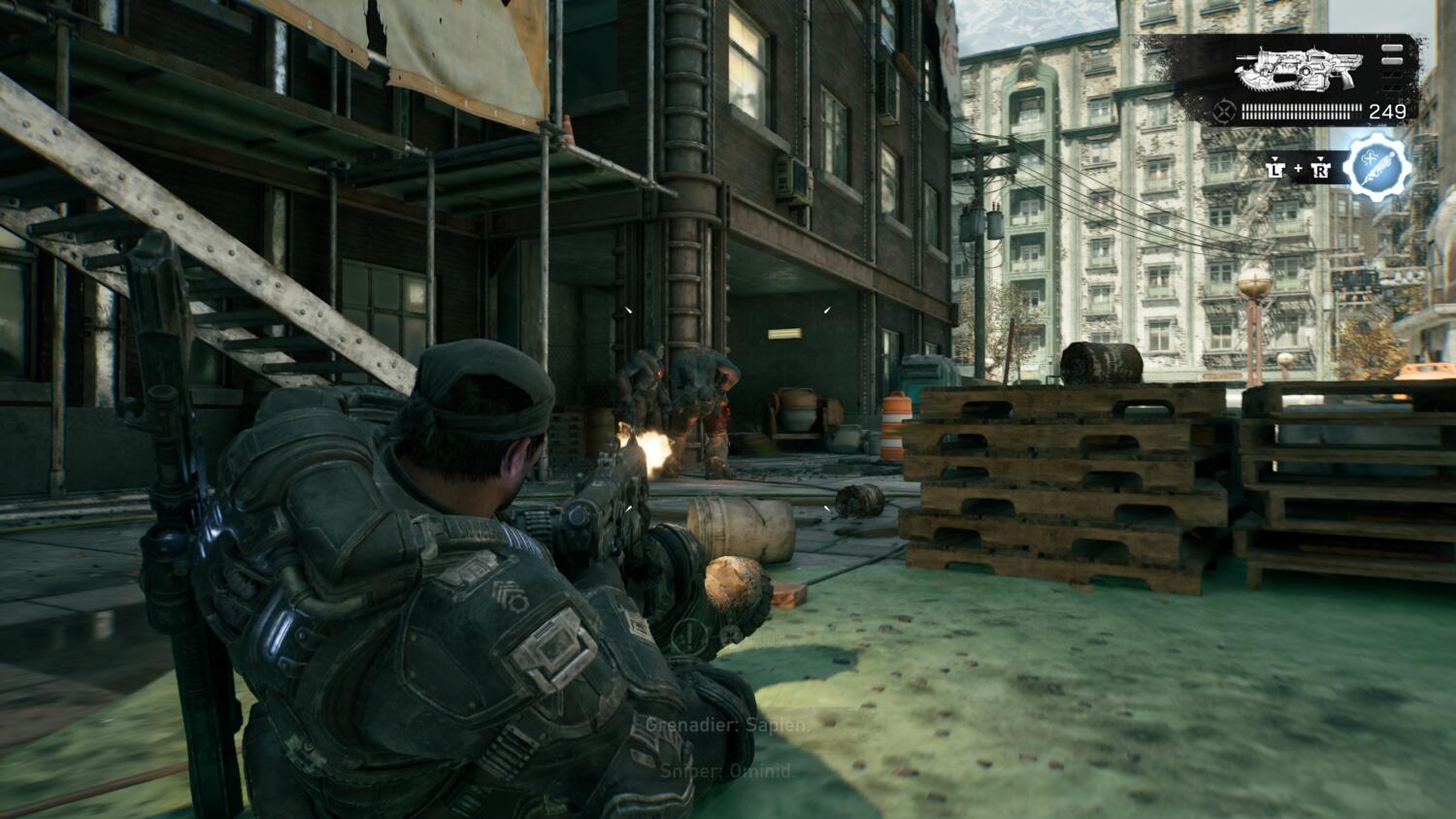
In this latest title, the Roadie Run has been completely removed, replaced with a more traditional sprint system where Marcus can run indefinitely while in an upright position at the press of a button. This might seem like a nitpick, considering the game does benefit from the additional fluidity, but at the end of the day, the removal of such systems designed to make the game intentionally more weighty means that Gears of War: E-Day doesn’t actually feel like a Gears game, and this is one aspect that will surely divide fans.
Movement aside, the core gunplay of the previous titles remains largely unchanged here, with players still unloading rounds into extremely tanky foes while mastering the Active Reload – where pressing the reload button at key points can either speed up the process or add bonuses to the new clip. Key changes here lie in some interesting new weapons, such as the Incinerator shotgun that fires a charged acid shot and also doubles up as an axe, and additional enemy types, such as armoured variants of the base Drones or Wretchers, or completely new ones like an acid-spitting frog creature, or one that looks like – as Bravo Squad so eloquently puts it – a giant floating ballsack that spawns multiple pods which fire deadly thorns in all directions.

Progression has been altered slightly too, as taking cues from 2019’s Gears 5, the game is a mix between traditional linear segments and more open instances where players are free to explore the city on their way to objectives, discovering hidden chests and side objectives to complete along the way, like saving survivors or assisting their fellow Gears. Doing so awards weapon mods, which can then be equipped on unlocked guns using supply caches found around the world, adding things like scopes for zoomed aim, stocks to increase accuracy, or extended clips for higher ammo capacity, with some even changing the benefits granted by Active Reloads, such as granting incendiary ammo.
Kalona might have only lasted two days from the initial start of E-Day, but that doesn’t prevent it from being the star of the show here. There’s a certain beauty to devastation, and revisiting the same streets as the campaign progresses only to see iconic landmarks like the Kalona Theatre or the Bank of Tyrus steadily fall into disarray isn’t just a showcase of the game’s impressive destruction technology, it also drives home the fact that the city itself is being worn down by the Locust assault, not just the people fighting against them.
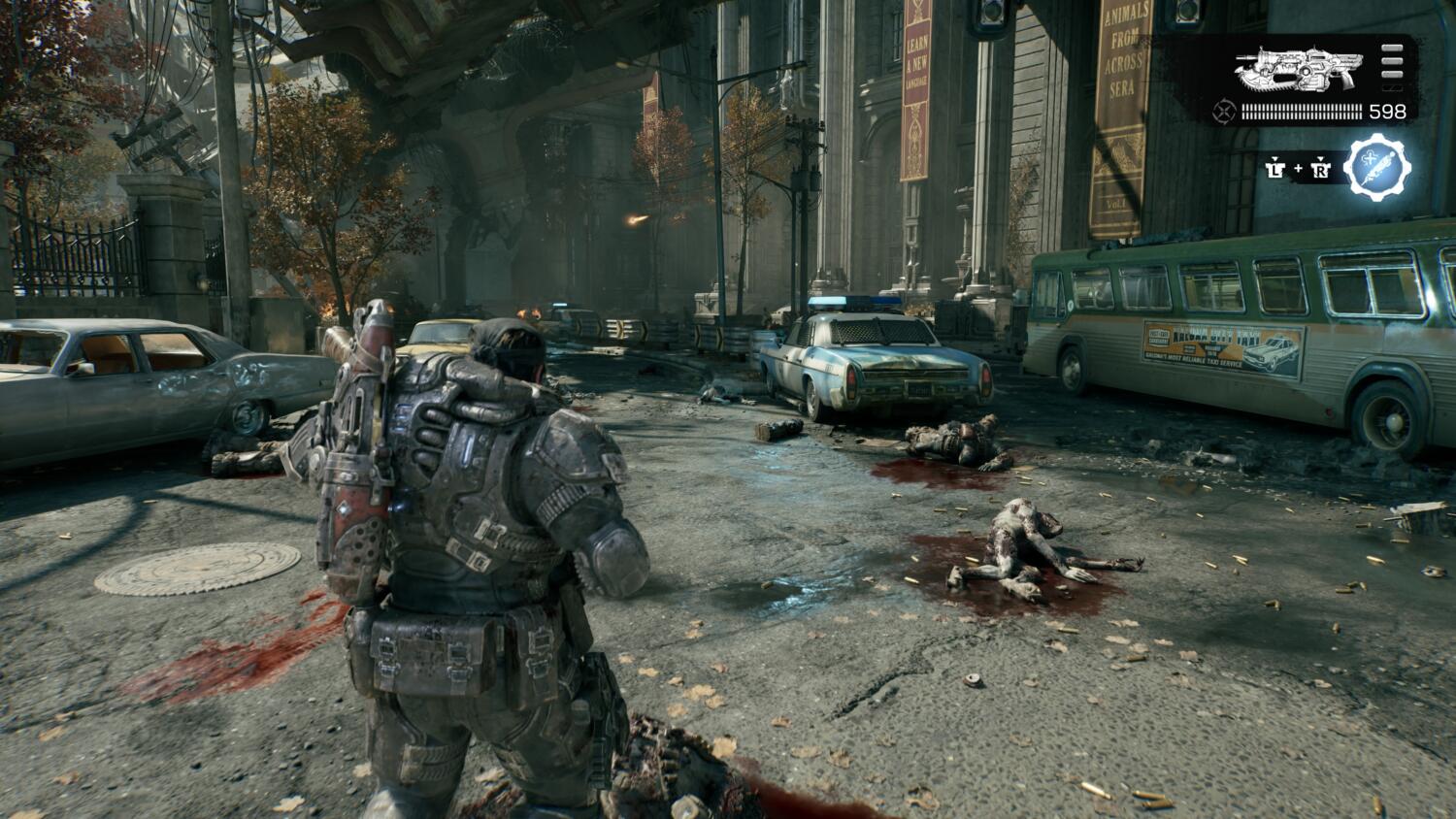
The world feels more alive too, as players will encounter all sorts of random occurrences as they explore the city, such as civilians fleeing for their lives or dynamic skirmishes between Gear squads and the Locust, making Kalona feel like a living, breathing place rather than just a digital playground for players to traverse as they power through the roughly 12-hour campaign.
As the dust settles on the fall of Kalona, Gears of War: E-Day remains an enigma. On one hand, it effectively brings to life one of the most important events in franchise history, all while presenting the smoothest and most fleshed-out gunplay and traversal system seen to date, but these improvements are unfortunately made at the expense of what defined the franchise to begin with. This is still a great prequel and an evolution of the classic cover-based shooter formula, but much has been shifted such that it just doesn’t feel like a Gears game any more.
GEEK REVIEW SCORE
Summary
Gears of War: E-Day takes players back to Emergence Day, the pivotal Locust invasion that defined the franchise, and while this prequel modernises its gameplay for some of the most fluid action seen from the series to date, it loses the spark that makes it a Gears experience in the process.
Overall
8.2/10-
Gameplay - 8/10
8/10
-
Story - 9/10
9/10
-
Presentation - 8.5/10
8.5/10
-
Value - 8/10
8/10
-
Geek Satisfaction - 7.5/10
7.5/10

Kevin is a reformed PC Master Race gamer with a penchant for franchise “duds” like Darksiders III and Dead Space 3. He has made it his life-long mission to play every single major game release – lest his wallet dies trying.
 Yong Le