
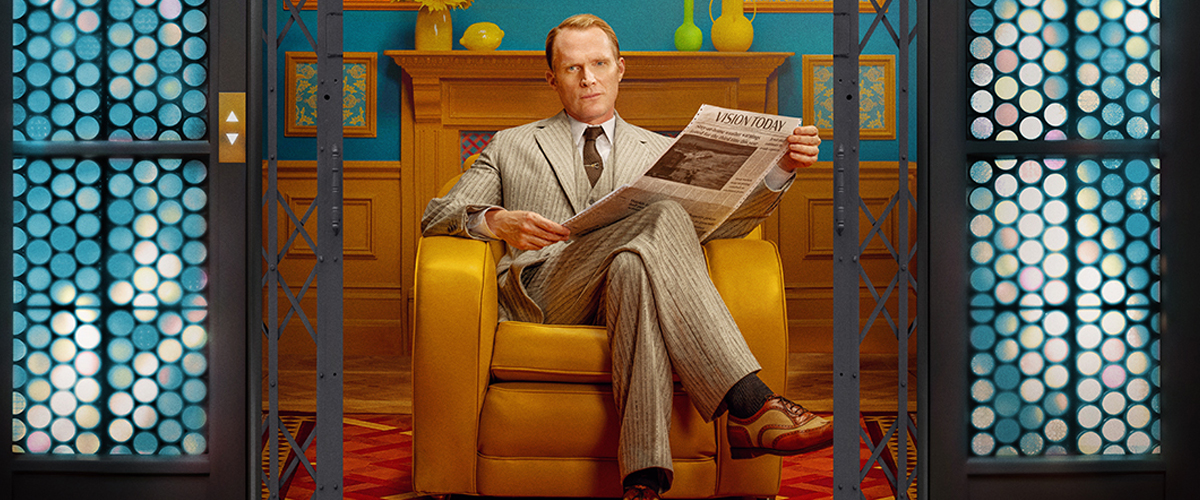
This spoiler-free review is based on the first two episodes of VisionQuest. However, please note that there will be spoilers for WandaVision and Agatha All Along.
Back in 2021, WandaVision took a gamble by flipping expectations of a conventional superhero adventure on their head. The Disney+ miniseries, which focused on the personal relationship between two of the most powerful Avengers, Wanda Maximoff / Scarlet Witch (Elizabeth Olsen) and the Vision (Paul Bettany), raised the emotional stakes, explored a sitcom-style presentation, and crafted a poignant study in grief and loss, spawning the iconic “What is grief, if not love persevering?” line that holds a spot in the character quote hall of fame.
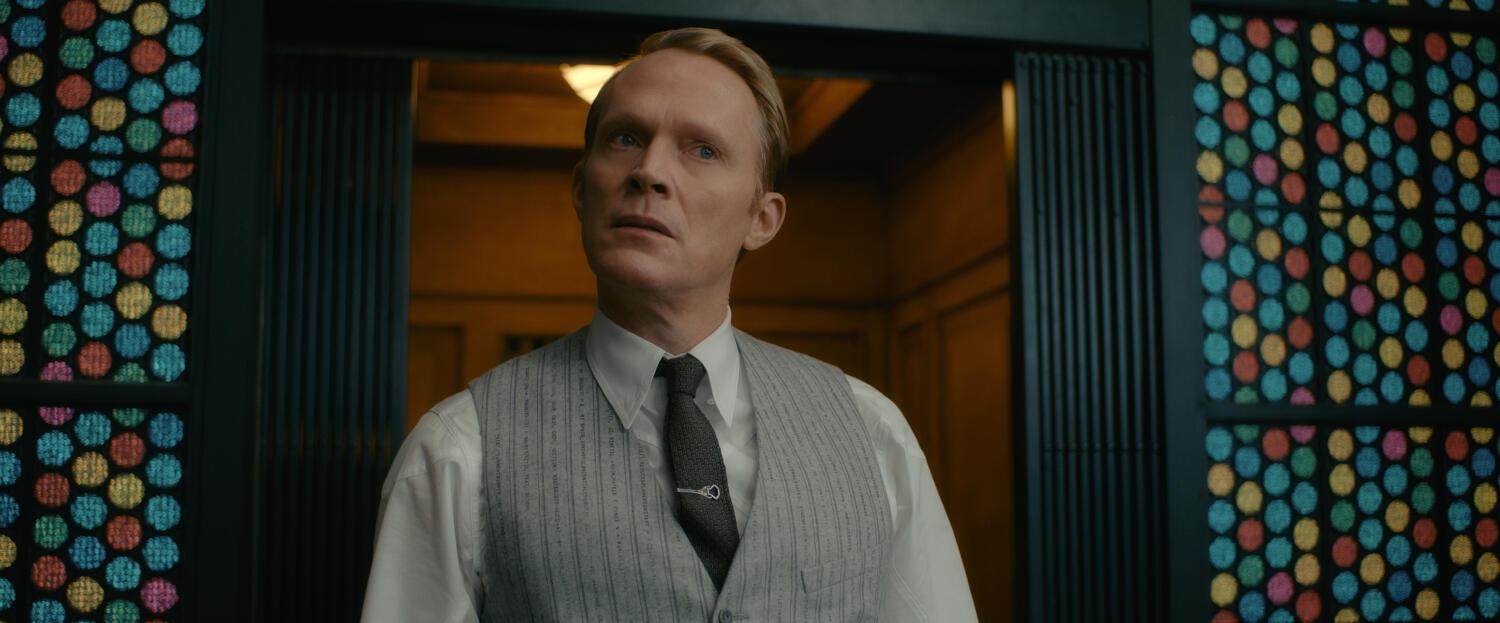
With Vision returning to the small screen in Terry Matalas’ VisionQuest, echoes of lost love and fractured bonds remain a haunting presence, woven into the larger thematic tapestry of identity. Marking Bettany’s return to the live-action Marvel Cinematic Universe (MCU) since the inaugural Marvel Television project, it caps off the loosely connected WandaVision trilogy that includes its 2024 sequel Agatha All Along, and picks up several years after the conclusion of the first instalment, where the rebooted synthezoid has been in hiding after fleeing S.W.O.R.D.
Except this Vision isn’t the same one as before. In the opening moments of the show, the character (re)introduces himself as “I am Vision, and yet, I am not”, which is…actually as accurate as things get. Let’s rewind the clock and recap a few little things – it’s been years, after all – with Vision, first introduced in 2015’s Avengers: Age of Ultron with the Mind Stone. Vision was ultimately killed in 2018’s Infinity War and later resurrected by Wanda in WandaVision.
The couple appeared to lead a happy life with their two kids, Tommy and Billy, in Westview, but after the illusion shattered, revealing the town as a fake world created by Wanda, she released her hex, and this iteration of Vision disappeared. S.W.O.R.D.’s version of Vision, initially created as a weapon and now sporting a white costume, subsequently gained all the other Vision’s memories, went rogue, and flew off. Sometime later, Wanda wreaks havoc in Doctor Strange in the Multiverse of Madness as the big bad and seemingly meets her demise.
It’s a doozy, and nobody can blame Vision for struggling to find his sense of self. To better understand who he is, he communicates with various AI personas in the Mindspace, a virtual realm inside his quantum-computer brain, who appear as human avatars assigned to different responsibilities. Iron Man’s J.A.R.V.I.S. (James D’Arcy), for instance, works on security, housekeeping, and encryption, with F.R.I.D.A.Y. (Orla Brady) from Age of Ultron handling socialisation, AI humour, and tactical operations.
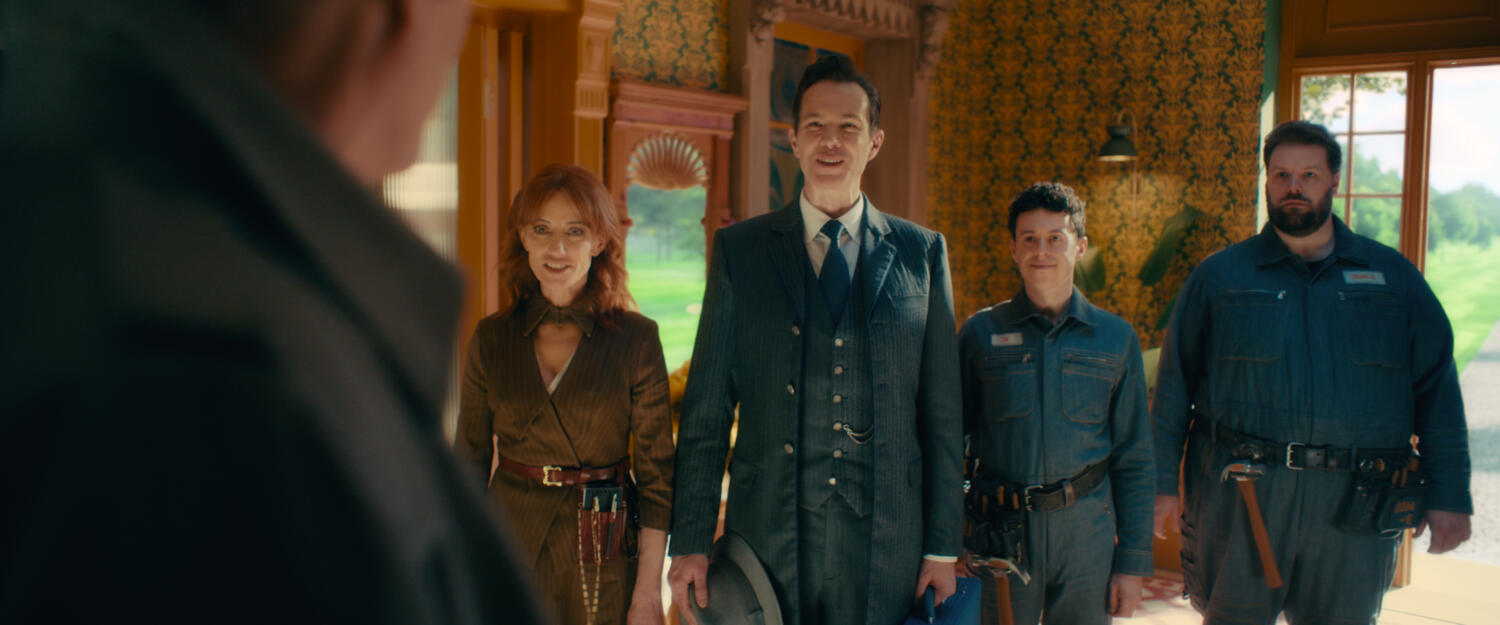
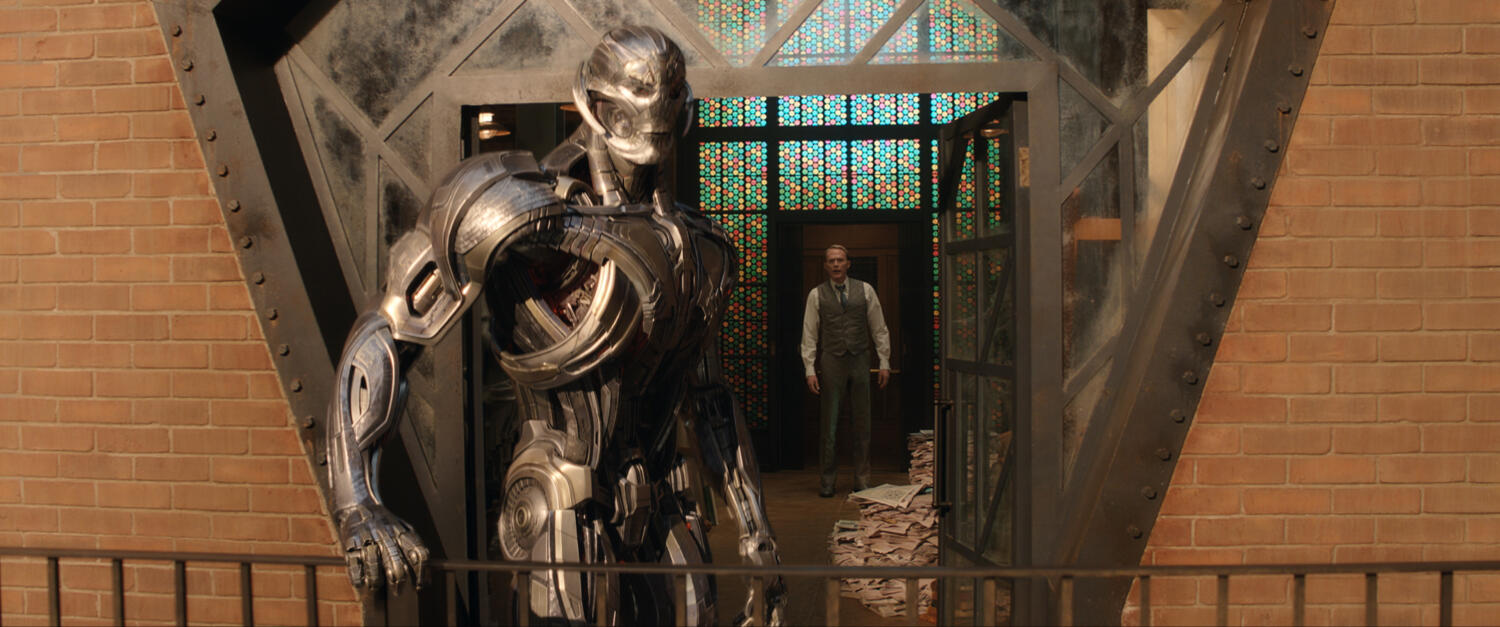
Spider-Man: Far From Home’s E.D.I.T.H. (Emily Hampshire), meanwhile, is programmed for recreation, game-based therapy, and weaponry, joined by a pair of general maintenance robots: D.U.M.-E (Henry Lewis) and U. (Jonathan Sayer). Unfortunately for Vision, Ultron (James Spader, reprising his role from the 2015 film) has also been uploaded to the Mindspace, creating a melting pot of eclectic personalities that can occasionally clash – and not in a bad way.
In fact, the character interactions in VisionQuest are entertaining fare. The cast oozes lively chemistry, with the banter between the straight-laced, wisecracking J.A.R.V.I.S. and the spirited, devil-may-care E.D.I.T.H. proving particularly delightful. When the focus shifts to Vision and Ultron, their interactions are often punctuated by tension that conveys the complicated creator-and-son dynamic, swinging between dry humour – Vision introduces the Avengers big bad as an “a**hole”, while the latter dishes out creative insults and sharp one-liners – and philosophical discussions (okay, ‘discussions’ may be too generous a word).
Putting Ultron in a role that challenges Vision’s understanding of free will, self-identity, and his relationship with humans may be unexpected, considering his villainous turn in the MCU, but Bettany and Spader’s natural chemistry makes it work like a charm. Coming at a time of AI fabulism in the real world, these themes are also more relevant than ever, and the show uses clever subtlety to reinforce its exploration here, such as showing F.R.I.D.A.Y. holding a book with ‘ego’ and ‘id’ in the title, two parts of Sigmund Freud’s structural model of the human psyche, and Vision reading Albert Camus’ The Stranger.
Humanity is the other focus of VisionQuest. When he’s not in the Mindspace, Vision works at a pub in Edinburgh that the past version of him and Wanda used to frequent, and continues to build his understanding of humans and reconcile them with his inherited memories. The superhero isn’t the only one seeking a sense of self, however, as the discovery of a bounty on his head leads to an encounter with Thomas Shepherd (Ruaridh Mollica), who, at the end of Agatha All Along, was brought back to life with Tommy’s soul after drowning.
Here, Tommy-as-Thomas is introduced as a grifter who can assume any identity and finds an accomplice in Lisa (Lauren Morais), a kleptomaniac pickpocket. It doesn’t take long for the latter to point out how his ability is a double-edged sword: “But if you can’t get to be yourself, you might as well be invisible”, setting the stage for a parallel storyline that takes Tommy on a similar search for identity. While Mollica’s performance as a roguish swindler proved magnetising, it’s only in the second episode that the 26-year-old brought out the different shades of his craft.
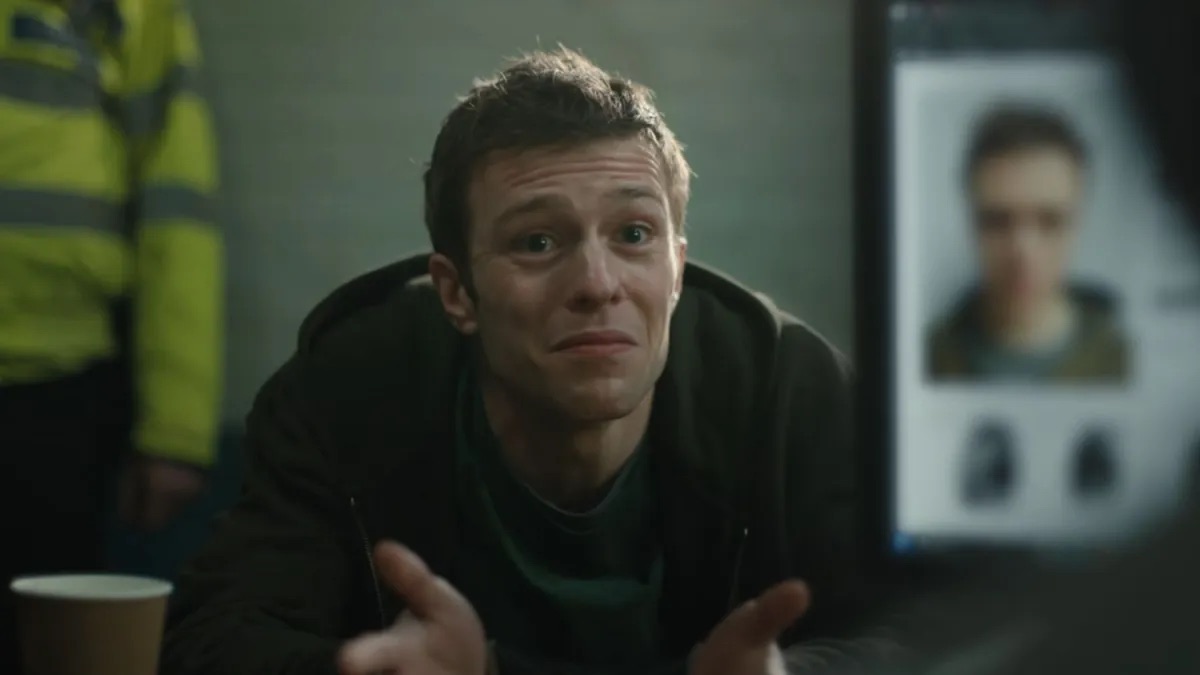
Amid the setup and exposition, VisionQuest delivers action set pieces that quickly ramp up in intensity – be it a multi-opponent showdown in a confined space where Vision activates his powers, a high-octane escape sequence, or a wipeout in a psychiatric facility. At the centre of the conflict is a ruthless mercenary named Paladin (Todd Stashwick), bound by an unbreakable contract, with his associate, the Handler, played to deadpan perfection by Diane Morgan of Philomena Cunk fame, and the adrenaline rush, however brief, is a welcome change in pace from the occasional slow storytelling. What’s not as inviting, though, are the needle drops, which can feel out of place or overdone.
The aesthetic nods to WandaVision serve as perfect finishing touches, marrying saturated hues with halation that echoes the previous retro look, topped off with deft, clever camerawork. With the first two episodes laying the groundwork, it’s too early to know whether Vision’s journey to enlightenment will live up to its ambition, but the insightful thematic exploration and off-the-roof cast synergy bode well for Matalas’ creative, well, vision and the end of the WandaVision trilogy.
GEEK REVIEW SCORE
Summary
Quirky, thought-provoking and entertaining, VisionQuest is shaping up to be a sincere exploration of the man behind the machine, anchored by charming, strong character dynamics and distinctive retro stylings that hark back to WandaVision.
Overall
8.5/10-
Story - 8/10
8/10
-
Direction - 8.5/10
8.5/10
-
Characterisation - 9/10
9/10
-
Geek Satisfaction - 8.5/10
8.5/10

Si Jia is a casual geek at heart – or as casual as someone with Sephiroth’s theme on her Spotify playlist can get. A fan of movies, games, and Japanese culture, Si Jia’s greatest weakness is the Steam Summer Sale. Or any Steam sale, really.

 Kevin Low