
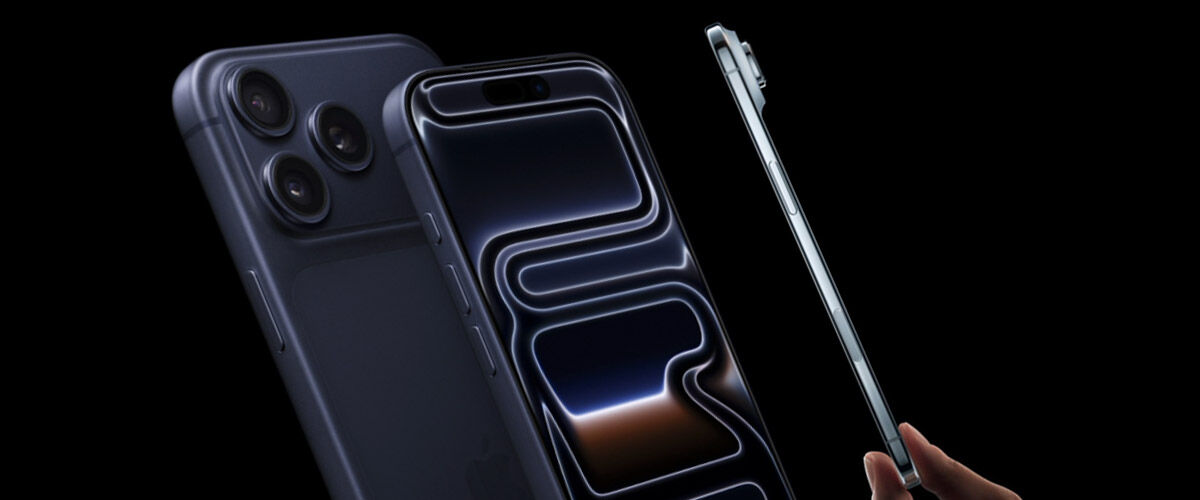
The status quo for Apple’s smartphone lineup has shifted, as the Cupertino giant is adding a new member to the family. Instead of the usual three, the iPhone 17 series now boasts four models tailored to different user needs, with the ultra-thin iPhone Air joining the staple, more powerful iPhone 17 Pro and Pro Max options.
Announced during the “Awe Dropping” keynote held on 9 or 10 September (depending on region), Apple’s latest doesn’t reinvent the wheel and comes equipped with incremental hardware refinements. It will mark an upgrade to the A19 chip, a 6-core CPU, and an updated 16-core Neural Engine, resulting in an expected 20 percent faster performance.

Measuring 6.3 inches, the Super Retina XDR OLED display on the iPhone 17 is larger than its predecessor (6.1 inches) and touts a 2,622 x 1,206-pixel resolution at 460 ppi, a 120Hz adaptive refresh rate, and a series-highest peak brightness of 3,000 nits. The dual Fusion rear cameras comprise a 48-megapixel (MP) main sensor and a 48MP ultra-wide snapper, alongside an upgraded 24MP Center Stage front camera that delivers increased stabilisation and a wider field of view.

The true show-stopper, though, is the iPhone Air. Coming in at a mere 5.6mm and weighing 165 grams (versus 7.9mm and 177 grams, respectively, on the base model), the titanium-fitted device is powered by the A19 Pro chip, featuring a 5-core GPU and a 6-core CPU that Apple claims is the fastest in any smartphone. In addition to a 6.5-inch ProMotion display with a 120Hz refresh rate and a resolution of 2,740 x 1,280, it also sports a 48MP Fusion camera system with a 12MP telephoto lens, an 18MP Center Stage selfie snapper, and a Dual Capture system that combines the front and rear cameras.
Under the hood, the iPhone Air ships with a new built-in modem called the C1x, which is twice as fast as the C1, and a new N1 chip design that offers Wi-Fi 7, Bluetooth 6, and Thread connectivity out of the box. As usual, no figures for the battery capacity were shared, but users can expect “all day” usage with up to 40 hours of video playback.

Moving on to the iPhone 17 Pro and Pro Max, the top-end models pack the A19 Pro chip in a new rigid aluminium enclosure. Their respective screen sizes remain unchanged at 6.3 inches and 6.9 inches, but a new bump now sits at the back, housing three 48MP Fusion cameras that promise improved detail and higher resolution owing to bigger sensors. Alongside an 18MP Center Stage front camera, both devices also feature Apple’s proprietary vapour chamber, which increases sustained performance by 40 percent compared to the iPhone 16 series.
As part of the ecosystem, the iPhone 17 lineup will inherit the latest Apple Intelligence features, including Visual Intelligence and Live Translation, as well as the new Liquid Glass design language set to launch with iOS 26.

The prices for each device are largely the same as before: the iPhone 17 starts at US$799, the iPhone 17 Pro at US$1,099 ($S100 more than its predecessor), and the iPhone 17 Pro Max at US$1,199. The iPhone Air comes in at US$999, with all models including a baseline storage of 256GB, and a first-ever 2TB option for the iPhone 17 Pro Max. Pre-orders open on 12 September, and availability begins on 19 September.

Si Jia is a casual geek at heart – or as casual as someone with Sephiroth’s theme on her Spotify playlist can get. A fan of movies, games, and Japanese culture, Si Jia’s greatest weakness is the Steam Summer Sale. Or any Steam sale, really.
 HSALS
HSALS

 Zinho De Costa