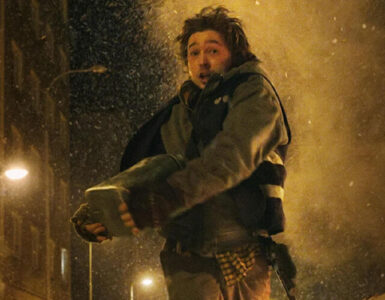
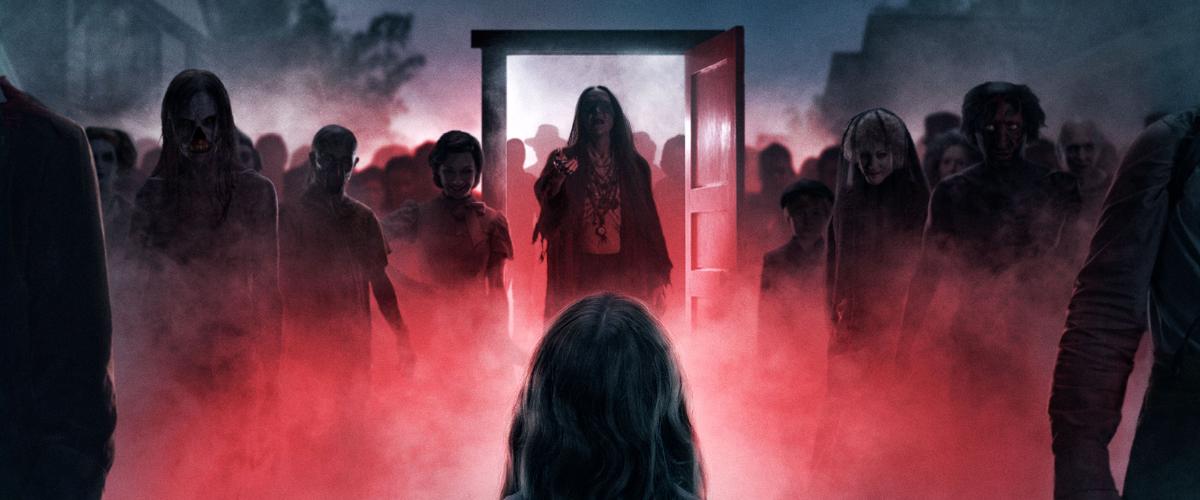
Since horror auteurs James Wan and Leigh Whannell of Saw (2004) fame first sent audiences tiptoeing through a darkened house to the screech of a violin in 2010, Insidious has built much of its staying power around one wonderfully creepy idea – somewhere beyond the living world sits The Further, an endless purgatorial void conceived as a shadowy reflection of reality suspended somewhere between life, death and whatever waits beyond. And it has given the series room to conjure everything from the Lipstick-Face Demon to the Bride in Black and the KeyFace.
Six films later, that spectral playground remains arguably the franchise’s greatest invention, capable of opening another crimson door whenever Blumhouse decides somebody ought to walk through it, though closing that door seemed to be precisely what Insidious: The Red Door attempted in 2023. Patrick Wilson’s (The Conjuring) directorial debut brought the Lambert family’s long-running ordeal to an emotional conclusion, allowing Josh and his son Dalton (Ty Simpkins, Iron Man 3) to confront memories buried since Insidious: Chapter 2 that also seemingly put the series’ original haunting to rest. Naturally, a franchise-best box office haul of US$189 million worldwide (against a small production budget of US$16 million) reopened that door of ideas. Three years later, Insidious: Out of the Further hands the keys to Come Play (2020) filmmaker Jacob Chase, leaves the Lamberts behind and asks whether Wan and Whannell’s ghostly dimension can sustain Insidious without the family whose astral misfortunes started everything.
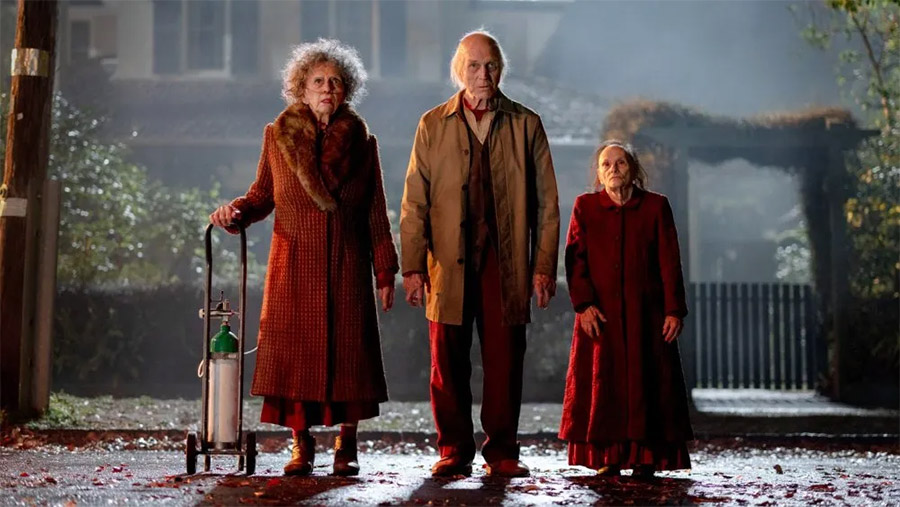
Caught at the centre of the haunting is Gemma (Amelia Eve, The Haunting of Bly Manor), a woman who has spent most of her life trying to outrun her traumatic childhood and Chase establishes that history through a grim opening sequence, following a young Gemma as she quietly tiptoes around her home to avoid attracting the attention of her mother (Laura Gordon, Late Night with the Devil) experiencing a prolonged psychological crisis. Years later, those memories continue to govern how she raises her daughter Maya (Island Austin, I Can Only Imagine 2), particularly as Gemma becomes terrified that the instability she grew up around may somehow repeat itself through her.
Such vulnerability naturally makes Gemma irresistible to whatever has escaped The Further and once its inhabitants recognise an opening in Gemma, she becomes both their target and their way into a family already struggling to hold itself together. Eve carries that deterioration with impressive conviction, shifting between panic, anger, exhaustion and fierce maternal protectiveness as Gemma’s certainty about what she sees begins slipping away. Anyone familiar with her work in Bly Manor (2020) already knows how comfortably she can inhabit supernatural misery, and Out of the Further gives her plenty of it. Less convincing is how insistently the screenplay explains what Eve’s performance has already made perfectly clear – Chase repeatedly circles the idea of pain travelling from parent to child, verbalising Gemma’s fear of becoming her mother long after the point has registered. Coming immediately after Insidious: The Red Door, which similarly built its supernatural conflict around father and son confronting damage passed between generations, the repetition becomes particularly noticeable.
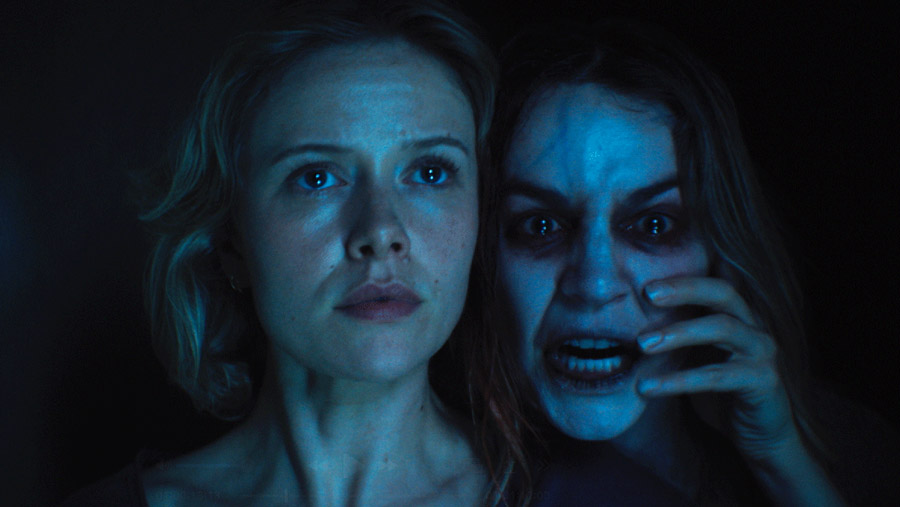
Curiously, Chase shows considerably less interest in explaining the supernatural mythology itself. Newcomers receive little guidance through The Further, though its basic rules remain straightforward enough to follow – psychically gifted people such as Gemma can cross into the shadow dimension while sleeping or astral projecting, where countless dead things wait for an opportunity to attach themselves to the living. Allowing that dimension to bleed further into physical reality gives Chase plenty of room to manipulate perception – with rooms, objects and apparitions slipping between worlds until Gemma can no longer reliably tell whether she has awakened at all. Before moving into filmmaking, Chase designed and operated the annual Big Worm’s Sherwood Scare haunted house in Los Angeles, and that experience shows in his handling of enclosed spaces, carefully placed apparitions and audience misdirection. He understands the visual language Wan established without slavishly reproducing it, particularly the awful anticipation created by noticing something in the corner of a frame that definitely was not there before.
Two back-to-back sequences around the midpoint show Chase at his most playful, beginning with a trip through Maya’s innocent-looking pillow fort that stretches impossibly far once Gemma crawls inside, tightening around her until the homemade hideaway becomes an endless network of narrow passages. Anyone who caught Backrooms earlier this year may experience a flicker of déjà vu as the fort carries the same spatial nightmare of an ordinary interior somehow becoming impossibly large once entered. Poking her head through one opening only reveals another tunnel, then another, as dead faces begin appearing around corners and wrong turns seem to fold back upon themselves. Chase exploits every inch of the cramped environment, placing the camera practically against Gemma’s face before sending it crawling behind her through passages barely wide enough for a body.
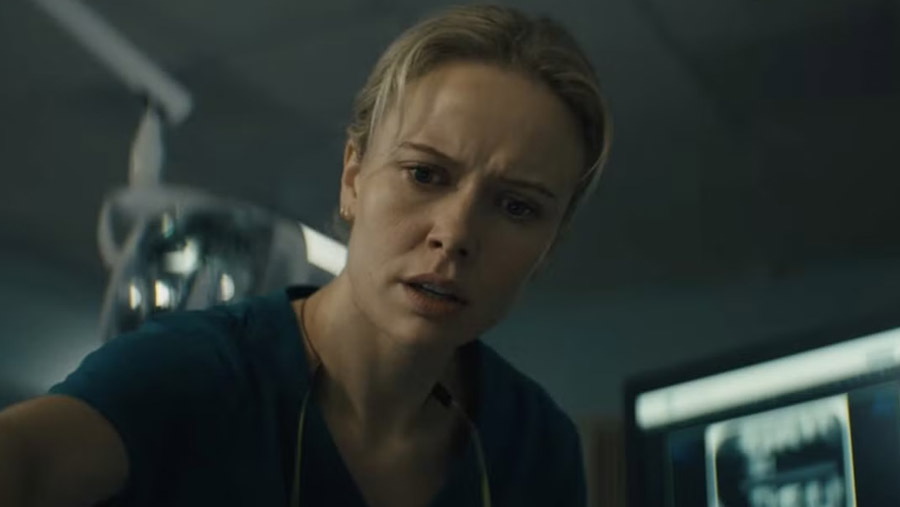
Then comes the dentist – Gemma’s day job as a dental hygienist provides Out of the Further with its nastiest and most memorable set piece, as an elderly patient (David Morgan, Wilderness) arrives with teeth that appear to have spent several lifetimes avoiding professional attention and Chase lingers on every revolting detail as Gemma begins cleaning them. Thick deposits peel away beneath her instruments, slimy residue collects around rotten gums, and strands of hair emerge from places where hair has absolutely no business being. Worse still, her patient simply stares back while she works, his ruined mouth gradually suggesting another row of considerably sharper teeth waiting beneath the first, though a PG-13 rating places obvious limits on how nasty proceedings can become.
Once the gagging subsides, Out of the Further introduces another welcome departure from franchise routine: previous entries have generally favoured demons built around memorable visual signatures (Lipstick-Face Demon, Bride in Black, KeyFace and their assorted nightmare colleagues) whose motivations rarely extend much beyond tormenting the living and stealing bodies. Cyrus Lam, played with oily menace by A Knight of the Seven Kingdoms‘ (2026) Sam Spruell, arrives with considerably more personality as a villain who understands The Further, knows how its relationship with the living world can be manipulated and has ambitions beyond attaching himself to whichever unfortunate soul happens to wander past.
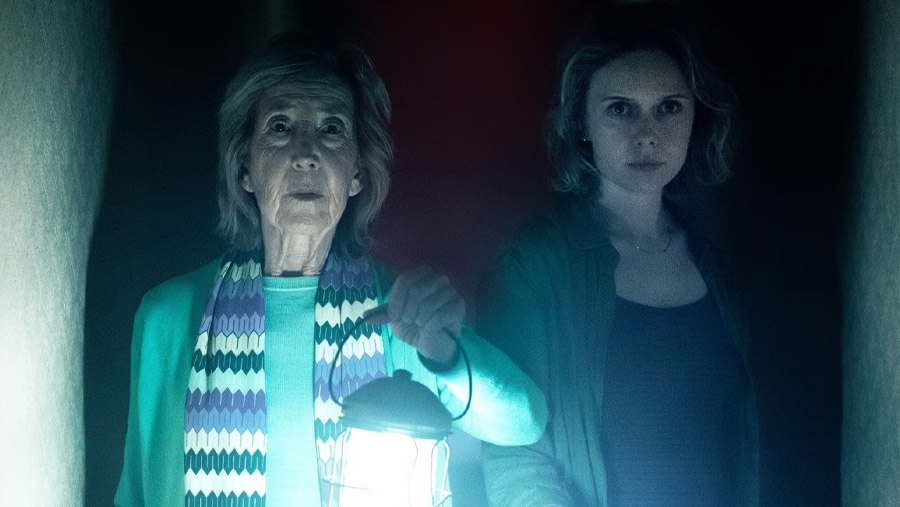
Familiar company soon arrives to help counter him – Lin Shaye (Nightmare on Elm Street) once again returns as Elise Rainier whose death has proved remarkably ineffective at removing her from a franchise. Now operating from the other side, Elise continues helping the living navigate The Further, communicating through tattoo artist and gifted medium Clare (Maisie Richardson-Sellers, The Originals), who becomes Gemma and Maya’s supernatural lifeline as Cyrus’ plans become clearer, eventually assembling Gemma, her earnest boyfriend Nick (Brandon Perea, Nope) and Maya around an increasingly elaborate scheme designed to trap him.
Somewhere around the moment Clare starts cutting up grapefruits to explain the scheme, Out of the Further begins tying its own mythology into knots. Watching everyone nod along creates the faint suspicion that the demonstration exists primarily because the screenplay itself needs reassurance that any of this makes sense but it does not particularly help. Strangely, that confusion also frees Out of the Further to become considerably sillier as Gemma’s battle against Cyrus in the final act gradually acquires the energy of a paranormal heist, complete with assigned roles, coordinated crossings between worlds and a trap governed by rules that become remarkably flexible whenever another complication is required.
Uneven pacing and increasingly tangled mythology prevents Out of the Further from reaching the unnerving simplicity of Wan’s original, while Gemma’s family troubles revisit territory the franchise has already explored at length. Still, Out of the Further demonstrates why Insidious has one advantage over many horror franchises – nobody actually needs to resurrect the same killer again. The Lamberts can leave, Elise can drift in and out, and new families can wander into trouble without carrying five movies’ worth of homework behind them. Somewhere beside the living world, The Further remains patiently waiting, filled with corridors that have never been explored and things that have yet to introduce themselves. Such freedom could sustain Insidious for years, provided future filmmakers resist explaining every shadow lurking inside.
GEEK REVIEW SCORE
Summary
Director Jacob Chase understands the series’ funhouse rhythm: darkness, silence, one awful face where no face should be, and keeps the jump scares coming with wicked precision, even when the final act ties itself into supernatural knots.
Overall
7.1/10-
Story - 6/10
6/10
-
Direction - 7.5/10
7.5/10
-
Characterisation - 7.5/10
7.5/10
-
Geek Satisfaction - 7.5/10
7.5/10

Natalie is a big fan of anything related to movies, TV shows, and anime — you name it. When she’s not reading or being a dedicated cinephile, she’s probably playing gacha and tabletop games, or daydreaming of Caleb from Love and Deepspace.

 Kevin Low