It’s safe to say that the Roguelike genre is the current “big thing” in the gaming space. Built on the foundations of replaying procedurally generated levels with different attainable power-ups during every “run” (the term used to describe each play session), with players largely starting from scratch each time around, the format is easy for developers to adopt, saving on budget while simultaneously offering a fresh experience each time a player jumps in.
In comes Finnish game developer Housemarque, who approached the genre with the goal of leveraging the addictiveness of procedural runs while also making a AAA experience, resulting in 2023’s Returnal. Offering a unique bullet hell (dubbed Bullet Ballet by the devs) formula in a third-person shooter format, Returnal was a hit among fans, although it did feature a rather steep learning curve with its immense difficulty and the lack of meaningful progression in between runs.
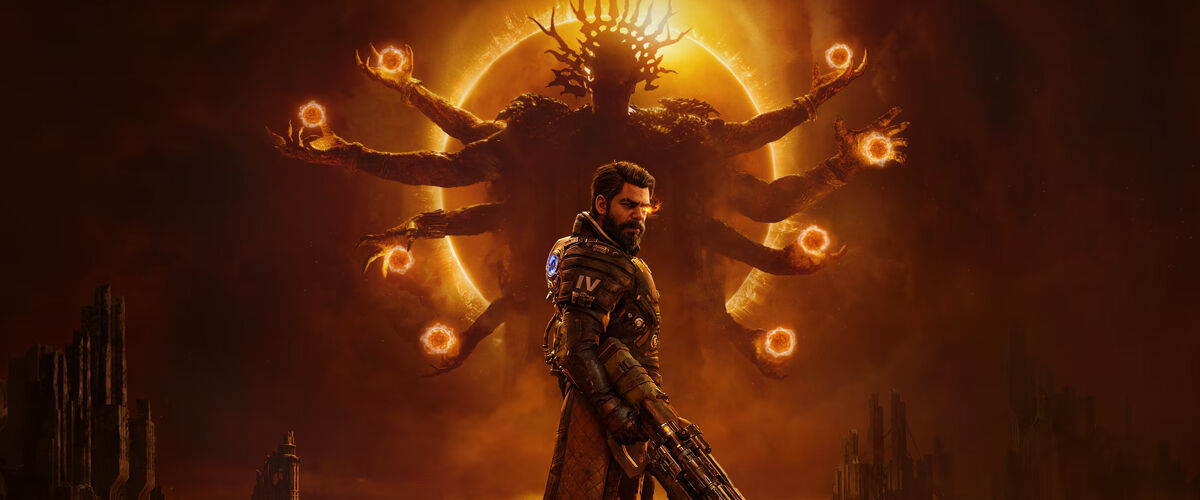
For Saros, the next Bullet Ballet evolution from Housemarque, the approach was two-pronged this time around – expand upon the core concepts of Returnal, while offering meaningful permanent progression to make players feel more powerful with every run. The result? A spiritual successor that improves upon the gameplay of the original in almost every way, while also being a far more accessible title in the process.
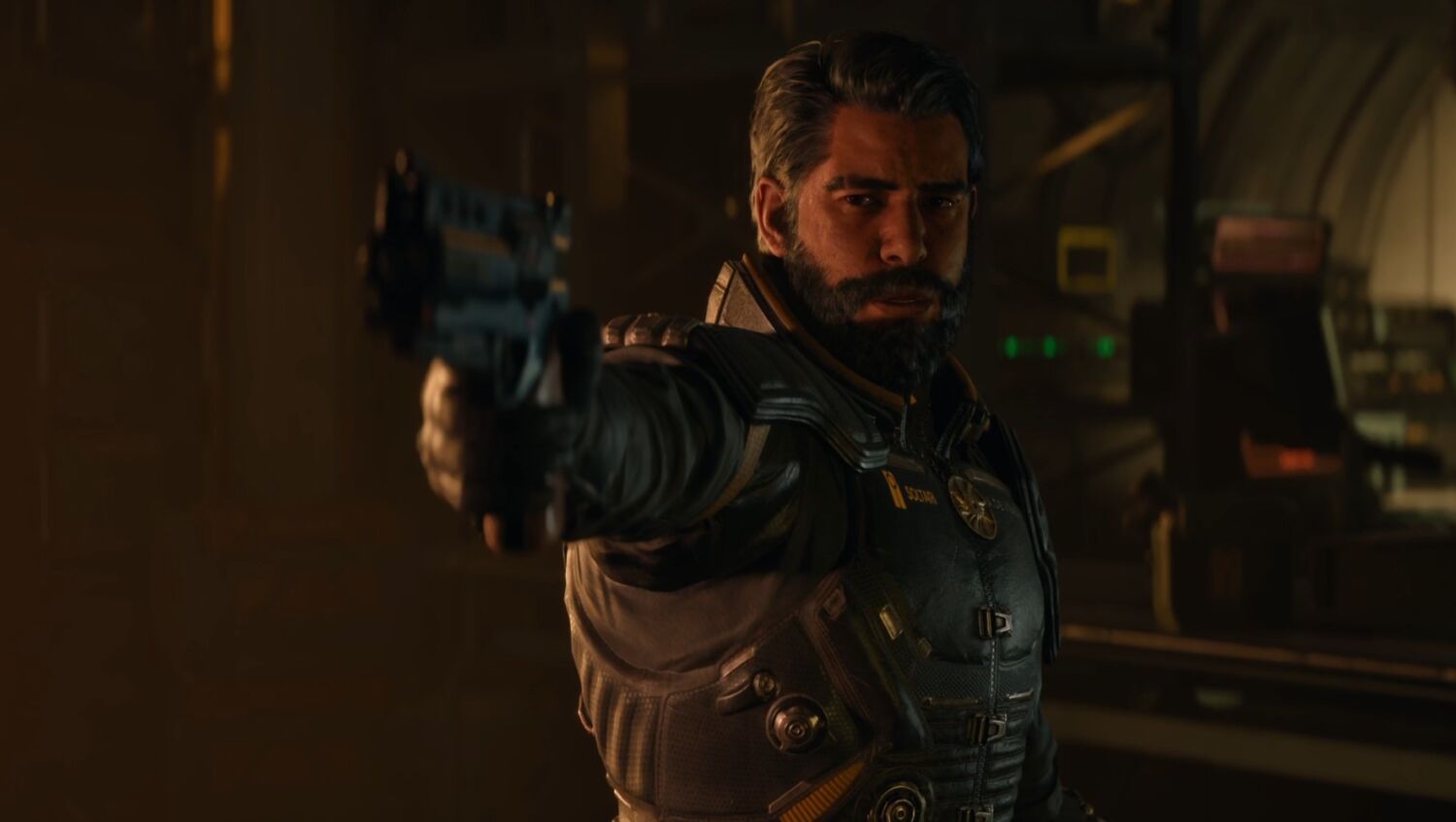
Set on yet another mysterious far-off planet, Carcosa, players follow the journey of Arjun Devraj, an enforcer for the mega-corporation Soltari. Tempted by the allure of Lucenite, a previously unknown compound found only on Carcose, Soltari sends its Echelon teams to the uncharted planet, but after communications are lost with the first three teams, it’s up to Arjun’s Echelon IV to figure out what went wrong.
For Arjun, however, the mission also holds a personal stake, as he is not just searching for the missing team but someone close to him as well. And with a mysterious phenomenon afflicting the planet known as the eclipse, which slowly drives people insane, his rescue mission quickly spirals into a race against the clock and a fight for survival.
Perhaps the biggest difference between the narratives of Saros and Returnal is that while the latter featured an intentionally intricate storyline filled with metaphors and largely open to player interpretation, Saros’ is comparatively straightforward and easier to follow. That said, Returnal’s narrative has more depth, such that it’s still being discussed by players til this day, and unfortunately, the worldbuilding of Saros just can’t match its predecessor, with many of its twists falling into modern gaming writing cliches and being quite the letdown considering the efforts made to build up intrigue.
Thankfully, Saros’ narrative is perhaps its only sore point, as when it comes to gameplay, the title far exceeds the heights of its predecessor, thanks to its reactive gameplay loop, an actual sense of progression, and most importantly, a much more flexible approach to difficulty that’s sure to attract a wider range of players who might not have agreed with Returnal’s punishing nature.
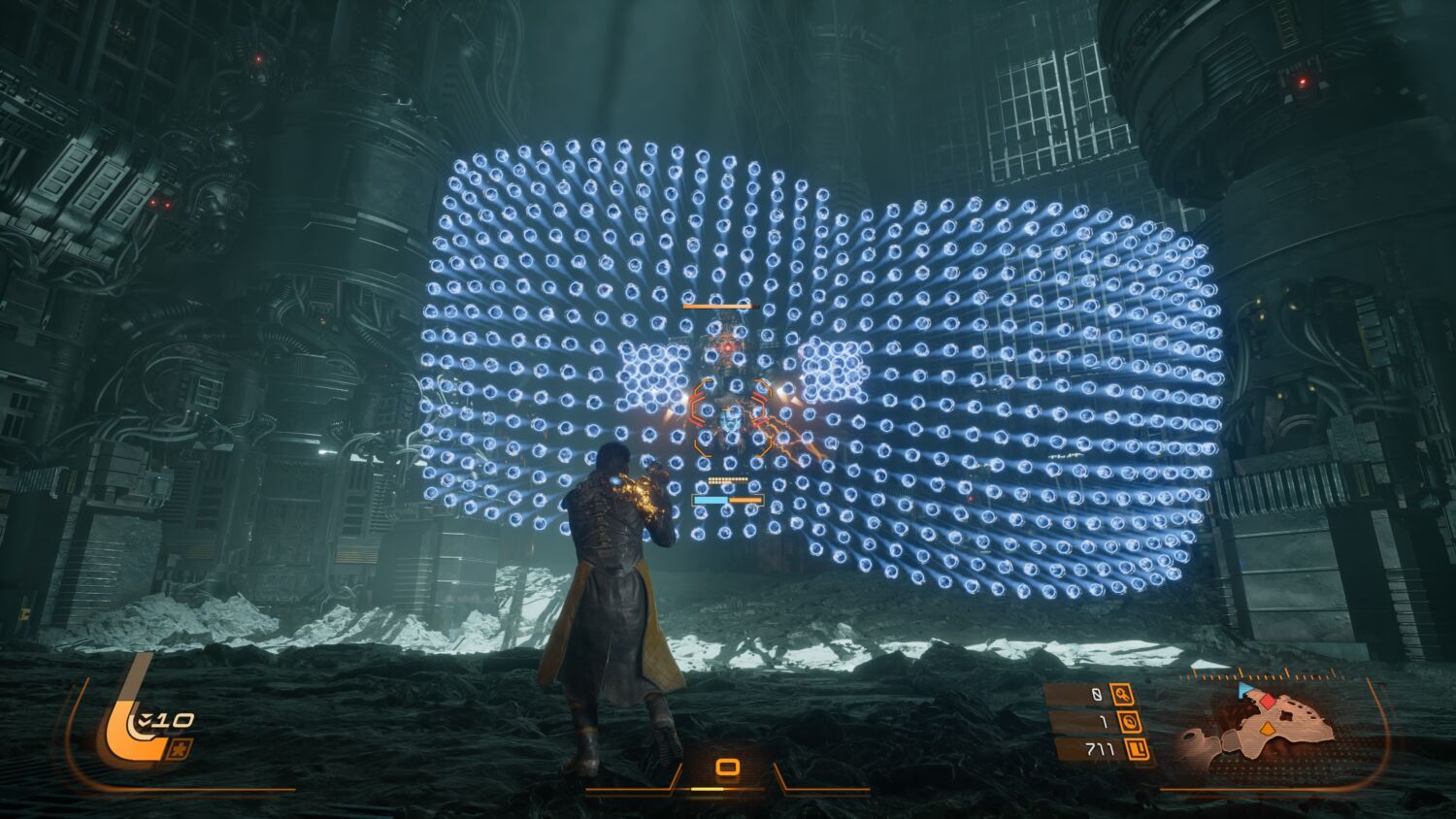
While most of what Saros has to offer in terms of its core gameplay systems will be familiar to those coming from Returnal, the title now shakes up its combat loop thanks to the addition of its energy shield system. Players will still face a barrage of multi-coloured projectiles with every enemy encounter, but now, they can turn the enemy’s attacks against them, thanks to Arjun’s shield, which can absorb projectiles of a certain colour. This isn’t just a tool for defence, however, as each absorbed bullet also generates energy, which he can then expend via a devastating power attack.
The addition of this system encourages players to take a more aggressive approach this time around, as, rather than simply dodging or kiting enemies around the battlefield, they can now choose to charge headfirst in a satisfying risk-and-reward-styled system.

This isn’t to say that the shield is overpowered in any way, as the game still throws numerous curveballs at a player, such as red lasers or projectiles that instantly break Arjun’s shield, leading to a lengthy cool-down period before he can use it again. More notably, however, is Saros’ Eclipse feature, where at set points in every level, Arjun has to interact with a mysterious pedestal in order to proceed. This triggers an Eclipse, which shrouds the level in a red haze and buffs all enemies.
That’s not all, as apart from being more aggressive, foes will now fire yellow projectiles, which, when hit, reduce Arjun’s maximum armour in addition to dealing damage. The only way to regain said max armour is to use his power attack, making encounters a true test of a player’s reaction times, having to balance shooting, dodging some bullets while absorbing others, and firing off a well-timed power attack all at once. The Eclipse also lasts permanently until the end of the level, meaning players will need to tackle the game’s punishing boss encounters with it in effect, further upping the challenge, although as a trade-off, all currency picked up when the Eclipse is in effect is also increased.
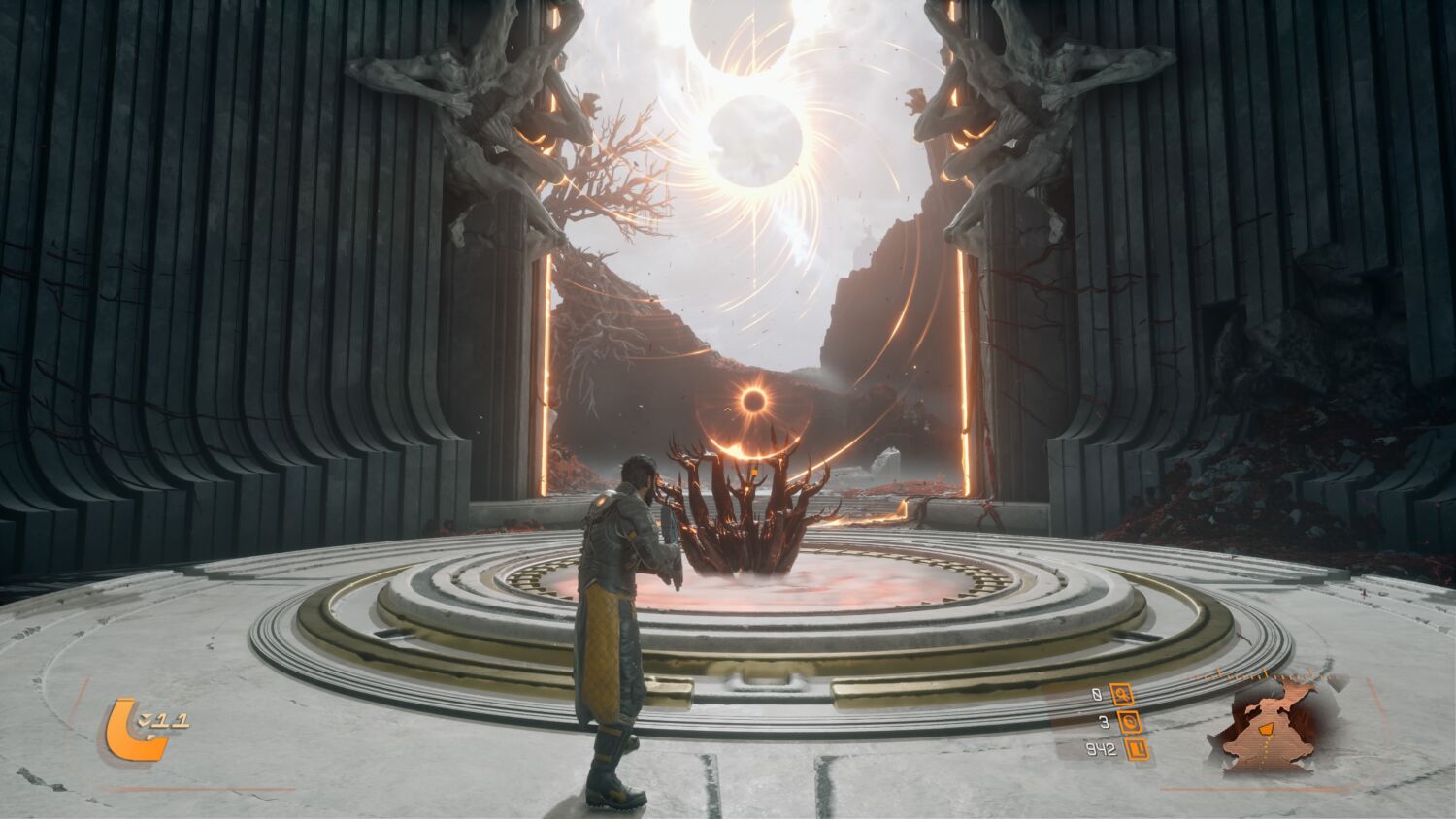
While this might seem like more of the same punishing experience seen in Returnal, Saros helps to even the odds by introducing permanent progression. During runs, players can pick up currency known as Proficiency points, which not only steadily improve their stats mid-run, but are also kept at the end of levels and can be traded in for upgrades via a skill tree, such as flat stat boosts or even game-changing ones, like the ability to absorb yellow projectiles (while still receiving the max armour damage), or being able to revive once upon death for every run. This makes death feel less like a hurdle and more like an opportunity to “level up” and come back stronger.
Furthermore, upon defeating the game’s second boss, players will also unlock Carcosan Modifiers, a system that allows players to equip powerful buffs known as “Protections” while balancing them out with negative traits called “Trails”. The addition of this system is a game-changer for accessibility, as with a little smart balancing of buffs and debuffs, players can significantly decrease the challenge of the game.
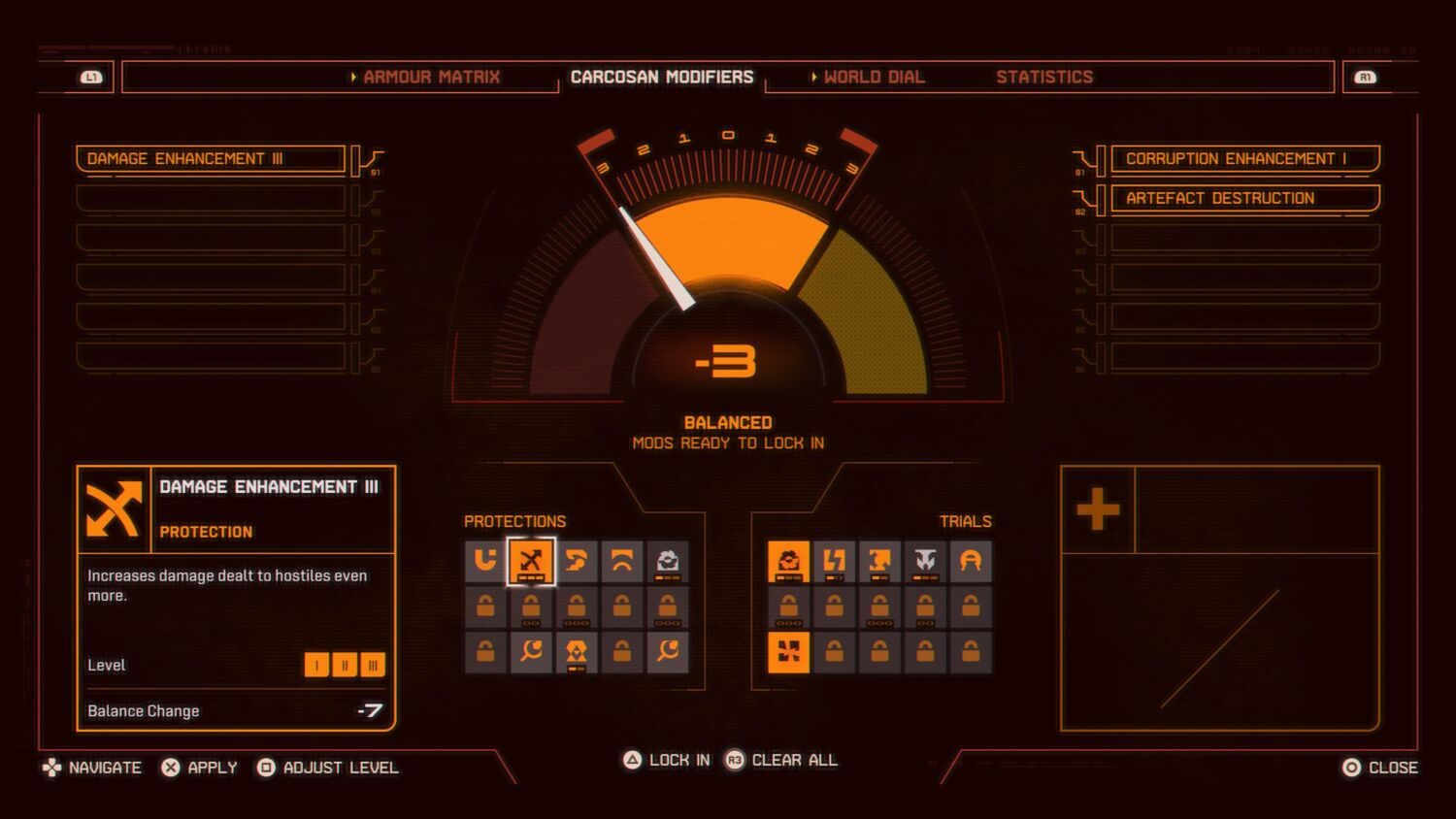
This feature is also completely optional, so purists can still maintain the game’s base level of difficulty, or even increase it further. It’s a simple inclusion that allows for more players to enjoy the game regardless of skill level, and one that should be in more games within the Soulslike genre moving forward. If there was any criticism to be made of the system, it’s that players only unlock the option well into the game, meaning those who struggle at the start might not even be able to make it to that point, and it might have served Saros better to include it earlier on, or even right at the start.
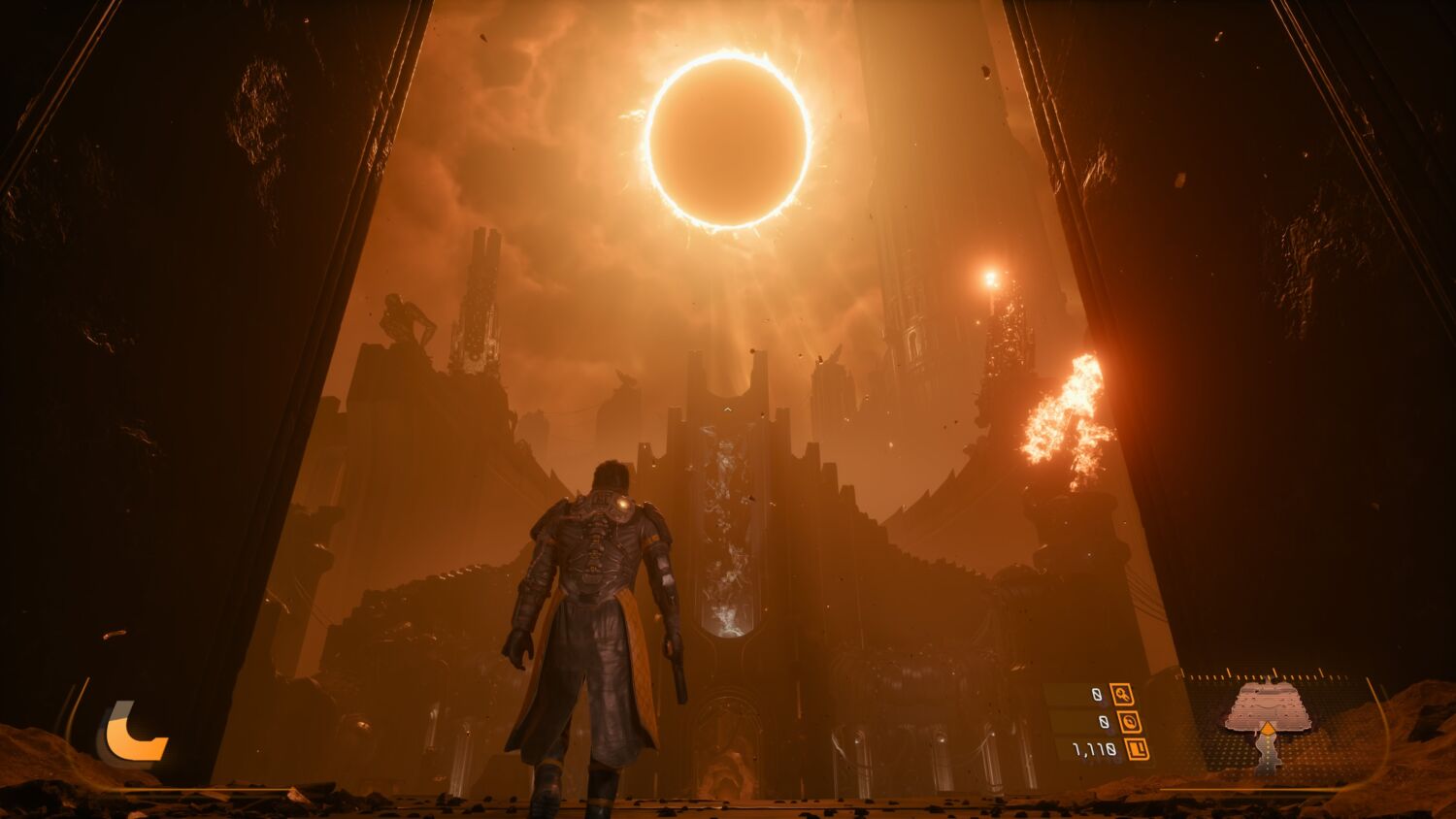
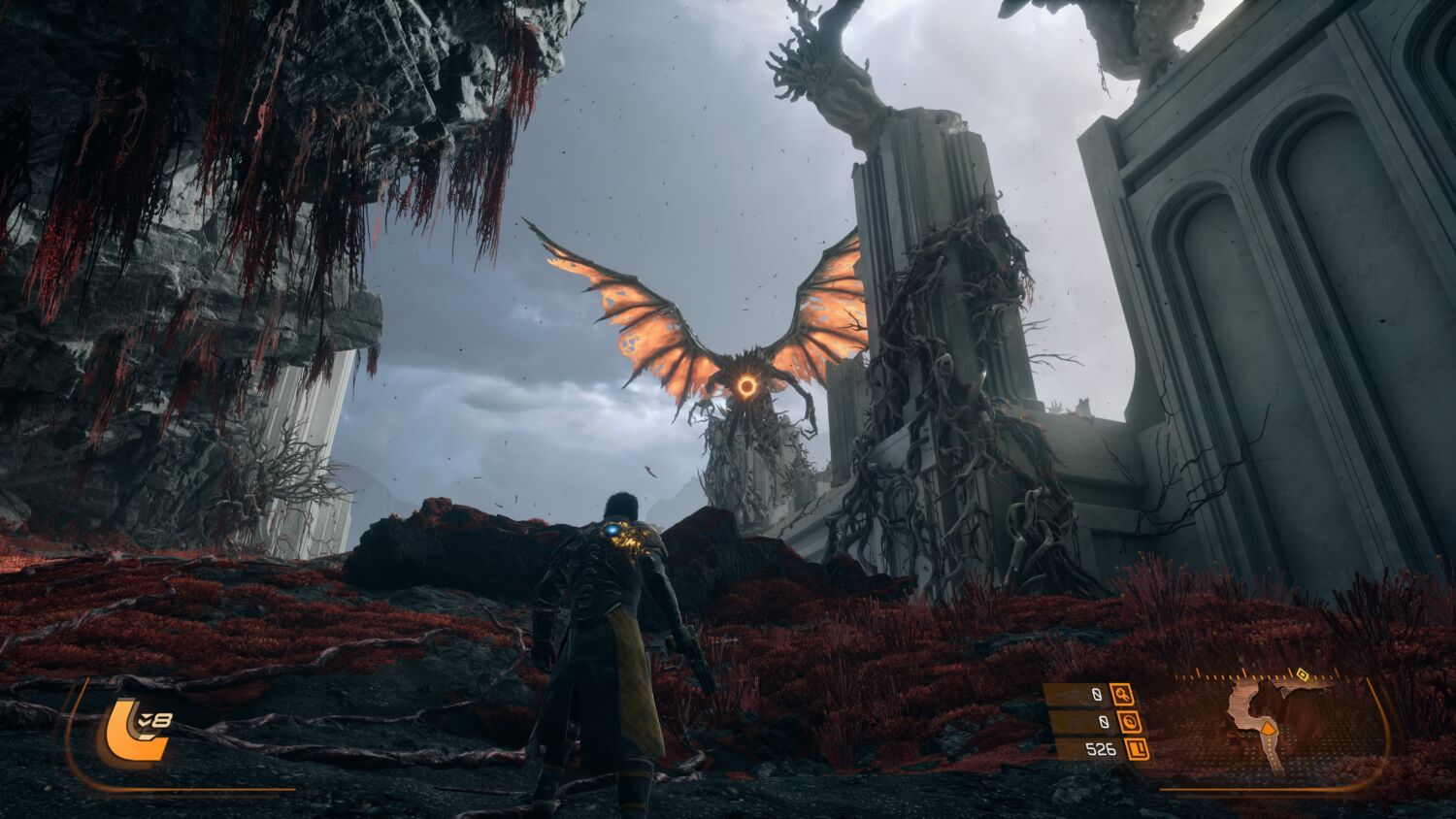
If the game has seen the biggest changes in terms of story and gameplay, its visuals are where things stay mostly familiar, and that’s not a bad thing. The planet has changed, but that distinct “alien-corrupted” landscape, such as tendril-covered walls and structures, or mysterious ancient ruins, still litter the environment, although Saros notably ups the vibrance and colours of its locales, a far cry from Returnal’s mostly dark and depressing aesthetic.
Like its predecessor, Saros continues to be a showcase of the PlayStation 5’s DualSense features. Haptic feedback helps to fuel immersion with every footstep, gunshot, or even at times when characters speak, while its adaptive triggers amplify each trigger pull and are even implemented to combine different actions intuitively, with a half-pull of the left trigger priming a weapon’s alternate fire mode, while a full trigger pull activates Arjun’s power attack.
Things aren’t completely perfect here, however, as Saros also retains one of the most notable flaws from Returnal – sluggish camera movement. Essentially, there is a notable downtime between controller stick input and camera movement, making panning the camera feel slow and quick camera snap movements impossible, which does prove an annoyance during intense shootouts, and seems counterintuitive, especially for a bullet hell shooter.

Still, Saros proves that Housemarque isn’t just looking to make a bigger and better spiritual successor, but a more approachable one too. Its combat is more engaging, its systems are less convoluted, and the added accessibility features help players tweak the experience to their liking. Of course, there might be some out there that will disagree with the studio’s approach, but at the end of the day, allowing more players to experience a title regardless of skill level is always a plus, especially when it is as well-crafted as this one.
GEEK REVIEW SCORE
Summary
With a refreshing take on its familiar bullet hell foundations and a host of accessibility features to help players fine-tune their gameplay experience, Saros is more than just Returnal 2.0, it’s a spiritual successor that more players will be able to enjoy.
Overall
8.6/10-
Gameplay - 9/10
9/10
-
Story - 8/10
8/10
-
Presentation - 8.5/10
8.5/10
-
Value - 8.5/10
8.5/10
-
Geek Satisfaction - 9/10
9/10

Kevin is a reformed PC Master Race gamer with a penchant for franchise “duds” like Darksiders III and Dead Space 3. He has made it his life-long mission to play every single major game release – lest his wallet dies trying.

 Joey Leong