
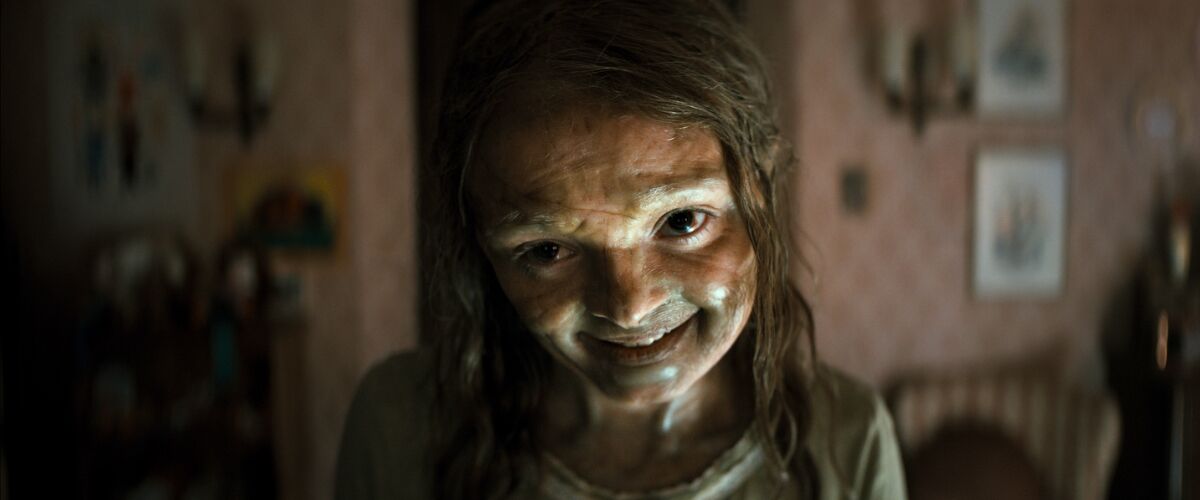
Confidence has never been in short supply for horror auteur Lee Cronin, the 44-year-old Irish filmmaker who has moved quickly, from reshaping familiar horror ideas into something distinctly his own. Early promise in 2019’s The Hole in the Ground gave way to the unrelenting brutality of 2023’s Evil Dead Rise, where Cronin proved he could handle legacy properties without sanding off their edges. Flesh, family, and festering dread have become recurring fixations, with his work often circling the quiet horrors that sit closer to home. Having already revived one undead playground, Cronin now turns his attention to another, armed with the same fascination for rot, rupture, revulsion and the things people would rather leave buried.
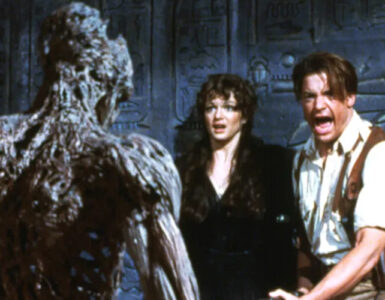
With Lee Cronin’s The Mummy, Cronin makes his intentions unmistakably clear, even staking authorship in the title itself, as though to warn audiences that this excavation won’t resemble anything that came before – deliberately severed from past incarnations, whether it’s the gothic legacy of Boris Karloff’s 1932 original, or the breezier 1999 cult spectacle led by Brendan Fraser and Rachel Weisz (the pair are set to return in a new 2028 instalment).
This reimagining of one of Hollywood’s legendary monsters has no charming rogue in the centre, no sweeping desert escapades, and certainly no easy sense of fun. Instead, Cronin’s version trades all of that for something far more claustrophobic and confrontational. Even the shadow of Tom Cruise’s (mostly failed) 2017 attempt at reviving the property feels distant here, and what emerges often resembles a harsher, more abrasive cousin to The Exorcist (1973), complete with shock tactics that favour confrontation over restraint. Despite the director’s assertive stamp, familiarity creeps in through those influences, resulting in something that can feel more generic than its ambitions suggest, though there remains plenty here for audiences drawn to unflinching gore.
Momentum gives way to repetition as Cronin cycles through an arsenal of gruesome set pieces, each escalating in intensity but rarely in purpose, until the effect begins to blur into one prolonged barrage that pushes past the 2 hours 20 minutes runtime that feels increasingly indulgent. Curiously, that excess sits alongside a premise that remains almost stubbornly straightforward, beginning with a quietly ominous prologue set in rural Egypt, where a seemingly ordinary family outing carries an undercurrent of unease.
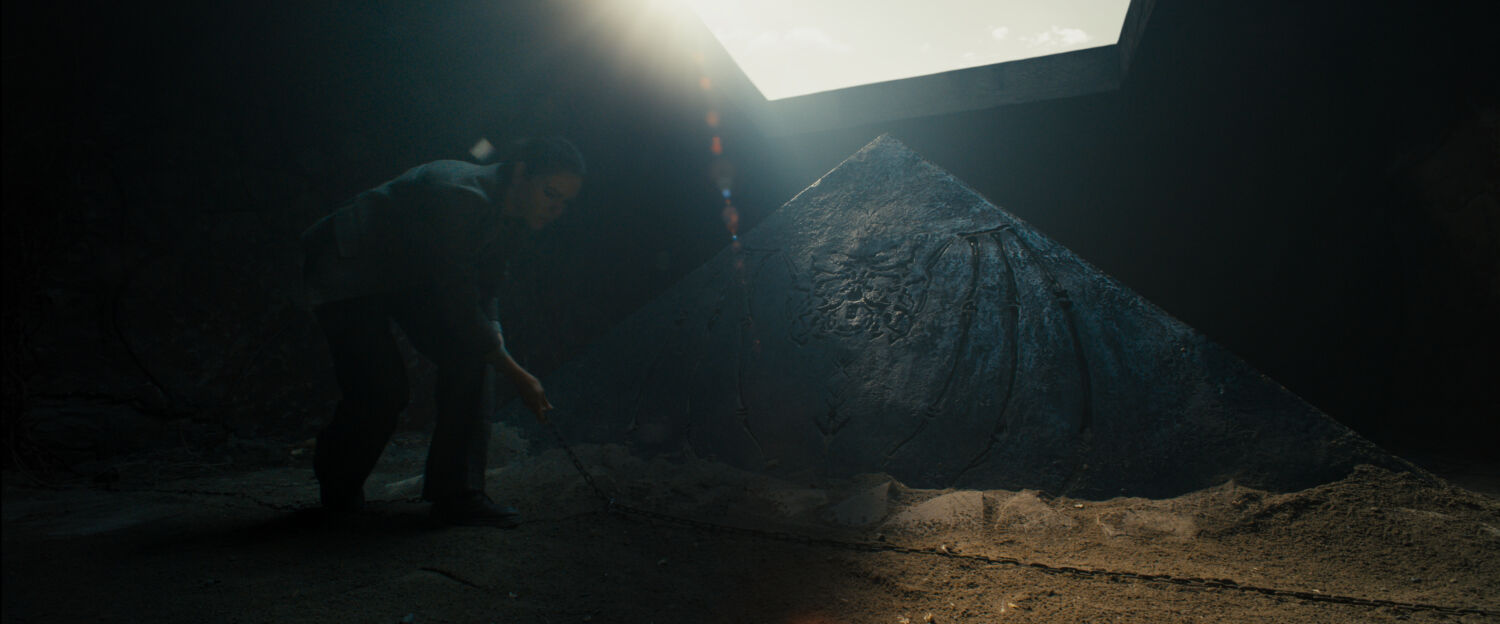
Cheerful singalongs mask something darker, with Hayat Kamille’s (Vikings: Valhalla) withdrawn mother figure offering an early signal that something is wrong, long before the film reveals its hand. A mutilated pet canary, glimpses of a basalt pyramid embedded in nectarine farmland, and a creeping sense of dread lay the groundwork with a precision that feels almost at odds with the excess that follows. Focus then shifts to an American family in Cairo with journalist Charlie Cannon (Jack Reynor, Transformers: Age of Extinction), his pregnant wife Larissa (Laia Costa, Victoria), and their two young children Katie (Emily Mitchell, Priscilla) and Sebastián (Dean Allen Williams, The Cleaning Lady) on the verge of returning home, unaware that departure will come too late.
Disappearance arrives with a violent inevitability when Katie, drawn toward a seemingly kind mother offering sweets, vanishes during a sandstorm sequence that stands among the film’s most striking moments, with swirling dust and rising panic collapsing into helplessness as her father Charlie loses sight of her. Accusations surface almost as quickly, with local authorities casting suspicion on him even as missing-persons detective Dalia Zaki (Moon Knight’s May Calamawy) attempts to cut through the indifference of her superiors. Years pass without answers, as grief settles into something permanent with the Cannons rebuilding their lives in Albuquerque, New Mexico, joined by uneasy attempts at normalcy including the presence of Larissa’s devout mother Carmen (Veronica Falcón, Ozark), whose constant prayers offer little comfort. Katie remains missing, while Sebastián grows into adolescence (now played by Shylo Molina, Deadly Illusions) and a new child, Maud (Billie Roy, A Little Prayer), fills a space that can never quite be replaced.
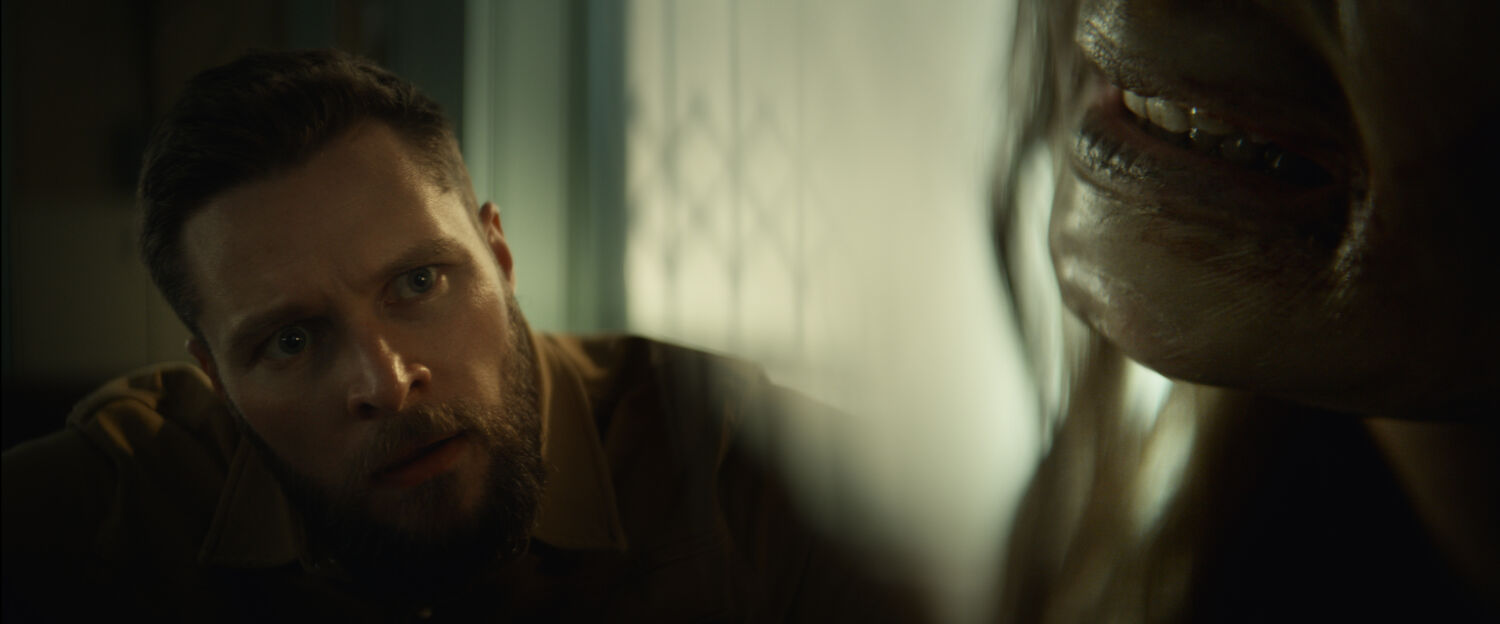
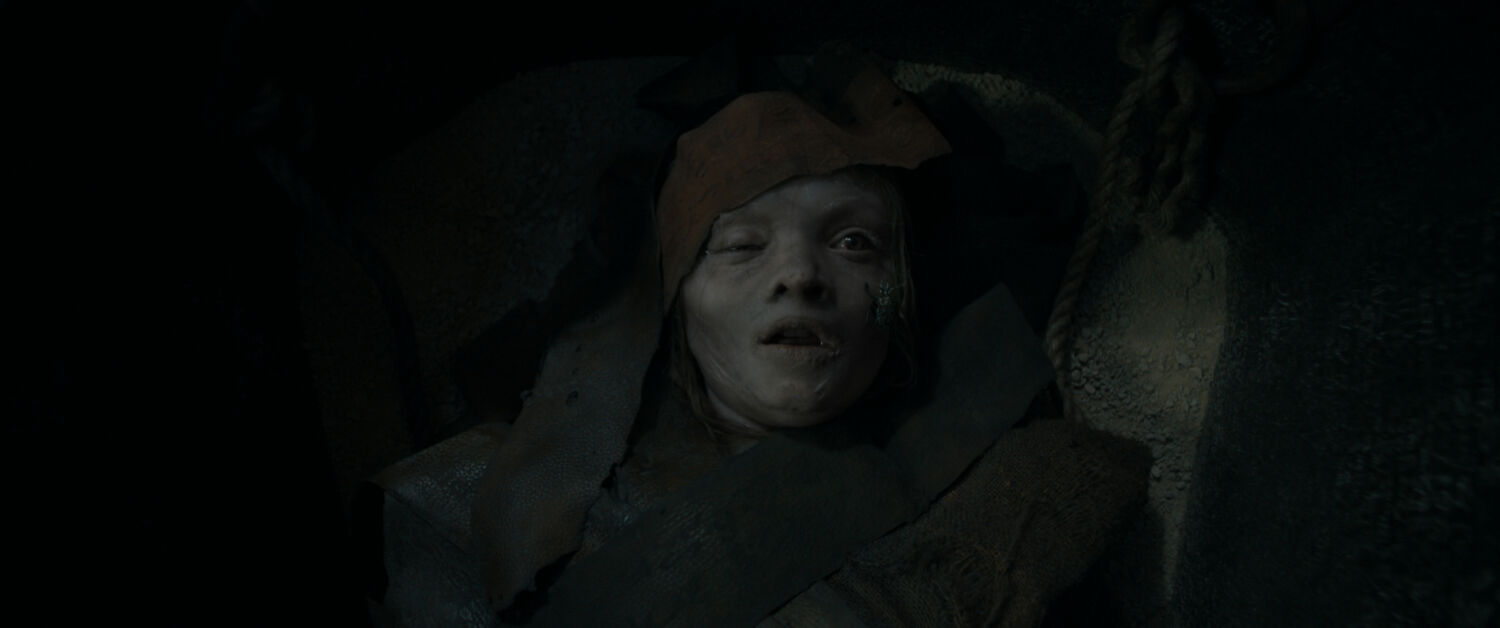
Closure of a sort emerges in the most unnatural way eight years later. Back in Egypt, a catastrophic plane crash exposes a long-buried tomb, and within it, Katie is found alive but altered beyond recognition, her body bearing the marks of something far older than the years she has been gone. Back home, relief quickly gives way to unease as the girl, now played by newcomer Natalie Grace, whose physically demanding performance recalls the contortions of Regan MacNeil, as Katie resists every attempt at reintegration. Recovery is never truly on the table because what returns requires something closer to containment, as Katie twists and convulses through the night, eating bugs and scorpions while she’s at it. Medical supervision remains strangely absent, even as Katie deteriorates in plain sight, confined largely to a bedroom where wheezing fits, sudden outbursts, and increasingly disturbing behaviour become part of a disturbing routine. Attempts to normalise her presence falter quickly, leaving Charlie and Larissa to navigate a situation that spirals beyond anything recognisable.
Predictability sets in soon after, though Cronin counters it with a determination to push every image as far as it will go. Violence arrives in lurid bursts – eyes forced from their sockets, teeth finding new homes, bodies hurled into harm before being finished off with cruel enthusiasm – each encounter treated like a chance to try out another grisly variation. Visual choices heighten that sense of unease, as split diopter shots keep Katie looming in the foreground, swelling into something almost grotesque as her parents struggle to focus on anything else, while an overabundance of close-ups of mouths chewing, fluids escaping, bodies reacting pushes the film into something queasily intimate.
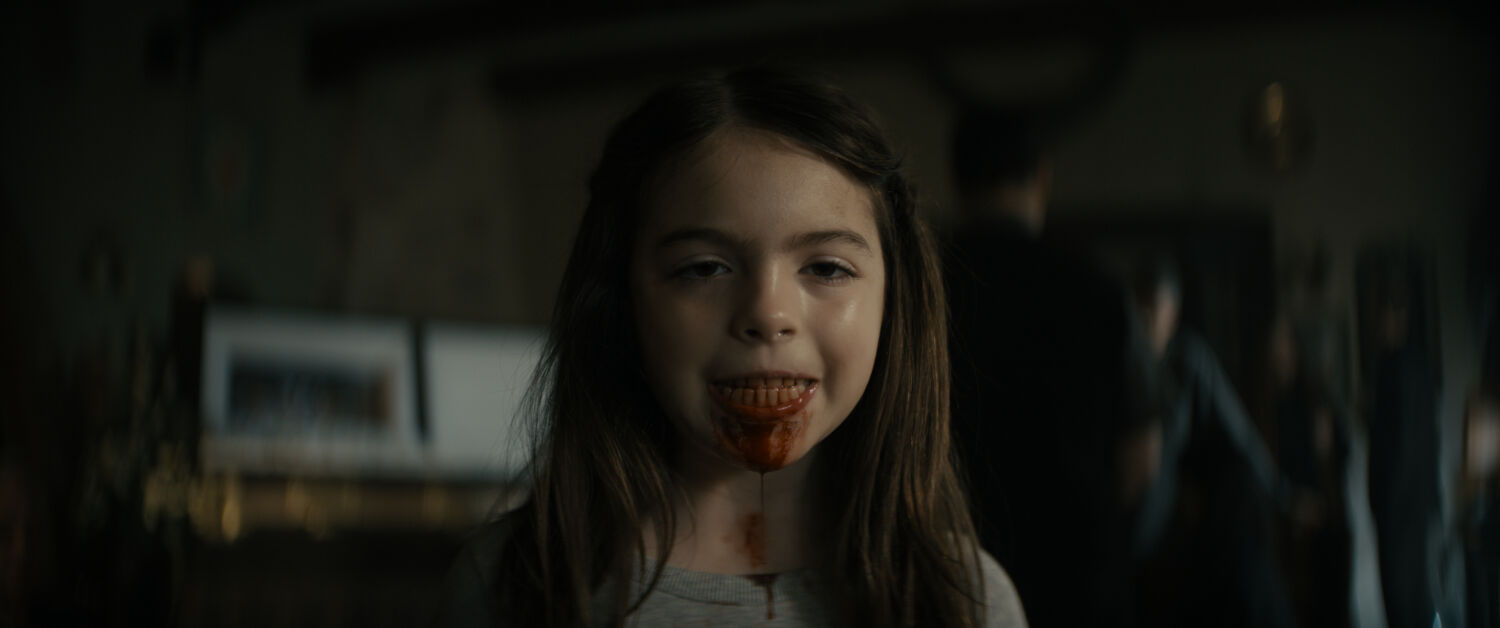
Body horror proves particularly effective in isolated stretches, with moments like a grisly nail-clipping sequence landing with an almost tactile discomfort. Composure slips, skin follows, and the cast commits fully to the madness, playing every moment straight even as prosthetics and practical effects threaten to steal the entire show. Dave Garbett’s (Sweet Tooth) sickly, mustard-tinted cinematography coats everything in a jaundiced glow, while Stephen McKeon’s (Evil Dead Rise) score collides with an aggressive wall of sound that feels like a persistent assault. Attempts to widen the scope, most notably through the investigative thread involving Egyptian detective Zaki add movement without always adding momentum, occasionally dragging the film sideways when it should be driving forward.
By the time everything converges, Cronin seems intent on emptying the entire toolbox, stitching together possession horror, occult mystery, and outright splatter into something that lurches forward on sheer momentum. Devoted horror fans may find plenty to savour in that excess, even as the film takes its time getting there. Purists will likely argue the title promises something else entirely, with no shambling relic wrapped in linen present here, and no grand excavation of myth, even as the film leaves a mark all the same – rattling bones, nerves, and the stomach in equal measure.
GEEK REVIEW SCORE
Summary
There is real nerve in how far Cronin is willing to go, and as a mean, queasy reinvention, The Mummy has just enough rot under its bandages to leave an impression.
Overall
7/10-
Story - 6.5/10
6.5/10
-
Direction - 7/10
7/10
-
Characterisation - 7/10
7/10
-
Geek Satisfaction - 7.5/10
7.5/10

Natalie is a big fan of anything related to movies, TV shows, and anime — you name it. When she’s not reading or being a dedicated cinephile, she’s probably playing gacha and tabletop games, or daydreaming of Caleb from Love and Deepspace.

 Si Jia
 Kevin Low