
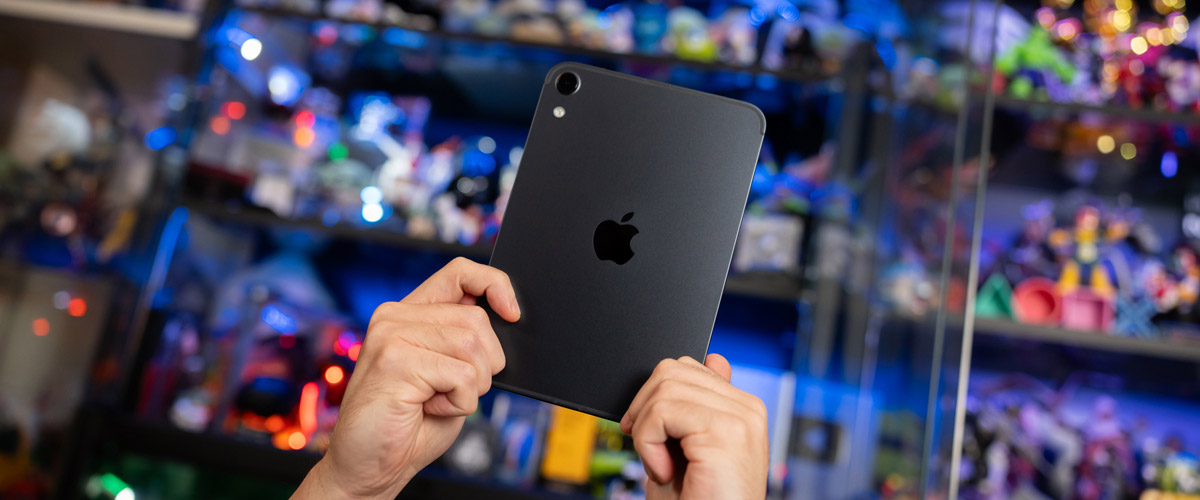
Since its inception, Apple’s iPad mini has been, and remains, one of the company’s more strategically questionable product categories. Its continued existence proves that there is demand for the palm-sized iPad, even if that demand remains niche. Throw in irregular updates, limited accessories, and an increasing overlap with the iPhone and larger iPads, and you have a device with a role that’s harder to define.
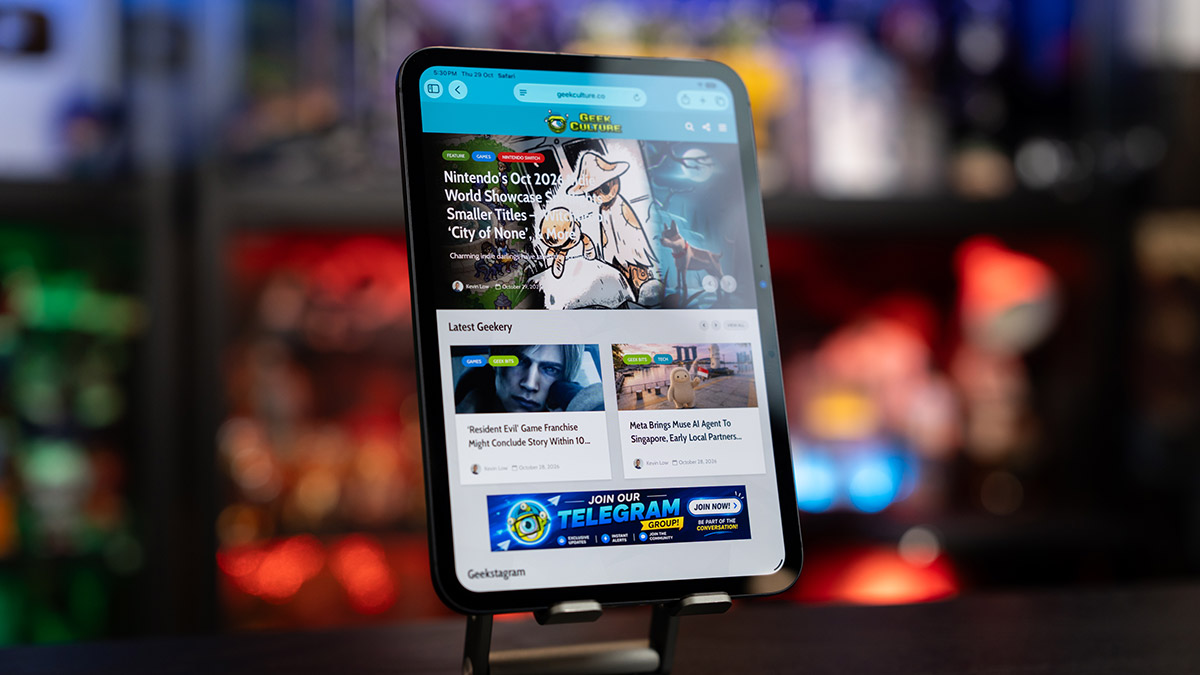
This year’s model – the 8th Gen, or generation, in the series – complicates that argument. It is not merely a faster version of the 2024 mini but it also brings new upgrades, including an OLED display, a thinner design, water and dust resistance, a revamped audio system, faster connectivity, and a significantly more premium visual experience. This small guy has taken several beatings, except this time, it has returned with considerably more than a chip upgrade.
But it has also made its debut mere weeks after the premiere of another similarly sized contender in Apple’s stable – the folding iPhone Duo, thus blurring its positioning once more.
If the jump from the 2021’s 6th Gen to 2024’s 7th Gen felt like a quiet detour that primarily bumped the CPU to an A17 Pro to power Apple Intelligence, this year’s model serves as the overhaul that users have been pleading for. Apple has swapped the aging chassis for an 8.5-inch Super Retina XDR OLED panel powered by the A20 Pro chip, finally giving the mini parity with top-tier mobile silicon and matching the visual detailing seen across its larger iPad line. Pick it up, and the first thing that hits you is the sharp screen, with its edge-to-edge OLED screen filled with blacks matched by vibrant highlights that go up to 1,200 nits. The already-thin bezels have also been shaved down even further, with content seemingly popping out of the glass.
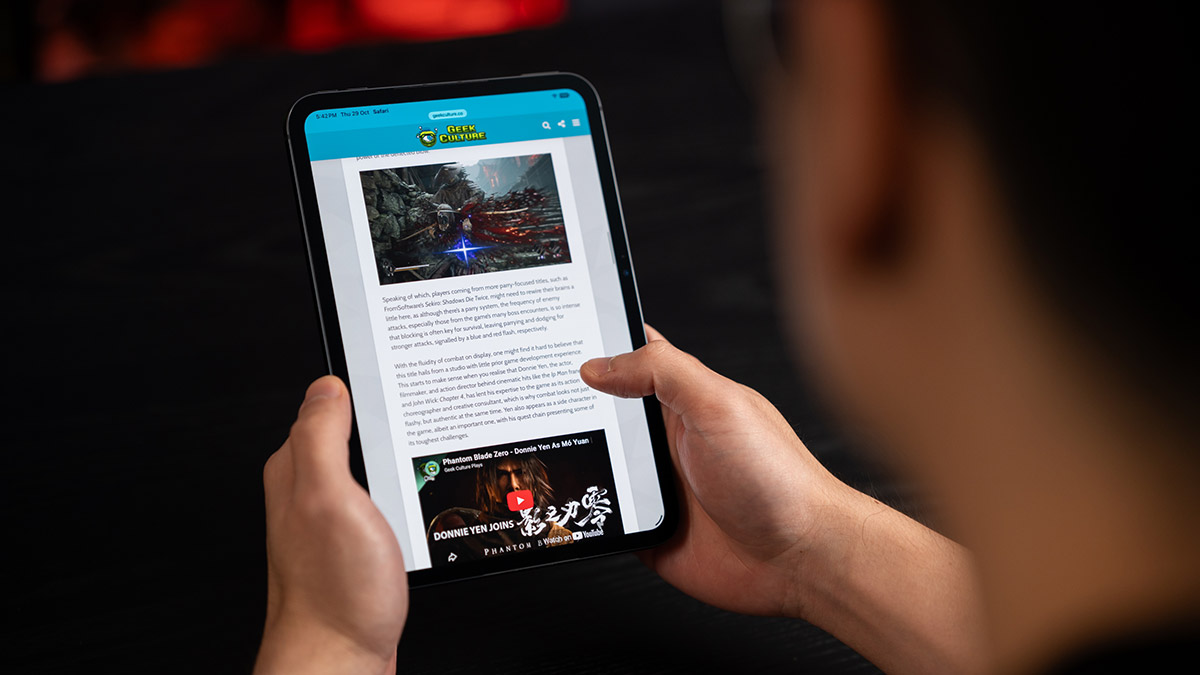
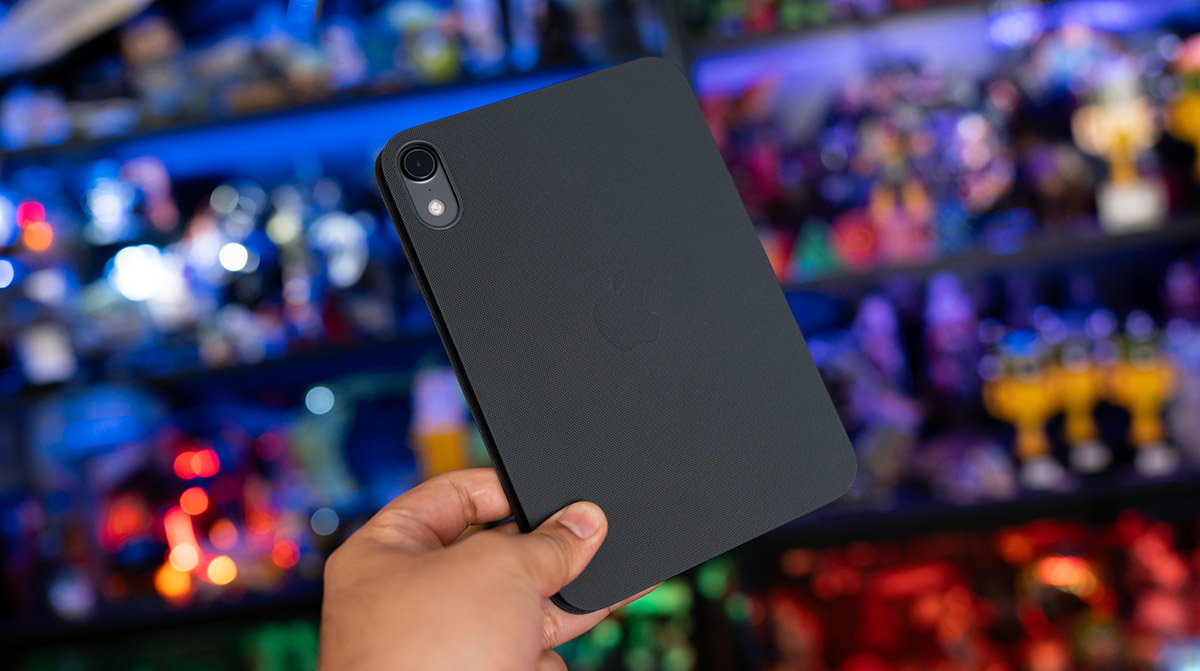
While the impressively thin 195.3 x 132.6 x 5.4mm chassis feels almost unreal, it also makes the barely-there 255g (263g for Wi-Fi Cellular) unit feel almost too fragile in hand, like holding on to a sheet of glass that can run an operating system. Without a case, picking it up off a table or holding it in one hand on the morning commute seems almost foolhardy, especially to those of us who have ever dropped a phone. The new IP67 rating may offer reassurance against water, but it’s the other things that its fragility has no defense against.
And while an OLED panel is long-awaited, Apple can’t help but be itself and has stopped short of giving the iPad mini ProMotion, sticking users with a premium display that lacks the same fluid on-screen motion as Apple’s higher-end devices. Users are also still left with a 60Hz display, and not the 120Hz from the Pro range.
The most radical and unusual engineering shift is not visible on the outside though, and that’s the Acoustic Display, where the company has replaced the familiar and traditional speaker grilles along the top and bottom edges with specialised woofers and tweeters positioned directly beneath the screen assembly around the glass and aluminium seam. Well, that explains how the device achieved its IP67 rating.
If you’ve ever held the device horizontally, there’s no more muffled audio caused by your palms blocking the speaker ports and with sound driven directly through the screen surface, the soundstage remains open, directional, and surprisingly balanced. Oh and the sound waves make the screen vibrate, with intensity increasing as you turn up the volume, and you might find yourselves – as we did – pressing our ears directly against different quadrants of the glass trying to pinpoint where the frequencies originated, and looking entirely ridiculous in the process.
The weird surprise is when you start gaming on the iPad mini, and you have the music accompany the beat of the game’s movement, or when gunfire rips through the air. Because the glass itself vibrates, any game with audio pushed past the halfway mark turns the device into an accidental rumble controller, as you not only hear the action, but your fingers and palm also register every audio-augmented action.
But other than this seemingly fancy by-product of the new display, how does the 2026 iPad mini actually game? Very well, and both inside and out. The new display makes all the difference in the game’s visuals, providing a sharpness and colour that you would come to expect from Apple and internally, the device offers solid gaming performance in every sense of the word, and can now add thermal management to the mix. This iPad mini still makes for the perfect palm-size gaming device where it does not feel clunky or awkward in hand. Genshin Impact and Zenless Zone Zero performed amazingly throughout, though there were some slight frame stuttering, while Delta Force ran smoothly without issues.
With prices starting from S$999, this 8.5-inch beauty now marks half of Apple’s 8-inch device portfolio, as the iPad mini also has to contend with the 7.6-inch (unfolded) iPhone Duo, launched earlier in September. Both fit naturally in two hands but also approach the pocket device with two distinct philosophies.
As the premium foldable that can clam up into a 5.4-inch iPhone, the Duo is the current apex of Apple’s mobile range, priced from S$3,099 and offering dual displays, more advanced camera systems, while also serving as a phone.
Meanwhile, the iPad mini is the dedicated compact tablet that continues to be an alternative to the larger iPad line, but it doesn’t fold and neither does it want to replace your phone. Instead, it offers greater convenience with its iPadOS multitasking, Apple Pencil Pro support, and a slightly larger screen but at a third of the Duo’s rather high asking price.
If you have money to burn and need an all-in-one wonder, the Duo is meant for you. But those looking for a digital notebook, content creation device and portable gaming deck would know that the iPad mini remains the more practical option.
Both run on the A20 Pro chip and here, the chip handles AAA mobile titles effortlessly. On Geekbench 6, our 512GB review set clocked a 4,645 single-core and 12,372 multi-core result, which matches that of the 4,685 and 12,502 results on the iPhone 18 Pro Max. With AnTuTu, it clocked 3,489,180, which is a hair below that of 3,536,960 on the iPhone 18 Pro Max. Its 3DMark for Steel Nomad Light came back at 3,055, slightly better than the 2,569 on the iPhone Duo.
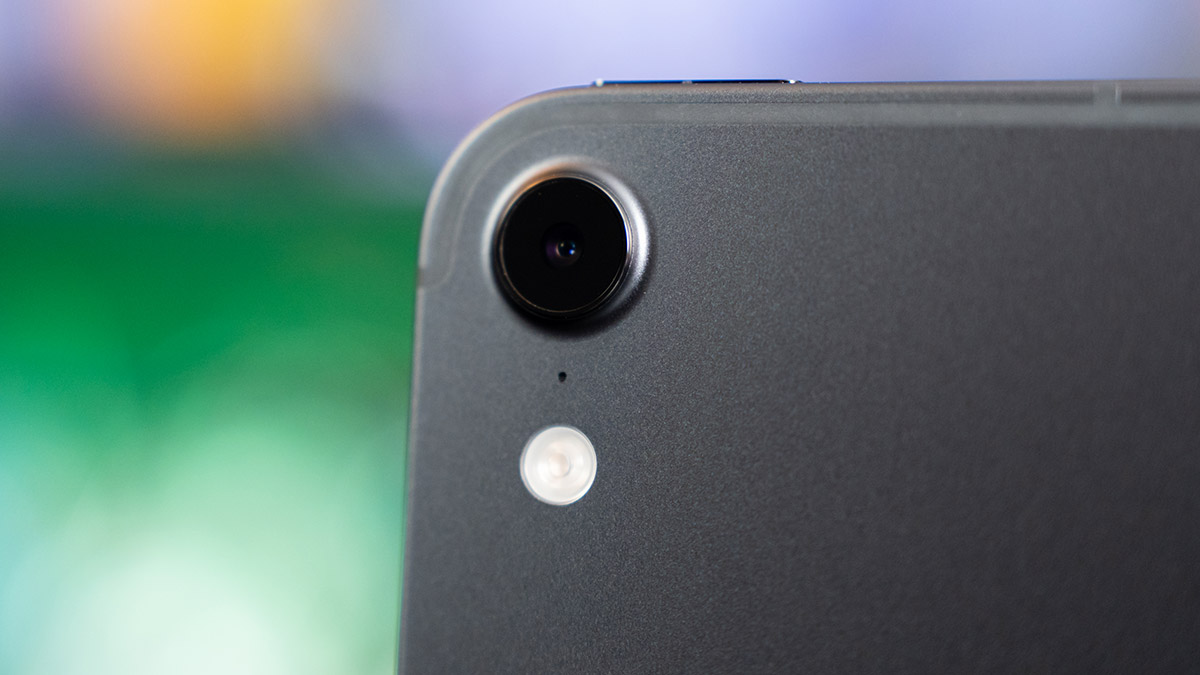
With a built-in 12MP Center Stage front camera now located on the landscape edge, a 12MP rear camera with Smart HDR 4, along with a true tone flash, Wi-Fi 7 and Bluetooth 6, the iPad mini is no longer the smaller and cheaper tablet from Apple, and the change in price reflects that. Accompanying the new device is also a new S$999 price tag for the 128GB base model, which is 300 more than the S$699 128GB base model from 2024. This makes it more expensive than the S$649 128GB iPad, and around the range of the 11-inch, M-series iPad Air, which comes with 128GB of storage at S$1,149.
The way we see it, the iPad is now a budget tablet, followed by the portable gaming-centric iPad mini, before you get to the mid-range workhorse that is the iPad Air. And if you do the math, you can spend S$3,098 on the iPhone 18 Pro Max (256GB, S$2,099) and iPad mini (128GB, S$999), or pay S$1 more to get the 256GB iPhone Duo.
Of course, things change once you opt for a higher specification device as there are two variants of the iPad mini. The 128GB (S$1,149) and 256GB (S$1,449) ones come with a 5-core CPU comprising 2 super cores and 3 efficiency cores, alongside a 7-core GPU and 16-core Neural Engine. Meanwhile, the 512GB model comes with a 6-core CPU (2 super cores and 4 efficiency cores) and 7-core GPU with dual 16-core Neural Engine. The 256GB and 512GB versions also have the option for a Nano-texture glass display (S$1,299 and S$1,599 respectively) that primarily reduces light reflection, so be sure to get the display type you need to match your use case.
The question is if the iPad mini is worth the new S$999 price tag. It’s clearly no longer the budget way into Apple’s tablet lineup as suddenly, the larger iPads now offer slightly more for your money.
GEEK REVIEW SCORE
Summary
Along with a better processor, the iPad mini (2026) delivers a gorgeous OLED display and bezel-less engineering that fans have been clamouring for, but at a stiff S$300 price increase that turned this pocket essential into a luxury powerhouse.
Overall
8.5/10-
Aesthetics - 9/10
9/10
-
Build Quality - 8.5/10
8.5/10
-
Performance - 9/10
9/10
-
Value - 7.5/10
7.5/10
-
Geek Satisfaction - 8.5/10
8.5/10

Hsals needs more space in his house, and more money in his bank account to pay for all the toys, collectibles and other geek related items that companies are churning out. Free-time? Girlfriend? Who’s got time for those?
 Si Jia
 Kevin Low