
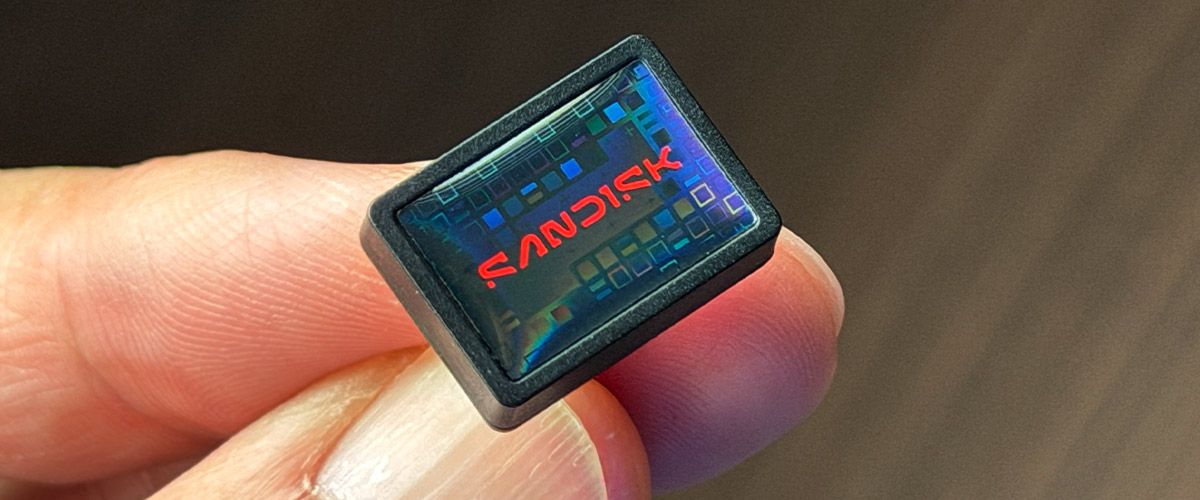
The best storage upgrades are often the ones you barely notice, and that is exactly where the SANDISK Extreme Fit USB-C Flash Drive makes its case. This remarkably small drive offers up to 1TB of storage in a low-profile design that can remain plugged into a laptop, desktop or compatible tablet, without becoming a constant obstruction.
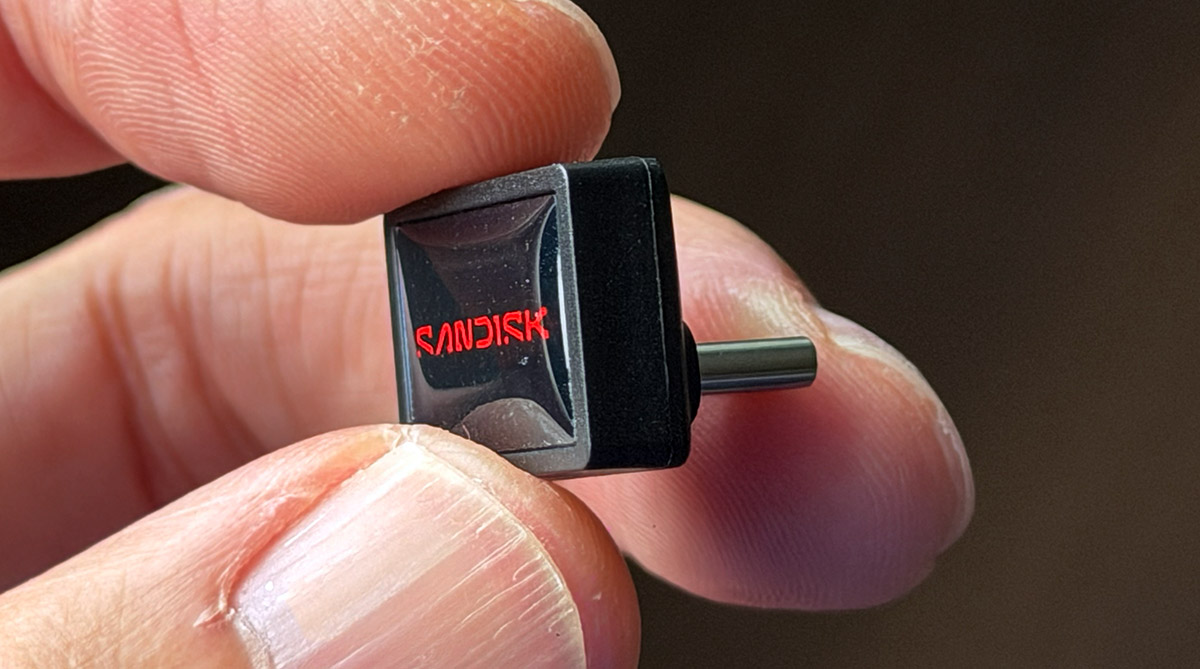
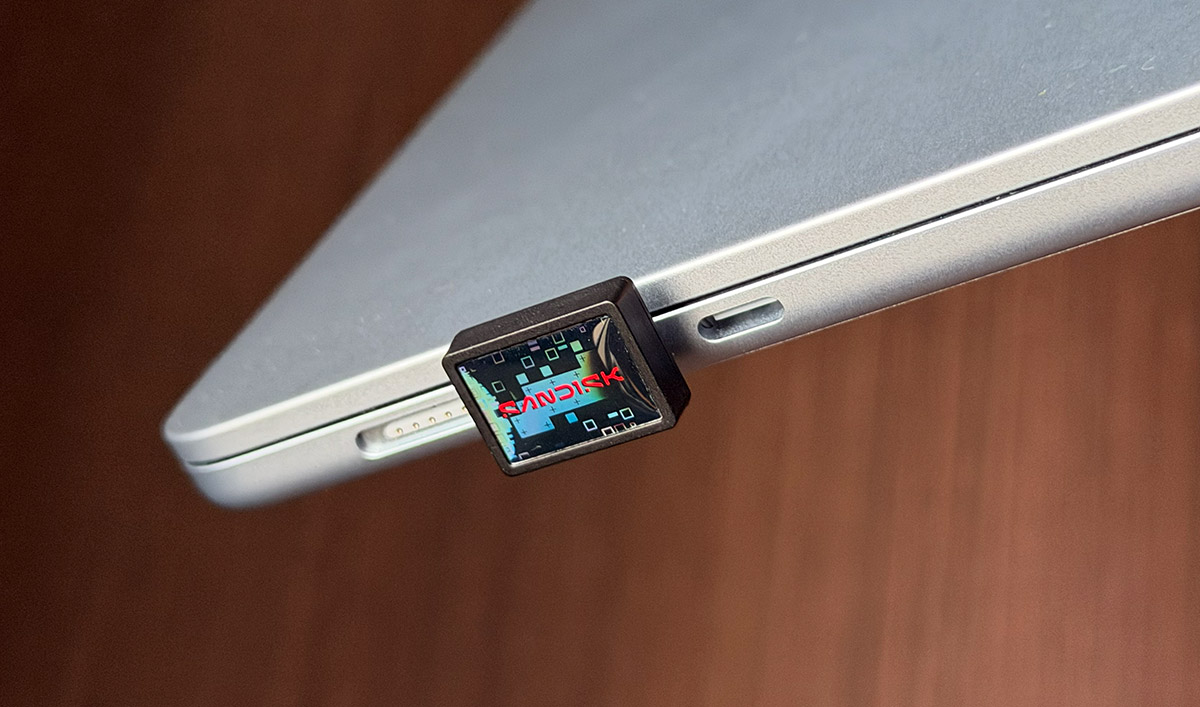
Measuring a mere 18.5mm x 13.7mm x 16mm and weighing only 3g, the Extreme Fit is genuinely tiny, offering a plug-and-forget experience. Once inserted into a USB-C port, most of the drive sits close to the device rather than sticking awkwardly out from its side or back. That makes it especially useful for people who want additional storage permanently available without carrying a conventional portable SSD (with a USB cable) or full-sized flash drive.
Its size does come with one obvious trade-off though, as this is the sort of accessory that could easily disappear inside a bag or desk drawer when it is not connected. The design makes far more sense as a plug-and-stay solution than something intended to be removed and carried around several times a day. It is easy to underestimate just how useful 1TB of storage can be when it comes in something this compact as there is enough capacity for a sizeable collection of photos, videos, documents and even installing PC games to run from it directly.
For compatibility across various hardware, Sandisk has an accompanying app for Windows and Mac, providing tools for managing and backing up files. The drive is covered by a five-year warranty, which adds some reassurance for buyers planning to use it as a long-term storage expansion.
Despite its size, performance is one of the biggest surprises as Sandisk advertises read speeds of up to 400MB/s for capacities between 64GB and 1TB, placing the Extreme Fit’s USB 3.2 Gen 1 drive’s performance comfortably above many conventional flash drives. We connected it to a desktop PC through a USB 3.2 Gen 2 port, and CrystalDiskMark 9.0 recorded sequential read speeds of up to 412.81MB/s and write speeds of up to 169.19MB/s. The read result slightly exceeded the advertised figure, while write performance remained fast enough for routine transfers and installing larger applications.
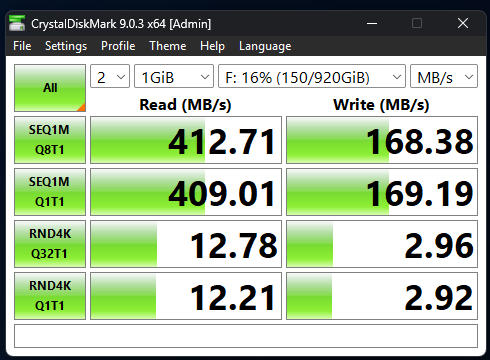
As always, benchmark figures will vary depending on the computer, USB port, file sizes and workload. Even so, these results show that the Extreme Fit is not relying on capacity and portability alone. It has the speed to be useful for more demanding everyday tasks.
The drive was also tested with PC Steam and Xbox game installations, where video games installed directly onto the Extreme Fit launched and ran smoothly, with no noticeable downtime or issues during play. When tested on Gears of War: E-Day running from the Xbox app, the game took 4 minutes and 30 seconds to get to the main menu, after compiling shaders. As for Clive Barker’s Hellraiser: Revival on Steam, it took a mere 46 seconds to compile the shaders and get to the main menu. In general, it did take a bit longer to start up games than if the games were running on internal SSDs, but gameplay isn’t affected. There were no noticeable stutters, but specifically for Gears of War: E-Day, the in-game textures did take up to a minute sometimes to load at the start of each new act.
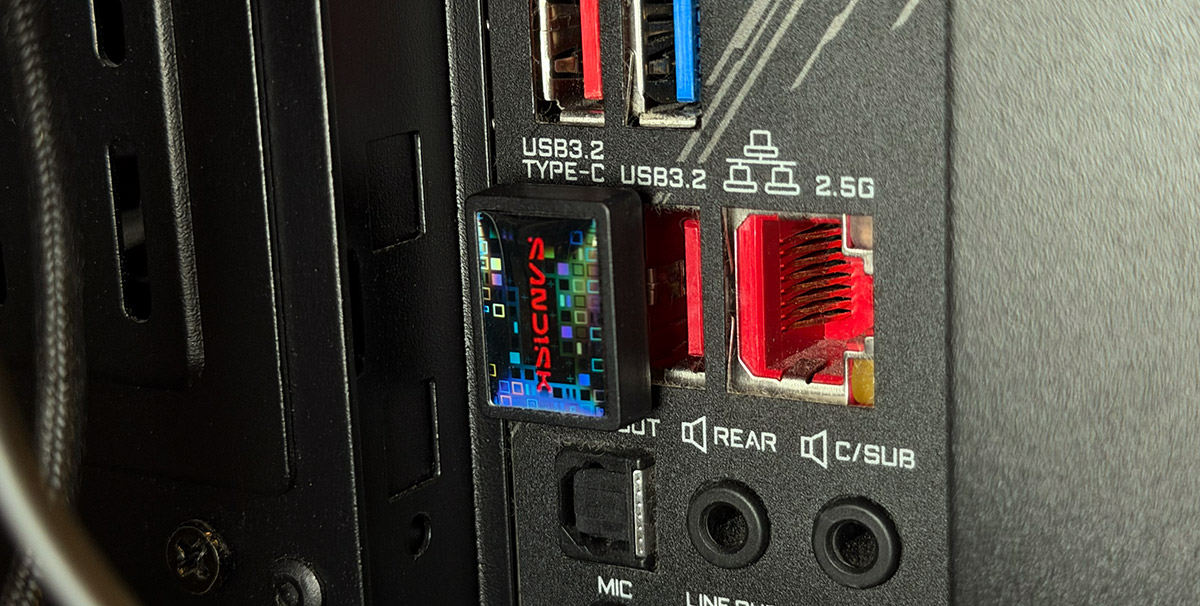
That makes it a potentially useful way to expand a compact gaming PC or laptop without immediately opening the machine or replacing its internal storage. A 1TB model provides enough room for a respectable selection of games, while the low-profile design can remain connected without a large drive protruding from the system.
It is important to keep expectations realistic. The Extreme Fit is still a USB flash drive rather than a high-end internal NVMe SSD, and performance may differ between games. Large updates, installations and sustained write-heavy tasks are also more likely to expose the difference between its read and write speeds. It is more suited for playing less system-intensive games and keeping less frequently used titles outside the main system drive.
The discreet design also reduces the chance of accidentally knocking the drive while it is connected. Conventional flash drives can act like small levers when they protrude from a computer, placing both the drive and USB port at risk if they are bumped. The Extreme Fit’s shorter profile makes that less of a concern.
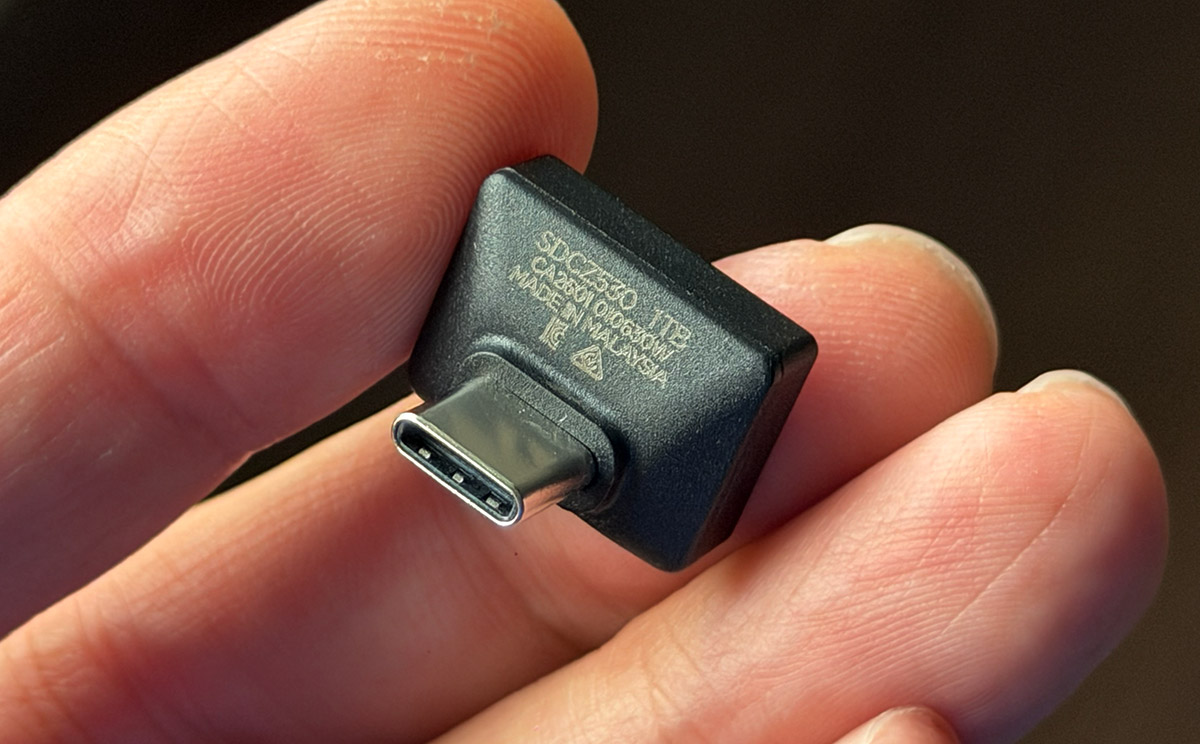
There are still reasons to be careful. Because the drive sits close to the port, removing it may be less convenient than pulling out a full-sized model. Its tiny shell could also become warm during sustained transfers, although the exact behaviour will depend on the workload and surrounding airflow.
The SANDISK Extreme Fit USB-C Flash Drive is an impressive example of how much storage can now fit into an almost comically small device. Its 1TB capacity provides meaningful room for media, documents and games, while its low-profile construction makes it particularly effective as a plug-and-stay expansion drive. Prices start at S$56 for the 64GB up to S$434 for the 1TB.
GEEK REVIEW SCORE
Summary
The SANDISK Extreme Fit USB-C Flash Drive is a fast, discreet and surprisingly capable storage upgrade, particularly for anyone who wants to expand a computer or tablet without adding cables or bulk.
Overall
8.6/10-
Aesthetics - 8.5/10
8.5/10
-
Build Quality - 9/10
9/10
-
Performance - 8.5/10
8.5/10
-
Value - 8/10
8/10
-
Geek Satisfaction - 9/10
9/10

Yonk is a geek who is fortunate enough to have an equally geeky Star Wars fan for a wife, who owns a LEGO Millennium Falcon encased in a glass coffee table as their home’s centre-piece.
 HSALS
HSALS
 Kevin Low
 Zinho De Costa