
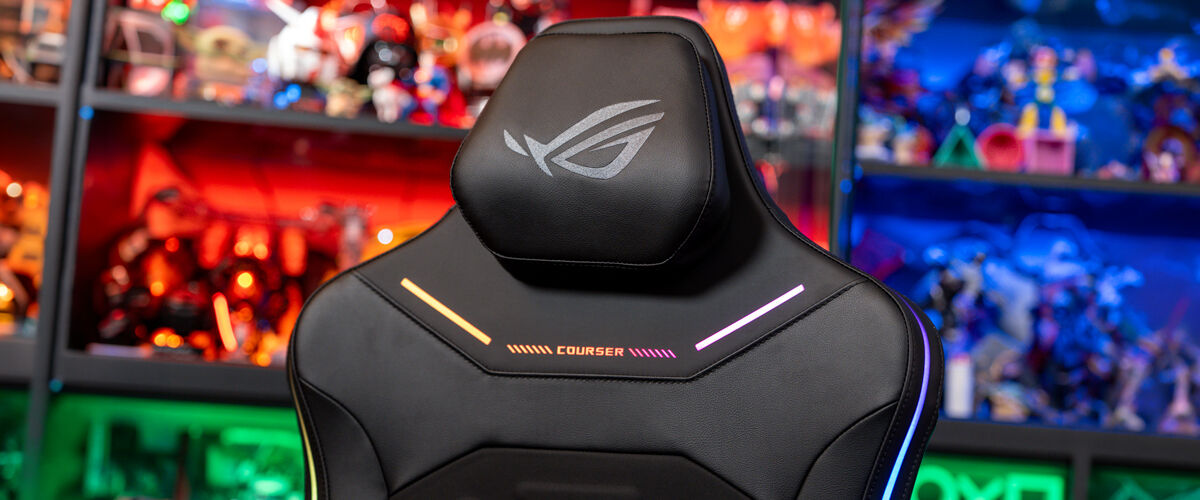
Ask any gamer, and they’ll tell you that the key to a “true” gaming experience lies not just in having the most powerful and responsive hardware or peripherals, but also in having striking RGB lighting to boot. Maybe this is the shiny but not useful cosmetic skins that gamers buy for their characters, but it’s clear that many gamers swear that having pretty colours will somehow improve their performance.
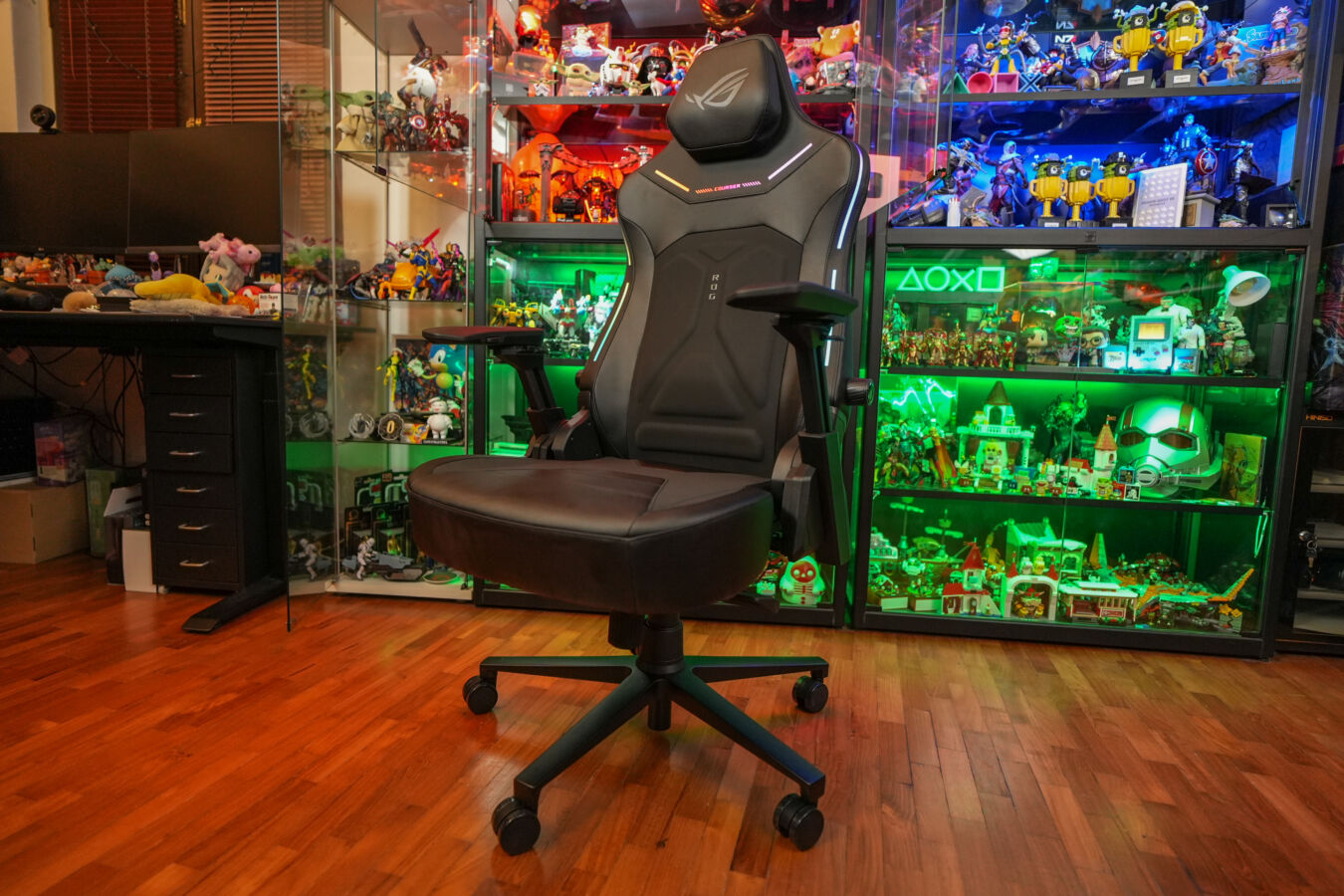
Otherwise, why would gamers and brands continue to deck out PCs, keyboards, speakers and mice in an array of LED lighting? And now, it’s a trend that’s fast infecting gaming chairs as well.
ASUS ROG (Republic of Gamers) had previously dipped its toes into the RGB chair space with its Chariot line, but is now levelling up its game with the ROG Courser, which not only ups the lighting effects but also boasts some unique features to make it stand out from its predecessors, for better or for worse.
On first glance, the Courser looks nearly identical to the Chariot line, with roughly the same silhouette, albeit with a wider overall width. Decked out once again in mostly EPU leatherette (more on that later), the chair is almost entirely black, even down to its wheels, save for a few silver ROG logos on the front and back of its headrest area.
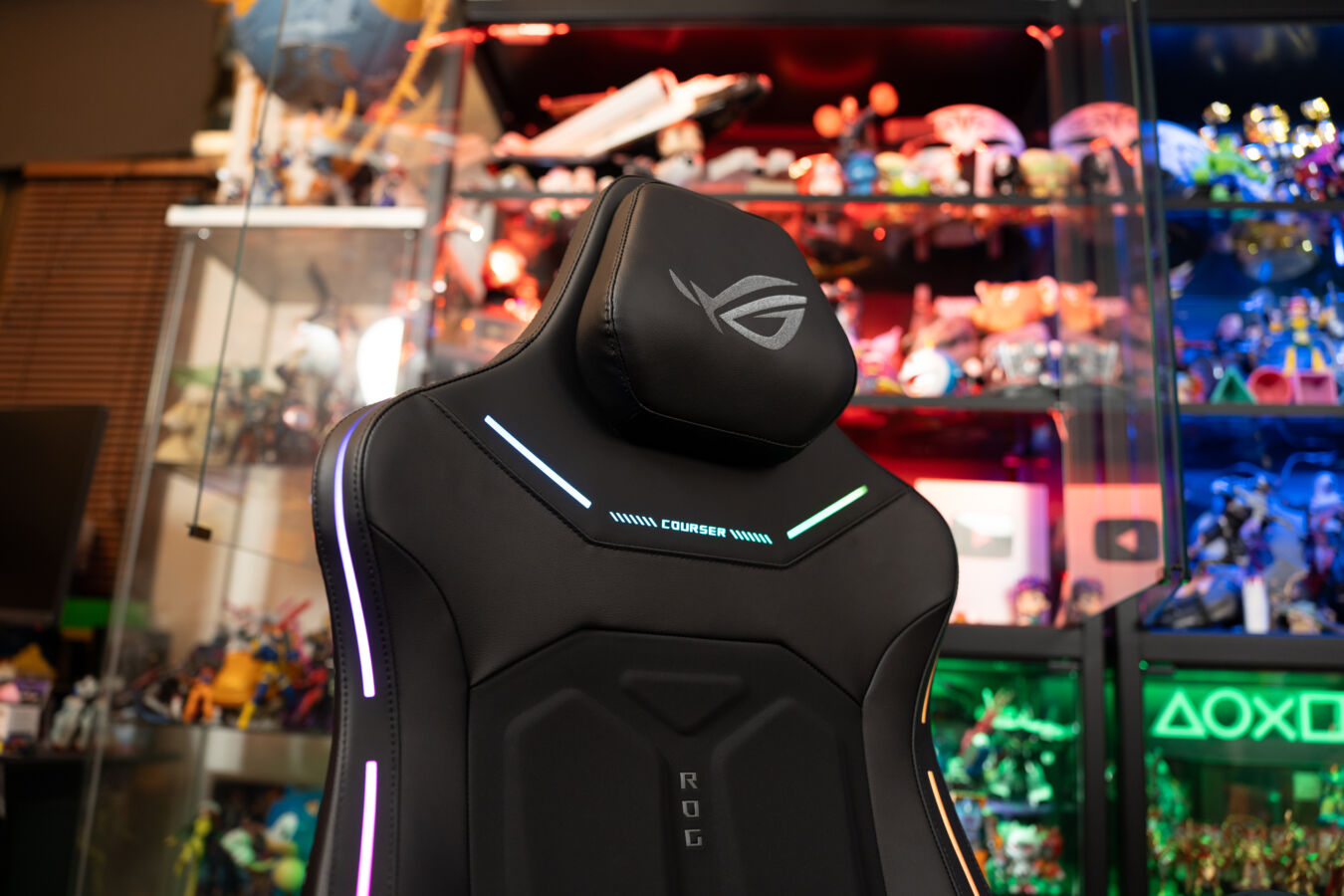
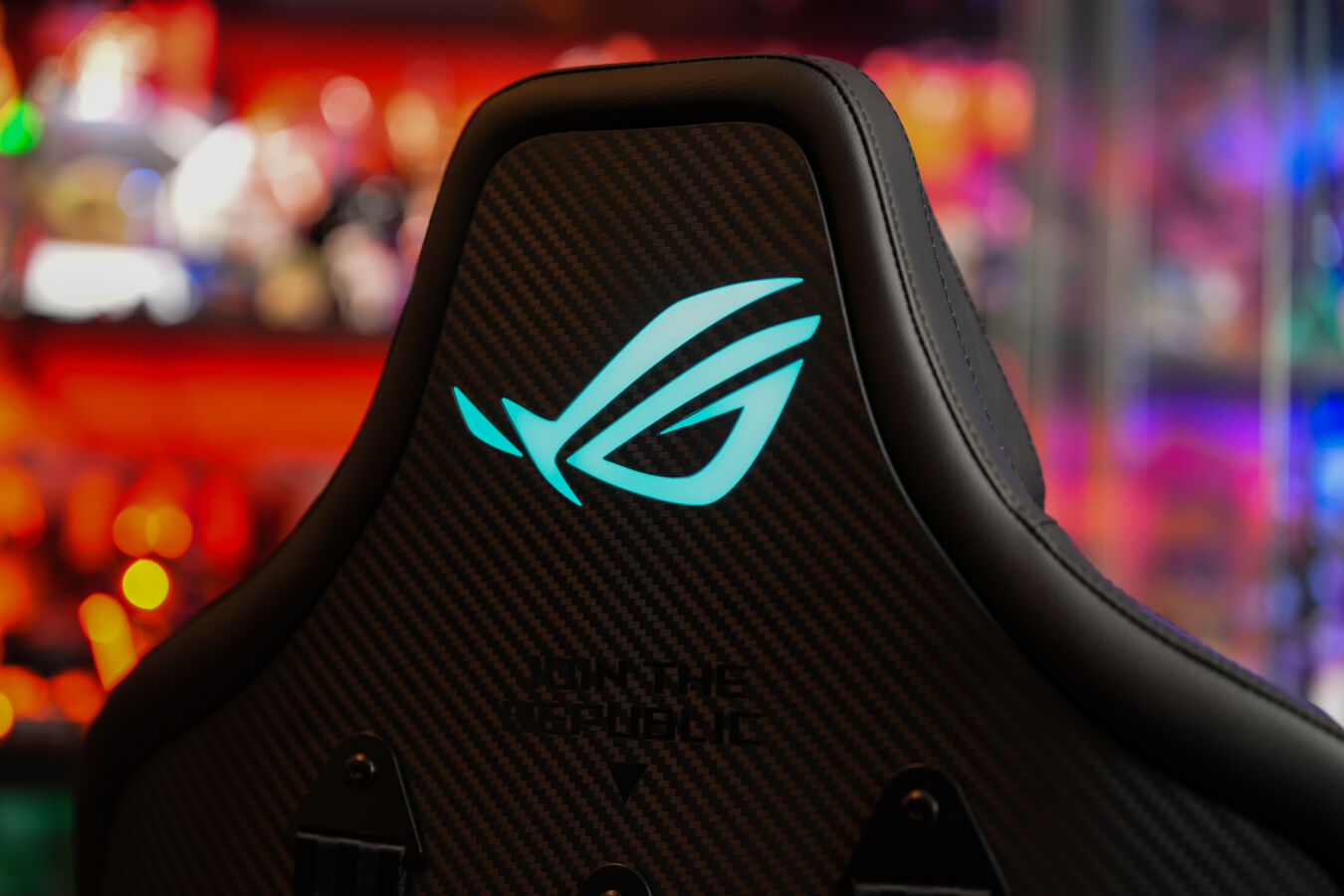
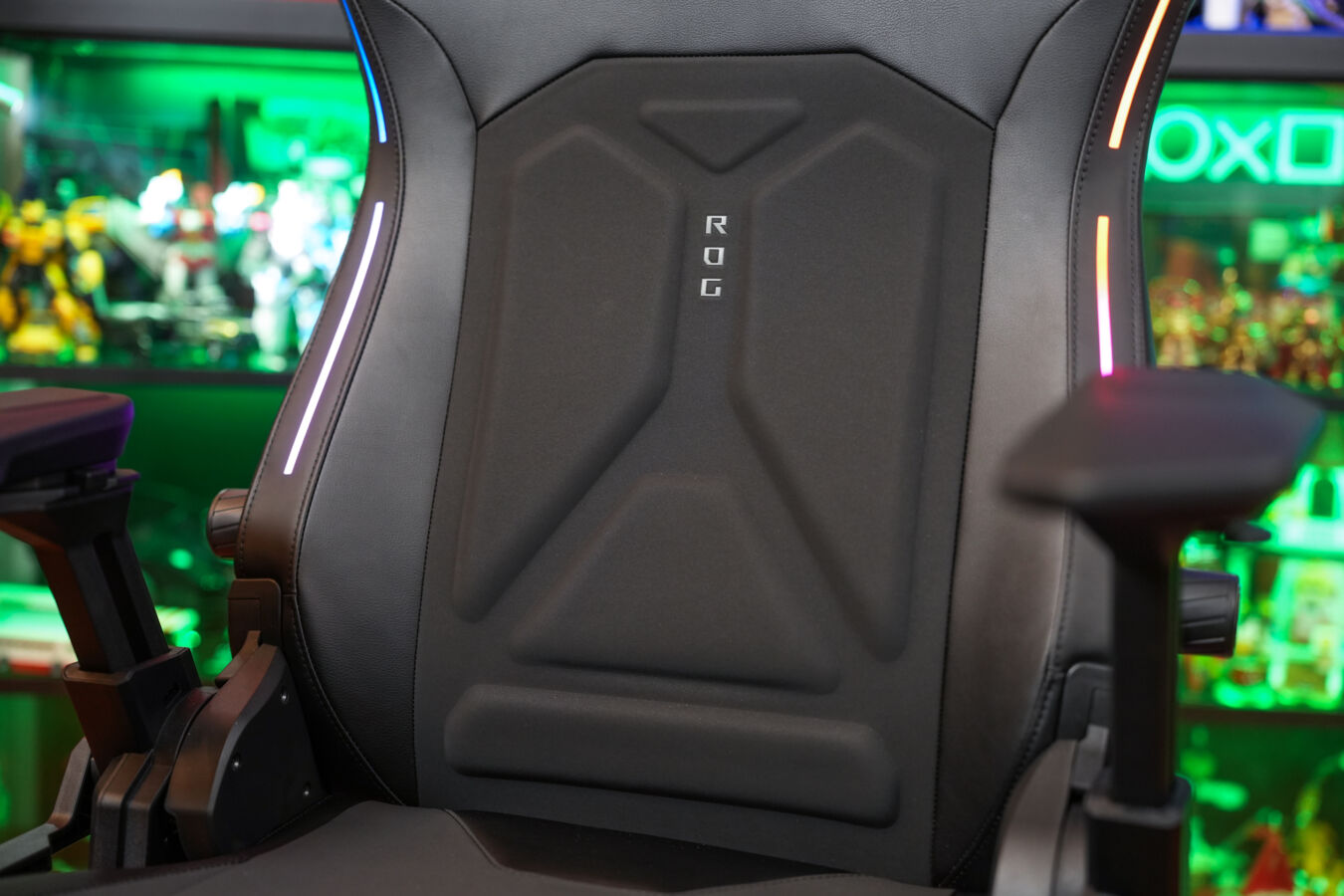
Perhaps the biggest difference in design between the Courser and the Chariot is the lack of a cutout near the headrest area. It was a distinctive feature that helped give a sense of visual flair to the previous design, and while its absence here does make the Courser’s overall appearance more generic, at least its upgraded RGB implementation is anything but.
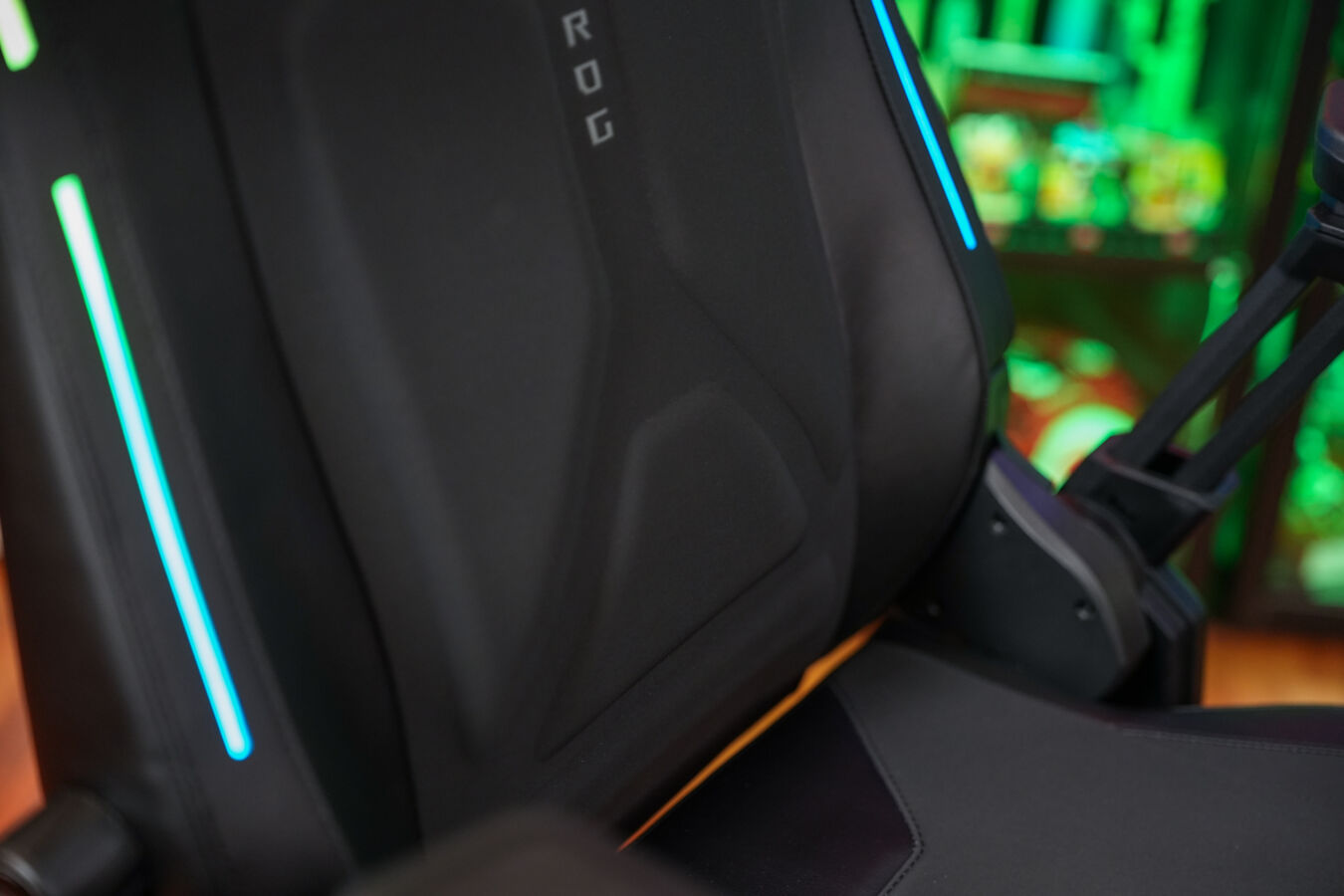
Unlike the Chariot, which only offered two main points of lighting (the cutout area and rear-side ROG logo), the Courser takes things up a notch with six areas, spanning the two aforementioned ones plus four lighting strips down the sides of its backrest. These light up in one of six colour modes – Rainbow, Wave, Static, Essential Light (which disables all lighting except the one near the headrest), Breathing, and Colour Cycle, with further choices for eight different colour settings and five levels of brightness.
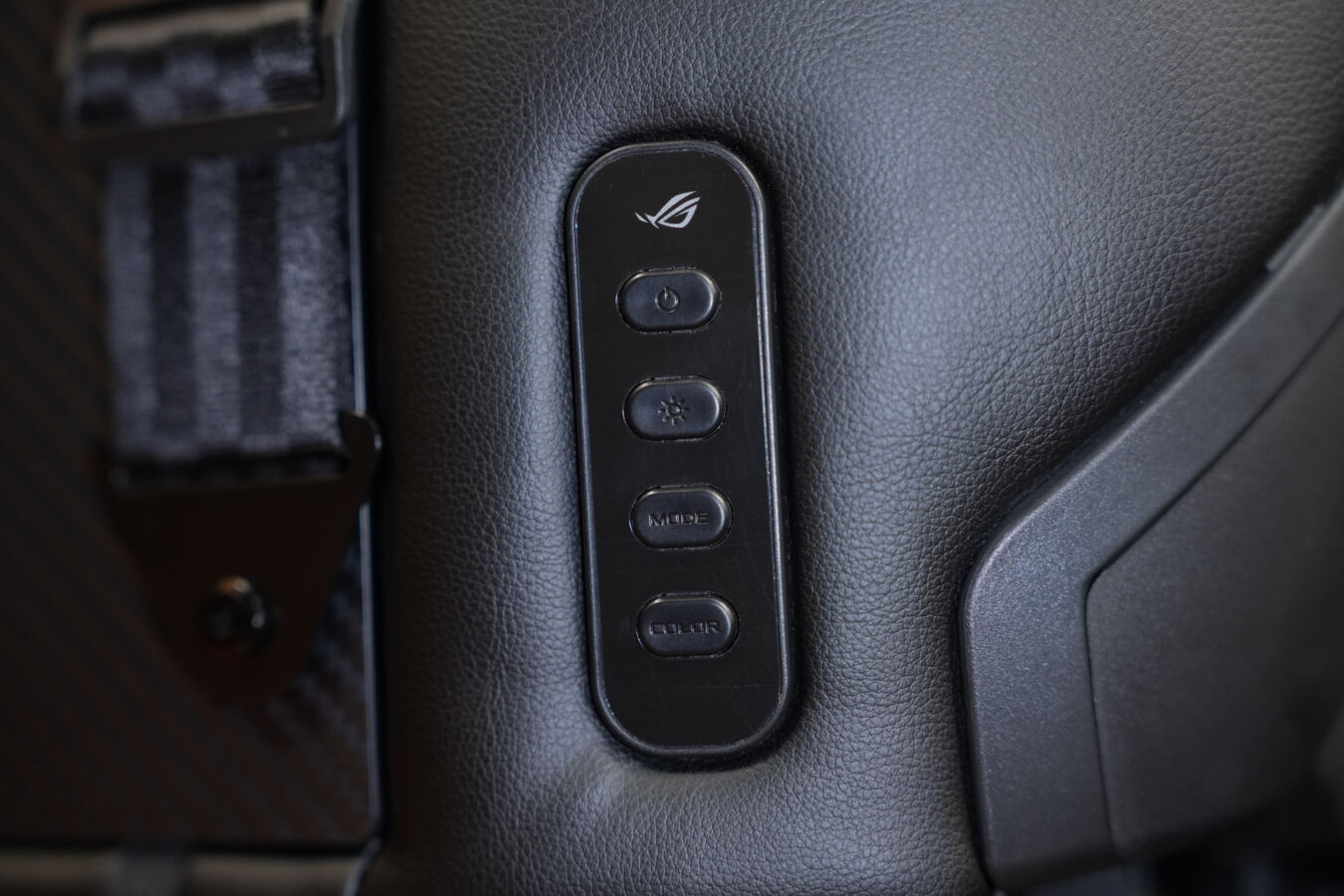
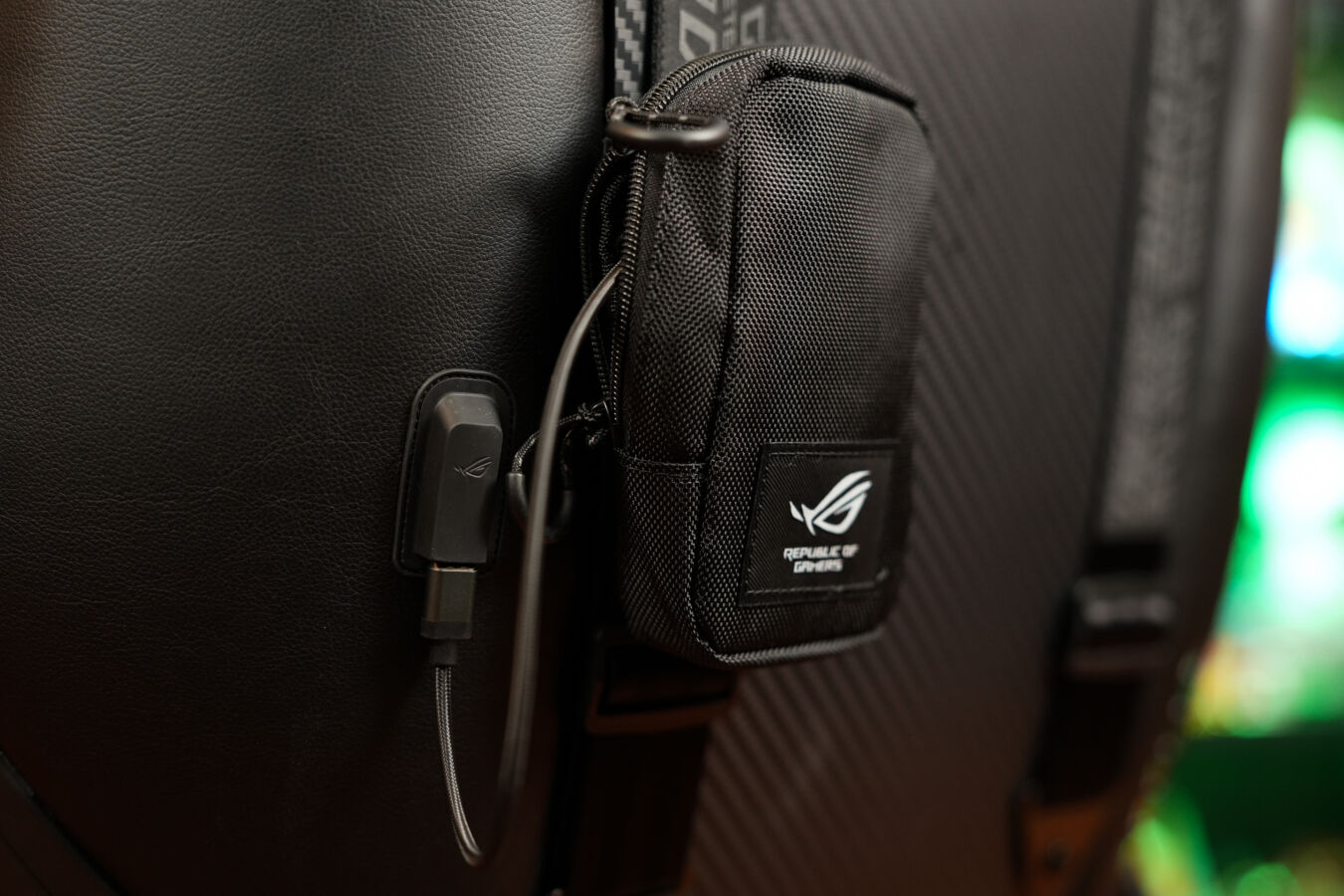
All these are controlled by an RGB control panel, which is situated at the bottom right of the chair’s rear, with everything powered by an external power bank that’s not included, similar to the Chariot, although it does come bundled with a USB Type-C cable with one magnetic end as a safety feature to prevent unwanted snags.
This is admittedly an awkward design change compared to the Chariot’s side-mounted, removable control panel, as users will have to now fumble around trying to feel their way through its four buttons if they want to remain seated throughout the process. Adding to the issue is the fact that every time the chair’s power supply is cut off, it resets to its default “Rainbow” settings, meaning that users who want a specific colour or pattern have to re-adjust each time their power bank runs out of juice.
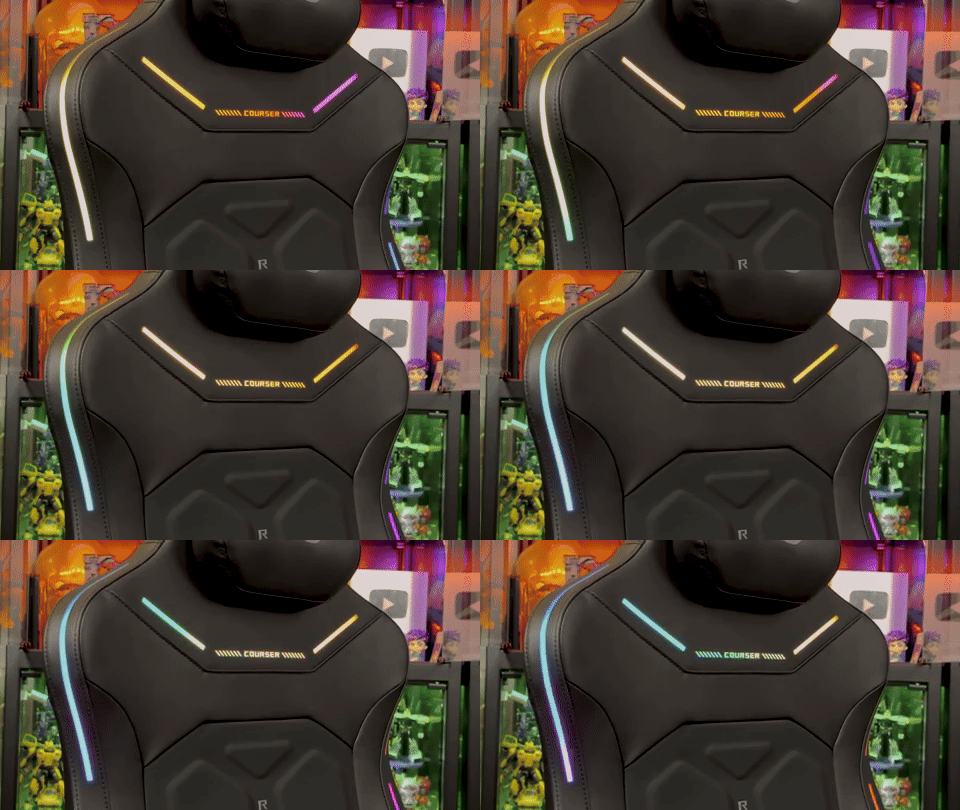
On the topic of battery life, the addition of more points of lighting may also have contributed to an increase in power consumption, as when tested using a standard 5000mAh power bank, the Courser barely lasted one working day (around 6 to 7 hours) on a full charge before running out of juice, no matter the brightness setting.
At the end of the day, the entire prospect of RGB lighting, especially on a chair, is subjective, to say the least. Apart from showing off the cool light features in an office setting, or unless you are using it for streaming purposes, the lights add nothing to the overall experience, as users won’t be able to see any of it while sitting on the chair (unless they look directly down below their armpits, but why would you?), and they definitely don’t add anything to comfort, which should be the main point of a chair.
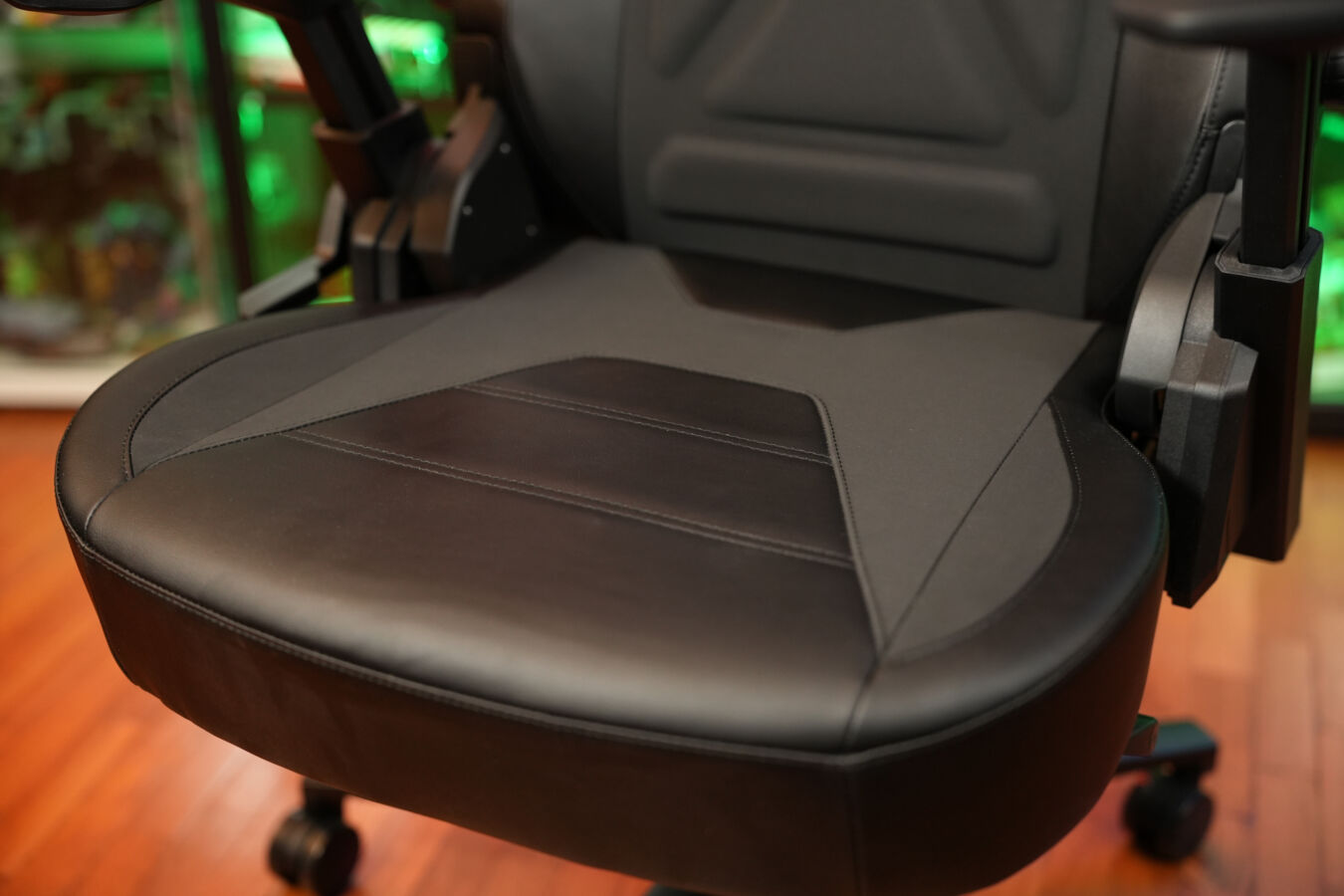
Fortunately, the Courser isn’t built solely around flashy RGB gimmicks, as its ergonomics have seen quite a notable shakeup compared to previous lines. The biggest change, literally, comes in its seat base, which boasts a generous width of 55cm and is free from the raised edges seen on the Chariot line. This means the chair is now catered to a wider range of body types, and having an accessible product is always nice to see, with a recommended height and weight range of between 160 and 200cm, and up to 136kg, respectively.
Material-wise, the Courser still features the same breathable EPU leatherette seen on the previous line, which helps maintain comfort especially in warmer climates. Durability seems to be the main goal here, as certain portions of the chair, like parts of its base and its in-built lumbar support backrest, are also decked out in an abrasion-resistant TPU leather.
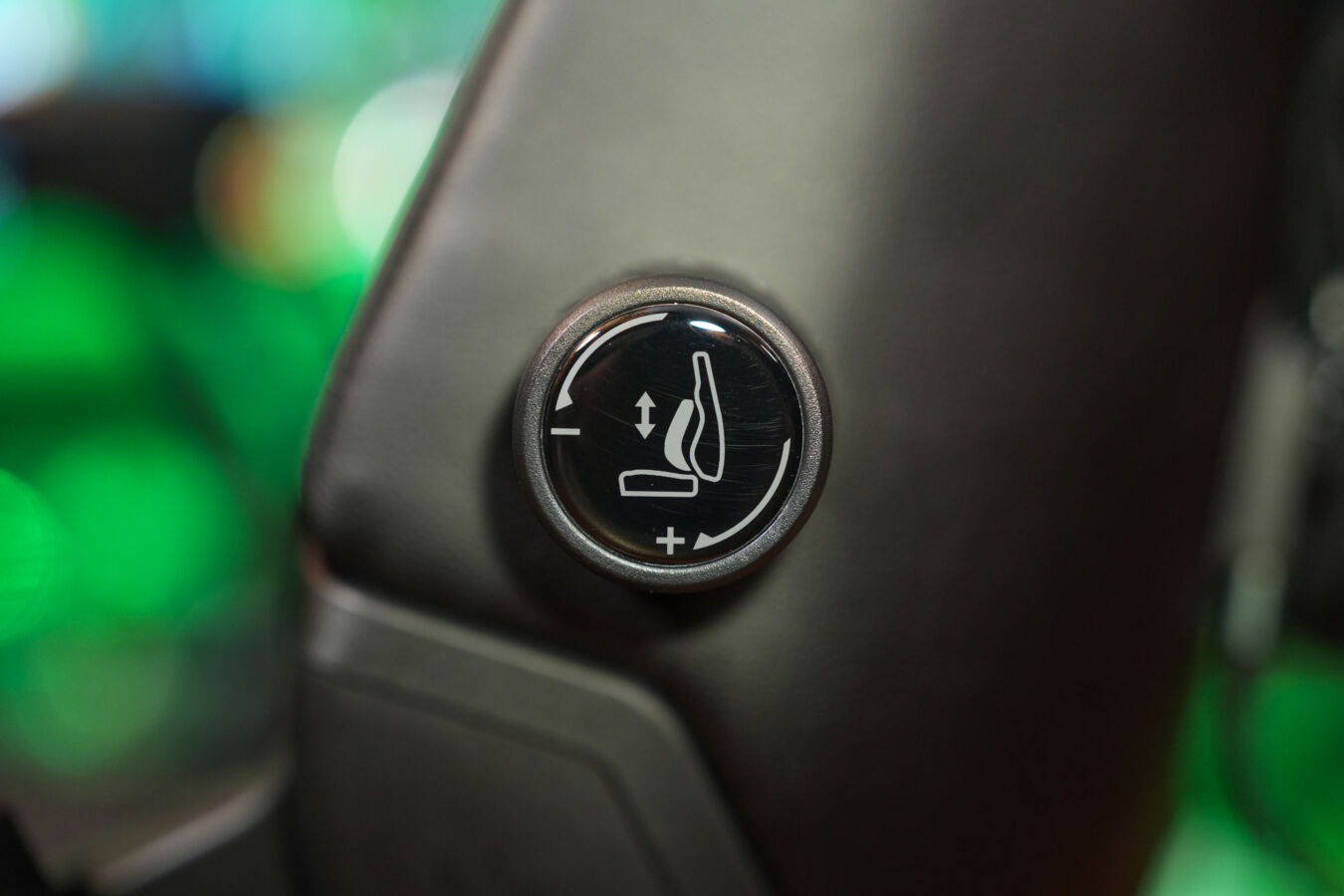
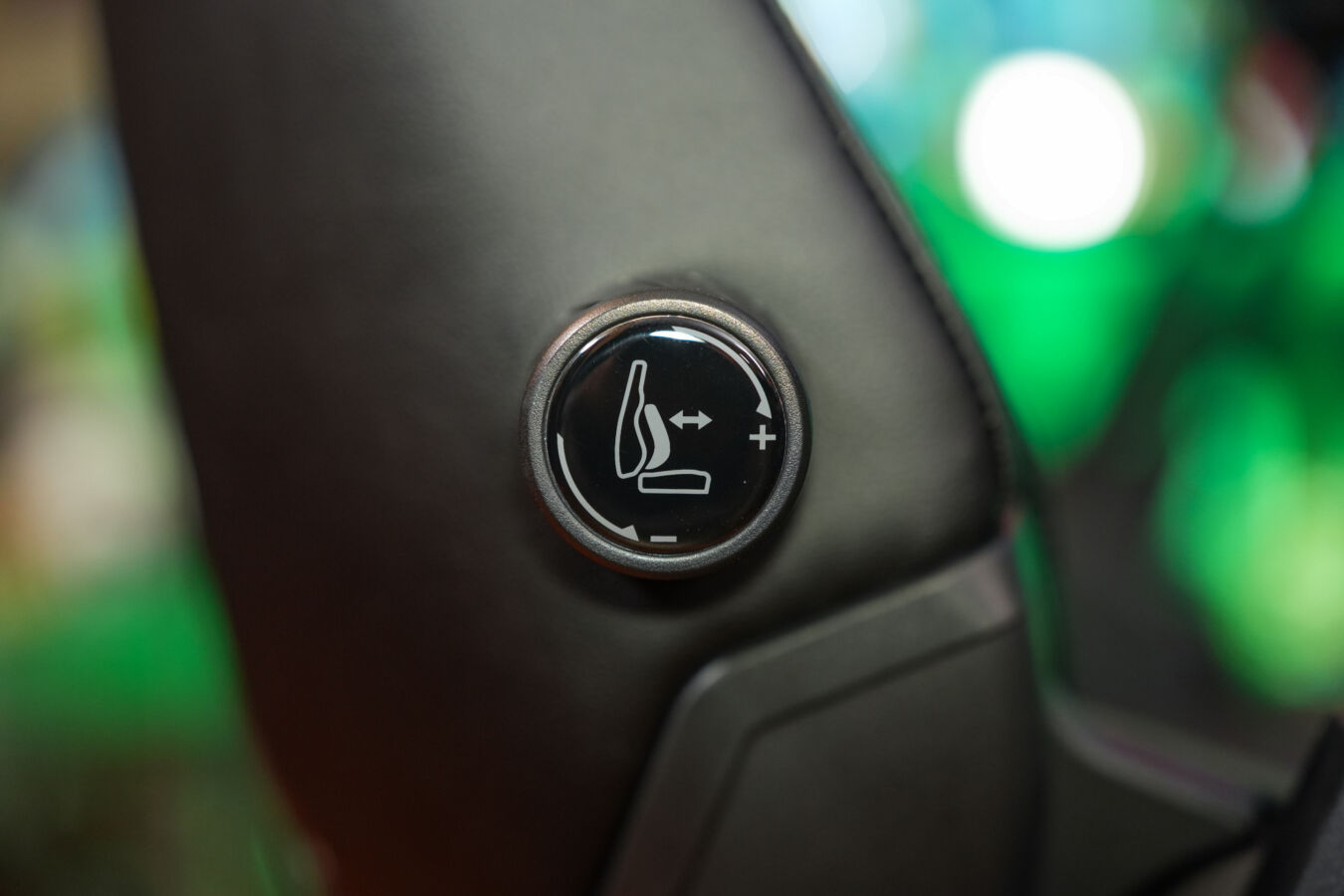
This leads to another point that might not sit well with returning users – the Courser’s lack of an external lumbar pillow. In its place, the chair now features an adjustable lumbar support system, which features different adjustable levels of depth and height. This change will vary in appeal from user to user, as those used to the softer lumbar support seen when using a pillow might find this new system to be a bit harsher on the back, while users of other chairs with such in-built features might appreciate the flexibility of its adjustment settings.
Even the texture of the backrest itself might be subjective, as it features multiple raised segments, giving the Courser an almost massage chair-like feel, even while the in-built lumbar system is completely concealed. Again, this addition might appeal to some users, but turn away others who don’t like the feel of materials sticking out against their back.
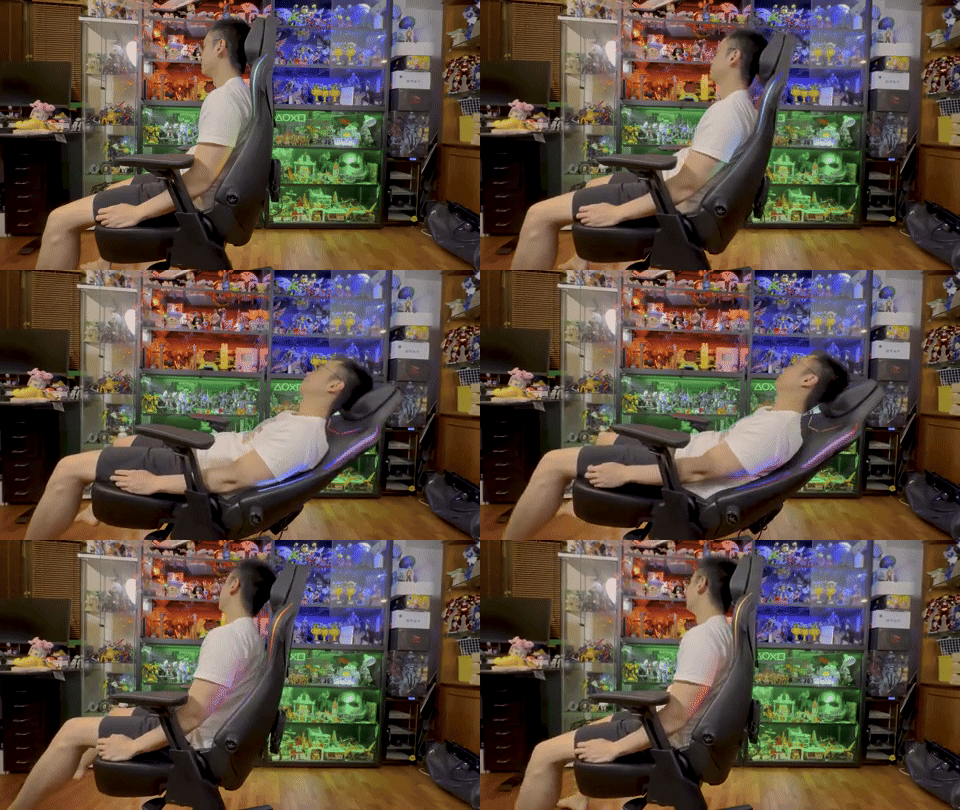
Finally, the Courser’s latest new feature is its “Dynamic Synchronised Recline System”. Despite a fancy name, what this does is that it’s intentionally designed so that a user’s head remains at roughly the same position on their headrest while reclining up to 155 degrees. This stands out from almost all other gaming chairs, which usually cause a slight downward shift on the upper torso relative to the chair’s backrest when reclining, and this change reduces the need to adjust to a more comfortable position every time. It’s a subtle yet innovative feature that sets the benchmark of chair reclining technology.
Headlining features aside, the Courser comes with all the bits and bobs many would expect from a modern gaming chair, including 4D armrests that can now swivel the entire 360 degrees, a lockable tilt mechanism, and a head pillow that’s magnetically attached to a rather generous area on the chair’s headrest, allowing it to be placed far lower on the chairs back compared to most of its contemporaries, allowing even vertically challenged users to rest their heads comfortably.

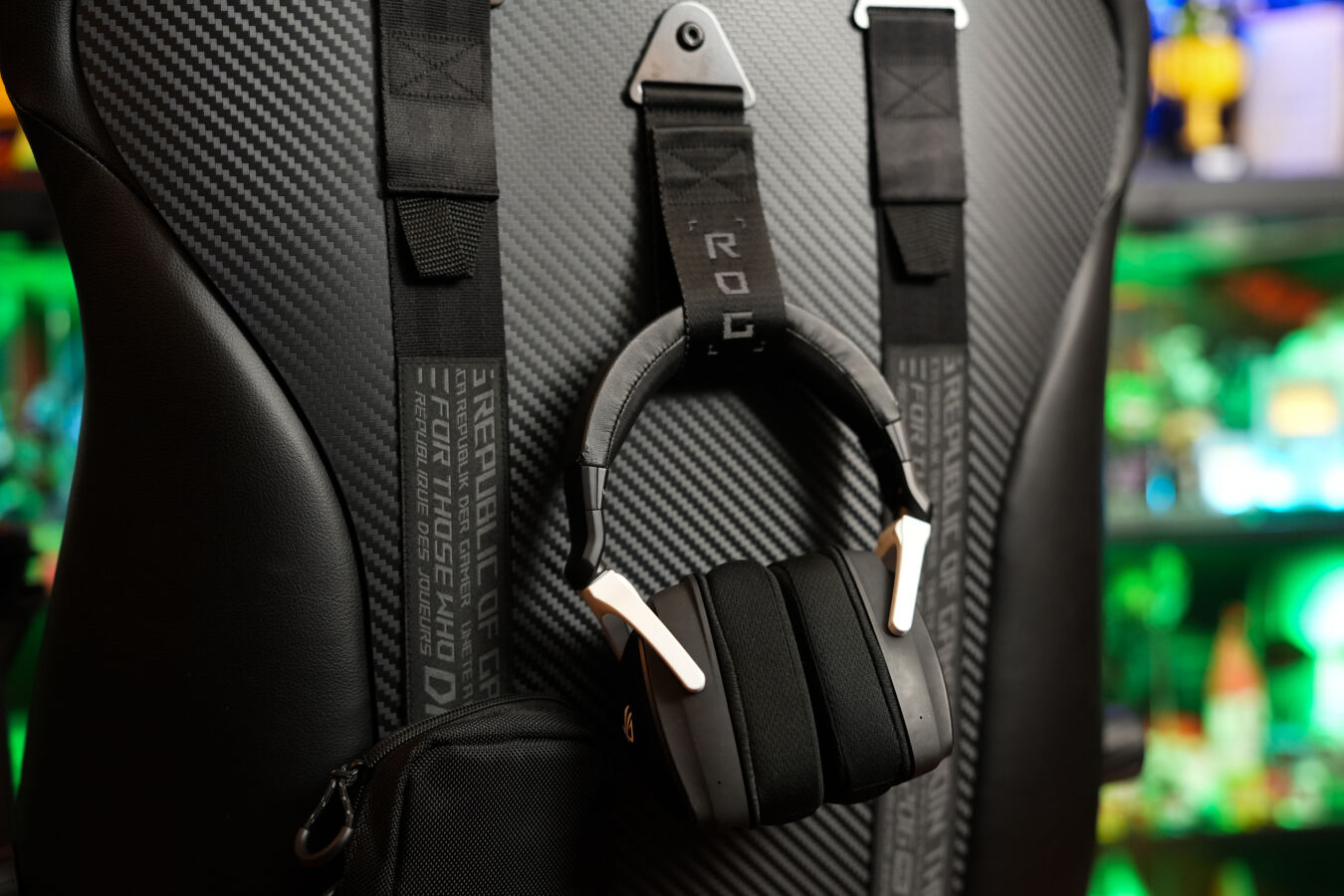
Still, the Courser recommends a user height of between 160 and 200cm, and supports weights of up to 136kg. A rear velcro strap for storage, another defining feature of the Chariot line, also makes a return, and can similarly support weights up to 2kg.
Priced at S$949, the ROG Courser’s asking price might be quite steep unless you’re looking for a very specific set of features. Its RGB implementation, while a step up from its predecessors, introduces questionable design choices that make it less intuitive to operate, and while the overall comfort has improved, some changes, especially with regard to its backrest, might take some getting used to. Alternatively, those looking to skip the RGB fluff can still opt for the ROG Courser Core, which features all the same features apart from lighting effects, and is priced at S$699.
Product images were shot using a Sony α7 IV Full-Frame Hybrid Camera equipped with the following lenses: Sony FE 16mm F1.8 G, 50mm F1.4 GM, 90mm F2.8 Macro G OSS, and 28-70mm F2 GM.
GEEK REVIEW SCORE
Summary
The ROG Courser continues to cater to its niche market of RGB enthusiasts, offering notable improvements in terms of lighting implementation and catering to a wider range of body types, although it does introduce some design changes that, ironically, won’t sit right with everyone.
Overall
7.8/10-
Aesthetics - 8.5/10
8.5/10
-
Build Quality - 8.5/10
8.5/10
-
Performance - 8/10
8/10
-
Value - 7/10
7/10
-
Geek Satisfaction - 7/10
7/10

Kevin is a reformed PC Master Race gamer with a penchant for franchise “duds” like Darksiders III and Dead Space 3. He has made it his life-long mission to play every single major game release – lest his wallet dies trying.


 HSALS
HSALS