
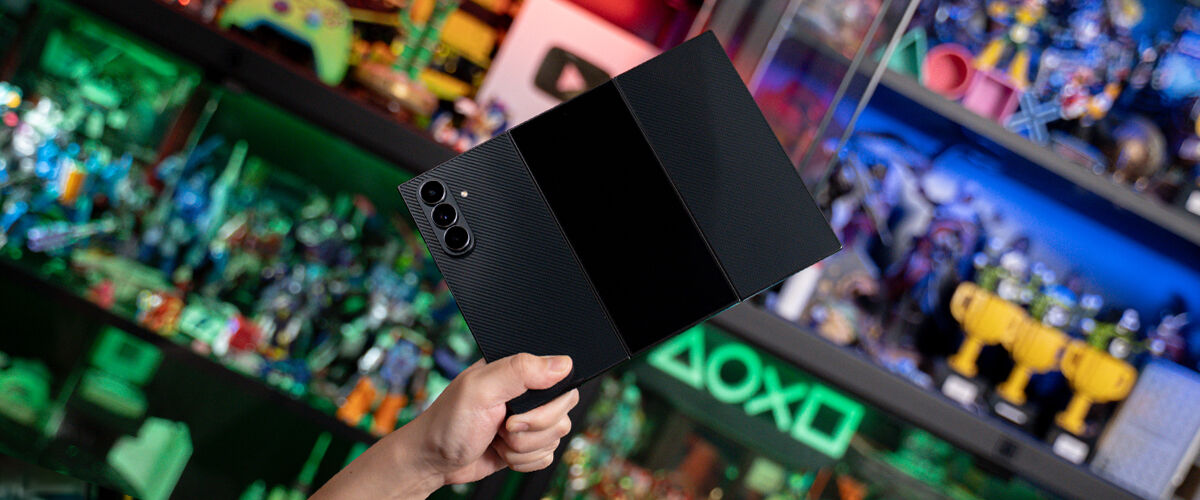
Seeing is believing, but sometimes, using is believing. In the case of smartphones, technology has evolved to the point where it can be difficult to determine how much of the new features directly translate into measurable results, and the same goes for foldable devices. The display, by virtue of being unfolded, is bigger, but would it be too unwieldy or hefty in hand? How much of a difference does the additional real estate really make? The infamous crease that runs down the middle is no longer as visible, but how can one tell without looking at it?
It all boils down to the feel, and as foldable devices continue to gain mainstream popularity, the scepticism is slowly waning. Tech moves fast, however, and a new player is looking to shake up the playing field – the Samsung Galaxy Z TriFold, the company’s first stab at a multi-fold handset, though not the first in the industry. Similar to its bi-folding Z Fold cousins, the non-standard design may appear gimmicky, until it’s used as an everyday carry, promising a smooth, convenient experience, especially for multitasking. Alas, the steep S$3,998 price tag is its biggest enemy and will turn many away.
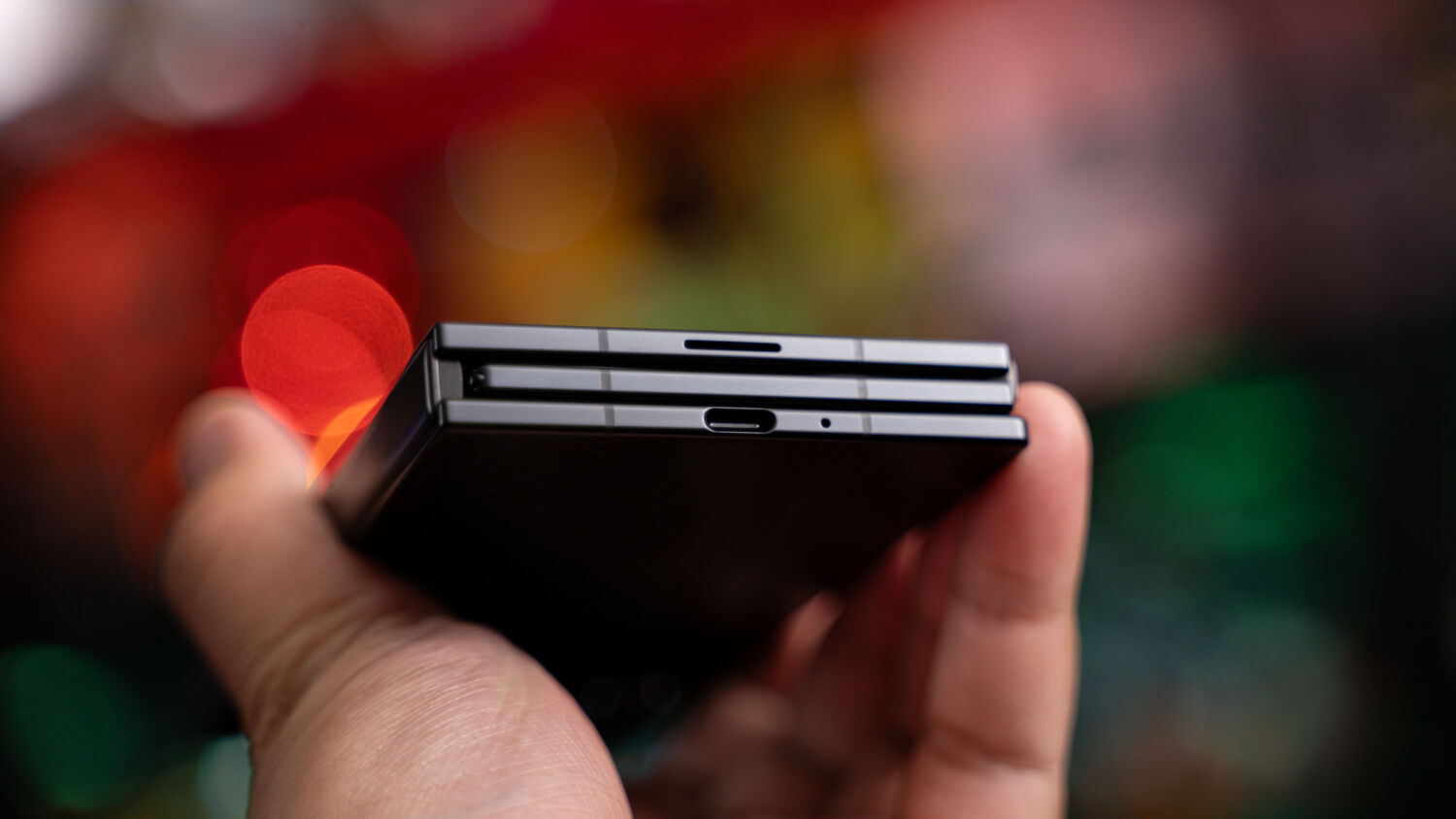
The hybrid offering shifts between two forms: a 12.9mm-thick clamshell and a sleek sheet measuring 3.5mm when fully open. In the former scenario, the chassis is slightly thicker than the Galaxy Z Fold 7, at 12.1mm, and also weighs more at 309 grams, thereby making it a little too long and bulky for normal-sized pockets or prolonged use, even more so for smaller-handed individuals.
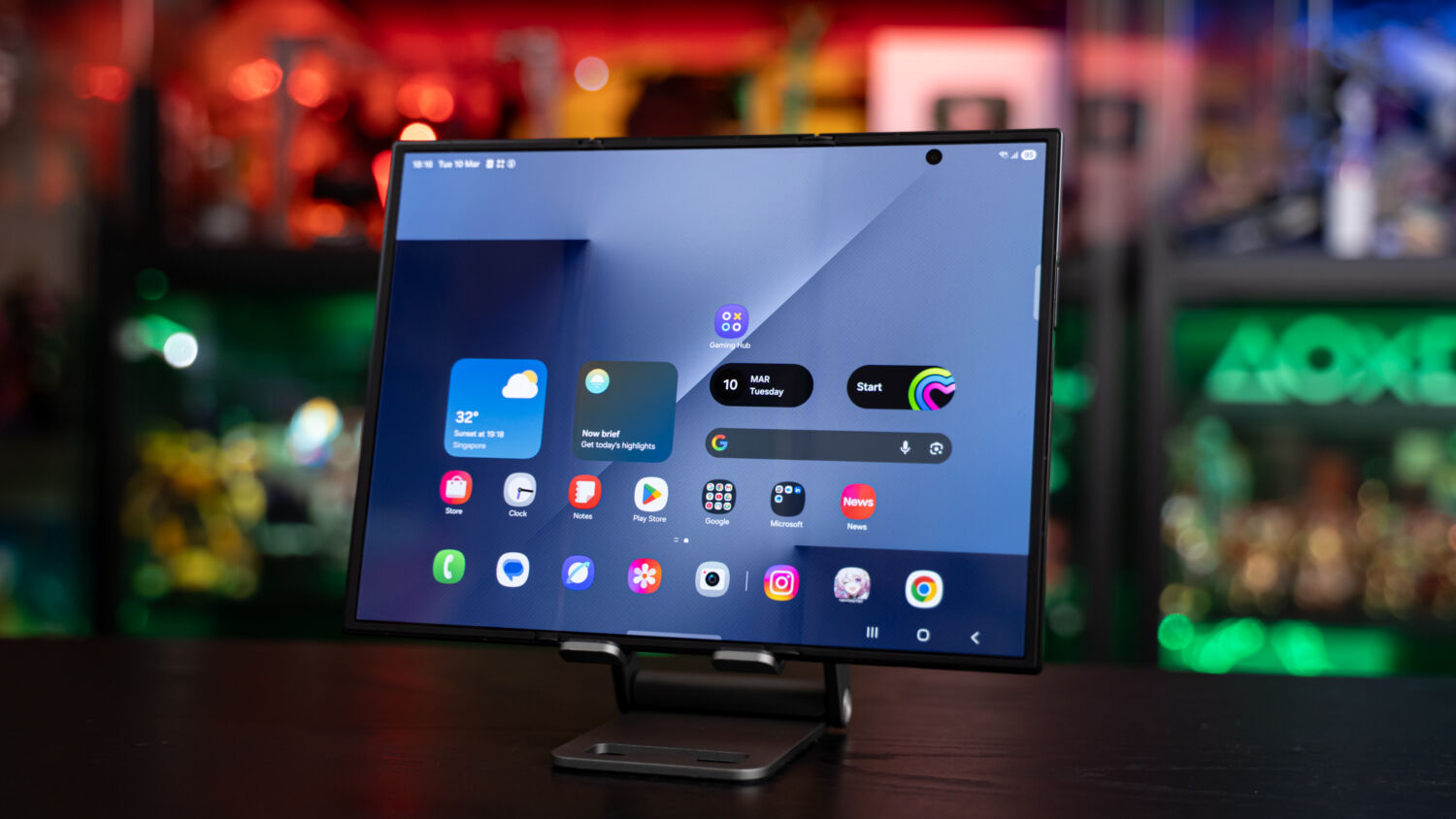
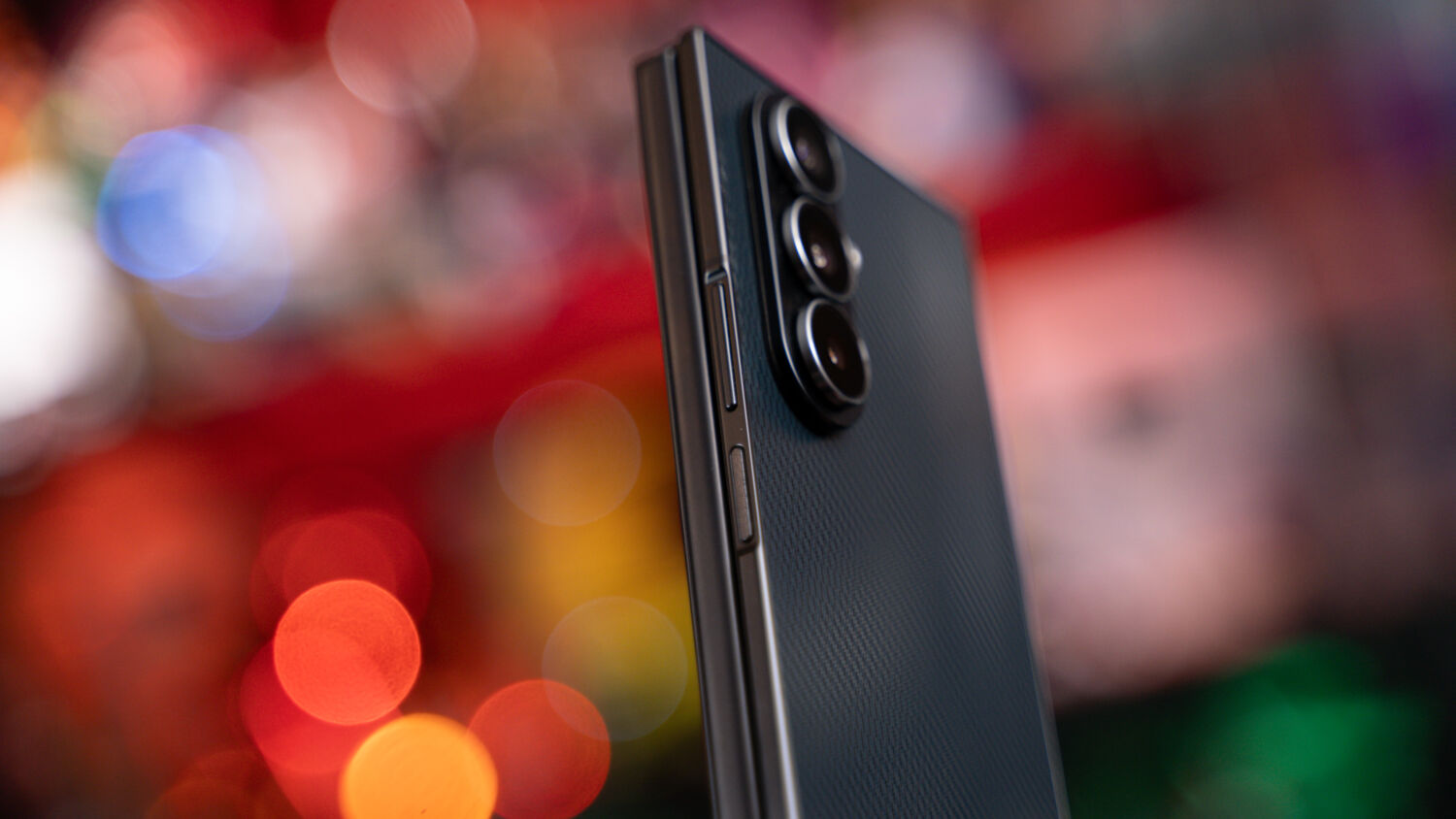
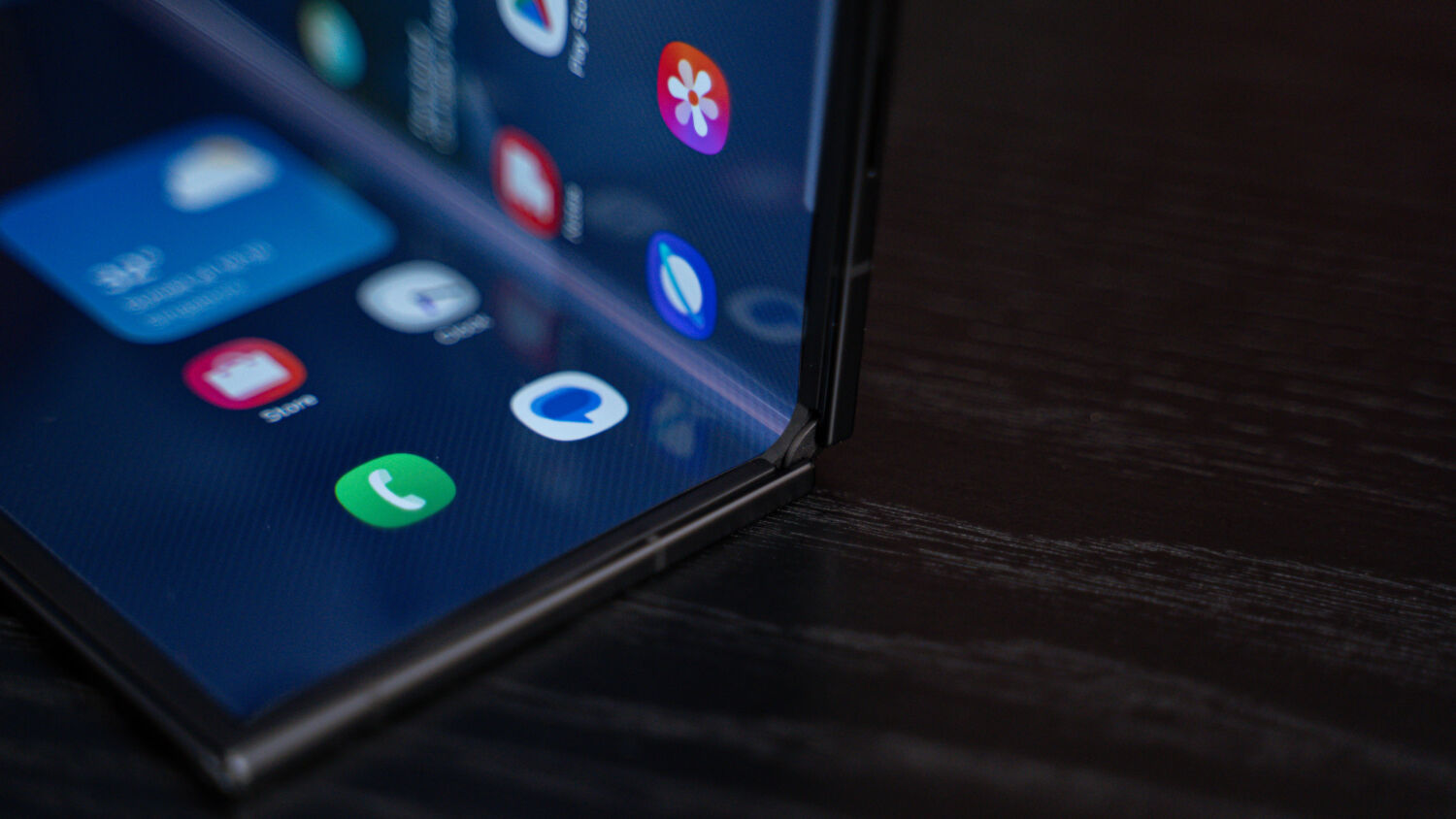
As a tablet, the TriFold is as slim as the Galaxy S25 Ultra, and the even weight distribution when opened alleviates some of the heft felt in the hand, allowing for a more comfortable two-handed grip. The titanium hinge offers the right amount of resistance to change from one mode to the other, with a safety detection feature prompting an on-screen alert and haptic feedback if the device is tucked in incorrectly (the left side goes before the right). Also on the right edge are the power button and volume rocker, though the extended length means their placement is lower than users have grown accustomed to.
Similarly, the two display options are built for different purposes. In its unfolded configuration, the TriFold touts a 10-inch Dynamic AMOLED 2X 120Hz display that proves handy for watching videos, viewing content across multiple windows, playing games, and the like. The extra inches here deliver a more tablet-like experience compared to the Z Fold 7’s 8-inch screen, with clear, bright visuals, sharp detail, and deep blacks – all staples of Samsung’s OLED tech. However, the thin bezels may cause accidental palm or finger mispresses of the Home and Back buttons, and black bars sometimes appear at the top or bottom of the display, due to the 15:11 aspect ratio.
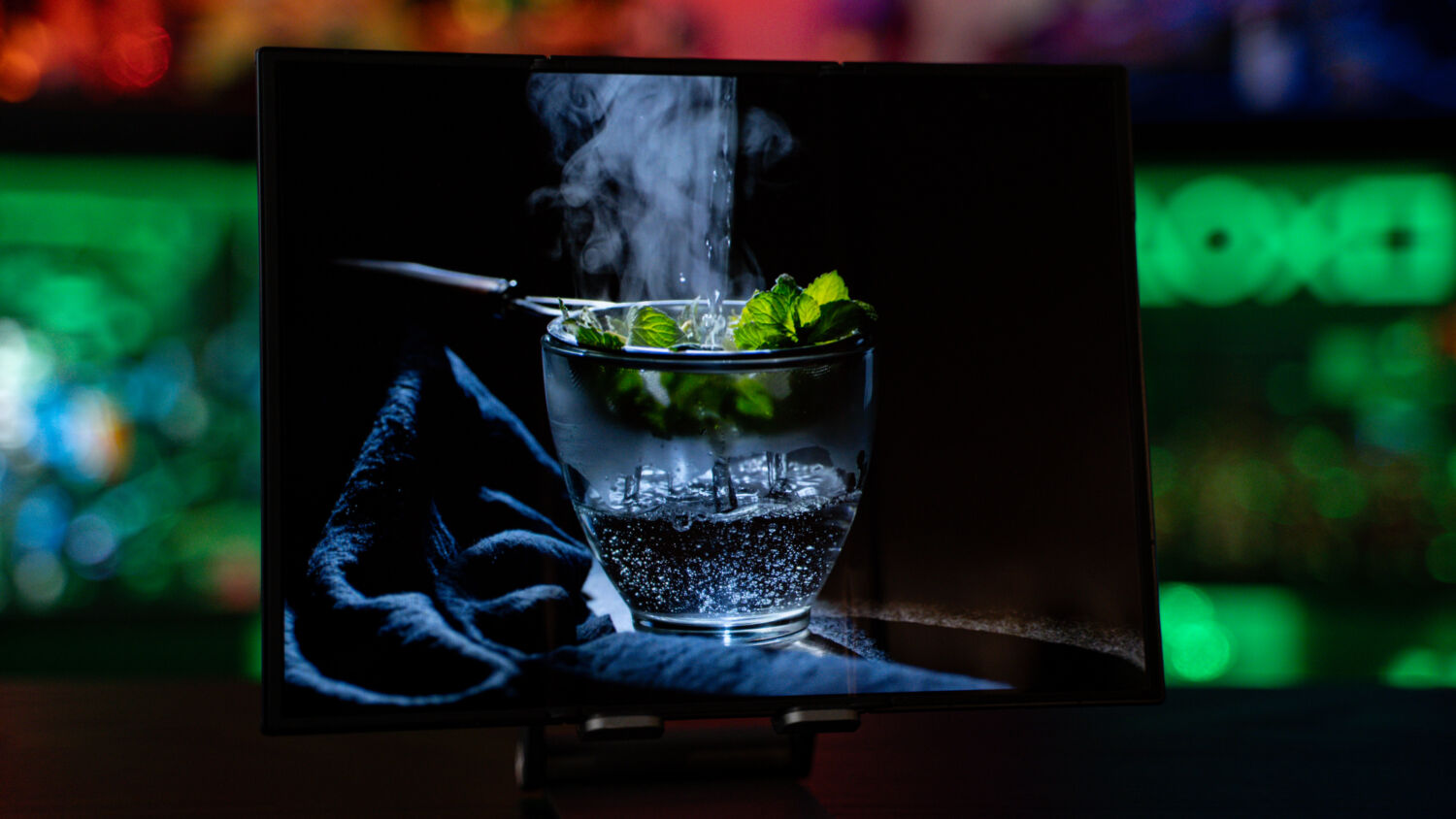
Social media consumption, meanwhile, is best suited for the smaller 6.5-inch FHD+ cover display, as image quality can be grainy and lose a fair amount of detail when viewed on the bigger screen. Day-to-day tasks, from reading emails to texting, work just as well in portrait orientation, but the tight spacing between each key on the keyboard makes for clumsy typing at times. Both the main and sub panels are also highly susceptible to fingerprints, and the creases are pronounced when the screen is black. Play some content, and they become near visible, leaving behind subtle grooves to the touch.
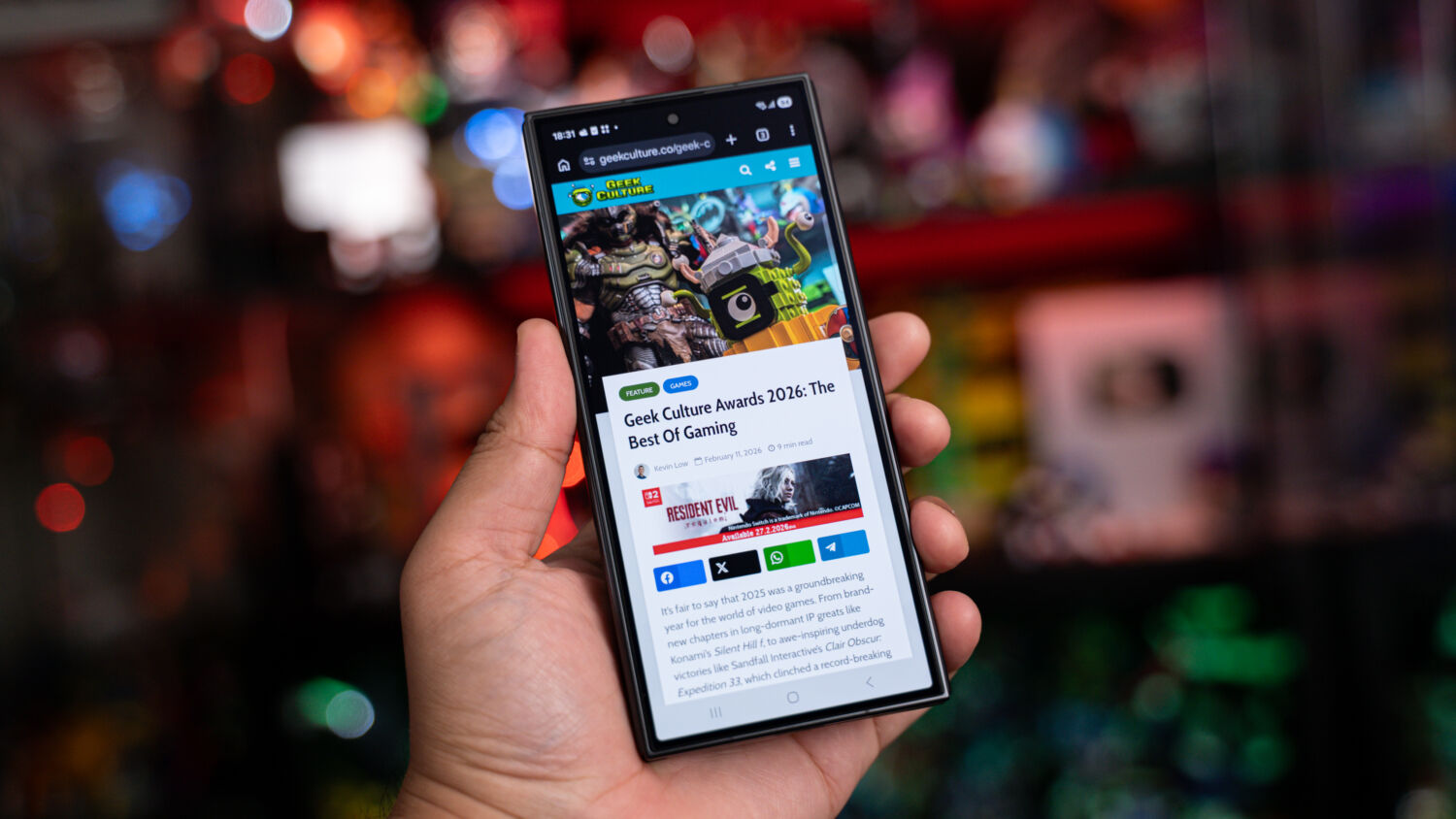
In our earlier first look at the device, we noted that the TriFold has a noticeable lack of on-screen continuity, which, good news, isn’t entirely correct. As it turns out, the feature is buried in the settings, requiring users to manually enable the “Continue apps on main screen” option – a bizarre oversight, really. Doing so eliminates the hassle of having to reopen apps between form factors, bringing back the seamless, cohesive transition that the Z Fold series is known for, though the optimisation for certain apps, such as YouTube (oddly enough), could be better. Case in point: full-screen content on the secondary display doesn’t rescale automatically to the edges of the 10-inch panel, so users will have to resize it by themselves.
Under the hood lies a Snapdragon 8 Elite chip, 16GB of RAM, and up to 1TB of storage. The processor may not be the latest Snapdragon 8 Elite Gen 5, but no matter – app navigation feels smooth, and the responsive, intuitive user interface (UI) makes it easier to resize or rearrange windows, as well as drag and drop content. Up to three edge-to-edge portrait panels and a fourth floating window can fit within the 10-inch main screen, proving handy for multitasking across work and gaming.
On that note, the TriFold is more than well-equipped to handle various titles, from shooters to graphically intense RPGs. Honkai: Star Rail, for instance, saw little to no dip in frame rate, even in the Currency Wars mode, where heavy particles, animated Ultimate cutscenes, and lengthy playtime take centre stage – all while a character building guide was open in a smaller window by the side. Thermal management was the biggest surprise, with the device running warm, but never hot, after 45 minutes of consecutive gameplay.
Adding to its multitasking expertise is the ability to connect wirelessly to a TV or an external monitor for dual-screen viewing. The first Samsung smartphone with a standalone DeX feature, it also offers keyboard and mouse support, giving the alternative of a mini PC workstation that Samsung has been cultivating for the better part of the decade. The setup process is fairly quick and straightforward, although slight latency can take place occasionally.
Courtesy of its Snapdragon 8 Elite chipset, the foldable ships with existing artificial intelligence or AI tools on board, including Galaxy AI and Google Gemini. Circle to Search, for instance, lets users automatically trigger a search for an image or text of interest by circling, highlighting, scribbling, or tapping it, while Generative Edit allows them to move, resize, and erase objects in photos. Portrait Studio and Sketch to Image serve more as bells and whistles than essentials, used solely for creating generative AI content.
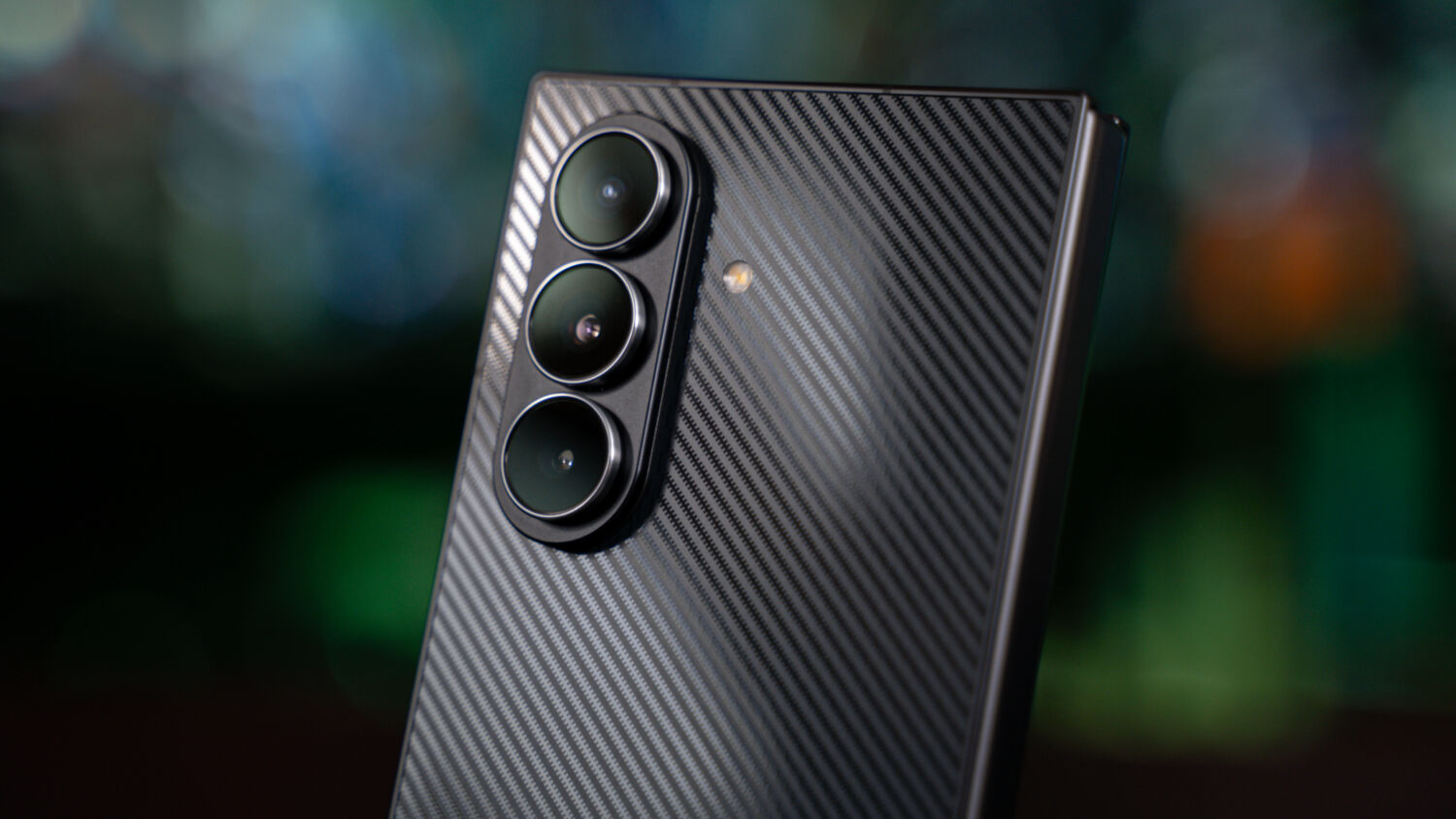
In terms of photography, the TriFold inherits the same triple camera system from the Galaxy Z Fold 7. It boasts a 200-megapixel (MP) wide, a 12MP ultrawide, and a 10MP telephoto camera at the back, alongside a 10MP selfie camera on both of its displays. Oversaturation, once a defining characteristic of Samsung phones, is eschewed for truer-to-life, more accurate colours, even for brighter ones like purple, orange, or red.
Portrait Mode works well for close-up shots, especially of food, producing a natural bokeh effect, clear foreground separation, and bright hues. In low light environments, the shutter is slower than expected, but the phones are still sharp and retain decent detail without much noise. Though kept to a minimum, the flare becomes more obvious when zooming into a shot.






Armed with a 5,600mAh battery, the TriFold packs enough juice to power through a regular day of use. While individual mileage will vary from one user to another, nine hours of scrolling social media, texting, listening to music, reading the news, and the occasional gaming brought its full charge down to around 30 per cent, with Always-On display enabled. It can last a few more hours on a lighter workload, with its 45-watt super-fast charging reaching 55 per cent charge from zero in around 30 minutes.
Despite all that Samsung has achieved with the device, word has it that Samsung never intended for the Galaxy Z TriFold to be a mass market consumer device and has plans, though nothing official has been established, to limit production, which while unfortunate, doesn’t come as a surprise. Shelling out S$3,998 in this economy is no light matter, and only a specific handful of users will know how to harness the full potential of its multifold capabilities.
That’s not to say the hybrid device fell short of expectations – in fact, it’s a strong first-time showing for Samsung, and the versatility proves effective at bridging the gap between smartphone and tablet functionality. For most, though, it does a little too much, but hopefully, glimpses of this promise can carry over to future Samsung products.
GEEK REVIEW SCORE
Summary
The Samsung Galaxy Z TriFold shows promise and is enjoyable to use, but its niche status and extremely hefty price tag make for a killer combo.
Overall
8.1/10-
Aesthetics - 8/10
8/10
-
Build Quality - 8.5/10
8.5/10
-
Performance - 8.5/10
8.5/10
-
Value - 7/10
7/10
-
Geek Satisfaction - 8.5/10
8.5/10

Si Jia is a casual geek at heart – or as casual as someone with Sephiroth’s theme on her Spotify playlist can get. A fan of movies, games, and Japanese culture, Si Jia’s greatest weakness is the Steam Summer Sale. Or any Steam sale, really.
 Zinho De Costa
 HSALS
HSALS