
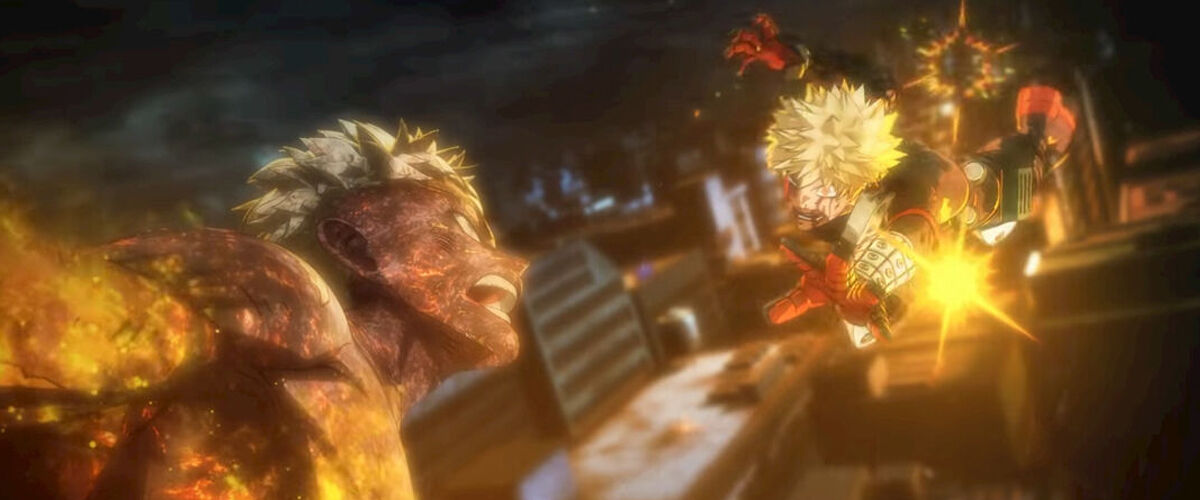
To say that My Hero Academia has built a superpowered legacy is certainly an understatement. Based on acclaimed artist Kohei Horikoshi’s original story of a young Izuku Midoriya’s (Deku) dream to become the world’s strongest hero despite not being born with powers, the zero-to-hero tale has captivated millions. Since 2014, the manga series, spread across 431 manga chapters and eight anime seasons, has continued to emphasise that true power comes from never giving up and believing in those who stand by you.
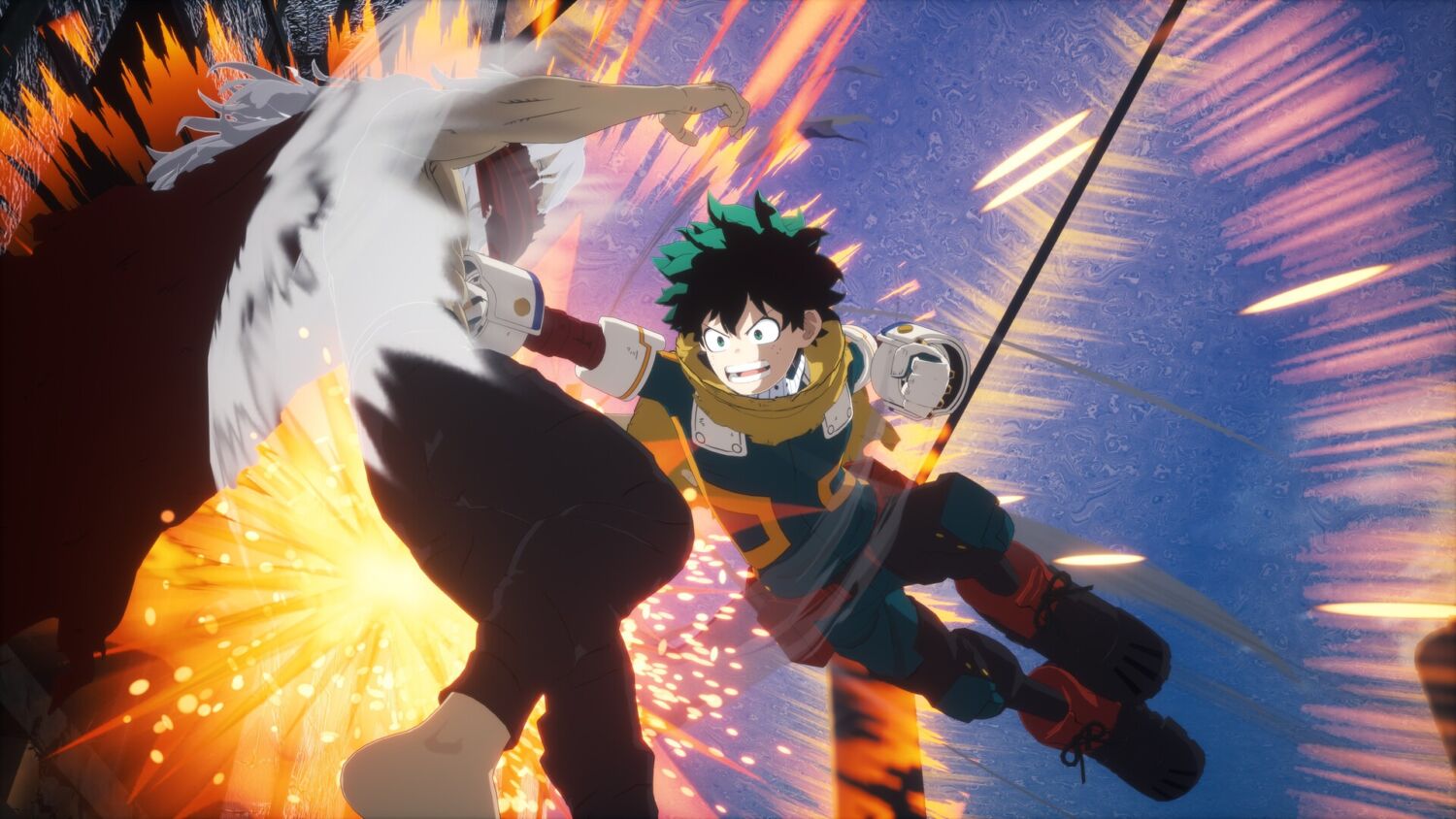
It’s this very concept that powers the sheer amount of playable heroes and villains in Bandai Namco’s upcoming 3D arena fighter, My Hero Academia: All’s Justice – a whopping 68 to be exact, and quite a substantial increase from the 42 and 46 from its two predecessors – 2018’s My Hero One’s Justice and its 2020 sequel, respectively. A big part of this expanded roster stems from the first-ever inclusion of the entire Class 1A, meaning even heroes with comparatively less page and screen time, including Mashirao Ojiro (Tailman), Koji Koda (Anima), and Toru Hagakure (Invisible Girl), all of whom can now stand side-by-side with their more well-known peers in battle.
The addition of its largest roster yet, alongside the pure power fantasy it provides, was something the developers aimed to provide from the get-go, as described in our previous interview session with producer Aoba Miyazaki, but now, via an extended four-hour PC gameplay preview session, we were able to better understand the flow of combat and how the team has tackled the balance of power between characters, along with what players can expect outside of the standard 3v3 fights.
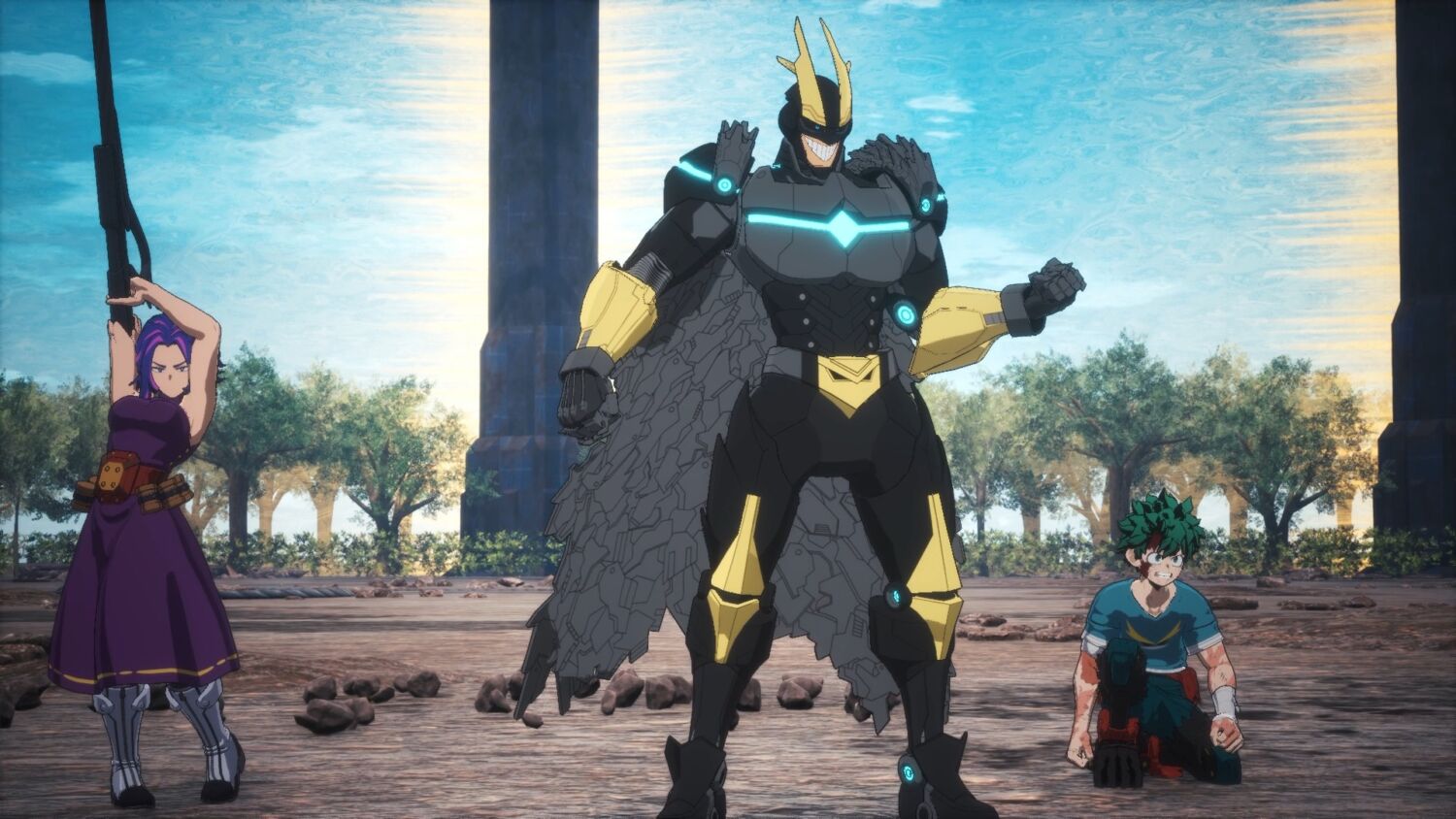
Combat takes place in a series of quick-fire matches pitting teams of three against each other, with players being able to freely swap between the roster, albeit with a short cooldown in between swaps, instead of the previous partner assist mechanic which merely summons two support characters temporarily, offering much more flexibility in terms of build synergies, and most importantly, lets players directly control different heroes (or villains) during a single match.
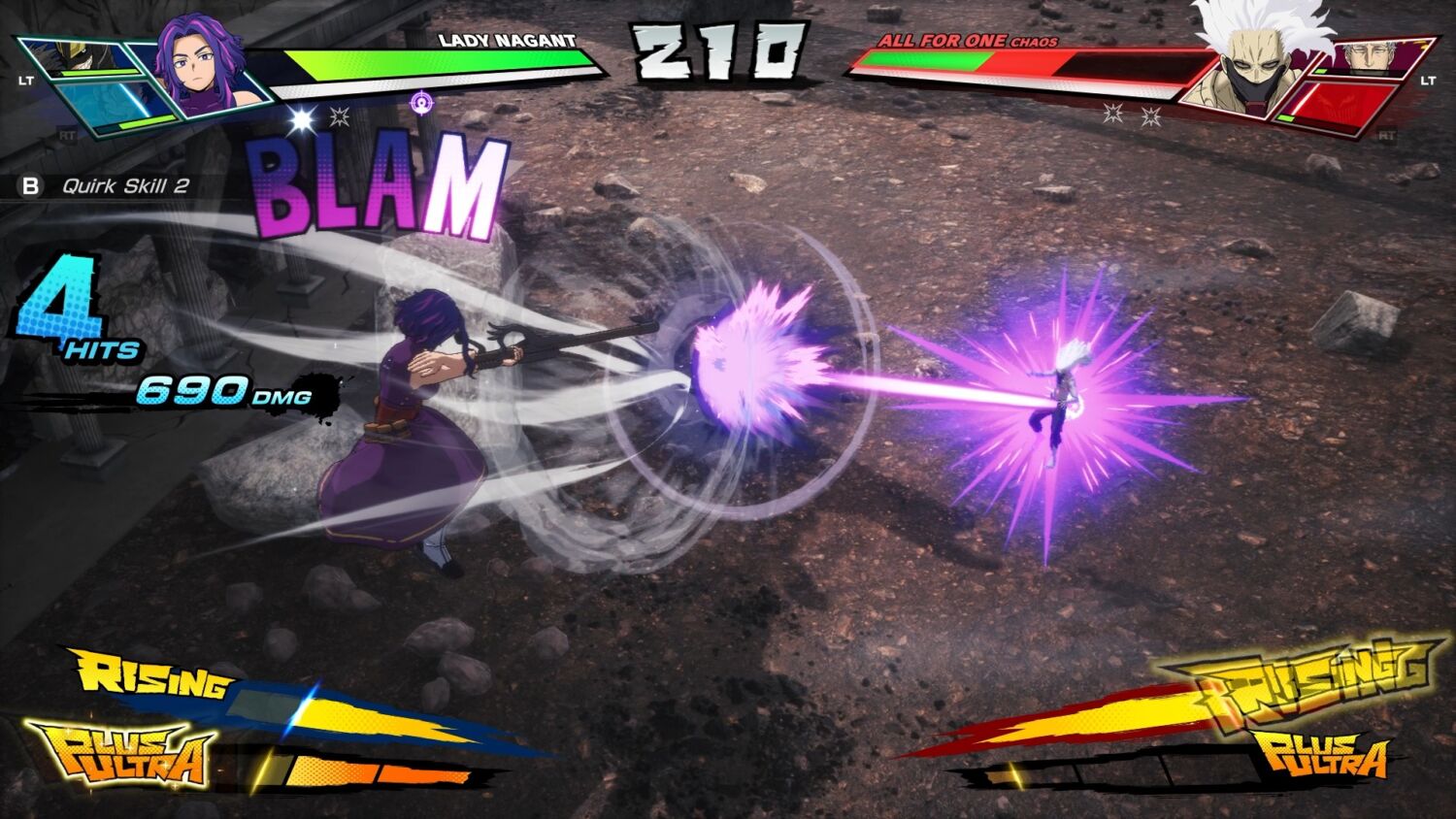
This way, players can strategically pick their teams to offset certain weaknesses of the individual fighters. Take Kaina Tsutsumi (Lady Nagant), a newcomer to the gaming franchise who specialises in using her Rifle quirk, aka the powers seen in My Hero Academia, to deal range damage from afar, but suffers in close combat. Players can now bring in Rikido Sato (Sugarman), another newcomer, a hero who excels in powerful close-ranged blows, or perhaps an all-rounder like Deku himself, hot-swapping between the trio to effectively control the battlefield.

Combat in My Hero Academia: All’s Justice is easy to pick up, but challenging to master, just like most arena fighters of its kind. Each character has a basic combo performed by mashing the X button on Xbox controllers (Square on PlayStation), but can then supplement each combo with either Y or B (Triangle or Circle) to perform Quirk skills, with different variations performed depending on the directional key held while pressing the buttons.
And that’s just basic attack combos, as this doesn’t include the multiple special actions that can be performed, such as block-breaking attacks, counter-attacks (of which there are two variations), emergency evades, and of course, the game’s two ultimate moves, “Plus Ultra” and “Rising”.
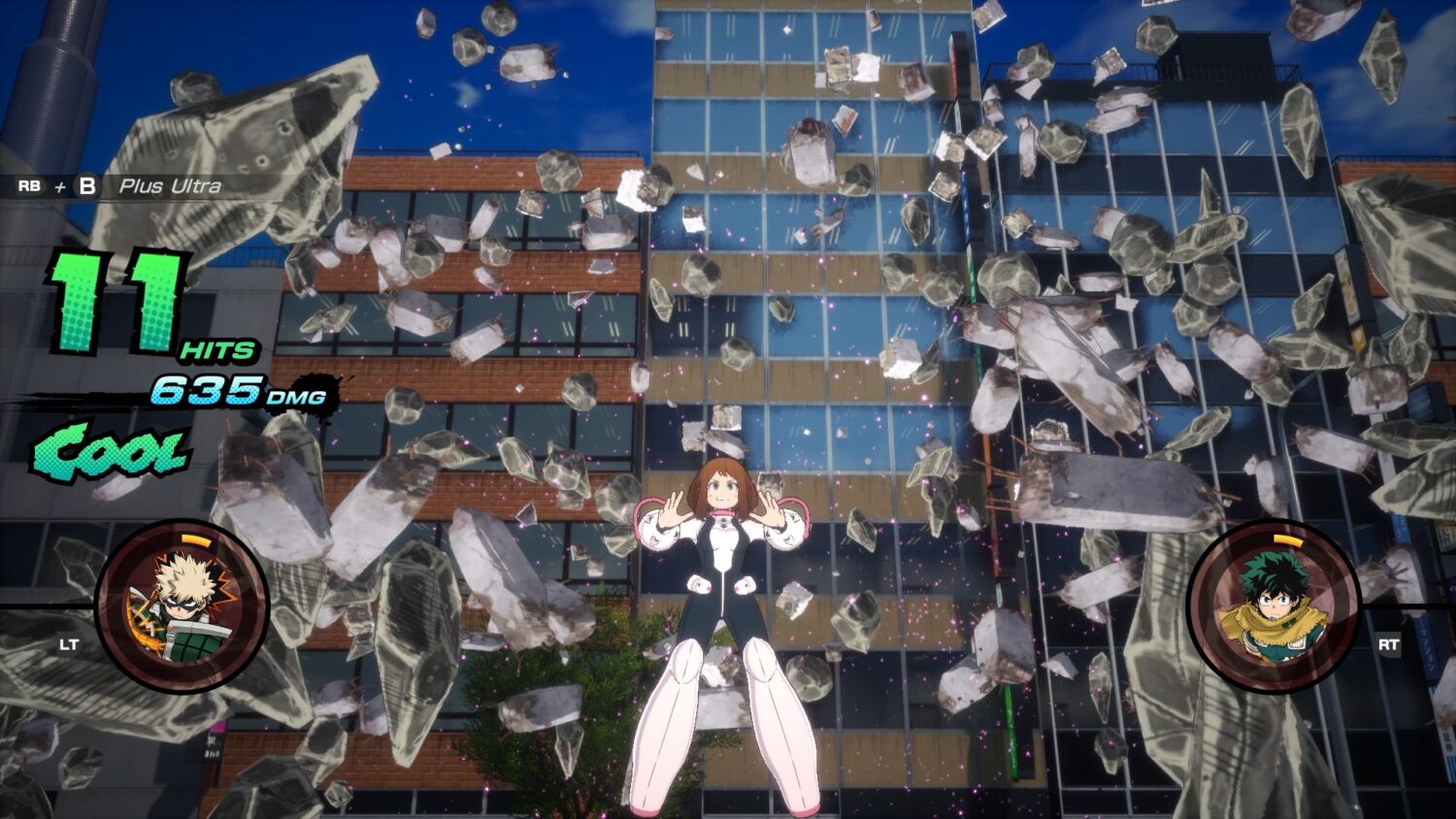
The former are special finishing attacks that use up a chunk of a dedicated bar filled up as the match progresses, and can even be combined across a player’s three heroes, depending on how full said bar is. “Rising” is the game’s version of a Rage meter, that once filled, can be expended to enter a temporarily buffed state that not only boosts attack power and speed but can also cause certain characters to power up and change how their special moves work. Katsuki Bakugo (Great Explosion Murder God Dynamight), for example, summons his Strafe Panzer support weapon, which transforms his Quirk skills into ranged attacks.
This might sound like a lot, and it certainly is, but the game does offer some features to better help players, especially newcomers, ease into the rhythm of things. The game features two control modes, Normal and Manual, with the former automatically activating certain actions just by mashing the basic combo button, alongside an option to simplify Quick Skills so that specific directional keys don’t need to be held to perform the skills. Additionally, the game also offers the option to toggle between automatic character switching and “Plus Ultra” activation, meaning players are free to pick and choose which kinds of assistance they require before every match.

Combat, for the lack of a better world, is a flashy affair, with characters running, zipping, or flying all around the map, with each clash being a literal explosion of particle effects from fire, blinding lights, electricity, smoke, and everything in between. Although this perfectly encapsulates the intense superpowered showdowns seen in the anime, things can get messy to a point where it’s difficult to even see a player’s character amidst the action.
It’s a power fantasy for sure, but since this is a fighting game and one that allows players to pick three different characters, balance in the game can make or break the experience, so we put ourselves in some situations where we were clearly disadvantaged, to see how well we fared.
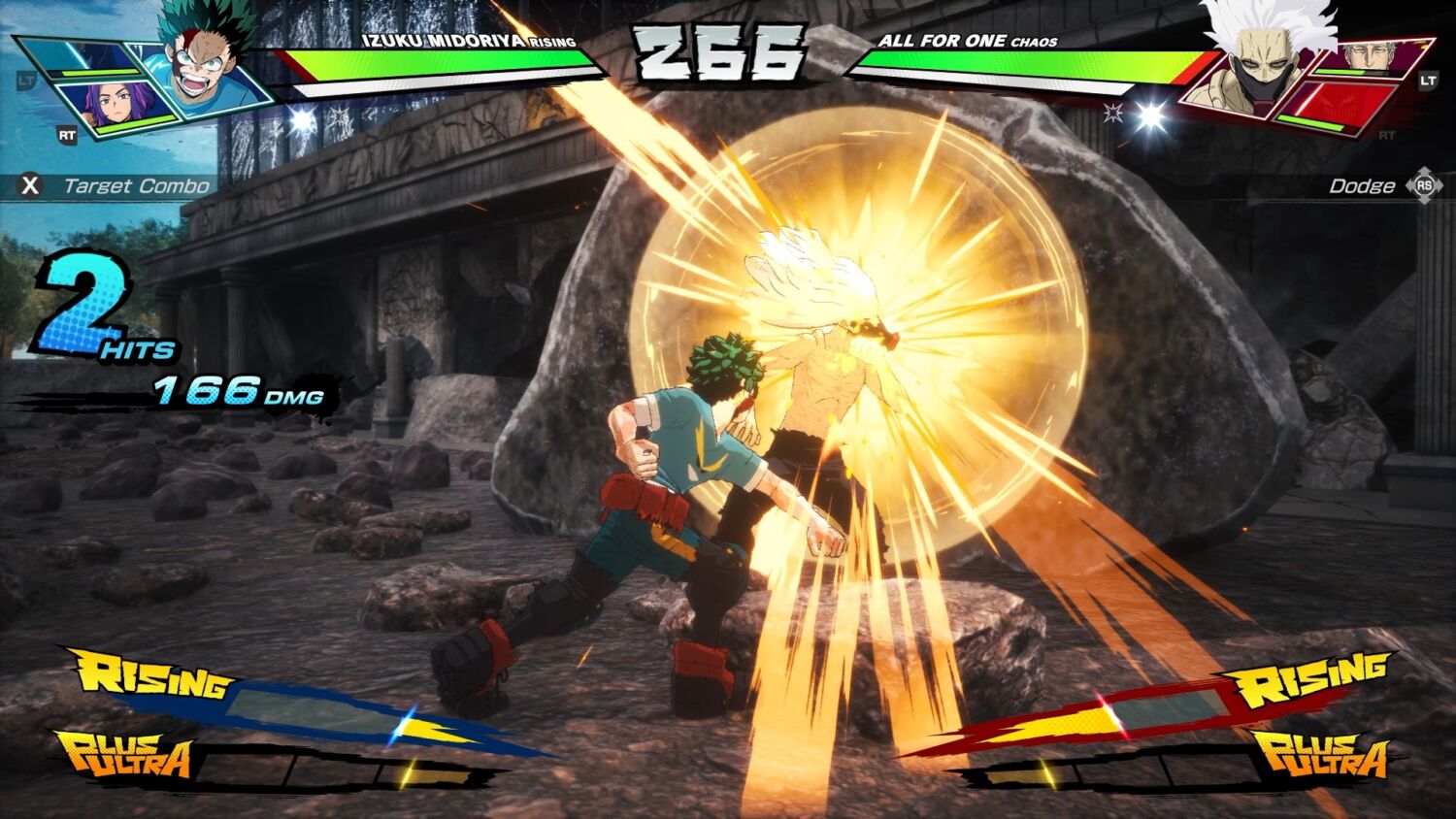
First up, we pit three close-ranged combatants (Mirko, Tentacole, and Red Riot) against a team of ranged heroes (Lady Nagant, Earphone Jack, and Gale Force), which would have certainly spelt disaster in theory, since the enemy simply needs to keep at range and pick our team off as we struggle to get up close. This didn’t turn out to be the case, though, as characters moved much quicker than expected, meaning it was easy to close the gap as long as we kept moving, allowing a relatively manageable win at a medium difficulty setting (level three of five).
Next, we tried an underdog match, with three relatively “weaker” characters, at least in the anime’s lore (Froppy, Invisible Girl, Lady Nagant), against some of the most powerful heroes and villains across the series (Endeavor, All For One, Dabi). This actually caused us to struggle quite a bit, losing one character before our eventual win, but succeed we did.

But even with this, there was clearly a power difference between certain characters, something we put to the test in a final test match, this time turning the tables by pitting an all-star team of Endeavor, Dabi and Tomura Shigaraki in his ultimate form against a team of Tapeman, Can’t Stop Twinkling and Invisible Girl. Set to the game’s maximum difficulty this time around, it wasn’t even a close match, as victory was swift and came without losing a single character.
Clearly, My Hero Academia: All’s Justice is designed around providing a playground of heroes and villains for players to simply have fun in, instead of fine-tuning each character to ensure a level playing field. This isn’t a bad thing, per se, and it does make sense in the franchise’s lore, as having a support-focused hero like Mei Hatsume, for example, being able to stand toe-to-toe with All For One, the show’s literal big bad, will certainly break the illusion and the show’s themes that not all powers are made equal.
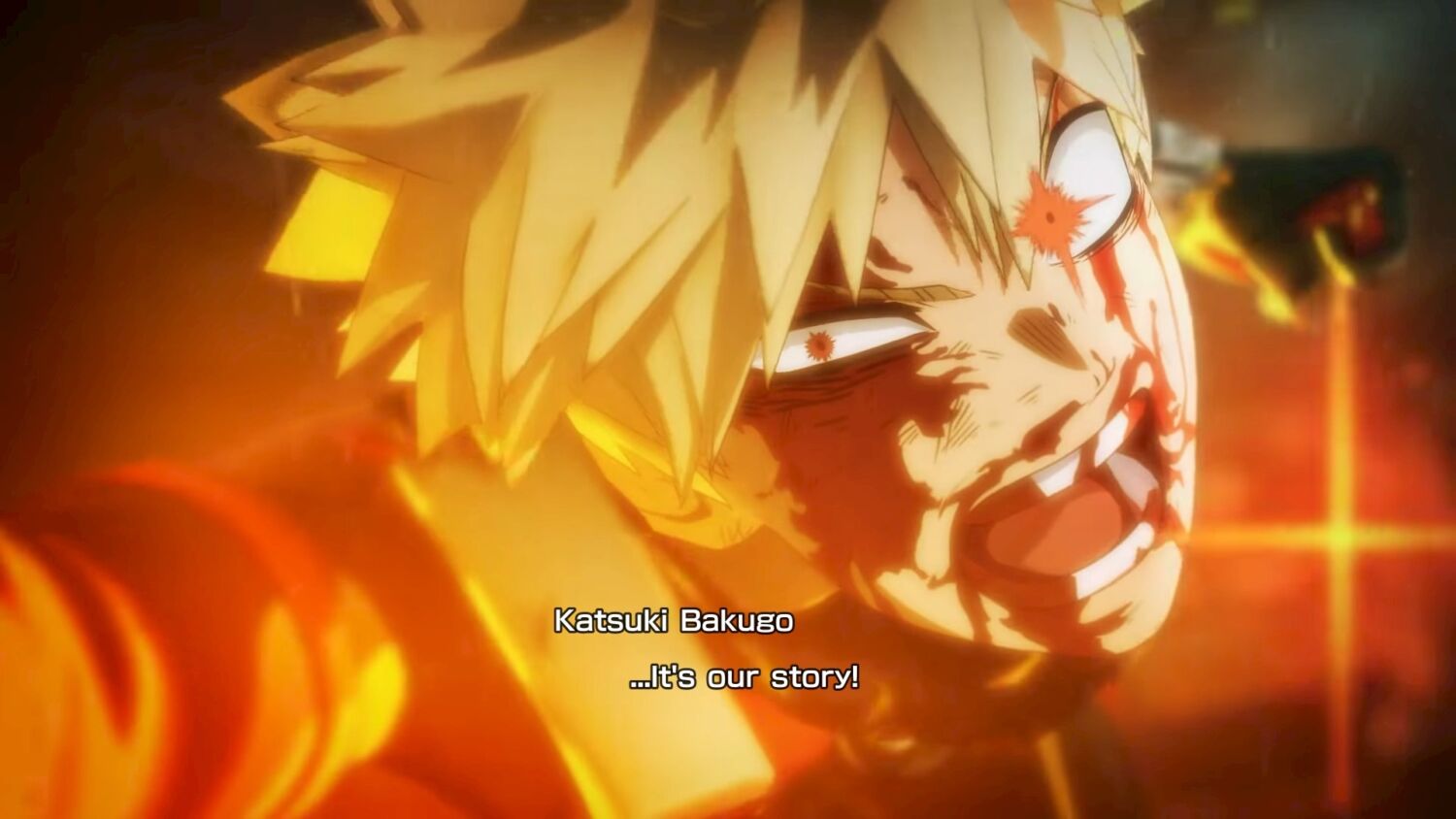
Outside of regular matches, My Hero Academia: All’s Justice also includes three other single-player gameplay modes. Story, which covers the Final War arc and consists of thematic battles mixed with impressive 3D recreations of scenes from the anime; Teamup Missions, which sees Deku exploring a virtual world and battling through a series of missions set against a mysterious AI malfunction, and Archive Battles, which recreates iconic fights across the show’s eight seasons, alongside the ability to play the standard 3v3 mode in online multiplayer or couch co-op.
While players will certainly be kept busy with all these modes to choose from, their quality isn’t consistent throughout, especially concerning the Teamup Missions. While conceptually interesting, allowing Deku and sometimes other heroes to freely explore a virtual city using unique traversal mechanics, things do start to get repetitive after a while. Every mission has players controlling mainly Deku, as he takes part in rinse-and-repeat fights against waves of weaker mobs mixed with the occasional hero or villain, or tedious escort and chase sequences.
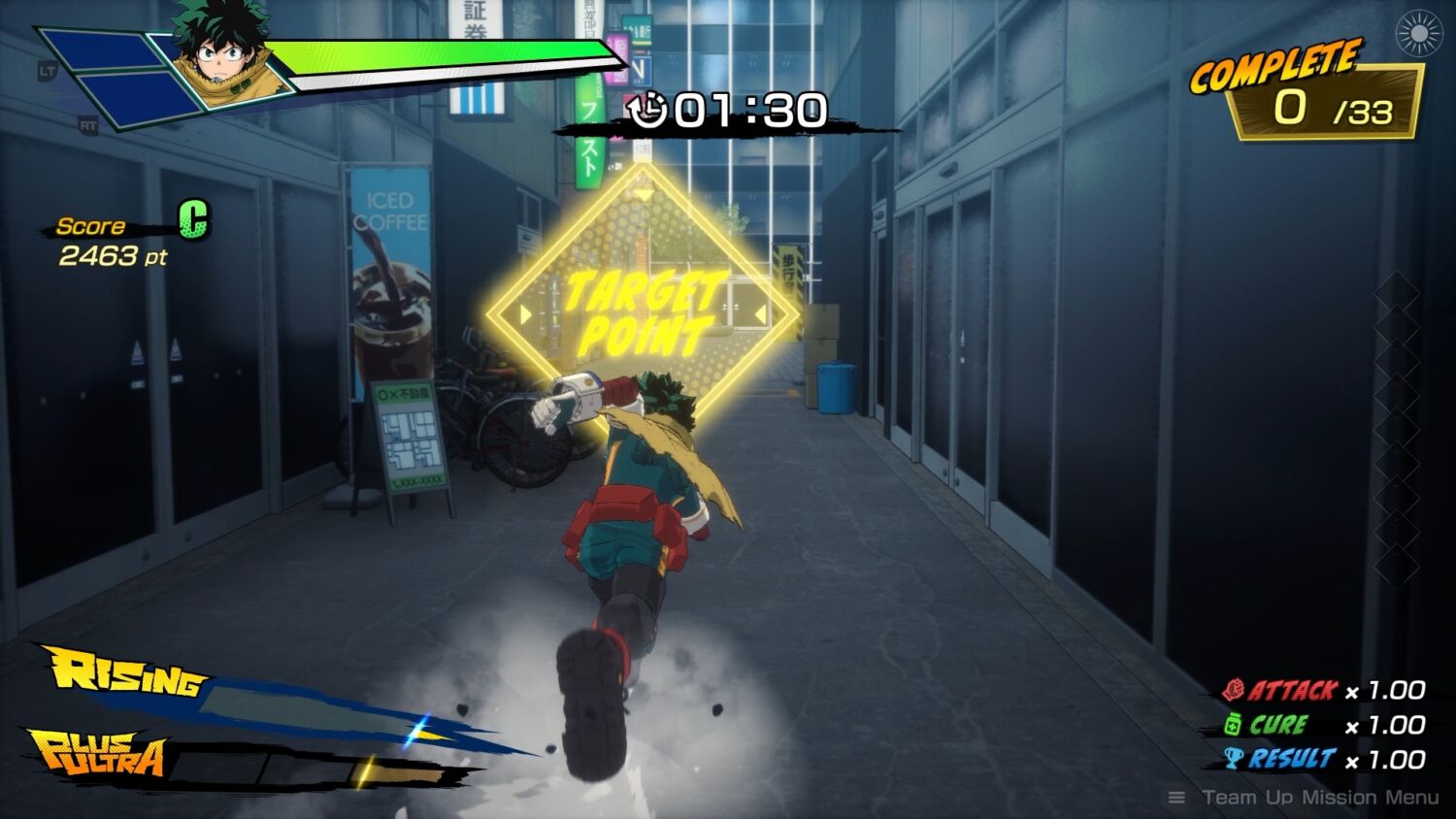
It doesn’t help that the cutscenes here aren’t nearly as high quality as those seen in the Story mode, reduced to just simple static shots of characters standing still and talking to each other, which makes this mode more of a bonus tangent to engage in while playing through the more interesting Story mode, rather than one to sink hours into.
Minor qualms with its Teamup Missions aside, My Hero Academia: All’s Justice still manages to provide the ultimate power fantasy for anime and manga fans with its impressive character line-up and flashy, accessible combat. Uneven hero and villain balance, while lore-accurate, does mean that its appeal might be diminished for those looking for a more hardcore fighting game experience, but at the end of the day, that’s not the point here, as this is one playground designed for fans to pick their favourite fighters and duke it out in a flashy, Quirk-filled extravaganza.
My Hero Academia: All’s Justice will Detroit Smash its way onto the PS5, Xbox Series X|S and PC on 6 February 2026.

Kevin is a reformed PC Master Race gamer with a penchant for franchise “duds” like Darksiders III and Dead Space 3. He has made it his life-long mission to play every single major game release – lest his wallet dies trying.

 Si Jia