Since the release of iOS 26 for the Apple iPhone family on 15 September, scammers no longer bother me.
Oh, don’t get me wrong – scammers still call my numbers, as the incessant ringing to my personal and work phones still comes through. There are callers with the ‘+’ symbol that follows the local Singapore country prefix, and those without, even though authorities tried earlier to introduce the ‘+’ symbol as legitimate, until scammers found a way to spoof it on your caller ID.
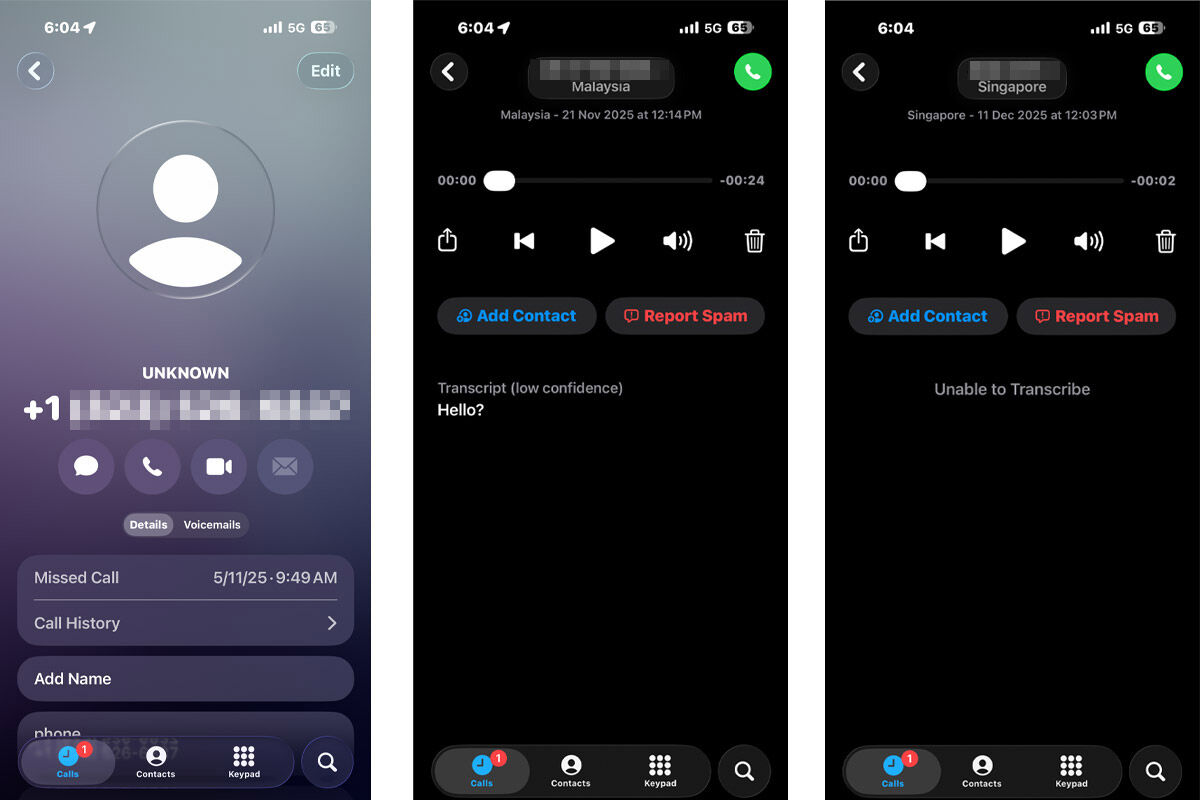
The calls still appear at different times in the day, as if fraudsters follow some sort of office working hours. These unwanted calls can be spoofed to be originating locally, or some come from Nigeria (+234), India (+91), Pakistan (+92), Zambia (+260), and Malaysia (+60), just to name a few. And you immediately know these are scammers calling from virtual, VOIP or digital numbers – there’s the slight pause before the call starts, as if the scammers are making dozens of calls hoping that someone – you – might pick up before they connect directly, hands clasped and ready to reel you in. There’s also a pause in hearing the other party speak, likely from the digital delay of a virtual connection. And everything they say feels scripted.
These callers even do their best to speak with local accents, as these days, the Indian-accented ones are less common. There are also more calls from those with a Mainland Chinese intonation, where they first introduce themselves in English, but immediately ask if you can speak Mandarin instead. The ones with local accents can also vary, with those speaking in Malaysian-accented English and those with Singapore-accented English that sound just a bit unnatural, as if they just picked it up. They claim to be from your bank or insurance provider, while others claim to be from the authorities wanting your help in fighting potential scammers!
The audacity. That said, I have scolded and hung up on these impostors, who used to call me weekly, and who somehow know my name and phone number, but so far, none have shown up at my door to arrest me for my behaviour, so clearly, someone’s lying.
Initially, I would cuss at them and tell them to lead an honest life and not be a scammer before hanging up, until friends told me that some of these hustlers are victims themselves, tricked into being a part of scam farms and centres. Then there’s even the fear that if you do speak to scammers, even to tell them off, they might be recording the call and using your voice as a template with artificial intelligence to recreate it, and then using it to further scam your close friends and family.
How these hustlers can potentially link your number to that of a family or friend who would then recognise your AI voice isn’t a concern, especially not for a multi-billion dollar industry across Southeast Asia, and one that has lost S$456 million from scam victims in Singapore in the first half of 2025.
So these days, I let Apple, or rather, my iPhone, do the talking for me. As part of the latest iOS 26 operating system, the American tech company introduced Call Screening, a free opt-in feature that allows you to monitor incoming calls from numbers not stored on your phone.
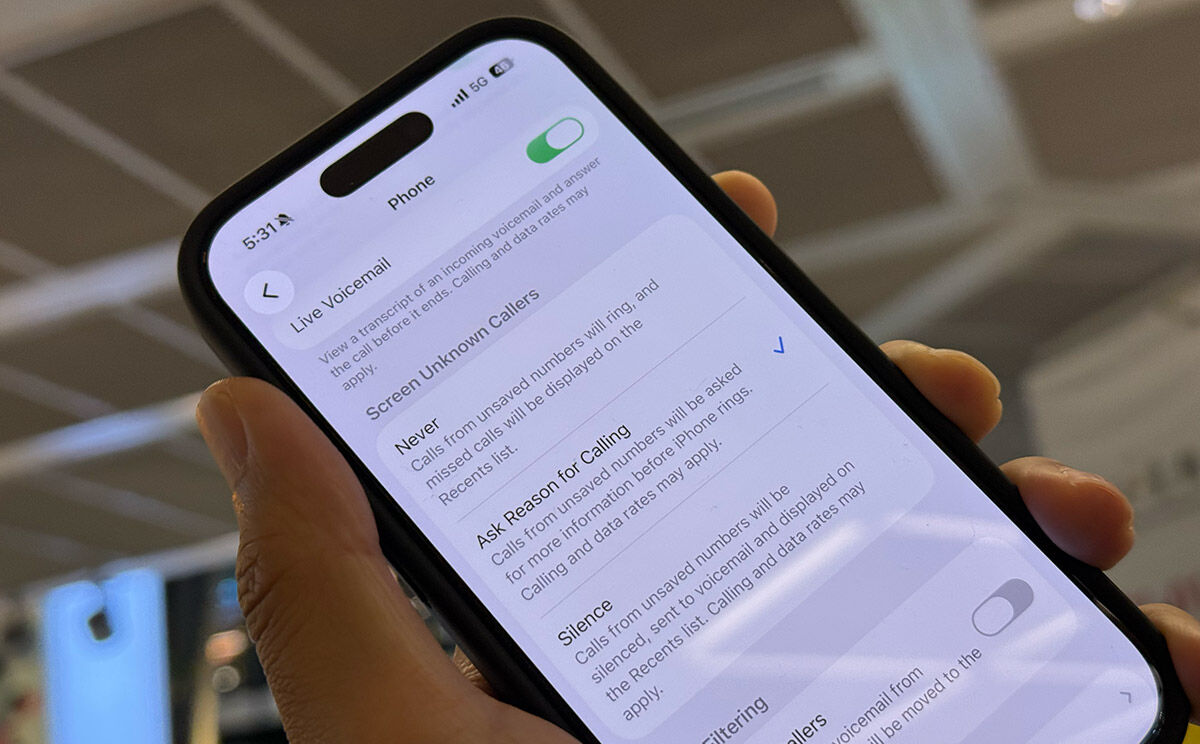
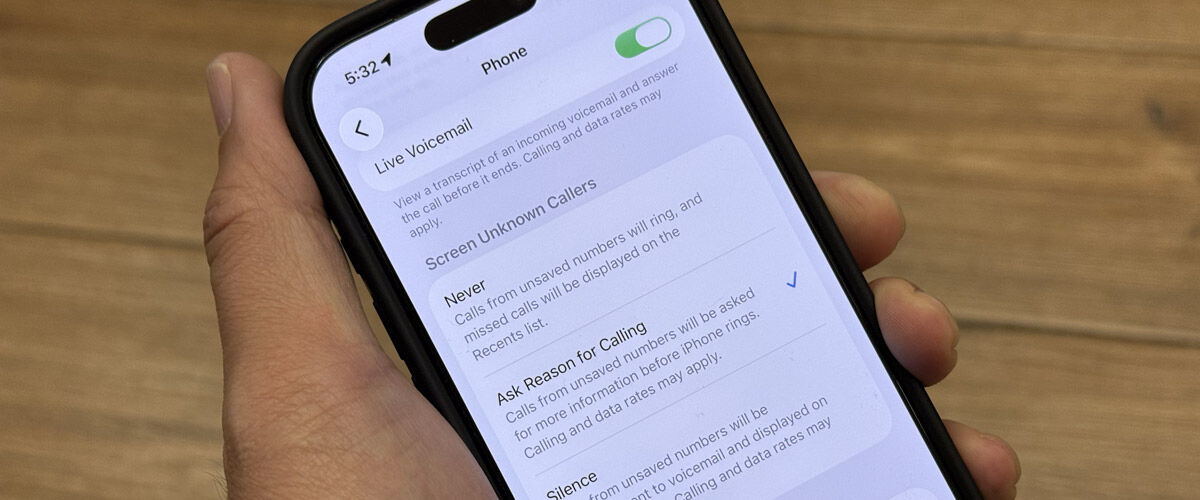
Once activated, the feature limits how new numbers can reach you. To turn it on, go to Settings on your device, tap Apps near the bottom of the menu, and scroll down to Phone and tap that. Scroll to the bottom, and you’ll see three options under Screen Unknown Callers. The first, Never, means calls from all numbers will ring, and callers can leave voicemails. With this option, nothing changes, and strange numbers will appear on your phone.
The second, Screen Unknown Callers, is the new feature. Once turned on, calls from unrecognised numbers will be answered by your iPhone, and it will ask the other party the purpose of the call, without ringing your iPhone. After the caller replies, your phone will then ring and drop you a transcript of the caller’s response, and upon reading it, you can decide whether to answer the call.
My experience is that scammers won’t want to waste time replying, and definitely do not want their voice to be recorded by your phone. But the convenience here is the background operations, as the phone communicates with the caller and shares their details, giving you the option of picking up or rejecting the call.
Now, the caller can very well be the delivery guy from Amazon, Shopee, Redmart or <insert delivery company details here>, but I’ve never had a delivery person call and not identify themselves. The receptionist from your dentist and doctor will also leave a message, as will the representative from your insurer, bank or travel agent. In fact, in the four months that I’ve turned the feature on, the one call I missed responding immediately to was from a delivery person new to my area – he didn’t know where to leave the package, and when I didn’t pick up right away, he had no choice but to opt for a re-delivery. The good news is that he’s now made several deliveries and knows where to leave my packages.
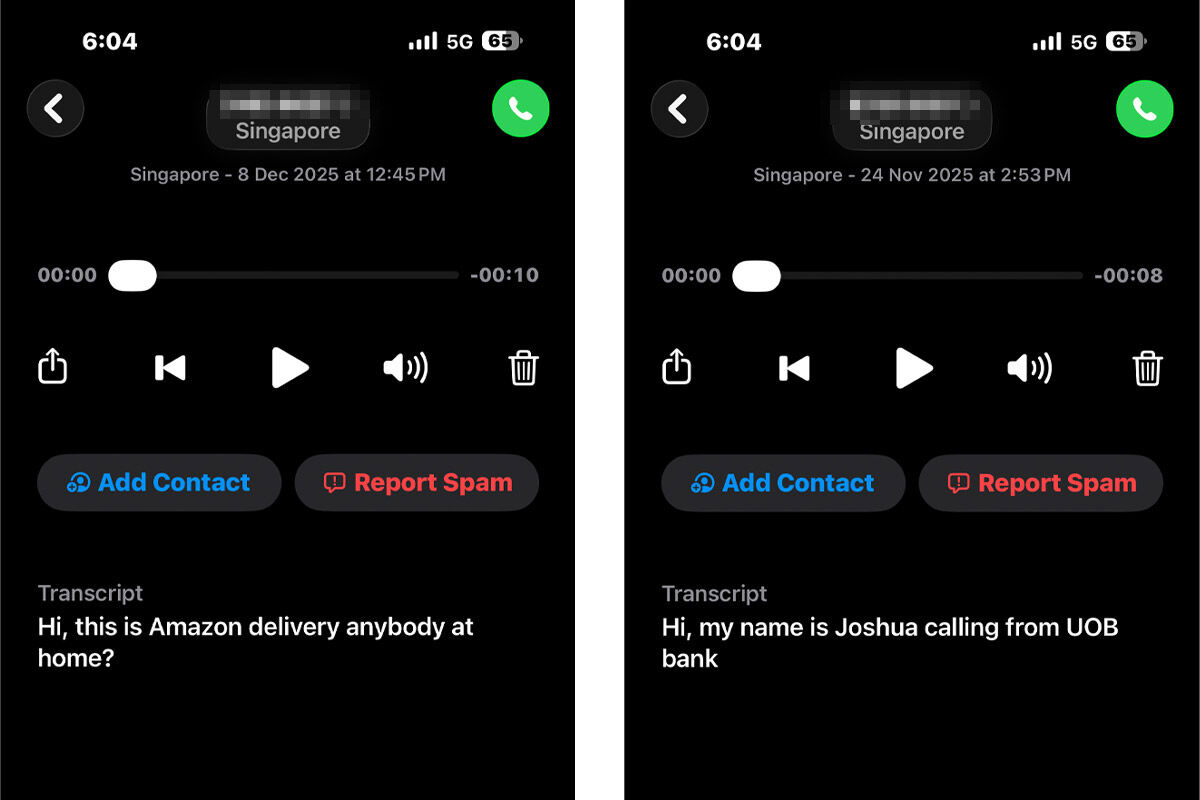
Most of the time, I’ll see a message that there was a caller, but there was no corresponding message, and unless you’re waiting for a callback on a reservation or appointment with your hairdresser, it will be apparent that the caller had no urgent business, especially if they don’t call back if you didn’t pick up the first time. One caveat is that this feature will answer calls from unknown numbers automatically, so if you’re traveling and don’t want to pay international dialling rates for the feature to respond to such calls while you’re overseas, do turn it off when you leave the country.
The last option, Silence, is to have calls from unsaved numbers go straight to voicemail, which is too extreme an option, unless it’s an office phone that isn’t used by anyone outside of your company.
Regardless, this feature has been nothing but useful. There’s no obligation to answer unknown calls because my iPhone 17 Pro Max does the work for me, and I don’t have to worry as much. What I do find is being added to strange and unknown WhatsApp group chats, where actors send messages from a script, acting out a charade where they claim good returns on investments and other money-making opportunities – I report and delete all of them and wish that Facebook’s much lauded artificial intelligence were capable of supporting users the way Apple has.
It’s now a feature I’ve turned on for my parents’ phones because the older generation is the target. In time, the scammers might find a way to circumvent this feature, and the vicious cycle will restart, but for now, the scammers are at bay.

Hsals needs more space in his house, and more money in his bank account to pay for all the toys, collectibles and other geek related items that companies are churning out. Free-time? Girlfriend? Who’s got time for those?

 Kevin Low