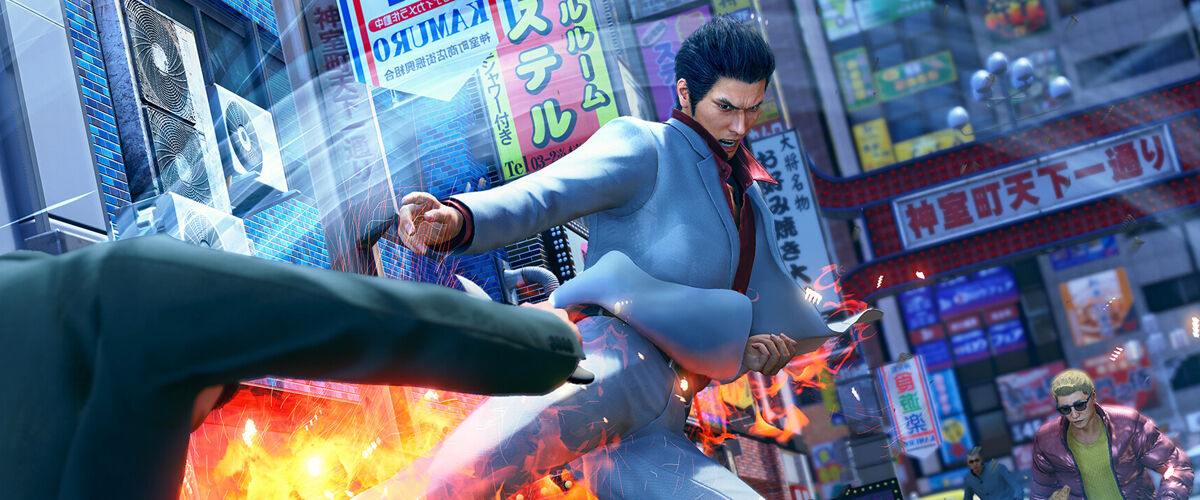
Never say that Ryu Ga Gotoku (RGG) Studio hasn’t learnt from past mistakes, as following its successful remake efforts to revive the first two games in the Yakuza action franchise – 2016’s Yakuza Kiwami and 2017’s Kiwami 2 – it’s now tackling perhaps the most ambitious endeavour yet with Yakuza Kiwami 3 & Dark Ties.
This upcoming remake is a bold one, not just due to the graphical engine improvements or all the other bells and whistles seen in today’s modern gaming revitalisations, but more so because franchise fans often refer to the original 2009 title as one of its weaker entries. In a series so well known for its high-octane action and over-the-top spectacle, Yakuza 3 made the unfortunate decision to slow things down considerably, both in terms of gameplay and storytelling, a move poorly received by fans.
It should come as a relief, then, that the team handling Yakuza Kiwami 3 has heard fan feedback loud and clear, as if there was anything that our lengthy three-hour-long preview of the upcoming title had taught us, it’s that many of the major tweaks of this remake directly address the sore spots of the original, elevating the action and moment-to-moment gameplay to a level more in line with its franchise peers.
Graphical overhaul aside, Yakuza Kiwami 3 feels like a completely different title due to three major factors: Improved combat flow, a more engaging “Morning Glory” gameplay segment, and the introduction of its additional villain-focused chapter, Dark Ties.
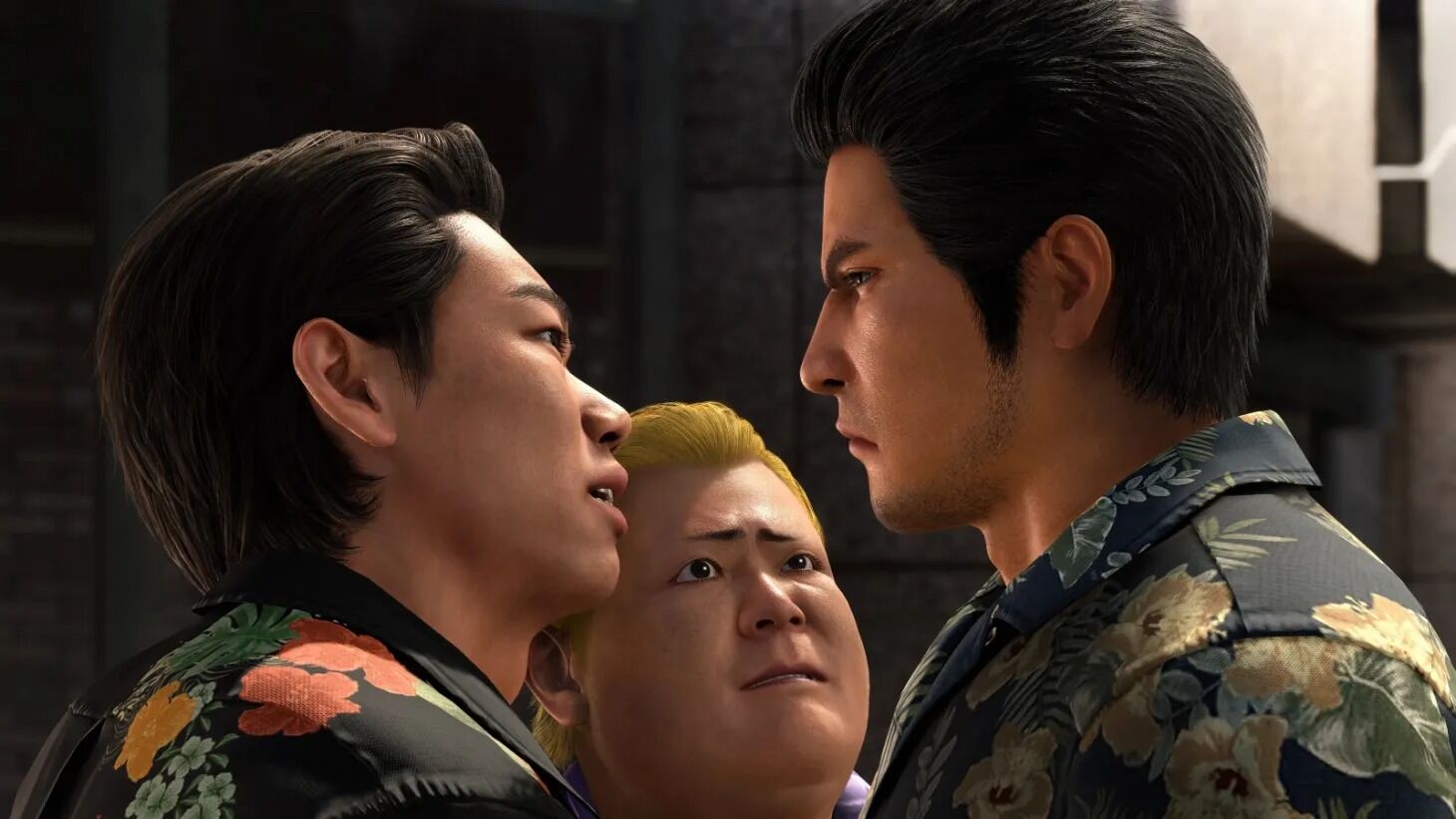
Among the three, perhaps the most important improvement concerns the title’s core combat, as that’s what players will be engaging with for the majority of the experience. The original game’s combat was notorious for intentionally slowing things down to a halt, as enemies would block a player’s strikes almost non-stop, garnering the title the hilarious nickname, “Blockuza”. To drive this wound deeper, its protagonist, Kiryu, only had access to one fighting style, the Dragon of Dojima, which, compared to more modern titles’ two or even three stance choices, meant building an effective combination of moves to approach any given combat scenario was rather limited.
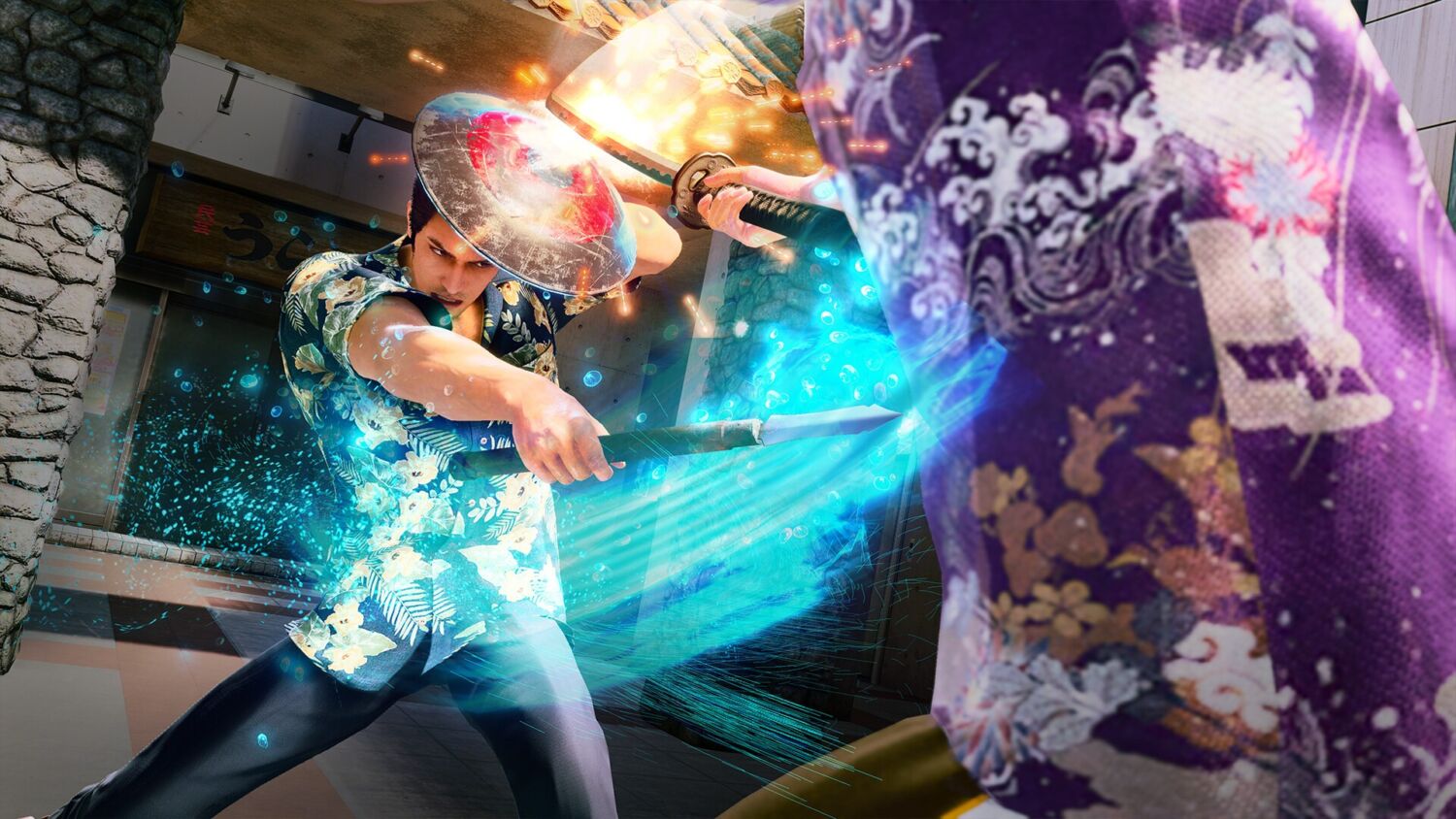
To address this, Yakuza Kiwami 3’s solution is two-fold – reduce the enemy AI’s overuse of the block function, and speed up combat tempo with the introduction of the crowd-focused Ryu-kyu fighting style. Inspired by tools used in the island of Okinawa, this style is a more technical, weapon-focused one that gives Kiryu not just one, but a whopping eight weapons to choose from, a Tinbe-rochin (short spear and shield combo), a Tonfa, a Tekko (a fist-load tool resembling brass knuckles), a Nunchaku, an Eku (a heavy boat oar), and a Surujin (a traditional chained blade), a pair of Kama (sickles), and a pair of Sai blades, each bound to one of Kiryu’s basic attacks.
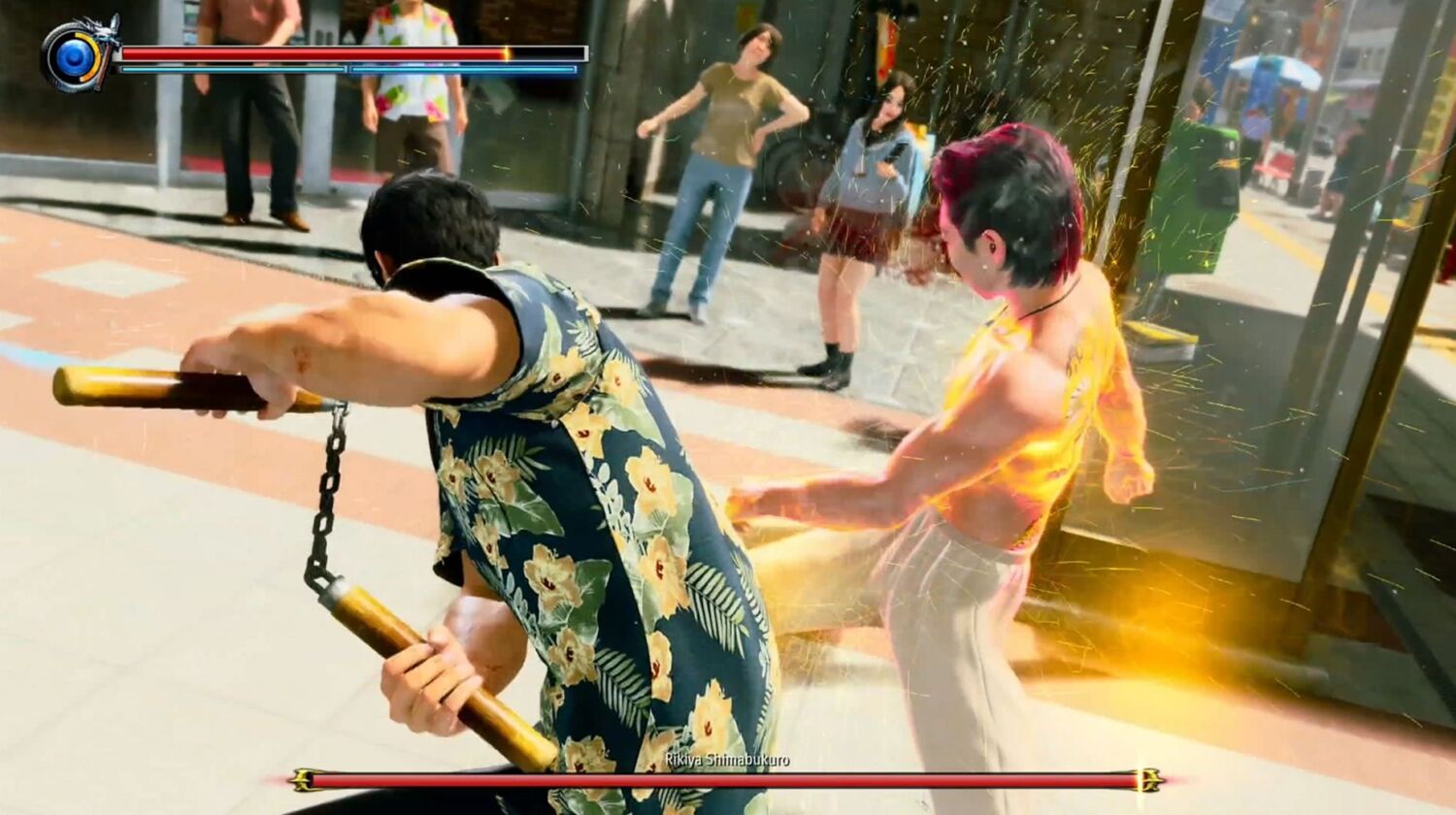
These tools aren’t just for decoration, as each weapon is designed to excel in a different aspect of combat, with the Surujin, for example, capable of damaging an entire group of surrounding enemies at once, while the Eku deals heavy damage in a small cone in front of Kiryu, and the Sai blades can be thrown from a distance mid-combo.
Together, the Ryu-kyu style marks one of the franchise’s most flexible fighting stances to date, as it has the potential to be effective against both large groups of foes or a single powerful one. Does this make the protagonist a little overpowered? Absolutely, but the game does try to balance things out a little by introducing much larger mobs of enemies, with one particular instance in the preview having us face off against 10 weapon-wielding goons at once, which we made short work of with weapons of our own.
Balance concerns aside, Yakuza Kiwami 3’s additions to base combat effectively squash the complaints of the original, with fights playing out more in line with what fans expect from later titles, meaning it’s more flashy combos with brutal EX finishers, and less running around in circles waiting for an opening in an enemy’s defences.
On to the original title’s next major shortcoming, Morning Glory, which sees Kiryu step up and play a father figure to multiple children at an orphanage. While the intention was a respectable one, with the initial game taking the time to build up Kiryu’s motivations towards the care of the children and proving that he is more than a violent ex-gangster, it fell short in execution. Most players criticised the slow pacing every time Morning Glory was involved, and since it was such a big part of the title, this meant the game was oftentimes a slog to get through.
While the team couldn’t completely cut Morning Glory out of Yakuza Kiwami 3 due to how much of an integral plot device it was, they could make its segments more engaging, and they have done so via a series of new mini-games players will take part in while caring for the children. In our preview session, we had the chance to check out three of them – helping out with their homework, which plays out similarly to the Ounabara Vocational School exam activity in Like A Dragon: Pirate Yakuza In Hawaii, a cooking quick-time-event-based mini-game seen in multiple other franchise titles, and perhaps the most interesting of the lot, sewing.

Now, one might ask, how in the world has the game managed to make sewing fun, of all things? The answer is to think completely out of the box and look at things from a different perspective, literally, as the team looked at a close-up shot of how the sewing needle interacts with guidelines on a piece of cloth, and transformed the way the needle glides along its path into a pseudo racing mini-game, with the needle being the “car” and the guidelines being the “track”. This, according to our accompanying interview with game director Ryosuke Horii, was inspired by the classic car chase video game Out Run, and the results are pretty identical if you squint hard enough, with players guiding the needle through an incoming track, navigating its twists and turns while staying within set boundaries.
While engaging in these new mini-games, players will slowly raise the humorously named “Daddy Rank”, as well as improve their relationship with each of the eight kids plus series regular Haruka Sawamura. While the preview didn’t leave room to find out how either maxing out Kiryu’s Daddy Rank or his relationships with the children will affect gameplay or the story, one can expect Yakuza Kiwami 3 to gradually feed players more mini-games, or tougher versions of existing ones, as the narrative progresses, ensuring they always have something to do instead of just being constantly bombarded with cutscenes or conversations.

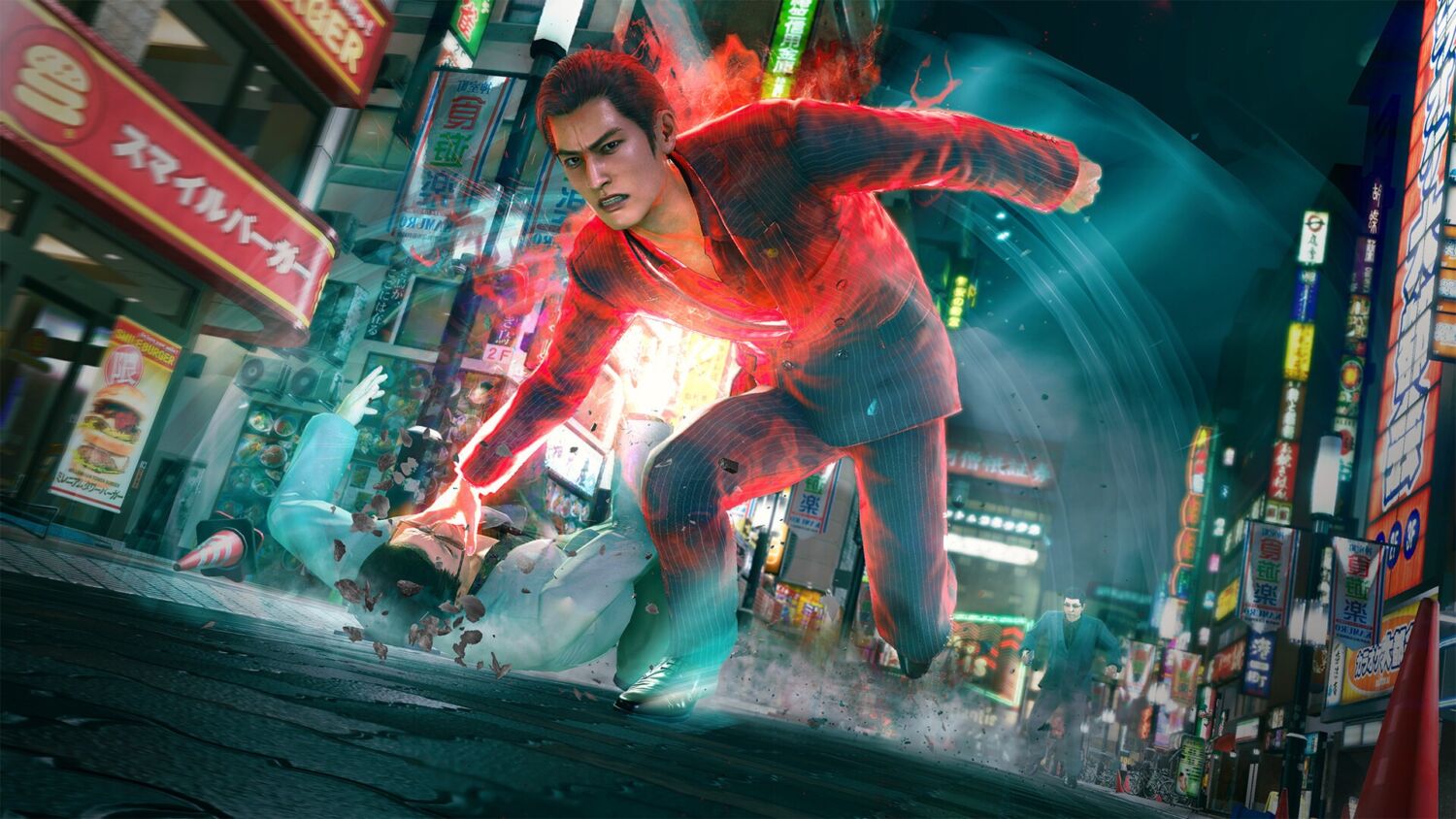
Finally, there’s Dark Ties, the free additional chapter included with the remake that shines a spotlight on fan-favourite villain Mine. We discussed a bit about Dark Ties’ overall narrative and Mine’s rapid Shoot Boxing fighting style in our previous interview and demo session at Tokyo Game Show (TGS) 2025, but with an extended gameplay look this time around, we where able to gain further insight into two other major Dark Ties systems, the Kanda Damage Control and the brand-new “Hell’s Arena” Coliseum game mode.
Just like its name suggests, Kanda Damage Control can be summed up just by its tagline, “rebuild rep, save face, profit”. Tsuyoshi Kanda, the third patriarch of the Nishikiyama Family and all-around scum of the earth, has come up with a brilliant plan to improve his standing among the Kamurocho community, and that’s to get Mine to go around performing “good deeds” to somehow make the people forget about Kanda’s plethora of crimes.
This initiative, if you can even call it that, comprises of Mine going around town completing good deeds in three categories: Good Deed Quests, narrative-style missions which seem to operate like main or sub stories, Helping the Little People, which consist of completing quick-fire activities strewn throughout the map, like quick brawls, item deliveries, or completing mini-games, and Damage Control Challenges, which are general gameplay milestones players can hit as they progress through the story.
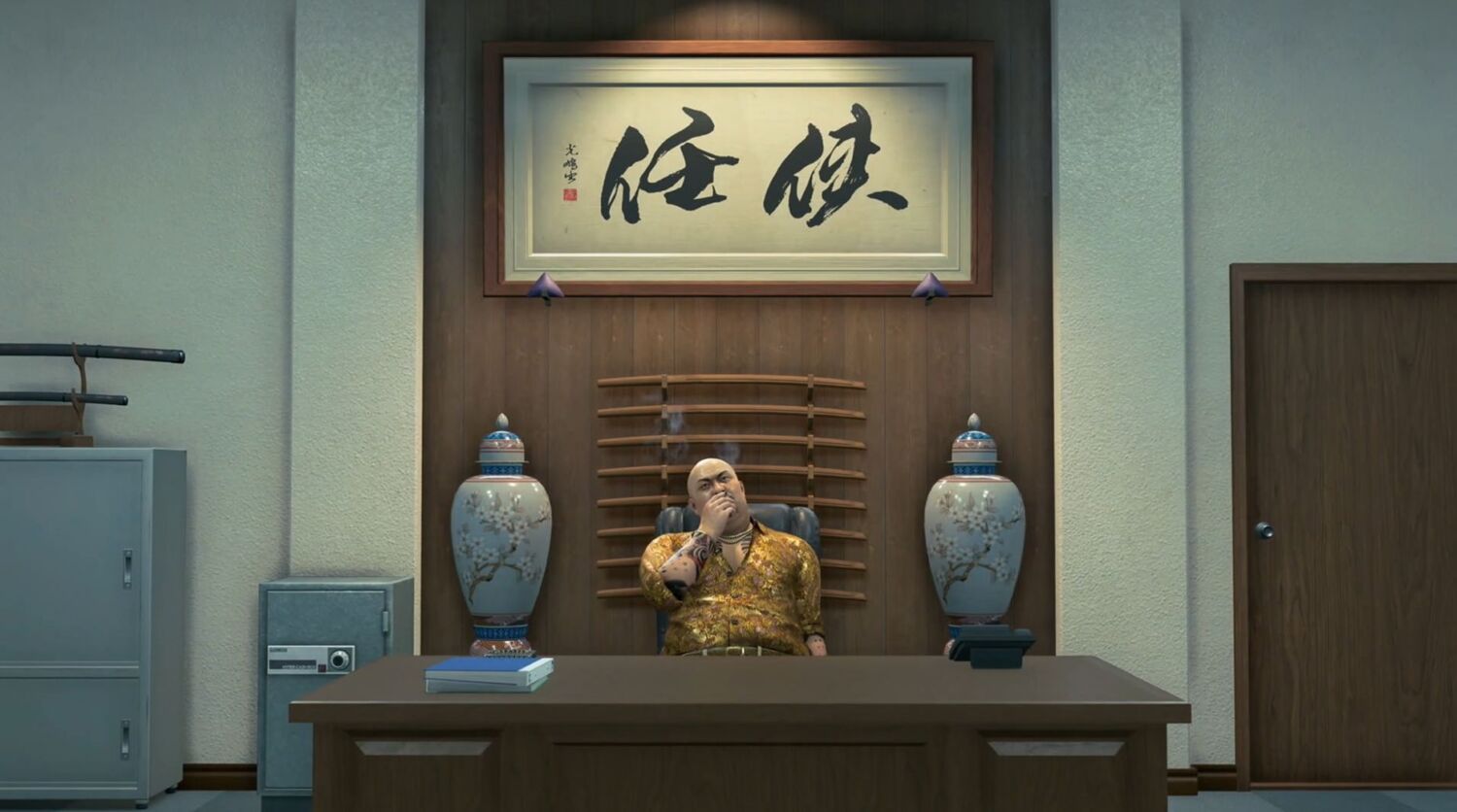
At least from the limited time we had playing Dark Ties, Kanda Damage Control seems like the spin-off’s way to fit its main and side missions into a way that aligns with its overall plot, as one of the Good Deed Quests shown in the preview directly led to the introduction of its biggest gameplay addition, the Coliseum mode.
Essentially, the Coliseum mode includes standard arena battles, alongside a mode known as Survival Hell, which plays out like a roguelite of sorts. Now, before you grimace in annoyance over yet another modern game shoehorning in some sort of roguelite system, it’s to be noted that this mode is a much more structured one than the usual procedurally generated affair, dropping Mine into a series of ever-changing dungeons as he fights his way to the boss awaiting at the end.
As far as the roguelite systems are concerned, this only affects the individual layouts of the three or four “phases” of each round of Survival Hell, meaning that, unlike most roguelite games, there’s a clear end goal here, with the overall mode split into different stages, known as Trails, each with their own difficulty levels, special stage modifiers and rewards to unlock.
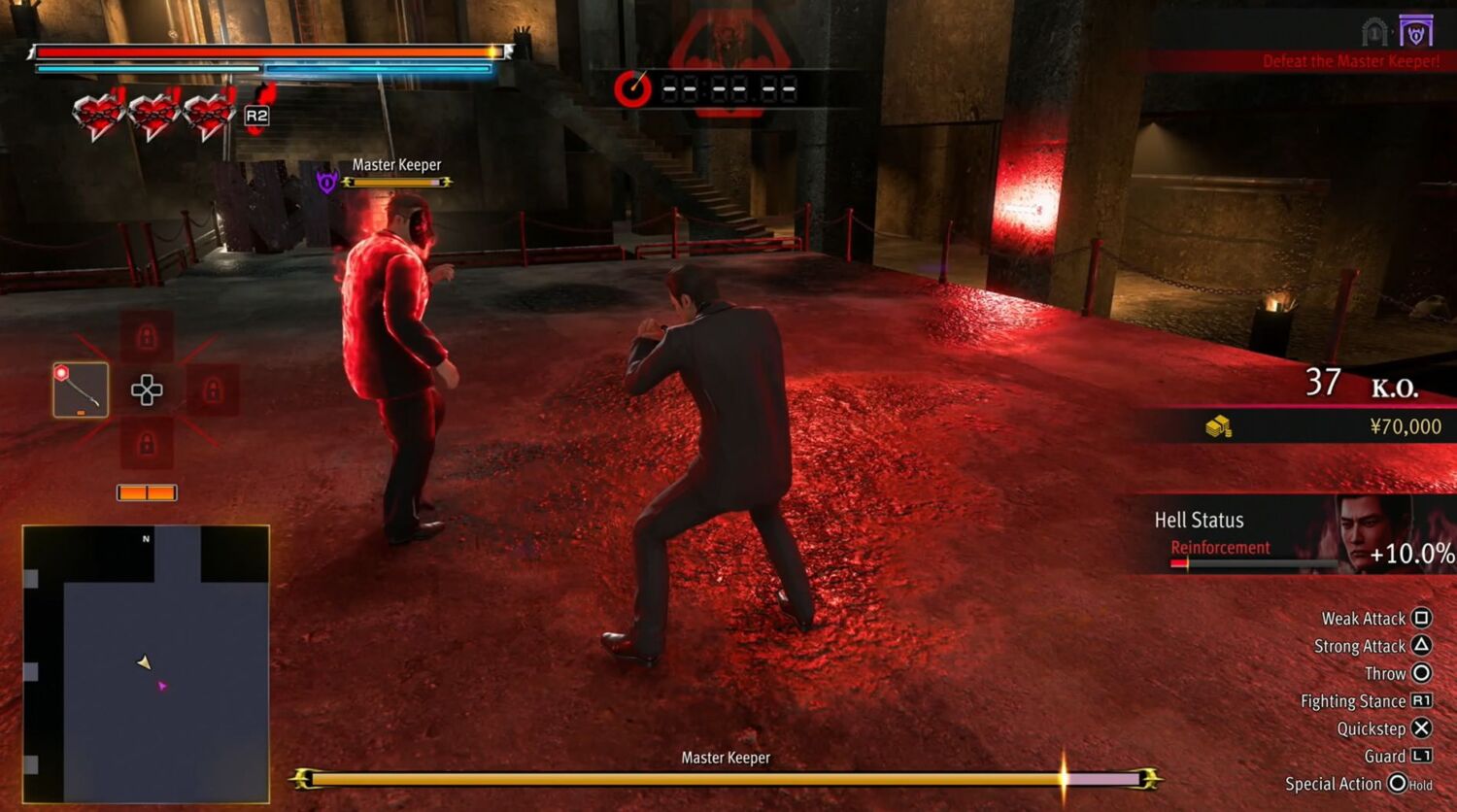
In terms of stage structure, each plays out generally in the same way, with players first choosing up to four unlockable Survival Weapons, special tool-based abilities such as flaming swords, bows, or even firearms, which they can then use interchangeably in battle, alongside up to four Mercenaries, AI-controlled teammates that can be employed to help out in exchange for currency, each with their own stats and even special skills for some.
Once in a Trial, Mine must fight his way through procedurally generated areas to find a gong to ring to proceed to the next phase. Along the way, he will face off with groups of fodder, avoid laser traps, and hunt down valuable chests guarded by high-level enemies, which, when opened, will award him with Gospels, books that grant stackable permanent stat bonuses for the Survival Hell mode. The gameplay loop thus comprises entering a trial, gaining as many Gospels as possible, and either defeating the boss at the end for a huge reward or failing mid-way and redoing the stage to gain even more Gospels to gradually improve Mine’s stats and tackle increasingly difficult Trials.
Upon first impressions, it’s unclear how Survival Hell can maintain a player’s interest, at least after the initial novelty wears off. To be fair, the late-game segment we played saw most of the high-ranking weapons and mercenaries already unlocked, so a huge part of progression would undoubtedly be to steadily gain more powerful tools and companions with each run and build up Mine’s arsenal, but as it stands, this does feel more like an interesting change of pace to engage with once in a while and not a mode that players will sink hours upon hours of their time into.
Nevertheless, Yakuza Kiwami 3 and its new Dark Ties chapter do pack enough gameplay changes to make a return visit to Kamurocho and Okinawa an enticing one for both newcomers and fans of the original. It remains to be seen how the team will tweak its overall narrative to tackle past criticism of poor pacing, but at least on the gameplay front, RGG Studio has got things covered.
Yakuza Kiwami 3 and Dark Ties will release on 12 February 2026 for the PS4, PS5, Xbox Series X|S, Nintendo Switch 2, and PC.

Kevin is a reformed PC Master Race gamer with a penchant for franchise “duds” like Darksiders III and Dead Space 3. He has made it his life-long mission to play every single major game release – lest his wallet dies trying.

 Si Jia