
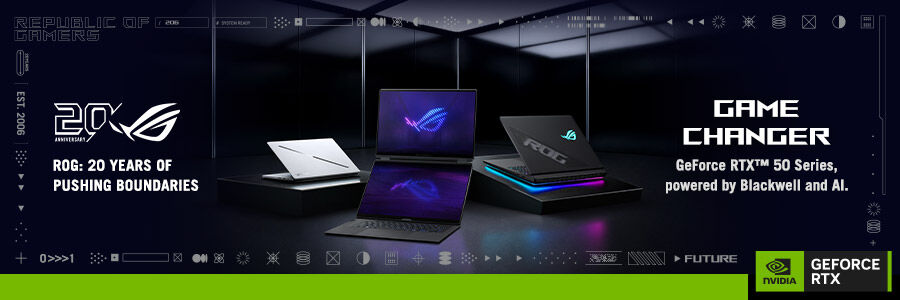
As an industry giant in the PC gaming space, Republic of Gamers (ROG) has had front-row seats to technological advancements over the years, itself often contributing to faster processing, higher frame rates, enhanced visuals, and more.
So it’s only fitting that the company’s 20th anniversary continues to celebrate this spirit of innovation and improvement, with its flagship line of 2026 gaming laptops redefining the gaming and content creation experience. Powered by the latest NVIDIA GeForce RTX 50 Series GPU, these upgraded models boast massive AI horsepower, which, alongside a suite of optimisation tools, offer the best machines one can ask for.
The first key player rests under the hood. Available across NVIDIA’s highest-end machines, its Blackwell GPU architecture packs up to 1,824 AI TOPS into fifth-gen Tensor Cores and fourth-gen Ray Tracing Cores for 2x higher performance in GPU-intensive triple-A titles like Black Myth: Wukong, and a 1.5 times increase in Cyberpunk 2077, as compared to the previous generation.
Taking things a step further are new Streaming Multiprocessors, designed specifically for neural shading and boosting the performance of workloads crucial for the process, and Max-Q technologies that optimise every aspect of a laptop running on Blackwell architecture, whether it’s the GPU, CPU, memory, or battery. The existing Advanced Optimus, for instance, automatically switches between discrete and integrated GPUs to deliver tear-free gameplay with NVIDIA G-Sync, while the new accelerated frequency switching feature improves performance by optimising clocks for each workload at microsecond-level speeds.
Not forgetting DLSS 4.5, the AI-powered neural rendering suite works to increase efficiency, reduce latency, and refine image quality. Its new Dynamic and 6X Multi Frame Generation ups the frame-rate count by generating up to five additional frames beyond traditional practice to maximise monitor refresh rates. Here’s the kicker – DLSS 4 is already supported in over 250 games and applications.
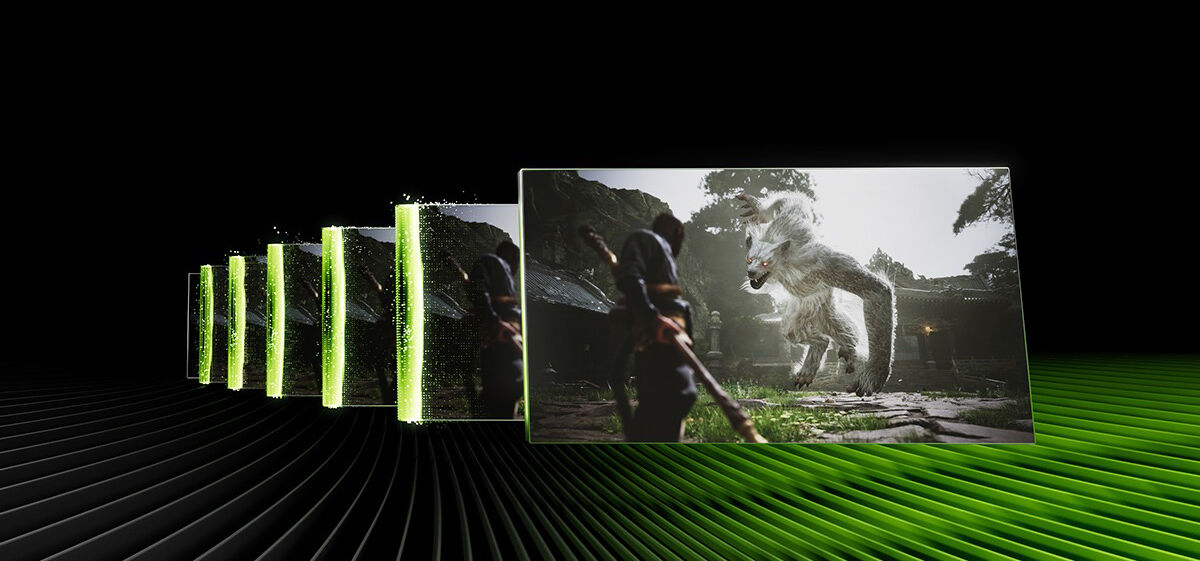
Driving these massive gains are the new 2nd-generation models, marking a major architecture upgrade for DLSS Ray Construction and Super Resolution. Alongside upgraded stability, sharper motion clarity, and higher lighting detail compared to its predecessor, users can also reap the benefits of full ray tracing and NVIDIA Reflex, which work together to create realistic immersion and lightning-fast response for faster target acquisition, reaction time, and aim precision in competitive games.
For content creators, the GeForce RTX 50 Series GPUs accelerate creative apps right out of the box, offering Studio drivers, ISV certifications, and optimisation technology to elevate workflows. New to the family are Virtual Key Light, designed to simulate the effect of physical studio lighting by dynamically adjusting illumination levels to remove shadows, and Studio Voice, which enhances speech input recorded with low-quality microphones in noisy or reverberant environments.
Ideal for livestreaming, podcasts, and video calls, the combo is topped off with a revamped user interface (UI) and effects, including a vertical layout option, a new GPU utilisation metre, accessibility improvements, better background noise removal, and more.

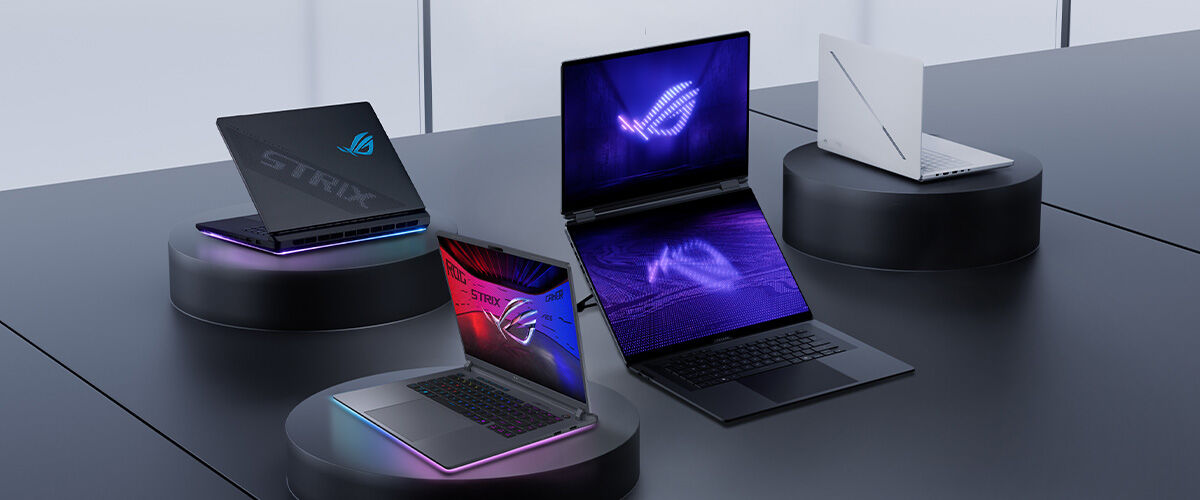
To get ahead of the race, ROG has armed its Zephyrus DUO, as well as the Zephyrus, Strix Scar, and Strix G gaming laptops with all of that punch. Each caters to different user demands, starting with the flagship Zephyrus DUO – as the world’s first gaming laptop with a dual 16-inch touchscreen, it covers both bases for work and play through several features. The detachable keyboard can be stacked on top of the bottom screen like a traditional keyboard or removed from the setup for a full look, supported by a 320-degree hinge and a built-in kickstand that lets users switch between five different modes.
When it comes to the edge-to-edge ROG Nebula HDR displays, expect 3K OLED resolution (2,880 x 1,800 pixels), a 120Hz refresh rate, a 0.2-millisecond response time, a 16:10 aspect ratio, and anti-glare technology. The chief offering of a GeForce RTX 50 Series graphics card is a given, with the Intel Core Ultra 9 386H processor, 64GB of RAM, and 2TB of storage rounding out the hardware configuration.

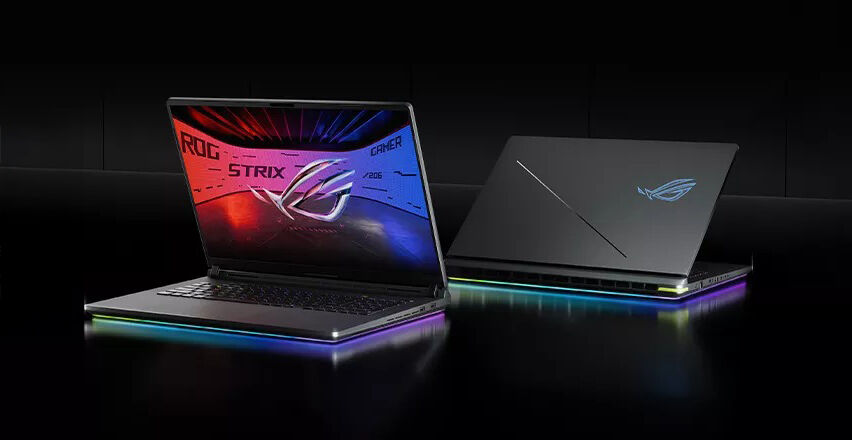
Those seeking stylish, thin-and-lightweight designs may turn to the 2026 ROG Zephyrus lineup, whereas the Strix Scar series is built for competitive users. The Strix G machines, meanwhile, present an entry-to-mid-range alternative, but no matter the pick, every model will include ROG-exclusive perks, such as its proprietary Nebula panel, intelligent cooling capabilities, and the built-in Armoury Crate app.
At its bare minimum, the displays across the laptops will deliver 2.5K resolution (2,560 x 1,600), a 120Hz refresh rate, a response time of three milliseconds, and NVIDIA G-Sync support for stutter-free display. The visual experience is further complemented by full DCI-P3 coverage and Pantone Validated certification, promising brighter, true-to-life colours and richer immersion.
Graphical enjoyment counts for nothing, however, if performance is affected by thermal throttling. To beat the heat, liquid metal and 0.1mm-thin fans are fitted to lower CPU temperatures by up to 10 degrees and increase dissipation rate, respectively. Alongside Anti-Dust Tunnels 2.0 and Arc Flow fans, which boost airflow by up to 32 per cent, certain models may ship with additional features, including tri-fan technology, a vapour chamber, and software tools such as the noise-reducing 0db Technology.
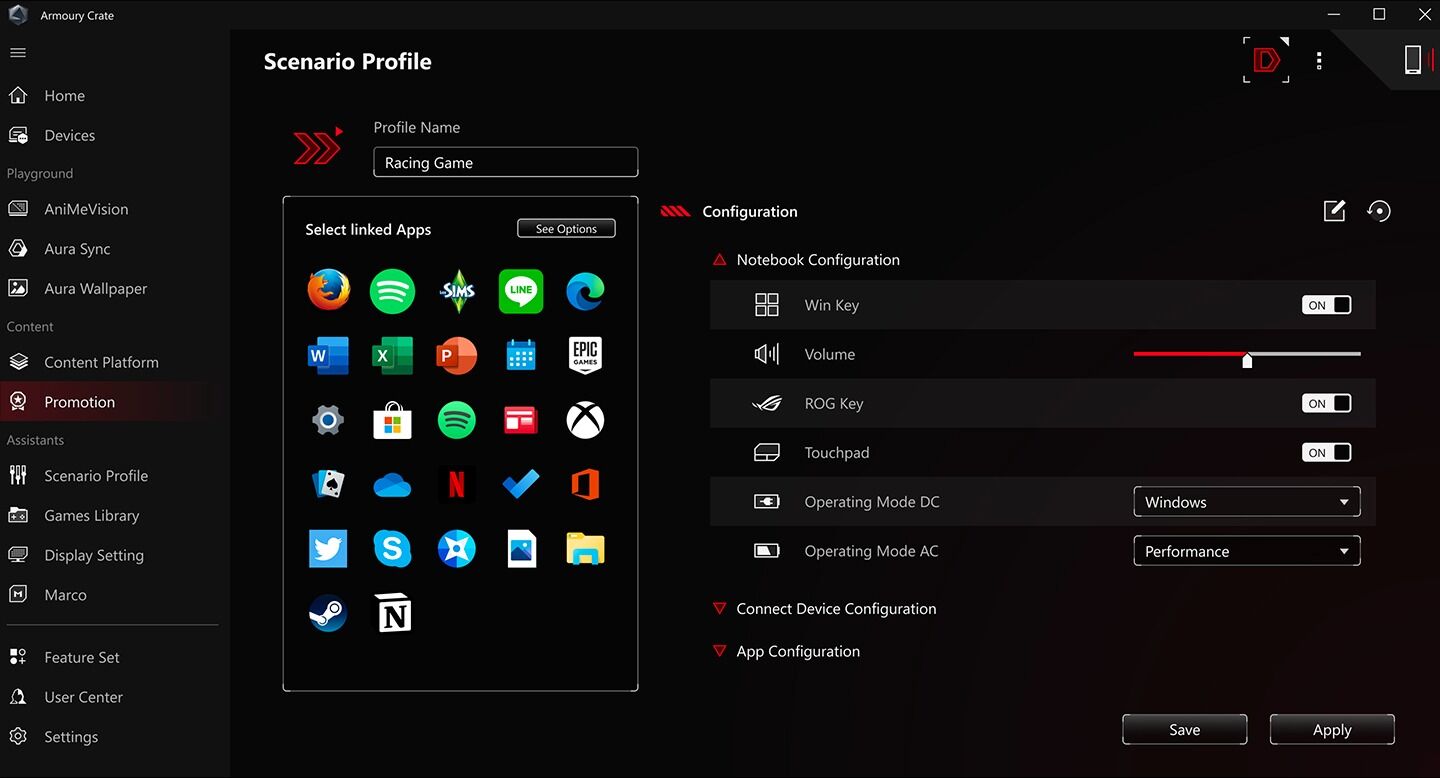
Last and certainly not least, Armoury Crate enables centralised control over various settings within an all-in-one hub, from customising RGB lighting with Aura Sync to downloading the latest drivers and firmware.
With the celebration of ROG’s 20-year milestone comes the reminder of how far gaming technology has come, and this partnership between two juggernauts will only raise the bar for excellence. It’s a well-oiled machine – where the NVIDIA GeForce RTX 50 Series GPUs act as fuel, and the laptops are the vehicles that put it to good use.
The ROG Zephyrus DUO retails for S$11,699, while the 2026 iteration of the ROG Zephyrus ranges from S$5,099 to S$8,499. As for the Strix Scar and Strix G models, prices start at S$7,999 and S$4,199, respectively.

Si Jia is a casual geek at heart – or as casual as someone with Sephiroth’s theme on her Spotify playlist can get. A fan of movies, games, and Japanese culture, Si Jia’s greatest weakness is the Steam Summer Sale. Or any Steam sale, really.

 Kevin Low