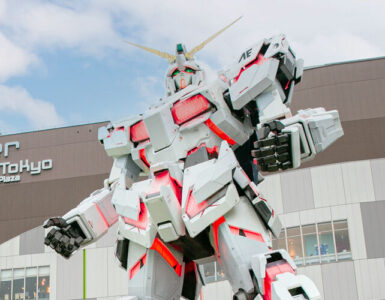

With over 40 years of lore, the Mobile Suit Gundam, or simply Gundam, universe is a complex labyrinth to navigate. There’s the main Universal Century (UC) continuity, first established by the original 1979 show, followed by multiple self-contained timelines that may cross-pollinate but ultimately serve as standalone narratives. Oh, and there’s also the non-chronological storytelling that can add to the confusion.
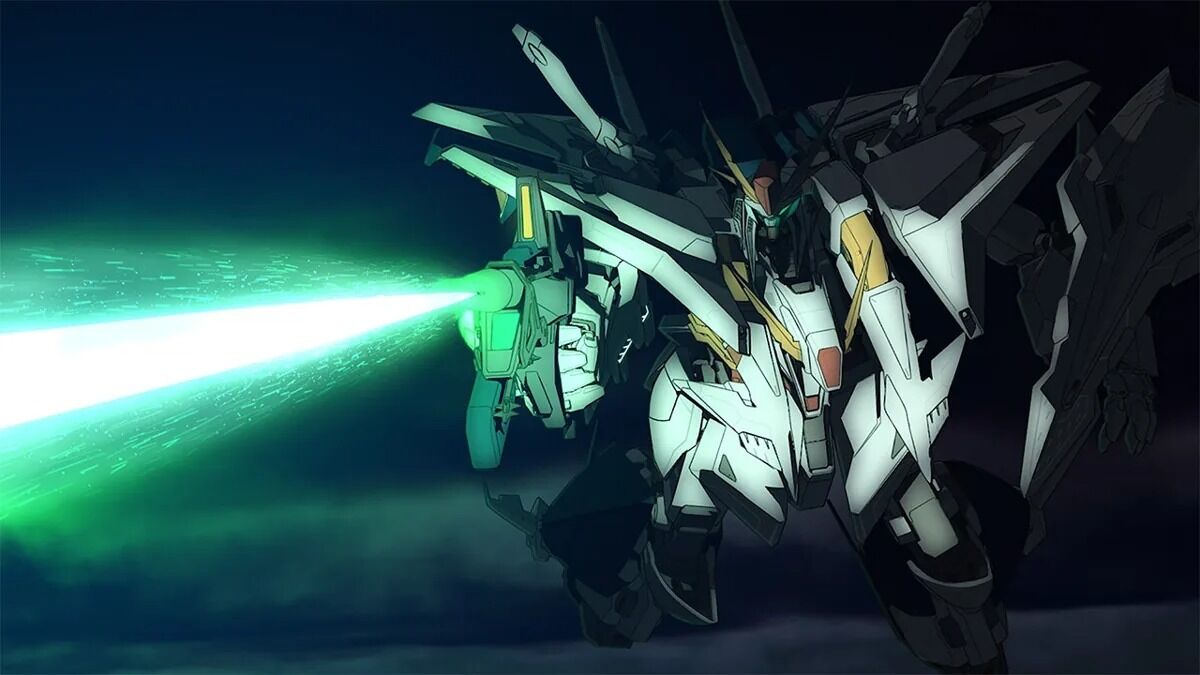
Still, there’s familiarity to be found amid the tangle, with the unchanging horrors of war, political corruption, the fallout of space colonialism, eugenics (particularly for the UC era), and more becoming staples of the franchise. Mobile Suit Gundam Hathaway: The Sorcery of Nymph Circe continues to tread on the unflinching, mature framework of its 2021 predecessor, Mobile Suit Gundam: Hathaway, delivering a visual spectacle and nuanced exploration of trauma that would satisfy lore enthusiasts. The extensive contextual knowledge required, along with the film’s dense exposition, however, may leave casual viewers in the dust.
The second in a planned trilogy adaptation of a three-volume novel by Gundam creator Yoshiyuki Tomino, it opens with a quick recap of the first film, set 12 years after the 1988 movie Mobile Suit Gundam: Char’s Counterattack – the titular Hathaway (voiced by Kensho Ono), son of Bright Noa, who fought in the One Year War alongside Amuro Ray, and secret leader of the anti-Earth Federation group Mafty, travels to Earth with the intention to assassinate Federation leaders at an important meeting.

Along the way, he crosses paths with Gigi (Reina Ueda), a mysterious, pretty young woman with uncanny perception powers, and Kenneth Sleg (Junichi Suwabe), a Federation captain tasked with hunting down and destroying Mafty. An uneasy love triangle develops between the trio, and as they pursue their respective goals, Hathaway ends up at a new base with his crew. Mobile Suit Gundam Hathaway: The Sorcery of Nymph Circe picks up from there and continues their attempt to determine where the government conference is being held, while Kenneth prepares a defence operation to eliminate Mafty.
It’s a lot to unpack, and the sequel wastes no time diving into Hathaway’s perspective that spans the first half of its 108-minute runtime. An understanding of both the 38-year-old Char’s Counterattack and the first film (naturally) is required, and the feature has no interest in hand-holding viewers who are expected to have done the necessary homework. Although reading the novels is more supplementary than necessary, it’s highly recommended to do so as well, as the third-person point of view gives a more macro overview of the events at large, offering insights into a character’s inner psyche that may not be reflected on the silver screen, held back by the unreliable narrator structure.
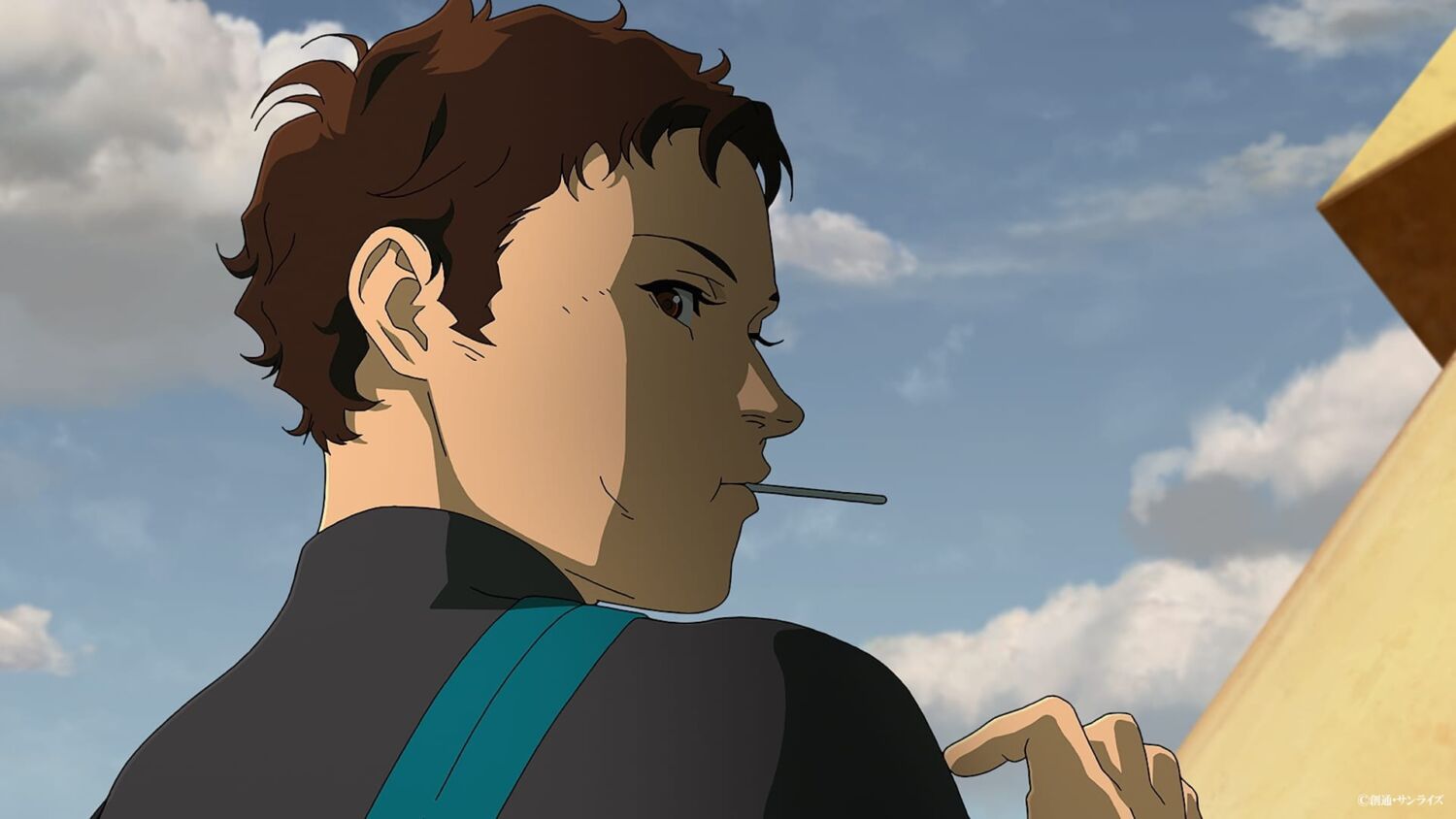
The other half is explored through Gigi’s lens. As on-the-nose as the title’s reference to Circe from Greek mythology is, there’s some truth to it – just like the sorceress, Gigi oozes magnetic allure and serves as both an obstacle and a guide. Mysterious, charming, and compelling, she continues to have an active presence but struggles to play her role in the conflict, though one’d never know it with the vague way her motivations are conveyed. Subtlety is a language Gigi speaks fluently, and without the background knowledge from the novels, the cues can be easily missed.
On another level, the character dynamics are an intriguing exploration of messy and toxic relationships. Gigi is the mistress of a wealthy, elderly man, Kenneth finds a romantic interest in a flight attendant named Mace Flower (Atsume Tanezaki), and Kelia (Saori Hayami) is Hathaway’s girlfriend, laying out the web of piping-hot interpersonal drama. At one point, Gigi whispers poison (which is muted here but explicitly stated in the novel, and crass is an understatement) into Mace’s ear after the latter makes a barbed comment, prompting a slap across her face.
Gigi and Hathaway are two sides of the same coin – while the former’s privileged life contrasts with Hathaway’s rough experiences, they share a desire for a life that lies beyond their reach. The neglected focus on Hathaway and Kelia’s deteriorating relationship is slightly disappointing, though this stems from the book itself.

When it comes to the source material, the story beats remain largely faithful, but like before, Mobile Suit Gundam Hathaway: The Sorcery of Nymph Circe adds a few touches of its own. The novel, which is based on Beltorchika’s Children, the literary counterpart to Char’s Counterattack, offers a different version of Hathaway’s late love interest Quess’ fate than in the movie timeline, and the emotional weight doesn’t hit as hard. By doubling down on Hathaway’s guilt here, his descent into mental deterioration becomes more gut-wrenching to witness, compounded by other unresolved trauma and the self-inflicted pressure to live up to Amuro’s legacy.
This bleakness lends itself well to the gritty world, too. The franchise is no stranger to painting grey strokes, never shying away from portraying the brutality of war, and the sequel continues in its footsteps. Civilians are quickly killed off in the opening moments, and during one specific scene, the dead bodies of militia personnel are bathed in blood. There’s a sense of cold detachment that follows each death, more so when conveyed through indirect channels, such as reports.
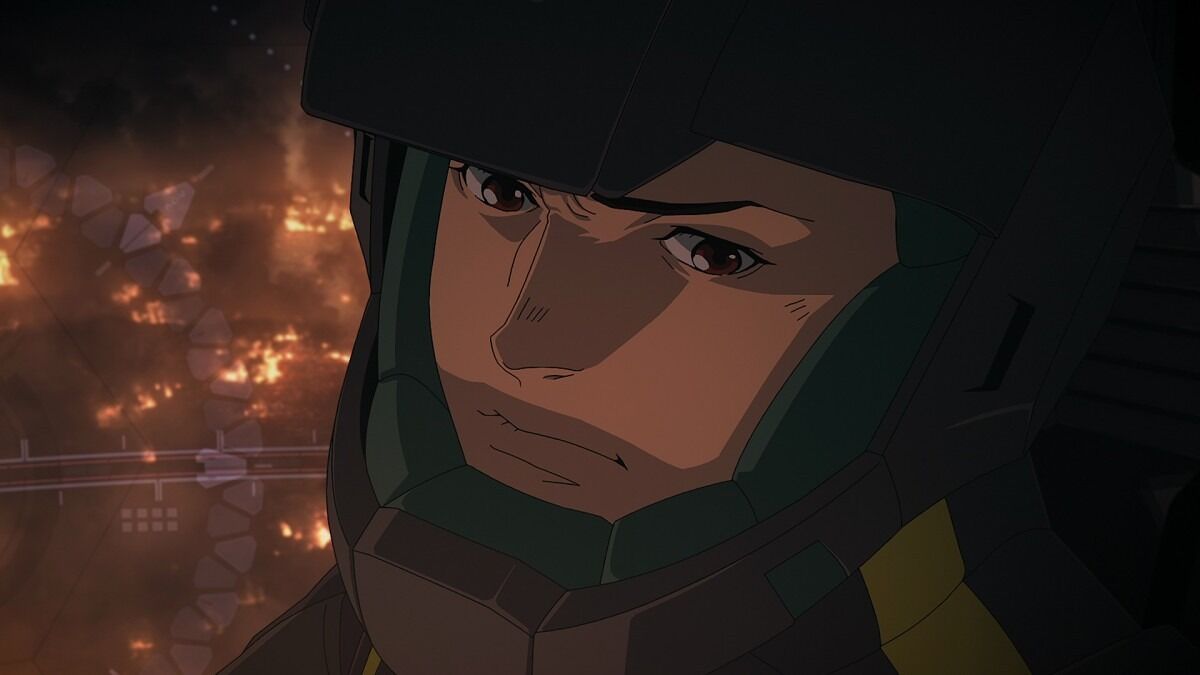
It’s certainly dark, and not just metaphorically. In the literal sense, Mobile Suit Gundam Hathaway: The Sorcery of Nymph Circe features a handful of dimly lit scenes, including mecha fights at night, making it challenging to keep up with on-screen activity, and the greatest offender of them all – silhouetted figures in a facility. Because their faces cannot be seen clearly, it may take a while to identify who’s speaking, and the inability to catch the character’s expressions diminishes the emotional impact or message the scene is supposed to deliver.
When the film finds its stride, audiences will be in for a visual treat. Barring the occasional awkward transitions and jarring blend of 3D and 2D elements, it offers impressive shot variety, from photorealistic backgrounds and crisp environmental detail to a roving camera that segues into an underwater sequence set against the opening notes of SZA’s “Snooze”. The large-scale mech fights are a dizzying, dynamic affair, topped off with fluid animation and excellent sound design that bring out every blast of beam rifles, engine bursts, and more.

The striking, eye-catching set pieces are accompanied by a stellar score from Hiroyuki Sawano, who has yet to disappoint as the composing heavyweight behind Attack on Titan, Solo Leveling, One Piece Film: RED, and more anime titles. Additionally, the appearances of mobile suits such as the Xi Gundam, RX-104FF Penelope and the Alyzeus are bound to delight fans, though the surprise needle drop in the final scene, of Guns N’ Roses’ iconic Sweet Child O’ Mine song may come across as jarring, even if the lyrics are fitting to a tee.
The biggest issue with Mobile Suit Gundam Hathaway: The Sorcery of Nymph Circe is inherent and hardly its own fault. As with most midquels, it lacks a proper beginning and end, creating a sense of suspension that makes it feel there hasn’t been much progression since the opening minutes. Part of that can be attributed to the film’s careful unravelling of charged politics and an emphasis on character exploration; the other goes back to its source material, which leaves the climactic moments, clever twists, and the growth of all three key players to the third and final novel. As it stands, the sequel serves more as a set-up to the finale, where one of the most unforgettable concluding acts in the franchise’s history awaits.

There’s a lot that the sequel does right. It knows its fans well, embraces its literary and theatrical legacy, and finds a strong lead in Hathaway, a fundamentally flawed, tragic figure. The story’s place in the broader narrative, however, means inevitable flaws, including uneven pacing, a lack of closure, and sprawling narrative threads that can be difficult to follow. To its credit, Mobile Suit Gundam Hathaway: The Sorcery of Nymph Circe puts in the effort to address them and drums up enough excitement for the next instalment.
GEEK REVIEW SCORE
Summary
Mobile Suit Gundam Hathaway: The Sorcery of Nymph Circe is worth the wait for those who have done the homework, anchored by nuanced characterisation, audio-visual excellence, and enduring thematic hallmarks.
Overall
7.6/10-
Story - 7/10
7/10
-
Direction - 8/10
8/10
-
Characterisation - 8/10
8/10
-
Geek Satisfaction - 7.5/10
7.5/10

Si Jia is a casual geek at heart – or as casual as someone with Sephiroth’s theme on her Spotify playlist can get. A fan of movies, games, and Japanese culture, Si Jia’s greatest weakness is the Steam Summer Sale. Or any Steam sale, really.


 Kevin Low