This interview has been edited for clarity.
While fighting games have been a pillar of the competitive esports gaming industry, titles within the genre have long established themselves as ones that cater primarily to the niche market. This rings especially true when it comes to Eastern developers, with studios like Arc System Works (ArcSys) highly regarded for churning out deep, complex fighting game franchises that are specifically targeted at competitive players, such as Guilty Gear and BlazBlue.
So what happens ArcSys decides to branch out with Marvel Tōkon: Fighting Souls, a game that potentially introduces an entire playerbase of newcomers, drawn in by the allure of playing as their favourite comic book characters?
When building a fighting game that features such world-renowned characters, the team knew from the very beginning that they had to switch gears (pun intended) and take a balanced approach this time around, offering an effective middle-ground that is accessible enough for newcomers while still being in-depth for diehard fans.
Their solution then was to focus on three main aspects – providing assist features, reimagining classic Marvel heroes while also introducing lesser-known faces, and crafting battle features that are not just engaging, but thematically fitting too. Geek Culture, along with select Asian media were invited to sit with ArcSys Producer Takeshi Yamanaka and Game Director/Lead Battle Designer Kazuto Sekine, to learn more about what each entailed.
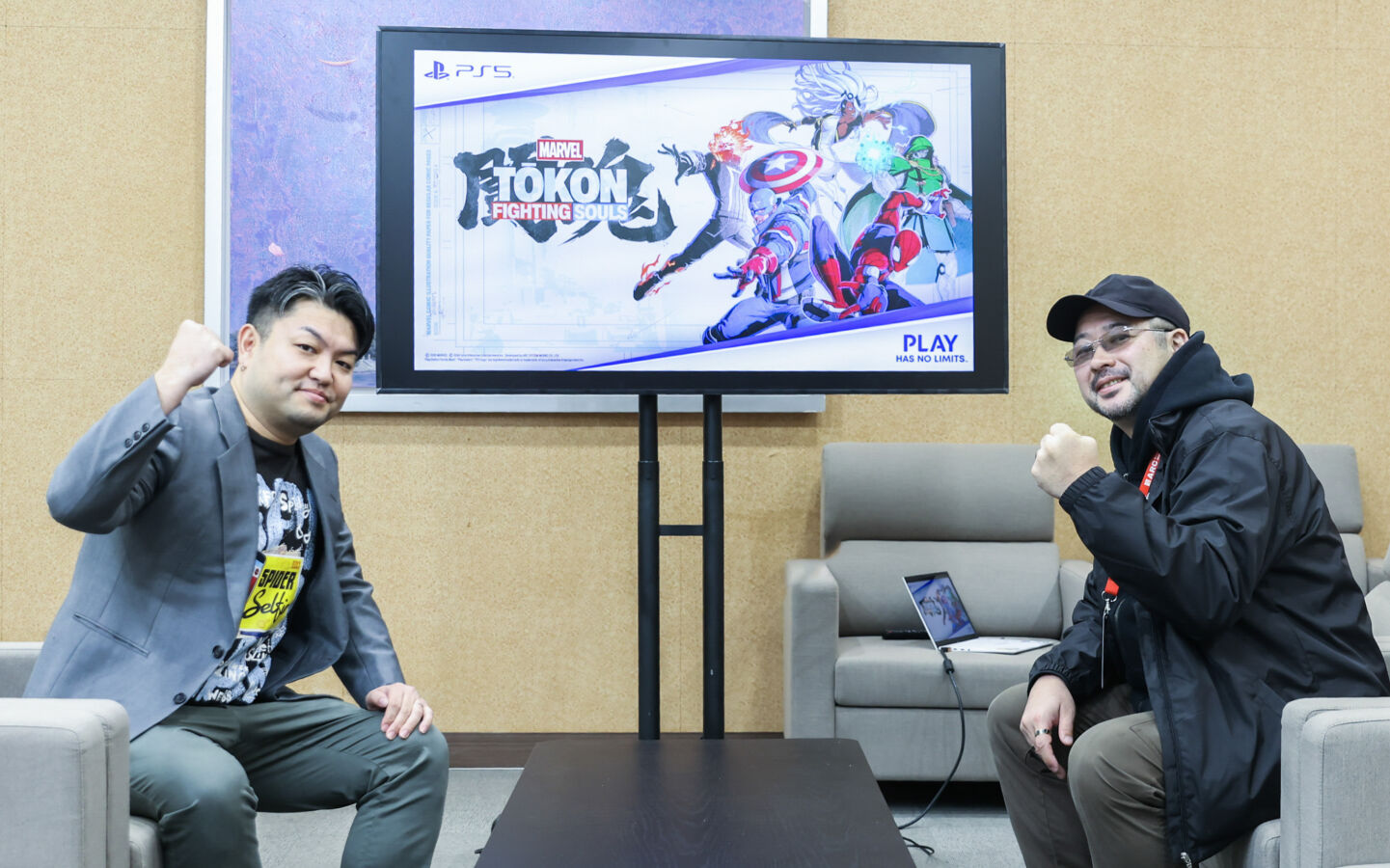
“When working on [Marvel Tōkon: Fighting Souls], we had two directions that we wanted to work in, where one is for the core fighting game audience to have that depth, to satisfy them on a competitive level, and then also making something that even a five-year-old would be able to sit down, just press buttons, and still be able to play the game,” explains Yamanaka.
Unlike established rules of combat in traditional fighting games, Marvel Tōkon: Fighting Souls’ 4v4 system puts players in control of a primary character, and up to three assist fighters who can be swapped out and individually controlled, but each quartet’s victory or loss is determined by a single health bar.
“We wanted to avoid a situation where you end up with a beginner player playing against a more veteran player and feeling that the odds are stacked against them.”
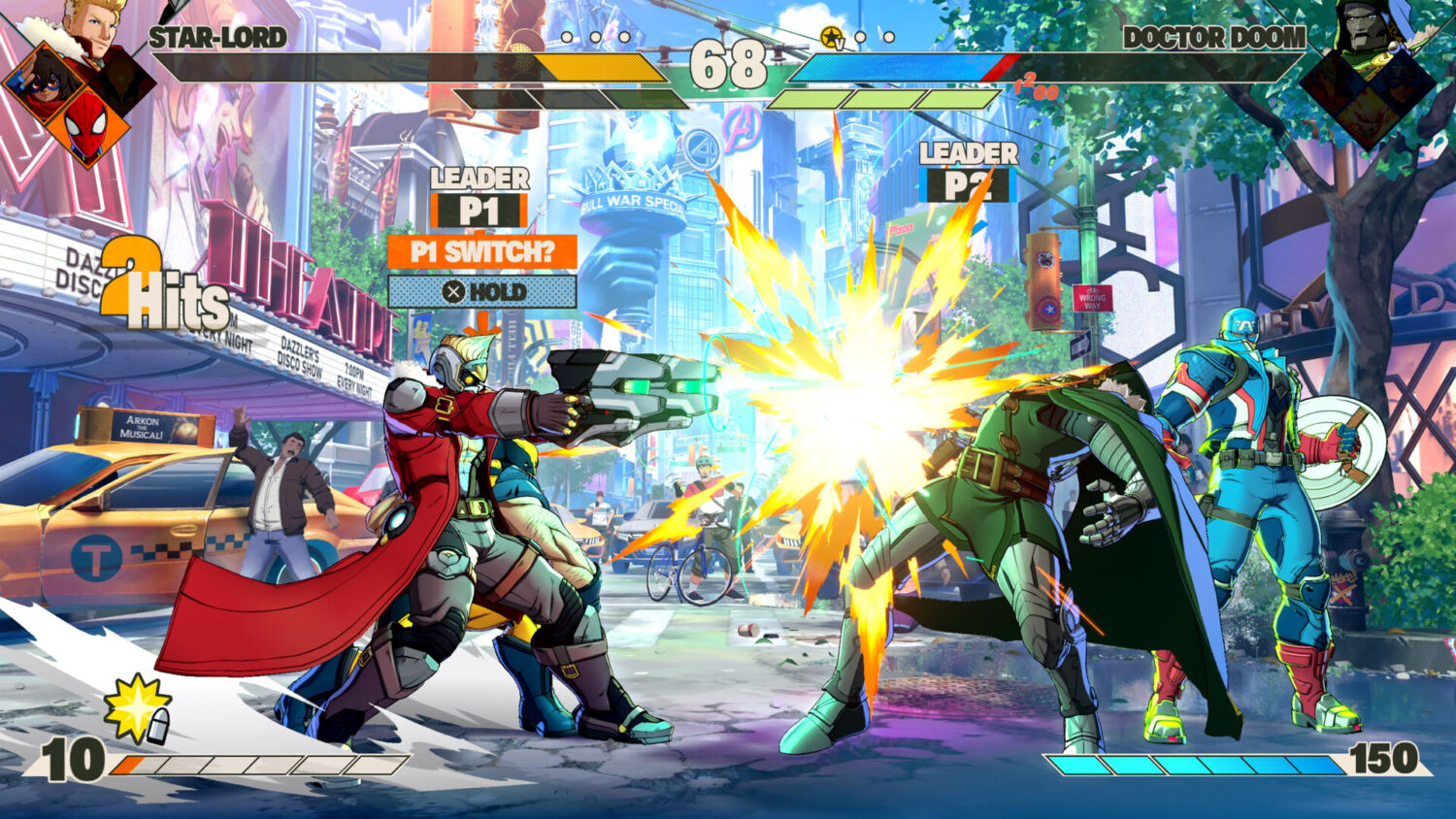
To help bridge the gap, especially for newcomers, the game will feature something known as a ‘Startup Battle Mode’, a pseudo-tutorial-style game mode that players can learn from, even with zero experience. In addition, a yet-to-be-announced “Casual” mode will also be included, which is set to remove that competitive aspect and let players simply have fun together and try out each character’s move set.
What’s more, the main battle system seen in Marvel Tōkon: Fighting Souls is also built with features that cater to less experienced players, although these are purely optional, so as not to diminish the experience for those who are more familiar with the genre.
“As far as battle mechanics, although we do have the core intention that we are a 4v4 tag fighter, you only need to learn one character to start get to get started,” adds Sekine, explaining that even if new players only learn how to control one character, they would still be able to manage decently during fights, and once they are more familiar, they can then branch out and learn multiple characters to form a team.
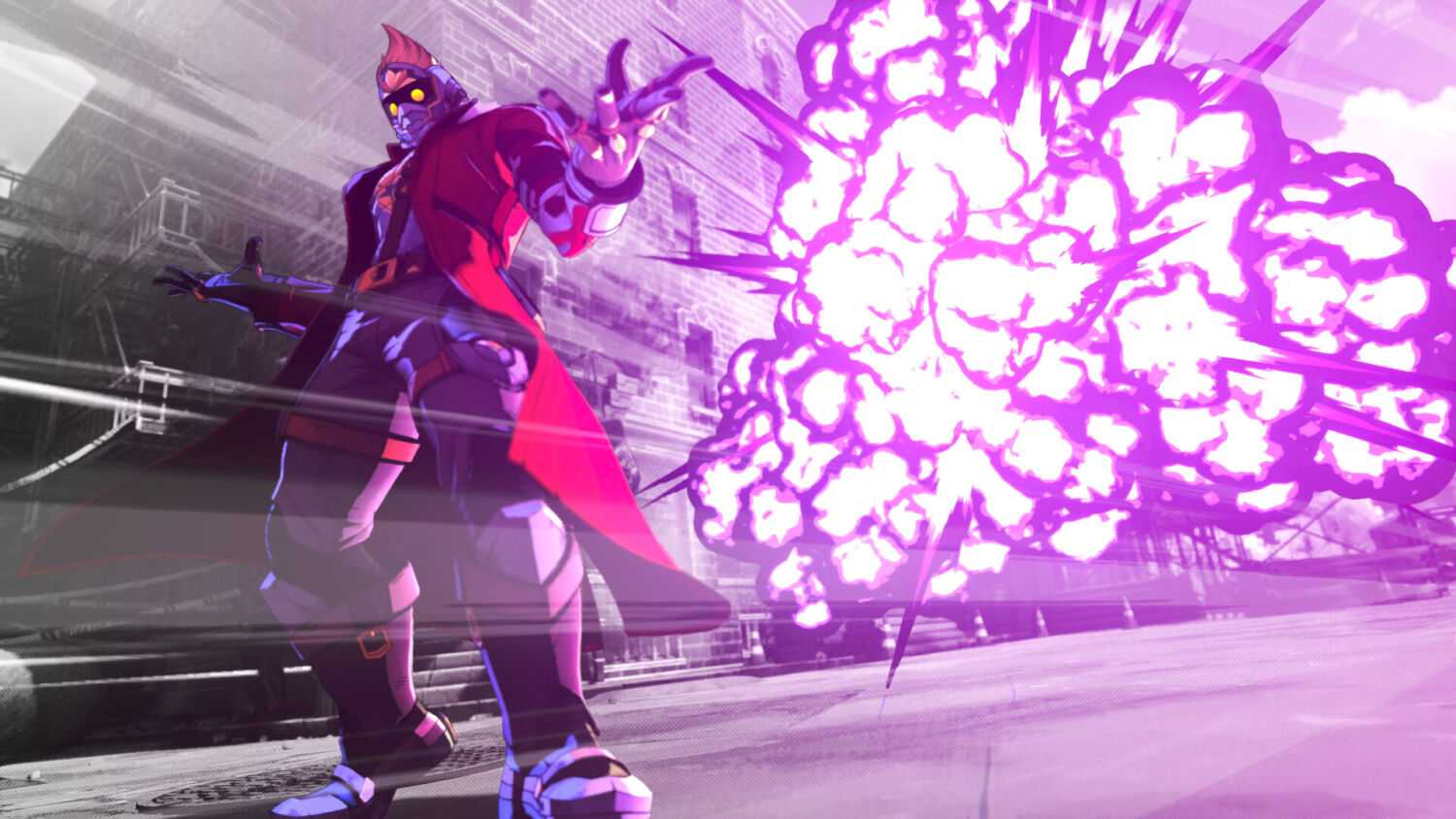
“For our controls, we have also been careful to make sure we don’t have any moves that players will struggle to perform, so we’ve incorporated systems like the skill button so that even those who haven’t played the genre for a long time can still come back and easily perform the moves that they’re looking to do.”
These “skill buttons” essentially bind a combination of buttons to a single, separate key, meaning that while some complex moves require both a specific directional input as well as pressing down a combination of two keys, newcomers or those jumping back into the fighting game scene can simply press the new skill button or combine it with direction inputs to pull off powerful attacks with ease.
If having accessible controls and features serves to help entice those looking to hop into Marvel Tōkon: Fighting Souls, it’s the game’s roster of Marvel heroes that will surely be the deciding factor for those on the fence, something the team looked to address by carefully considering which heroes or villains to add to its roster.
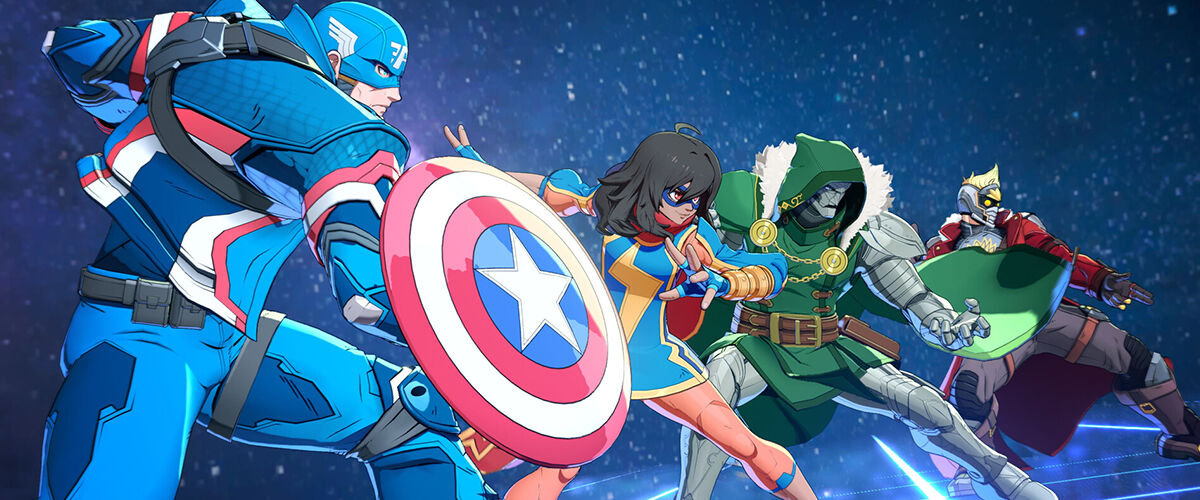
“It’s important for us in a fighting game to have a variety of characters amongst our roster, and of course, we have to have some characters if we’re making a Marvel fighting game, like Captain America. If he’s not there. It’s not really going to be a Marvel fighting game,” explains Yamanaka. “And then, in addition to those characters that you would expect to see, we also wanted to provide pleasant surprises for the fans.”
One such surprise is Danger, a fan favourite but relatively new character rarely seen in video games, films or TV shows but added to the roster for X-Men fans, and Geek Culture was able to have a sneak peek at an accompanying media briefing and hands-on session. Following that, yet another lesser-known but equally interesting hero, Peni Parker, was also added to its roster, and now joins Spider-Man, Ms Marvel, and Star-Lord to form “The Amazing Guardians”.
“We chose Danger because of the variety that she can bring to the designs that we have in the game, which we would classify as a robot girl,” explains Yamanaka. “I think in a lot of Arc System Works games previously, you can see these kinds of robot girl type characters, and we really like that kind of character and wanted to bring it into this game, and fortunately, Marvel also liked the idea too.”
“From a battle perspective, a character like Danger also offers us a lot of freedom to work with when we’re designing the battle mechanics, as far as how she’ll play. And so I felt like this kind of character could make the gameplay experience really interesting,” adds Sekine.
“And that whole notion of having a character being announced and everyone going ‘Who is that?’ is also something Marvel fighting games have had a long history of as well.”
It’s not just about introducing new and exciting characters, either, as since Marvel Tōkon: Fighting Souls will feature some of the most powerful superheroes and villains, the team also had to consider how to balance each added character, making sure they are not too overpowered.
“The most challenging aspect of adding Marvel characters to an ArcSys game is trying to strike a balance between capturing the individuality and identity of that character while also making sure that it’s fun from a fighting game standpoint,” explains Sekine.
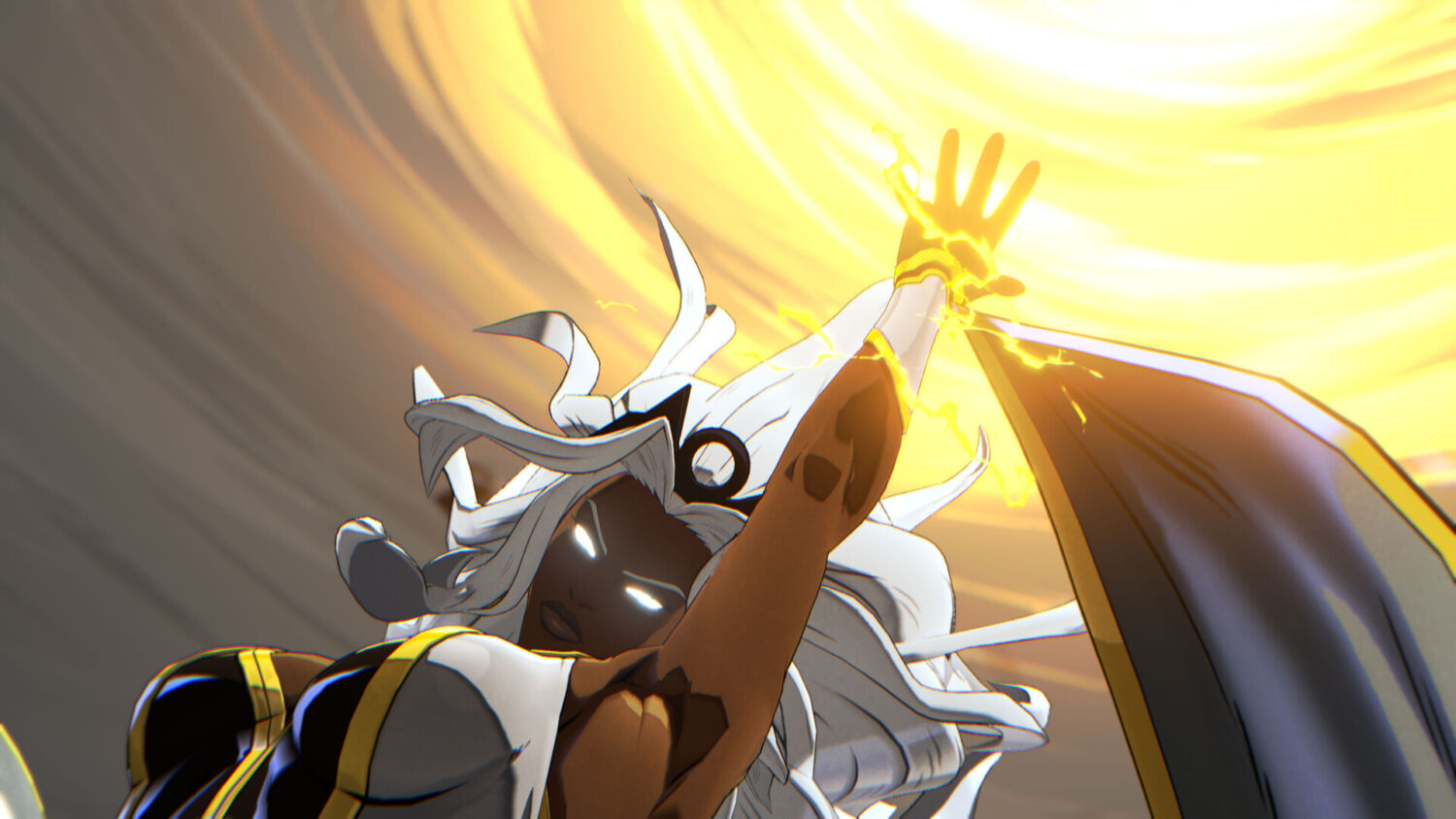
“For example, Storm can freely control any kind of weather element, and that makes her so powerful. Realistically, she would be able to perform attacks that can cover the entire screen,” he adds. “She should be able to do anything, but of course, is that fun as a fighting game? Maybe not. So we have to try and express their powers in a way that is still engaging as a game, while also not making it feel like we’ve kind of scaled down their powers or made them feel weak.”
In fact, the addition of Marvel heroes not just defined the game aesthetically, but also how it played. Marvel Tōkon: Fighting Souls features two systems relatively uncommon in the genre, the first being the ability to “smash” through the edge of the screen and bring both players to a new location, and the second being a progressive character unlock system, where players only start with two swappable characters, and have to unlock the remaining two by performing specific actions.
According to Sekine, these two features were not only developed to shake up the core fighting experience, but also to make the title fit thematically with the superhero action format.
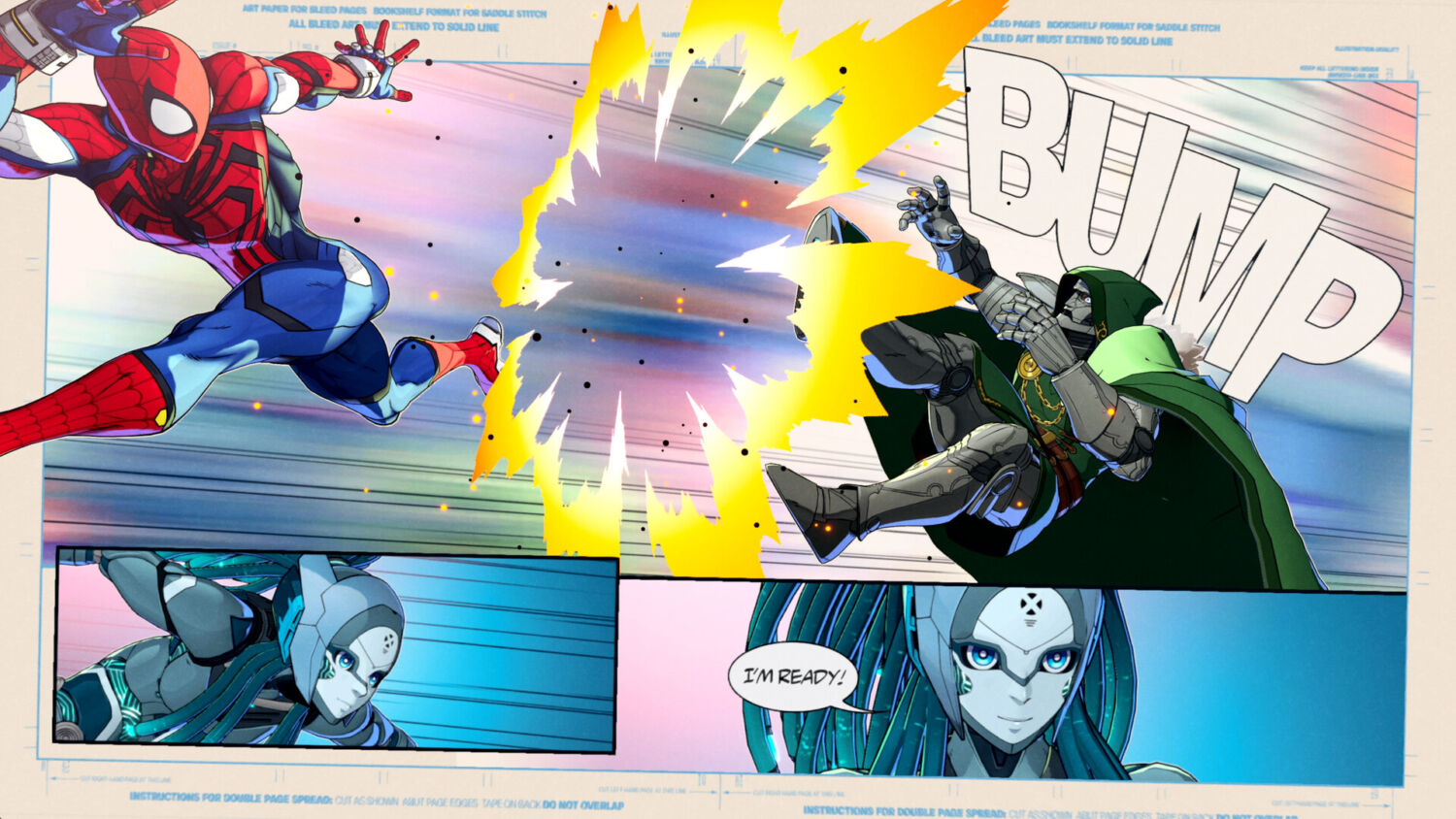
“When you are reading something in comics or watching a movie on superhero battles, you’ll notice that they are not staying in one location, they’re moving around, destroying objects and moving between places,” he explains. “So we wanted to recreate that as part of the actual rules and mechanics of the game.”
“As for the character unlock system, we’ve seen in previous tag fighter games where you start with your full team, and then you lose team members one at a time until you’re at the weakest state at the end of the match,” he adds. “We wanted to reverse that here, so that you start in a weaker state, and then you gain your allies, and you become stronger as the match progresses.”
“The idea is kind of similar to if you’re reading a comic, where towards the end of the story, all the characters get together, we have that ‘assemble’ moment where the entire team of heroes is together and fighting in a final face-off, something we want to recreate in our game experience.”
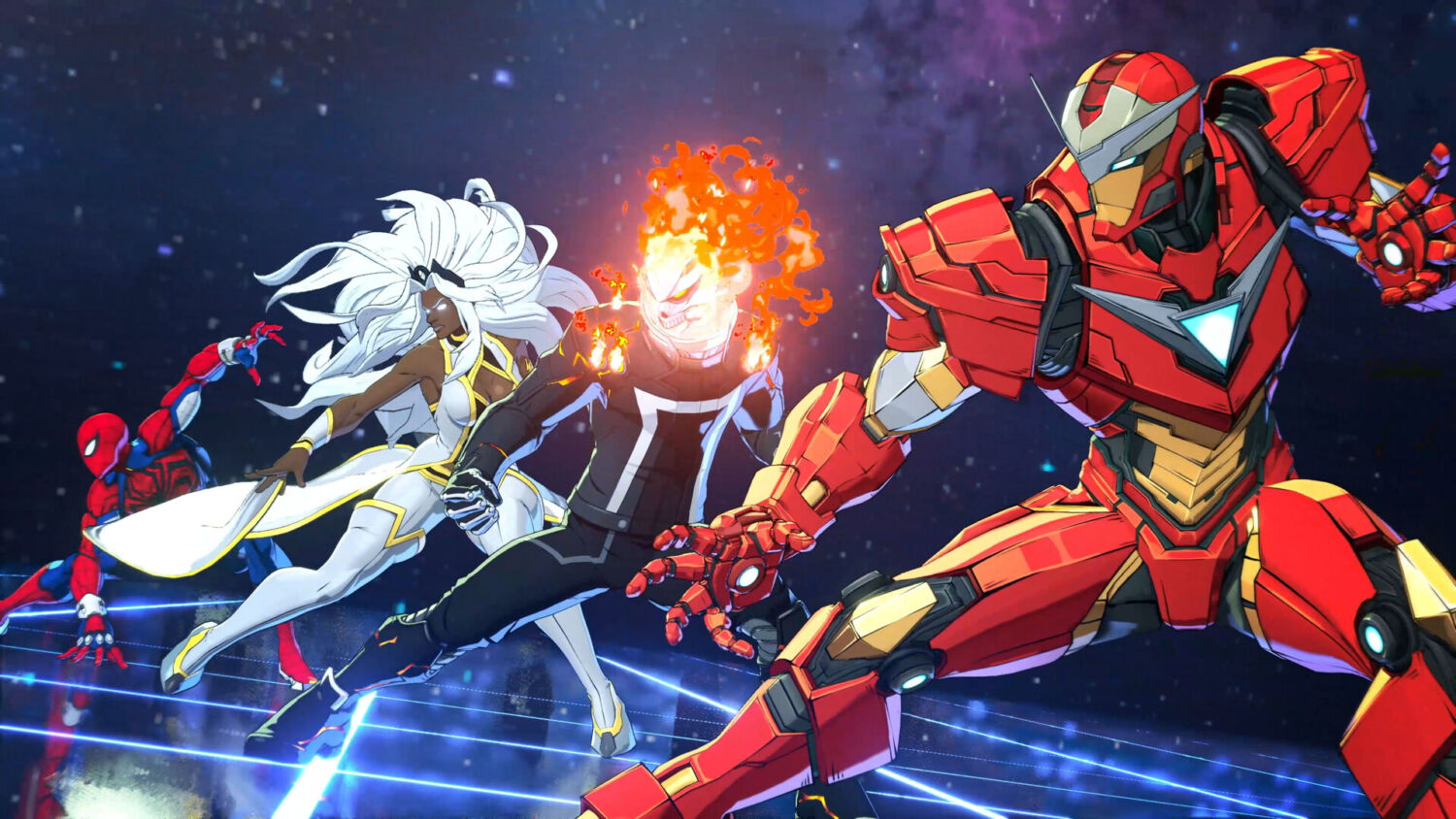
The fact that ArcSys has found a way to weave in distinct gameplay systems that make sense within its superhero world shows just how much thought is being put into Marvel Tōkon: Fighting Souls, to ensure maximum enjoyment from both the returning genre fanbase, as well as fans of the wider Marvel IP.
“The goal for our game as a whole is, of course, to ensure that all players can get into matches and have a good time, but especially for beginners, this is extremely challenging for them to jump into,” concludes Yamanaka. “So the idea is to create steps for them to take so that they can get there eventually at their own pace, something that we’ve tried to address every step of the way.”
Marvel Tōkon: Fighting Souls will pit the world’s greatest superheroes and villains against each other when it launches on 6 August 2026 for the PlayStation 5 and PC.
Kevin is a reformed PC Master Race gamer with a penchant for franchise “duds” like Darksiders III and Dead Space 3. He has made it his life-long mission to play every single major game release – lest his wallet dies trying.
 Si Jia