
This interview has been edited for clarity.
Square Enix is on a mission to subvert expectations. The company did it once with Octopath Traveler 0, which serves as a console adaptation of the Octopath Traveler: Champions of the Continent mobile title, and it’s looking to recreate a similar first-impression switch-up – except there’s now the weight of a decades-long legacy in place.
Final Fantasy VII Revelation, the finale to the remake trilogy of the 1997 original, arguably bears most of the load, but Final Fantasy Resonance has its own trials to overcome. In addition to being the first HD-2D entry in the franchise, it also marks a return to classic turn-based gameplay and is a reimagining of Final Fantasy Brave Exvius, the free-to-play mobile spin-off that shuttered last year.
It’s got a point to prove, spurred by the critical reception of Octopath Traveler 0 and the untapped potential of turning mobile experiences into full-fledged ones. As noted in our preview, the forthcoming adventure is shaping up to be a dream come true for old-timers, coming amid a resurgence of interest in turn-based titles and genre evolutions over the years.
Instead of embracing the new, however, the team went back to basics. A shared love for the first six mainline instalments fuelled the desire to recapture the magic(k) that came before, when times were simpler.
“One of the things that we looked for and took inspiration from is how good they feel to play, the things we felt were really simplistic in a way that anyone could pick up, and that were stress-free,” shares producer Keisuke Nakashima in an interview with Southeast Asian media at Square Enix’s office in Tokyo, Japan.
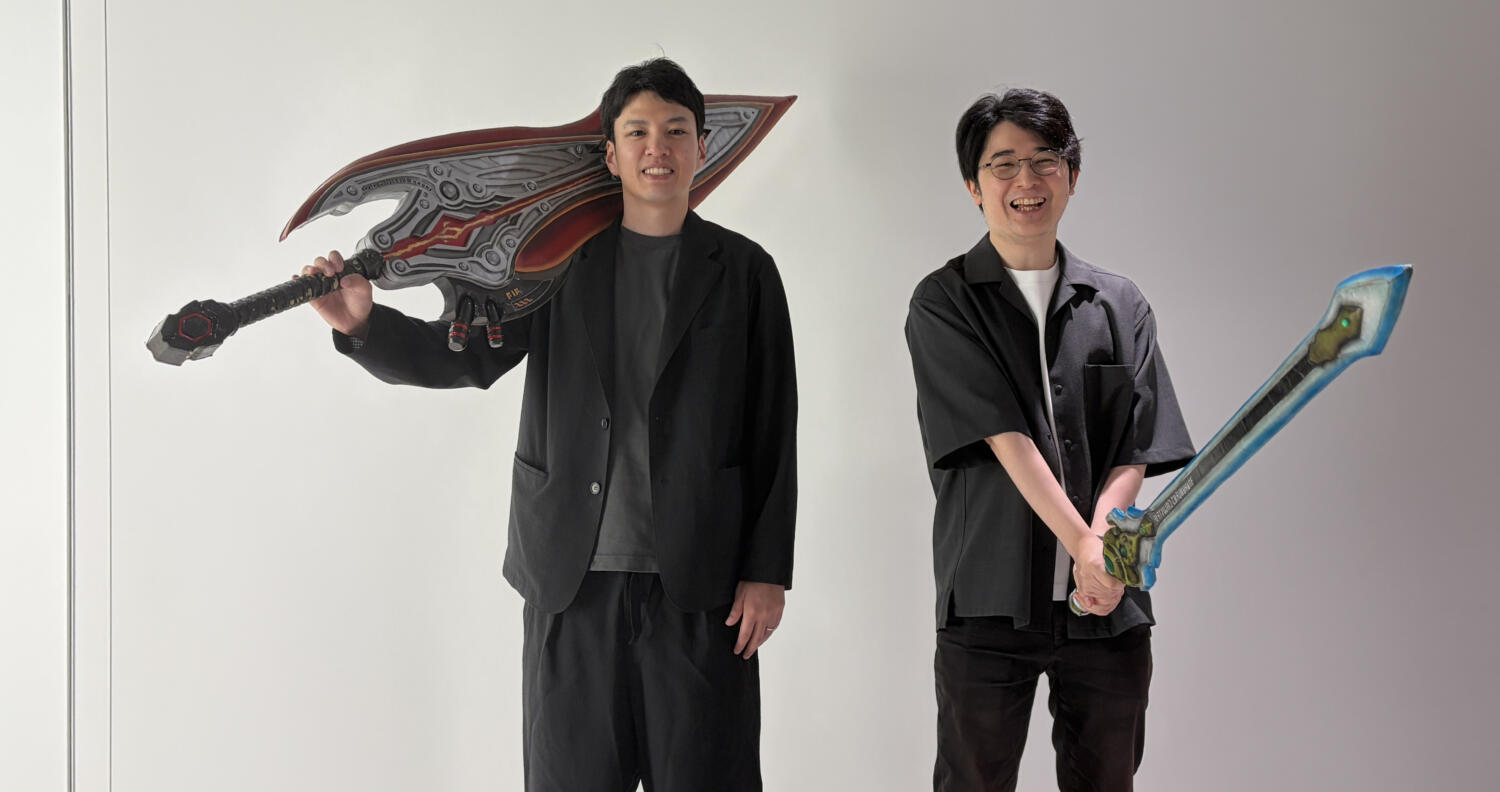
“We wanted to revisit turn-based games from FFI through FFVI, and bring back what was fun about them: the exploration, the story elements, and the battles.”
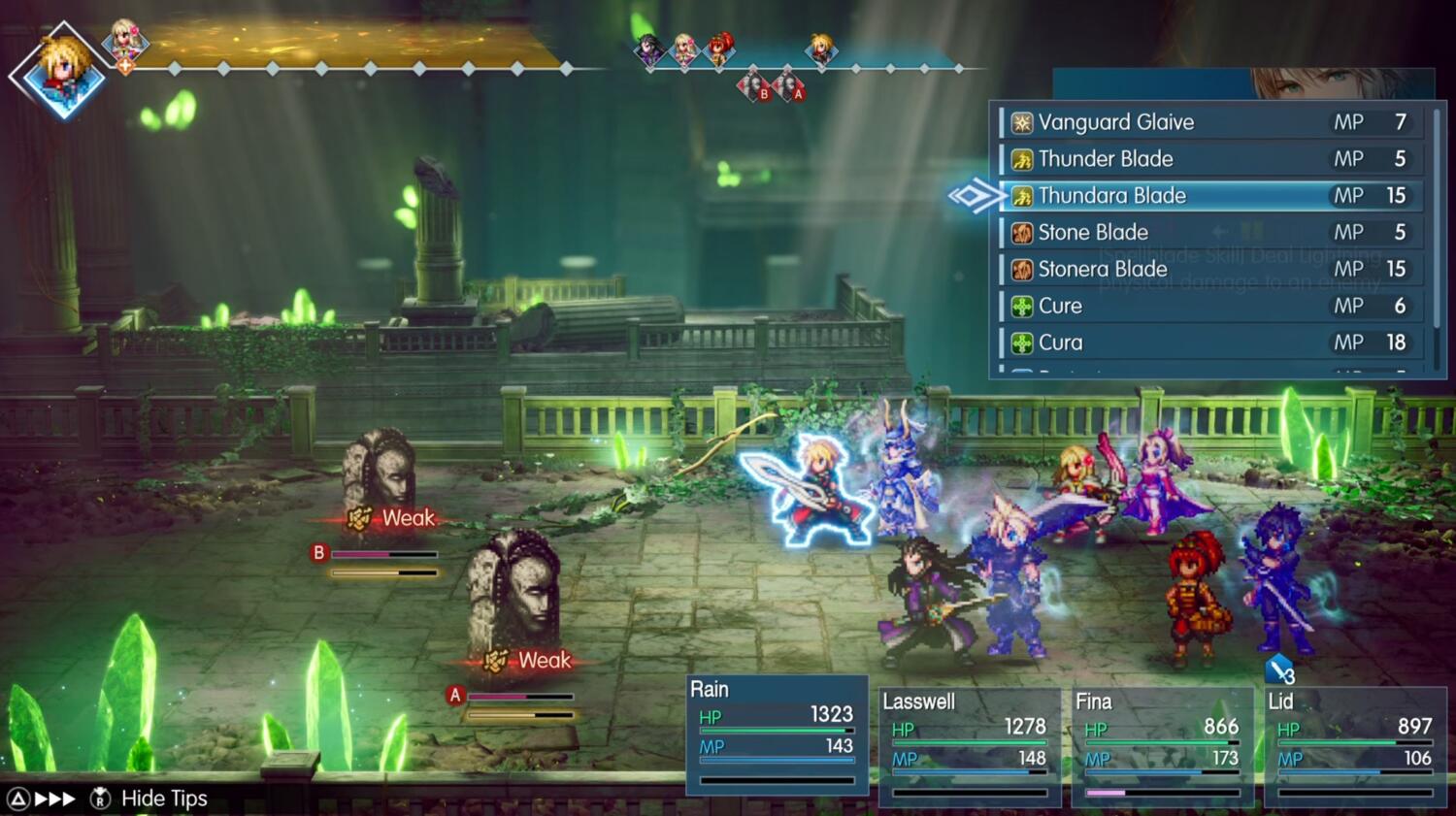
Indeed, Final Fantasy Resonance doesn’t hide the trappings of its past. The ATB, or Active Time Battle, system from previous titles has been eschewed for a traditional turn order displayed at the top of the screen, with the Speed attribute determining when a character acts. Photorealism takes a back seat, and pixel-art sprites make a return, looking a little different than what Brave Exvius players may remember.
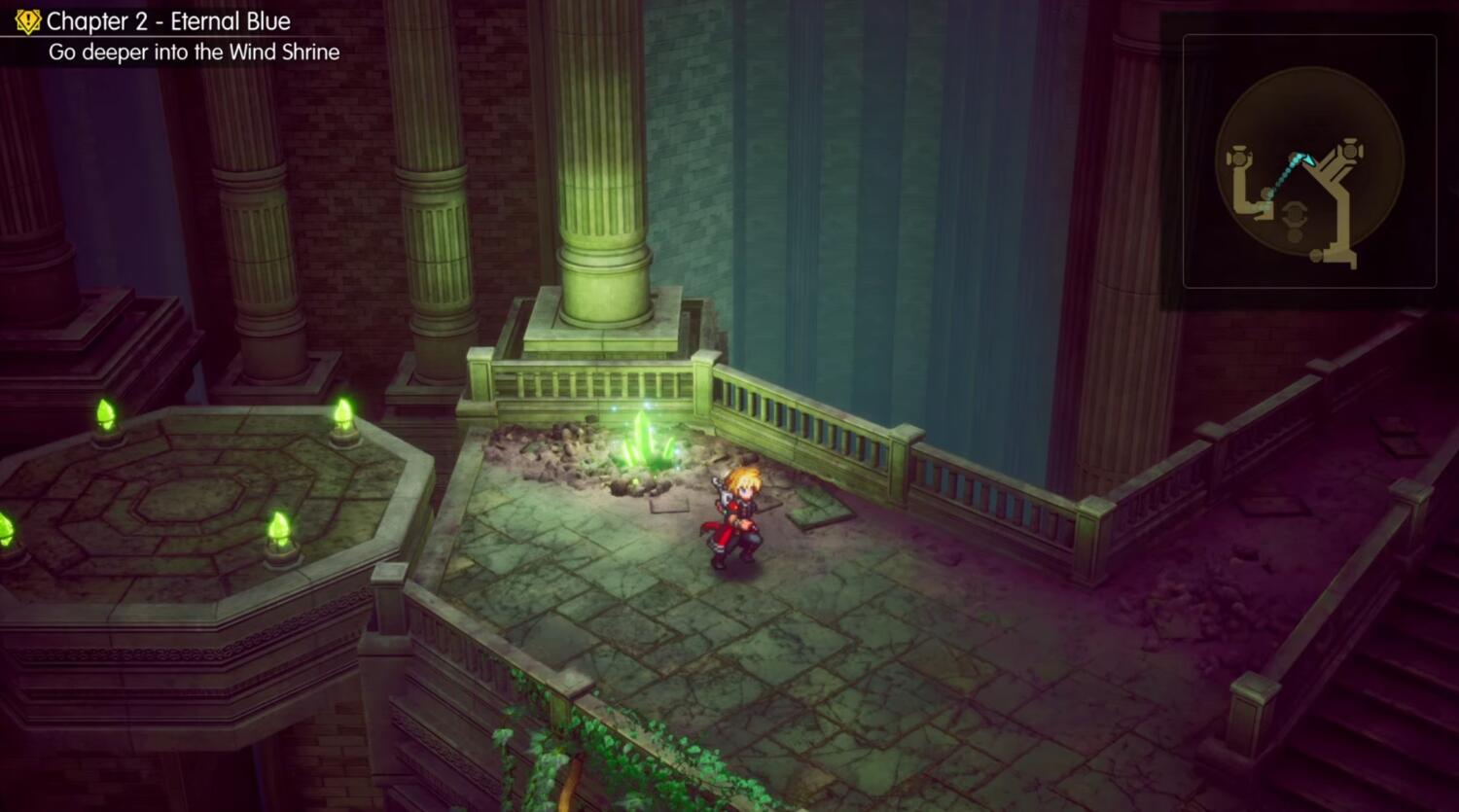
While the HD-2D visuals may draw immediate comparisons to Octopath Traveler, where they originated, the idea here was to create an aesthetic identity that stands on its own. According to Nakashima, the dynamic camera brings a sense of scale and depth that couldn’t be achieved with the latter’s fixed camera view, such as highlighting the smaller stature of dwarves, allowing the world to “feel more alive”.
He explains, “We wanted to show that the style can evolve, like it’s a different version of this art style. Some of the scenes in Brave Exvius that we could recreate, such as event scenes, can be much flashier, and the Bahamut Summon would be more exciting to see as well.”
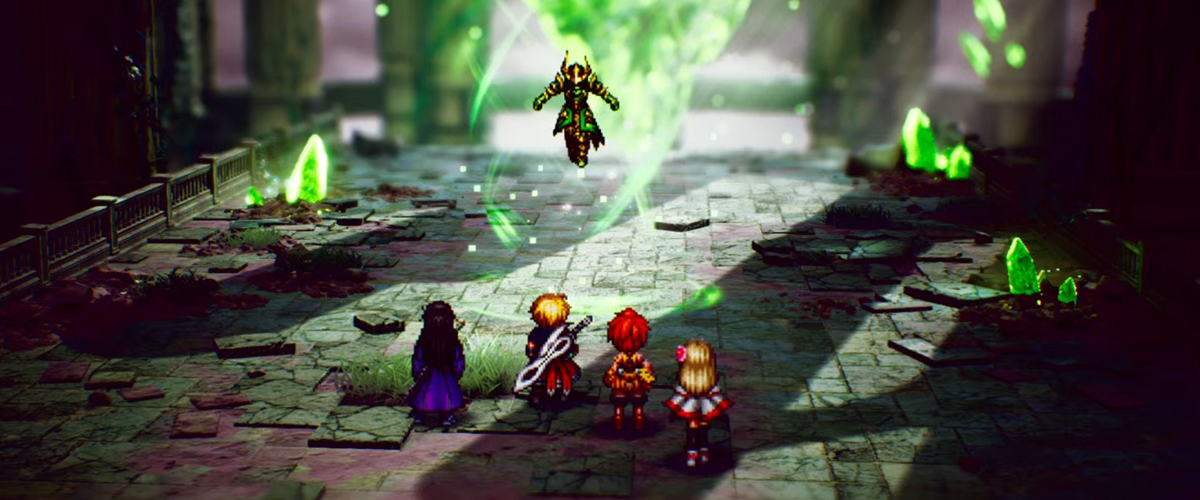
It’s not hubris talking – the now-defunct mobile game had its fair share of larger-than-life animated cutscenes featuring Summons such as Ifrit and Bahamut, but the opening moments of Resonance’s prologue, now playable in the public demo, unleash one action spectacle after another. Latin chants and sweeping instruments fill the background, building to a fever-pitched finale that feels right at home in a Final Fantasy title.
Likewise, combat welcomes several new additions. Central to the Final Fantasy Resonance experience is Sweeping Stagger, which builds on the Stagger mechanic first introduced in Octopath Traveler, and activates when all enemies are Staggered in a single turn. Depleting their individual Stagger gauges prevents them from performing actions on their turns and lets them take more damage than usual, granting an extra action to all party members during the bonus phase. At the end of it, players can unleash an all-out tag-team attack called Resonance that calls upon a Vision, crystallised essences of heroes from across the franchise.
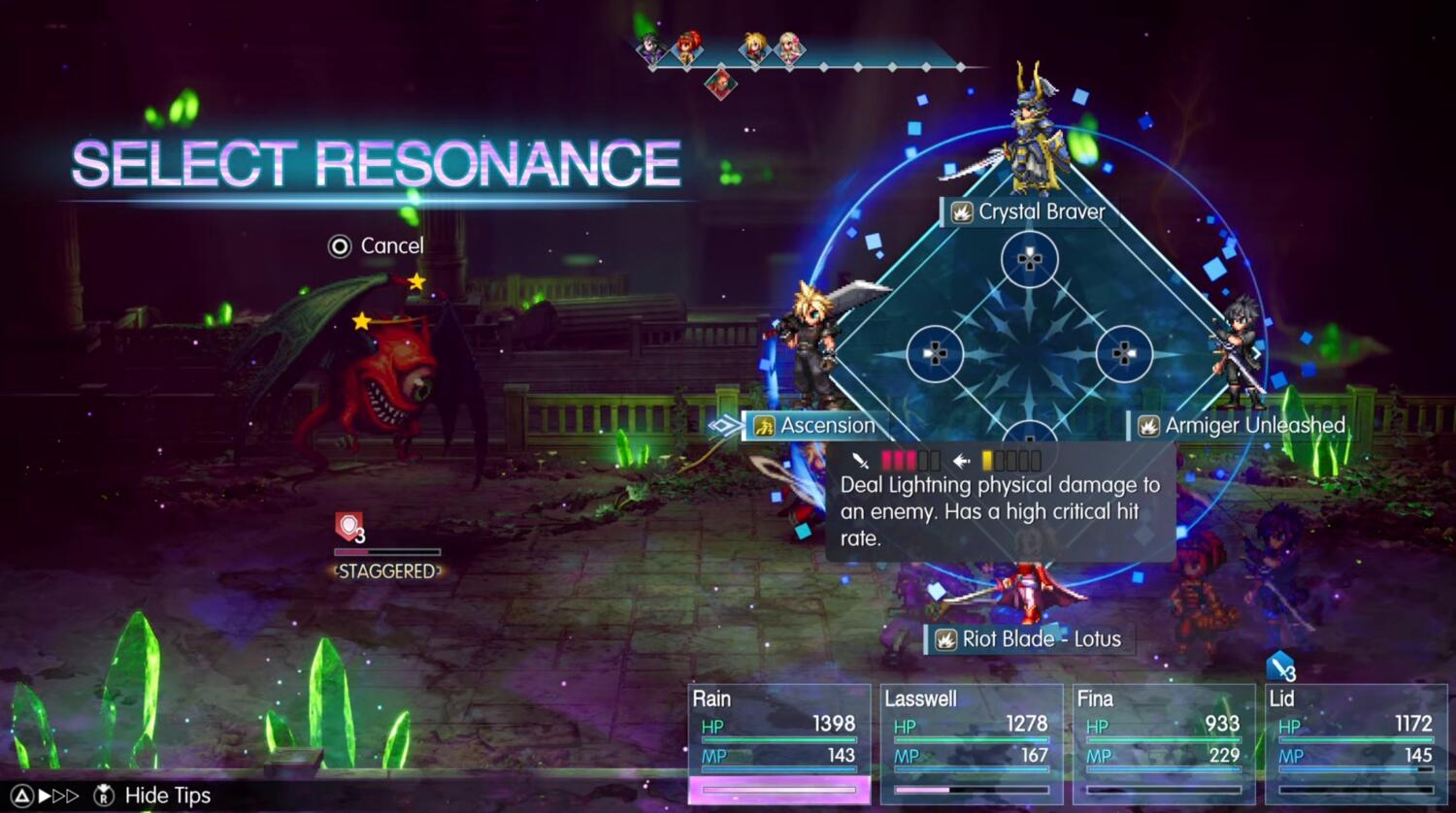
As director Hiroto Furuya shares, the battle system is rooted in another influence: “We liken it to Final Fantasy V, where you can hit multiple times, up to 20 times [or so] on a single attack, so we wanted to see how much variation and variety we could provide to the battle system.”
Tactical emphasis is another major difference. Knowing how and when to Break and Stagger a foe holds the key to victory here, and that’s not counting other gameplay elements, including elemental affinities and party customisation. Additionally, equipped Visions can be freely swapped between party members, encouraging players to toy with their synergy and find what works best for them.
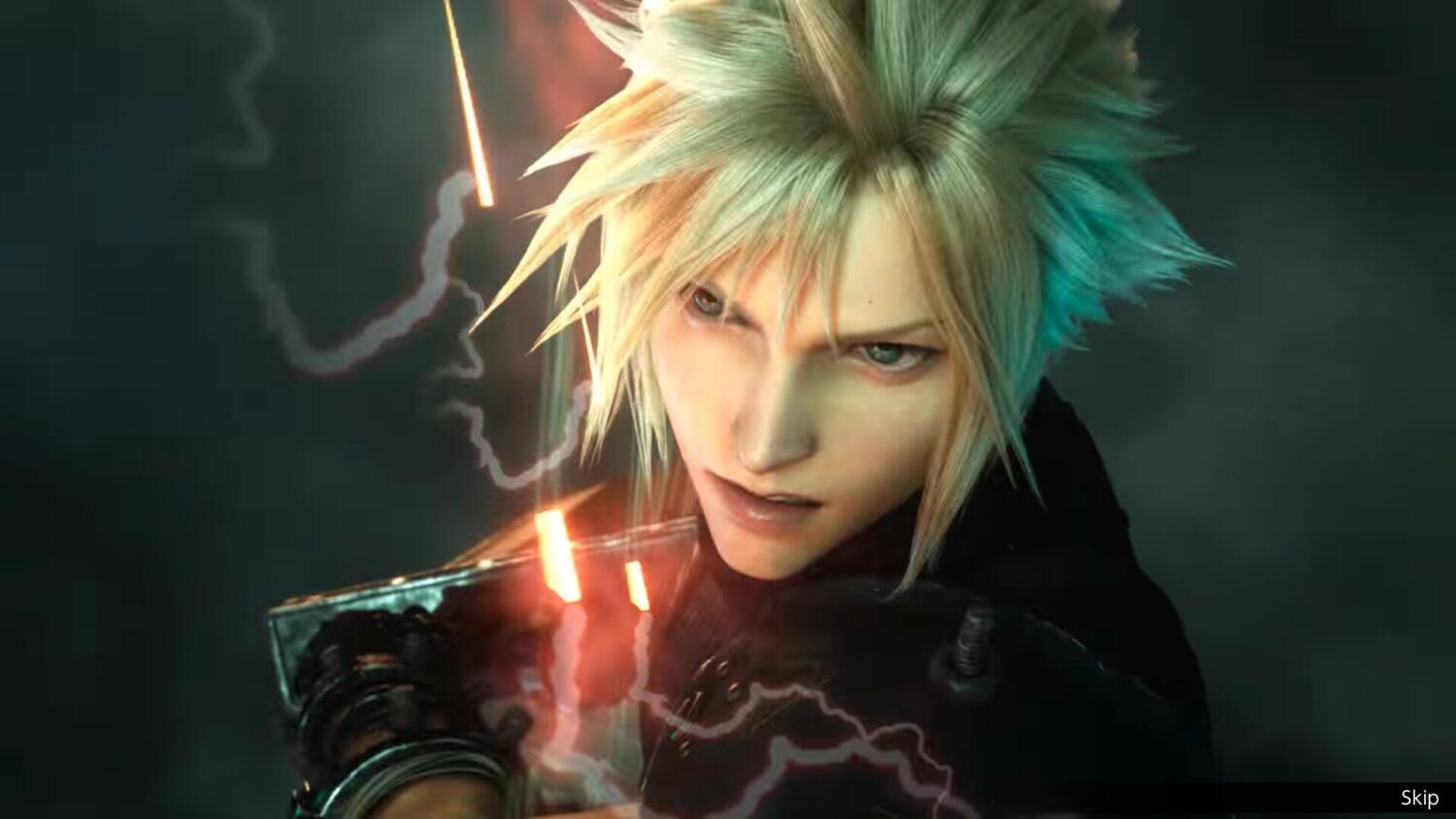
For franchise veterans, it gives them a reason to fight alongside their favourite characters. Among the 26-strong roster are Final Fantasy VII’s Cloud, Lightning (FFXIII), and Noctis (FFXV), all of whom were brought in with authenticity in mind. Then, there’s keeping the power balance in check, such that no one Vision is more useful, and tying both the visual and mechanical aspects together.
“More than just flashy fan service, we wanted to make sure their original personalities and what makes them unique come across in those fights,” expresses Furuya. “[For example,] Bartz has elements from Final Fantasy V, and FFXIV characters have elements from their game as well, so we wanted to make sure that the characters were properly represented.”
The team makes the job look easy, but Final Fantasy Resonance was the result of multiple overhaul efforts. Although the premise is familiar, following Rain, Lasswell, Lid, and Fina as they set out to protect the remaining crystals after the Earth Crystal is destroyed, it’s more than just an enhanced port of Brave Exvius, boasting revamped combat and visuals, as well as a reordered narrative.
The latter’s mobile-first format, however, presented an immediate hurdle, with an event scene – that Nakashima compares to a novelisation game – playing out after clearing a series of stages. This lack of interactivity makes it challenging to incorporate structural changes.
“A difficult thing about the scenario specifically is similar to translating four-panel comics into a full series. How do you break all of this apart and rearrange things? Where do you put which event? Where do you put exploration? It’s difficult because you expect exploration in RPGs, and you expect to walk the world map – things that Brave Exvius didn’t really have.”
Design-wise, the team also took a stab at other art styles. Before settling on HD-2D, box style, which involves making 3D sprites pop as much as possible, was part of the process to create a “Final Fantasy with a new look and a new style.”
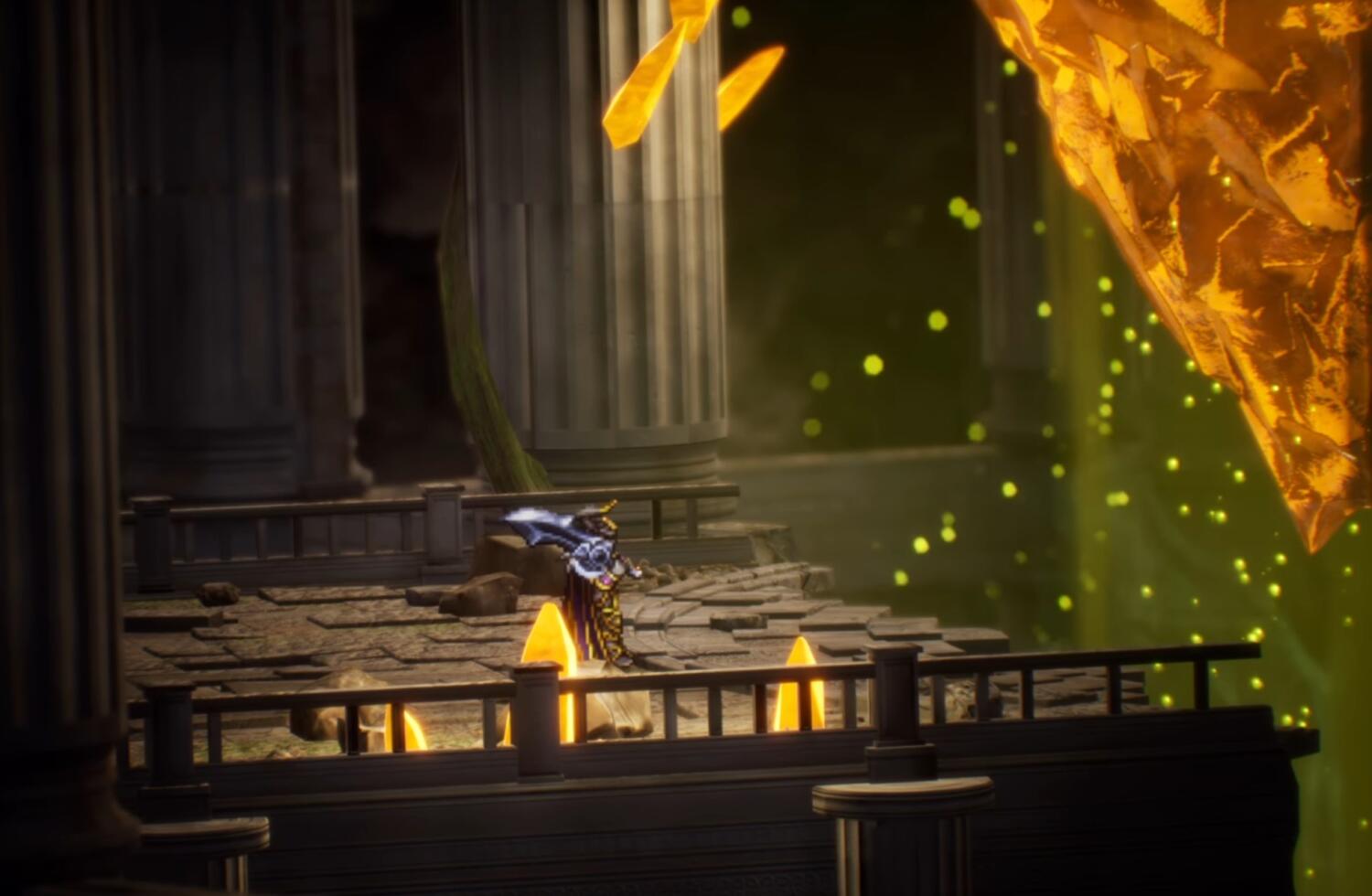
“I’m probably the foremost expert on this kind of sprite style at this point; I looked into anything and everything,” laughs the Brave Exvius alumnus.
Reuniting with Nakashima on the project is Noriyasu Agematsu, founder of the musical group Elements Garden, who composed the score for Brave Exvius. Final Fantasy Resonance will include all 87 tracks and 33 brand-new compositions, making it a continued legacy of sorts for the pair. To do so, it all starts with celebrating heritage.
As Nakashima puts it, “With the current iteration of Final Fantasy, they’re sprawling 3D games and very heavily rooted in action. The combat is very dynamic, and that’s great; it’s an awesome experience. I own them, play them, and love them.
“But I think the classic titles also have their own inherent appeal, and we really wanted to build upon that original style.”
Final Fantasy Resonance arrives 22 October on Nintendo Switch, Switch 2, PS5, PC, and Xbox Series X|S. A free demo of the entire first chapter is out now.

Si Jia is a casual geek at heart – or as casual as someone with Sephiroth’s theme on her Spotify playlist can get. A fan of movies, games, and Japanese culture, Si Jia’s greatest weakness is the Steam Summer Sale. Or any Steam sale, really.