
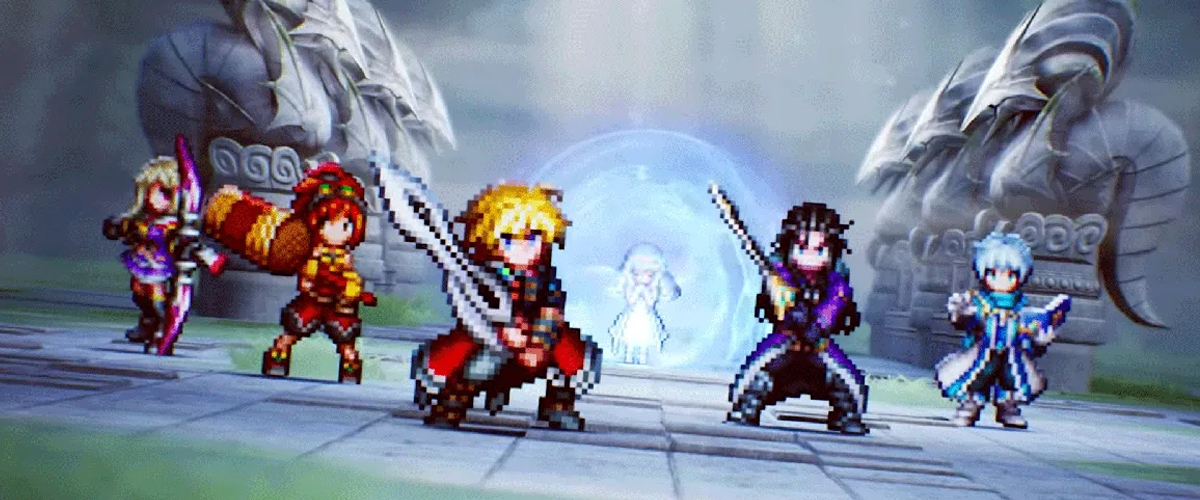
Ideas evolve with time, and storied legacies often chronicle the process. In the case of Final Fantasy, the beloved Japanese role-playing game (JRPG) franchise has undergone several identity changes since its 1987 debut, from the early turn-based days to the real-time action spectacle seen in the latest titles.
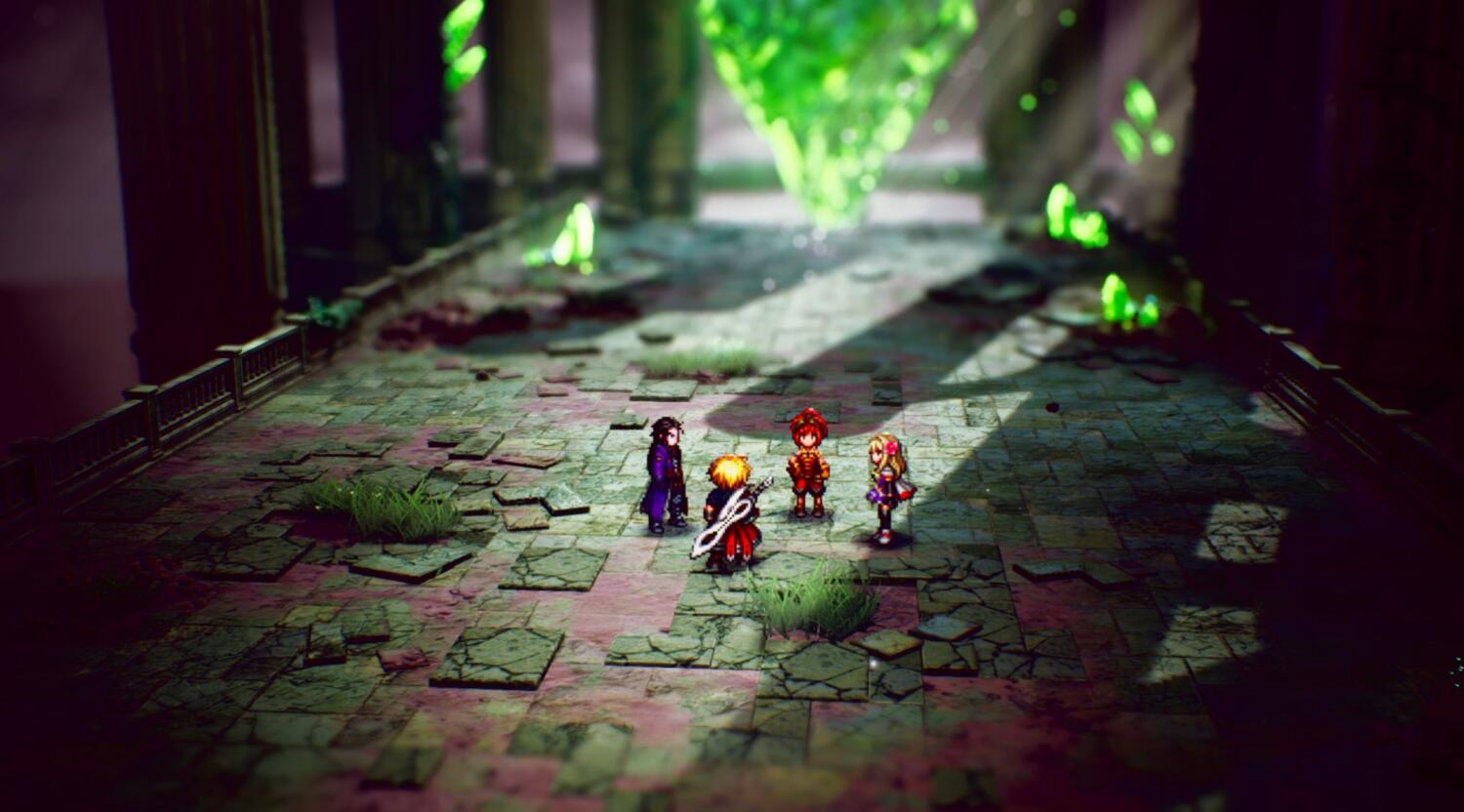
Visually, the transformation is even more prominent – in place of polygonal sprites and pixel art are photorealistic graphics, dense particle effects, natural lighting and shadows, detailed facial expressions, and 3D animated cutscenes. But nostalgia is a powerful tool, and as gaming tech becomes increasingly sophisticated, some yearn for a return to the past, where simplicity was king. Square Enix’s stab at revisiting the experience took the form of the Octopath Traveler titles, which established an identity around the HD-2D aesthetic that eventually carried over to the company’s other offerings.
Final Fantasy Resonance is the first of its ilk to receive this treatment and the first full instalment to feature traditional turn-based gameplay in a while. It follows in the footsteps of Octopath Traveler 0, the spin-off that revamped the Champions of the Continent mobile game, serving as an adaptation of the now-defunct Final Fantasy Brave Exvius, sans the gacha mechanics and microtransactions. To call the forthcoming adventure the console-style counterpart of Brave Exvius would be both inaccurate and a disservice to the team, though, because it has all the makings of an old-school (final) fantasy come true for players, as gleaned from a one-hour preview held in Tokyo, Japan.
The premise will be familiar to those who’ve played the original, centring on Rain, Lasswell, Lid, and Fina as they set out to protect the remaining crystals across the world after the Earth Crystal is destroyed. Beyond that, the story beats have been tailored for a conventional RPG undertaking, featuring an overworld and combat overhaul, as well as visuals rebuilt from the ground up.
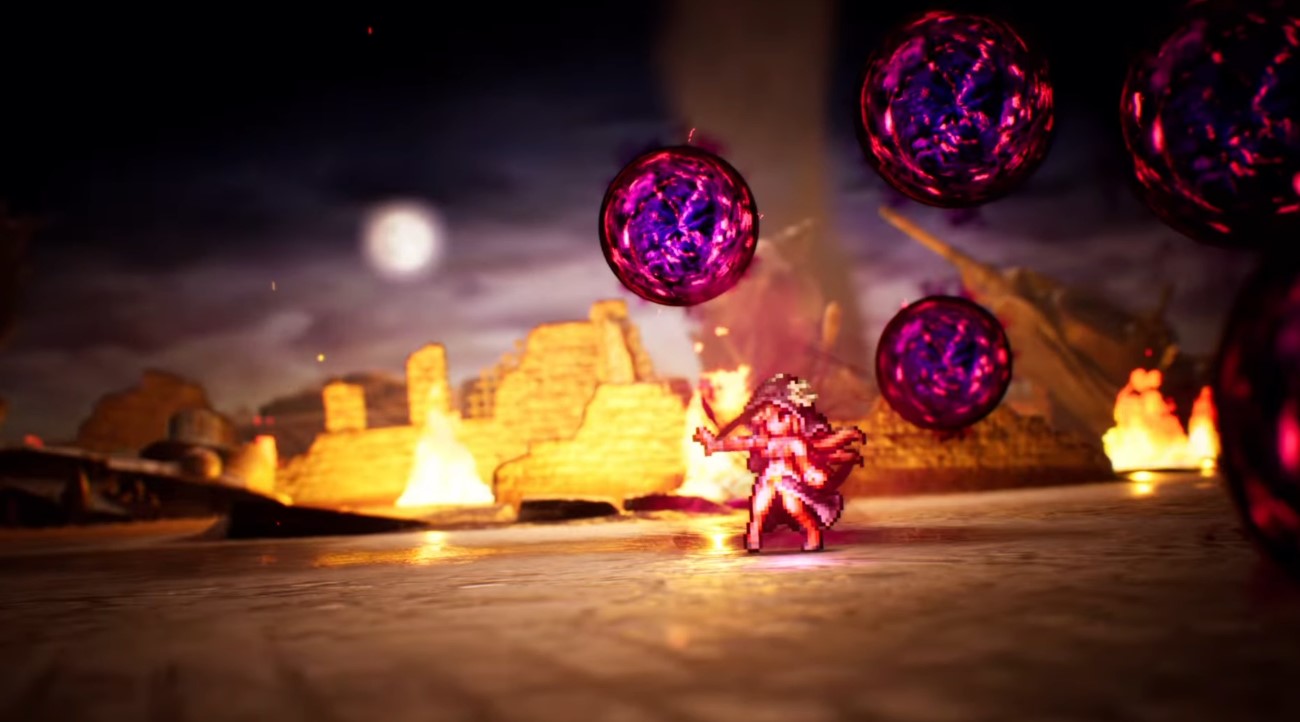
Indeed, Final Fantasy Resonance hits the ground running with a breathtaking display of the latter in its prologue. The opening cinematic introduces the enigmatic and powerful Archwitch, who can call upon Espers, the game’s take on Summons, amid a siege, and it’s here that players are guided through the basics of movement and combat. Soon after witnessing Bahamut and its signature Megaflare in action, the flourish picks up as the Archwitch and a mysterious villainous figure engage in a high-octane, thrilling clash. In the background, Latin chanting is accompanied by frenzied guitar shredding and sweeping instrumentals before transitioning to a mellower, more emotionally resonant score.
It fits perfectly into the franchise’s musical tapestry, making for a gripping segue into the starting chapter of the main narrative, in which Rain and Lasswell are tasked with investigating the cause behind the weakening magic barrier at the Earth Shrine, home to the Earth Crystal. Immediately, their dynamics highlight two contrasting personalities – the former has an affable, happy-go-lucky disposition, while his best friend is the no-nonsense type – that offer entertaining banter and a playful, lighthearted tone (given the series’ track record, however, it will likely take a darker turn as players progress).
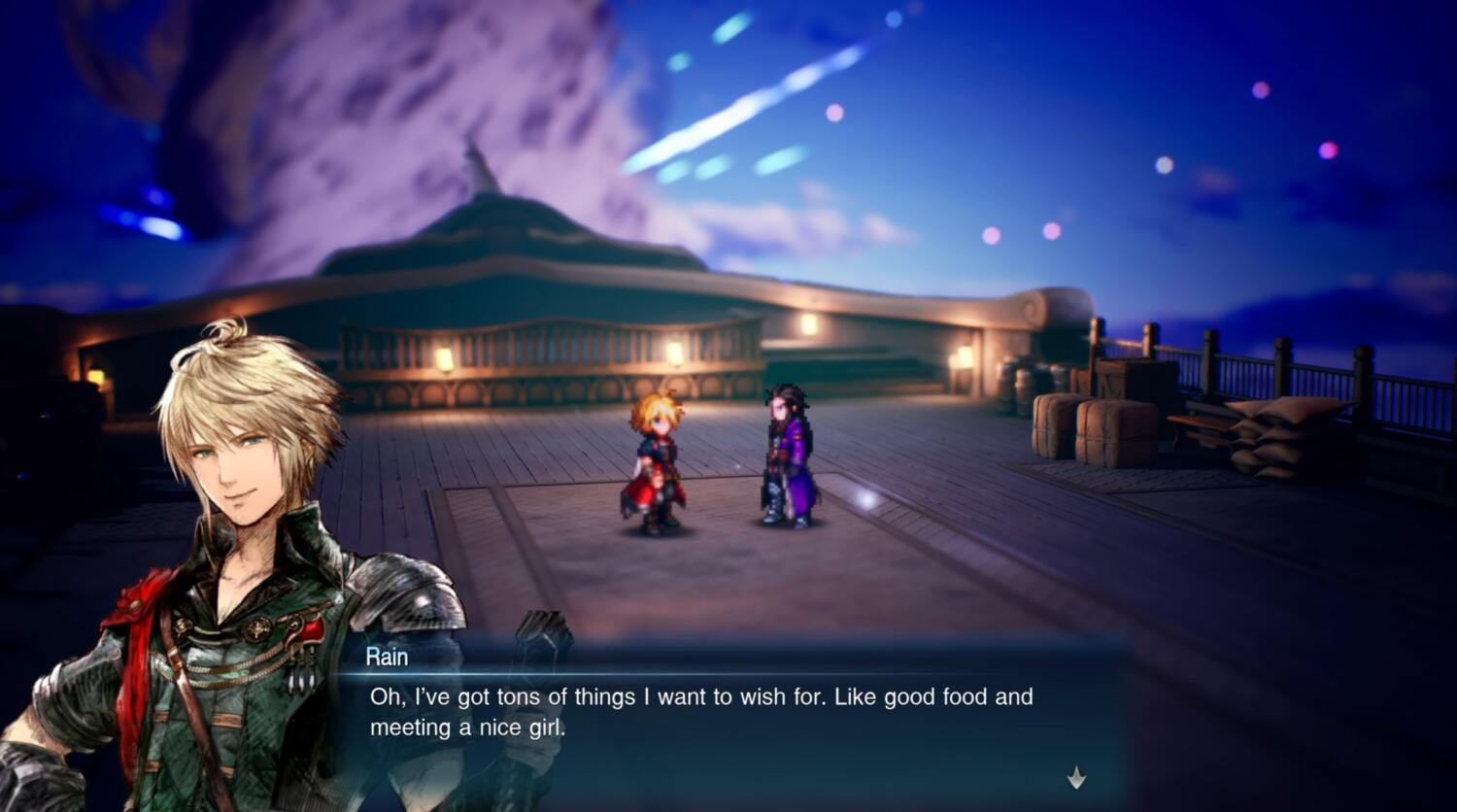
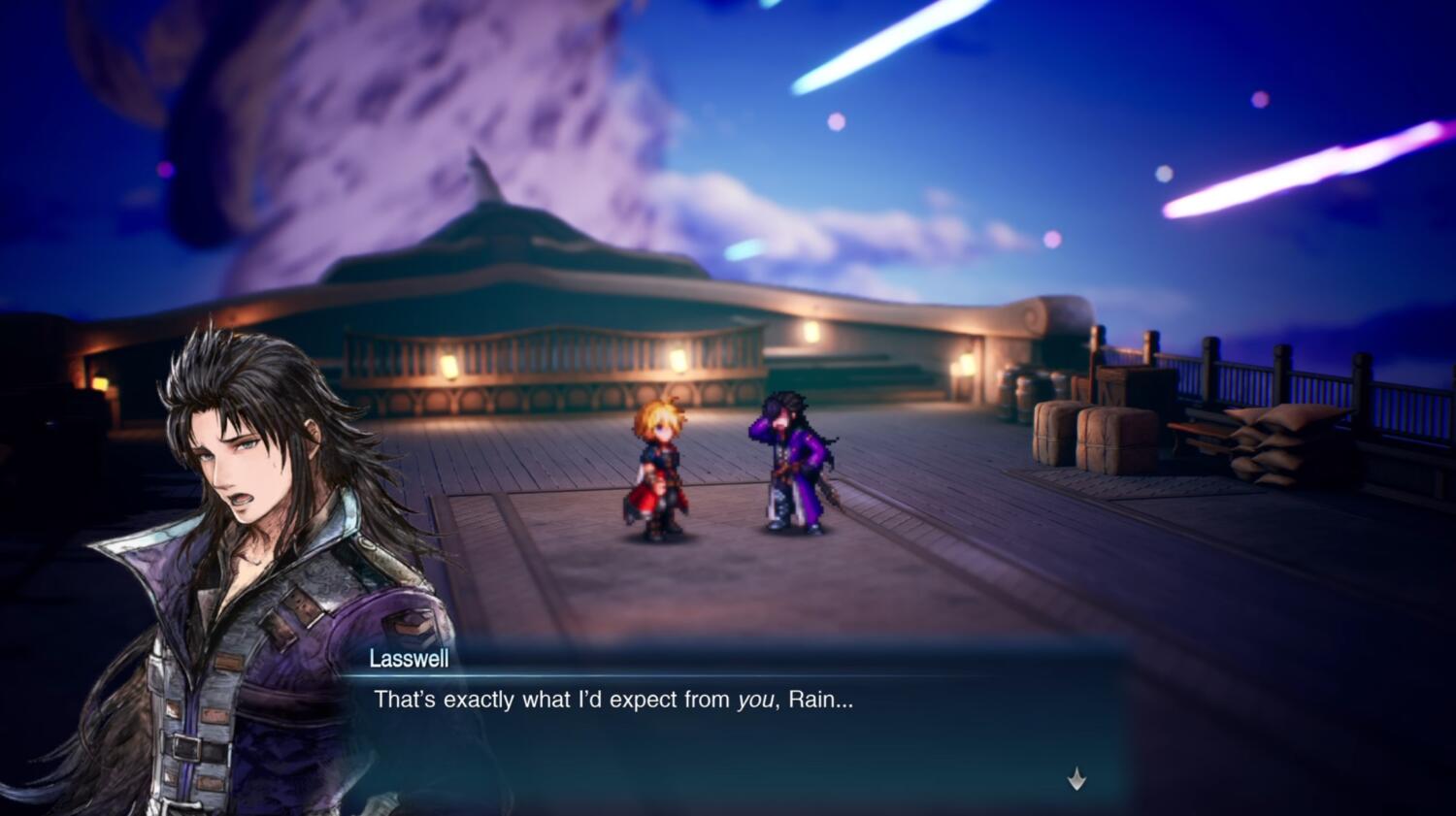
This distinction also extends to combat roles, spanning Synergist, Medic, Breaker, Commando, and Sentinel, with each character assigned their own skills and weapons. Rain, for instance, is a sword-wielding Sentinel who can cast defensive spells and take hits in place of others, unlike Lasswell’s Breaker arsenal that focuses on dealing damage with elemental strikes and katana equipment. Attributes-wise, the former is more hardy, but has lower Speed and Physical Attack than Lasswell. Fina is easily the most different, boasting the ability to summon Espers any time in battle, starting with the support-slash-healing unit Siren.
As genre veterans know, it’s important to understand how the number game works in battle because Speed is particularly advantageous in turn-based gameplay, allowing players to act faster and, if played correctly, more than once in a single turn. The nature of each attack and spell is denoted by a symbol, including a sword for physical damage power, a staff (magic damage), a light ray (power of attacks affected by the Sanctity attribute), a cross (healing power), and a bullet (Stagger power).
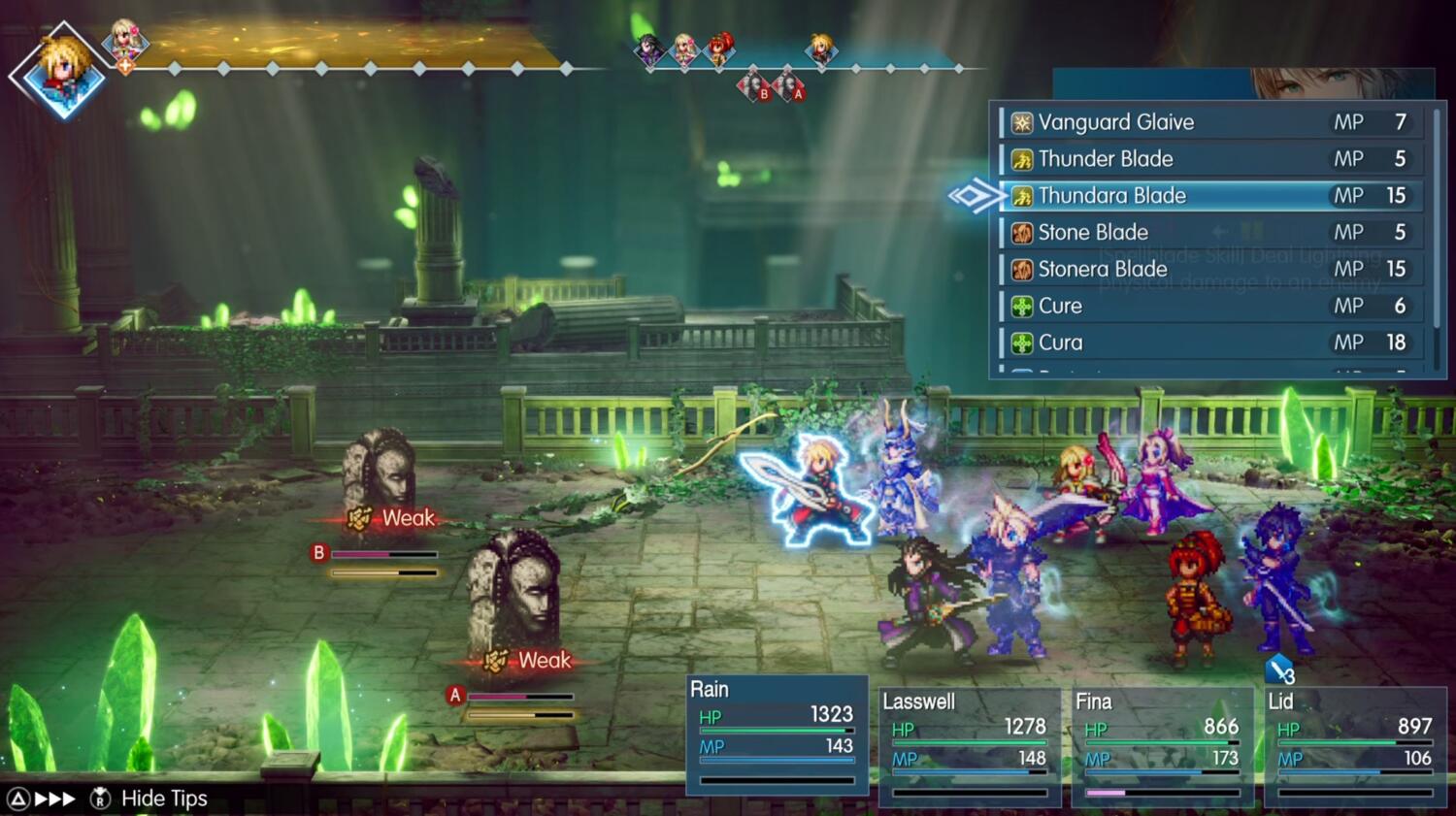
For those familiar with Octopath Traveler, Stagger is an old friend. The enemies in Final Fantasy Resonance have an individual Stagger gauge that, when depleted, renders them unable to perform actions on their turn and lets them take more damage than usual. There are no ATB, or Active Time Battle, elements here, only an old-school turn order at the top of the screen and an emphasis on elemental affinities – similar to its HD-2D brethren, enemy weaknesses are revealed after a successful hit with the corresponding attack type – that feels like a turn-based twist on the Final Fantasy XIII experience.
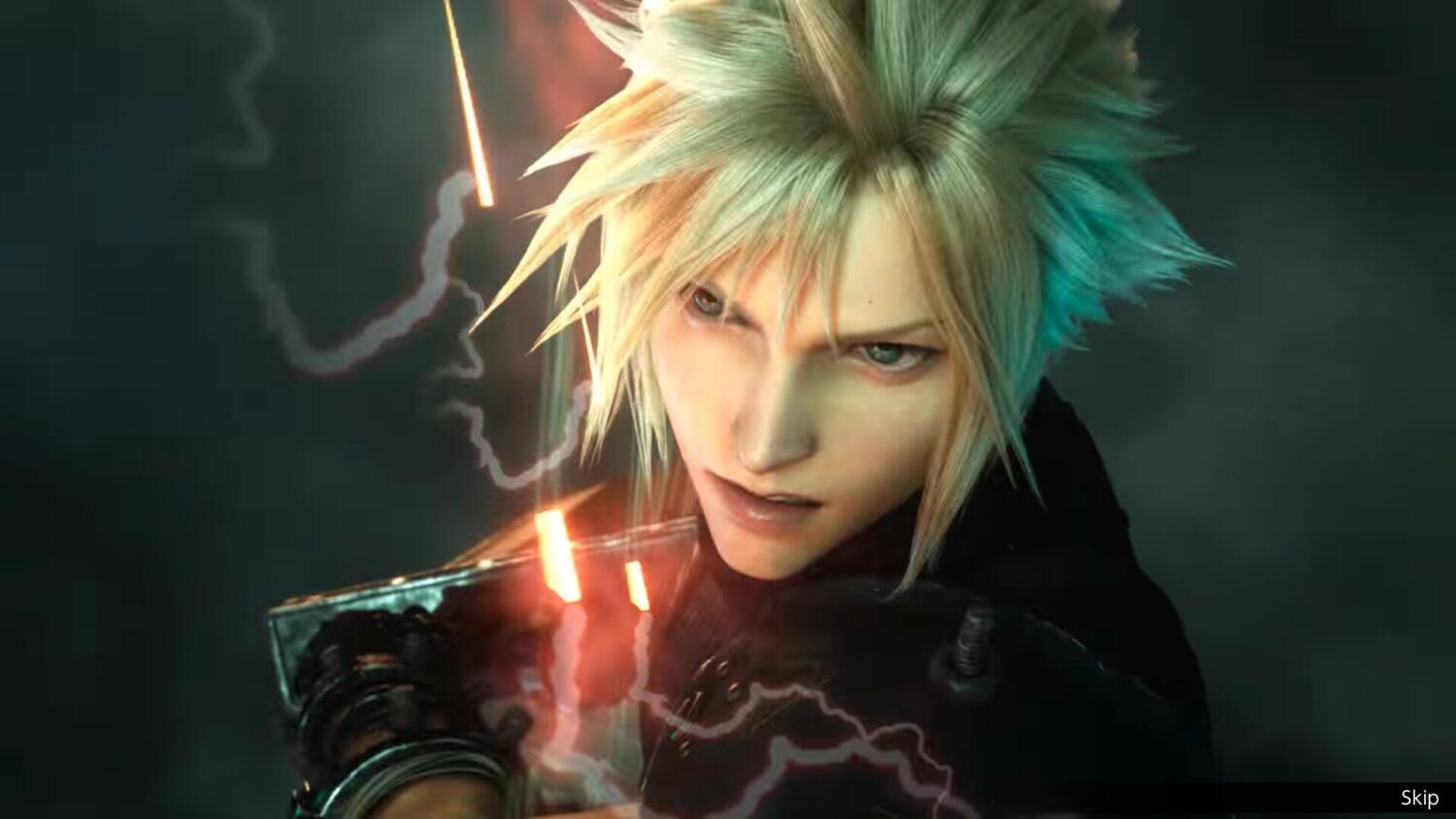
Sweeping Stagger is the new wrinkle to the formula, activated when all opponents are Staggered in a single turn. In this state, all party members will get an extra action during the bonus phase, and once it ends, players can unleash an all-out tag-team assault called Resonance. Not only does the execution deliver a satisfying thrill, but it also triggers CGI cutscenes featuring one of four equipped Visions, crystallised essences of legendary heroes that can be summoned to fight alongside Rain and company.
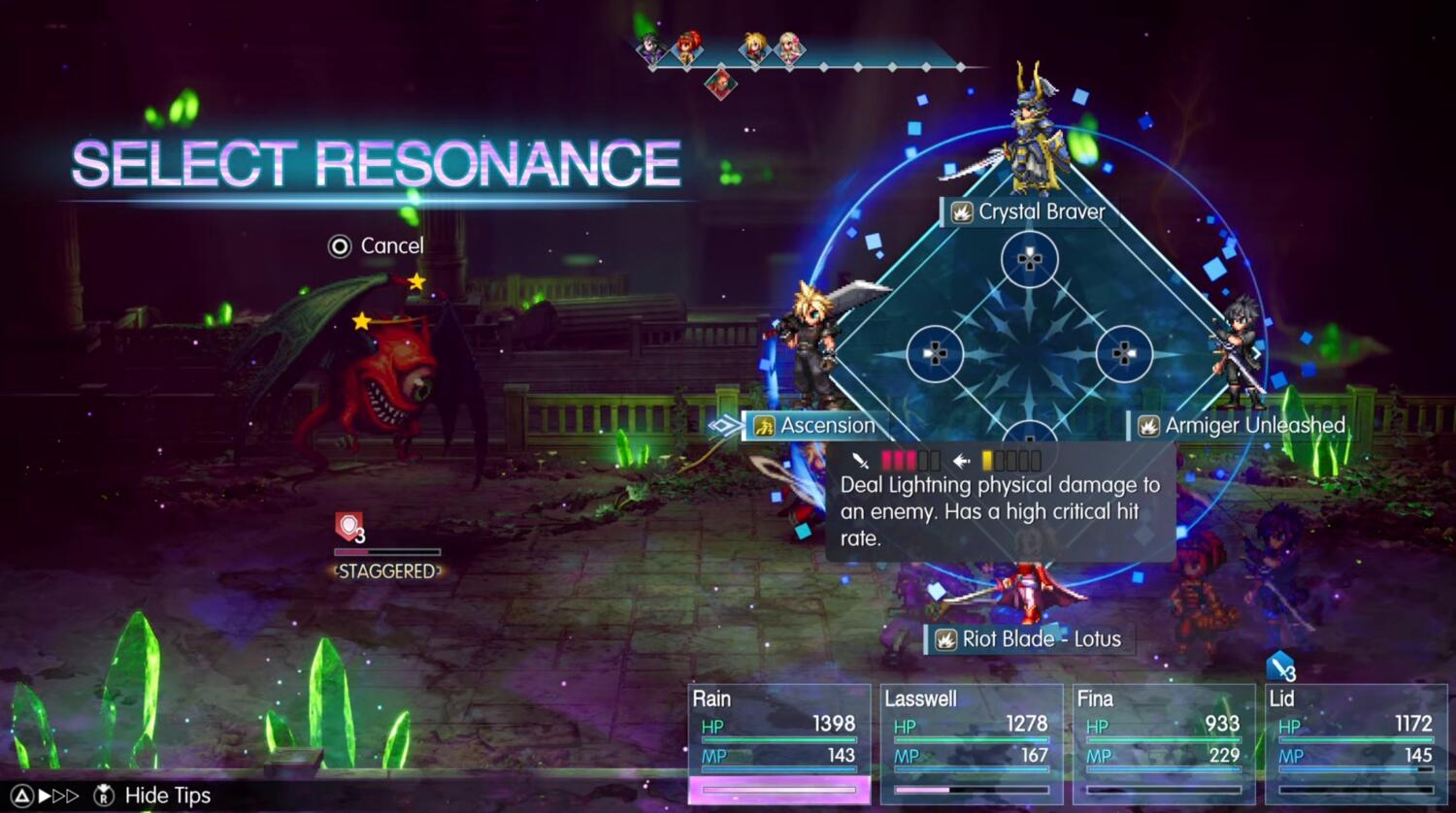
Reminiscent of the Personas from Atlus’ Persona series, they add a separate pool of movesets to the host character and bring different effects to the battlefield. For example, Ascension calls upon Cloud, who inflicts devastating Lightning physical damage, while Crystal Braver’s Warrior of Light deals physical damage to all enemies, casts Regen, and increases Defence and Spirit for three turns. Manifestations of Noctis, from Final Fantasy XV, and Terra (Final Fantasy VI) were included in the preview build as well, with the selection expanding to 26 in the full game.
For all that they are a sight to behold, the 3D-rendered Resonance sequences appear jarring and awkward next to the charming pixel-art aesthetics, much like a fish out of water. Thematically, though, it’s a clever tie-in to the franchise’s identity, oozing enough flair to stand on its own.
Limit Burst, inherited from Brave Exvius as an offshoot of the Limit Break system in the mainline instalments, offers another way to prey on an enemy’s weakened defences and can be unleashed once the character’s Limit gauge (indicated by a purple bar) is filled up. All these combat elements click into place nicely, delivering a fair balance of challenge and accessibility – the boss encounter in the preview required some tactical planning beyond just sheer brute force.
After exiting the battlefield, whether by escaping or defeating foes, it’d be wise to keep an eye on the party’s HP and MP. Levelling up or returning to a save point in Final Fantasy Resonance won’t replenish either, leaving players with the choice of setting up a tent at a save point or consuming items. Those who love exploring, in particular, will want to stock up, because there are hidden paths, tucked-away crannies, and treasure chests littered throughout the overworld.
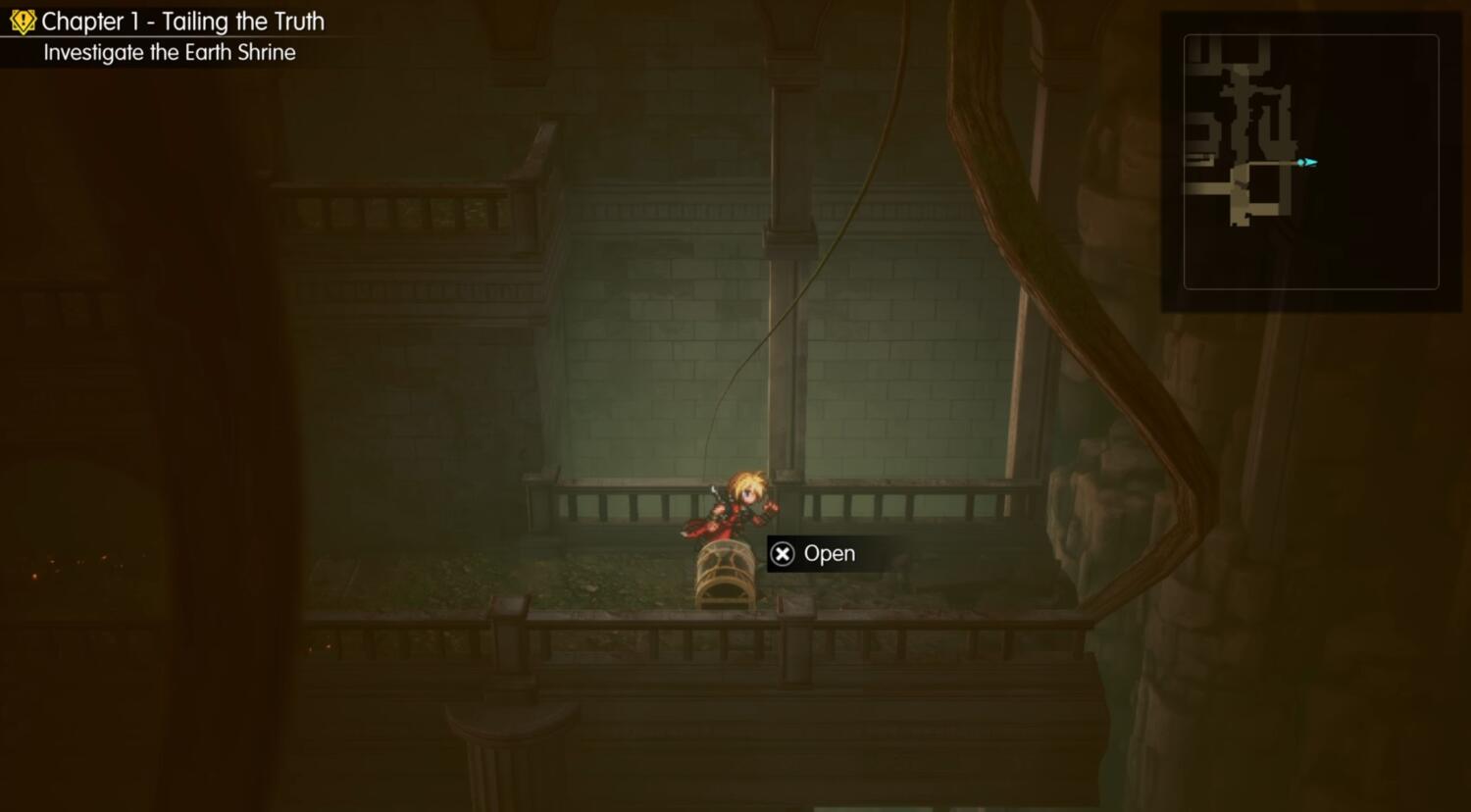
While the initial announcement of Resonance admittedly sparked concerns of HD-2D fatigue, this sneak peek has put them to rest. It teases a promising return to the old-school Final Fantasy experience, pairing delightful visuals with an engaging combat system and beautiful music that includes familiar series leitmotifs. Whether the appeal will endure into the full playthrough remains to be seen, but for now, it already, well, resonates with old-timers in more ways than one.
Final Fantasy Resonance is set for release on 22 October for Nintendo Switch, Switch 2, PS5, PC, and Xbox Series X|S.

Si Jia is a casual geek at heart – or as casual as someone with Sephiroth’s theme on her Spotify playlist can get. A fan of movies, games, and Japanese culture, Si Jia’s greatest weakness is the Steam Summer Sale. Or any Steam sale, really.
 Kevin Low