
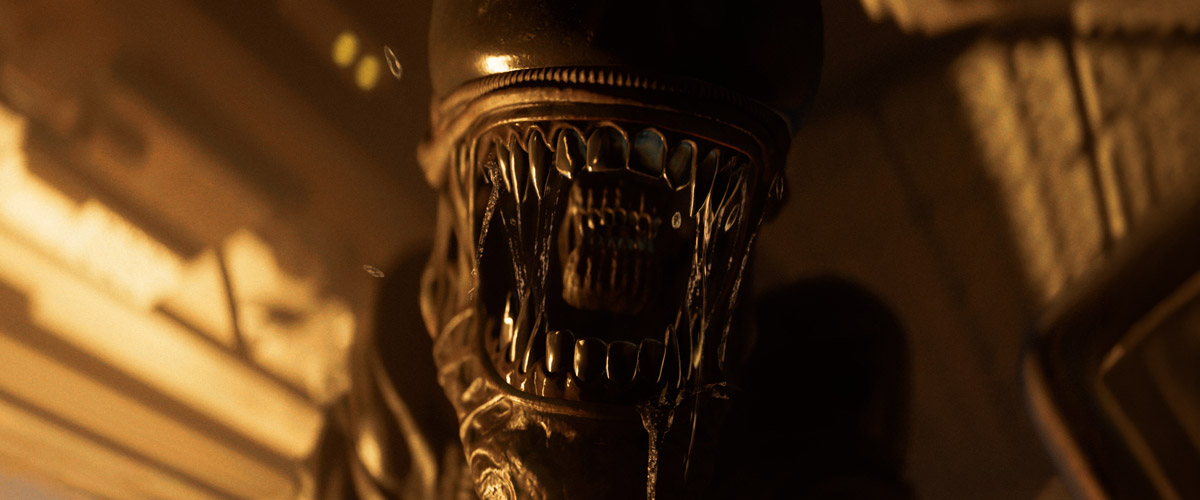
As the maxim goes, “If you can see it, you can kill it”, but when applied to the Xenomorphs in the massive Alien franchise and in the upcoming sequel to the 2014 survival game, Alien: Isolation, it creates a certain quagmire.
In an era where horror games chase jump scares and instant gratification, Alien: Isolation 2 wants to double down on slow dread and the kind of unscripted terror that made the original 1979 film a cult classic, but it’s also set in a larger, more open exterior environment – the same space where it’s harder to keep an alien creature hidden in the shadows.
Geek Culture sat down with the development team during Gamescom 2026 where Project Art Director Anastasia Sopikova and Principal UI Artist Laura Mauterer broke down how Creative Assembly is moving from claustrophobic hallways to chaotic exteriors, while maintaining the franchise’s essence firmly rooted in Ridley Scott’s masterpiece. More importantly, the team understands the importance of maintaining what made the first game so revered.
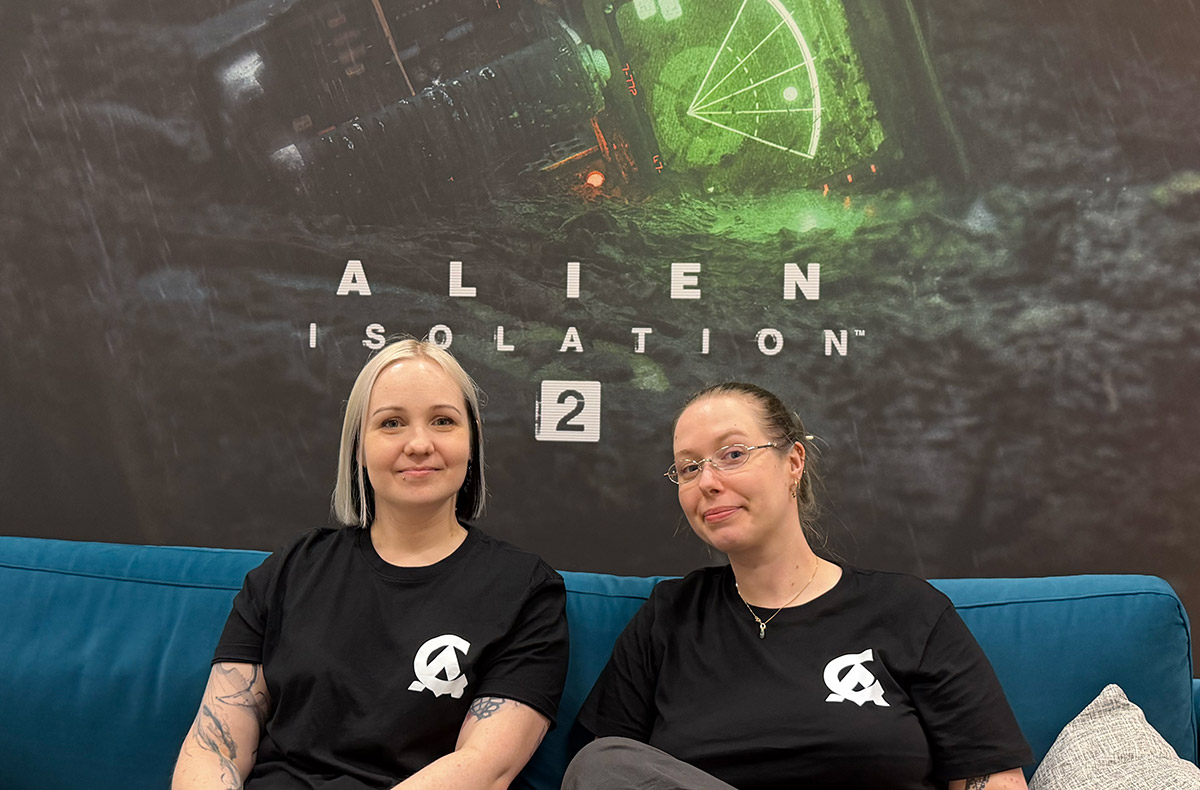
Despite the decades of Alien media that have been produced since, the team remains laser-focused on the specific atmosphere of the first film.
“The 1979 Alien is definitely the film that fits our experience, the Alien: Isolation experience, the best,” says Sopikova. “It’s all about that feeling of being hunted, that cat-and-mouse, you-versus-creature gameplay.”
To achieve this, the art team has gone to extreme lengths, dissecting the original film’s production methods.
“By dissecting everything that made the original film great… we’re kind of diving deep into the techniques and the methods,” Sopikova explains. “That allows us, as an art team, to almost build like this toolset of methods.”
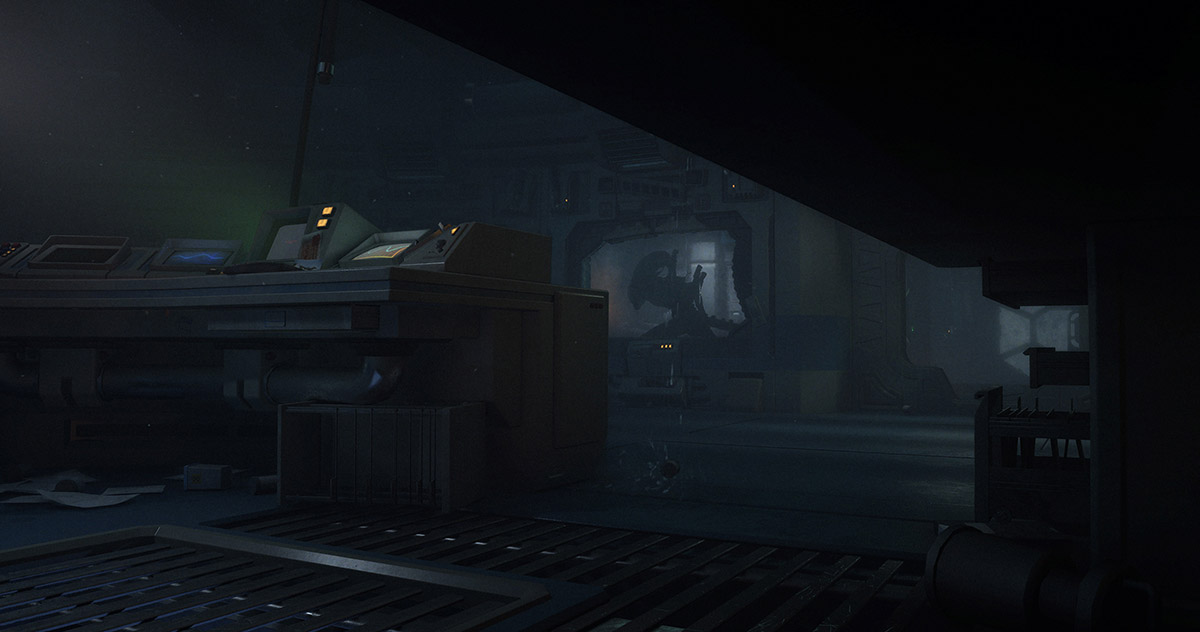
To sustain that authenticity, the team has gone to some unexpected lengths with their reference material. Sopikova gestures to an image of the creature in the studio as she recalls one example.
“The [Xenomorph] drool has actually been created with a special brand of jelly… a very specific 1970s brand of lubricant that they used at the time to create alien saliva,” she says with a laugh. “I got it from Amazon at some point.”
Another deep dive involved the sparks seen in the original film’s electrical malfunctions. Back then, the team used special cables that short-circuited, melting plastic and sending tiny fragments flying.
“If you scrub the film really closely, you can see it in a lot of the sparks, there’s little chunks of plastic just flying away, little bits of smoke,” Sopikova notes. “That stuff is something that I’m taking to the VFX team, and we are recreating it… It’s such a small, subtle detail, but it’s super authentic.”
These micro-details, invisible to many on first viewing but felt subconsciously, are what the team believes will make the sequel’s world feel truly lived-in and cinematic, with the believability that every corridor and area maintains a lived-in logic, coming together to establish a colony established by the franchise’s overarching villainous corporate entity, Weyland-Yutani.
“We’re really thinking through how this planetary colony would work. Where would people live? Where would they sleep? What route would they take from their bedroom to their office?” Sopikova says.
“We don’t want people to question, ‘Why is this thing a weird shape?’ or ‘Why is this plant some crazy colour?’ The environment and the ambience have to just suck you in… and then the Alien is the star of the show.”
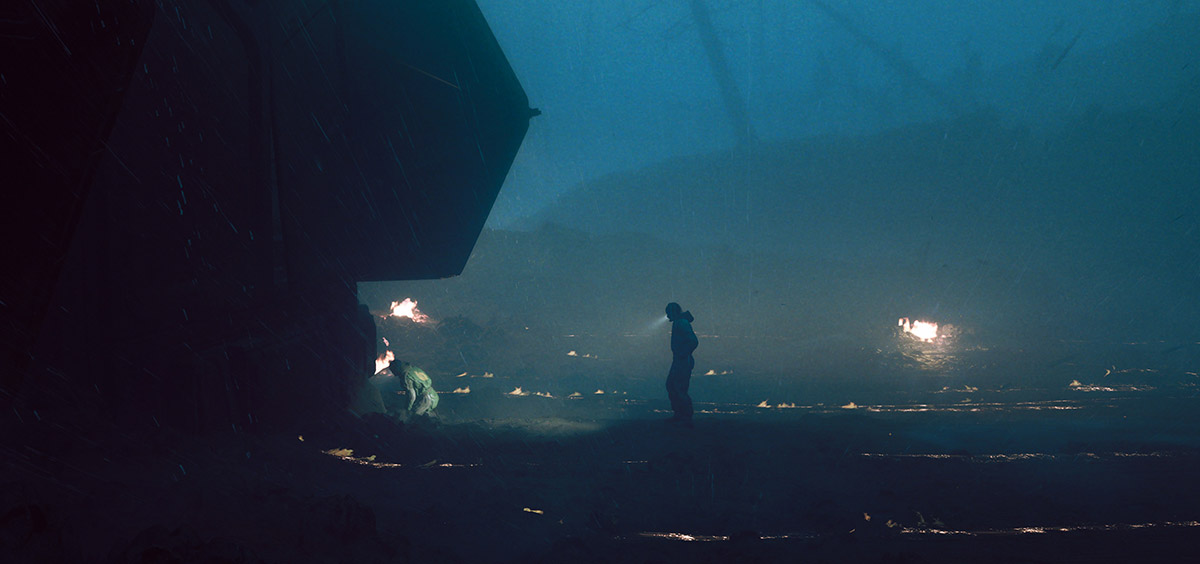
One of the bolder shifts in Alien: Isolation 2 is how quickly the creature shows up as compared to the original game, which made players wait hours before encountering the Xenomorph.
“People played the prologue, and you can see that you’re actually seeing the Alien quite early, and that was a deliberate choice,” Sopikova notes. “The first game kind of took its time… but this time, having the alien just there, boldly, very soon after you start actually playing, sets the scene for the sequel really well.”
Despite evolving expectations for gamers over the years, the team recognises that what was shocking in 2014 may feel “tame” by today’s standard, so it is keeping focused on the Xenomorph as the backbone to the game’s experience.
“It’s always been about the core isolation experience and the unscripted nature of the creature,” she stresses. “The creature can see you, it can hear you, it hunts you. It’s not scripted; it is actively looking for you.”
The team emphasises that while they have systems to manage pacing that ensures players aren’t overwhelmed, even as it reacts to the player’s sight and sound.
When it comes to the user interface, the goal is to keep the player immersed in the character of Blake. Mauterer, responsible for the UI design, explains that the philosophy is “very much cinematic.”
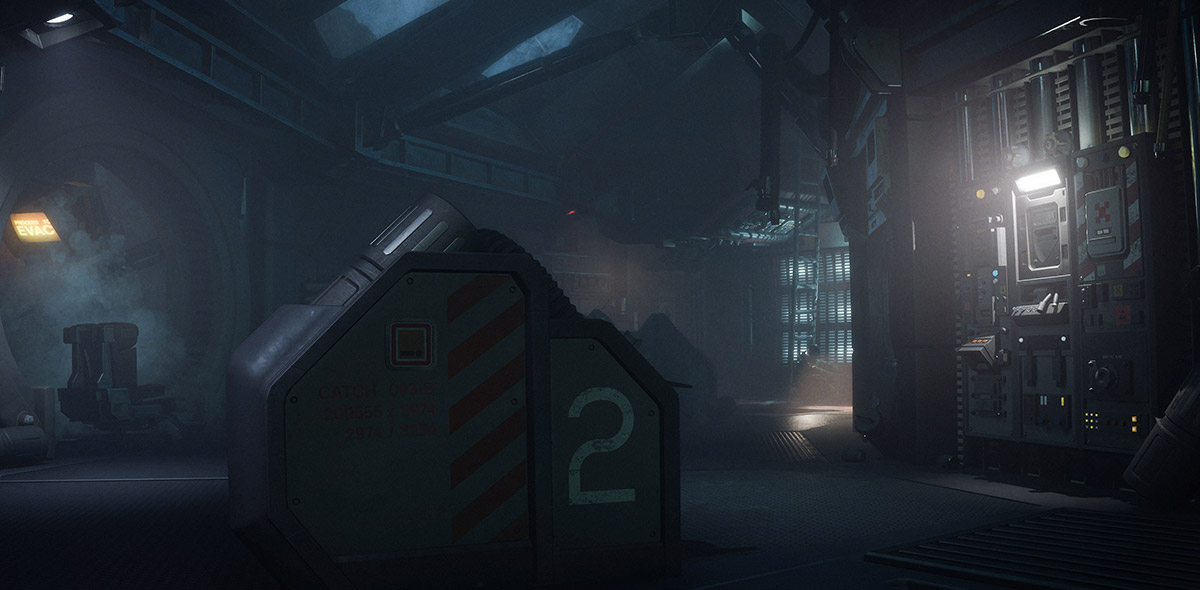
“We don’t want to have too many things on the screen that could distract from what is in front of the player,” Mauterer says. “We want the UI to create friction where we want to create friction, but where it’s necessary to create tension.”
One of the trickiest balances in a horror game is navigation. Players need to know where to go, but feeling lost is part of the fear.
Subtle visual cues and tools help keep outright frustration at bay, but the team embraces the idea that wandering off the critical path can be meaningful. Wrong turns might lead to environmental storytelling such as a dead body, a discarded log or a note that deepens the world. And even once players fully understand an area’s layout, the Alien’s unscripted behaviour keeps things tense. Sopikova mentions having played the Hazard Lab area hundreds of times and still being caught off guard.
“Even when I know and I feel like, ‘Oh, I’m just quickly going to demo it to somebody,’ it still kills me because you can’t predict it,” she says. It’s a perfect echo of Ellen Ripley’s struggle in the original film, where knowing the space doesn’t guarantee control when the enemy is always one step ahead.
As the interview concluded, the team reflected on their time at the consumer booths, watching new players experience the game. Seeing younger players, who are often accustomed to faster-paced titles, get instantly sucked into the slow-burn tension of the Alien universe was a validation of their approach.
“It’s so fascinating to see how they… seem quite relaxed, and then the Alien sequence happens, like the alien drops out, and everyone like… this is it,” Mauterer says. “It’s clearly super engaging.”
As the development for Alien: Isolation 2 is in its early stages, there is no release date set as yet.
Yonk is a geek who is fortunate enough to have an equally geeky Star Wars fan for a wife, who owns a LEGO Millennium Falcon encased in a glass coffee table as their home’s centre-piece.
 Si Jia