

In the race to develop the next must-have mobile phone, it’s no longer just about size, lightness, or even performance, as these have become the expected upgrades at this point. Instead, brands are turning to more radical and unique features, such as foldable technologies, creative chassis design or in some cases, even leveraging collaborations from other recognised brands.
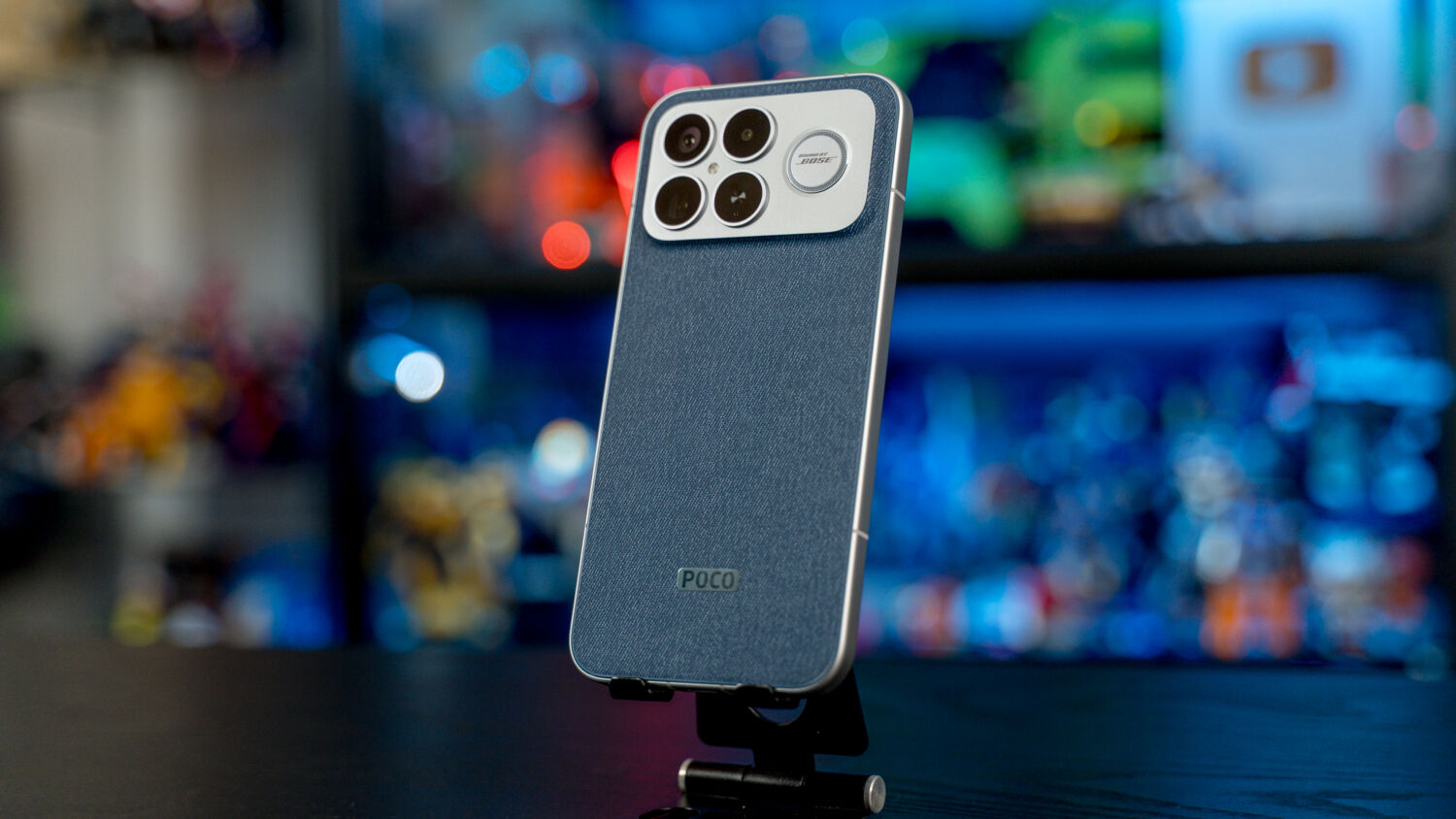
Such is the case for POCO, the smartphone-focused sub-brand of Chinese tech giant Xiaomi, and its latest flagship, the POCO F8 Ultra, which apart from featuring all the upgraded bells and whistles, also sports a distinctive denim-textured design, and more notably, a sound technology collaboration with established audio heavyweight Bose. While these additions, including the rather exotic jeans-material rear panel, don’t add any game-changing enhancements to the overall user experience, they do work in tandem with the device’s already strong foundations for a solid balance of novelty and practicality.
Technically, the POCO F8 Ultra isn’t entirely new, as much like the brand has done with past devices, the F8 Ultra is actually a rebranded Redmi K90 Pro Max, the recent flagship of Xiaomi’s other sub-brand, released in China on 23 October this year. Similar to this year’s POCO F7 and Redmi Turbo 4 Pro, which are also slightly altered variations of the same device, with different naming conventions depending on their release market.
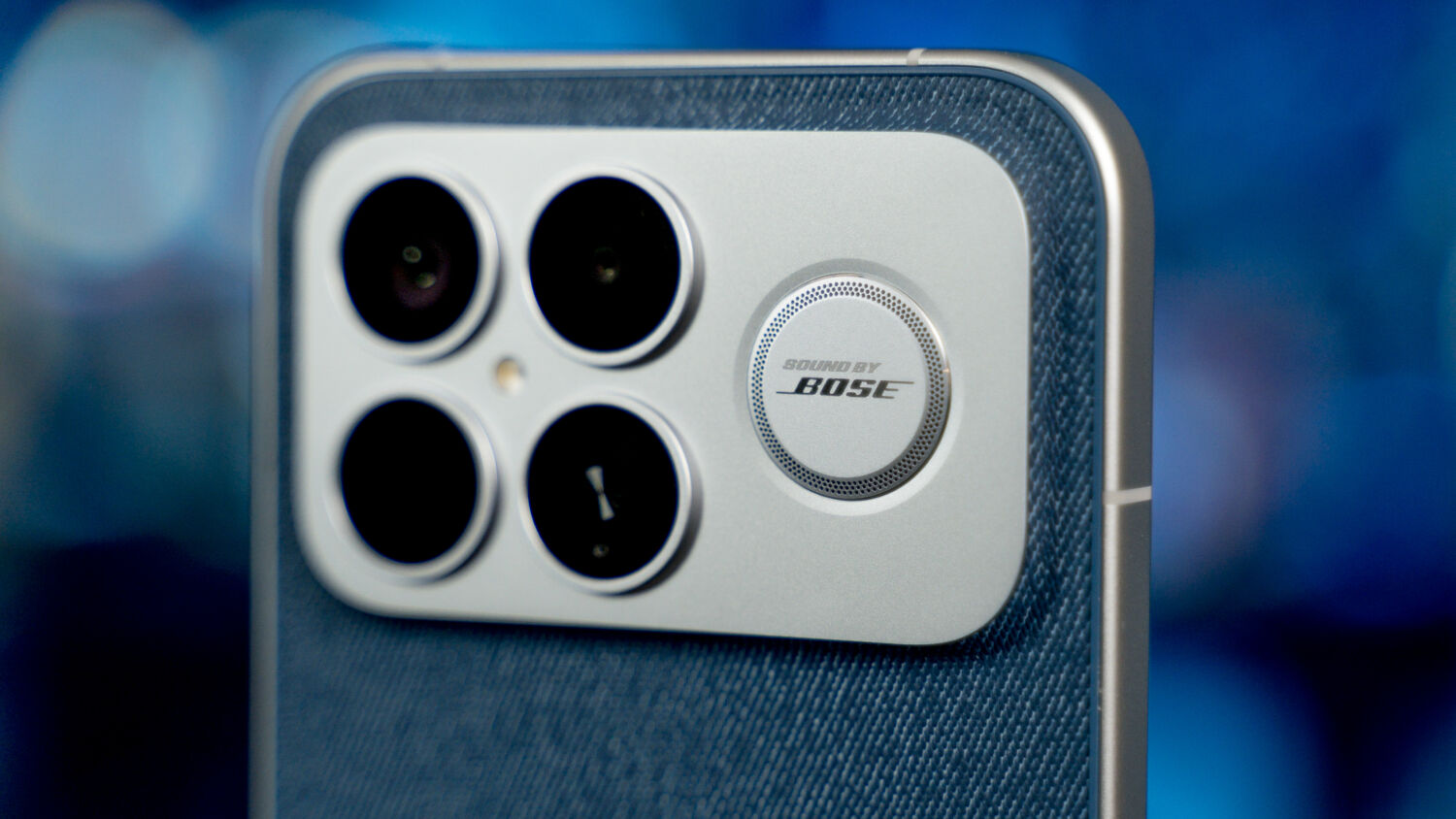
Compared to its aforementioned F7 predecessor, the biggest design difference the F8 Ultra brings is with regard to its rear camera module, moving away from the pill-shaped or circular cutout to a more traditional rectangular block that nearly extends from edge to edge, with the cutout’s four circular protrusions now housing its triple lens set-up, alongside its headlining feature, a dedicated subwoofer with Bose branding etched atop, but more on that later.
Much like the futuristic, almost modular design of the F7’s Silver colourway, the F8 Ultra sports a unique visual identity of its own, this time featuring a Denim Blue variant that, as its name implies, decks out the device’s rear with a textured finish rarely seen on smartphones.
While undeniably aesthetically pleasing, this design choice does introduce some issues, most notably that it trades fingerprints for stains instead, which is arguably harder to maintain. As the denim finish doesn’t extend to the rear camera module, the protrusion of the metal edge also feels more pronounced, resulting in discomfort when holding it horizontally, such as when watching videos or playing games. Using the included phone cover alleviates the issue but defeats the purpose of its unique design, making it a questionable implementation of aesthetics over practicality.

Like before, the phone only houses two control keys on its sides – a volume rocker and a power switch – with both sitting on its right edge. Its SIM card tray, USB-C port, and speaker are similarly laid out in an identical fashion, and even the phone’s overall chassis remains largely the same, measuring 16.3 x 77.8 x 8.3mm and weighing 220g (versus the F7’s 163.1 x 77.9 x 8.2mm and 215.7g).
Screen-wise, the F8 Ultra sports a 6.9-inch 120Hz AMOLED display, with a 2,608 x 1,200 resolution that’s surprisingly slightly lower than the 2,772 x 1,280 on the F7, with POCO also ditching the Corning Gorilla Glass 7i protection for their proprietary Shield Glass technology. Peak brightness has increased slightly, from 3,200 to 3,500 nits, which shouldn’t be noticeable unless viewed under direct sunlight.

In practice, these minor differences do little to mar the viewing experience most will expect, finding a balance between vibrant colours and not being too straining on the eyes, even in low light conditions. To enhance video content, the device also comes with an in-built Dual-core visual option, which uses a dedicated chip to improve video resolution, frame rate and HDR implementation. While this change is ultimately far from noticeable unless viewing content side-by-side, it’s nice to have the option nonetheless.
The F8 Ultra’s 6,500mAh battery also remains identical to the F7’s international model, and this also marks the biggest difference compared to its Redmi K90 Pro Max rebrand counterpart, which houses a larger 7,560mAh cell. Like the Redmi, the device also supports 100W wired fast-charging, 50W wireless charging and up to 22.5W reverse charging for power sharing.
Perhaps the biggest improvement the POCO F8 Ultra provides is its graphical prowess as the CPU chip has been upgraded to the latest Qualcomm processor – the octa-core Snapdragon 8 Elite Gen 5 Mobile Platform, pairing it with an Adreno GPU alongside a dedicated VisionBoost D8 chipset that promises improved details and AI Super Resolution.

Unsurprisingly, this enhancement translates to seamless navigation and stable performance even while juggling multiple apps, but that should be a given in this day and age. The true test lies in gaming performance, and the F8 Ultra does shine in this regard, running most titles like Destiny: Rising or PUBG Mobile without so much as a hitch. Even Zenless Zone Zero, a title infamous for making even the newest chipsets struggle, ran without any noticeable frame drops while in combat, with only slight dips while exploring the densely-filled Sixth Street in between missions.
A similar boost is seen with the F8 Ultra’s photography chops, as apart from its additional 50MP periscope telephoto camera added in its new tri-lens setup, the device’s two other shooters have also seen some tweaks. Its main 50MP wide lens, for instance, has an adjusted aperture of f/1.67 with a 1/1.31″ Light Fusion 950 image sensor, while its ultra-wide camera has seen a major boost from 8MP to 50MP. In the same vein, its selfie shooter has been improved slightly from 20MP to 32MP.






With these improvements, the F8 Ultra’s camera capabilities are now more in line with what you would expect from devices of its calibre. Shots are competent, but not perfect, with a heavy reliance on digital post-processing to sharpen the image, which makes the final image unnaturally sharp, and in the instance of human subjects, can make faces overly smooth.
Night shots see the same give and take, as while colour accuracy and contrast remain strong in low light conditions, light flares are quite noticeable throughout, especially from harsh sources like street lamps. Overall, the photography experience is an improvement, but far from outstanding, although to be fair, it’s clearly not POCO’s focus here, and should still serve well for any casual user.




The POCO F8 Ultra’s headliner then, is its Bose Technology-powered speakers and audio, which have been tuned in partnership with the American audio company. Housing a unique triple-speaker setup, the dual symmetric speakers are now paired with a dedicated subwoofer at its rear, and the phone is built for and by bass lovers, with the resulting soundstage presenting rich, deep tones without much noticeable distortion.
The downside of having such impactful bass thumps is that it tends to drown out the other aspects of a track, like treble or vocals, and while this might not be an issue to some, the device also features two sound profiles suited for various needs. Dynamic, the default option, puts bass centrestage, while Balanced, which presents a more even soundstage and largely disables the enhancements provided by the woofer, makes it more akin to other devices. Both modes support further equalisation tweaks, such as a spatial audio setting or the ability to enhance vocals.

Whether the F8 Ultra’s Bose-flavoured sound setup can entice buyers boils down to personal preference, with bass enthusiasts undoubtedly being the targeted audience, as the device’s subwoofer offers a truly unique audio experience not seen in any other device (except the Redmi). Those who desire a more balanced audio experience, however, might have to do some manual equaliser tweaking, as audio is still rather bass-heavy even on Balanced.
While its unique propositions are hit or miss, the POCO F8 Ultra still provides a strong overall package. At S$999 for its 16GB RAM and 512GB storage configuration, its minor downsides do little to mar its value, especially considering its excellent graphical performance and of course, a subwoofer-enhanced audio experience unlike anything else on the market.
GEEK REVIEW SCORE
Summary
The POCO F8 Ultra’s headliner triple-speaker Bose sound setup and unique denim finish might differ in appeal from person to person, but all the fluff hardly detracts from the device’s already solid foundations.
Overall
8.2/10-
Aesthetics - 8/10
8/10
-
Build Quality - 8/10
8/10
-
Performance - 9/10
9/10
-
Value - 7.5/10
7.5/10
-
Geek Satisfaction - 8.5/10
8.5/10

Kevin is a reformed PC Master Race gamer with a penchant for franchise “duds” like Darksiders III and Dead Space 3. He has made it his life-long mission to play every single major game release – lest his wallet dies trying.

 HSALS
HSALS
 Si Jia