
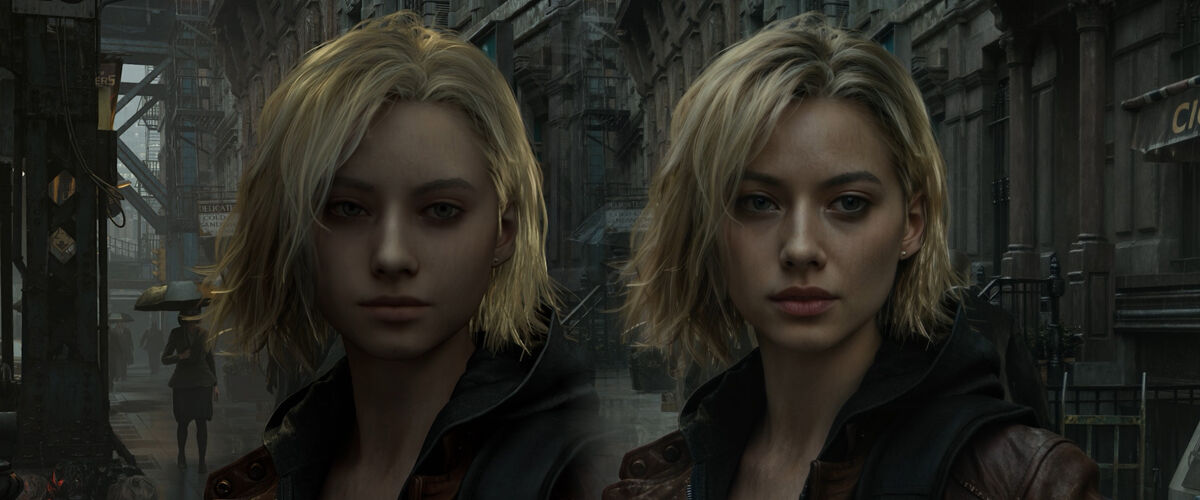
Nvidia has announced the next iteration of its Deep Learning Super Sampling model, DLSS 5, at GTC 2026, giving a first look at its headline feature – the ability to inject AI into video game scenes to make them appear more “photorealistic”.
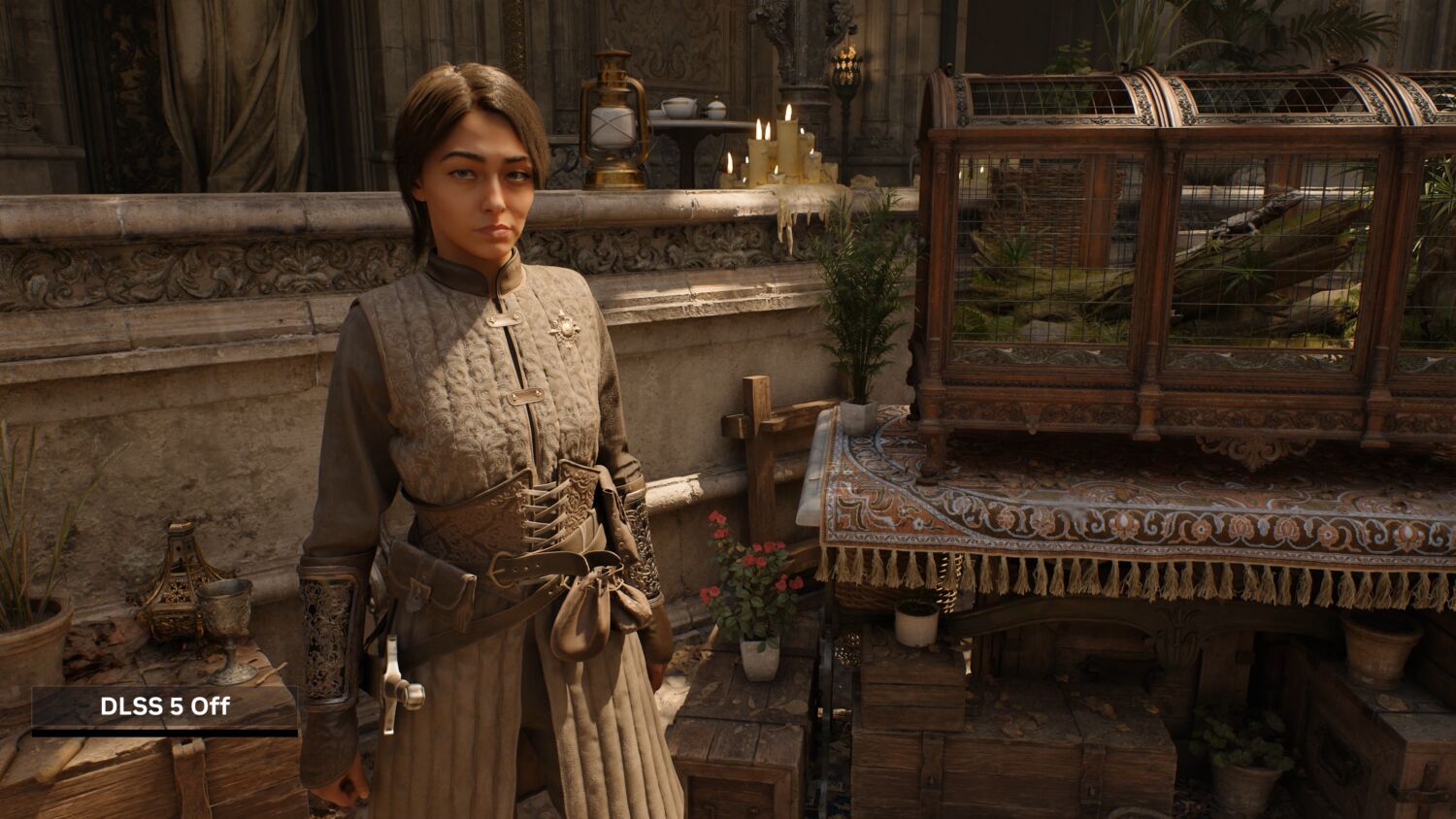
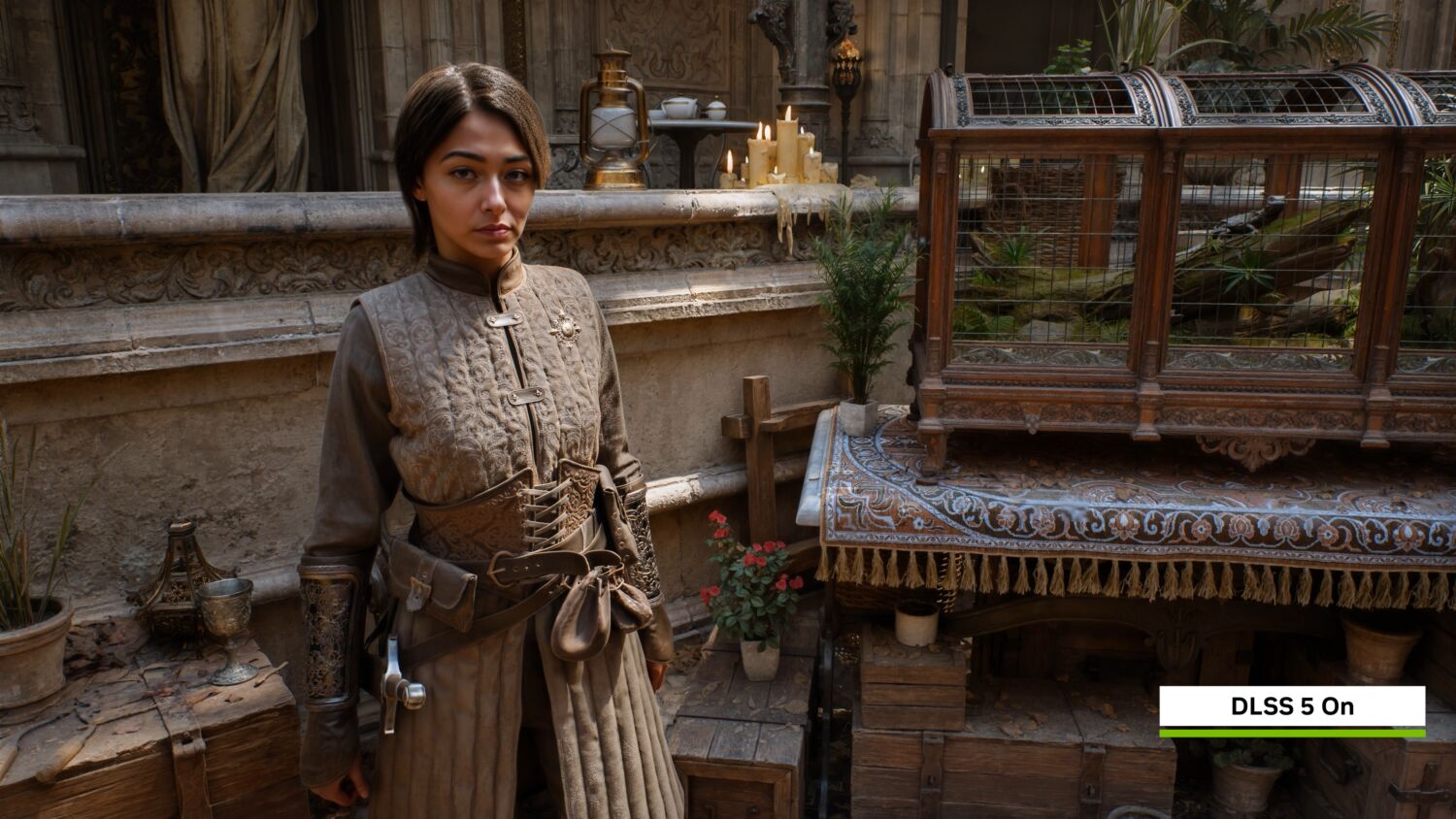
First released in 2018 alongside the RTX 2080 series of graphics cards, DLSS works by rendering games at a lower resolution and then using AI to upscale it, offering a boost in performance with a reduced loss in image quality. Over the years, each iteration of DLSS has offered sharper visuals and smoother framerates, with later versions even featuring support for Frame Generation, which further boosts framerate by two to four times.
Now, DLSS 5 is set to focus heavily on the image quality aspect, but not with regard to sharpness. Instead, it will now feature an AI model that injects a filter onto game scenes, adding new lighting and, more notably, new textures, especially concerning character faces. An announcement trailer showed off the technology being used in games like Resident Evil Requiem, Hogwarts Legacy, and Starfield, and the results look like each scene was ran through an AI filter.
According to an Nvidia blog post, the AI model is “trained end to end to understand complex scene semantics such as characters, hair, fabric and translucent skin, along with environmental lighting conditions like front-lit, back-lit or overcast — all by analysing a single frame.” DLSS 5 will then use this to generate images that feature “complex elements such as subsurface scattering on skin, the delicate sheen of fabric and light-material interactions on hair, all while retaining the structure and semantics of the original scene.”
Nvidia has not announced an exact release date for DLSS 5, nor has it announced how graphically intensive this new feature will be. Compatibility also remains a question, but considering the AI power needed to run such complex rendering, it will likely be limited to the RTX 50 series graphics cards with their Blackwell architecture.

Kevin is a reformed PC Master Race gamer with a penchant for franchise “duds” like Darksiders III and Dead Space 3. He has made it his life-long mission to play every single major game release – lest his wallet dies trying.


 Si Jia