
Think back to 2009 – you’re having a blast with Valve’s Left 4 Dead 2, mindlessly mowing down hordes upon hordes of the undead. Did you ever once stop and think to yourself, “You know what this game needs? A needlessly large and mostly empty map that forces me to spend more time driving around in a vehicle collecting resources, rather than shooting zombies.”
No? Exactly.
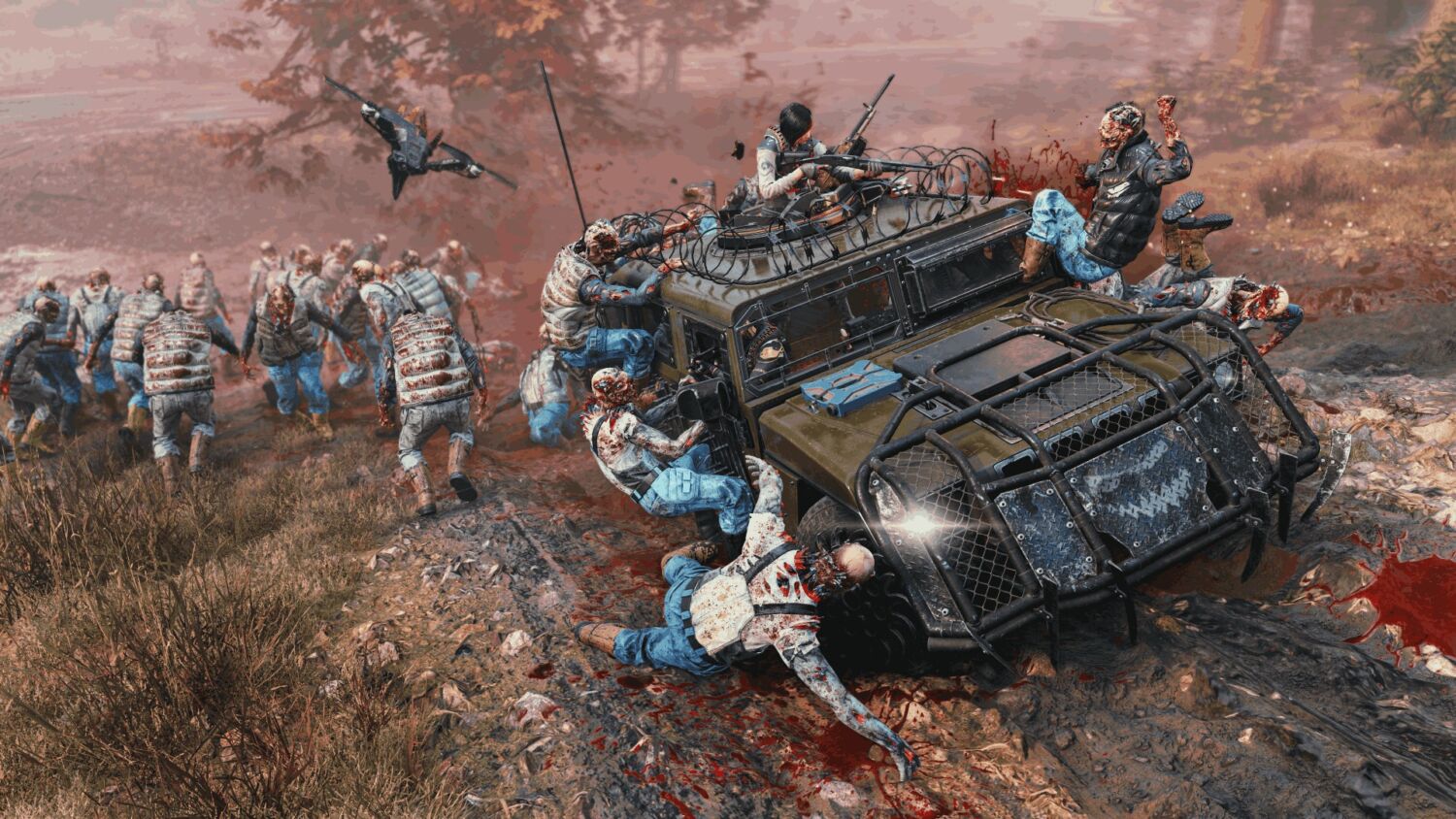
Zombie shooters are built upon the core idea that players can jump into a quick 20-minute shooting spree and let loose, as players unload hundreds of rounds as they indulge in pure zombie-killing bliss. Yet, John Carpenter’s Toxic Commando is what happens when a developer, who had previously all but perfected this gameplay model, decides to “shake things up” by slowing the action to a crawl.
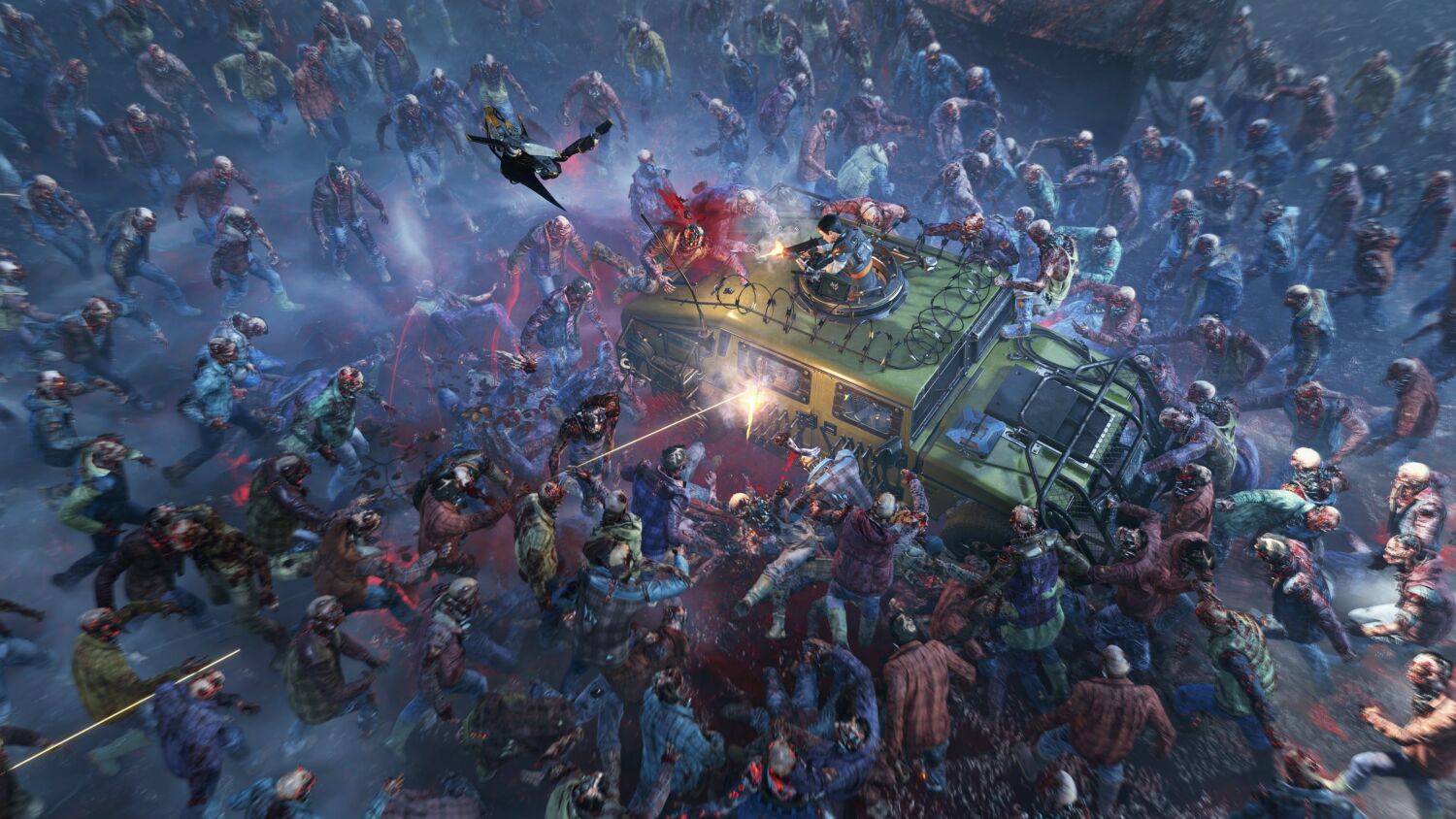
That’s not to say that Saber Interactive doesn’t know what it’s doing because this is the same studio responsible for one of the most refreshing modern takes on the co-op zombie shooter genre with 2019’s World War Z. Loosely based on the 2006 novel of the same name, that game looked like your run-of-the-mill horde shooter on the surface, but stood out from the crowd with one gaming changing addition, the Swarm Engine, its proprietary tech that was able to render up to 500 zombies on the screen at once.
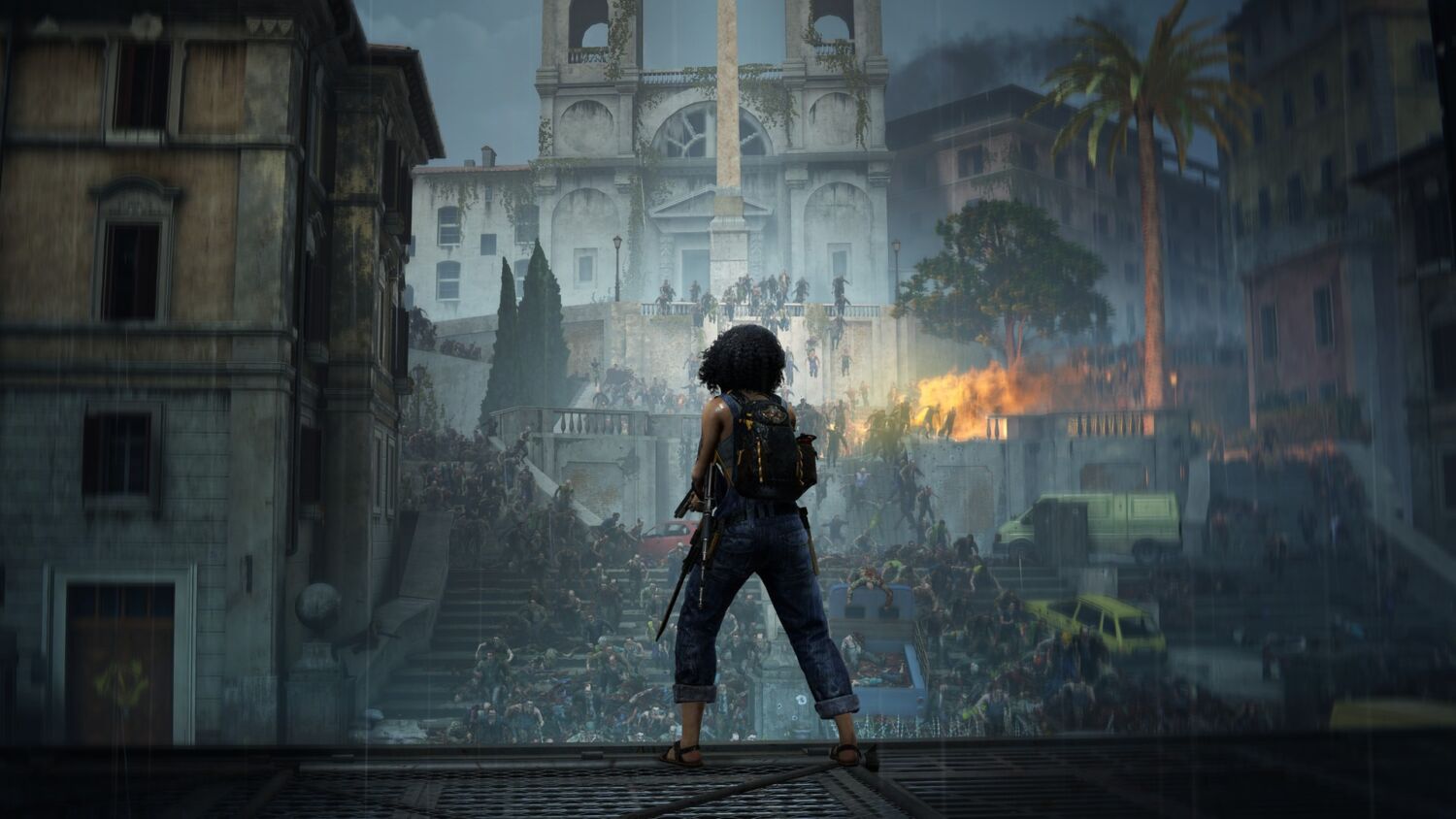
The result was revolutionary, as nothing beats the feeling of pure terror as hundreds of zombies descended upon players, with the notion that you and your team had to personally whittle their numbers one by one, especially when ammo is in short supply. Further adding to this excitement was the “Pyramid” system, where zombies would pile up over each other to form a pyramid structure, just like those seen in the 2013 film, to get to you. Still, this also provided players with the satisfaction of targeting the undead at its base, to cause the foul creatures to collapse in a glorious chain reaction.
Taking the learning lessons from World War Z, the studio would go on to push out another banger in the form of 2024’s Warhammer 40,000: Space Marine 2, bringing the horde shooter formula to the 40K universe and utilising the same technologies to render swarms of Tyranids instead. The skins were different, but the overall thrill remained the same, further cementing Saber’s pedigree as the modern zombie shooter kings.
With John Carpenter’s Toxic Commando, Saber is now aiming for a hat trick, relying on both the genius Hollywood mind behind horror classics like The Thing (1982) and Halloween (1978), as well as an emphasis on vehicular traversal, something unheard of within the genre, to carry the game to the next level. Unfortunately, the implementation of the latter was only to its detriment, as the over-reliance on vehicles, alongside the exploration and map design elements introduced to suit this new addition, makes Toxic Commando one of the most bland zombie shooters in recent memory, and a wasted opportunity all around.
Toxic Commando’s journey of monotony begins with its story, which sees a fictional universe where humans have resorted to drilling the Earth for new sources of clean energy. These efforts came to a sudden and devastating halt when their equipment drills too deep, accidentally unleashing the Sludge God, a massive subterranean beast that infects the world with a black, gooey sludge that turns victims into undead, mind-controlled husks.
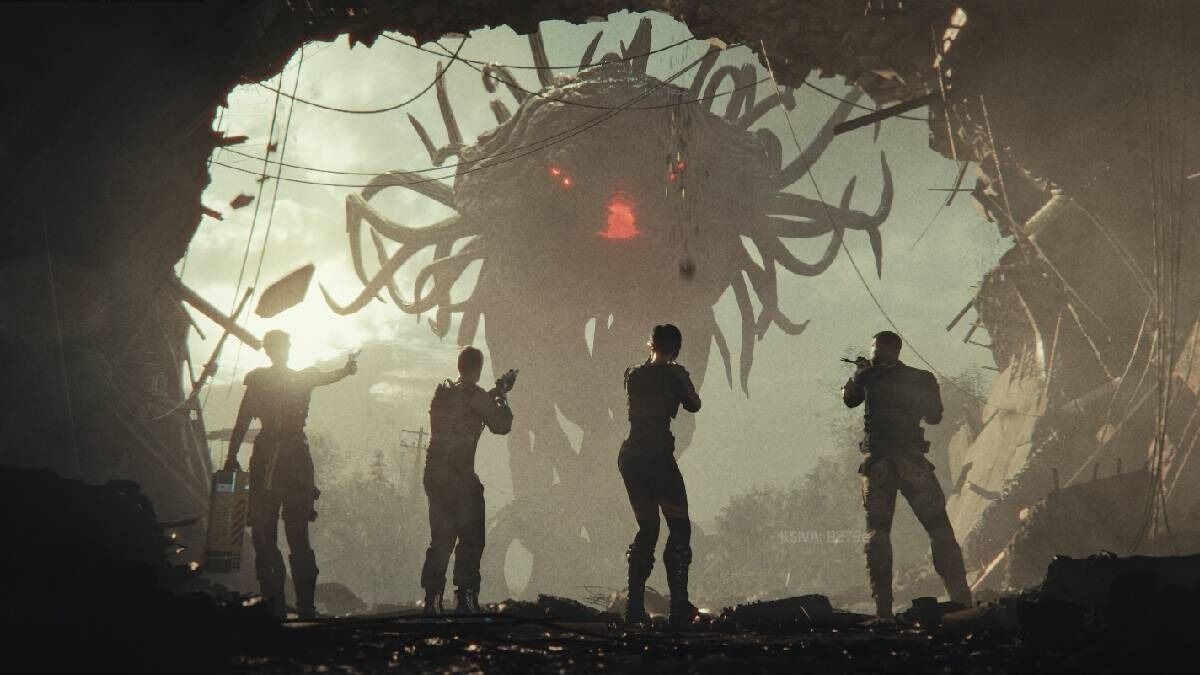
To combat the Sludge threat, the CEO of tech company Obsian, Leon Dorsey, hires a group of four mercenaries to transport a package that could end the Sludge God once and for all, but things quickly go wrong as the four come face to face with the beast itself and, destroying the package in a last-ditch effort to take it down, and getting infected themselves in the process. And so begins their journey, as four take on a variety of missions to rebuild the package, a Sludge-killing bioweapon, and destroy the Sludge God for good.
While the premise of tackling a subterranean threat is certainly interesting, Toxic Commando’s writing is anything but. Missions essentially boil down to the group going to different locations to fetch components and build the weapon, and lacks the same stakes such as the globe-trotting adventures centred on different countries fighting back against the undead seen in World War Z. Of course, the main point of these types of games is not their stories, and having a bland one is certainly forgivable, but what’s not is the title’s terrible dialogue and writing.
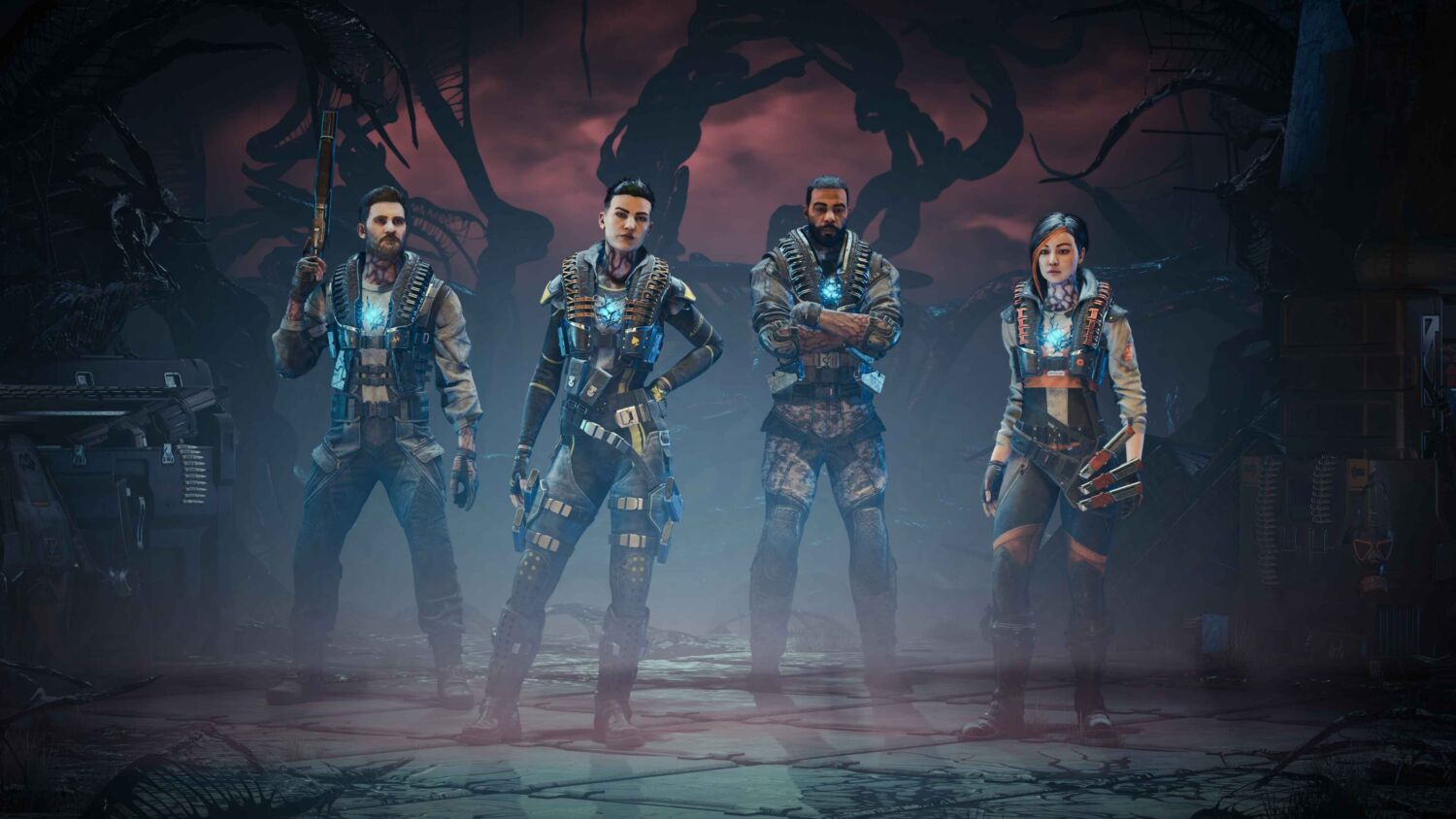
Inspired by the works of John Carpenter, Toxic Commando is obviously trying to capture that same cheesy 80’s vibe, but it unfortunately ends up being badly overdone and, more importantly, the writing just isn’t funny. Characters throw verbal jabs at each other constantly, and none of the jokes hit, resulting in dialogues of cringey one-liners and nonsensical back-and-forths.
It doesn’t help that most of its heroes fall under the usual tiresome tropes, with the self-appointed leader and his “main character energy”, the snarky ex-con-like character who always chooses violence and gets turned on by explosives, the overly-serious soldier, and the cool-headed Asian character. None of them stand out, resulting in a forgettable narrative that only serves to push gameplay along.
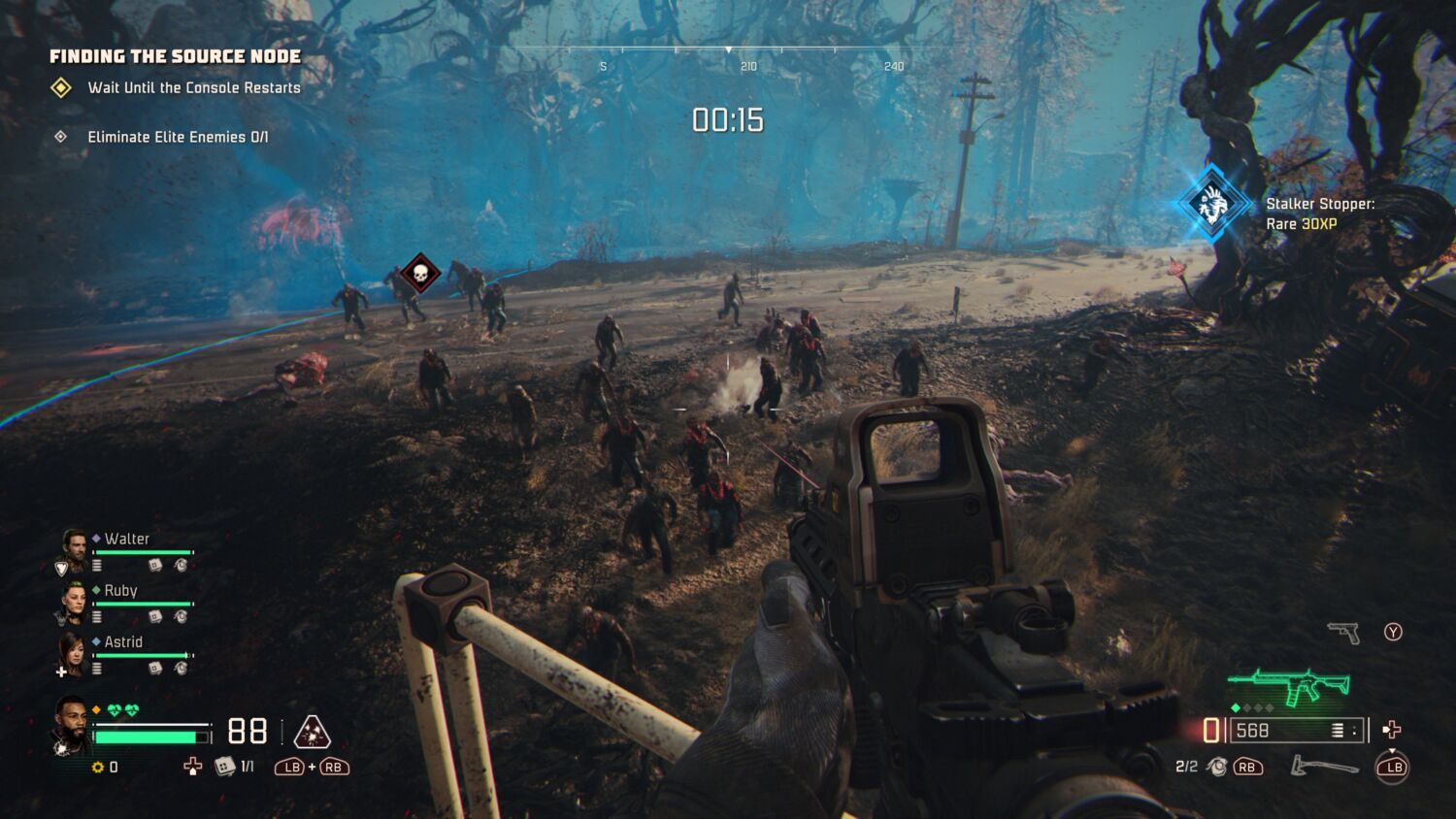
With this, it’s up to Toxic Commando’s gameplay to carry it as an experience, but once again, problems arise. It’s not all bad, considering that this is Saber’s debut first-person shooter zombie game and it absolutely nails down the FPS experience. Gunplay is top-notch, down to elements like realistic gun handling, animations and audio, adding a grounded yet visceral nature to gunfights and making moment-to-moment encounters constantly satisfying.
The problem then lies in almost everything else, key among them the game’s main selling point, the introduction of vehicular traversal and combat. The act of driving in itself isn’t the main issue, but more so, how the overall layout and design of its levels had to be altered to suit this addition.
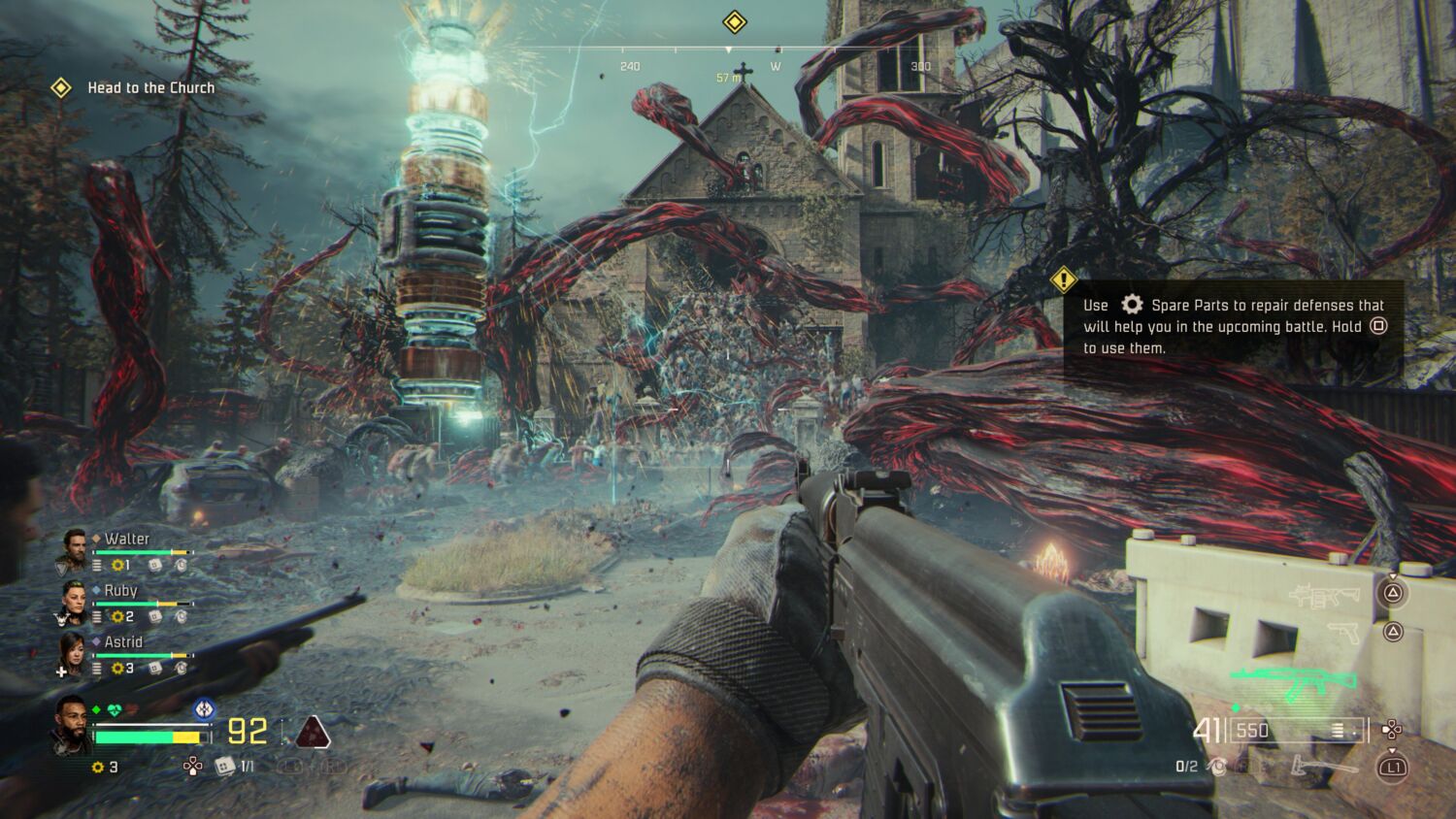
Unlike almost all other zombie shooters, which take place on a linear map with focused set pieces throughout, players are instead dropped into a semi-open area with randomised objective locations and items at different points, and it’s up to them to tackle these goals in any order they wish. These maps are also relatively large for genre standards, meaning the only efficient way to go from point to point is by driving vehicles scattered around the map, with the game providing a selection of different ones, each with its own special abilities.
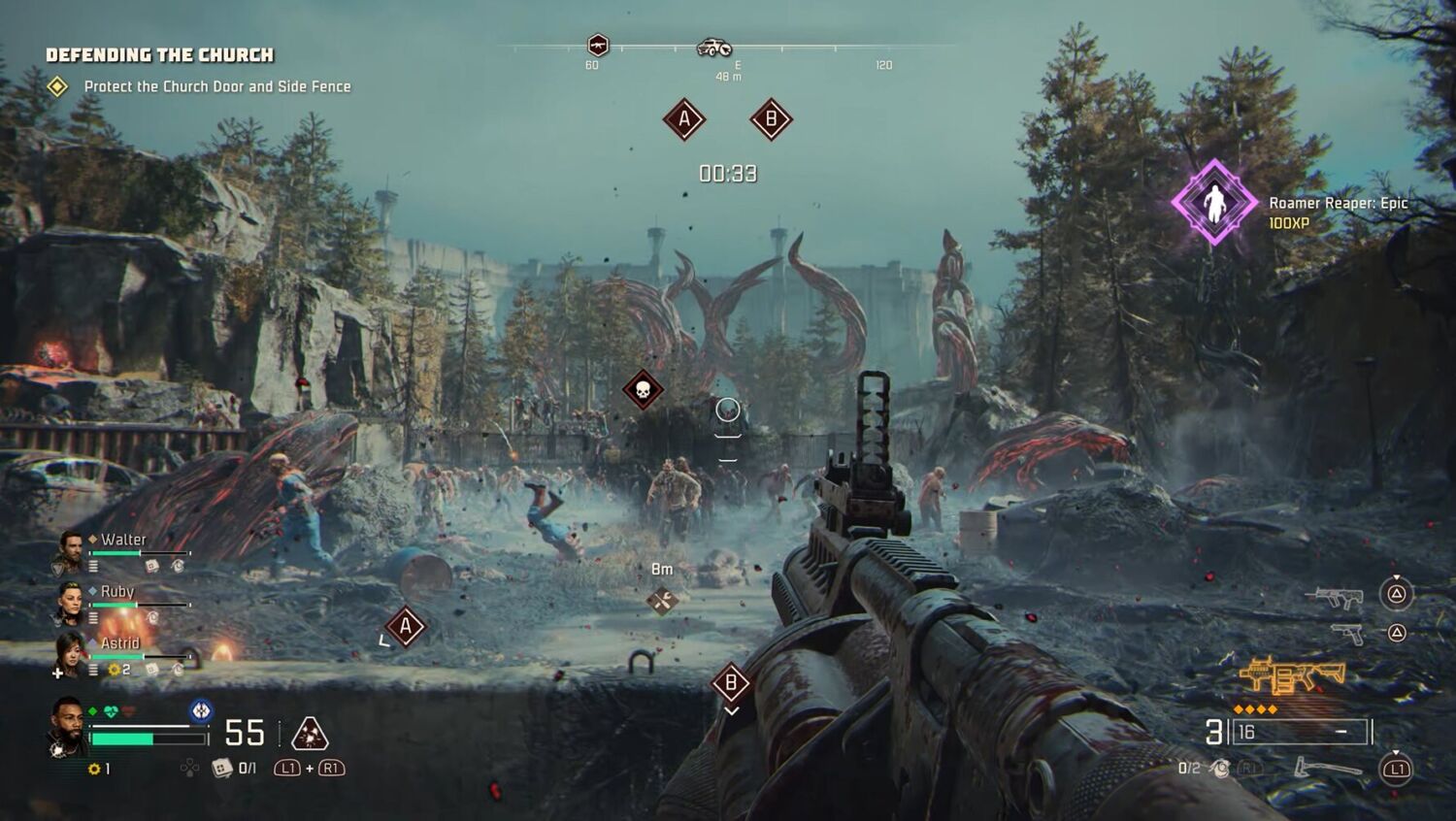
Players won’t simply spawn in and head straight to their objectives, however, as Toxic Commando also introduces resource gathering into the mix. In every level, players must first roam the open roads to various points of interest to collect valuable resources, such as Sludgite, the title’s main currency to unlock weapon upgrades and attachments, fuel and ammunition for their vehicle and its mounted weapons, and most importantly, Spare Parts, which they can spend to either unlock crucial defense installations like turrets or barbed-wire fences to take out hordes, or loot-box-styled containers with a random heavy weapon within.
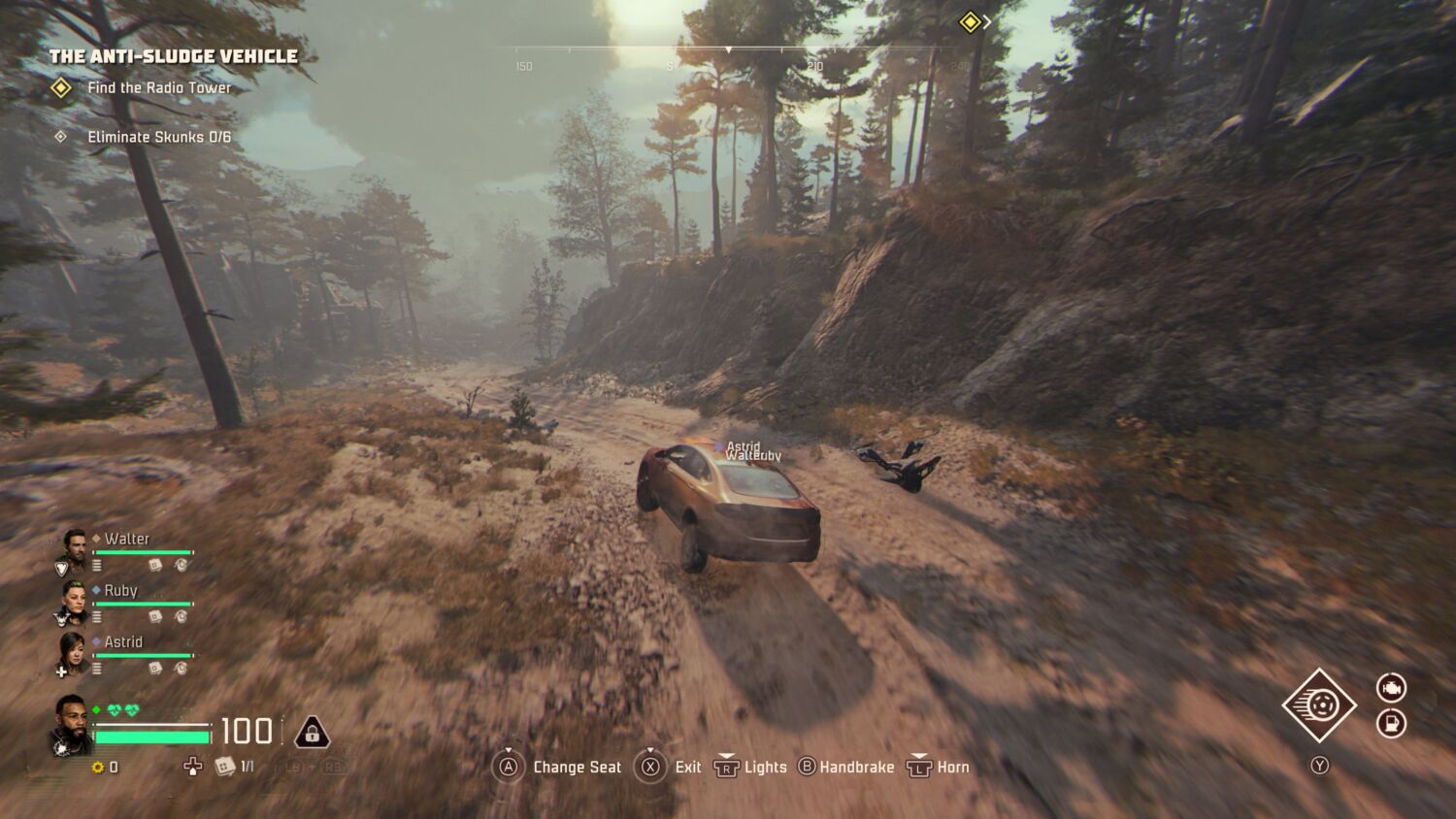
With so many things to manage at once, missions in the game end up being more about driving around to collect resources than actually killing undead hordes. Yes, players will still meet smaller groups of undead at every turn, but these pale in excitement compared to the signature horde showdowns seen throughout the genre.
To make matters worse, driving is nothing more than a chore to sit through. Controlling the various vehicles feels floaty and bland, exacerbated by the fact that they can move painfully slow at times. Roads in levels are usually filled with portions of thick sludge, requiring the use of the game’s winch system to progress, and with not all vehicles possessing a winch, this can lead to additional time needed to be spent side-tracking to obtain the required car.
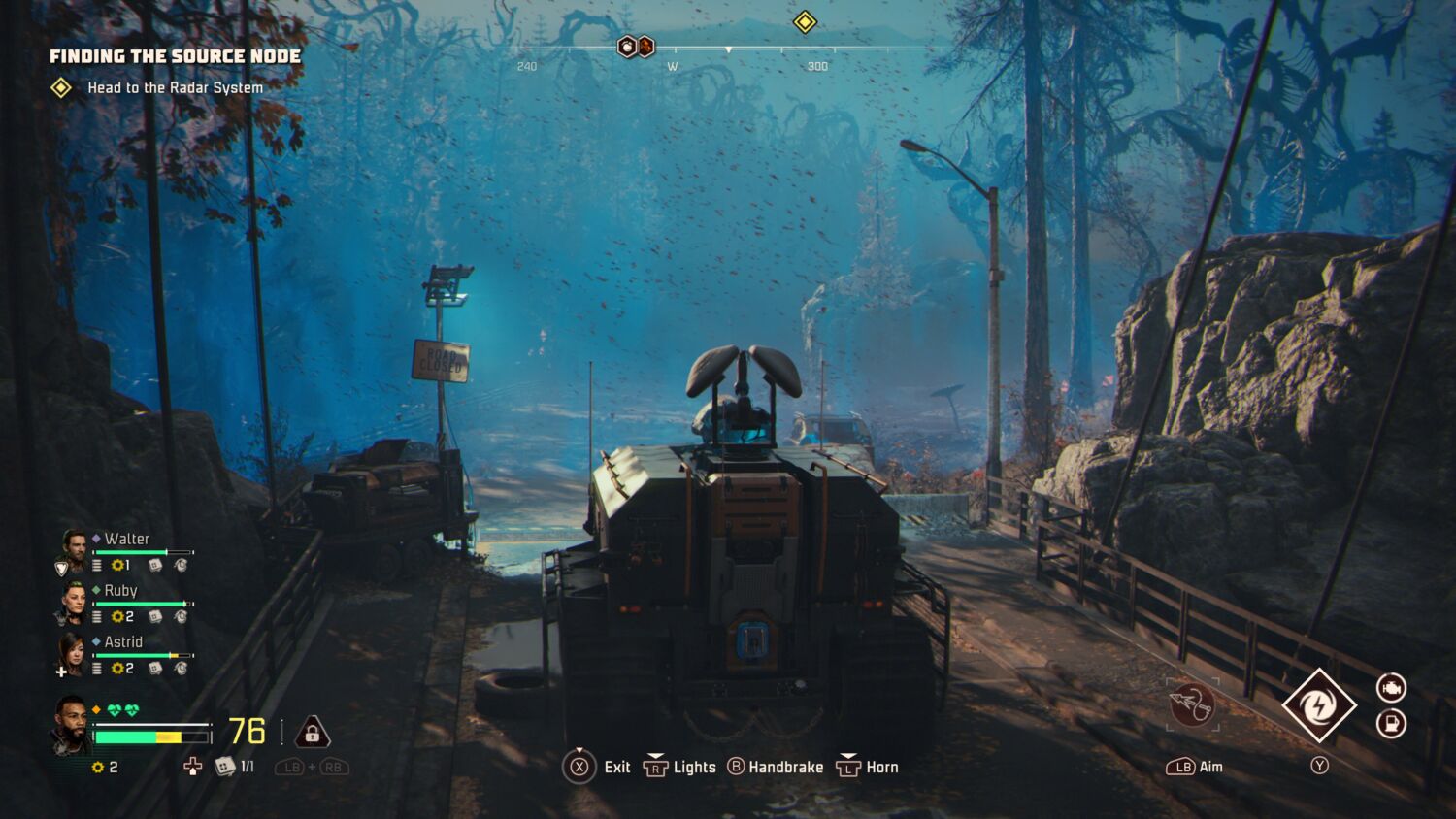
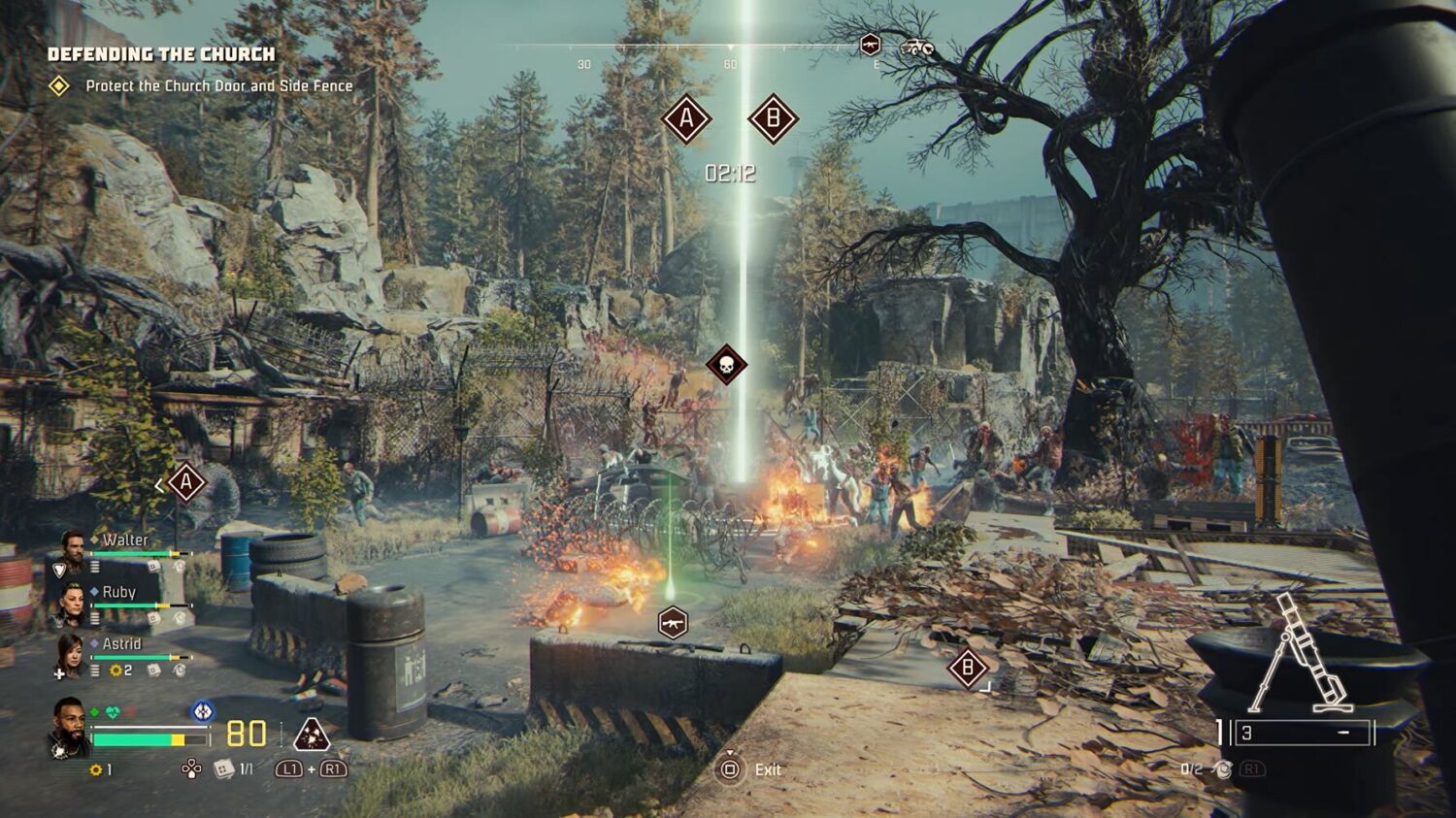
Thankfully, upon reaching the level’s main objectives, players will still need to survive against much larger undead hordes, with each level culminating in a grand showdown at a set location filed with placeable defences and multiple entry points for the impending undead hordes.
The issue here is that, final set-piece aside, every other objective takes place in a random area on the map, meaning Toxic Commando largely lacks the crafted encounters seen in other, more linear titles. Furthermore, instead of relying more on its impressive Swarm Tech system with exciting ‘last stand’ objectives with massive hordes to fight, Toxic Commando trades in focusing fire on zombie ‘Pyramids’ for shooting at big red growths over and over, and as you can probably tell, that’s not fun at all.
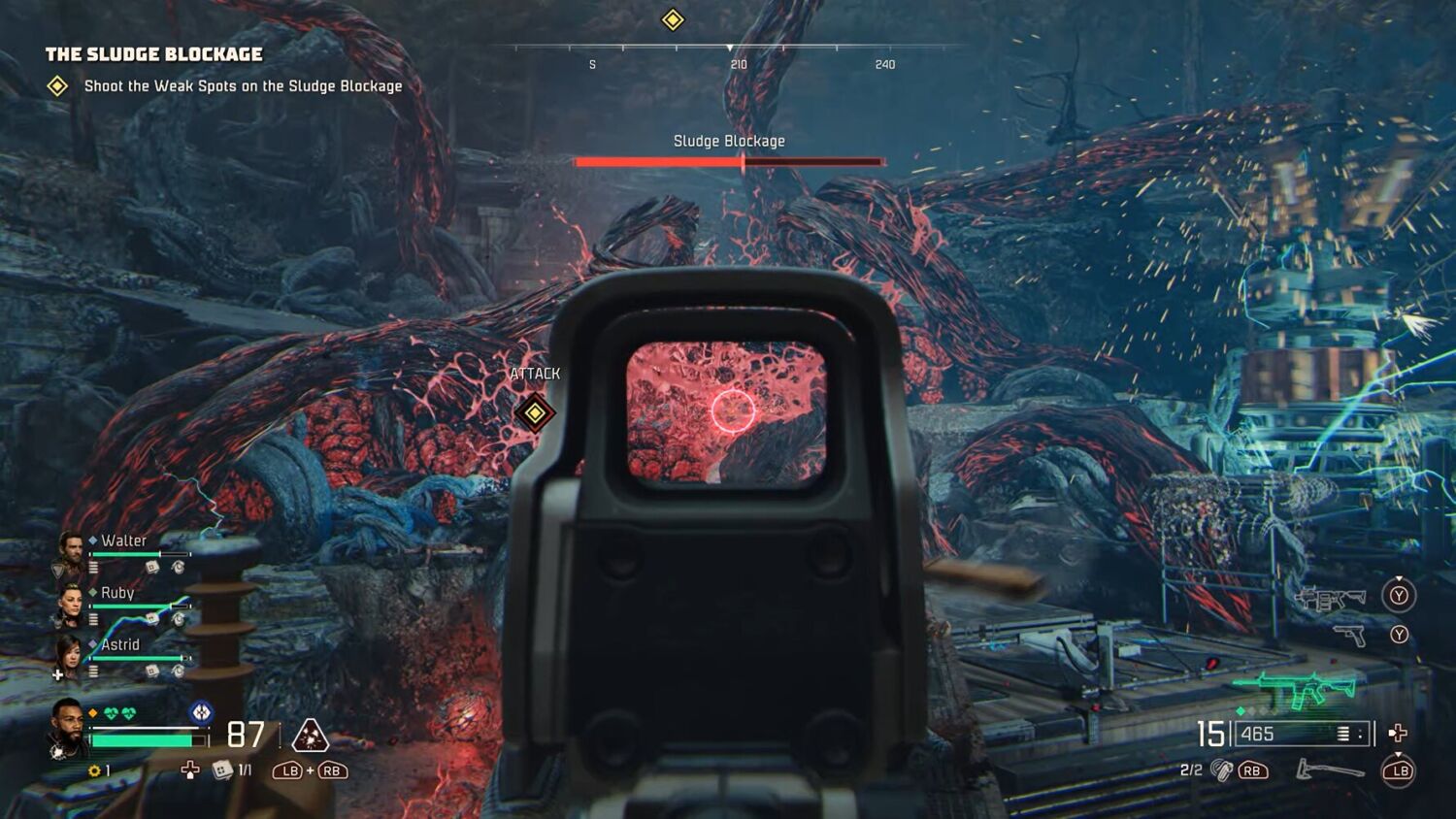
Essentially, this means that every level is 80 per cent busy work, and the remaining 20 per cent for the final horde showdown as the only interesting part. Even then, instead of clearing out zombies by yourself, missions usually boil down to just surviving a timer, following which an explosion wipes them out automatically, which isn’t as satisfying.
And then, there’s the game’s progression systems, which is a notable step down from its predecessors. While past genre titles offered a net stat upgrade for guns by levelling them up, Toxic Commando opts for a slightly more realistic route by making players buy gun attachments instead. The issue here is that gun attachments are expensive, and most provide both positive and negative stat changes, and with that, coupled with the usual ‘Tier Up’ upgrade that boosts damage, the game demands multiple repeat playthroughs before any significant improvements.
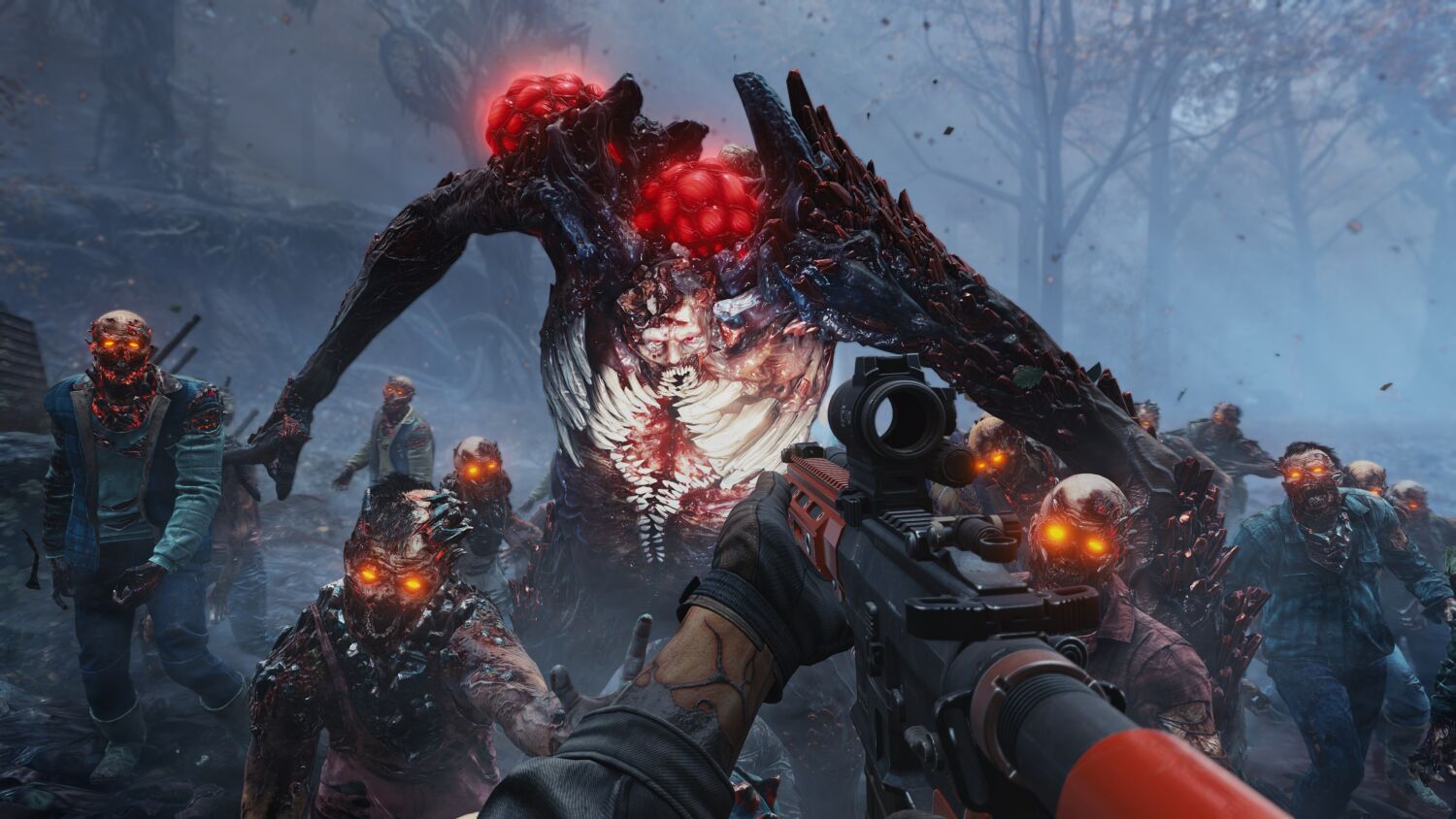
Finally, there’s the game’s visuals and enemy design, which look decent enough to suit its needs, but mark a huge wasted potential with just how generic the undead monsters’ designs are. With a mind like John Carpenter behind the game, one that dreamed up the grotesque titular beast inThe Thing, it’s a shame that Toxic Commando’s special infected designs are just bland.
Games like Left 4 Dead and World War Z had special infected that were designed to explain why those individuals gained their powers when they turned (Left 4 Dead’s hunter and his hood, its steroid junkie Tank, World War Z’s Bull and his riot police armour, or the Screamer with his loudhailer and construction getup). None of that finer worldbuilding is seen here, just different shapes of black sludge monsters with no personality.
For a studio with so much positive experience surrounding the co-op horde shooter genre, it’s truly a shame to see it fall short with Toxic Commando. The ideas here were clear – to introduce vehicles, something never before seen in the other titles, and tap on a known name for its world-building. The thing is, there was a reason why these systems didn’t exist in other games in the first place, resulting in a largely forgettable shooter, especially considering there are so many better options out there.
As a personal closing note, as someone who believes that World War Z was one of the finest co-op zombie shooter games ever made, even surpassing that of the Left 4 Dead franchise (don’t fight me on this please), John Carpenter’s Toxic Commando’s absolute disappointment hits especially hard. It’s a troubling sign of Saber Interactive’s complacency, and possibly the early signs of its fall from grace.
GEEK REVIEW SCORE
Summary
Oh, how the mighty have fallen. Instead of relying on Saber Interactive’s ground-breaking Swarm Engine for more magnificent undead horde set pieces, John Carpenter’s Toxic Commando instead trades this in for needlessly open-ended maps with a heavy reliance on bland driving. It’s not bad, it’s boring, and honestly, that’s so much worse.
Overall
5.8/10-
Story - 5/10
5/10
-
Gameplay - 6/10
6/10
-
Presentation - 7/10
7/10
-
Value - 7/10
7/10
-
Geek Satisfaction - 4/10
4/10

Kevin is a reformed PC Master Race gamer with a penchant for franchise “duds” like Darksiders III and Dead Space 3. He has made it his life-long mission to play every single major game release – lest his wallet dies trying.

 Joey Leong