Regardless of the medium, the superhero genre broadly exists to inspire its audience and to show that no feat or struggle is too great for the average Joe. On the other hand, fighting games appeal to those who strive to hone their skills in executing combos and knowing when and where to strike. Throughout the history of video games, players have reaped the fruits of these genres colliding to produce memorable titles, including 1998’s Marvel vs Capcom (MVC), but few have successfully told tales of heroism that both tug at the heartstrings and entertain with hours of fighting-game content.
Fortunately, Arc System Works (Arcsys) and Sony PlayStation’s Marvel Tōkon: Fighting Souls have managed to boldly and beautifully bring these two genres together, masterfully telling inspiring stories of heroism spearheaded by Marvel Comics’ iconic superheroes and villains, while also keeping fighting game fanatics on their toes with engaging and extremely accessible combat mechanics for both veterans and newcomers alike.
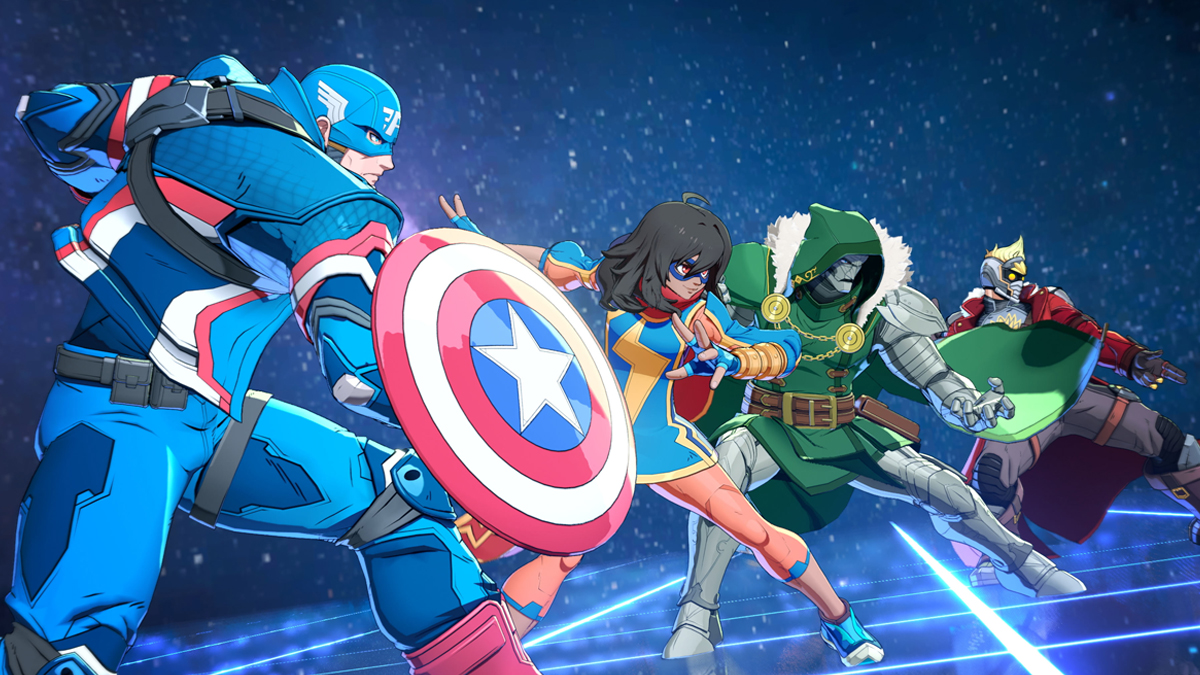
No doubt, the main draw of Marvel Tōkon: Fighting Souls is that it’s a 4v4 2.5D tag-team fighter, allowing players to assemble their dream team of four heroes and/or villains, and pit them against each other by depleting just one shared health bar in combat. Think of this as the next-generation Marvel Team-Up, where three heroic Avengers and the evil Doctor Doom meet Wolverine, Green Goblin, Storm, and Blade, and only one group can win.
The novelty of mashing superhero dream teams together is not unfamiliar territory, as players have been doing it since Marvel Ultimate Alliance, and have done so since the last one in 2019. Yet as much as we’ve seen so many variations of our Captain Americas and our Peter Parkers, Marvel Tōkon: Fighting Souls has not failed to tell their version of wholesome heroism through the way they overcome personal struggles amid the threat of typical world destruction.
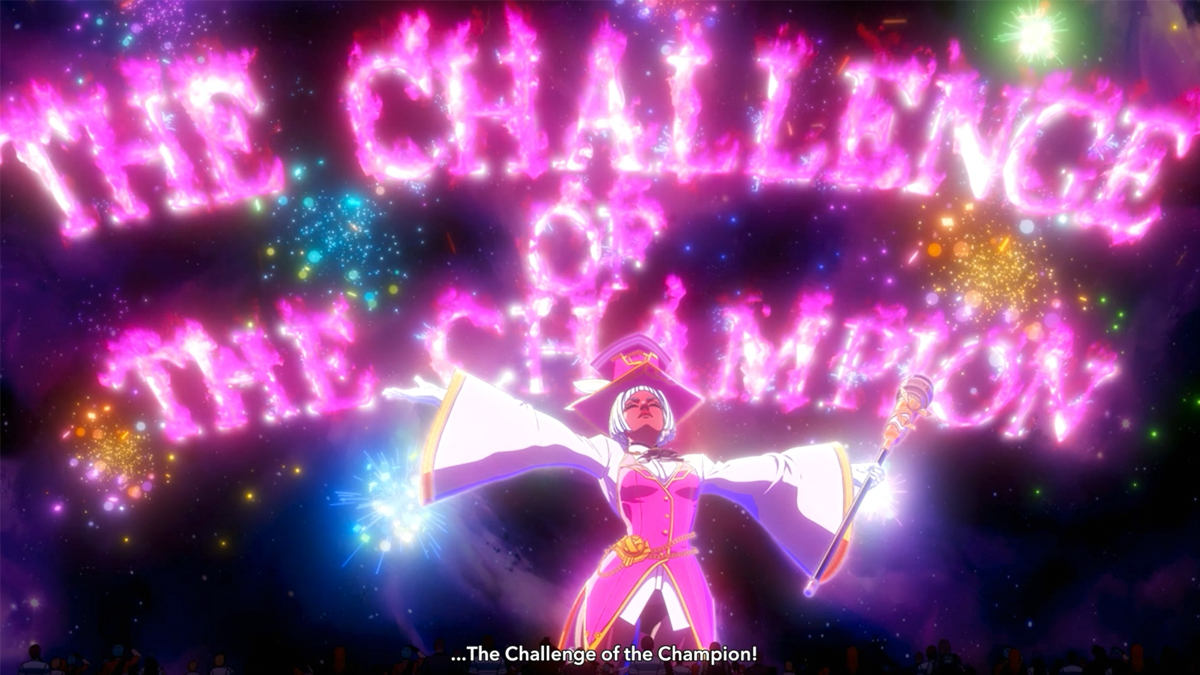
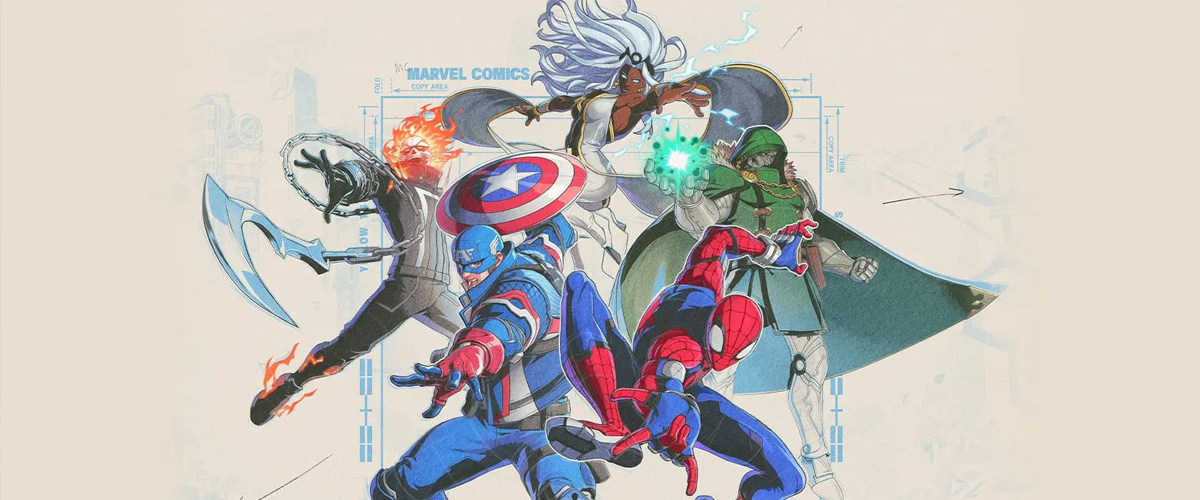
The Episodes – the first option in the game’s main menu – is where this characteristic shines. At launch, the game offers 5 different perspectives (or teams) of the same storyline: The Champion of the Universe, a master cosmic pugilist, has set his eyes on Earth to find worthy opponents to fight. Choosing 5 different individuals – Captain America, Storm, Spider-Man, Ghost Rider, and Dr Doom – each must assemble their team of four and prove themselves by fighting each other to face the Champion of the Universe eventually. Failure to win the Champion results in the “destruction” of the world.
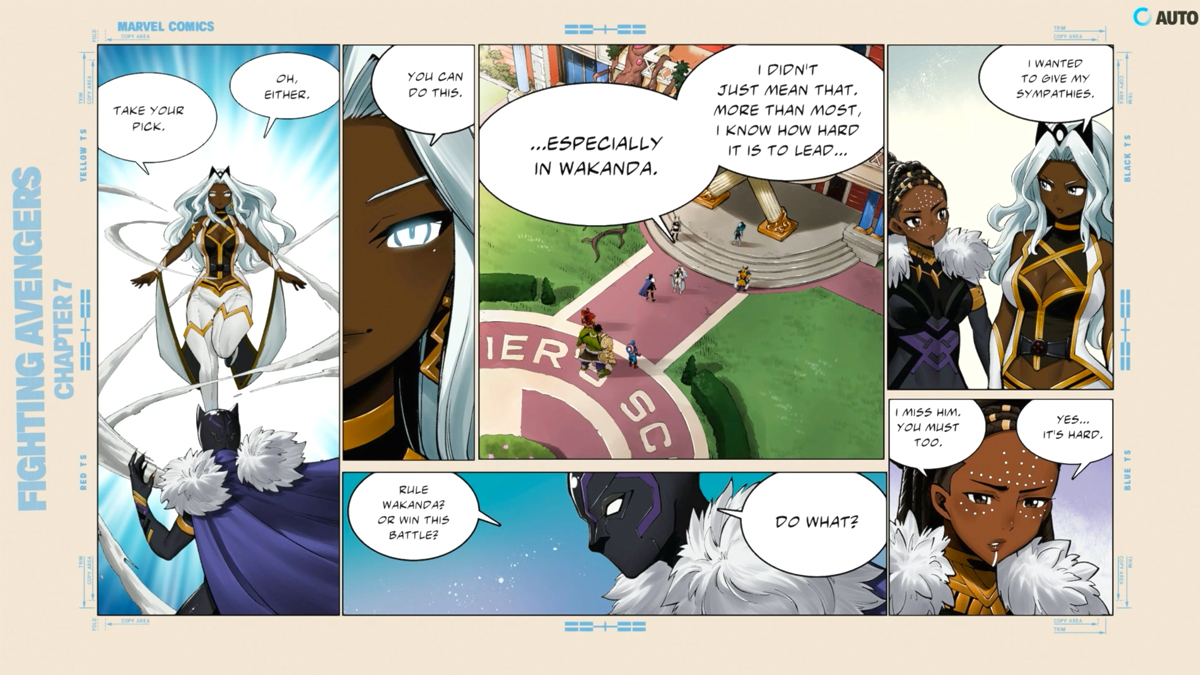
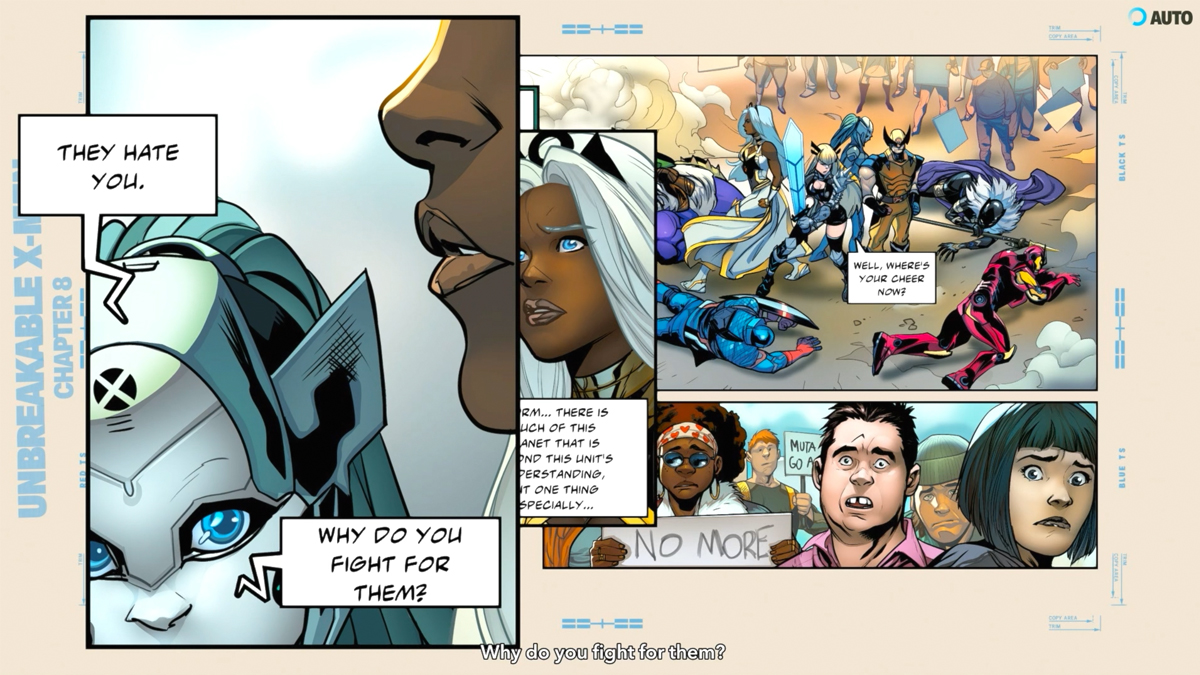
Although each team goes through the same story beats and major anime-inspired skippable cutscenes, and each perspective can be completed within an hour or so, these episodes are more than just stories of superheroes successfully fending off a cosmic threat. Each story, told through intentionally animated comic panels that read like manga, demonstrates the nuances of the characters’ motivations within their respective teams. For example, if the player chooses the “Fighting Avengers” as the protagonist team of the story, Captain America chooses to save Earth and those endangered by the vision of the Champion just because “it’s the right thing to do”. Meanwhile, if the player chooses the “Unbreakable X-Men”, the journey to face the Champion becomes one in which they question whether humanity is worth saving, despite being hated by the very race they strive to save.
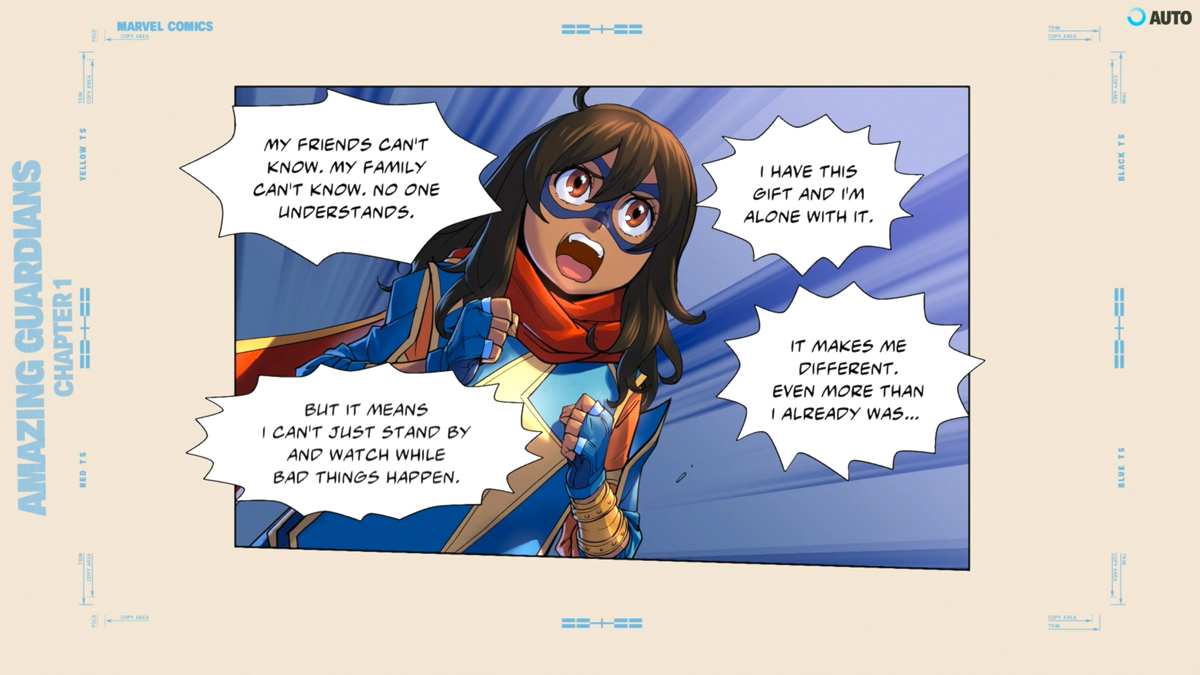
These stories are elevated by the way each perspective is drawn and animated by different artists. The team led by Spider-Man, “The Amazing Guardians”, tells a story of how small-time neighbourhood heroes like Ms Marvel can find their place and prove themselves to be worthy to conquer larger-than-life challenges through the mantra of “With Great Power Comes Great Responsibility”, and this story is presented by manga artist Betten Court (My Hero Academia) in an almost chibi-cute-like fashion.
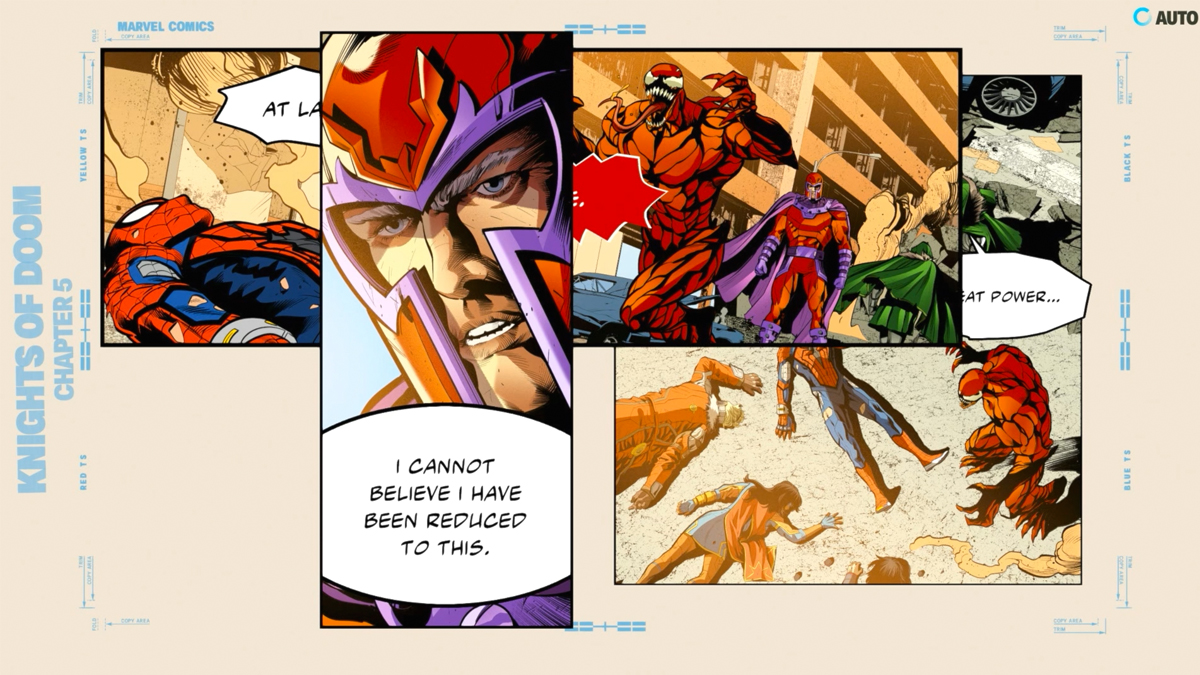
Meanwhile, Doctor Doom’s storyline, “Knights of Doom”, is presented in a more mature light, with each character drawn by Mike Deodato Jr. (Wonder Woman) representing more realistic character proportions and facial expressions, depicting his quest to dominate the Champion of the Universe out of pride and spite.
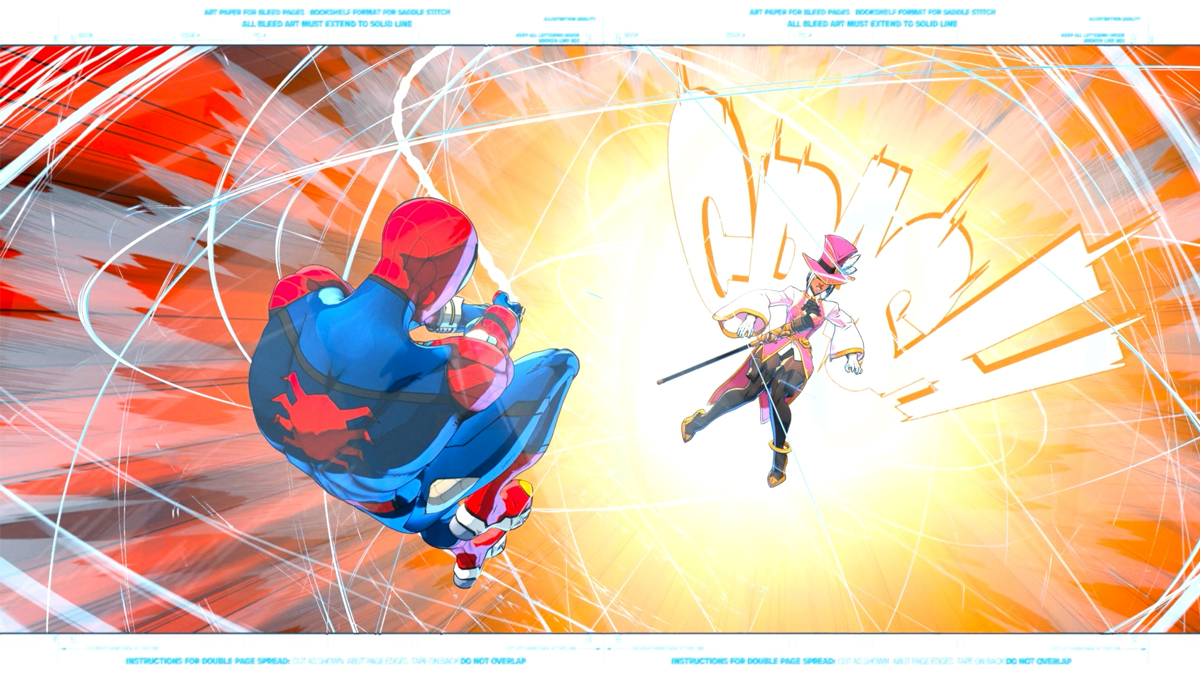
It’s commendable to tell these stories across a range of philosophies through different art styles, yet it fits so consistently with the game’s art direction. On top of the main bulk of the game, where characters fight and colours pop, the game’s entirety is presented as mock comic book draft pages, with menu and character selection screens showing margins like “Trim” and “Copy Area”. It shows that a lot of heart and soul has been poured into Marvel Tōkon: Fighting Souls not only as a fighting game but also as one that leans heavily into the pages of comic books as powerful media of storytelling – and all of this in a game!
That said, the Episodes are a perfect way to get a sense of the entire roster of 20 characters, and eventually inform you of which ones should be included in your team that fit your playstyle, as the chapters in each perspective eventually allow you to experience every available character at launch. These episodes, on top of a dedicated tutorial, also teach you the core and basic concepts of how to play the game.
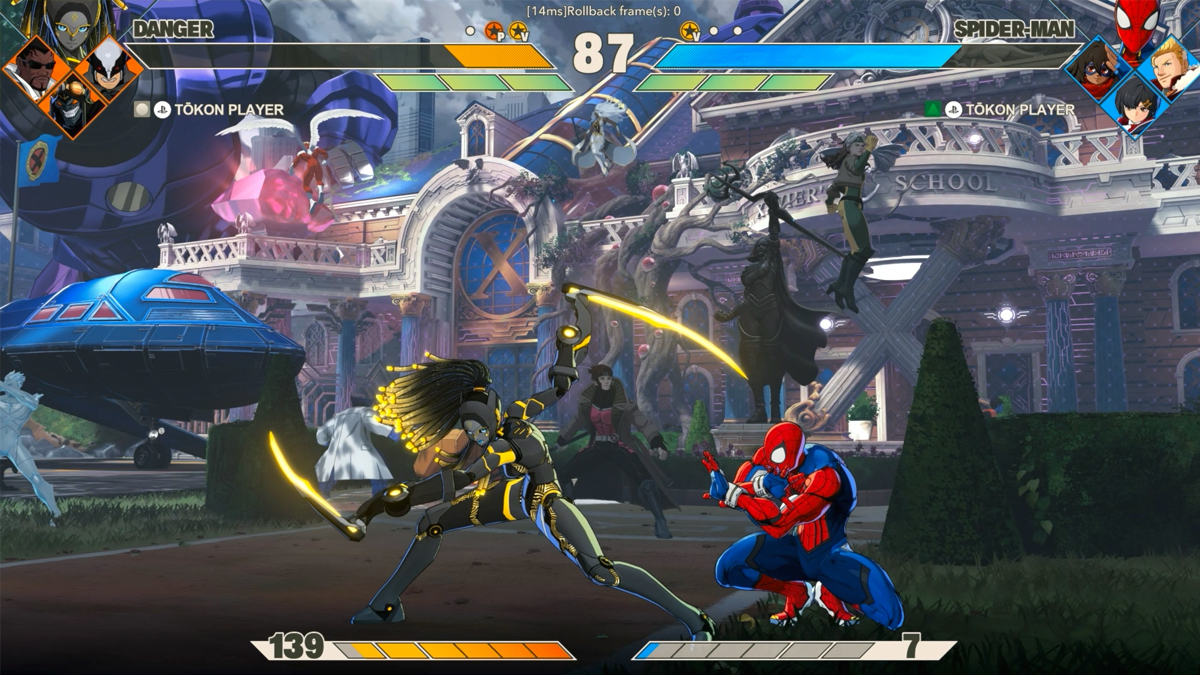
Attacks in Marvel Tōkon: Fighting Souls are defined by Light (L), Medium (M), and Heavy (H), and there are Assist buttons that allow you to call forth your three other fighters, who can substitute for the fighter currently being played. This mechanic gives rise to essentially two ways to enjoy the game’s combat. Those unfamiliar with fighting games can get by by simply mashing the LMH buttons, which will still execute cool combos that lead to unique finishers. On the other hand, those looking for a challenge can look through the command list and remember the correct command inputs, which, when executed properly and sensibly, allow them to squeeze added damage and prolong combos. This system allows fighting game veterans and newcomers to enjoy Marvel Tōkon: Fighting Souls at their own pace and, in some sense, bridges the gap between pro and casual play, as one playstyle depends on impeccable execution of moves and the other alleviates the stress and pressure of executing command inputs, and focuses more on when to strategically use their respective LMH combos.
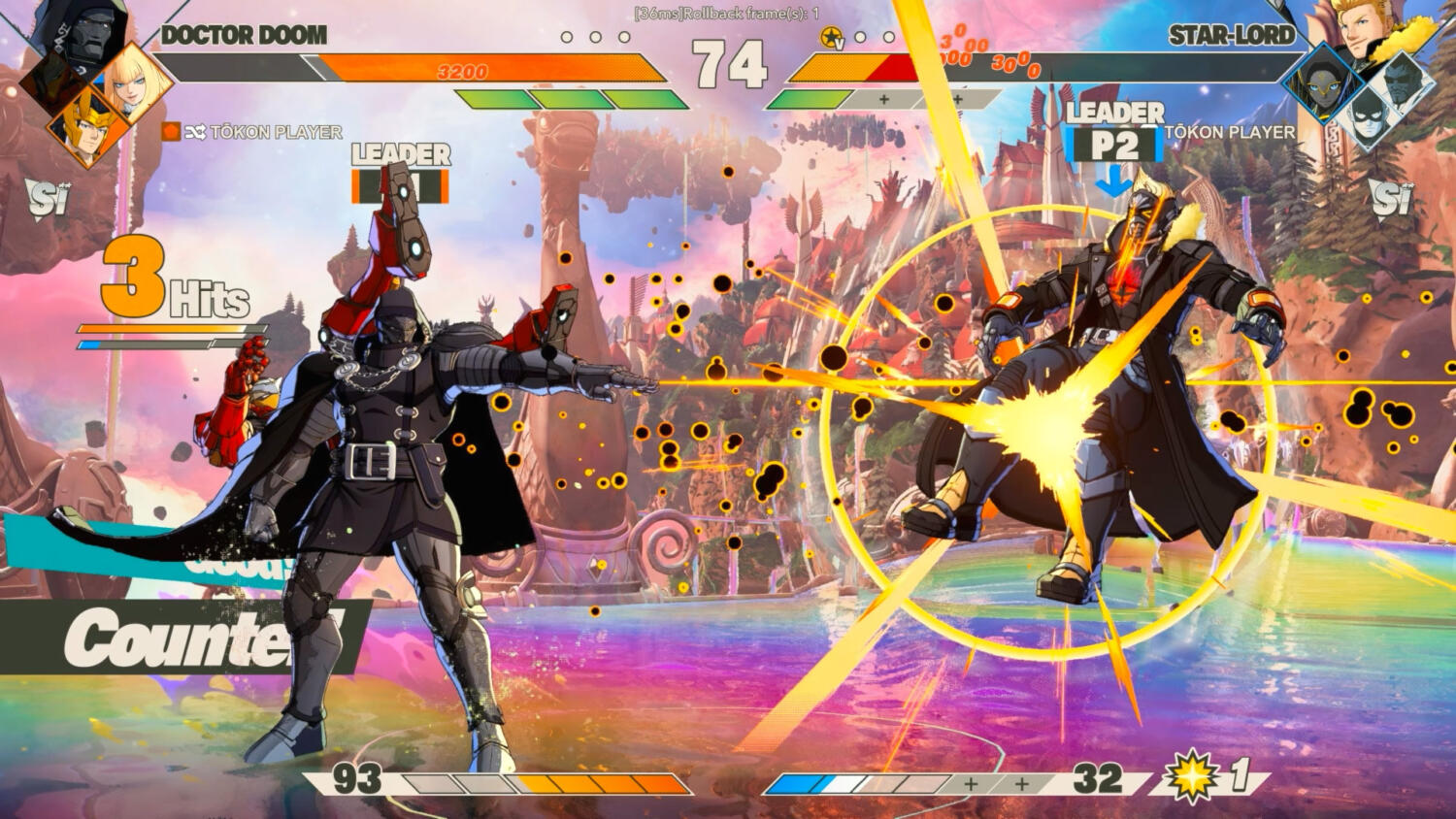
Interestingly, the roster of Marvel Tōkon: Fighting Souls does not necessarily fit the common archetypes of 2.5D fighting games. Instead of embodying these archetypes wholesale, each character draws on various elements of these archetypes while possessing unique abilities that encourage exploration to suit the playstyles of different players. Unlike games like Guilty Gear Strive (2021), where there are dedicated grapplers and zoners like Potemkin and Venom, characters like Doctor Doom in Marvel Tōkon: Fighting Souls share traits of being both a zoner and rushdown character, as he can strategically deploy energy shields that can damage opponents at a distance while hashing out brutal and quick combos for wall splat pressure.
Characters like Ghost Rider encourage mix-up moves, which keep opponents guessing, using Judgement Cradle as he swings his hook and chain for heavy damage, which can also lead to an overhead heavy move, a low slide, or even a grapple. Additionally, Ghost Rider has a “Vengeance Gauge”, a speedometer-like gauge that increases by performing his unique moves and makes them stronger over time. However, if he over-utilises his abilities, the gauge hits a “Red Zone”, which puts him in a cooldown and vulnerable, stunned state.
As every character has their own unique abilities, possibilities for play and mixing them around to optimise combos are near endless, even with the base 20 characters in the roster, and yet, although this may sound daunting, picking up a character and getting to know how to play them properly is not difficult. Every character only has a handful of fewer than 10 skills to learn, and even if new players are clueless as to how to effectively utilise them, the game has a “Character Lesson” mode that spells out what makes each character unique and how they can chain these special skills together to make combos.
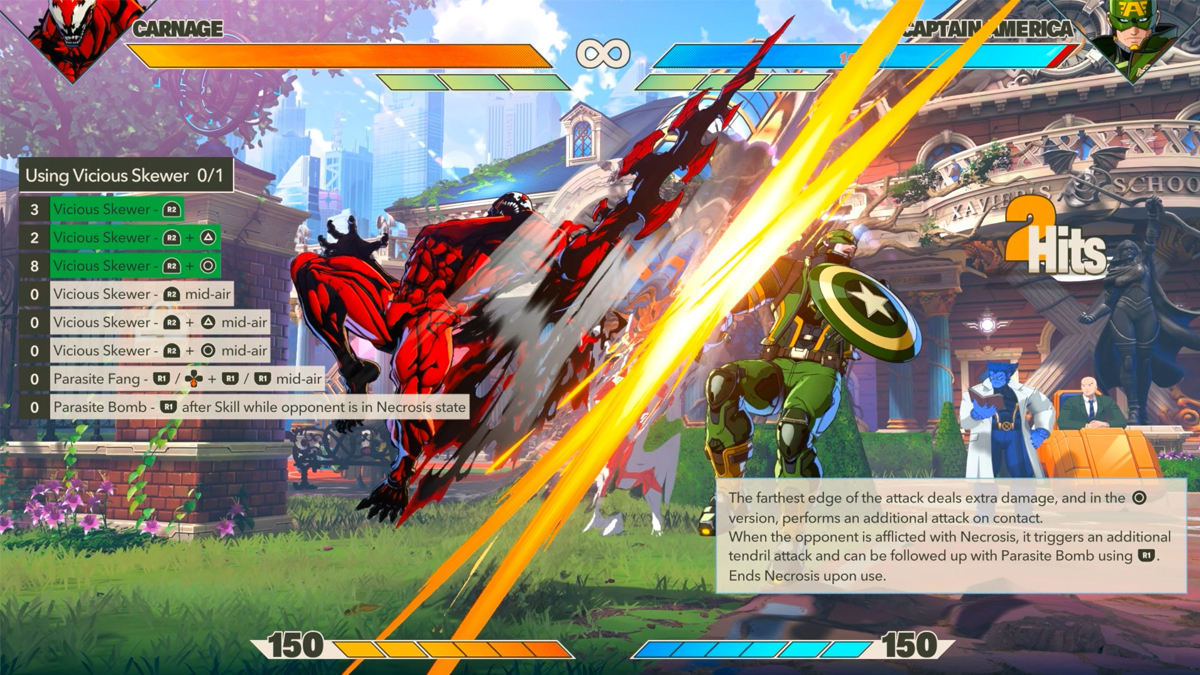
These “Character Lesson” modes not only show unique moves that players should pay attention to, but also show players the buttons that need to be pressed step-by-step to successfully execute core combos. Similar to games like Tekken 8 (2024), those looking to improve their skills can access a visual demonstration of how to press the buttons and how combos should look when executed properly. Those looking to improve their skills can also switch on real-time statistics, such as frame data.
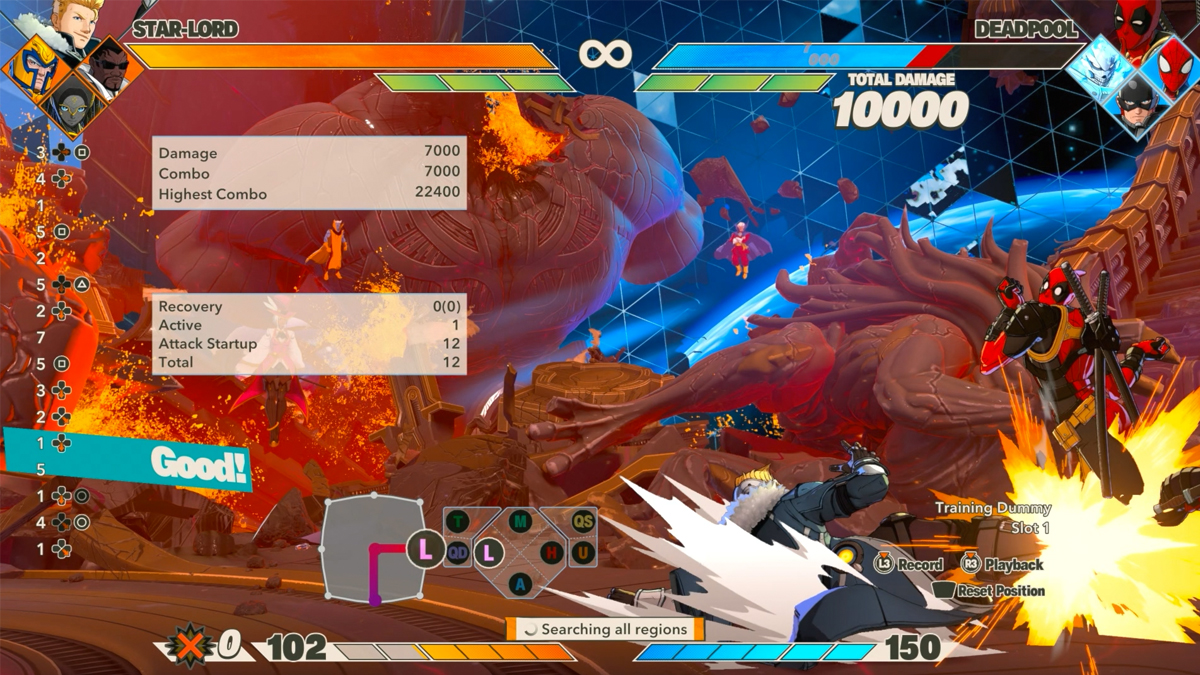
But as much as these features provide accessibility for newcomers to improve their game, the User Interface is not as intuitive to navigate. For a start, in order for players to access a demonstration of what a string of combos should look like, they will have to pause and select “Playback Sample.” A similar feature in Tekken 8 can be achieved simply by pressing the touchpad and square button. Additionally, should players want to switch on Frame Data or even select various control settings for their training dummy, they will need to pause and change the menu type, which brings an arbitrary and unnecessary extra step for a feature that is frequently utilised for pro players. Nevertheless, these are quality-of-life gripes that can perhaps be easily addressed in a later patch.
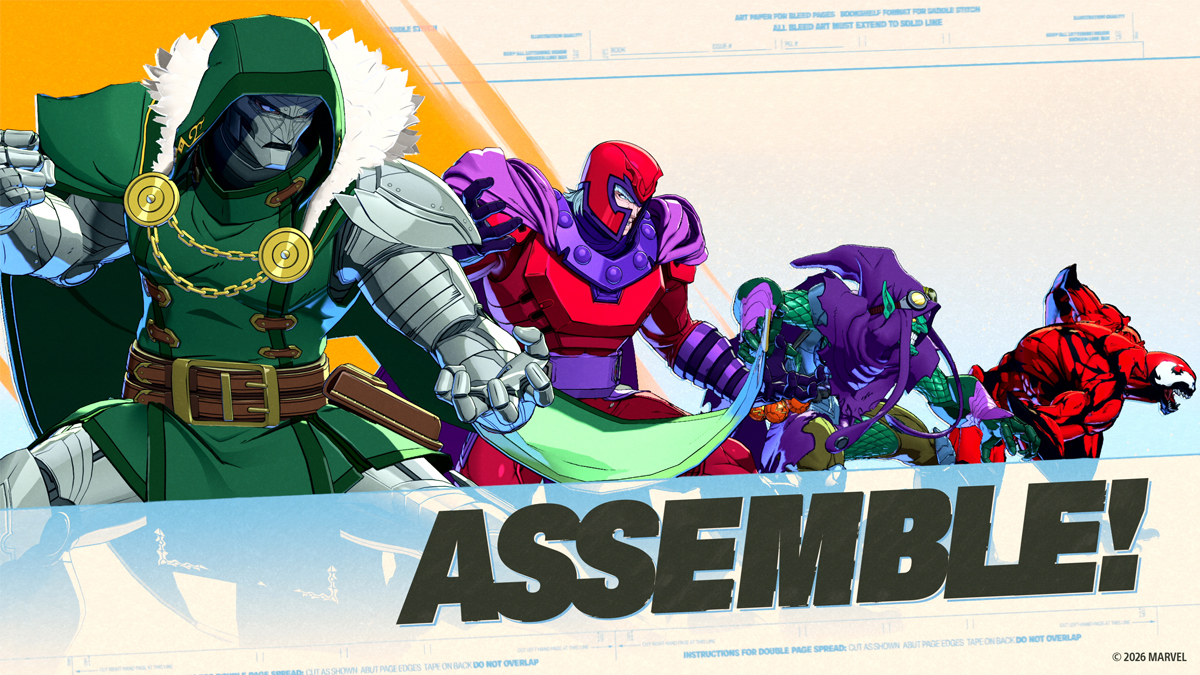
Marvel Tōkon: Fighting Souls is a beautiful, colourful, fun fighting game that caters to a wide demographic across the Fighting Games Community (FGC), Marvel, and even comic book and manga fans. Its story mode may be repetitive, but worth experiencing, and at just 20 characters with more on the way, those looking to play will easily sink hours into understanding how to play each character and experimenting with different team combinations.
GEEK REVIEW SCORE
Summary
It’s surprising to say that a fighting game can tell a great typical story five times over, and Marvel Tōkon: Fighting Souls has managed to do so. With such an accessible way to enjoy combat alongside tools to bridge the gap between newbie and pro, players of all skill levels will enjoy round after round as long as support for the game persists in the years to come.
Overall
9/10
-
Gameplay - 9/10
9/10
-
Story - 9/10
9/10
-
Presentation - 9/10
9/10
-
Value - 8.5/10
8.5/10
-
Geek Satisfaction - 9.5/10
9.5/10

Crack open a cold one with Joey, because the moment you approach him, he will start talking about film and video games for days. He spends his waking moments during the weekends meditating on how the latest movie he’s watched or game he’s played has impacted his worldview.
 Kevin Low