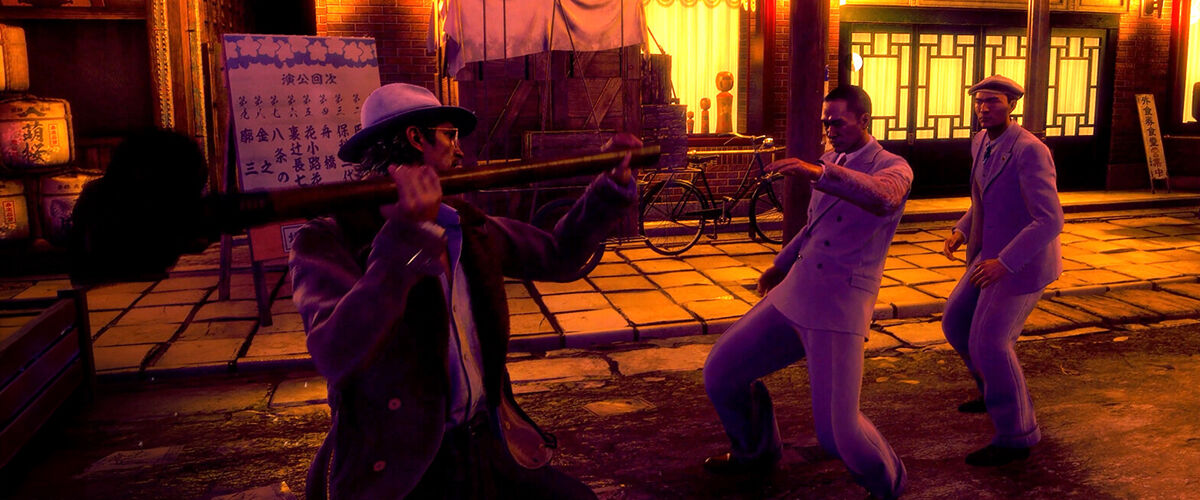
Ever since the debut of the original Yakuza game in 2005 for the PlayStation 2, the franchise has become renowned for its arcade-like combat – one that favours flair over complexity, which players could pick up easily due to its button-mashy nature, leaving complex moves only to those who wished to make full use of every tool available in protagonist Kazuma Kiryu’s arsenal.
Over the next two decades, nine mainline games and 11 spin-offs like the Judgement and Like A Dragon franchises, this remained the status quo for developer RGG Studios’ brawler-focused titles. But now, it seems the studio is finally ready to move on from what’s arguably a rather outdated combat formula, as the studio’s brand-new IP, STRANGER THAN HEAVEN, flips the script completely, ditching the button-mashing for a noticeably slower and grittier system that emphasises the importance of position, timing, and enemy attack pattern awareness.
Thanks to a combat-focused 40-minute-long gameplay preview held at SEGA’s headquarters in Tokyo, Geek Culture was able to get our hands on an early build of the action-adventure game and left with the impression that, while it’s much harder to master this time around, the new combat style presents an experience like no RGG title before once everything clicks together.
The preview was split into three sections, each taking place in different locations and eras. Each section consisted of one combat encounter of increasing difficulty and included Kokura, Kukuoka (Beginner), Kure, Hiroshima (Intermediate), and Minami, Osaka (Advanced).
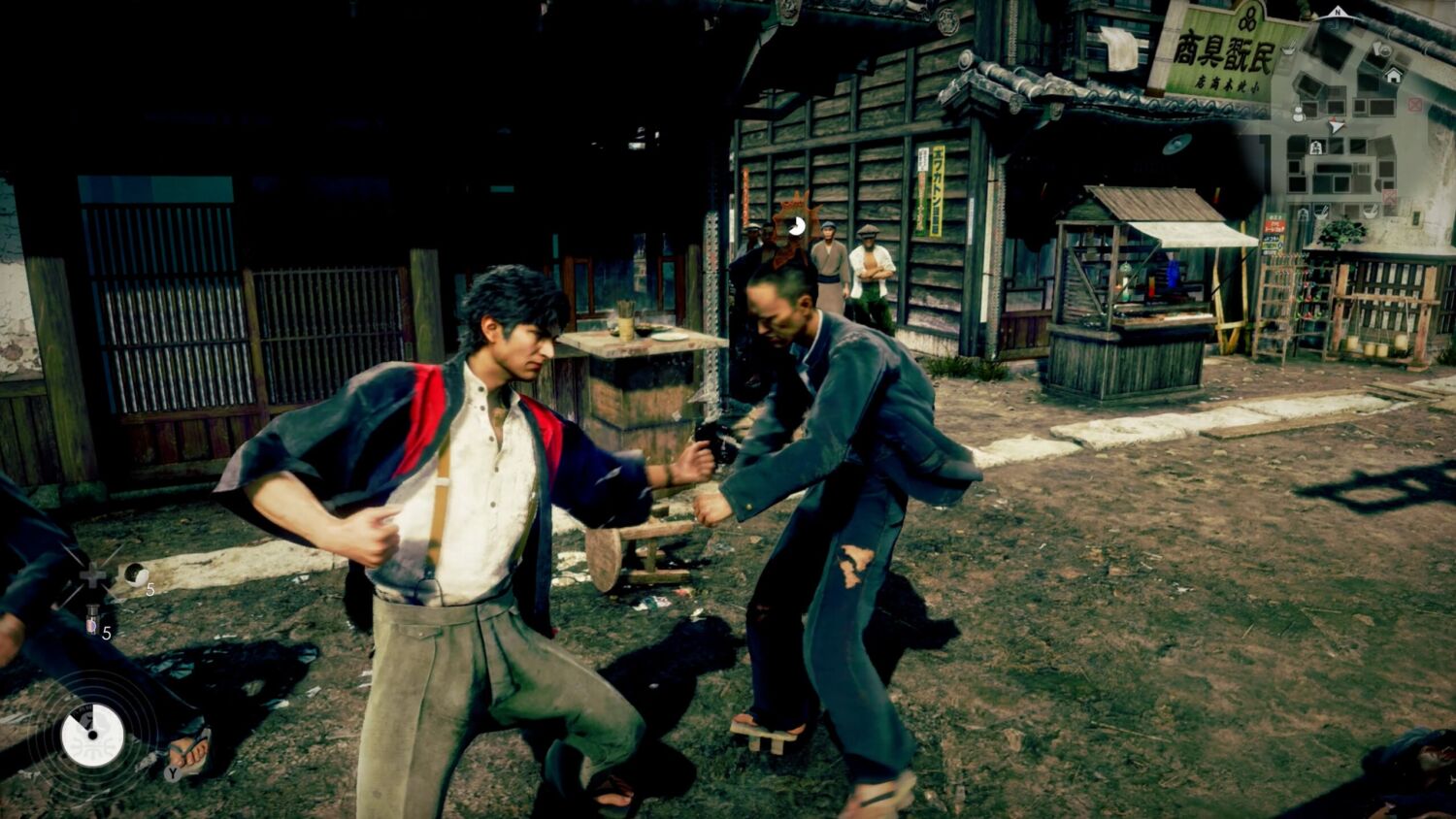
Kicking off with the beginner stage, this offered the perfect opportunity to get to grips with STRANGER THAN HEAVEN’s new control scheme against a small group of relatively weak foes. Unlike past RGG titles, combat isn’t delegated to single buttons for light and heavy attacks, but instead split into left and right directional inputs.
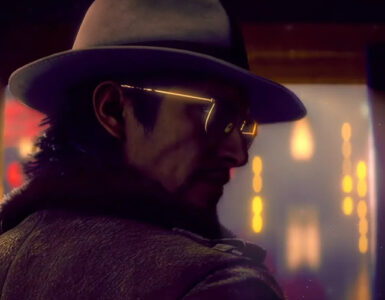
On an Xbox controller, RB and RT launched a light and heavy attack, respectively, from the right side, while LB and LT performed left-side attacks. By combining moves of different directions, protagonist Makoto Daito can then mix and match moves that provide different tactical opportunities – LB is used for a quick strike that’s good for countering attacks, while LT performs a blow that pushes foes away and provides room to breathe, for example.
It isn’t just the controls that have changed, but also the overall flow of battle, which now feels much more grounded compared to previous RGG games. Both the player and enemies hit slower, but noticeably harder, meaning that if a player isn’t careful, they can easily be overwhelmed by even a small group of fewer than five foes, as receiving just a few hits in a row can be devastating.
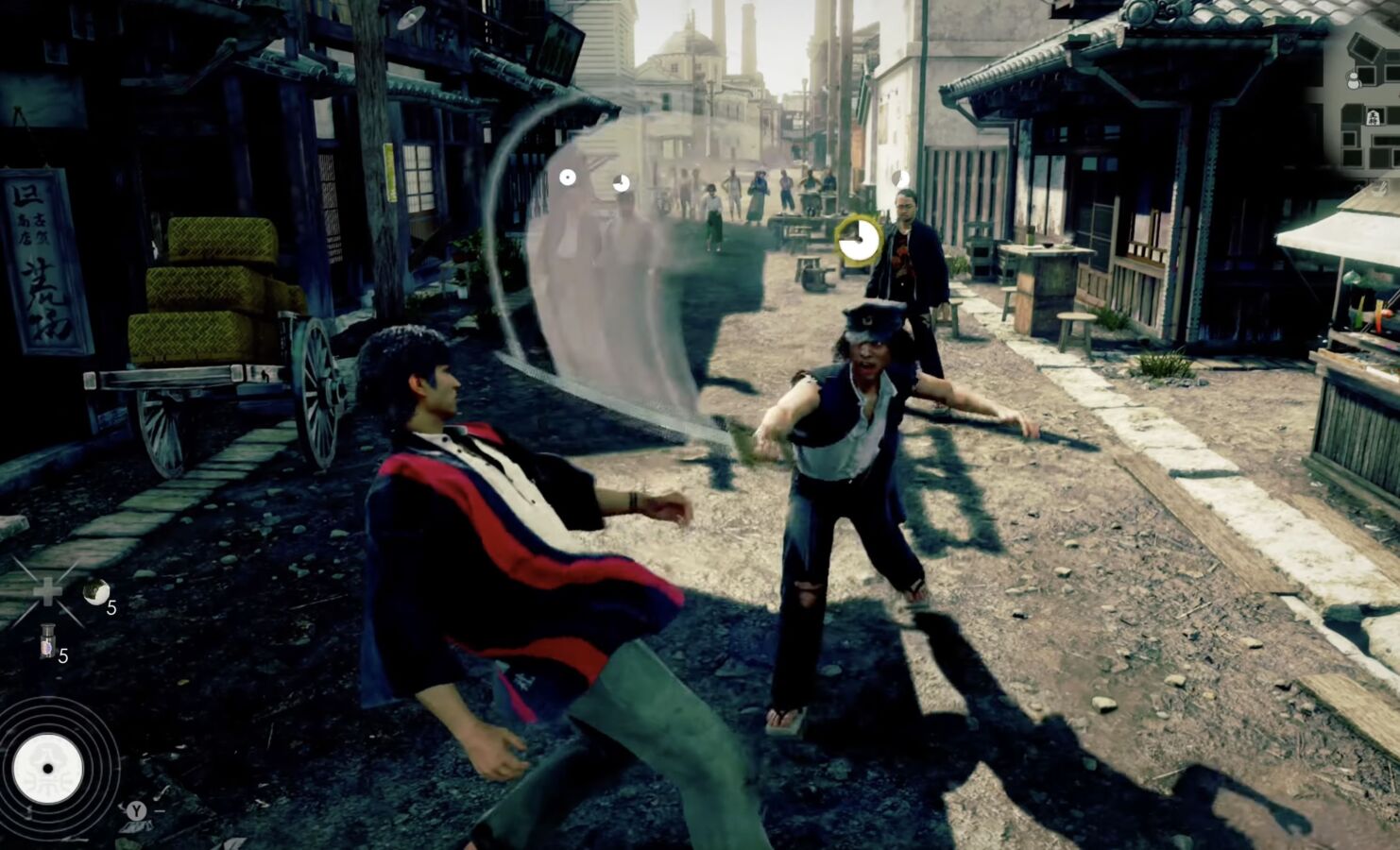
Here’s where the game’s evasive systems come into play. First off, they can dodge similarly to how the system worked in the Yakuza games, with perfect timing leading to a period of slow motion and opening up the foe for a powerful counterattack, but the biggest difference between STRANGER THAN HEAVEN and other games with such dodge systems is the lack of i-frames (moments of invulnerability the player has after pressing the button). This means that players can still get hit while performing a dodge, making positioning essential. See an enemy swinging his katana from the right side? This calls for a dodge to the right as well, as dodging the other direction will just put you right in the path of the incoming blade.
Apart from dodging, the game also features a pretty interesting guard and parry system, one that relies heavily on timing, something that most fans from the Yakuza or Judgement franchises might need time getting used to. By pressing the B button, players will enter a guard state, which allows them to block attacks as long as they have stamina (presented by a ring on the bottom left of the screen). As they absorb blows, this ring gradually turns from white to yellow and then red, and once a player’s guard is broken, they will fall to the ground and become vulnerable for a set period of time before being able to get back up (players can still roll from side to side or guard to avoid attacks while grounded).
To counter an opponent’s strike instead of merely absorbing the blow, players can also perform a counter, although this move is undoubtedly the trickiest to pull off among all the evasive options, but is also the most satisfying. While holding B, players will need to study an enemy’s attack patterns and counter their attacks at the last moment using either LB or RB, depending on which direction the blow is coming from. Once successfully parried, this triggers a period of slow motion where they can then counterattack by pressing the opposite button of the one used to deflect the attack (if you parry with LB, you counterattack with RB, and vice versa).
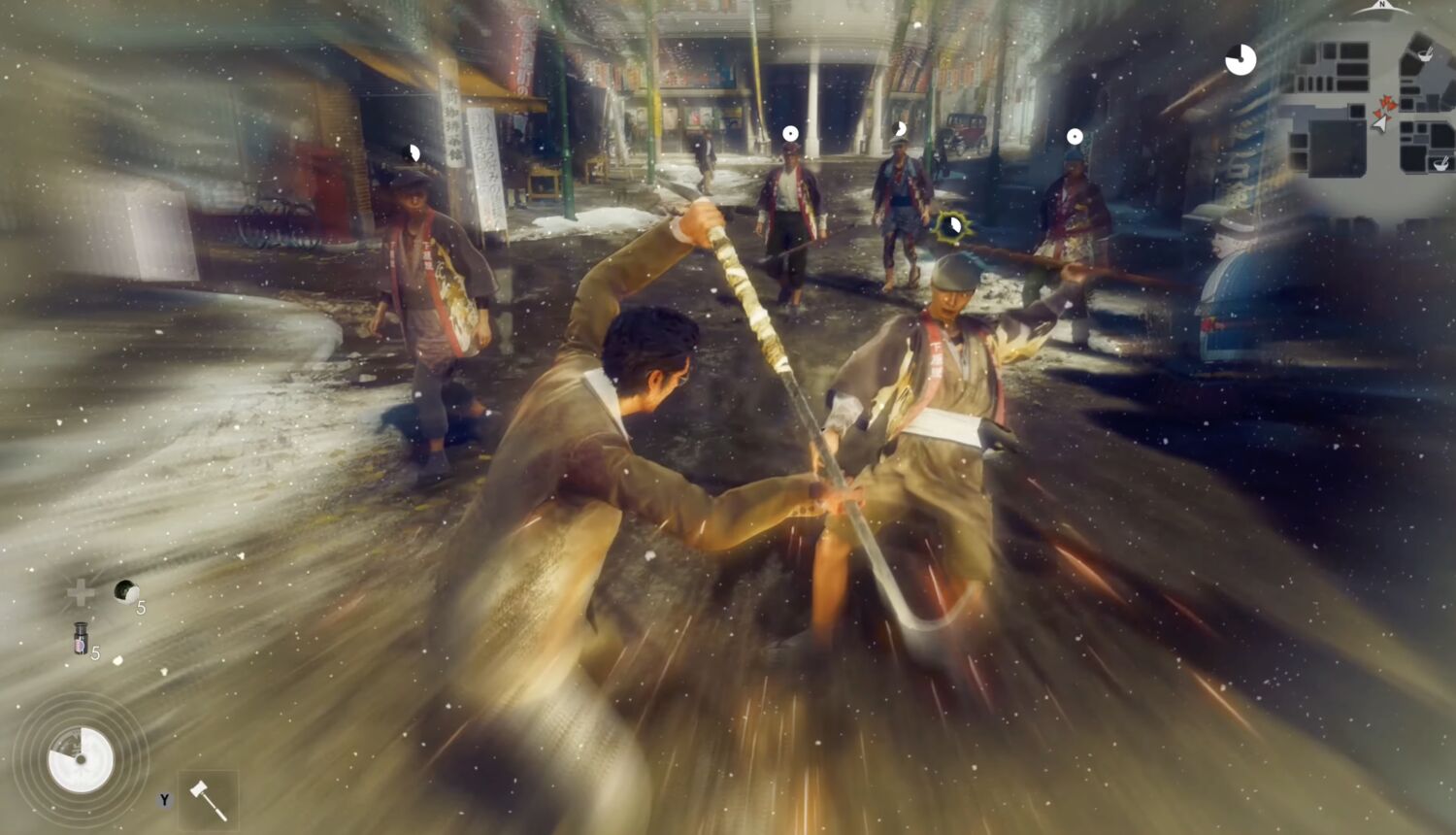
Not only do parries do much higher damage than normal attacks, it also has a chance to completely break an enemy’s stamina, which is similarly presented as a coloured circle on top of their heads. Once their stamina is broken, this opens them up for a grapple or finishing move, performed by pressing LT and RT simultaneously. While the latter is simple enough, instantly dispatching the foe in one brutal move, the former is where things get a little more interesting, as it results in a ground grapple.
Once a player successfully grapples an opponent on the ground, this leads to a tussle between the two, where players can alternate the left and right buttons to deal the pain, while simultaneously guarding if the grounded opponent looks like he is about to counterattack. It’s an incredibly gritty manoeuvre that’s pretty tough to pull off when dealing with crowds, as you’ll still be vulnerable to attacks from other foes while in this grapple state, so it’s best to leave this move for the last remaining enemy, or grapple, get in a few hits, and quickly back off before the others have time to react.
Put this all together, and you have a core combat system that’s much more reactive compared to anything done by IGG Studios yet. Keeping track of where enemies are and what moves they pull off is essential to dodge and counter them, all while trying to ensure that your vulnerable back is never towards the opponent.
And we haven’t even talked about weapons yet.
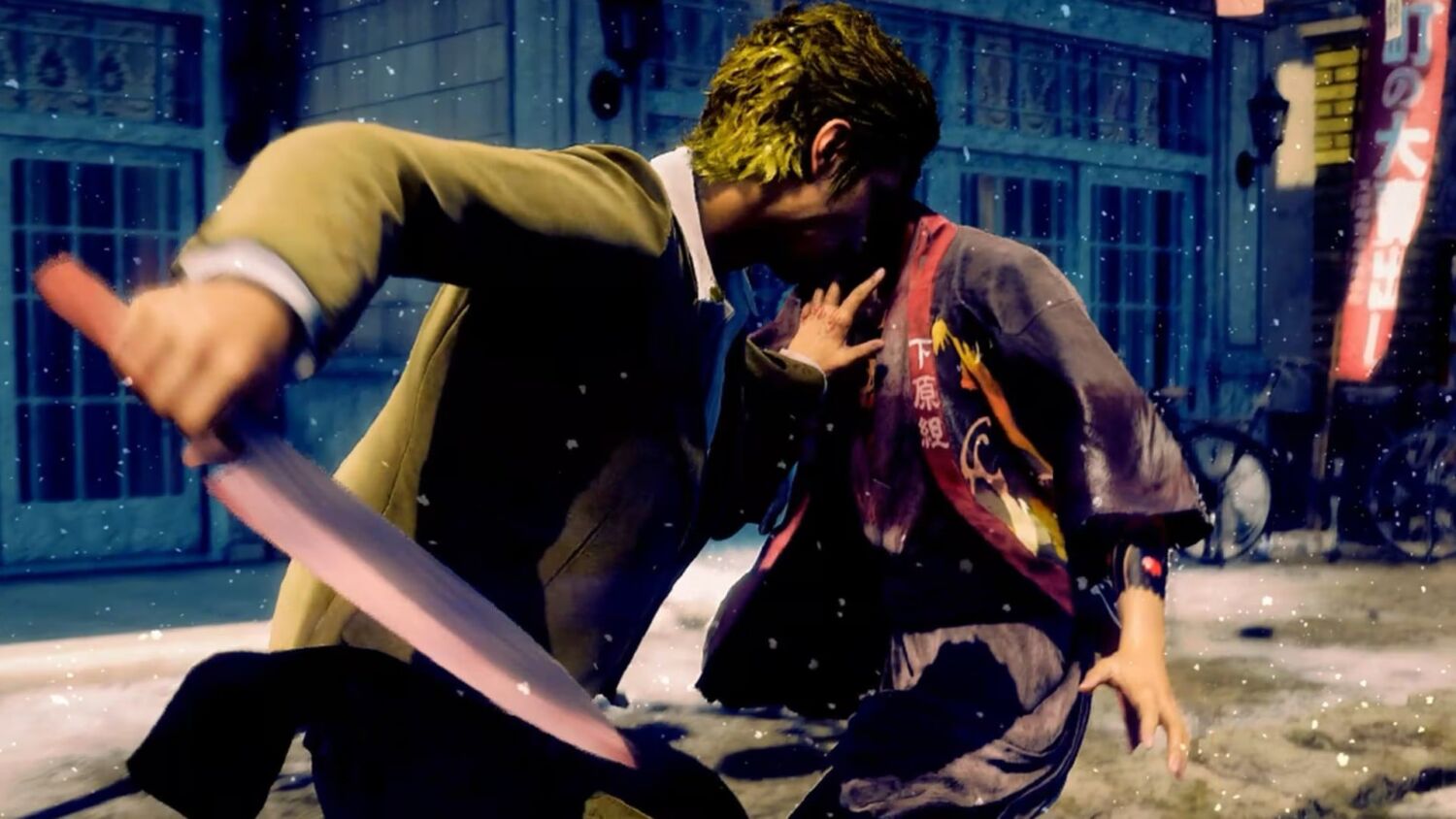
Apart from his bare fists, Makoto will have access to 12 different weapons in STRANGER THAN HEAVEN, ranging from one-handed blades, massive two-handed tools, and even firearms. During the preview, we only had access to two – a short knife and a heavy crowbar.
The importance of using weapons came into play during the preview’s intermediate stage, where we were pitted against a large group of foes, including not just armed and unarmed combatants, but a giant brute enemy as well. This large group was the perfect opportunity to try out the crowbar, which, although incredibly slow to swing, was capable of dealing damage to multiple foes in an arc. Weapons didn’t have a durability meter, and Makoto was also able to switch between them at will, depending on the situation at hand.
Apart from obviously dealing more damage, weapons also played a part in defence, as they allowed Makoto to block incoming weapon damage, something he couldn’t do unarmed. With a weapon in hand, parrying attacks also felt easier to pull off, although this is just speculation, as different weapons only had differing stats in terms of damage and attack speed.
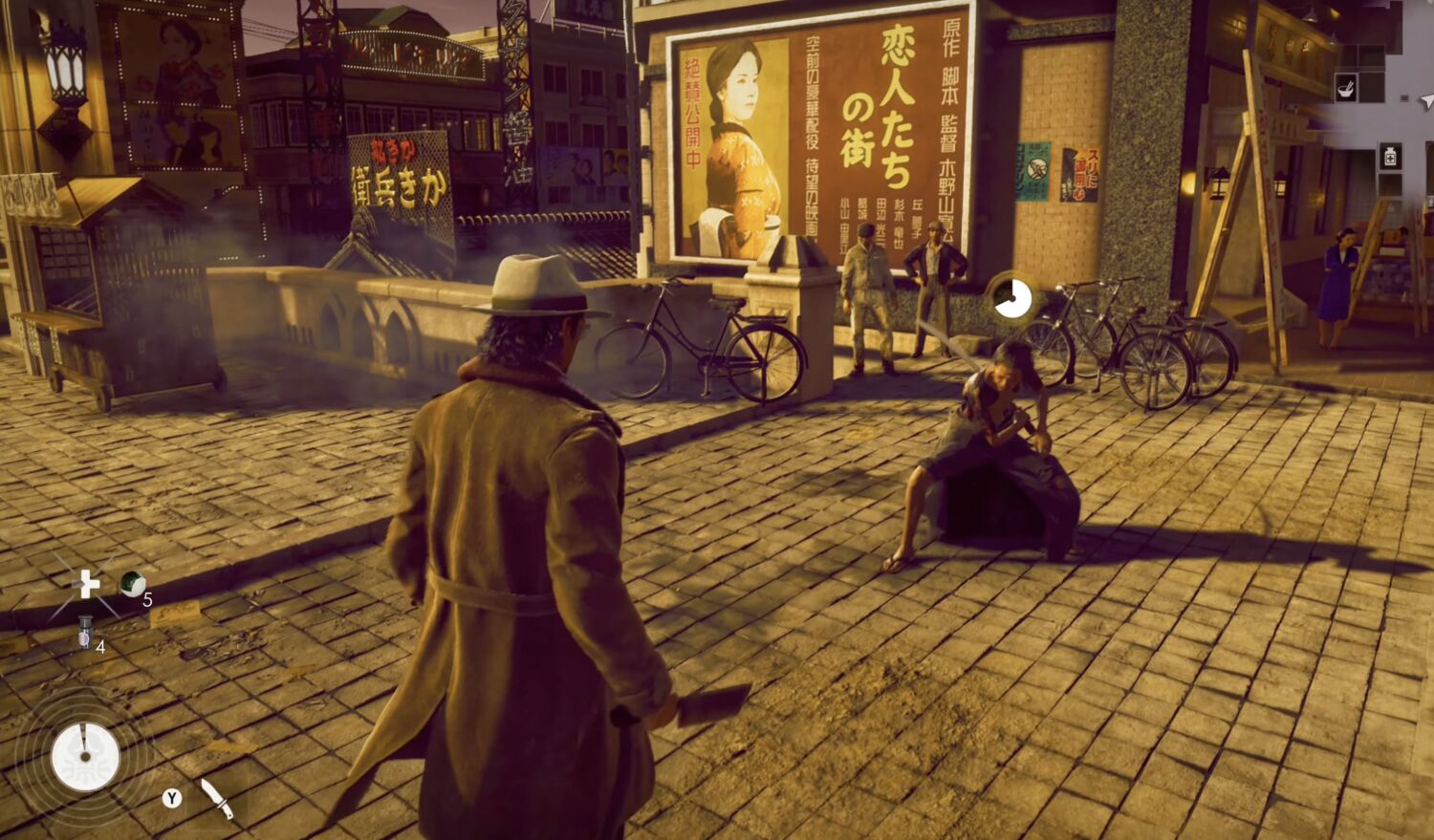
Rounding off the preview session was the third and final stage, which consisted of a boss battle against a single sword-wielding madman. This enemy was not just capable of multiple back-to-back attacks, but also a powerful grapple move that could instantly take out almost three-quarters of a player’s health, meaning timing was important, and so was a fast weapon like the knife.
The knife was capable of quick, short-ranged damage that made it perfect for a fast-moving foe like the swordsman, and although the crowbar still could get the job done, its slow swing speed allowed the opponent to dodge away or land a quick counterstrike, which hints that boss battles in STRANGER THAN HEAVEN require players to put some thought into their loadouts to find the right tool for the job.
With just these three combat encounters, it’s clear that RGG Studio is taking some chances when it comes to introducing this new battle system. Fans of past games might need to get used to using the bumpers and triggers instead of the face buttons, and they also need to juggle multiple systems at once, all while managing positioning of both themselves and their foes.
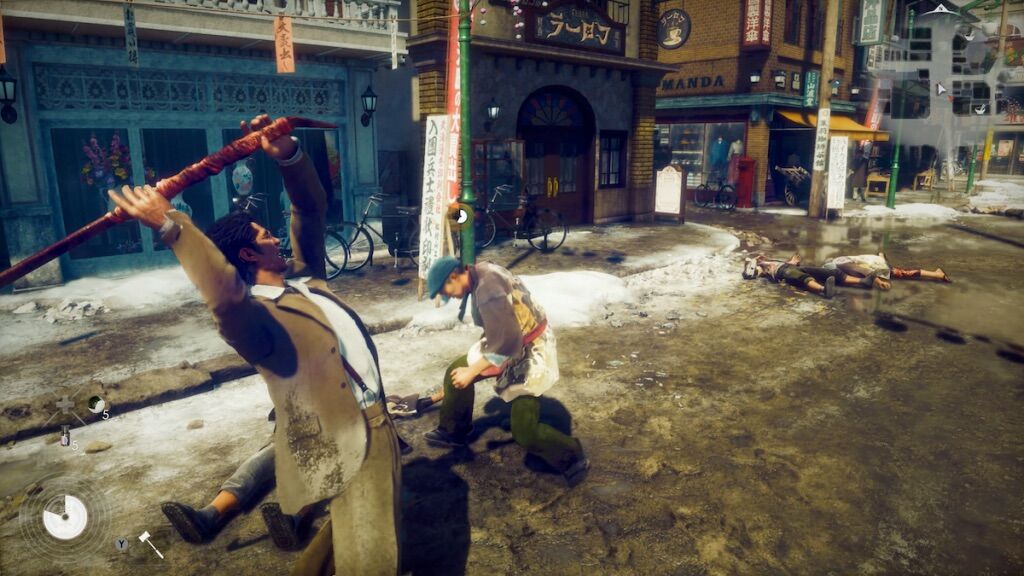
Once all these systems clicked together, however, STRANGER THAN HEAVEN’s combat felt far more engaging compared to the more arcade-like brawlers of the past, where every action performed could be countered as long as a player pays attention to direction, positioning, and timing. It can be quite difficult to get to grips with at first, but hopefully, the game will ease players into the flow and provide them with a gradual learning curve when the game launches on 15 January 2027 for the PS5, Xbox Series X|S, and PC.

Kevin is a reformed PC Master Race gamer with a penchant for franchise “duds” like Darksiders III and Dead Space 3. He has made it his life-long mission to play every single major game release – lest his wallet dies trying.
 Si Jia
 Joey Leong