
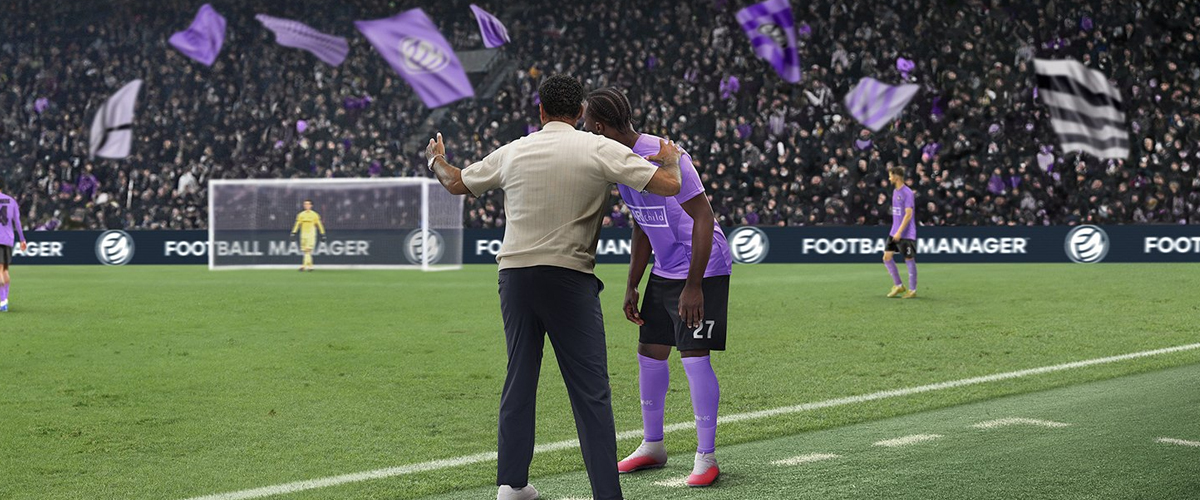
It’s widely referred to as the Beautiful Game, but when it comes to football, the beauty isn’t just the action on the pitch, but everything that leads up to it. Long before the opening whistle blows, every aspect of the game, from the team’s lineup to positioning and tactics, is meticulously planned beforehand, with even the smallest miscalculation or missed opportunity potentially spelling the difference between victory and defeat.
It’s this allure of what goes on behind the scenes, the prospect of handling every little detail that can make or break a match, that’s the very reason why Sega and Sports Interactive’s football management simulator franchise, Football Manager, is so popular with fans of the genre, as it allows them to build their dream teams almost entirely from scratch.
As a franchise with a lengthy history, first starting out in 1992 as Championship Manager before rebranding after the split with original publisher Eidos Interactive in 2003, Sports Interactive’s series has garnered a niche but fervent fan base, alongside yearly game releases – excluding its cancelled 2025 iteration – with each further perfecting the management formula.
While last year’s iteration was positioned as the start of a new generation for the franchise, with the game being rebuilt on the Unity engine and offering the biggest technical shift for the series to date, its latest entry, Football Manager 27, evolves the franchise even further with notable tweaks to usability and a push towards player freedom.

As the excitement hits a fever pitch with the game’s launch, here are five ways Football Manager 27 enhances the franchise experience, and how the sequel isn’t just a worthy successor for fans, but a perfect entry for those looking to kick-start their management journey.
1. Less clicks, more kicks, for smoother user interface (UI) navigation
For the uninitiated, the many tabs and screens of the Football Manager franchise’s UI might seem like a complicated mishmash of text, logos, and data, but for franchise fans, they are digital windows into a world where the performance of their teams is entirely in their hands, so ensuring that this important data is presented clearly, and that navigating through the many tabs feels intuitive.
Football Manager 27 sets out to improve navigation with one simple goal in mind – reducing the number of clicks to perform actions. Building upon the overhauled UI of its predecessor, the game’s primary navigation menu has been updated to better reflect a player’s responsibilities as a manager, all while reducing the steps needed to reach the information and actions that matter most.
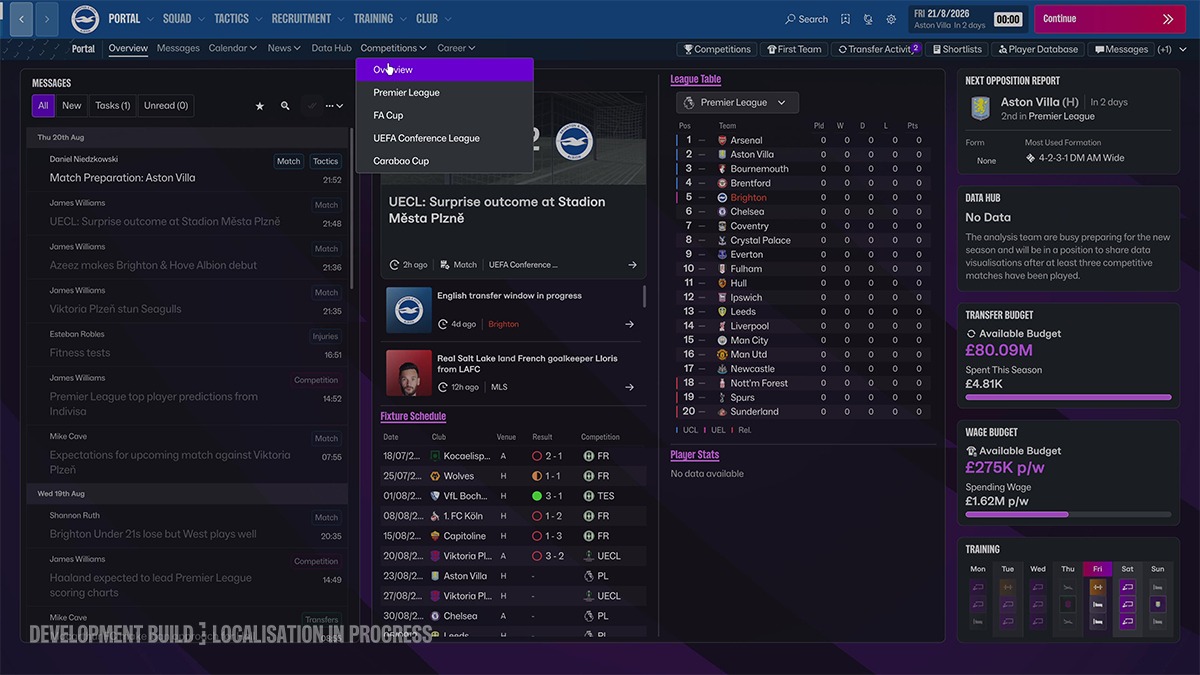
In addition, the game’s secondary navigation system has also been improved with better signposting to make finding specific areas much easier, alongside the reintroduction of the toggle button seen in previous iterations like FM24, allowing players to effortlessly swap between screens without returning to the overview page. A new control panel at the top of the screen also suggests key actions players can take in a particular tab, further reducing the need to keep closing windows and resulting in significantly fewer clicks to access what’s important.
An effective UI isn’t just about efficiency, however, as personalisation plays a key role in adapting to each player’s management style. The logic of Football Manager 27’s UI has been reworked to recognise a player’s preferences and adapt to their screen sizes from laptops to ultra-wide monitors, while the introduction of new customisable aspects like Shortcut Remapping, Bookmarks to pin their most used areas, and Tile Swapping, which allows them to access a dropdown list on certain tiles and swap them out with another of the same size.
2. A deeper, more immersive football world
A huge part of building a realistic dream team in Football Manager 27 is how it exists within a living, breathing football universe, and so the sequel has taken strides in making the world beyond the club more immersive and, most importantly, making information more relevant for the player.
News content has been refreshed for every part of the season, making headlines and stories feel more distinct, now including club season previews, mid-season check-ins, job speculation, and title race previews. The ‘For You’ system, which previously listed out all relevant news, has now been reworked to showcase specific content tailored to a player’s interests, with a more distinct separation between that and other news from around the world.
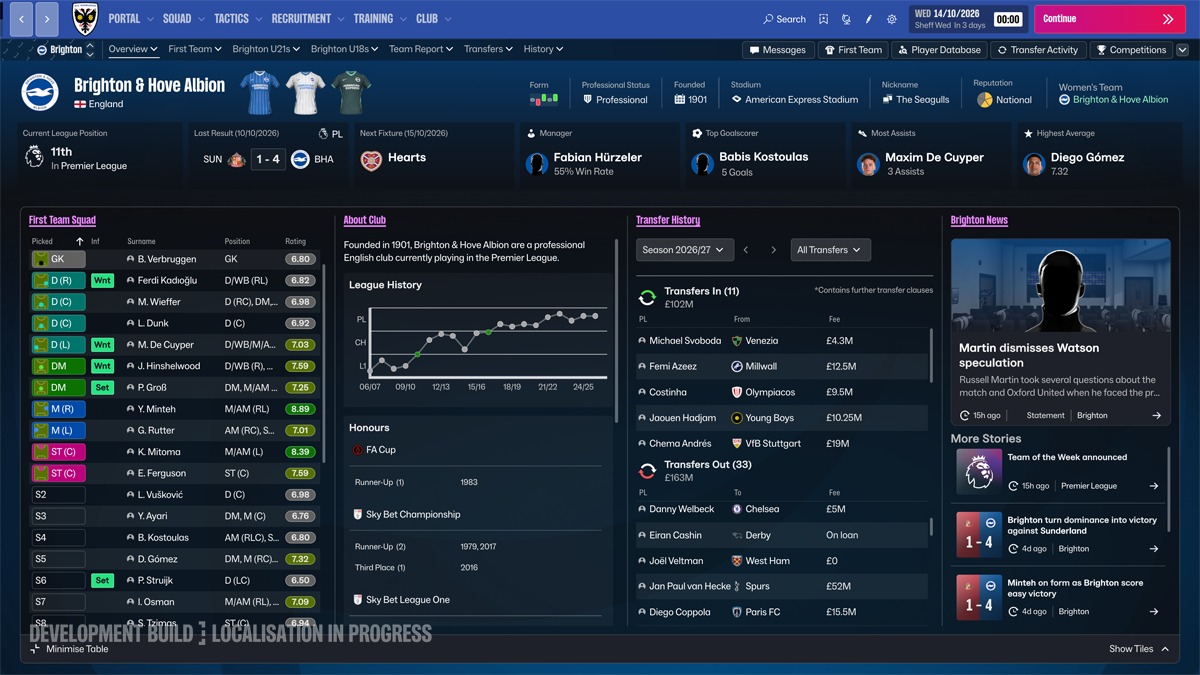
The Club, Competition, and Nation screens have also been revamped, letting players easily discern important and relevant information at a glance, including a team’s identity and history, managers, key players, latest transfers, upcoming fixtures, results, and much more. Heat Maps also makes its return, providing more technical information to inform a player’s critical decision-making, alongside the addition of full-screen career history pages for more information with less scrolling, and a Quick Flick feature, which lets players easily cycle between their team information and that of their rivals.
Cup draws and Deadline Day also make their return from previous iterations. The former allows players to once again live out the excitement of seeing their team’s name being drawn out of the proverbial hat, instead of just via information in a message, while the latter better captures the sense of occasion as players get those last-minute deals over the line, with improved AI behaviour so that Agent Offers ramp up naturally and don’t feel like they come out of nowhere.
3. Ramping up the immersion and atmosphere on the pitch
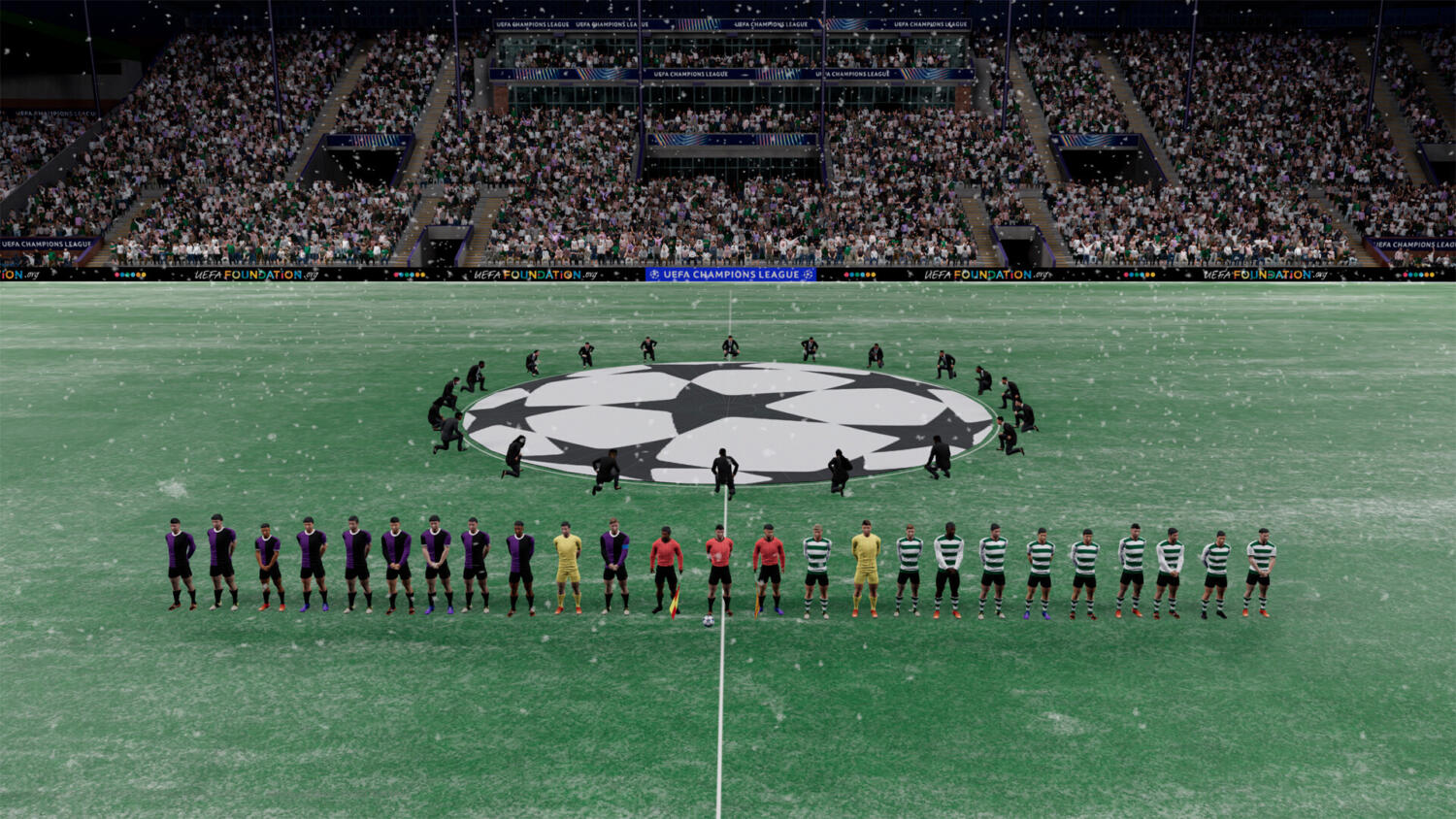
After the long weeks or months of planning are completed, it’s time to actually hit the pitch, and Match Day is of equal importance to Football Manager 27 as is pre-game management. To this end, the sequel is taking the Beautiful Game to new heights with loads of graphical improvements, meaning the game doesn’t just look good; it feels just like the real thing too.
In-game stadium designs now feature the largest variety of stands, corners, and roofs to date, with further improvements to shading and colour variation across structures. Season and weather systems have also evolved to be more dynamic, with elements such as the grass, trees, and other outdoor features changing throughout the in-game year. With its brand-new time-of-day system, matches also play out realistically as time progresses, meaning lighting, shadows, and weather will shift as the match progresses.

A stadium won’t be complete without thousands of roaring fans, and since these crowds are pivotal in reflecting the intensity of matches, crowd model rendering has also seen an improvement. Fans now sport the shirts of their teams on the pitch, with various layers of apparel depending on the weather, climate and time of year, and will even wave club flags to further enrich the atmosphere in the stands.
Of course, one can’t forget the stars of the show themselves, with player and manager models receiving a complete design overhaul. From visible musculature of their bodies in their calves and forearms to hair physics that react to their movements, these improvements make the action look and feel more alive and dynamic.
4. An evolved Match Engine for more intense tactical battles
Football Manager’s Match Engine has constantly evolved with every new iteration, and here, it’s no different. A key focus for Football Manager 27 is enhancing the way players move and react on the pitch, and by building on the franchise’s partnership with Hawk-Eye Innovations, the game has now seen an expanded range of animations across the board, combining clips from real-life matches with bespoke motion capture for a host of new skill moves like body feints, Elasticos, Heel Chops and more.
The increased dynamism and individuality of movement is supplemented by an evolution in player running speed, bringing it more in line with real football movement. By overhauling the game engine’s underlying systems, the speed and tempo of every match have become much more realistic, with more natural representations of a player’s stamina and how their fitness gradually declines over the course of a match, making substitutes have a greater impact on results.
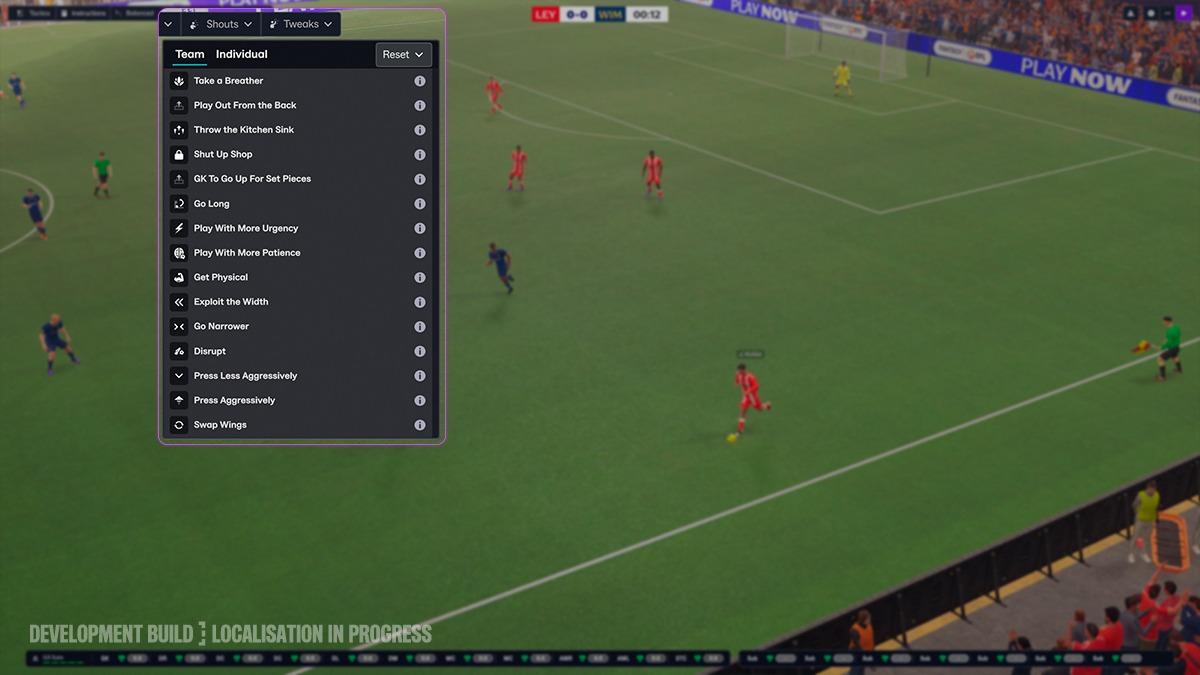
The Shouts system from previous titles has also seen a revamp, and while the manager (ie. the player) can still give their players emotional instructions like criticism or praise, the reworked system now directly affects mental states instead of just providing slight attribute boosts. There is now better feedback on the outcomes of a team shout, with a summary of the effect the shout had now presented inside the dugout feed, alongside squad bar animations to highlight a player’s body language change, offering greater individuality of reactions based on a player’s personality types and the game context.
Finally, there’s the new Tactical Tweaks system, which is inspired by real conversations in professional football. This new feature lets players make team-wide and individual tactical decisions based on how the match is unfolding without going into the tactics screen, meaning they can now perform actions like swapping a winger’s sides or asking the entire team to play with more urgency at the touch of a button. The player will also be advised on when best to use a Tactical Tweak, granting greater ownership of a match and making them feel less passive.
5. A refreshed training ground for an improved level of control
At the core of any game session lies the training ground, a place where plans to organise and develop a team to understand and execute a player’s tactical philosophy come to fruition. To better reflect this important aspect of the game, Training is now a main item in the primary navigation bar, and alongside featuring the same UI enhancements as the rest of the game, the ability to replicate training schedules has returned, alongside introducing improved visual cues about player load not only for the most recent matches, but also several weeks ahead.
However, the biggest changes come under the hood. In Football Manager 27, each squad has a specific purpose to work towards, meaning youth teams are more development-led, while senior squads are more focused on match preparation, like team cohesion and tactical understanding. This is supplemented by newly added training sessions that improve a team’s overall effectiveness and polish, while individual training sessions help to balance players’ long-term development against the short-term goal of winning matches.
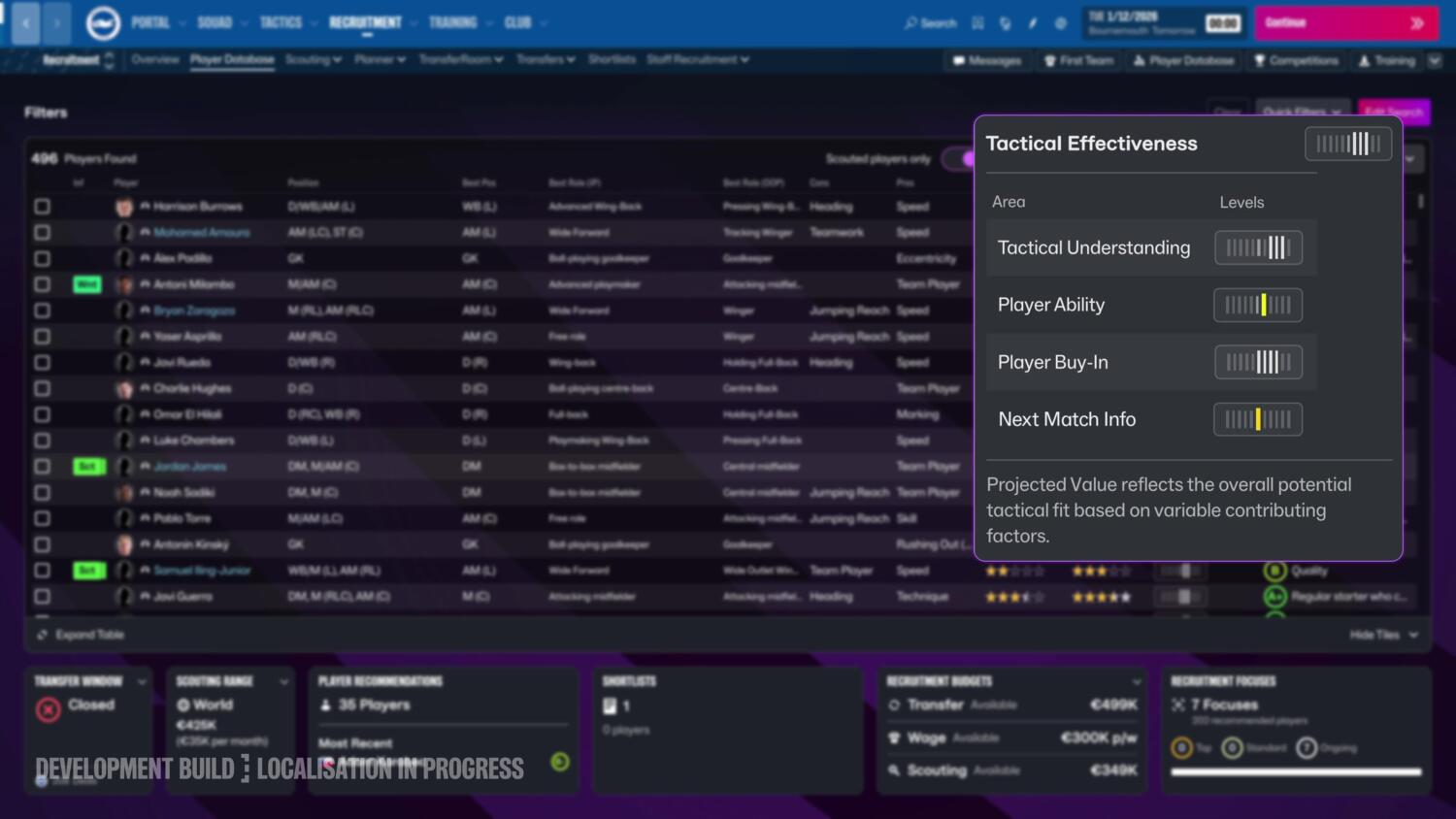
Intrinsically linked to the changes to Training is the game’s brand-new system, Tactical Effectiveness, which comes in four core areas – Tactical Understanding, Player Ability, Player Buy In and Next Match Information – each measured by its own gauge. Players can now check these stats in various contexts, like tactics, training, and recruitment, to better understand how their football philosophy is being expressed on the pitch. Tactical Effectiveness is also reflected in scout reports, giving players richer data to discern if a potential signing can make an immediate impact in their current formations.
Working hand-in-hand with this system is Tactical Complexity, a new measure of the volume of instructions. This offers a more immersive depth of choice that allows players to adapt to different situations, and there’s now a clear trade-off in the game between complexity and ability.
These are just some ways that Football Manager 27 builds on its legacy and improves with numerous other minor but notable tweaks to improve the overall experience. Of course, the best way for players to get a better feel for how much the game has improved is to jump in and see first-hand, as the game is now available on the PS5, Xbox Series X|S, PC via Steam and the Epic Games Store, and on mobile via Apple Arcade and Netflix Games.

Kevin is a reformed PC Master Race gamer with a penchant for franchise “duds” like Darksiders III and Dead Space 3. He has made it his life-long mission to play every single major game release – lest his wallet dies trying.


 Si Jia