This interview has been edited for clarity.
Three decades (and counting) of an ever-expanding cast of characters has spawned many Pokémon designs, with some sporting more obvious inspiration than others. Whether adorable or majestic, cool-looking critters often become popular picks, as their quirky counterparts can make a stronger impression, especially those with a creative spin on real-world elements. Chandelure, for instance, hails from a chandelier, while Vanillish (or Vanilluxe) takes the form of vanilla ice cream.

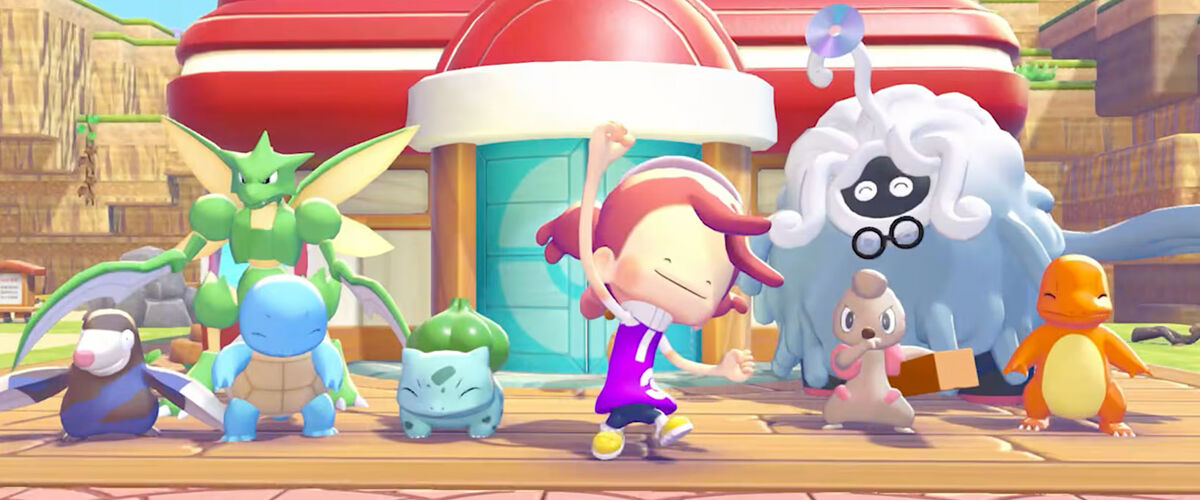
In the case of Ditto, the purple blob is well-known for two reasons – its unconventional yet no less endearing form, and the ability to transform into any Pokémon. The upcoming life simulation game, Pokémon Pokopia, planned and co-developed by The Pokémon Company, Game Freak Inc., the studio behind the mainline titles, and Koei Tecmo Games, seeks to challenge the notion through an intriguing premise: what if Ditto could also appear as a human?
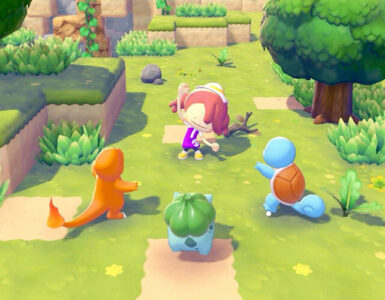
It’s uncharted territory for the game series to date, and hardly the only departure from tradition. Instead of pitting players in battles, the upcoming spin-off will lean into the life simulation genre in a similar vein to Animal Crossing or Stardew Valley, where they have to befriend new Pokémon, learn moves from them to interact with the environment, and rebuild a desolate world into a lively, thriving one. The mellow, dreamy aesthetic is no less distinctive, featuring blocky, modular terrain, a pastel colour palette, and a slightly different version of Ditto that taps into sentimentality.

“Specifically for Ditto, the goal was to give it the nostalgia of the 2D aspect, which is why it has a deformed, big-headed look,” highlights Shigeru Ohmori, Pokémon Pokopia concept creator and senior developer at Game Freak, in an interview held for select Southeast Asia and global media in Tokyo, Japan.
The other catch is the lack of humans in this all-Pokémon setting, calling for additional designs specific to the game. Building on its shape-shifting capabilities of Ditto, the Normal-type fan-favourite retains its signature beady eyes in all forms, but Koei Tecmo’s Takuto Edagawa, game chief director, explains that the nature of its transformation depends on the ability being used: a partial one for quick, easy moves or skills that last a very short amount of time like Leafage, and a full makeover when Ditto needs to become another Pokémon to use specific moves, such as flying as Dragonite or surfing on the water as Lapras.

Franchise veterans would recognise them as damage-dealing moves (although Fly and Surf also double as modes of transportation in the games), which have been reworked in Pokémon Pokopia. Since the game features no combat elements, their functionality now centres on cultivation, where activating Leafage, for instance, grows patches of grass, while Water Gun, well, waters dried-up plants, and together, players can create grass habitats that spawn Pokémon.
In some cases, the change in environment has left its mark on the Pokémon. As Ohmori explains, the critters in this world lead slow, laid-back lives due to the absence of Pokémon battles, so their appearance and behaviour aren’t the same from memory. Pikachu gets a pale, lethargic variant called Peakychu, first revealed in a 10-minute gameplay clip alongside Snorlax (Mosslax) and Smeargle (Smearguru), because it doesn’t use much electricity in this state, and Tangrowth’s rise to a professor is a natural progression of studying every object discovered along the way.
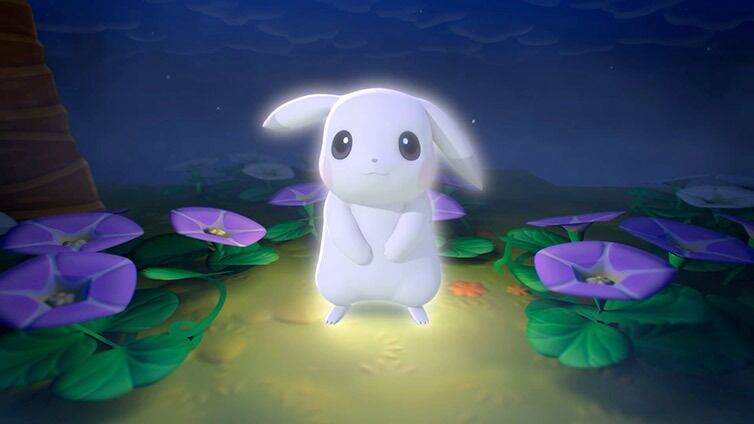
The design adjustments, according to the 45-year-old, are rooted in a “similar thinking to the Alolan region, where [Pokémon] come in different forms.” To give a few examples, Alolan Vulpix and Ninetails sport a snow-white appearance in the Generation VII titles (Pokémon Sun, Moon, Ultra Sun, and Ultra Moon), instead of their usual orange/brown and gold, with their typing changed from Fire to Ice and Ice/Fairy, respectively. Similarly, Alolan Marowak has a black body, a Fire/Ghost typing, and wields a bone with bluish-green flames on both ends.
“The other reason is to create a world with Pokémon, so the decision was made based on what kind of Pokémon would work with you,” Edagawa adds, referring to the process of narrowing the selection pool for Pokémon Pokopia from over 1,000 Pokémon to date.
“It was important for Pokémon to be the core, so how each of them is relevant to every move, reaction, and whatever feature that’s in the game – that was very difficult [to work out].”
More notably, there’s no mention of where the forthcoming adventure fits in the larger Pokémon in-game universe. The mainline entries take place in a specific region for each generation, starting with Kanto, the primary setting of Pokémon Red, Blue, and Yellow, followed by Johto (Gold, Silver, andCrystal), and most recently, Kalos (Pokémon Legends: Z-A), sparking a hunt for clues to its location, with eagle-eyed fans listing Cinnabar Island in the Kanto region as a potential choice.

While the team remains coy about the specifics, game producer Kanako Murata (The Pokémon Company) hints at a nod back to the franchise’s roots. “The scenery featured on the package art has a certain resemblance to the landscapes of the traditional series, so we can’t really see it, but it likely isn’t an entirely unrelated world.”
Familiarity, in fact, forms a huge part of the Pokémon Pokopia experience. Alongside recognisable sights and elements from existing titles, the offshoot outing also incorporated real-world inspiration into its aesthetic identity, designed to complement the cute and calming presentation of human-form Ditto.
“For the motion effects and the UI (user interface), we leaned heavily into a sense of softness and texture to create a pleasant feel,” shares art director Marina Ayano, who hails from Koei Tecmo. “When providing the textures, we grounded them in real-world materials, such as candy-like colours, patterns, and delicious-looking qualities, so players can instantly feel a sense of familiarity with the real world.”

For Ohmori, the muse harks back to his early days at the company. The series veteran has been working on the series for a long time, from designing the third-generation games (Pokémon Ruby, Sapphire, and Emerald) to leading development on 2014’s Omega Ruby and Sapphire remakes and beyond, including Pokémon Legends: Z-A. It was his first task of creating the tall grass on the map and the subsequent appearance of wild Pokémon – an experience he describes as “very fun and interesting” – that served as the basis for the project, however.
“For example, creating the grass on a volcano would spawn Fire-type Pokémon, and I thought of developing Pokémon Pokopia based on this concept of creating a habitat and meeting all the Pokémon by yourself, which would be something different from an RPG,” recounts Ohmori, who started to work on a prototype in 2022 before development began a year later.
The audio cues are a celebration of the series’ heritage, too. Lively, mind-soothing ditties will keep players company on their journey to restore the world to its former glory, but listen carefully, and it won’t take long for the nostalgia to set in. Expect remixed or revised versions of the original game soundtracks, alongside the all-too-familiar rising melody and bright chime of the sound effect that follows a Pokémon Evolution, which now plays whenever Ditto learns a new skill.

“The reason for that is that when a Pokémon is evolving, you have the anticipation of, ‘Oh, how is it going to evolve?’ and then the surprise of how it evolves. It’s similar [here] to when Ditto learns a new move – what is it going to learn, and what does it look like?” elaborates Edagawa, who also teases another easter egg.
“In the beginning, [the score] is arranged in a different style to match Pokémon Pokopia, but the closer the town gets to revival, the closer the background music gets to what everyone has heard before from the mainline titles.”
Talk about a super effective motivation lure!
Pokémon Pokopia releases for the Nintendo Switch 2 on 5 March.
©2026 Pokémon. ©1995-2026 Nintendo/Creatures Inc./GAME FREAK inc. ©2026 KOEI TECO GAMES. Pokémon and Nintendo Switch are trademarks of Nintendo.

Si Jia is a casual geek at heart – or as casual as someone with Sephiroth’s theme on her Spotify playlist can get. A fan of movies, games, and Japanese culture, Si Jia’s greatest weakness is the Steam Summer Sale. Or any Steam sale, really.