This interview has been edited for clarity.
Whenever a classic game receives the remake treatment, the biggest question on the mind of fans is how much the revamped version will change the experience of the original. Apart from the usual graphical revamp, many such titles often introduce tweaks to modernise gameplay or quality-of-life adjustments to improve the overall flow.

Such is the case for Atlus and Sega’s upcoming remake, Persona 4 Revival, which is set to breathe new life into the classic 2008 JRPG sequel. The thing is, this won’t be the first time that the game has gotten some sort of enhancement, as it previously received an expanded “definitive” edition in the form of 2012’s Persona 4 Golden, which added a substantial amount of new content like an extended third chapter, new social links (relationship events between characters), and a host of gameplay tweaks.
With many already considering Golden to be the most feature-rich version of the game, what more can Persona 4 Revival bring to the table to improve the experience further?
According to Persona Studio and Persona 4 Revival General Producer Wada Kazuhisa, whom Geek Culture and other members of Southeast Asia media spoke to during an interview following our hands-on session at the Sega headquarters in Tokyo, the team opted not to switch up the already excellent gameplay improvements of Golden too much for this remake, instead focusing on improving the game’s narrative aspects.

“In this game, apart from the graphical improvements, we mainly focused on the cinematic side, finding ways to create a more immersive experience,” Kazuhisa explains. “While we did bring various small updates here and there, improving immersion was our main direction.”
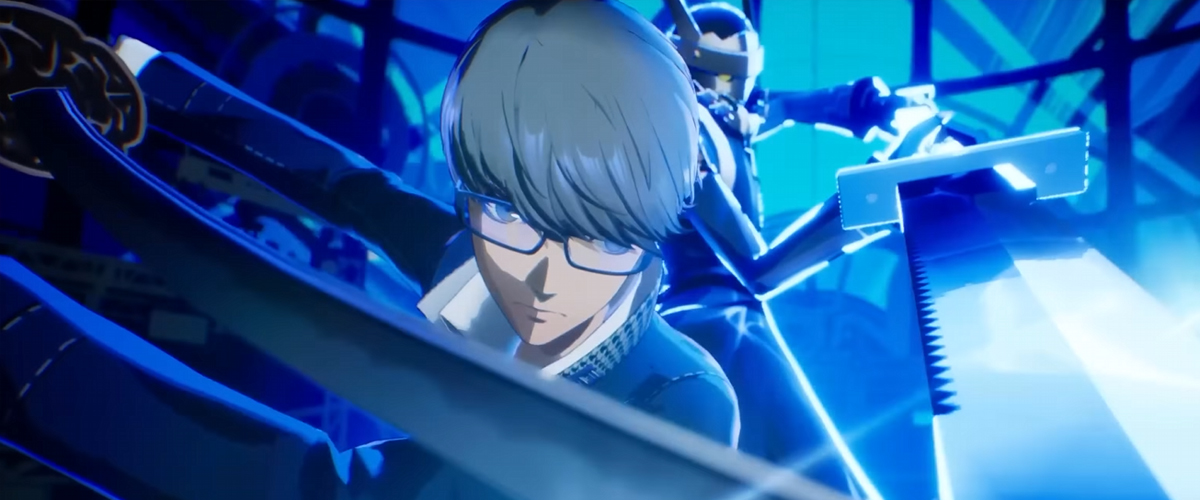
So how exactly has the team worked to improve said immersion? Based on our brief 40-minute gameplay preview, we were already able to discern some of the changes, notably a new 2D cutscene during the protagonist’s initial ambush by the Shadows that led to the awakening of his Izanagi Persona, which is now replaced by one made by MAPPA, the renowned animation studio behind Chainsaw Man and the opening of Persona 5 Royal.

Of course, not all of the original title’s 2D cutscenes have been replaced with newly made ones, which was actually a deliberate move by P Studio to ensure that it didn’t remove too many elements that made the game’s storytelling so great to begin with.
“We had to go through a selection process when it came to deciding how to present the game’s 2D cutscenes,” adds Kazuhisa. “Of course, we had the fans of the original game in mind, so we needed to balance their expectations while still finding ways to improve immersiveness, so we decided to not alter things too much.”
As a game which focuses equally on its turn-based combat and narrative beats, Persona 4 Revival’s cinematics don’t consist entirely of 2D cutscenes, but 3D ones too, mostly for conversations between its characters. In the preview, we were able to see some of these new event scenes in action, and while the original title mostly stuck to static camera angles in these scenes, the remake switches things up with more variations, such as close-up shots or playing around with different camera angles, which doesn’t just help to shake things up, it also provides more opportunities to appreciate its improved graphics built on Unreal Engine 5.

Of course, changing every single narrative scene in a roughly 70-hour RPG experience was unsurprisingly a daunting task for the team, which led them to be selective about which elements to adjust and which to keep.
“Following the development of Persona 3 Reload (2024), we have been able to brush up on our ways to build upon 3D cutscenes to improve realism and immersion,” Kazuhisa explains. “Even with these different tools at our disposal, the series is known for its very lengthy scenarios, narratives, and event scenes, and so working on all of these ended up being a very difficult task to take on.”
“Still, for Persona 4 Revival, we tried brushing up as much as time allows us. Of course, this was still challenging, so we had to make some decisions in the beginning to settle on a set direction for how to improve upon these scenes, and we worked to implement these improvements given the time frame that we were allowed to do so.”

From the preview, one of the small but notable details we were able to catch was a subtle improvement to the animations of the game’s visual novel-styled character portraits, which players will spend a bulk of their time looking at while watching its many narrative events. While the original game featured slight facial animations when characters spoke, Persona 4 Revival ups their fidelity significantly, with the characters’ expressions now being shown more clearly.
Aside from the major changes to narrative presentation, the remake also introduces smaller changes, and while Kazuhisa didn’t delve too deeply into details, he did offer hints of what’s to come, such as fleshing out certain character dialogue to give them more depth.
“Many of the characters in the original game, such as Kanji Tatsumi or Naoto Shirogane, are easily misunderstood, with their true personality only being revealed when players take the time to look deeper into their narratives,” explains Kazuhisa.

“While we tried not to veer too far from the original source material and what makes them them, there are a few areas like some voice lines that we thought were a little bit underthought and too hastily made, so we did brush up on some of their dialogue with small adjustments.”
Even though improving the game’s narrative presentation was the main goal of Persona 4 Revival, the team still took the time to further flesh out its gameplay aspect. This included not just gameplay additions like the “Baton Pass” system last seen in Persona 5 and new moves like “Send Flying” and “Prime Time” – which Kazuhisa describes as a way to “turn the battle around” – but also meant the removal of some systems in Persona 4 Golden, such as the scooter mechanic in order to make the game more engaging for players. In addition, dungeons have also seen a substantial improvement both visually and in terms of playability.
“We’ve mainly decided to make the dungeon playing experience a lot less stressful,” explains Kazuhisa. “These came in the form of the new guarding mechanic and the Goal Guide (which you can turn on or off), or even quality-of-life additions like being able to recover health or mana from breaking objects.”

It makes sense, too, considering how big a part dungeons play in the game. Each dungeon was tied to the psyche of a specific character, and with new technology at their disposal this time around, the team was able to improve the ways they could visually show this to players as they ventured further into the depths.
“We also brushed up the dungeons to better represent the internal feelings of each of the characters,” Kazuhisa adds. “Thanks to the graphical boost, we were also able to make use of different lighting and environmental design techniques to change how the world is presented as players explore deeper, so the further you progress, these internal feelings get stranger and more intense.”
With Kazuhisa’s comments, and what we’ve seen first-hand so far, Persona 4 Revival is looking to improve the title’s overall scale instead of making overly drastic changes, a sentiment mirrored by Kazuhisa too.

“In terms of scale, the original Persona 4 was something like a late-night television channel, and then for Persona 4 Golden, we made it feel more like prime time TV. Now, for this instalment, we are aiming to build upon it a little further for something grander, so it’s now on the scale of a feature film.”
For Kazuhisa, who has been a pillar of the Persona franchise, from being the design director of Persona 3 to producing and directing numerous mainline entries and spin-offs like Persona 5 Royal, Persona 3 Reload, and Persona 4 Arena, and now taking on the role of head producer of the Persona team, it’s clear he’s placing his heart and soul into this upcoming project, which looks to be in safe hands.
“To me, Persona 4 is one of the most important entries in the series, and so remaking it was sort of a personal mission,” Kazuhisa concludes. “My goal is for the people visiting Inaba for the first time to feel like this is a place where they would like to remain for a long time, and for returning players, a place where they would want to revisit once more.”

Persona 4 Revival brings the classic JRPG to the modern era on 18 February 2027 when it launches on the PS5, Xbox Series X|S, and PC.

Kevin is a reformed PC Master Race gamer with a penchant for franchise “duds” like Darksiders III and Dead Space 3. He has made it his life-long mission to play every single major game release – lest his wallet dies trying.

 Si Jia