
Even as leading technology companies delve into developing their own AI (artificial intelligence) models to lead the pursuit of the next tech advancement, Chinese tech giant Lenovo is making one thing clear – it isn’t trying to build the next ChatGPT or Gemini. Instead, its new AI ecosystem Qira taps into existing AI models, and the company is making a very different bet – that users are adopting AI through their devices and Lenovo wants to understand its users across all of their devices.
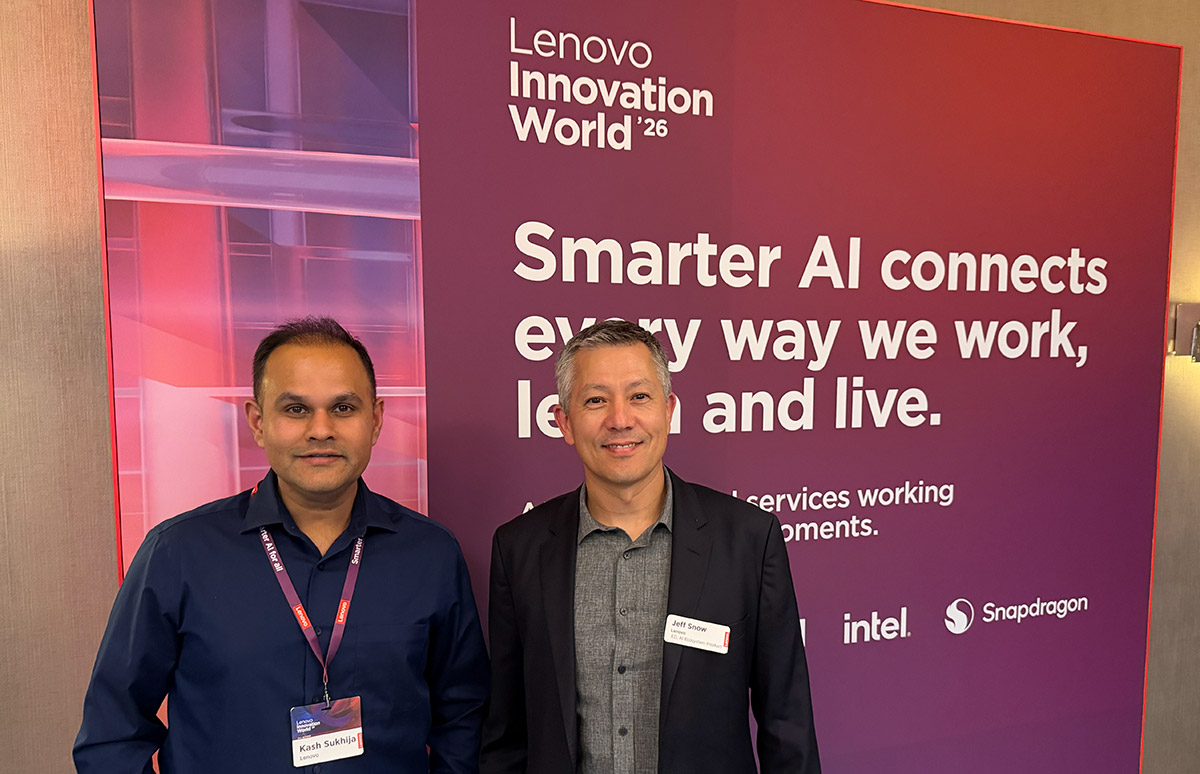
“We’re the device makers,” says Jeff Snow, Executive Director, AI Ecosystem Product at Lenovo. “We’re making all the various devices, and we want to take full advantage of being a device maker that can build software… not just an individual device system, but a system that can actually seamlessly bring context and connect across the devices and make it feel consistent and continuous.”
Unlike cloud-first assistants, Qira is built around a local-first, hybrid model and taps into different LLMs (Learning Language Models) to deliver its AI push. For example, it taps on Microsoft’s AI stack to drive its trusted local-to-cloud capabilities, offering seamless coordination across its PCs, tablets, and smartphones. Creators looking for image creation will be reliant on Stability AI which taps on Stable Diffusion 3.5 Flash models.
Perplexity’s AI models powers Qira’s AI assistant that gives users the ability to dive deep into a topic with clear, well-sourced answers. And all of this is done locally, as Levovo is determined to keep user data out of the cloud as much as possible.
“First of all, we are not competing with Gemini and ChatGPT. They are the chatbots, right?” says Kash Sukhjia, Executive Director, AI Engineering. “We are emphasising on our value to be local first and cross-device.”
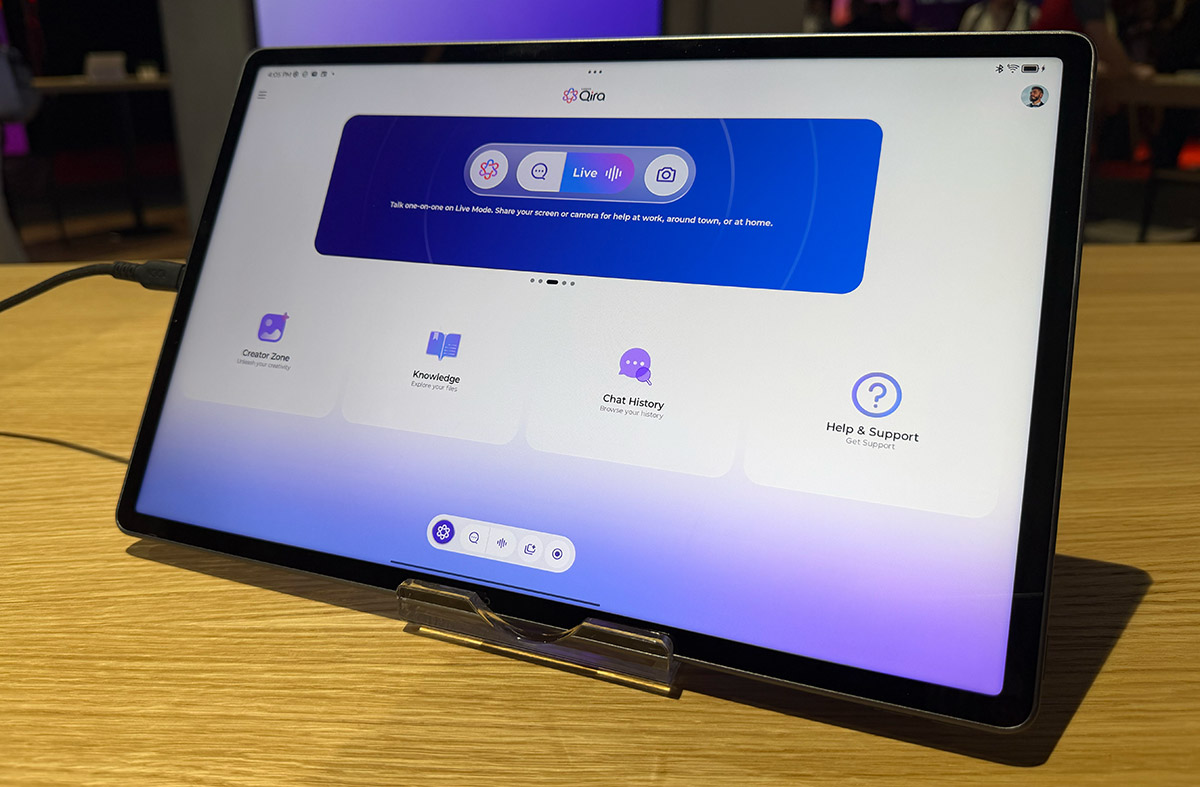
Qira classifies your intent on-device and taps into preloaded local models whenever possible. Only when the task exceeds your device’s memory or compute does it spill over to the cloud. At the same time, anything Qira learns about you on one Lenovo device is kept private and local, but made available across your other Lenovo hardware, from computer to tablet, to smartphone, and smart watch.
“You create your knowledge on one Lenovo device,” Sukhjia explains. “That knowledge stays in a very private way locally on your device, but it becomes available cross-device on all Lenovo systems that you are using Qira on.”
Even before Qira was announced earlier this year, Lenovo had already recognised one key lesson, that they don’t want to “prompt”. Instead, consumers want automatic, everyday value from AI, but aren’t interested in the current modes of interaction. Hence, one of its breakout features is in “catching you up” on what you’ve missed.
“Being able to get caught up on what you’ve missed across devices and be able to have that summarised… like a very good executive assistant,” Snow says. “They say, ‘Okay, this I can use every day. I don’t have to think about how I prompt. It knows my apps. It knows how to answer to me.’”
Lenovo has since evolved this from a flat notification digest into themed summaries that group your day by topics or people, making it easier to scan and act on.
Underneath the user-facing polish, Lenovo is obsessed with two things – latency and trust.
“Latency is king,” Snow says. “From the point the user needs something to the point that they get the output… every choice we make has an impact on latency.”
On trust, Snow argues that many people don’t realise how much they’re shipping to the cloud when they use AI today.
“I wouldn’t take a private document and just blast it out to a bunch of people I don’t know, right? But then why do I send that to the cloud?” he asks. For Lenovo, on-device AI is the answer as “on-device AI gives you control because you have complete control and auditability of that information.”
Sukhjia frames it as a long game: “Building a trust is always the hardest thing to do, but once you build that trust with the consumers, then you just gain that for life.”
For now, Lenovo’s priority is strengthening its own ecosystem rather than racing to show up on every OEM.
“First and foremost, we want to build a strong Lenovo ecosystem,” Snow says. “We want to make sure we don’t water that down too fast.” In the longer term, Lenovo can see Qira reaching beyond its own hardware, but with at least one “anchor” Lenovo device per user.
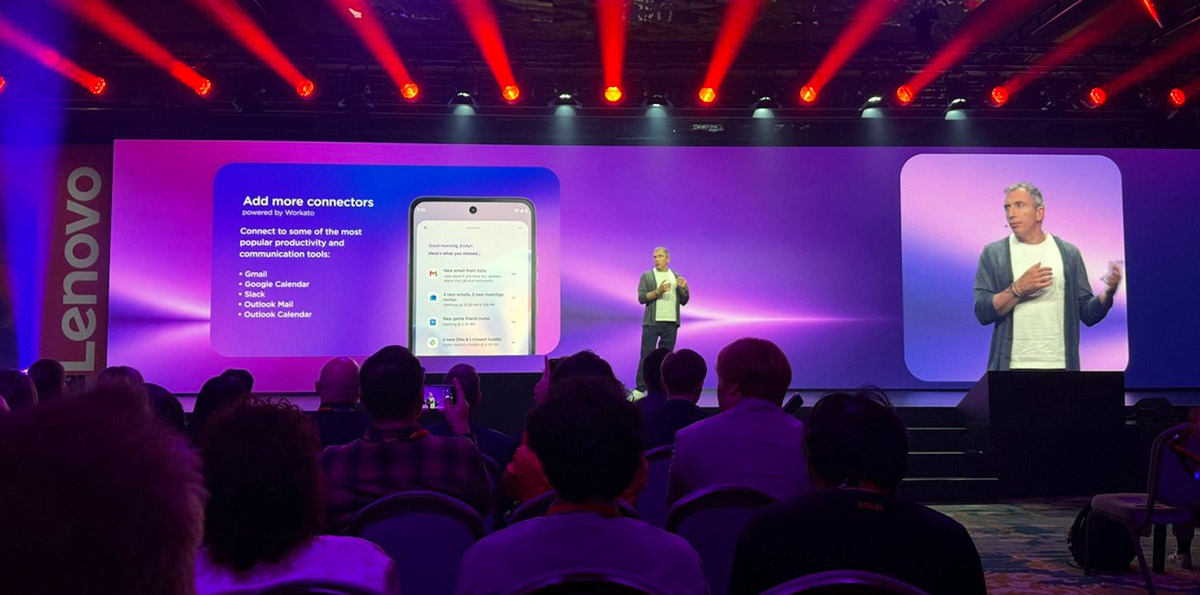
On the AI model side, Lenovo mixes global and regional choices, including Chinese models for its Tianxi AI product in China, balancing technical performance, regulations, and partnerships. “You can’t ignore the political aspect,” Snow notes. “It’s as much of a technical consideration as it is a business consideration.”
Meanwhile, Lenovo is quietly wiring Qira into the wider SaaS (Software as a Service) world via protocols like MCP (Model Context Protocol), working with partners that provide connectors to services like Gmail, Slack, Notion, and Perplexity.
Beyond Qira’s launch window, both executives are watching where AI could fundamentally reshape life and computing.
Sukhjia is drawn to biotech and healthcare: “The success of AI in DNA analysis literally could cure the diseases… the wealth of innovation that is happening in AI will be able to cure the diseases and have a bigger impact on human life.”
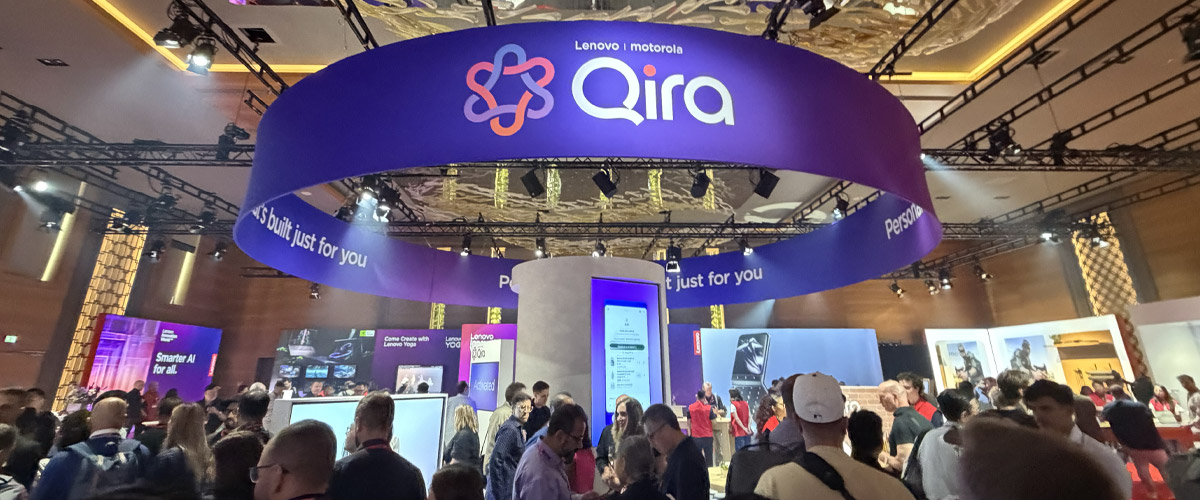
Snow, meanwhile, is betting on voice-first interactions to change what a “computer” even is. His twins grew up talking to a Google Home before they ever touched a keyboard.
“When they first were given a keyboard to do their schoolwork on, they were confused. ‘Why do I have this keyboard?’” he recalls. As voice tech becomes truly real-time and natural, he expects people to “not be so tied to the traditional form factors such as a laptop or a phone.”
If Lenovo’s Qira vision plays out, whatever you’re talking to in that future, be it your watch, PC, headset, or something entirely new, your AI will already know you, run mostly on your own hardware, and respond in milliseconds.

Yonk is a geek who is fortunate enough to have an equally geeky Star Wars fan for a wife, who owns a LEGO Millennium Falcon encased in a glass coffee table as their home’s centre-piece.

 Si Jia