While no longer as prevalent these days, the isometric strategy game genre was once all the rage before the eventual rise of gaming consoles. Built to simulate entire cities and armies of troops on a 2D plane, they often fell into the RTS (Real-Time Strategy) subgenre, with an oversaturation of franchises including Age of Empires, Command & Conquer, Warcraft, and Supreme Commander.
While the 1990s were often considered the ‘Golden Age’ for RTS games, one franchise still managed to stand out despite not actually being of the genre. Heroes of Might and Magic: A Strategic Quest, the 1995 turn-based strategy game spin-off by New World Computing, combined the resource management and base-building aspects of RTS titles, along with the turn-based systems adapted from the main Might and Magic fantasy role-playing game franchise, for a unique combination of both gaming worlds.
The franchise has seen multiple changes of hands over the years, from New World Computing (1995 to 1996) to The 3DO Company (1996 to 2003), and finally Ubisoft from 2003 onwards, with a total of seven instalments leading up to its most recent entry, 2026’s Heroes of Might and Magic: Olden Era. Still, one title has stood the test of time, with the franchise’s third chapter in 1999 revered by fans as a cult classic, and following an HD remastered version of the title in 2015, the game is finally getting a proper modern transformation thanks to the upcoming Heroes of Might and Magic III Remake.
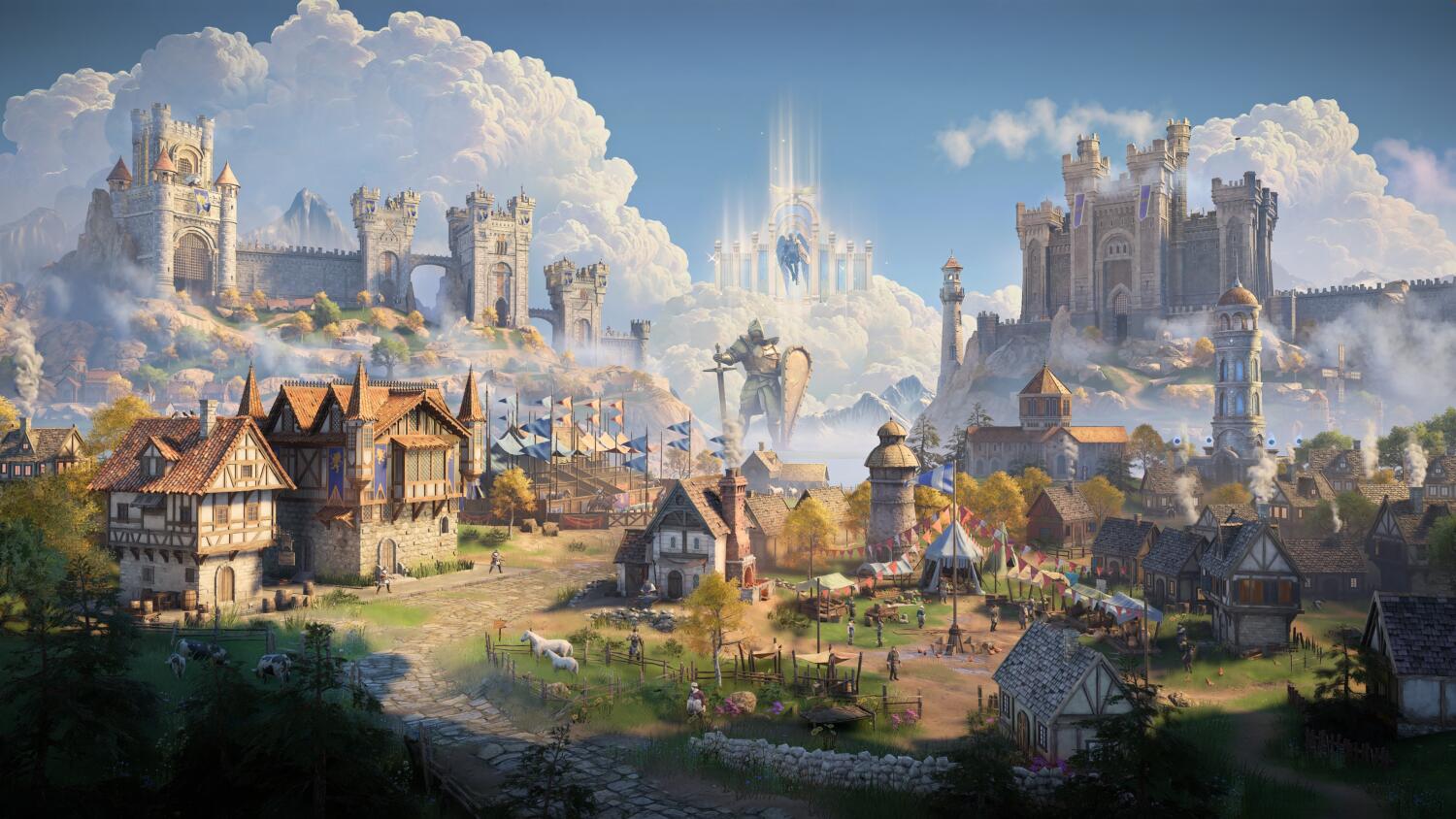
Rebuilding a classic video game is always a tricky endeavour, and that’s why Ubisoft is taking a two-pronged approach for this remake, focusing its efforts on not just preserving the gameplay legacy of the original while modernising its visuals, but also paying respects to another reason why the game was so well-loved – its fan community.
While the original Heroes of Might and Magic III already provided a wealth of content thanks to a hefty main campaign, the Restoration of Erathia, and two expansions – Armageddon’s Blade and The Shadow of Death – the fun didn’t just end when the credits rolled. The game included a level editor for players to create and share their own playable maps, and has maintained enduring popularity thanks to its healthy modding community supported by its development team, with notable mods like 2001’s In the Wake of Gods and 2011’s Horn of the Abyss adding fan-made units, creatures, and even entire campaigns.
Heroes of Might and Magic III Remake is set to continue this legacy, as not only will the remake launch with all the original’s expansions, it will also feature updated versions of the game’s map and campaign editors at release, with Ubisoft also teasing more editing features to come at a later date. Additionally, the remake will also integrate mod.io, offering players a platform to easily create and share their own fan-made experiences, with Ubisoft adding that the remake will be compatible with 25 years of community-created maps.
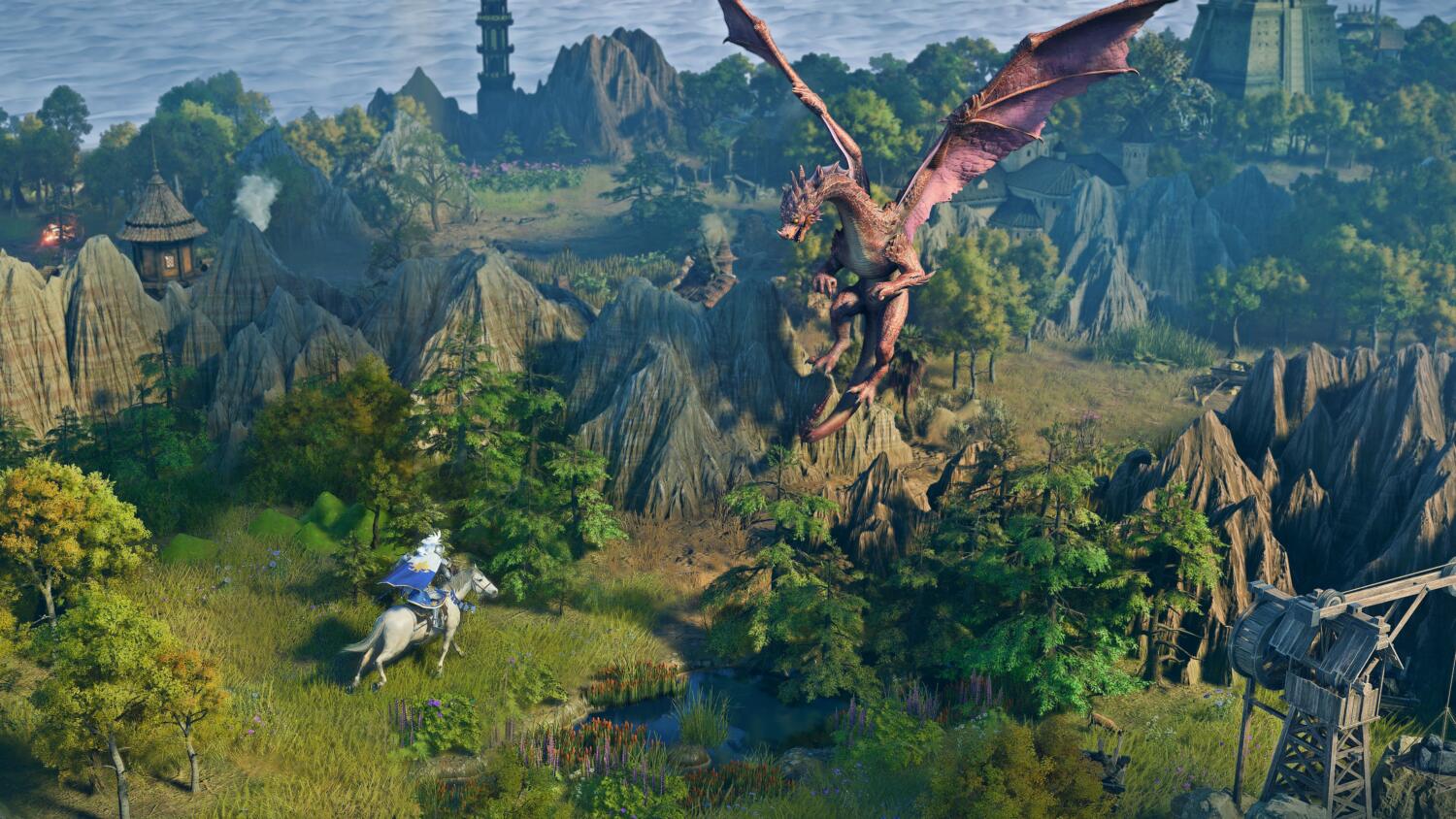
While Geek Culture was not able to see how extensive these content creation tools will be, what we were able to get our hands on was a lengthy two-hour preview of the upcoming remake, which included a playthrough of a section of the game’s prologue, The Queen’s Departure, as well as a Free Play scenario set in an updated version of one of the game’s original maps, ‘Arrogance’.
Serving as a short tutorial section meant to familiarise us with the game’s controls and combat systems, the opening prologue mission in the preview sees protagonist Queen Catherine Ironfist preparing to leave for her home Kingdom of Erathia in a brand-new three-part tutorial campaign designed to teach new players the ropes. This brief campaign section also showcased the game’s enhanced visuals, which reimagine the original 2D sprites into full 3D characters and environments.
Much like the original, the game plays out in the turn-based format, with players having only a set number of moves per character before the end of a turn (aka a “day”). Once players encounter and engage an enemy, the game then transitions into a grid-based encounter layout, with the units of the two engaging forces lined up on each side of the grid.
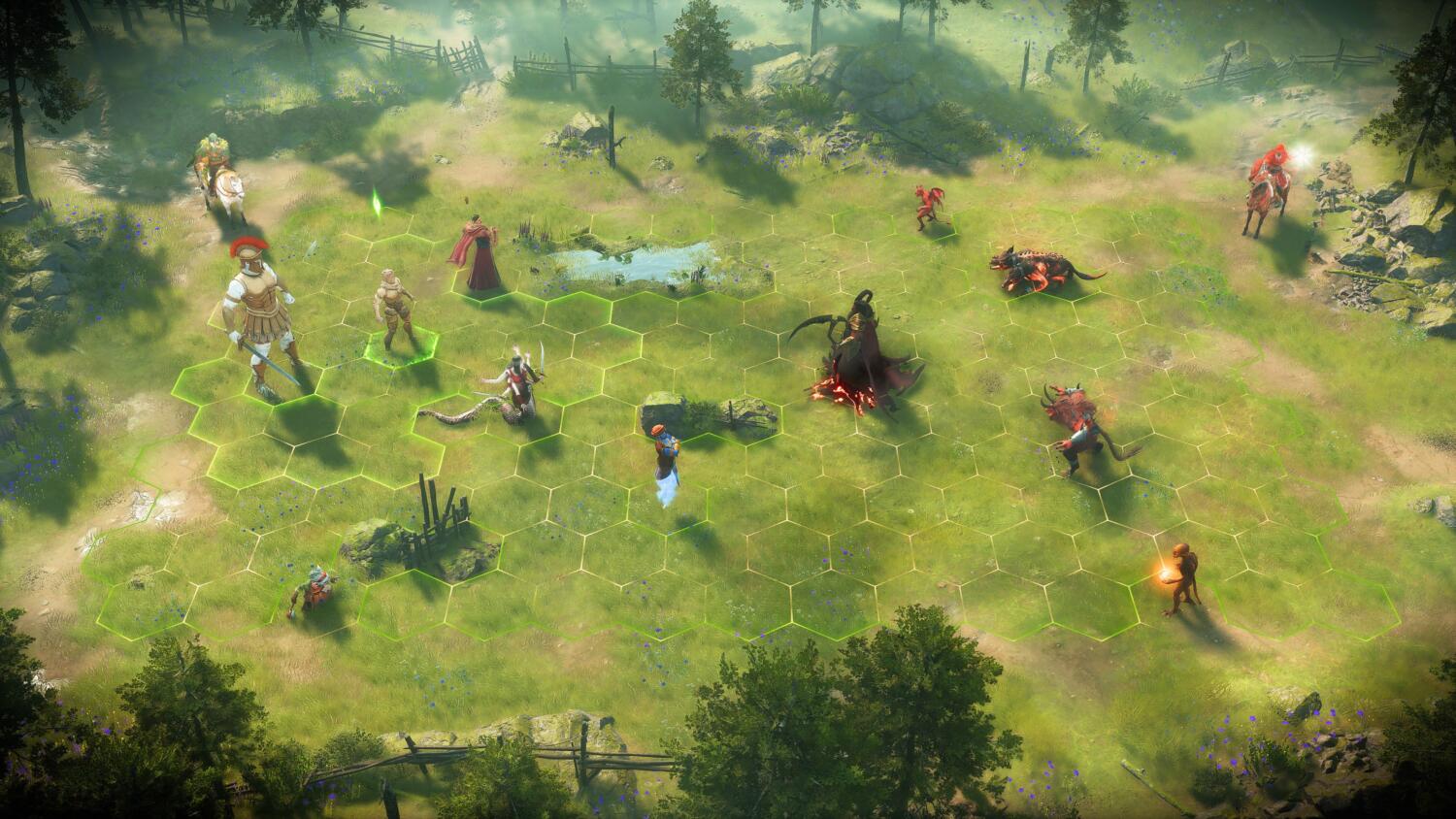
In Heroes of Might and Magic III Remake, units aren’t represented by multiple characters on-screen at once, but instead by a single “stacked” unit. This means that if a player has 20 pikemen, for example, the game will still show a single pikeman on the battle grid, but his health and attack power will be the combined total of all 20 units.
Each unit also has its own movement range, as each side takes turns to move their individual units across the grid and into attack range. While melee units can only attack when next to a foe, ranged units operate slightly differently, with their attacking strength differing based on how far away their target is. Additionally, when faced with an opposite unit next to it, ranged units are forced to engage these forces in melee, which puts them at a major disadvantage, so the best move would be to relocate them once a foe draws near.
With combat basics explained, the preview then transitioned into a Free Play map featuring an updated version of the ‘Arrogance’ map, a relatively small four-player map featuring both a surface and subterranean layer. Heroes of Might and Magic III Remake will feature all nine factions, but for the preview, we were only able to try out four – Castle, Tower, Inferno, and our eventual pick, Necropolis.
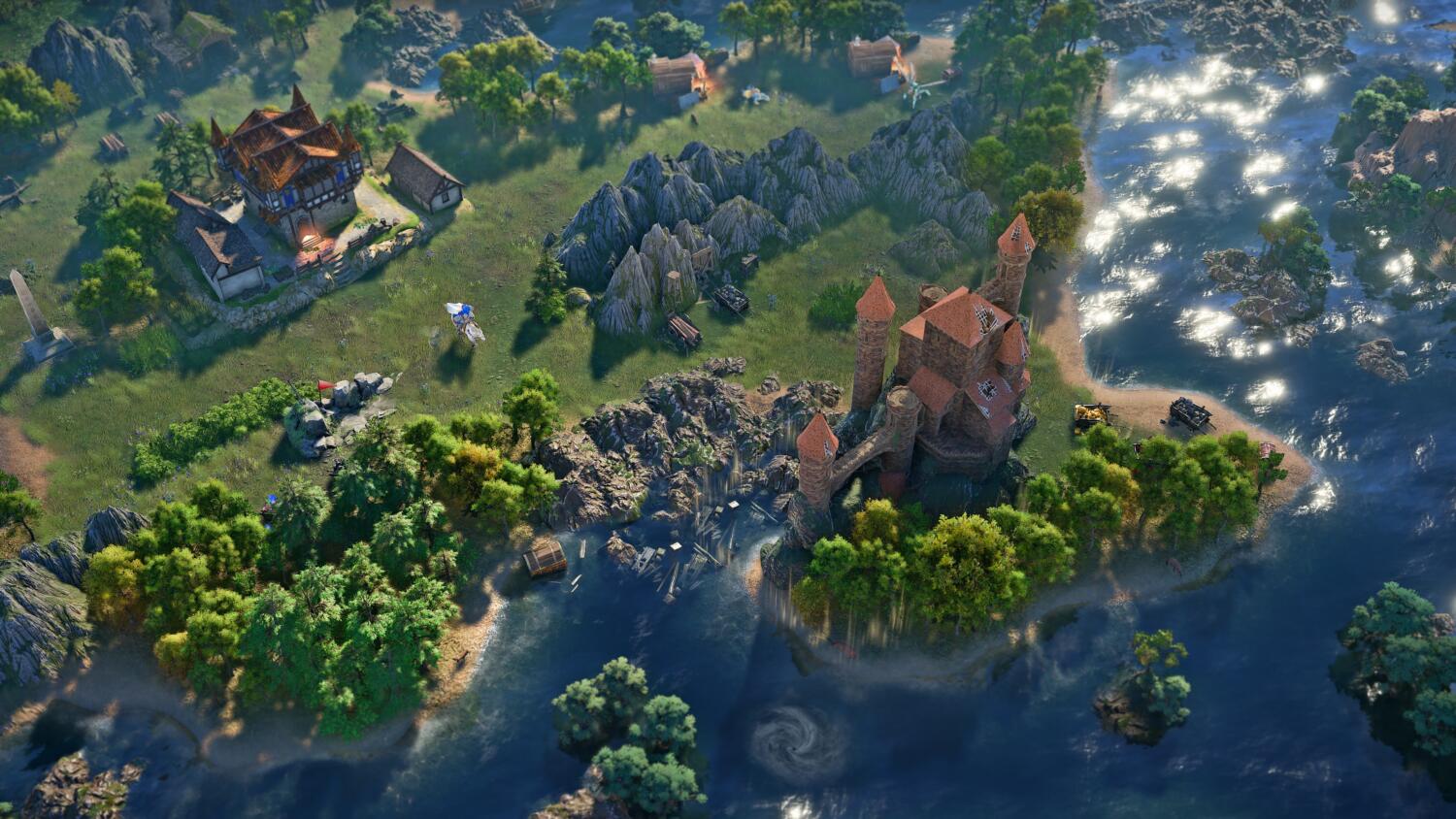
In this section, we were able to try out the game’s familiar loop of exploration, building and unit management, and battles against both NPC creatures spread throughout the map and the units of the opposing three AI forces.
Starting off with just a single stronghold, each new day allows for the construction of one building within the base itself, with players able to choose between constructing structures that provide resources every week, ones that unlock new abilities, or ones that train a set number of a particular type of unit each week, which can then be recruited into the player’s army for resources.
Thus begins the gameplay loop, where each day starts with unlocking a new building or upgrading existing ones, then using a set number of moves to explore the surrounding areas to pick up resources, capture structures that grant gold or crafting resources, or seek out opposing strongholds and units.
While every match begins with each side having a single commander unit, players can also choose to spend money and recruit leader units, with commanders and leaders able to each have an army of units of their own. Ending a day not only advances time and allows the remaining three AI forces to make moves of their own, but it can also sometimes trigger world events, which have the possibility of adding or reducing a player’s pool of resources.
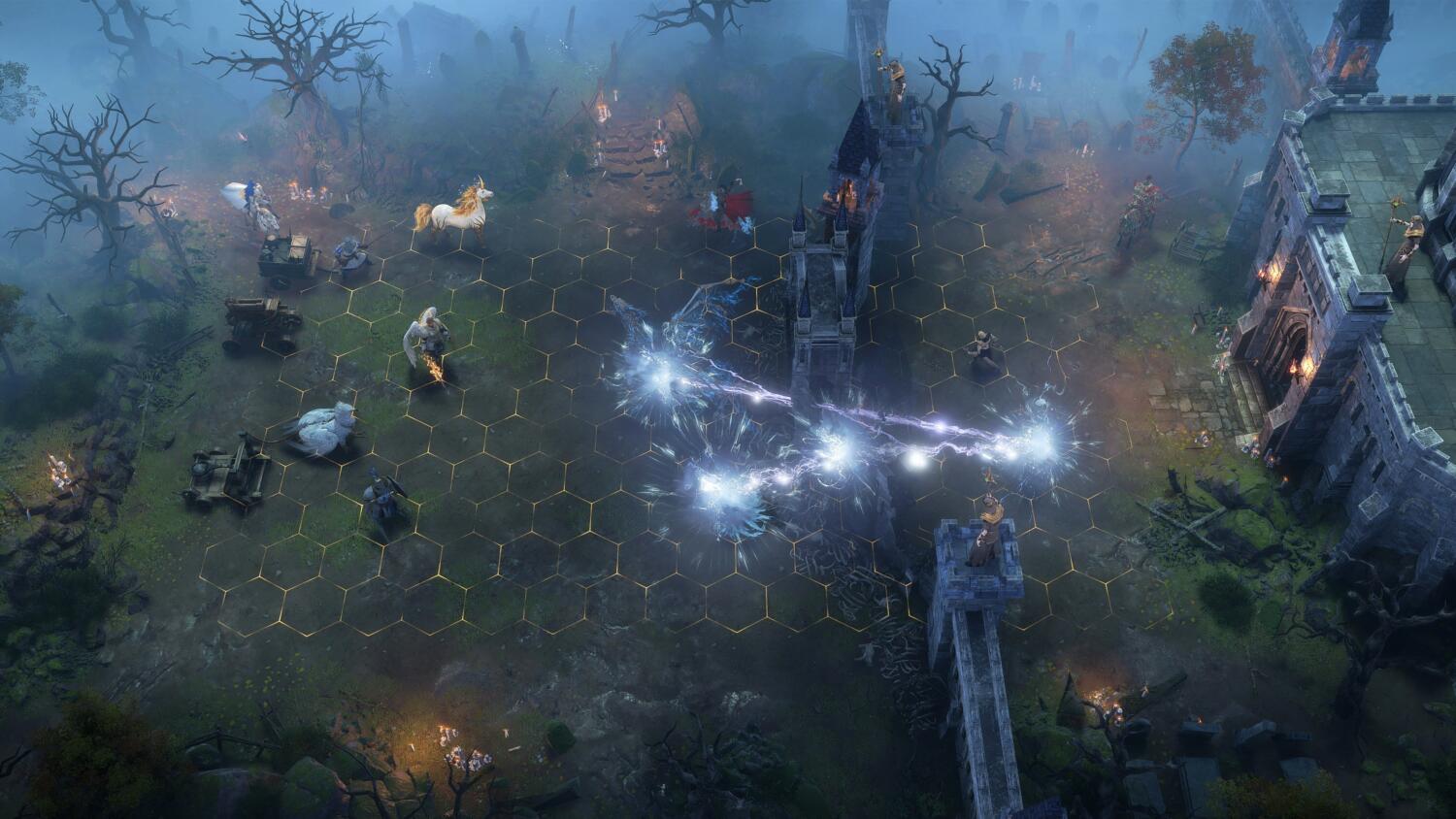
The goal here is to be the last faction standing, and to do this, players have to explore the map to defeat all the opposing leaders and commanders, alongside capturing all enemy-controlled strongholds. While standard battles against units play out similarly to those seen in the tutorial, stronghold battles present a different challenge, as players will first need to tear down the walls of the castle with an AI-controlled ballista before their melee troops can enter attacking range.
Enemies can also attack the player’s stronghold, so they need to ensure that these important locations are well-defended. To do this, players must recruit units like before, but instead of adding them to their army, they must leave them inside the stronghold to serve as defending units.
Additionally, while commander and leader units don’t show up on the grid itself, they can still aid in battle by activating skills, such as the ability to call down a lightning bolt from the sky or, in the case of the Necropolis, reviving slain units from the dead. Players will also be able to equip these characters with armour sets or items, which provide attack and defence bonuses to every single unit on the battlefield.
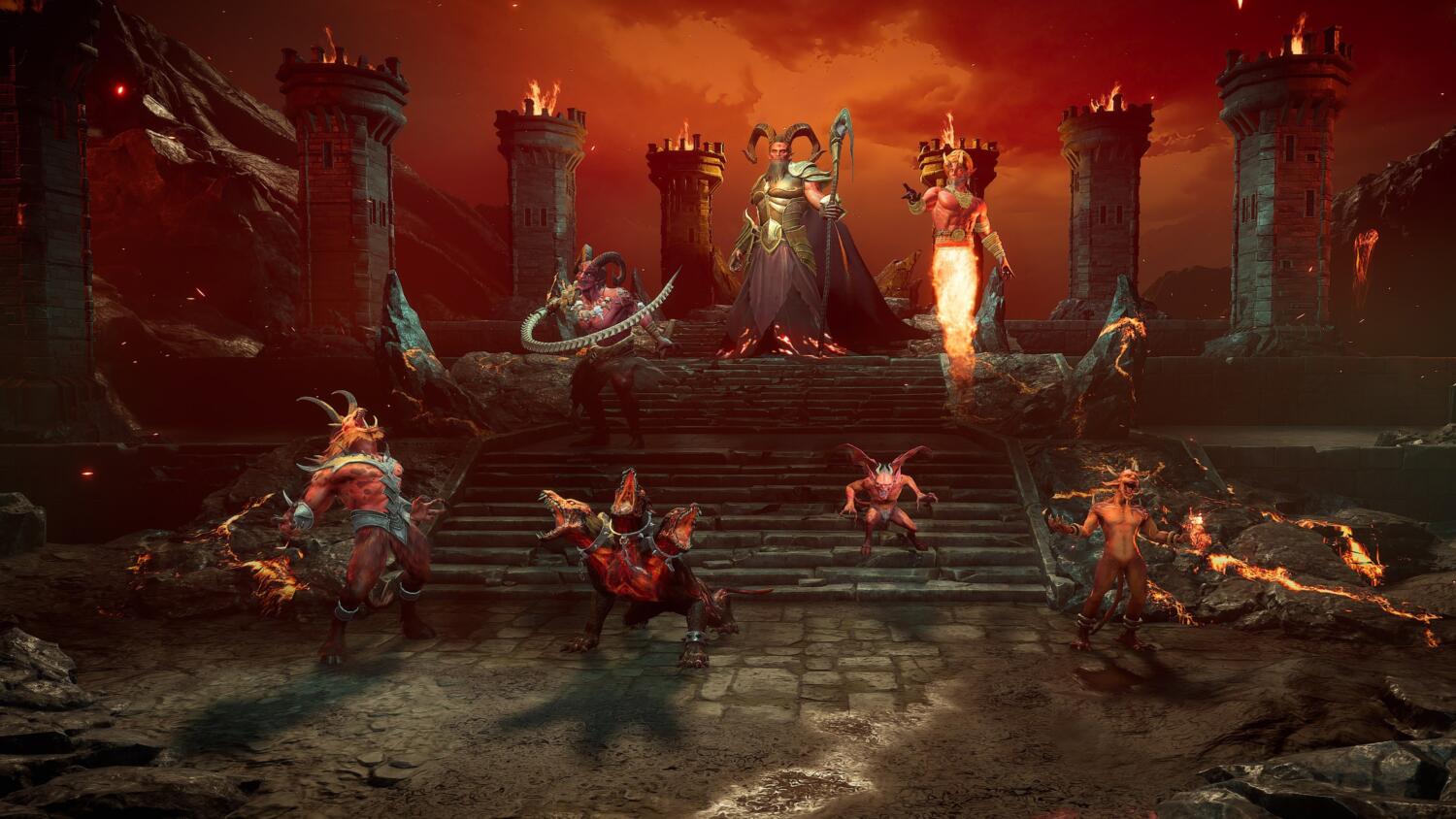
Even though we chose the Necropolis faction, it didn’t mean that we were limited to having undead troops. Each stronghold on the map was themed after a different faction, meaning that once we captured an Inferno stronghold, we were then able to build the faction’s buildings to recruit demonic units into our army.
While ‘Arrogance’ is considered to be a relatively small map, skirmishes didn’t play out quickly, as after almost two hours, we only managed to defeat and conquer all of just one of the AI opponents’ units and buildings. Even then, this conquest only occurred on the subterranean level of the map, with the two remaining factions fighting a battle of their own on the snowy surface level, which can be accessed via a portal. Said portal is right in the middle of the map, meaning that players must be on guard to defend against an attacking force that can invade at any time.
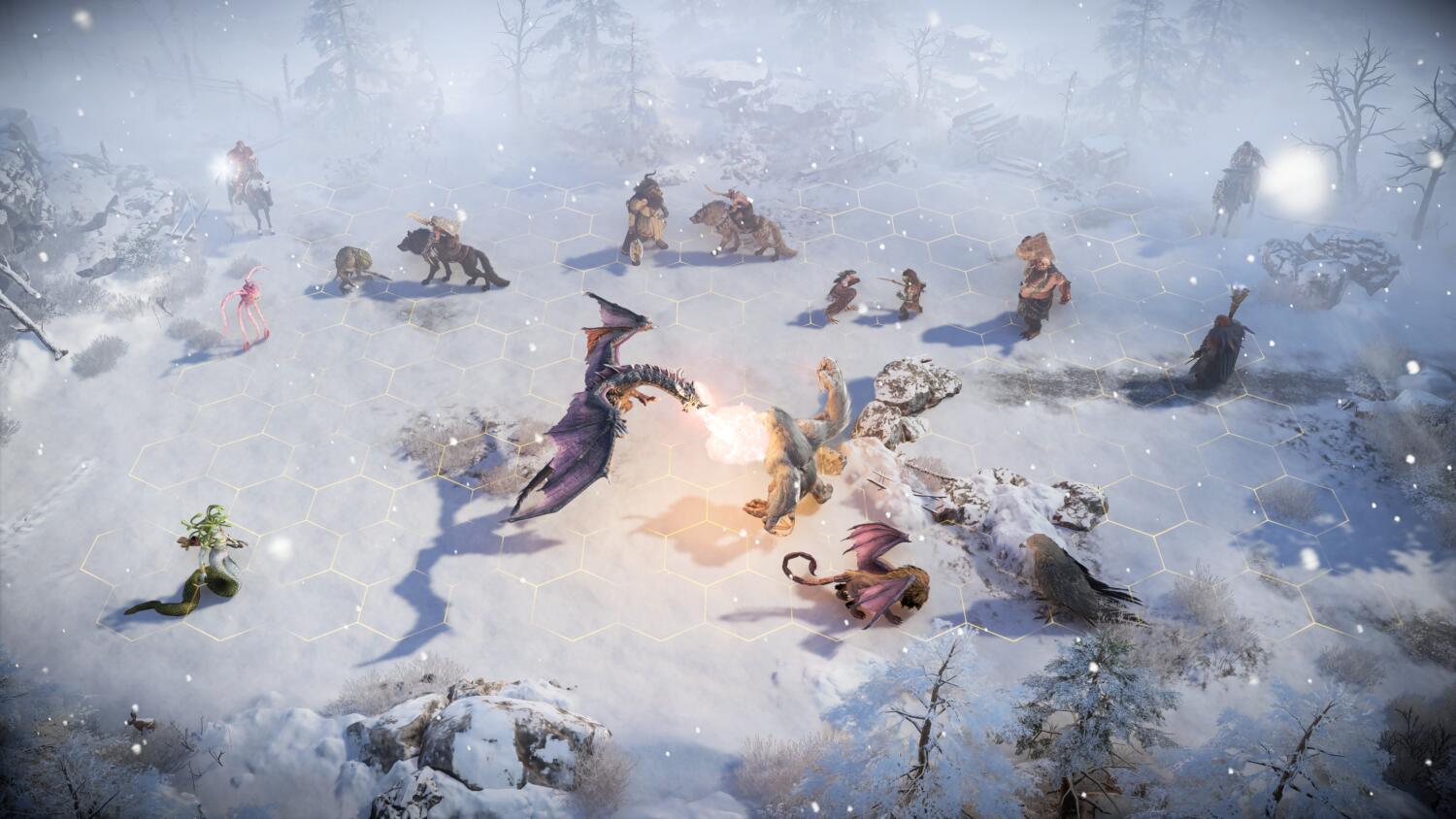
With this preview session, it’s clear that Heroes of Might and Magic III Remake is still keeping things familiar for fans under all its shiny new 3D graphics. The remake is not just easy to jump back to for franchise veterans, but it also introduces new systems like the tutorial campaign and cleaner, updated UI layouts to ease the learning curve for beginners, making it poised to recapture the (might and) magic of the original. The question now lies in whether the remake can foster the same community spirit of the original when the game launches in 2027 for the PS5, Xbox Series X|S, and PC.

Kevin is a reformed PC Master Race gamer with a penchant for franchise “duds” like Darksiders III and Dead Space 3. He has made it his life-long mission to play every single major game release – lest his wallet dies trying.
 Si Jia