Director James Cameron has never been afraid of a good sequel. Whether pushing the boundaries of practical effects in Aliens (1986) or reshaping action cinema with Terminator 2: Judgment Day (1991), he has built a career on occasionally returning to familiar universes and somehow making them feel bigger, bolder, and more cinematic the second time around. His fascination with water, technology, and otherworldly environments has threaded through decades of filmmaking, from The Abyss (1989) to Titanic (1997), culminating in the sprawling alien seas and floating mountains of the alien planet Pandora. Let’s be real, not many directors have blended spectacle and control with such relentless consistency; it is a display that blends art and technology like no other.
When the first Avatar was released in 2009, it delivered groundbreaking visuals, 3D technology that refused to be a gimmick, and a digital world that felt lived-in, tactile, and strangely beautiful. The box office numbers were staggering, becoming the highest-grossing film of all time with around US$2.92 billion worldwide, making it the first film to cross the billion-dollar box-office ceiling. The 2022 follow-up, Avatar: The Way of Water, reignited the franchise with aquatic wonder and familial stakes and Cameron’s newest sequel, Avatar: Fire and Ash, arrives as a continuation of the Avatar saga.
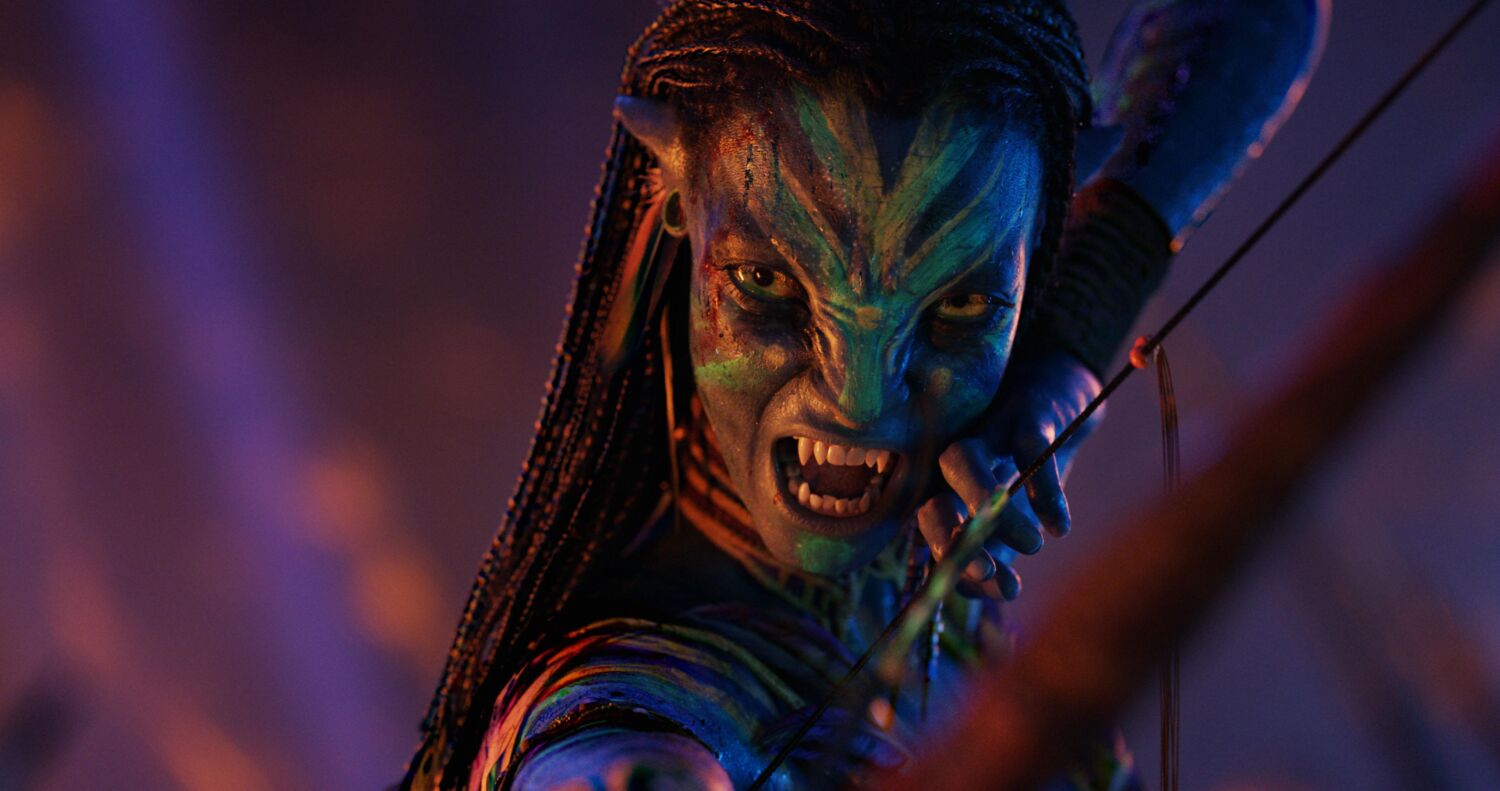
The story resumes almost immediately after the events of the 2022 sequel. Elder son Neteyam (Jamie Flatters, The School for Good and Evil) is dead, killed in battle between the Resources Development Administration (RDA) and the Metkayina clan, and his loss sits heavily, especially for Neteyam’s mother Neytiri. Zoe Saldaña (Guardians of the Galaxy, Star Trek) returns to deliver a performance laced with fury and devastation, charting Neytiri’s psychological descent as she struggles with how to lead, how to protect, and how to keep her family from splintering under the pressure of vengeance and grief. Her pain is not clean nor is it quiet; it ripples through her actions and undermines even her closest bonds.
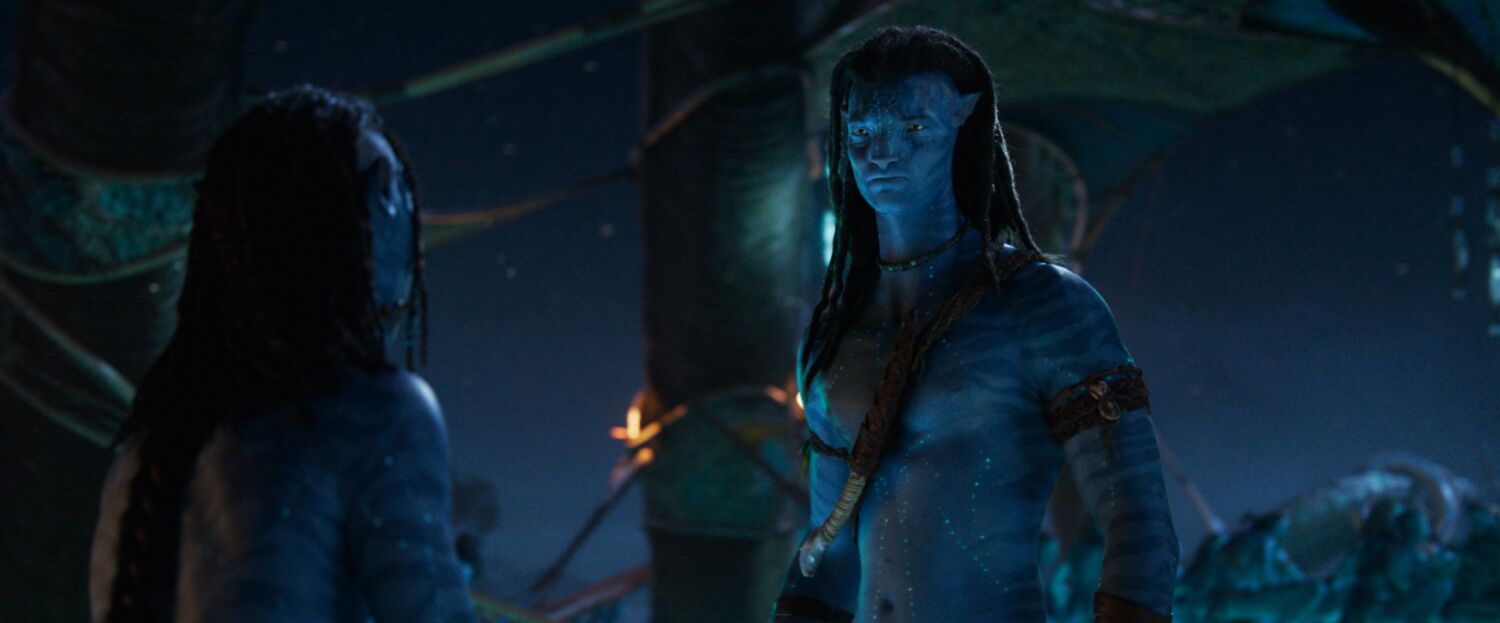
Jake Sully (Sam Worthington, Clash of the Titans), her human partner in battle, husband and father to the children Kiri (Sigourney Weaver, Alien), Tuk (Trinity Bliss, The Really Loud House), Lo’ak (Britain Dalton, Uncharted 4: A Thief’s End), and Spider (Jack Champion, Scream VI), finds himself equally adrift. He remains the narrative’s connective tissue – once human, now fully Na’vi, yet never quite free of the systems he used to serve. Together, they carry the film’s moral tension – what does leadership look like when every decision leads to more ruin?
Grief casts a long shadow, but the film still manages to thread through quieter human (or Na’vi) moments. Spider, the human boy raised among the Sullys, finds his place in the family uncertain. When his oxygen mask begins to fail early in the film, it’s a reminder of how close he is to death every day, even as he fights to belong. His vulnerability prompts the family to send him away for his own safety, which ends up with them travelling with the nomadic Tlalim clan, also known as Wind Traders, led by Peylak (David Thewlis, Harry Potter and the Prisoner of Azkaban).
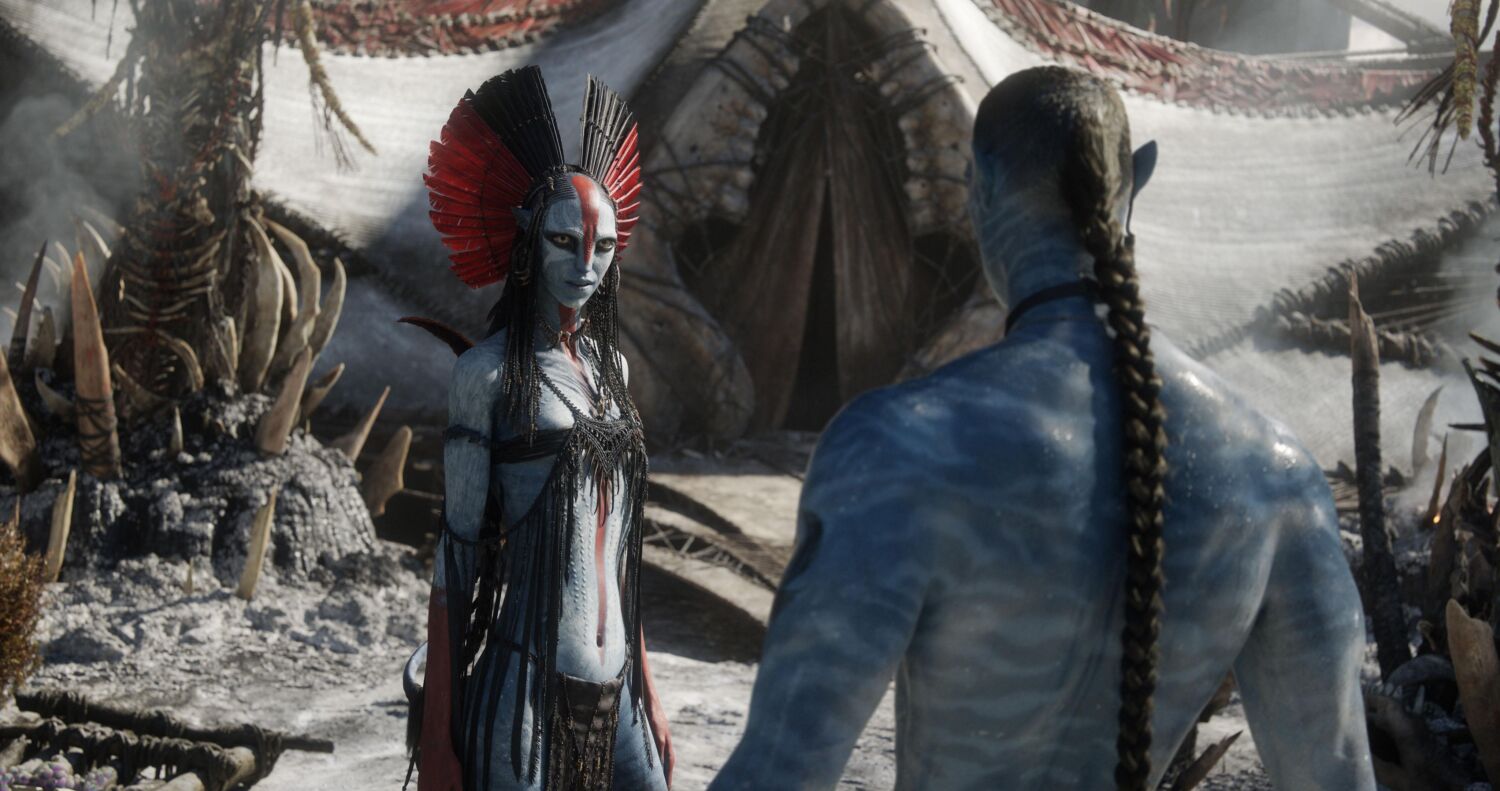
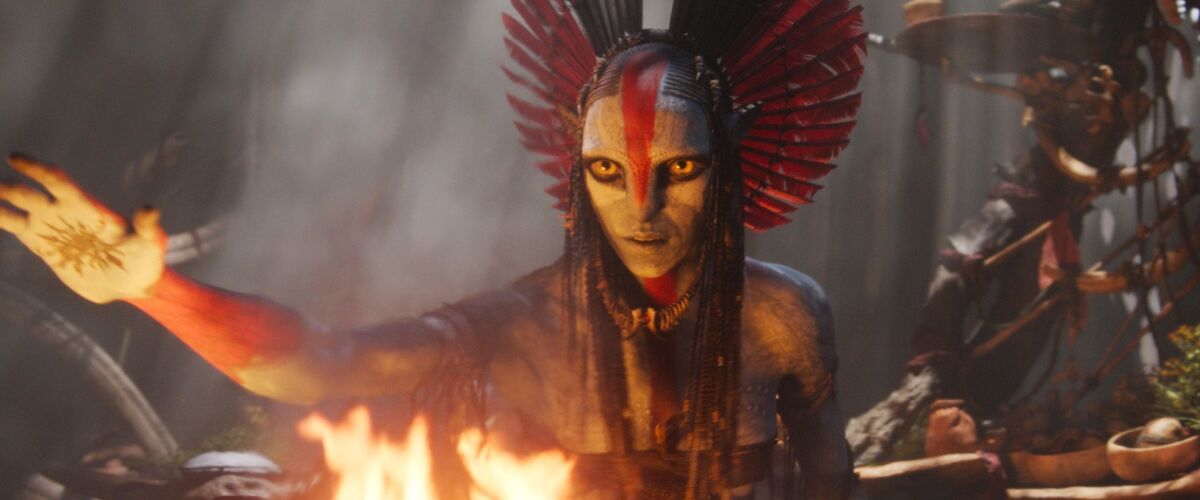
Any hope of a peaceful journey is short-lived when the Wind Traders are ambushed by the Mangkwan Clan, also known as the Ash People, who are unlike any Na’vi tribe introduced before. Painted in scorched reds and ash grey hues, the Ash People have turned their backs on Pandora’s deity Eywa, embracing power and vengeance in her place. Their leader Varang (Oona Chaplin, Game of Thrones) bursts onto the screen in a blaze of fury and fire, a character at once arresting and unnerving, getting respect (and more) from Colonel Miles Quaritch (Stephen Lang, Don’t Breathe), now less a one-note villain and more of a parasitic fixture in Pandora’s ecosystem.
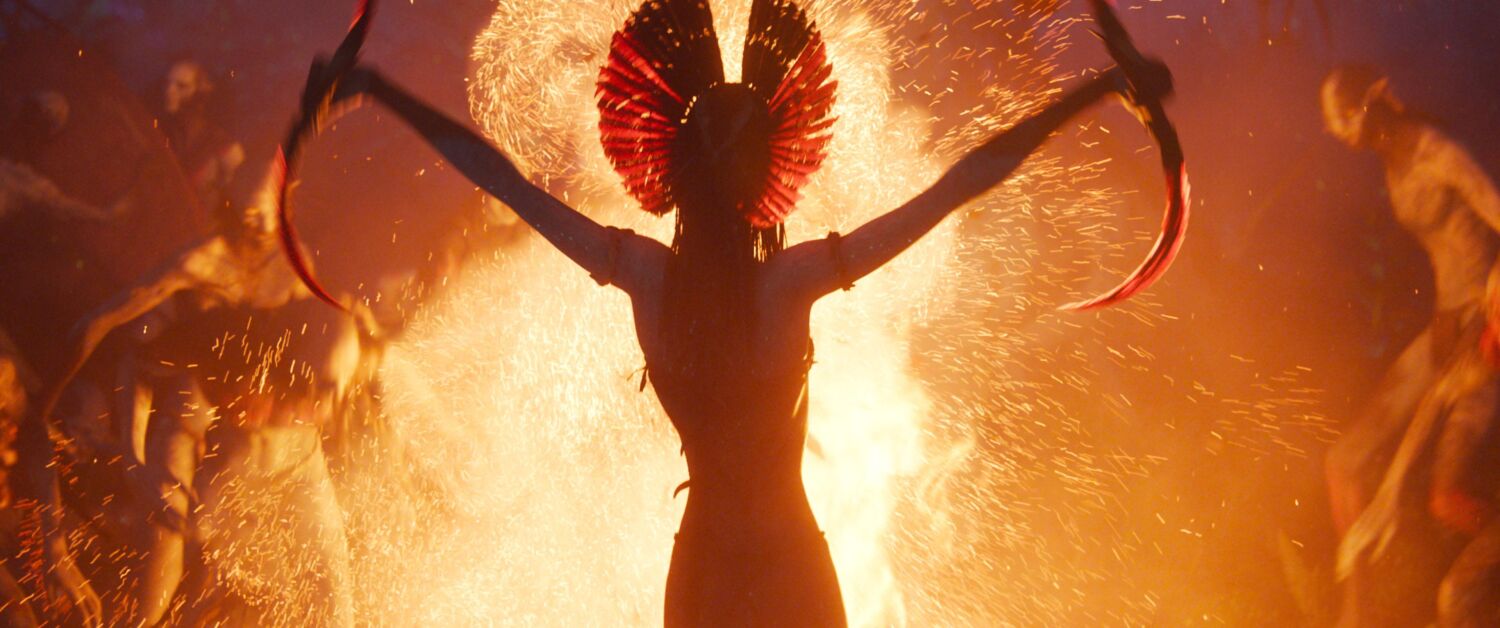
If Neytiri turns to Eywa for spiritual healing after loss, Varang is her foil as rage incarnate – a woman who watched her Hometree fall from a volcanic eruption and chose to let the burn become her religion as a huge f***-you to Eywa. One of the film’s most striking scenes is her hallucinatory sequence – a chaotic, psychedelic detour that allows Cameron to unleash his more… deranged visual sensibilities. He resists offering easy answers here, allowing the Mangkwan Clan to exist as both tragic and threatening, a rawness and unpredictability that previous films often lacked.
Internal conflicts also dominate this chapter, with inter-clan disputes replacing the usual human-versus-Na’vi battles. That shift allows for more personal reckonings notably for Spider, whose bond with his adoptive family deepens in the wake of Neteyam’s death, and his continued entanglement with his biological father Quaritch gets even murkier. Having a war criminal for a dad is one thing. Having that dad resurrected as a Na’vi, whom he actually longs to be, and seeing his old man continuing his descent into villainy is another entirely.
What’s more curious, though, is the fact that Spider started adapting to Pandora’s atmosphere. Kiri attributes it to Eywa, as if divine intervention is now a patch for basic biology. As Avatar leans harder into its spiritual mechanics especially with Kiri now portrayed with near-saintly resonance, it loses some of its internal consistency. Her messiah-like powers, including unexplained healing and communion with nature, drift into quasi-mythic territory that sits awkwardly against the franchise being grounded in scientific plausibility. Cameron once touted Avatar’s ecological authenticity and real-world research, but now we’re deep into holy Pandora Jesus territory.
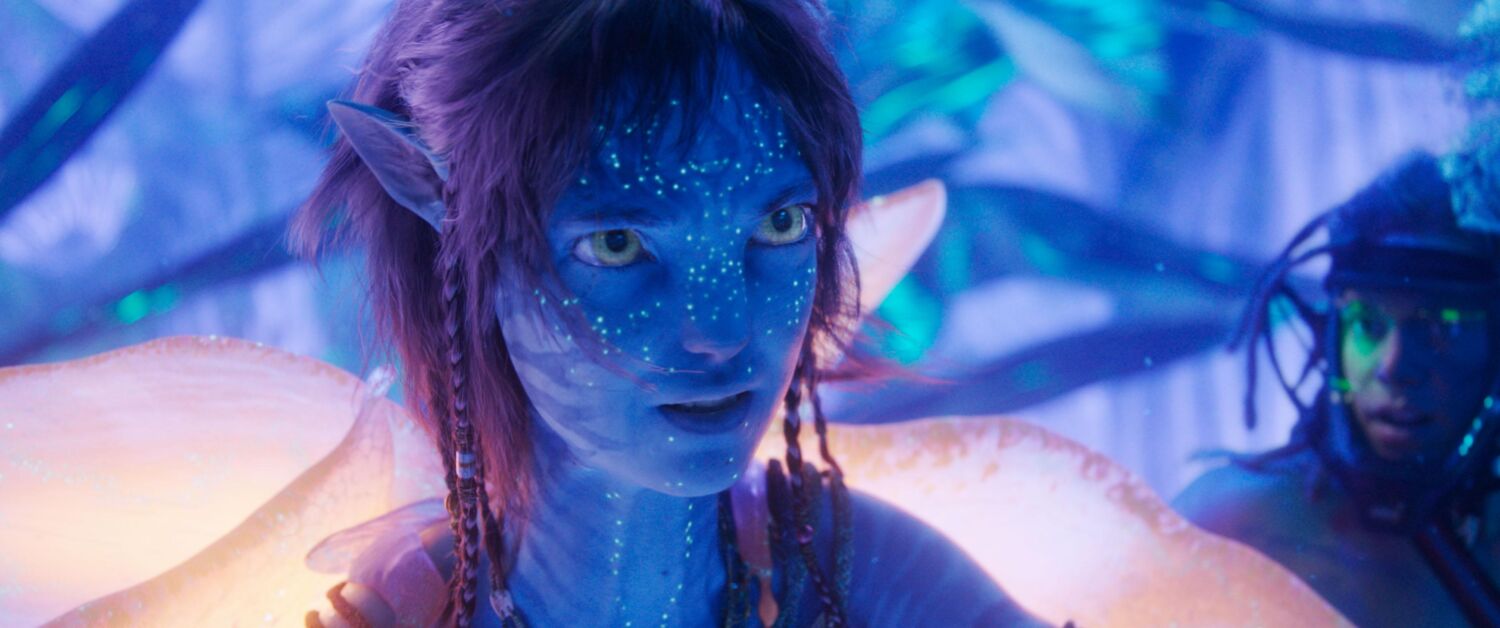
That’s always been Cameron’s greatest weakness, even in his strongest films – his fondness for coincidence. Bad guys fall because they conveniently fumble the bag, rescue comes right when all seems lost, and plot twists hinge on accidents. There’s a thin line between fate and convenience, and Avatar: Fire and Ash spends much of its runtime on the wrong side of it. The world is still a marvel to look at, but when storylines and turning of tides hinge on deus ex Eywa, even the most breathtaking visuals start to feel untethered.
For all its visual dazzle, the film leans heavily on familiar rhythms so much so that it seems like a reassembled echo of its predecessor, making it harder to justify its draggy 3 hours and 17 minutes runtime. Conflicts repeat, character beats are recycled, even with unobtanium rearing its head once again, playing out nearly beat-for-beat. It’s probably a reflection that this and the last film were originally written as one but it got so unwieldy that Cameron had to ally it and it’s rather obvious that parts of this script were originally part of Avatar: The Way of Water’s production pipeline, and written and filmed together.
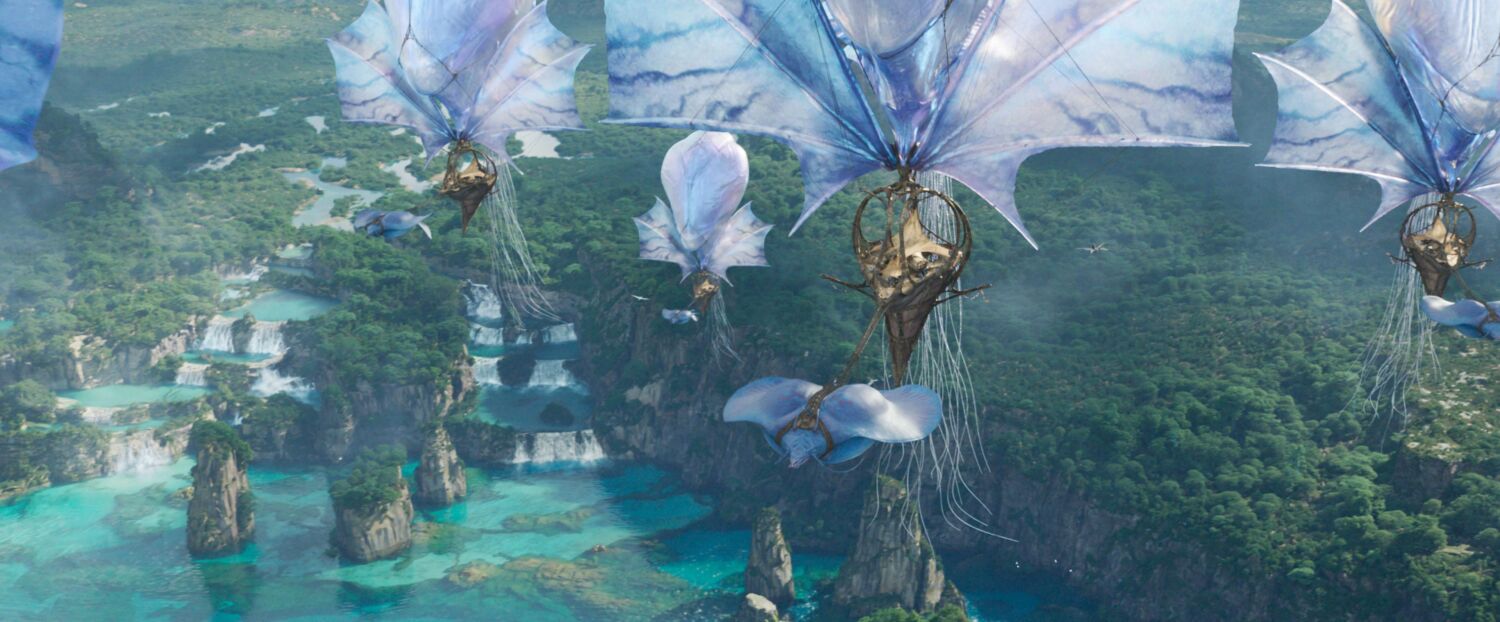
What keeps the film afloat is the sensory experience. Pandora has never looked more dangerous, or more alive. Russell Carpenter’s (Titanic) cinematography once again renders the alien world with an almost tactile clarity, aided by Simon Franglen’s (Skyfall) swelling score. The film’s third-act set pieces are some of the most visually arresting scenes Cameron has ever shot, blending fire, water, and flight in sequences that feel operatic in scale. Even as the script slips into repetition, Pandora refuses to be ignored. And that perhaps is Cameron’s unspoken ace – despite the recycled plot points and timeworn dialogue, his grip on visual immersion remains ironclad, daring you not to feel something.
Three films in, it’s fair to wonder how many times Cameron can return to the same well for the next two planned movies without it running dry. Where can this saga go next? If future chapters finally let the story leap as far as the visuals already have, there might yet be fire enough to forge something new.
Avatar: Fire and Ash will ignite cinemas on 18 December 2025.
GEEK REVIEW SCORE
Summary
For those already enamoured with the visual candy of Pandora, Avatar: Fire and Ash may be enough. But for anyone hoping the saga would evolve, it’s hard not to wish that Cameron, with all his tools and talent, had aimed for new ground rather than a retread.
Overall
8/10-
Story - 7/10
7/10
-
Direction - 8/10
8/10
-
Characterisation - 9/10
9/10
-
Geek Satisfaction - 8/10
8/10

Natalie is a big fan of anything related to movies, TV shows, and anime — you name it. When she’s not reading or being a dedicated cinephile, she’s probably playing gacha and tabletop games, or daydreaming of Caleb from Love and Deepspace.

 Kevin Low