

Rhythm games are seemingly straightforward on paper – match the on-screen button inputs to the beat of the music, rinse and repeat, and maybe set a new high score along the way. But simple isn’t the same as easy, and maintaining an unbroken streak from start to finish often remains a challenge, especially in stages with higher beats per minute (BPM) or tapping through tunes with an irregular tempo.

The formula has only evolved since, with the early days of Rock Band, Guitar Hero, and all-time arcade favourite Dance Dance Revolution paving the way for osu!, Beat Saber, and Tango Gameworks’ Hi-Fi Rush, which incorporated combat into the musical experience. Marking a long-awaited return in over a decade, Rhythm Heaven Groove revisits the basics that have shaped its identity – a rudimentary control scheme, a cartoonish art style, and quirky humour – and, cue music, continues to charm. While a little dated in some ways, this latest instalment still delivers a rewarding, enjoyable time.
Like its two predecessors, there’s no overarching narrative here. The gameplay loop is centred on a collection of rhythm-based minigames, where players must follow auditory and on-screen cues (typically more of the former) to perform various actions with different button presses, such as a quick tap, a hold, or a simultaneous two-key execution. It’s a familiar marriage of creativity and absurdism for veterans, divided into eight base levels, each with four titles, culminating in a Remix stage that combines all the experiences into one collage.
More challenges lie ahead, and once players reach the end, one of four performance ratings will be shown: Keep Trying, Good, Very Good, or Amazing. “Good” is the minimum prerequisite for progression, while scoring an “Amazing” earns Medals that can be used to unlock additional bite-sized adventures within a sub-menu. It also opens up the opportunity to go for a Perfect playthrough, but here’s the catch – a flawless run alone doesn’t automatically grant the special badge, as it’s only attainable during a specific window that Rhythm Heaven Groove picks out randomly, indicated by three small hearts on screen.
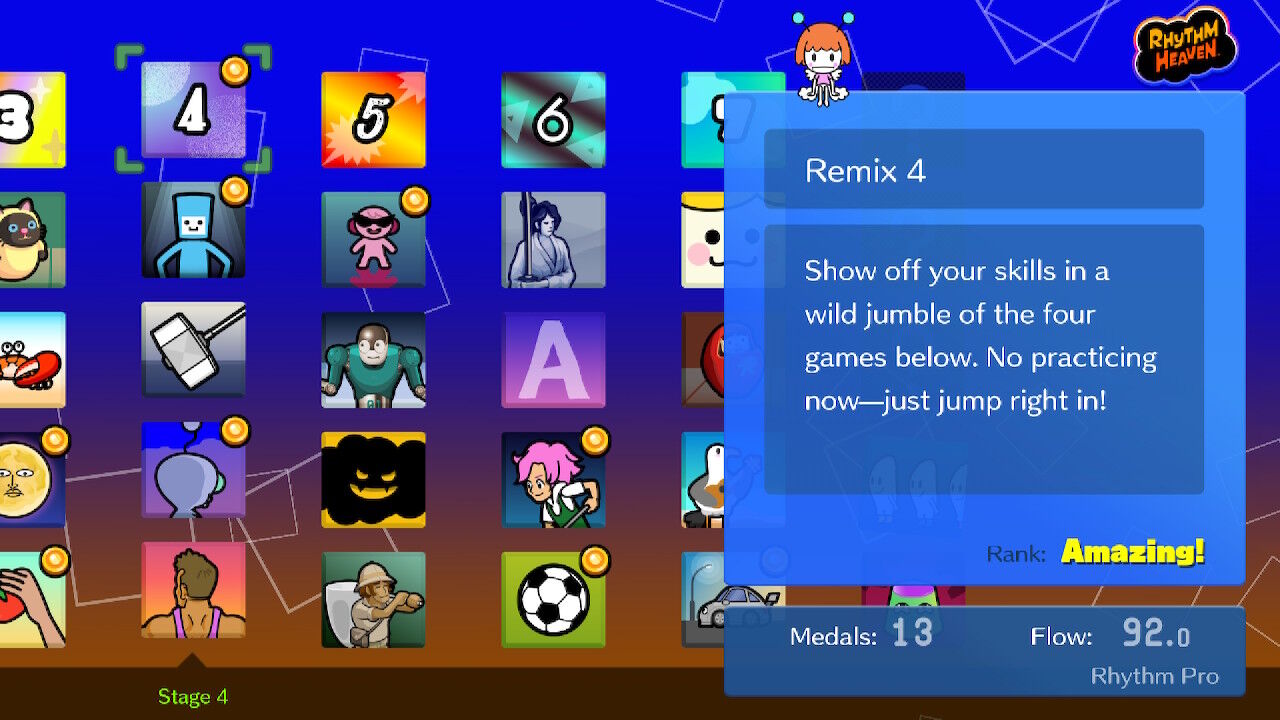
That, of course, refers to the number of attempts available, and the unpredictability proves effective at keeping players on their toes and evoking an addictive rush of satisfaction. It can be a bit of a double-edged sword, however, because waiting for the exact moment while in the zone is exasperating at times, and the inability to restart means unnecessary back-and-forth navigation between the main menu and the stage itself.
The good thing is that unsuccessful attempts don’t usually last long. As is the case with most rhythm games, Nintendo and TNX’s musical title rewards patience and practice, and barring a few exceptions, the bar for clearing a stage is comparatively manageable. Having a brief tutorial before the start of each round is a plus, giving a taste of the beat patterns that will vary across the board, and the unlimited-try system allows for self-learning and accustomisation at one’s own pace.
Naturally, some minigames are more memorable than others. In sheer Rhythm Paradise fashion, there’s a healthy variety to go around, with different characters and mechanics for each. Become a backup dancer for a pop idol? Check. Catch vegetables flying through the air and chop them up? Been there, done that. Time your traps and kicks to the rhythm as a football player? No biggie.
It’s a ball of a time (hah) for sure, but the goofy, oddball scenarios deliver the most fun. Bouncing fruits off the massive biceps of a fitness buff is always an entertaining sight, and fitting the letter ‘A’ into the frame against a backdrop of stock images – in a level aptly titled ‘A for Effort’ – brought out incessant laughter on the first attempt that it ended up with a failing score. Beyond the lighthearted entertainment, the infectious energy reduces the sting of unsuccessful runs as it usually takes a few tries to get the hang of things, even with the tutorial.

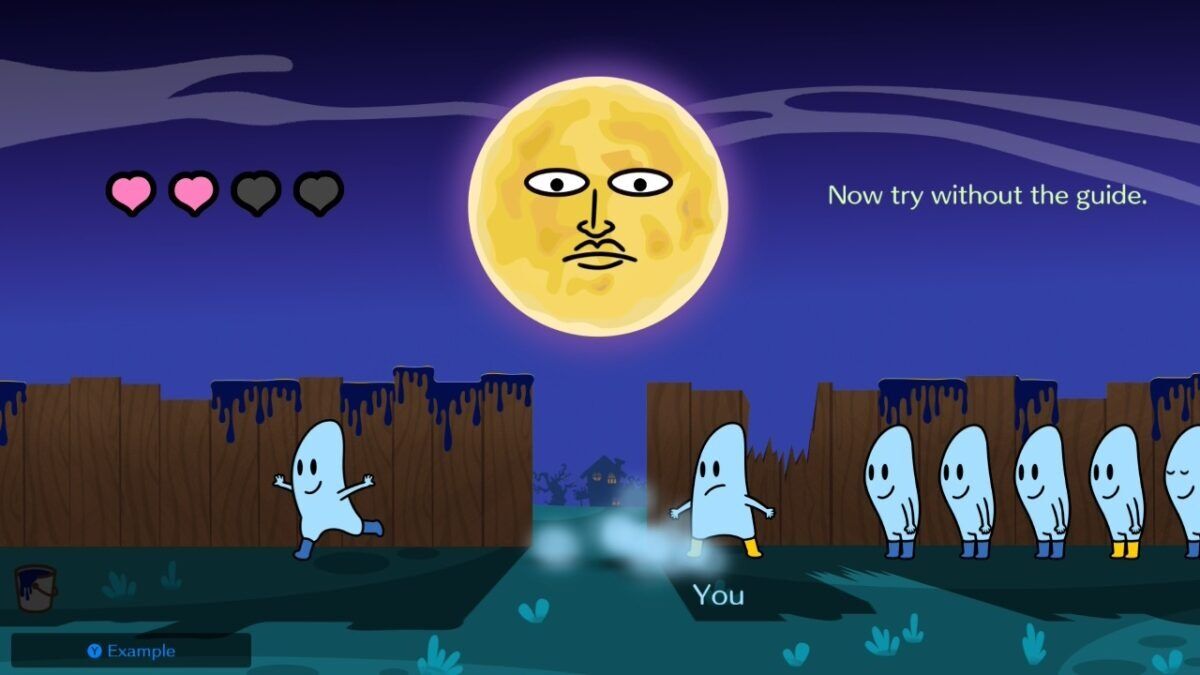
Then, there are the deliberate curveballs to consider. Alongside sudden tempo switch-ups (looking at you, Sneezy Moon) and a combination of buttons and the D-pad that evokes its Game Boy Advance roots, specifically Rhythm Tengoku, certain stages will introduce visual distractions or obstructions, forcing players to rely more on audio cues. In Hop & Slide, for instance, a bug turns the software, coded by a young girl for her programming class, into a glitching sequence with a faster BPM and offscreen visual indicators. Disc Dog and Pop, Don’t Drop, among others, have similar tricks up their sleeves as well, taking the form of an off-beat button press on the seventh count (as opposed to the eighth) and zoomed-out camerawork, respectively.

Fortunately for the affected, Rhythm Heaven Groove can be played with eyes closed. Both Alien Alphabet, featuring two alien-human conversations with distinct rhythms, and Stop N Go N Stop, in which players must accelerate or brake at the same time as two other cars, were significantly easier to handle without looking at the screen, each coming up to two missed prompts at worst. The gameplay also caters to differently-abled individuals, including those with reduced vision and hearing capabilities, with an accompanying text-to-speech voiceover adding a thoughtful finish.
A minor gripe here is that the soundtracks don’t always incorporate the audio cues into the music well, creating a sense of disconnection between the action at times. Strangely enough, none of them is particularly memorable, either – while the pop songs are individual head-boppers, it’s difficult to hum or remember them right off the top of the head. That’s a real pity, given the involvement of longtime series composer Tsunku and well-known Japanese guest singers such as Ado and Yui Sakurai of Fruits Zipper fame.
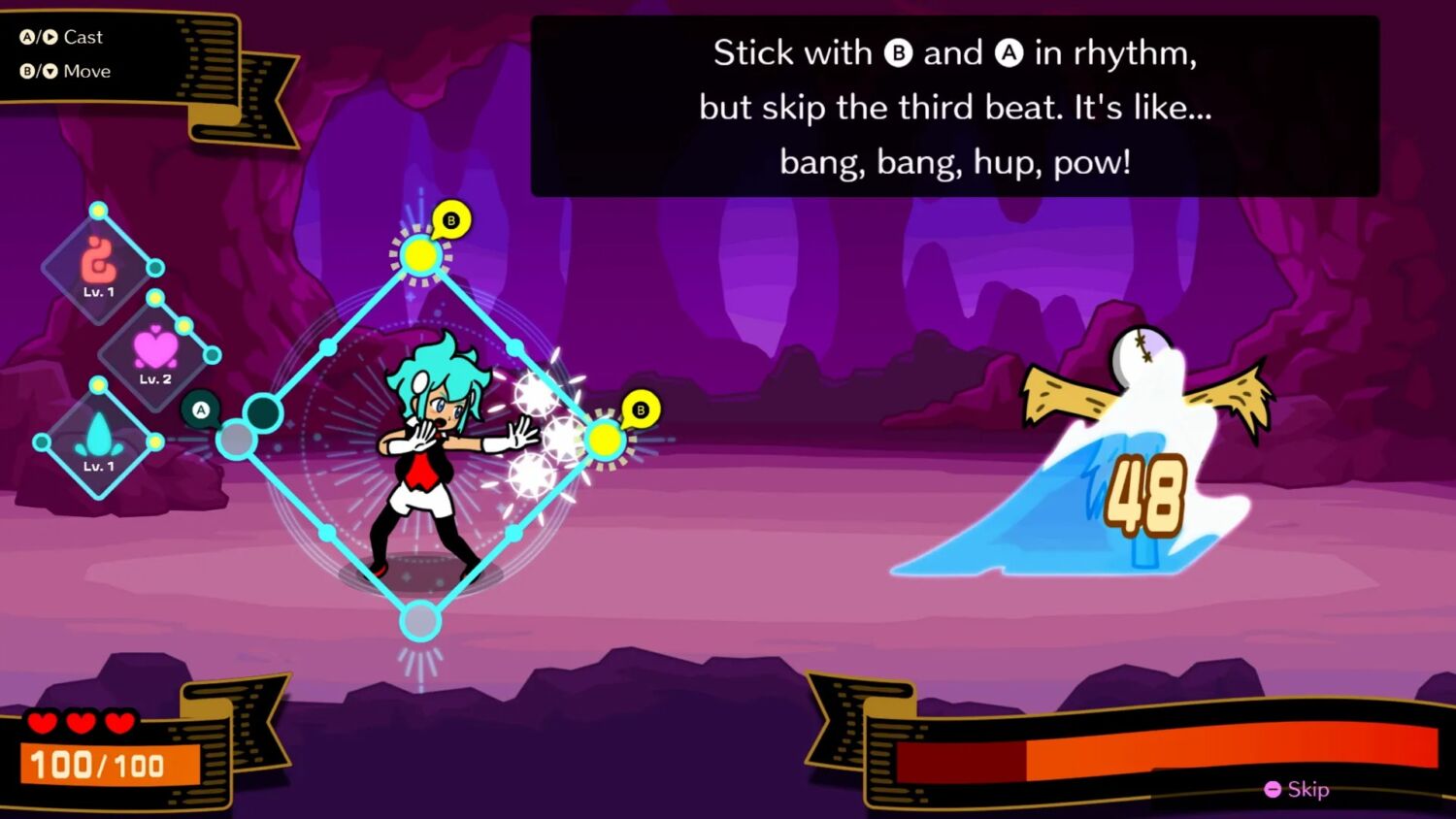
New to the game is Beatspell, and it doesn’t quite stand out as expected. The special mode, available through the previously mentioned side menu, is a riff on the role-playing game (RPG) genre that uses different rhythm inputs to cast fire, water, and healing spells. It starts on a simple note, and as more Medals are earned, the advanced stages wean off reliance on button-mashing by balancing consistent timings with more complex combos. In theory, the formula should inspire novelty, but it quickly grows stale with repetitive level design and tedious boss encounters that often drag out longer than necessary.
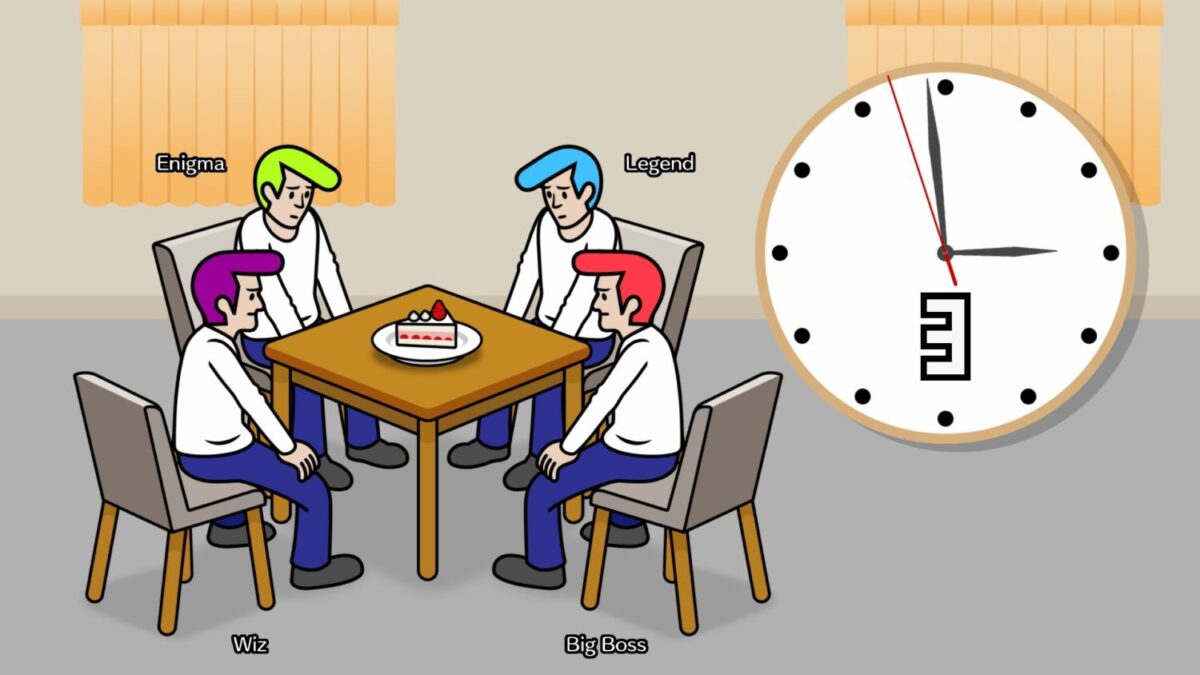
On the flip side, co-op gameplay is a blast. The medley of 10 minigames is split into three variants across increasing difficulty levels and supports up to three other players, made convenient by the plug-and-play nature of the Nintendo Switch controllers. Like the main campaign, there are medals and optional challenges to unlock, and the group will have to complete the first iteration before progressing. It features a fairly balanced mix of collaborative and competitive experiences, but Cake Wait ended up as a personal favourite because of how chaotic it can get.
The premise is deceptively easy – four players around a table attempt to grab a slice of cake at exactly 3pm, and the one closest to the target time wins. The CPU opponents are hardly a threat, so the adrenaline rush kicks in only when the countdown is between zero and one second, with super-tight calls always sparking cries of disbelief and the occasional swear word. In addition to being the record holder among the three of us, my sister has beaten the timer by 0.01 seconds multiple times, which is outrageously impressive and also makes my brother and me all the more determined to beat her. Co-op-wise, a higher headcount is generally better, as it offers more leeway for mistakes and alleviates the pressure of the remaining player to clear the stage.
No matter the mode, Rhythm Heaven Groove performs best in handheld. As genre aficionados would know, musical titles are highly sensitive to latency, and it’s no different here. The game addresses this on every boot-up, including the recommendation to use wired headphones, and the distinction is likely negligible for newcomers. Veterans will beg to differ, however – while their final scores won’t change much, fewer misses and delayed inputs were observed when plugged in. There’s also a dedicated TV sync feature, and credit should be given to the team for the effort, even if docked gameplay still comes with its fair share of precision issues.
Beyond the core offerings, the optional Drum Lesson and Rhythm Toy Mode deliver rhythm fun in different ways, with the Café serving as a welcome reprieve from the action and handing out tips to players. Hopping back and forth between them is nothing short of fun, topped off with the addictive thrill of trying harder and setting a new high score, though the bare-bones user interface (UI) design comes as a bit of a letdown.

It’s comforting to know that Rhythm Heaven Groove still marches to its own familiar beat after all this time. The blend of approachable yet rewarding gameplay, playful charm, and robust variety, including that of the multiplayer suite, marks a warm homecoming and introduction for returning fans and first-timers, respectively. Not every fresh addition hits the right note, and the simplistic mechanics may turn some away, but the sequel is an example of how the process of learning and gaining mastery should feel fun and exciting, which is all that matters when you’re tapping your feet to the music. A demo of the game is out now for those who want to try getting into the groove.
GEEK REVIEW SCORE
Summary
Cementing its appeal in simplicity, Rhythm Heaven Groove packs an entertaining punch for both solo and co-op play. It makes sure to reward dedication and effort, and most importantly, proves that the spirit of fun hasn’t been eroded by time.
Overall
8.5/10-
Gameplay - 9/10
9/10
-
Presentation - 8/10
8/10
-
Value - 8/10
8/10
-
Geek Satisfaction - 9/10
9/10

Si Jia is a casual geek at heart – or as casual as someone with Sephiroth’s theme on her Spotify playlist can get. A fan of movies, games, and Japanese culture, Si Jia’s greatest weakness is the Steam Summer Sale. Or any Steam sale, really.

 Kevin Low