This interview has been edited for clarity.
The Gothic double has long been cemented as a genre archetype. From the early days of Robert Louis Stevenson’s novella, The Strange Case of Dr Jekyll and Mr Hyde, to Mary Shelley’s Frankenstein, much of its enduring appeal lies in the physical manifestations of the internal conflict between good and evil, as well as the power to unmask and confront the dark, repressed aspects of human nature.
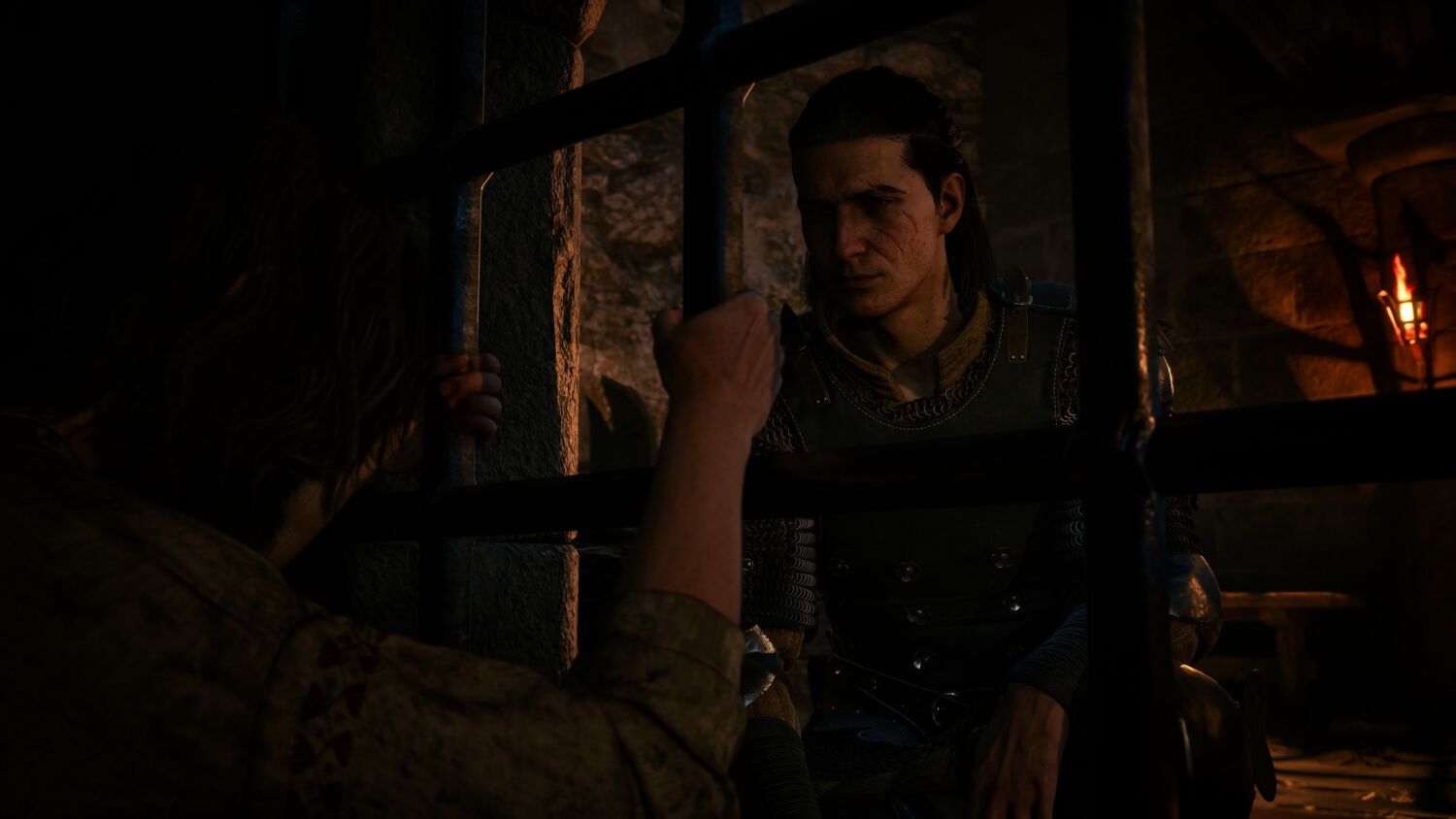
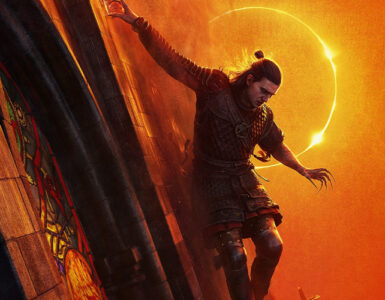
In The Blood of Dawnwalker, the upcoming debut title from Polish developer Rebel Wolves, duality forms the core of its narrative. The dark fantasy role-playing game (RPG) features a man with both human and vampiric qualities as its protagonist, instead of a full vampire or half-blood, who has 30 days and 30 nights to save his family from the ancient vampire overlord Brencis.
It’s hardly the only marriage of opposing ideals, though. The team’s creative vision also involves a day-night cycle and what’s referred to as a narrative sandbox, where both inaction and action will trigger consequences that shape the game’s non-linear course of events. Aligning with the overarching theme, the former offers two different versions of Coen to step into – a sword-fighting human by day, and a bloodsucker by night.
Naturally, the vampire form comes with trade-offs. In exchange for supernatural abilities and increased agility, he can be consumed by bloodlust that, if not managed well, drives him to kill off characters, some of whom may have a major part in certain quests. Regular feeding through the Voracious Bite mechanic keeps hunger pangs at bay, but there needs to be a balance – drain too much human blood, and the gradual erosion of humanity is the price to pay.
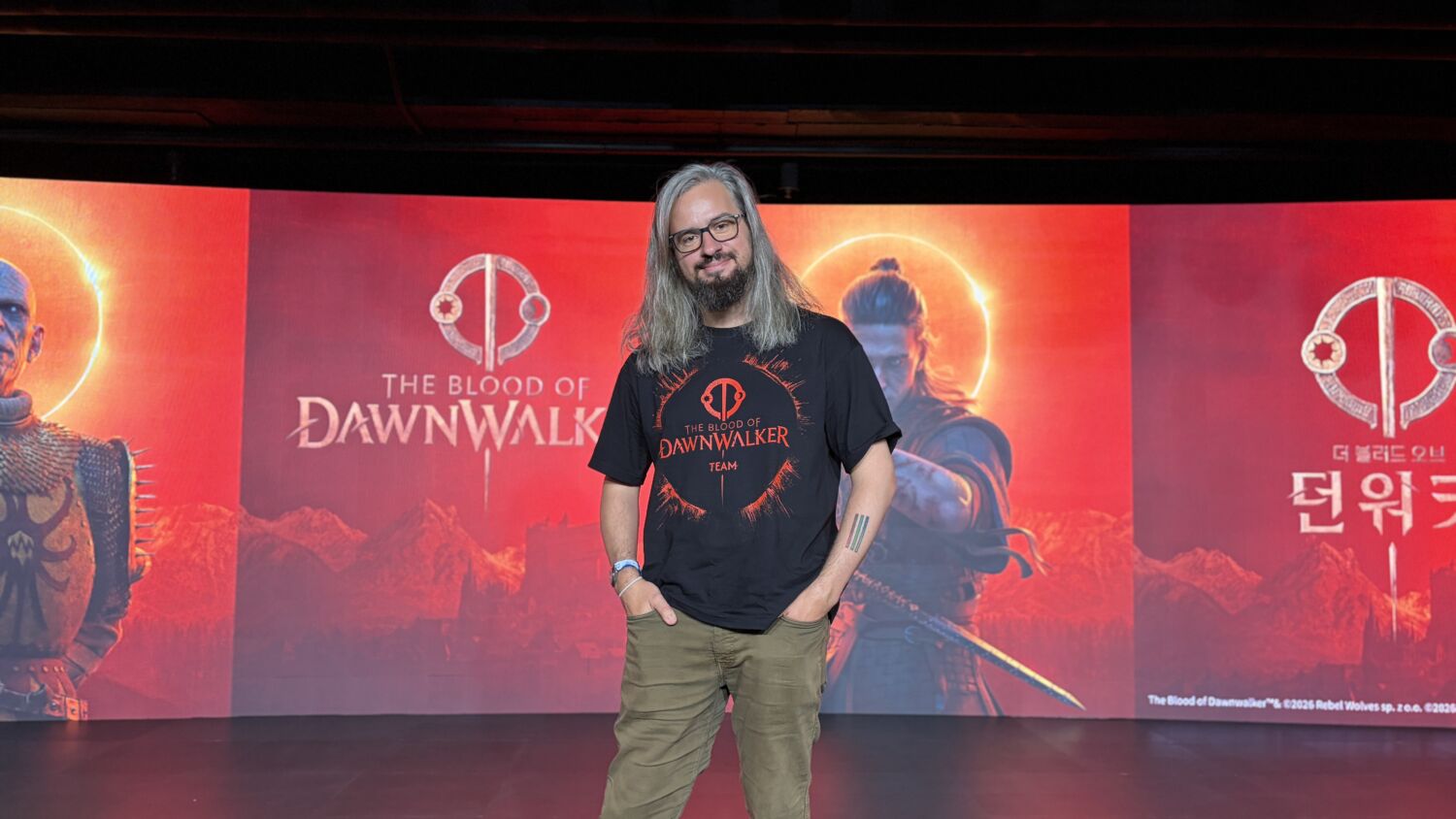
“When you first lose control of Coen, and he drinks blood from someone against your will, he will initially be shocked and discombobulated,” shares narrative director and main writer Jakub Szamalek during a preview event held in Seoul. “But the more it happens, the more blasé he becomes, and you can see the relationship between him and his monstrous side changing.”
The distinction is reflected through character details, starting with a heterochromia design. Each of his eyes differs in colour, and the runes carved onto his arms, used to cast spells, are a juxtaposition of a pure vampire’s ability to heal from wounds. Then, there are the psychological implications – since certain powers can only be acquired by drinking the blood of defeated vampires, a piece of them will stay with Coen, allowing for an interesting exploration of the inner psyche.
“The darkness kind of seeps into you, and it’s represented in The Blood of Dawnwalker, which can end differently depending on whether you embrace the darkness or maintain your distance from it,” he explains, adding that games are “an interesting medium to play around with players’ moral compasses”.
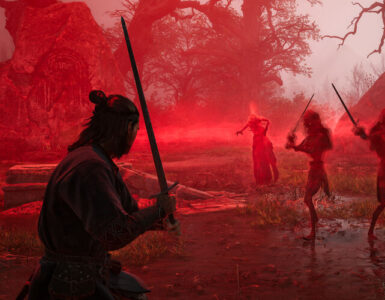
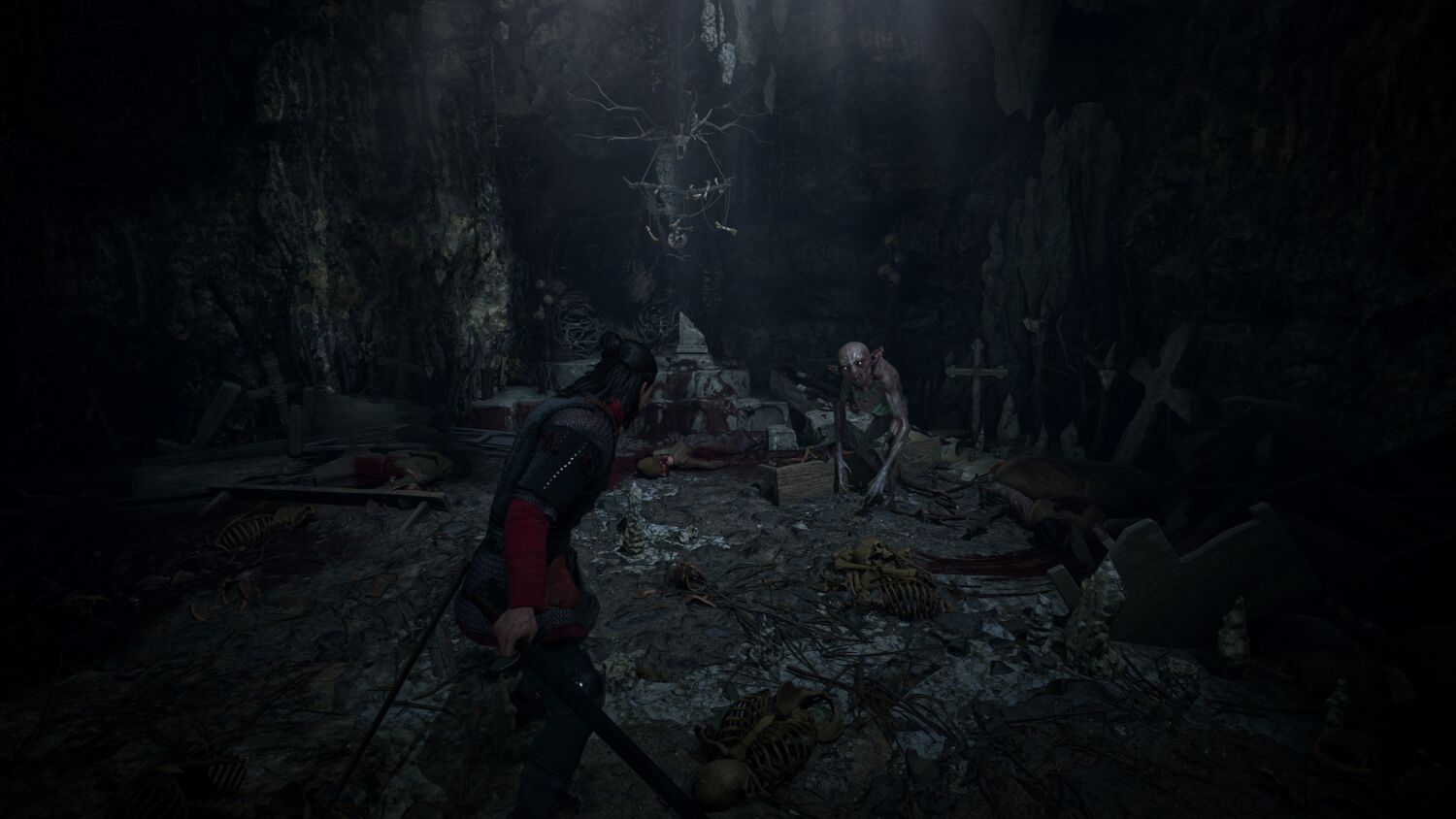
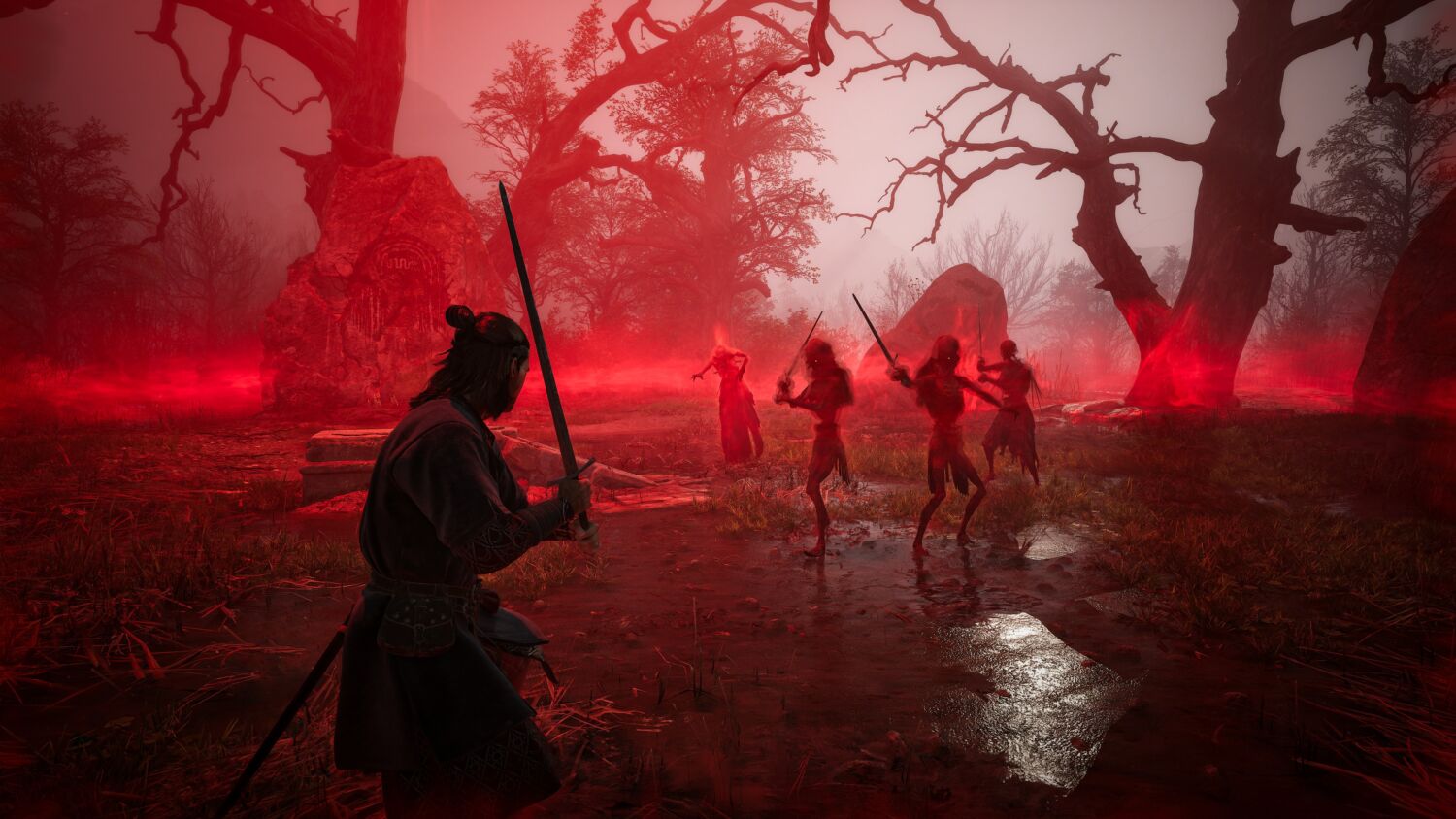
The open-world structure means plenty of room for other lurking threats, including a red wraith-like apparition and a swamp vampire, which were encountered in a separate hands-on demo, as well as aggressive animals. On the opposite end, docile wildlife offers an alternative to drinking human blood, and there’s little reason to worry when travelling the main roads or exploring a city, as the danger will only set in after a certain point.
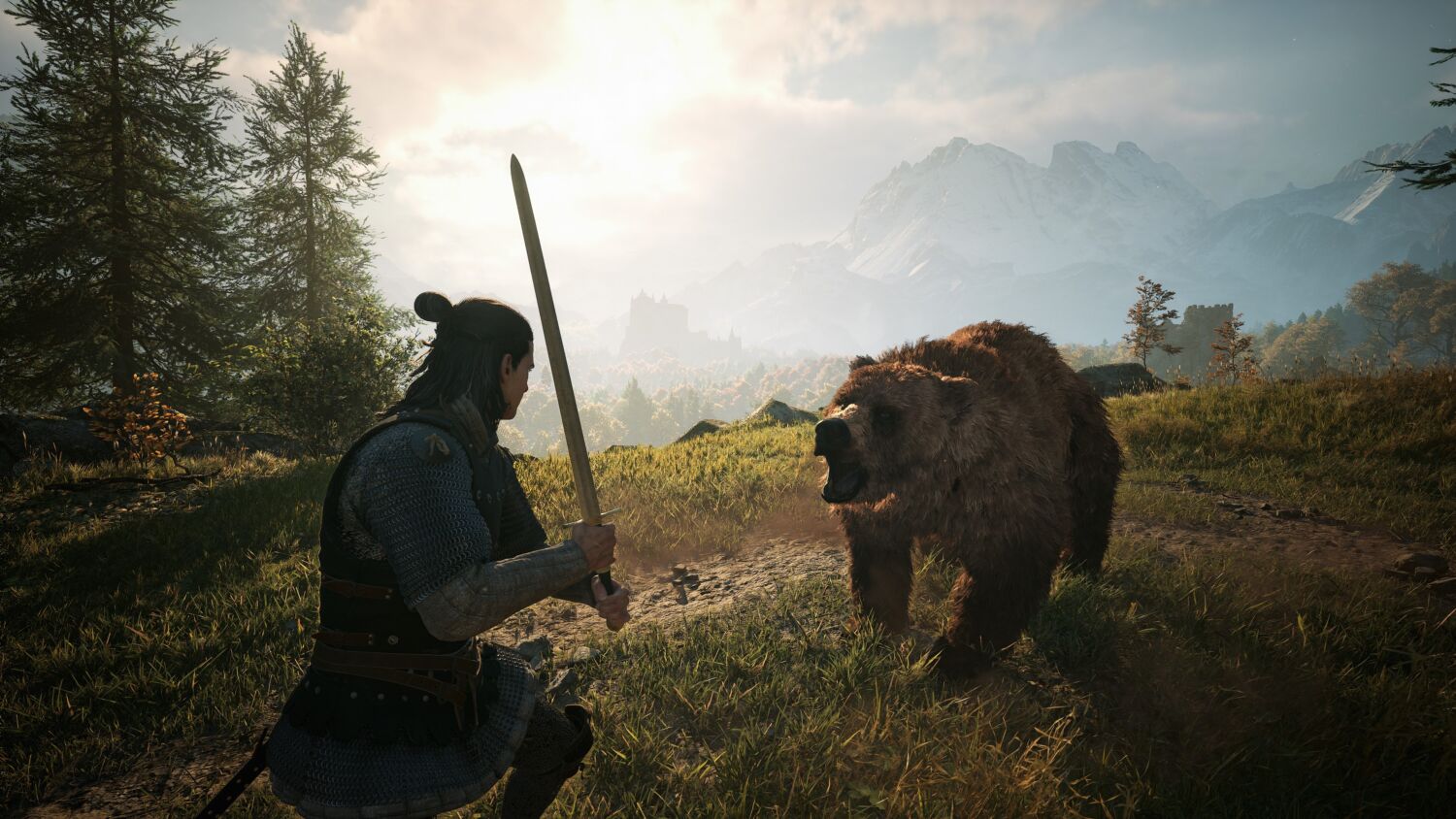
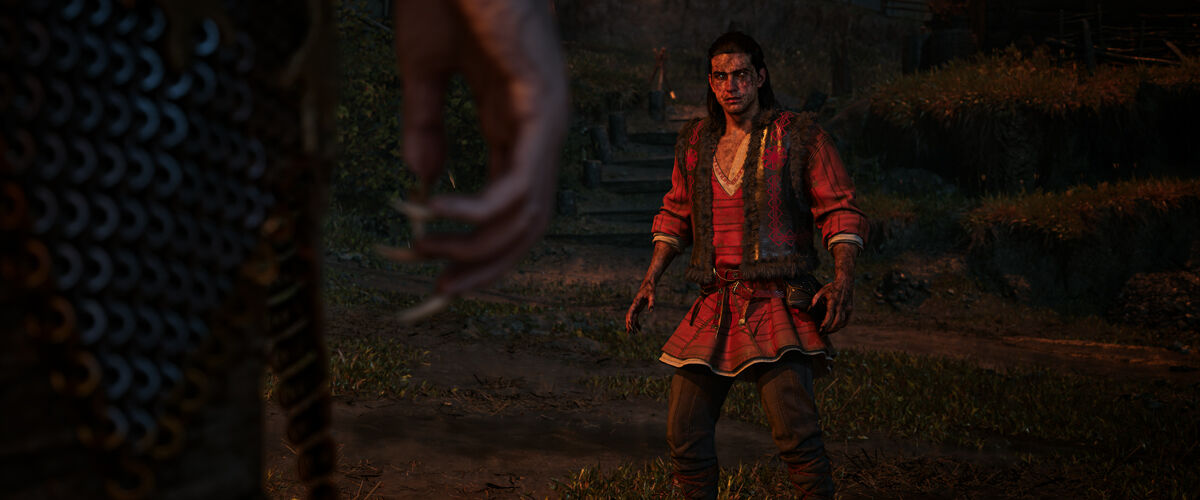
Citing the mythologies and folk legends from Central and Eastern Europe as inspirations for its inhabitants, the 40-year-old expresses, “Once you step into the shadows, something’s going to be there, and we wanted the monsters to feel like they are of this world – not flashy or huge, but grounded in this reality.”
It certainly helps that Szamalek has real-world expertise to fall back on. As an archaeologist by training (“Finally, my useless degree came in handy,” he quips cheekily), his love for old stories and myths made it easier for the team to “cherry-pick all the interesting things from our real history and add fantastical elements to the mix.”
Here’s another fun fact: the Cyberpunk 2077 and Witcher 3 alumnus also writes professionally on the side, with eight published novels under his name. Given the focus on storytelling in The Blood of Dawnwalker, there’s no better platform for Szamalek to continue honing his craft, especially for branching narratives.
As mentioned earlier, the game’s non-linear approach is all about freedom of choice. There’s an overarching goal but no fixed path forward, allowing players to proceed however they deem fit – whether it’s gunning straight for Brencis and his henchmen in his castle, The Legend of Zelda: Breath of the Wild style, or taking their time to forge alliances, complete side objectives, and track down the best pieces of equipment until day 29.
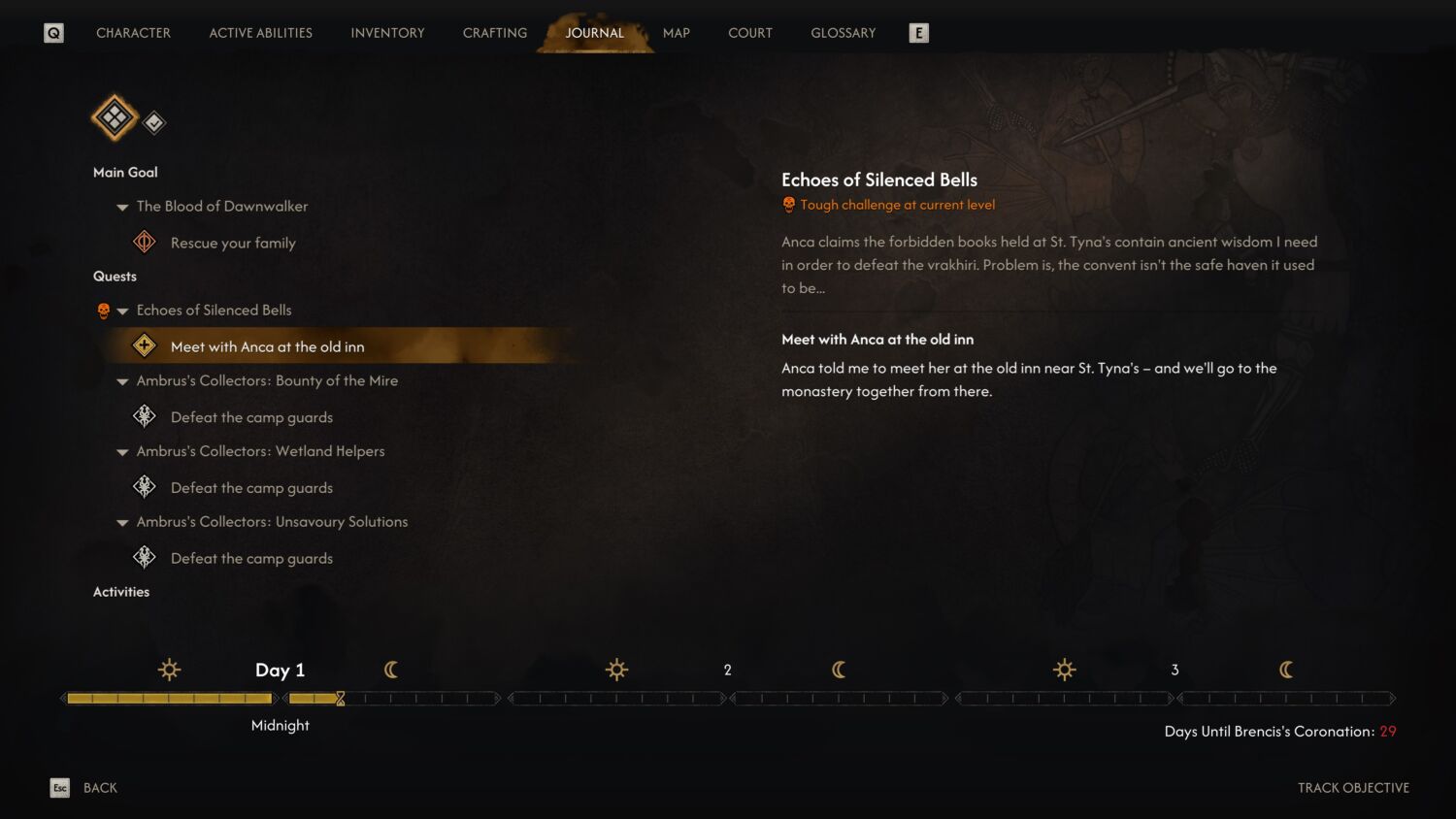
It’s not like the looming weight of consequences can be easily forgotten, either. Microdecisions are already present in its opening moments, and seemingly insignificant details, such as the time of day or a casual dialogue option, often alter the outcome of a questline. Between the high-stakes choices and dire ramifications, players have control over shaping their own journey, such that no two experiences are the same.
“I believe there’s a deep satisfaction that comes from being a co-creator of the story, because we give you the tools [and] the building blocks, but we also ask you to collaborate with us and create a story that feels true to you,” Szamalek stresses.
Time is another resource to manage. In The Blood of Dawnwalker, completing objectives moves the clock forward, denoted by the number beside an hourglass symbol (a “1”, for example, corresponds to one in-game hour), and the same goes for levelling up. Unlike traditional RPGs, upgrading and learning new abilities consume a unit of time here, so task prioritisation and day-to-day planning are integral to gameplay.
While the mechanic may appear restrictive, it proved more manageable than one might think in the preview build, and it all boils down to the core design philosophy. Pulled from JRPG and Western influences, namely Fallout 1 and 2, the time element was added to inject a sense of urgency without the constant stress of beating the clock – exploring the world, as such, has no such limitations.
“Often in games, you’re told to hurry and save someone or go somewhere, and then you go off to play mini-games or whatever, which leads to a disconnection between you and the game world,” explains the narrative director.
“It really changes the flavour of the experience, and like in our own lives, time is such a precious resource. How we invest our time, who we talk to, who we want to build a relationship with – it affects how you live your life, and we wanted to capture this element in our game.”
As genre veterans would know, choice-based storytelling means multiple endings, and it’s no different in The Blood of Dawnwalker. The team previously confirmed that an average playthrough will cover 80 percent of the main story content, but no matter how it pans out, failure won’t be in the cards (in the traditional sense of the word, at least).
“You can get an ending you feel about, that’s for sure, but I don’t think you can fail fail,” Szamalek affirms, adding that Coen can end up killing all of the NPCs and become a total monster, which still counts toward game completion.
Interestingly, the element of failure proved to be the biggest difference between traditional and video-game storytelling for the creative professional. Where the usual narrative arc for the former involves failing, starting over, and succeeding, players’ dislike or intolerance of failing means that he had to overcome the challenge of structuring a satisfactory narrative and learn new lessons on the go – and there will be more opportunities to do so, as The Blood of Dawnwalker was billed at the start of a saga from the very beginning, allowing Coen to continue growing as a character.
“In a lot of franchises, we get to play the same character over and over again, and whatever happens [after] doesn’t really reflect in how they are,” he notes. “Superheroes are always the same, no matter how many times they save the world, and with Coen, we want him to change, so while he may be young, inexperienced, and confused by what he’s experiencing, we want him to feel different and have his own arc in future titles.”
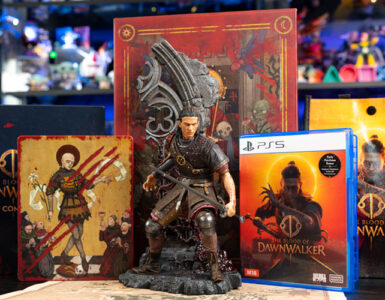
The Blood of Dawnwalker arrives on PC, Xbox Series X|S, and PS5 on 3 September.

Si Jia is a casual geek at heart – or as casual as someone with Sephiroth’s theme on her Spotify playlist can get. A fan of movies, games, and Japanese culture, Si Jia’s greatest weakness is the Steam Summer Sale. Or any Steam sale, really.