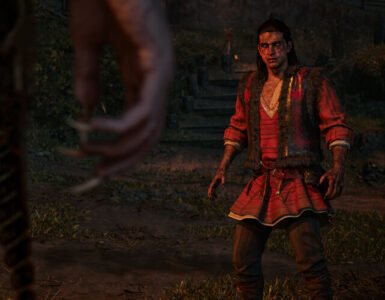
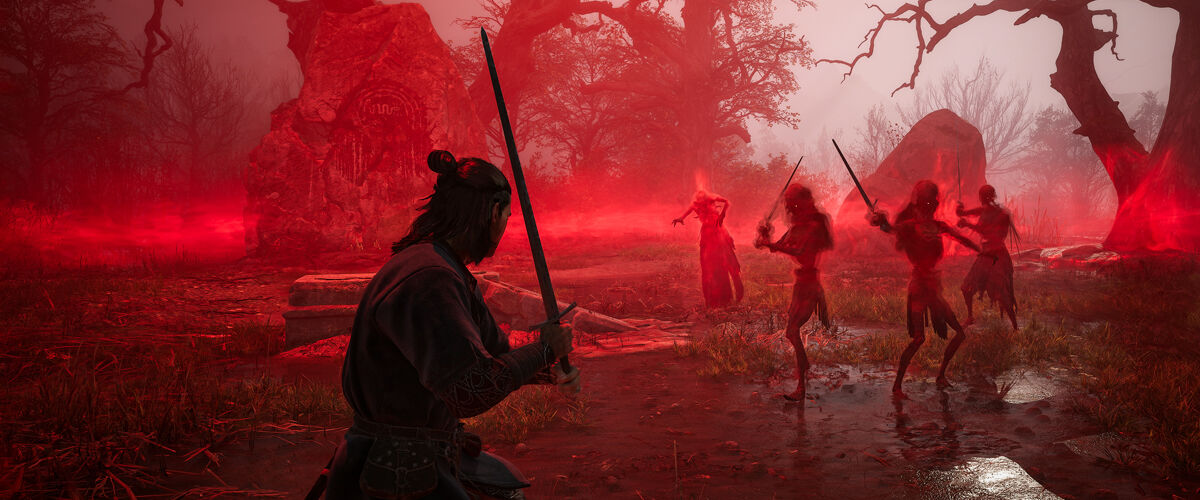
In the words of renowned fantasy author Terry Pratchett, “Change the story, change the world,” and the role-playing game (RPG) genre has embraced that sentiment. Several hallmark features centred around decision-making as part of that magic provide players with the freedom to craft individualised experiences for a unique gaming destiny.
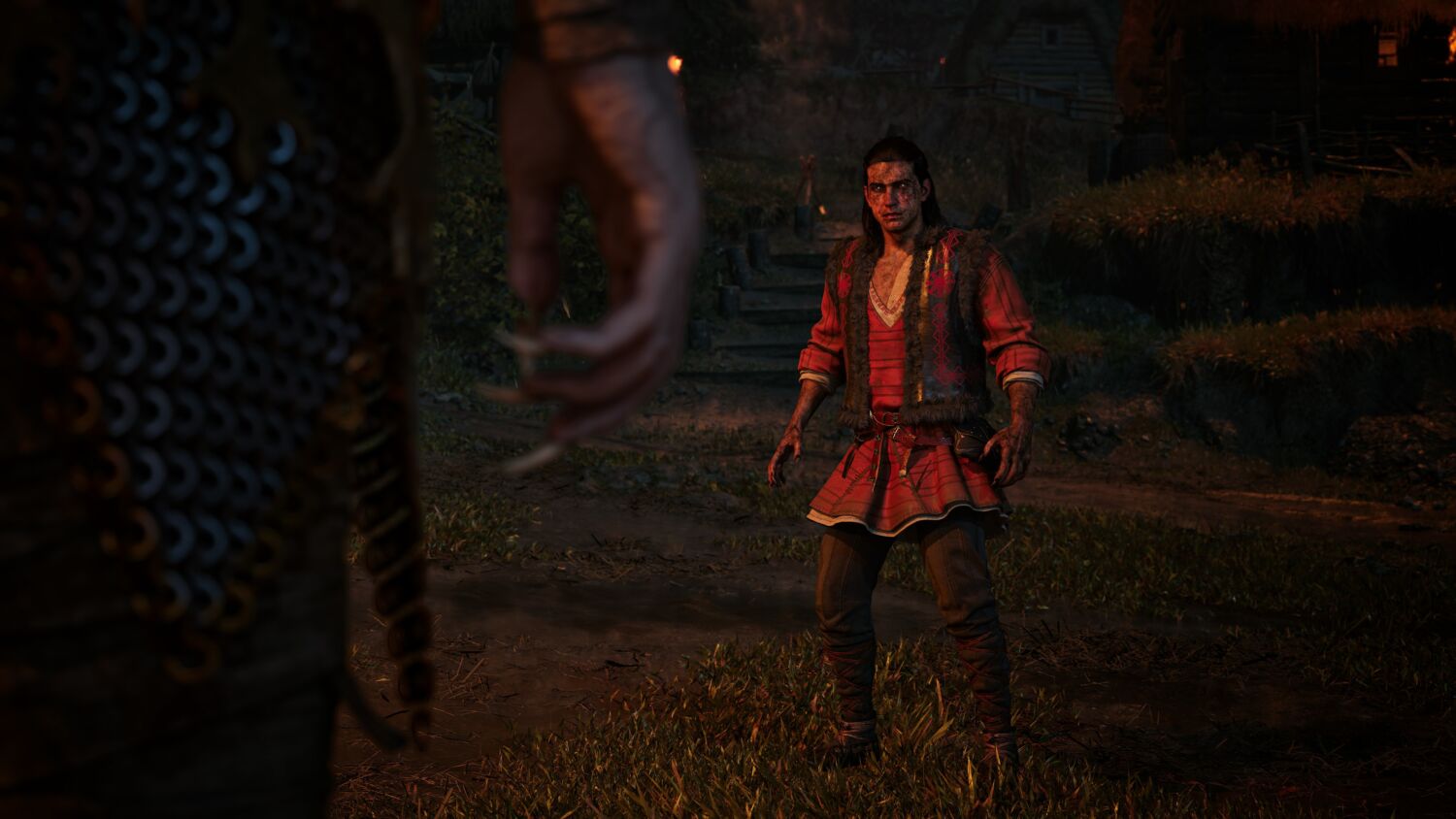
But it’s one thing to introduce high stakes, and another to make them actually meaningful, which separates the greats from the rest of the pack. The Blood of Dawnwalker, a dark-fantasy debut from Polish studio Rebel Wolves, looks to push the limits of player agency – and it’s not making a freshman attempt as the team comprises former members of CD Projekt Red who have worked on beloved titles including The Witcher 3: Wild Hunt and Cyberpunk 2077, both known for their branching narratives.
Driving this bold ambition is something billed as a narrative sandbox, where a non-linear course of events will be influenced entirely by the choices picked along the way, no matter how small, leading up to the game’s conclusion. In a four-hour hands-on preview in Seoul, South Korea, murmurs of promise flowed through the veins of the studios’ inaugural title, establishing a strong start to a journey set in 14th-century medieval Europe, where players follow Coen, a man with both human and vampiric qualities who has 30 days and 30 nights to save his family from the ancient vampire lord, Brencis.
Those 30 days and nights within the game to achieve their end goal alongside a narrative sandbox structure shaped by decisions made along the way, and it wasn’t until attendees compared notes that the differences in experiences and decision-making were better defined, and that’s all part of the fun.
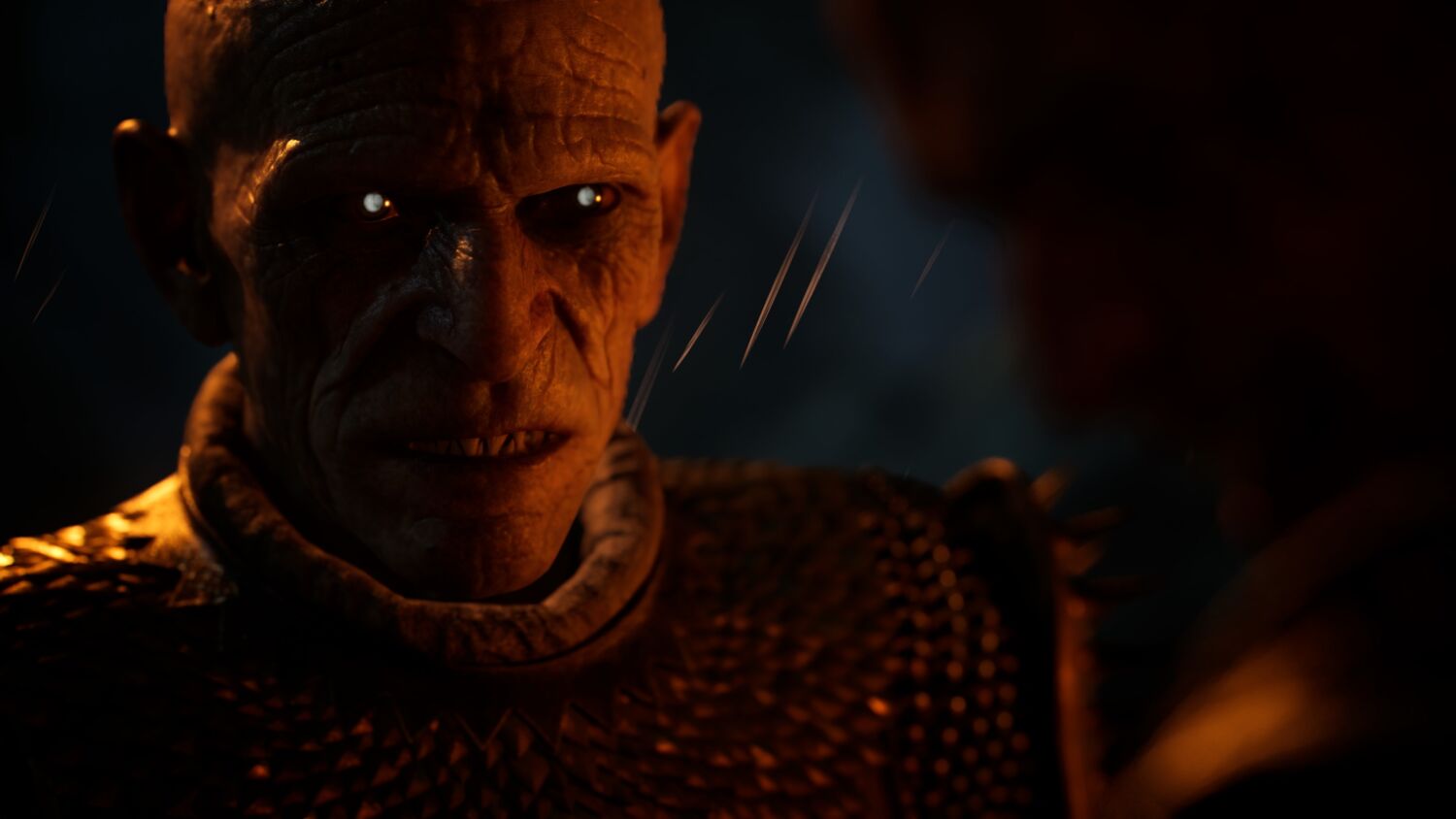
The prologue, previously shown in a hands-off first look at Rebel Wolves’ office in Warsaw, covered the first two hours of gameplay. It opens with an animated sequence introducing Coen and his sick sister, Lunka, who are held captive by the soldiers invading their village. After attacking their captors, a vampire, or “vrakhiri,” feeds Lunka his blood, and her condition improves, but it comes at a price – under Brencis’ rule of Vale Sangora, where The Blood of Dawnwalker takes place, the human populace is required to pay a “blood tax” in exchange for safety and health.
Four months later, the pair is enjoying a day out with the family before Lunka runs off into the nearby woods, prompting a tutorial sequence on movement as Coen chases after her. Combat basics are next, taking the form of a four-way directional system (up, down, left, right) that would be familiar to Kingdom Come: Deliverance players, be it attacking or blocking. Directional parrying is ideal for the latter, involving parrying precisely in the direction of an incoming strike, which not only consumes the least amount of stamina but also builds Activation Charges for use to activate special abilities and finishers.
For those unaccustomed to its workings, that’s going to be easier said than done. The execution can feel strange or unwieldy initially and takes some getting used to, making it easy to fumble when fighting multiple opponents. In such cases, omniattacks and omniblocks offer a safety net by removing the focus on matching enemy strike angles at the expense of increased stamina cost. Alternatively, accessibility options allow players to tweak certain mechanics, such as disabling directional indicators or toggling on the auto-block feature, though the trade-offs still apply.
Then, there’s dodging. Unlike a regular onslaught, unblockable attacks – indicated by a red flashing icon – cannot be defended against and must be dodged, adding another aspect of timing to the combat. Between the swordplay, the need to consider the best approach for different enemy types, and a stamina-based fatigue system that makes attacks less effective and slower, The Blood of Dawnwalker eschews standard hack-and-slash fare for tactical depth. It certainly doesn’t hurt that each successful block or strike feels satisfying to pull off, either.
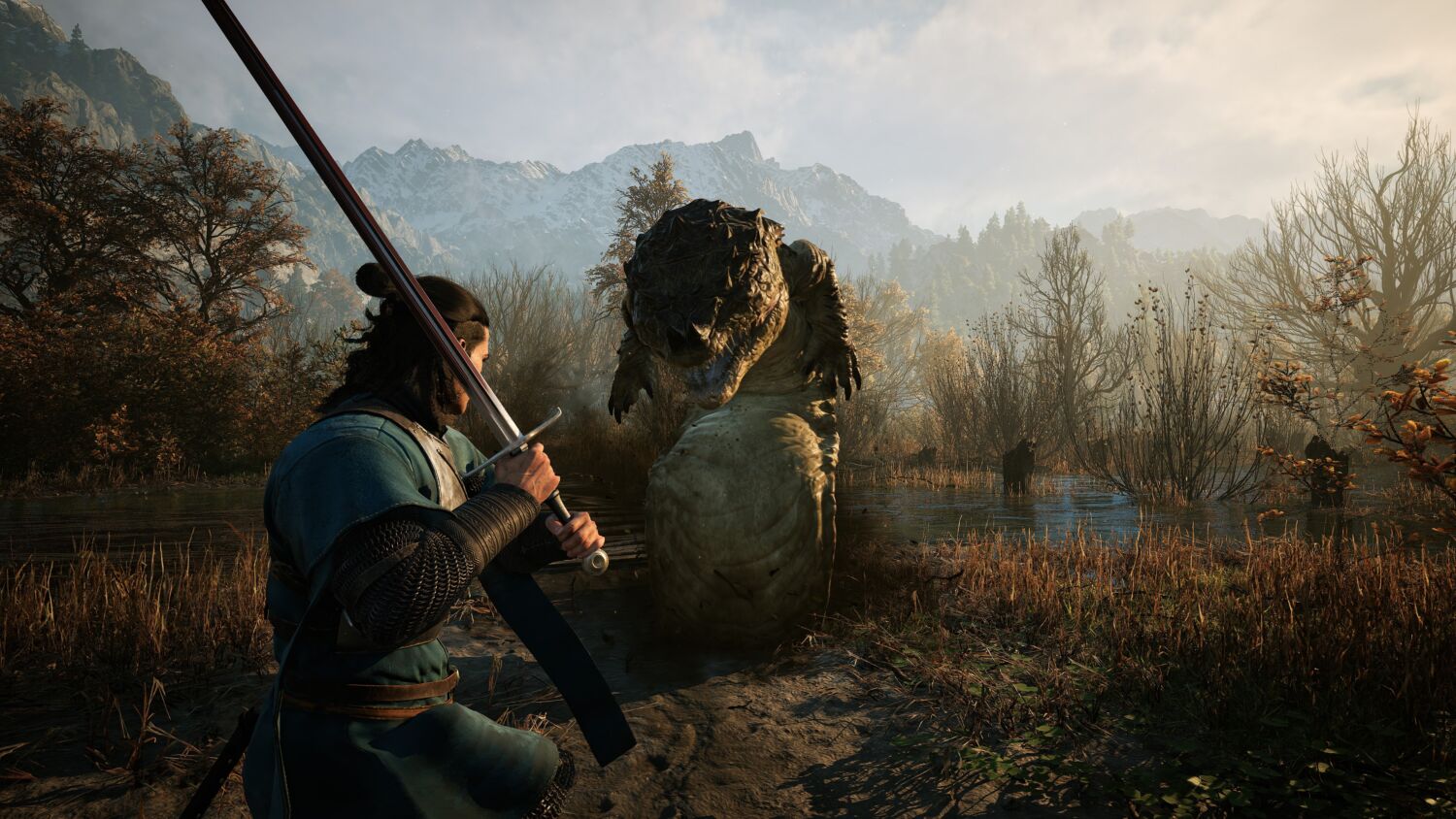
Nighttime is where vampiric powers come into play, unlocking a secondary fighting style. In this supernatural form, Coen can sic his claws and fangs on foes or stick to taking them down with a weapon in hand. Teleporting behind an enemy to evade or land a strike (at the cost of stamina, naturally) becomes a viable strategy, and traversal mechanics such as Clawride and Planeshift offer welcome verticality.
The two often work in tandem to let players slide down and scale vertical surfaces or structures, respectively, proving handy for bypassing obstacles, flanking enemies, or infiltrating various locations. There’s also Shadowstep, which opens up alternative paths and makes it easier to disengage from sticky situations by dashing across gaps and short distances. No matter the skill used, activation consumes the blood hunger metre, calling to attention the need for regular feeding.
Voracious Bite offers the primary means of doing so, allowing Coen to sink his teeth into unsuspecting NPCs, non-human creatures and animals. For the former, he can choose how much blood to drain, and it’s a perk that carries over to combat, granting a tactical advantage when used at the start of the battle and health regeneration if triggered mid-fight.
Keeping to the choice-and-consequence design of The Blood of Dawnwalker, neglecting the management element will cause Coen to be consumed by bloodlust, indicated by black tendrils along the edges of the screen, and kill off characters during dialogue sequences. In the worst-case scenario, this may affect the completion of certain quests involving the dead party.
There wasn’t an opportunity to try out other supernatural powers during the preview, but some of them can only be acquired by deepening Coen’s vampiric corruption and drinking the blood of other defeated vampires, as creative Mateusz Tomaszkiewicz previously shared. Similarly, certain sword skills require a specific manual to become available for learning.
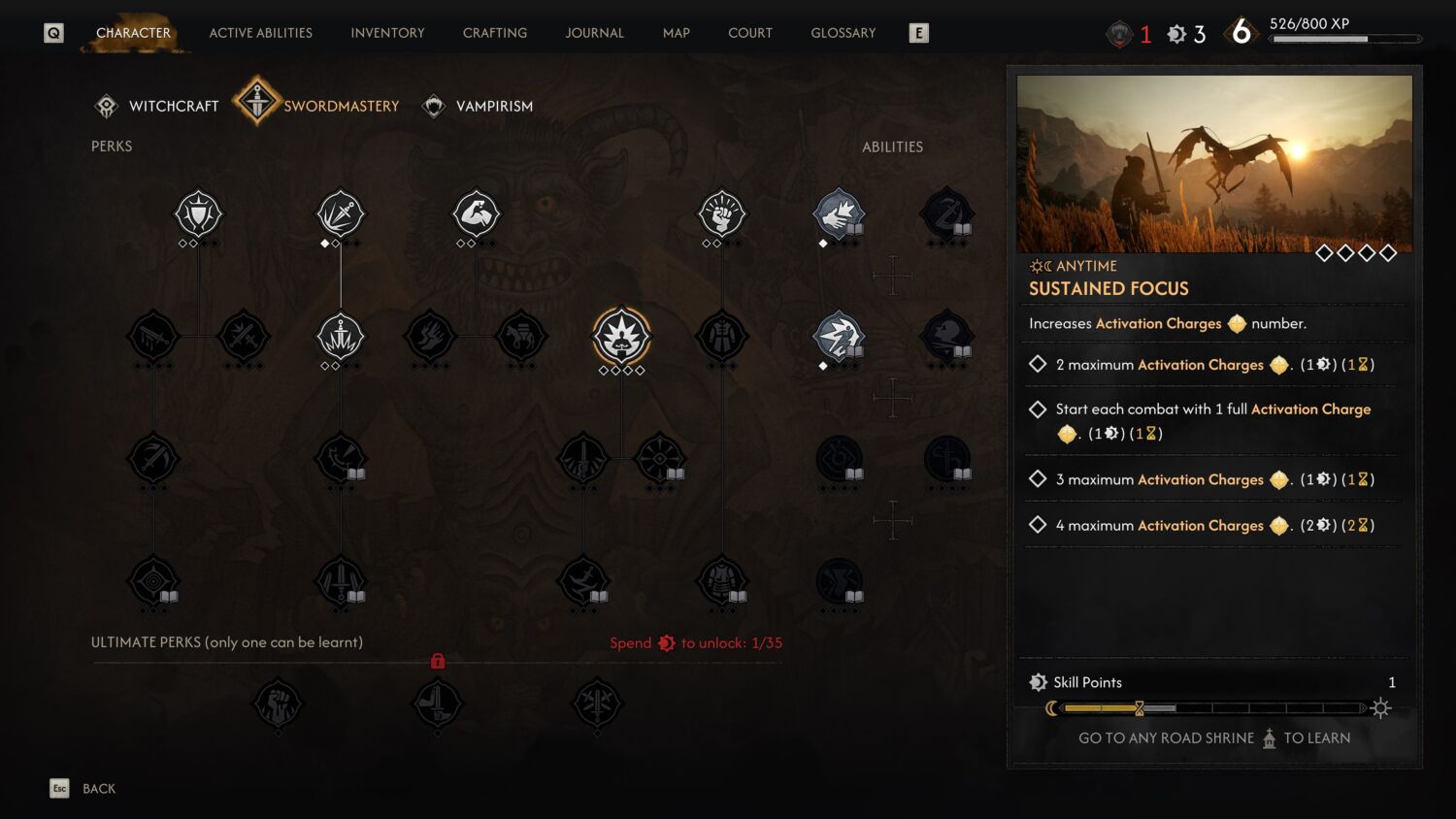
Compared to daytime combat, the nocturnal experience teases more versatility, with players having the freedom to mix and match different abilities and loadouts. There’s a distinct flair to each attacking style – while the directional system remains unchanged, Coen’s claws feel faster in action, versus the slower, grounded swing of a weapon, and blows pack a more visceral punch. The night-enhanced movement also allows for fluid environmental navigation, even if the mechanics of Planeshift aren’t the most natural.
As the clock moves into the next day, it’s time to jump back into the daily swing of things, starting with chopping wood. Following a quick-time event (QTE) sequence, The Blood of Dawnwalker wastes no time in giving the first taste of the butterfly effect, which unfolded across four instances here: collecting herbs for Coen’s ill mother, escorting his siblings to the river, confronting a hostile villager called Vasil, and tracking down a stolen banner that needs to be hung in the church before the start of Blood Mass, a weekly or monthly religious gathering where townsfolk donate their blood to the vampire overlords.
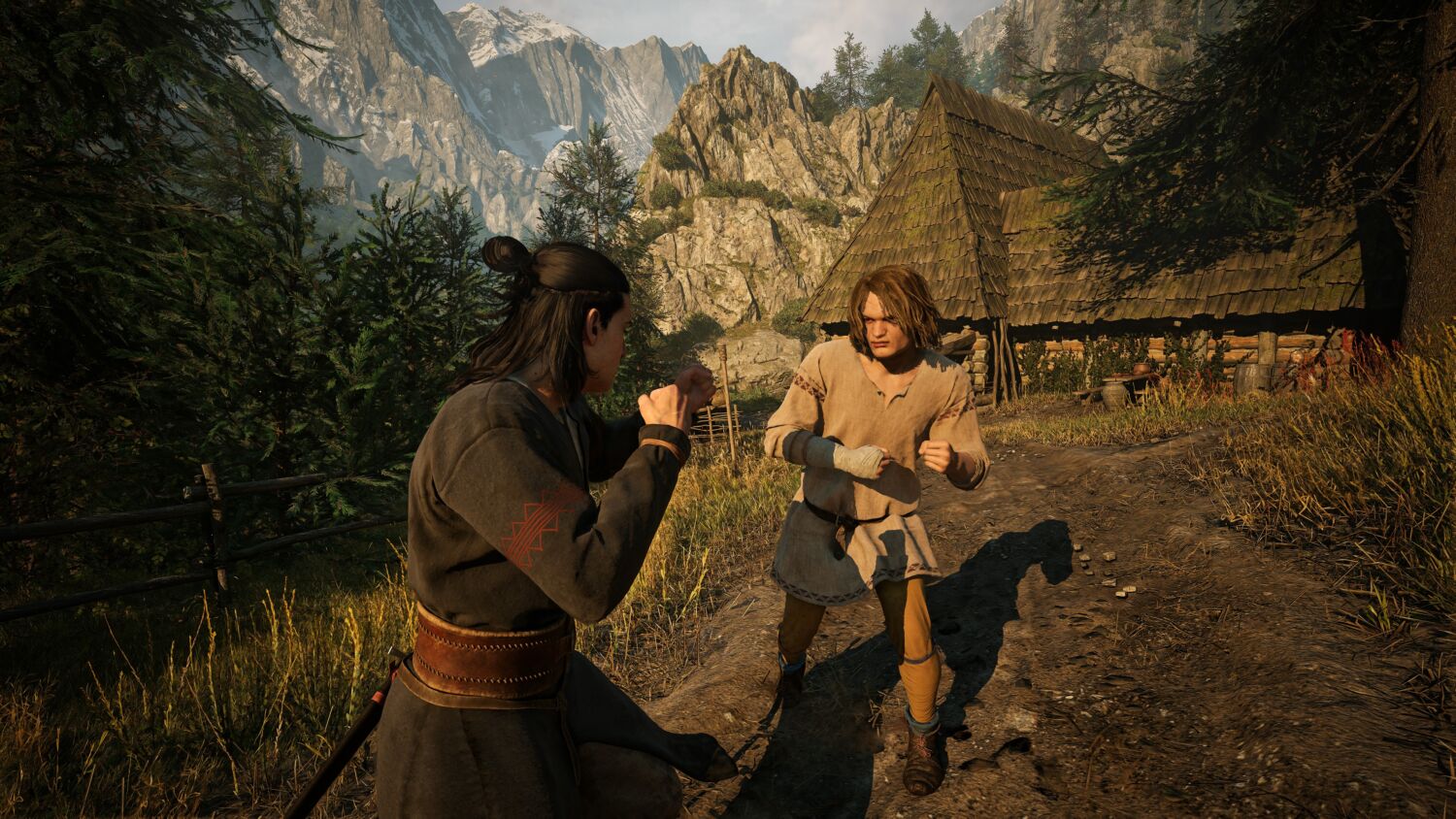
The previous hands-off session demonstrated how seemingly insignificant details can alter the outcome of a quest, where locating a character’s missing brother at a different time of day will determine his fate (no spoilers!). On second viewing, now with first-hand exposure, the curiosity and anticipation were still present, as Coen works to alleviate his mother’s suffering – in contrast to ignoring the request – only for this latest playthrough to reach the same conclusion.
The events leading up to it were not, however, and the game makes sure that players carry the weight of their choices. At one point in the quest, they are given a recipe to read, and those who don’t will be thrown into the deep end when a multiple-choice response pops up later, with no option to back out and refer to the notes. It’s a painful lesson, but one that works to great effect.
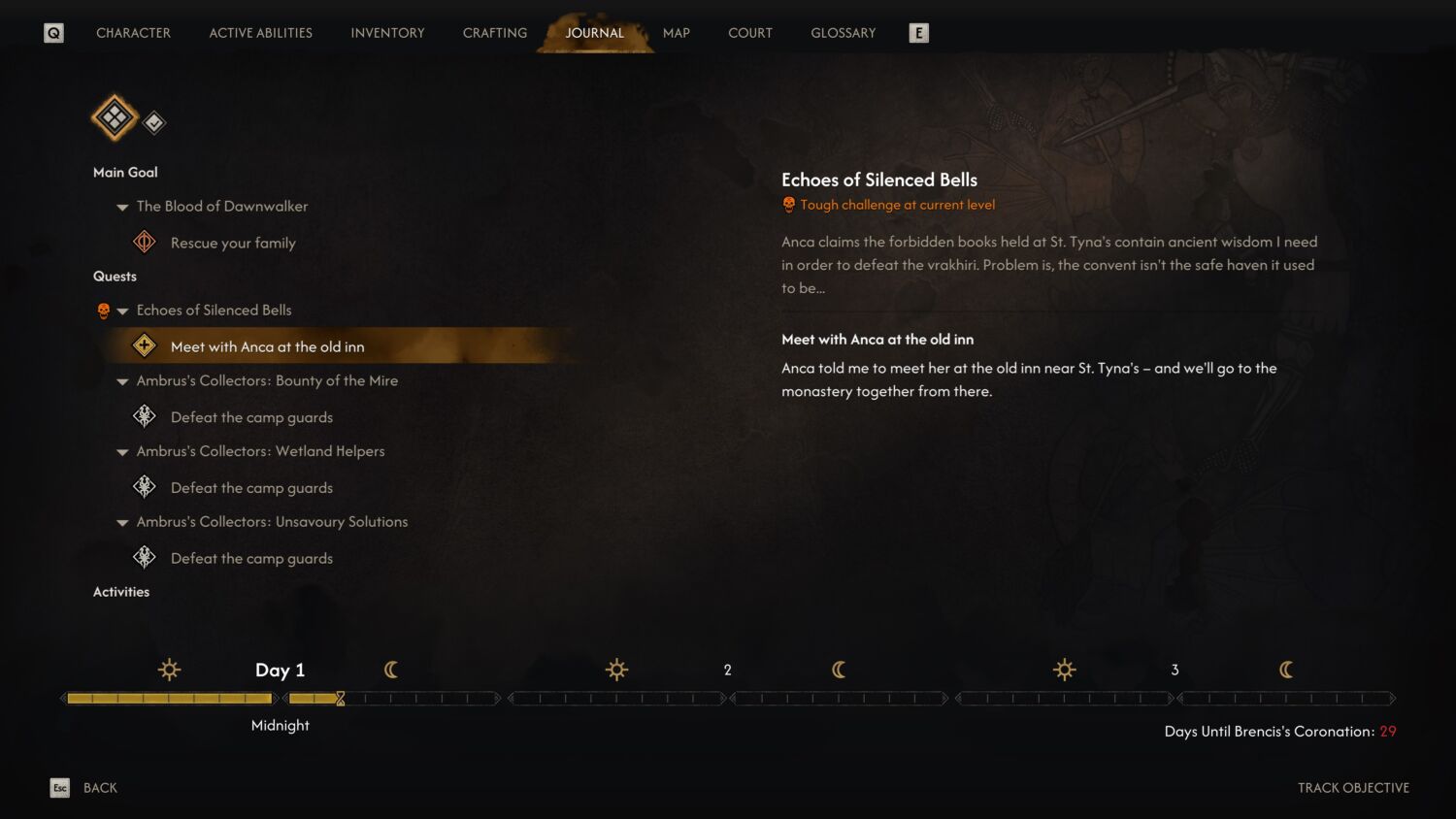
Because it’s impossible to complete every task by sundown, prioritisation is key. Time is a precious resource in The Blood of Dawnwalker, and completing objectives advances the clock, denoted by the number beside an hourglass symbol (a “1”, for example, corresponds to one in-game hour). The indicator comes in handy for planning Coen’s day-to-day (and night), making the time limit more manageable than one might think. Still, it’s easy to forget that levelling up, as well as upgrading and learning new abilities – accessible through Roadside Shrines that double as fast-travel points – also cost a unit of time, resulting in the missed opportunity to turn in a completed quest before dusk fell.
On the bright side, exploration has no such restrictions. The world will open up past the prologue after players are introduced to magic through Anca, a character they will encounter on a main quest, who carves a rune into Coen’s arm. The first hex he learns is Compel Soul, unlocking the ability to speak with the dead and uncover clues, access alternative objectives, and reveal hidden lore, much like the “Speak with Dead” spell in Baldur’s Gate 3. With this, all three skill trees are properly established: Witchcraft, Swordmastery, and Vampirism, each tied to its own skill points.
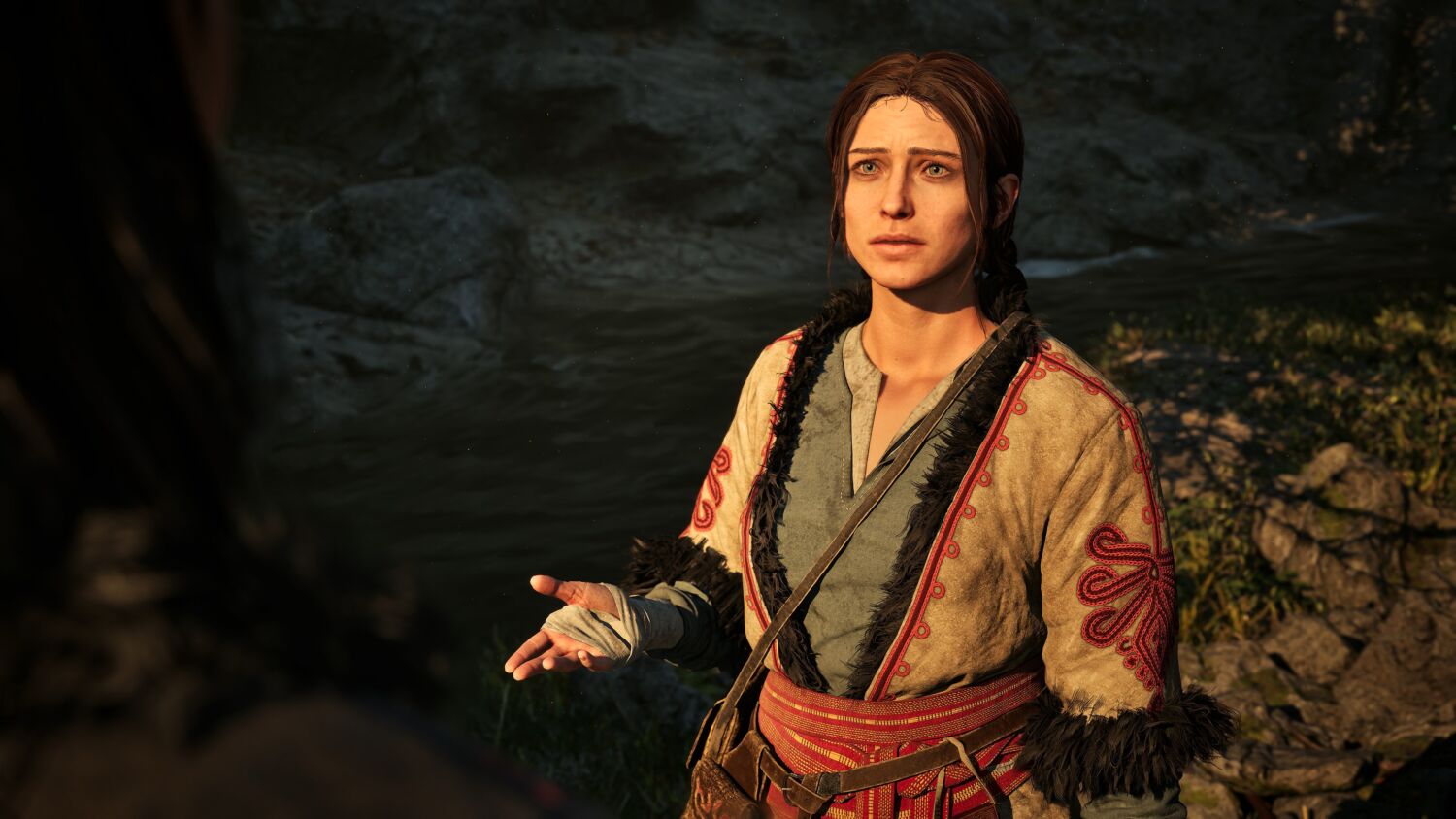
The playable area in the demo was confined to a fixed part of the map, but opening the map reveals a big world waiting to be discovered. Stepping away from RPG tradition, there won’t be mounts to ride on, as travelling is designed around Coen’s vampiric abilities, so daytime traversal may feel slower than expected. While the reduced pace was manageable throughout the four hours, it’s unclear how that will translate in the long run, considering the risk of becoming tedious.
Otherwise, exploration gives off an organic sense of freedom and immersion, where players are free to do what they want, be it sneaking into houses and stealing items, climbing high points to scout for more areas of interest, or wandering off in a random direction. Focus Mode further facilitates navigation by highlighting hidden objects, loot, blood traces, and environmental clues, and the absence of time-based limitations does take some of the pressure away.
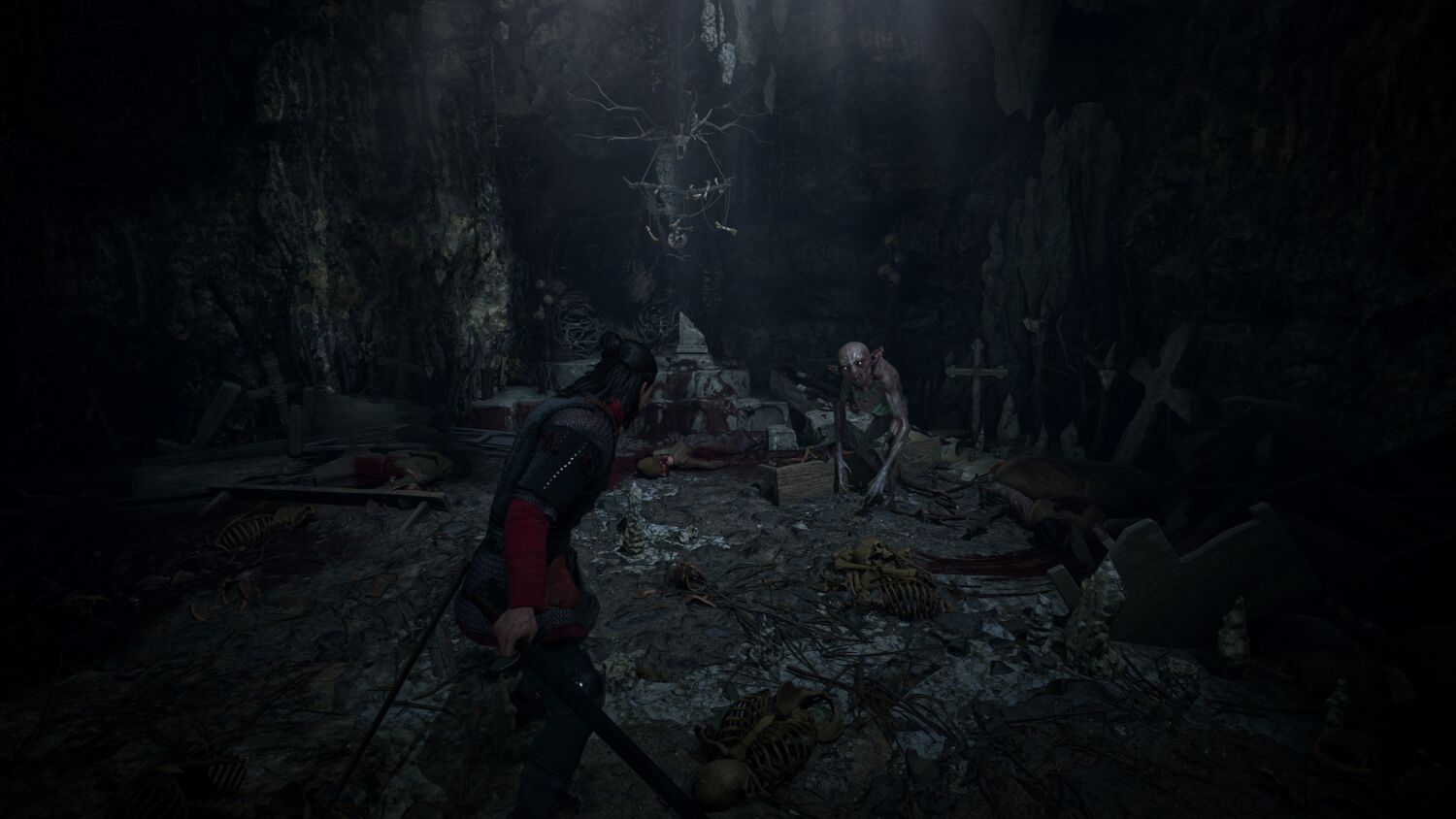
In the case of repeated deaths or failure, for instance, players are motivated to try again, rather than be frustrated by the process and give up, resulting in a more enjoyable experience. Throw monster variety into the mix, and each restart can feel like a fresh breath of air – four separate occasions of roaming in different directions spawned varying hostile encounters, from a red wraith-like creature to a swamp vampire.
Bringing an ambitious vision to life is never an easy task, but a small taste of The Blood of Dawnwalker has dispelled doubts about Rebel Wolves’ commitment to breaking new ground. By adding its own spin on genre conventions, its debut outing looks to shake up a space where player agenda is often plagued by the illusion of choice and low stakes, and the game’s opening hours have already sharpened the fangs of consequences. Between the dual play styles, meaningful decision-making, and dynamic open-world, there’s a lot to revel in; the question now is whether the experience will carry over to the full game.
The Blood of Dawnwalker releases for PC, Xbox Series X|S, and PS5 on 3 September.

Si Jia is a casual geek at heart – or as casual as someone with Sephiroth’s theme on her Spotify playlist can get. A fan of movies, games, and Japanese culture, Si Jia’s greatest weakness is the Steam Summer Sale. Or any Steam sale, really.