
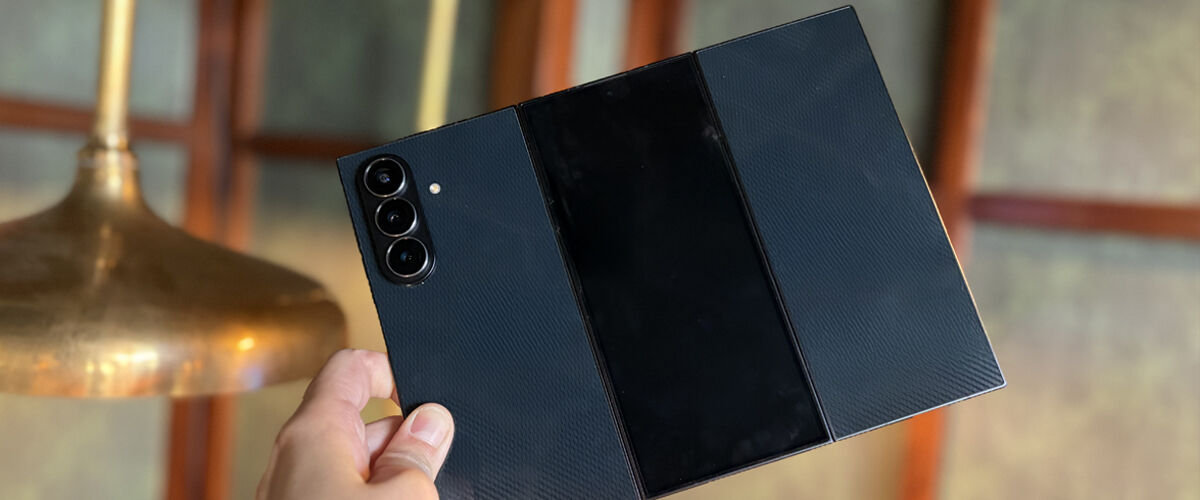
As smartphone technology continues to evolve, there are times when things come full circle (sort of). The introduction of foldable devices, for instance, evoked the old-school flip phone days, and they have only grown since Samsung pioneered its Fold lineup in 2019, which offers a middle ground between the tablet and clamshell form factors.
Building on that expertise, the Korean giant recently unveiled the Galaxy Z TriFold, its first multi-fold smartphone that looks to challenge the Huawei Mate XT. Unlike the latter, however, it will be available in Singapore after an initial rollout in South Korea, with plans to expand into China and the United Arab Emirates by 2025.
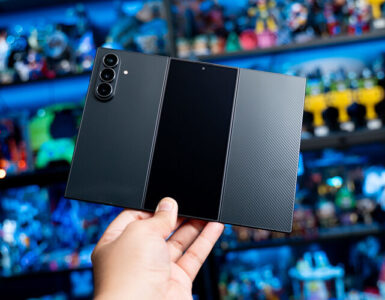
Ahead of its 19 December launch, select local media were given hands-on time with Samsung’s latest, and it presents a convincing case for enhanced productivity – for those who can afford it, at least, considering its 3.59 million won price tag in Korea (S$3,155). The device measures 12.9mm when folded –putting it slightly thicker than the Galaxy Z Fold 7 (12.1mm) – and may be too long a fit for normal-sized pockets or smaller-handed users. It’s also heavier at 309 grams, but the evenly distributed heft ensures a secure and comfortable fit in the hand.
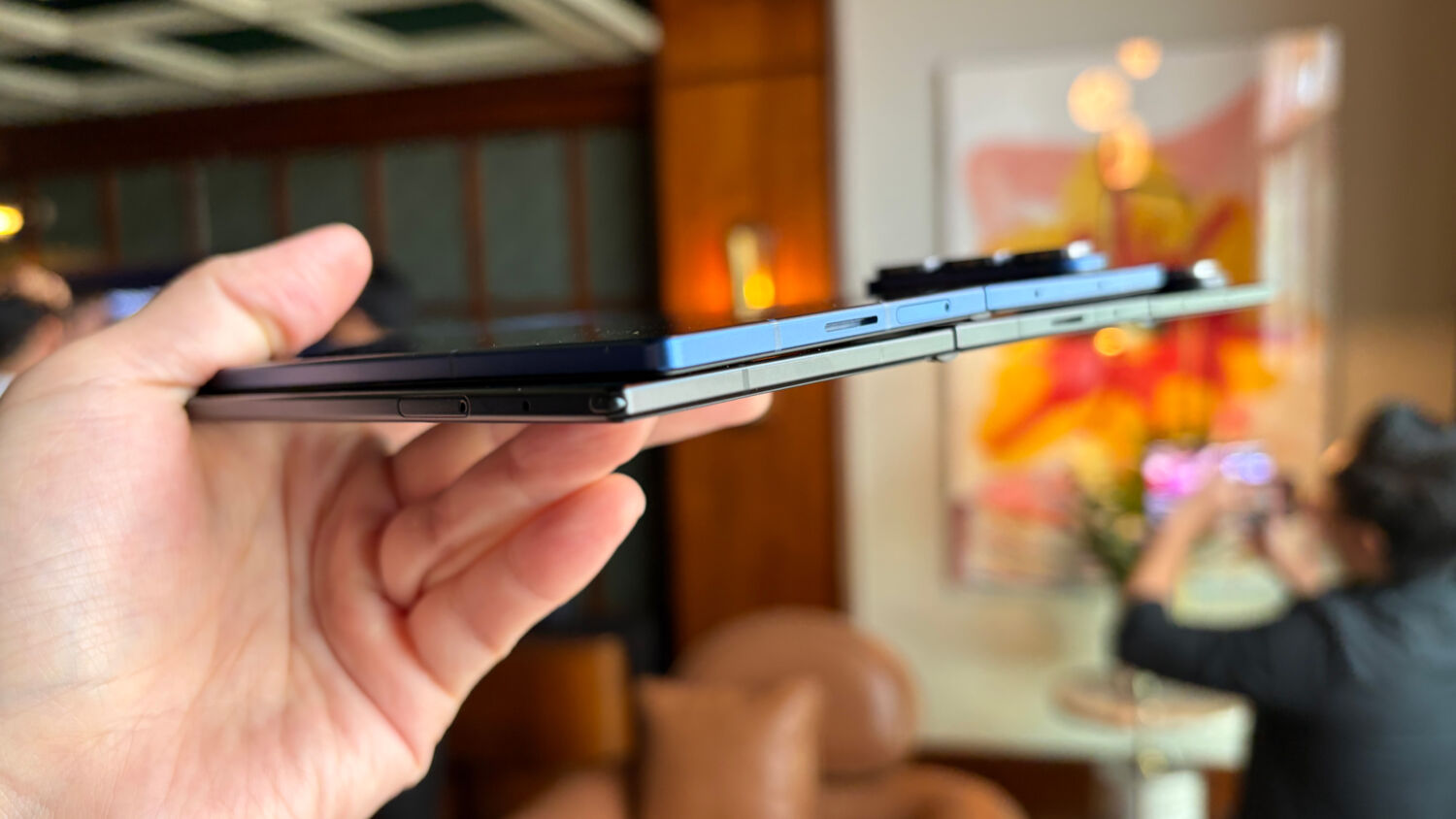
In clamshell mode, the 6.5-inch FHD+ display (2,520 x 1,080 pixels) delivers a viewing experience that’s virtually identical to that of a traditional Samsung smartphone, with the striking, accurate colours, strong contrast, and smooth visuals carrying over to the 10-inch, 120Hz main display when fully opened. At 3.5mm thin in this unfolded state, the Galaxy Z TriFold is as slim as the Galaxy S25 Ultra, and the hinge offers just the right amount of resistance for users to switch between both forms easily.
What’s different here is the addition of a safety feature that triggers an on-screen alert and strong haptic feedback upon detecting the incorrect folding method. It appears to be reliable, having successfully identified three deliberately botched attempts, but there are several drawbacks to note – the creases on the device’s screen can be quite prominent when no content is playing, and both the main and sub panels are highly susceptible to fingerprints. More importantly, the lack of on-screen continuity results in a disjointed experience, requiring users to reopen apps after the transition process instead of an automatic changeover.
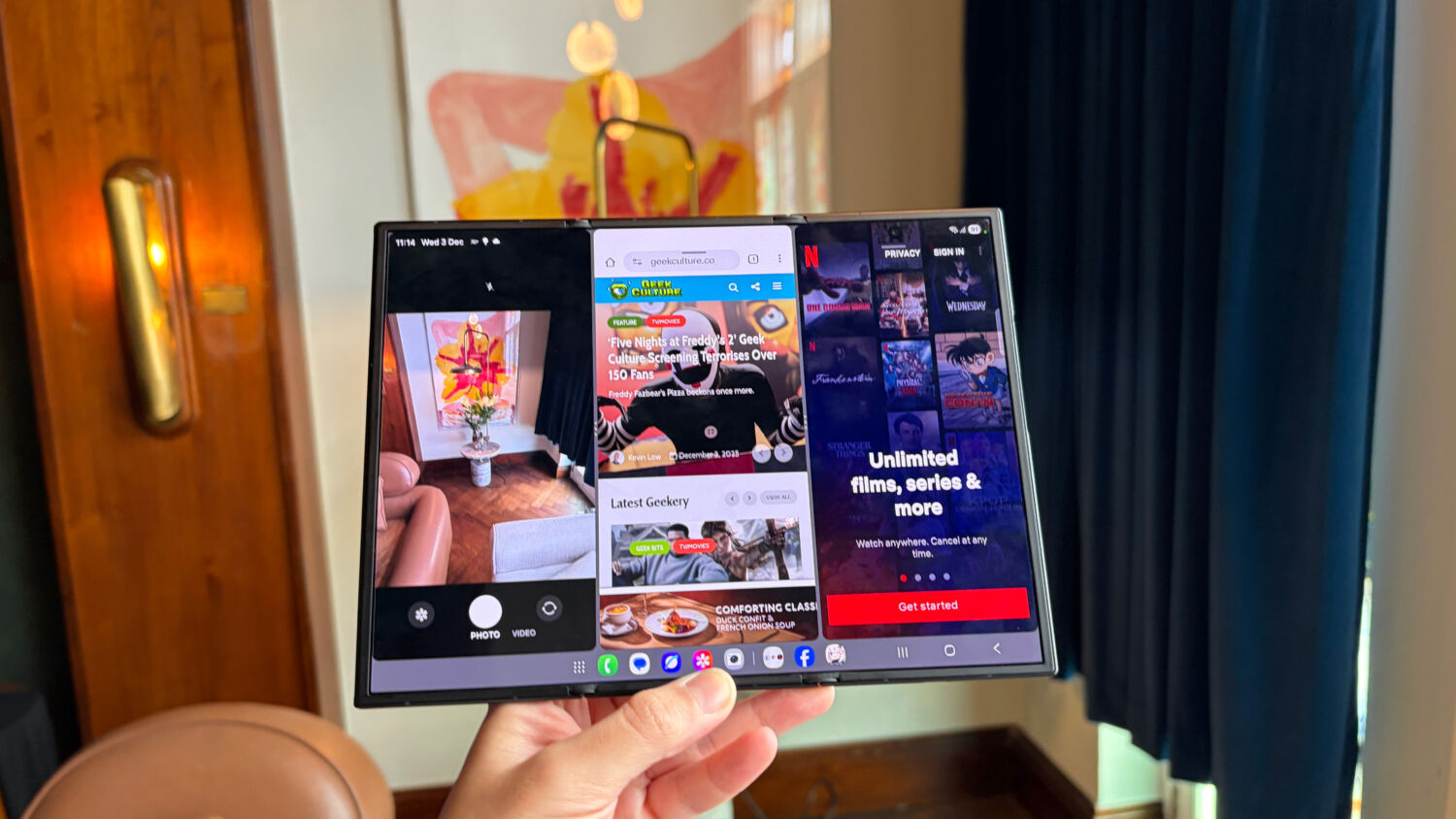
Look past that, and the Galaxy Z TriFold has some multitasking tricks up its sleeves. The device supports up to three edge-to-edge portrait panels, plus a fourth floating window for those who need it, with an intuitive user interface (UI) that makes it easy to navigate, resize, or rearrange them, as well as drag and drop content. As the first Samsung smartphone with a standalone DeX feature, it can also be wirelessly connected to a TV or an external monitor for dual-display use, albeit with a slight latency.
Following in the footsteps of its flagship cousins, it boasts a triple camera setup on the rear comprising a 200-megapixel (MP) main shooter, a 12MP ultra-wide camera, and a 10MP telephoto lens. There wasn’t much time to test them out, but here are some sample pictures:


Under the hood, the Galaxy Z TriFold is equipped with a Snapdragon 8 Elite chip, 16GB of RAM, and up to 1TB of storage, and while there was no opportunity to put its gaming chops to the test, overheating does seem likely. Other notable features include a 5,600mAh battery, the biggest in the series to date, 45W fast charging – the first Samsung foldable to support this standard – and the latest suite of Galaxy AI tools, ranging from Generative Edit and Sketch to Image to Photo Assist.
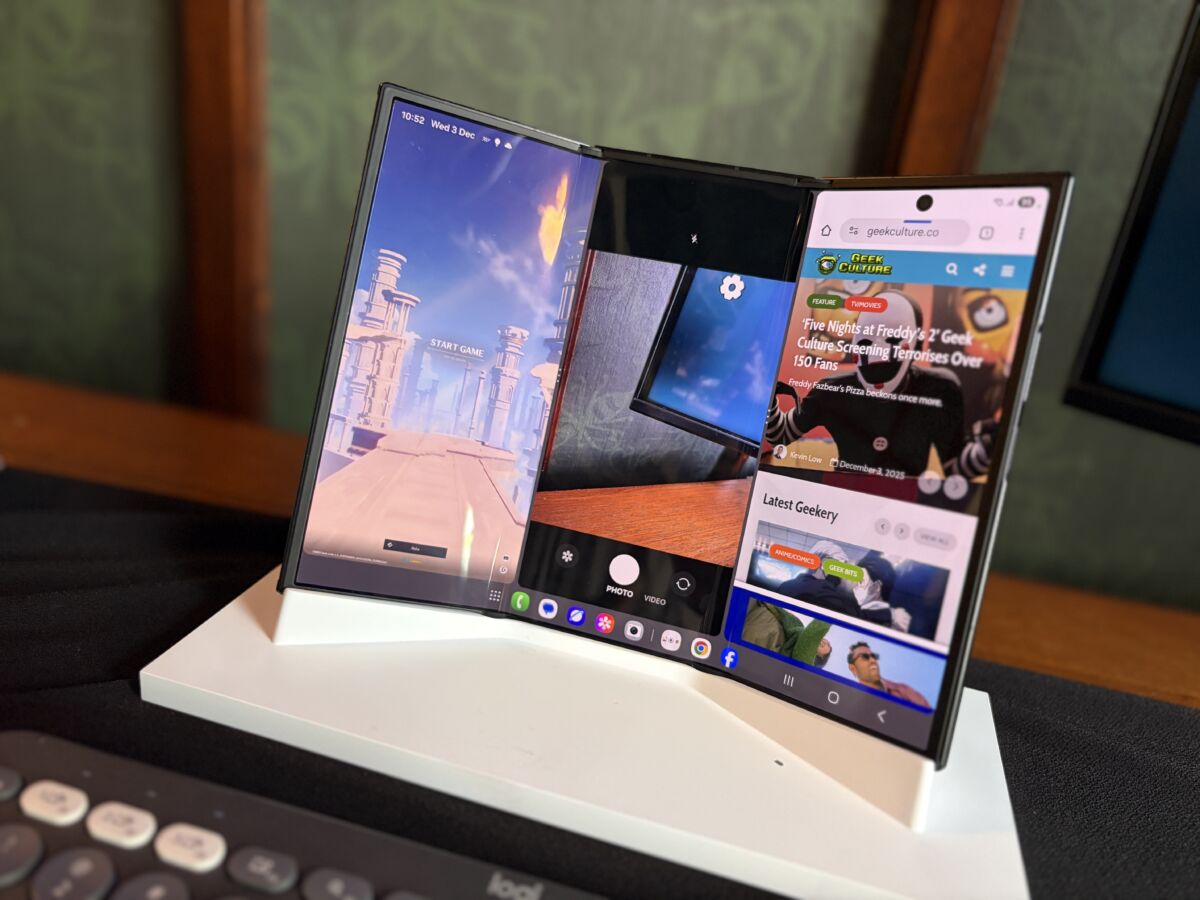
The Samsung Galaxy Z TriFold will be available in Singapore from 19 December, with local pricing to be announced at a later date. Interested parties can register their interest at the official website from now till 10 December.

Si Jia is a casual geek at heart – or as casual as someone with Sephiroth’s theme on her Spotify playlist can get. A fan of movies, games, and Japanese culture, Si Jia’s greatest weakness is the Steam Summer Sale. Or any Steam sale, really.


 Destro