Inspiration is everywhere if one looks closely enough, and sometimes, it can come from the most unexpected places. But there are also simple executions that have evolved into enduring, beloved experiences – the sky’s the limit, after all, and mundane everyday observations or musings only serve to fuel the creative juices.
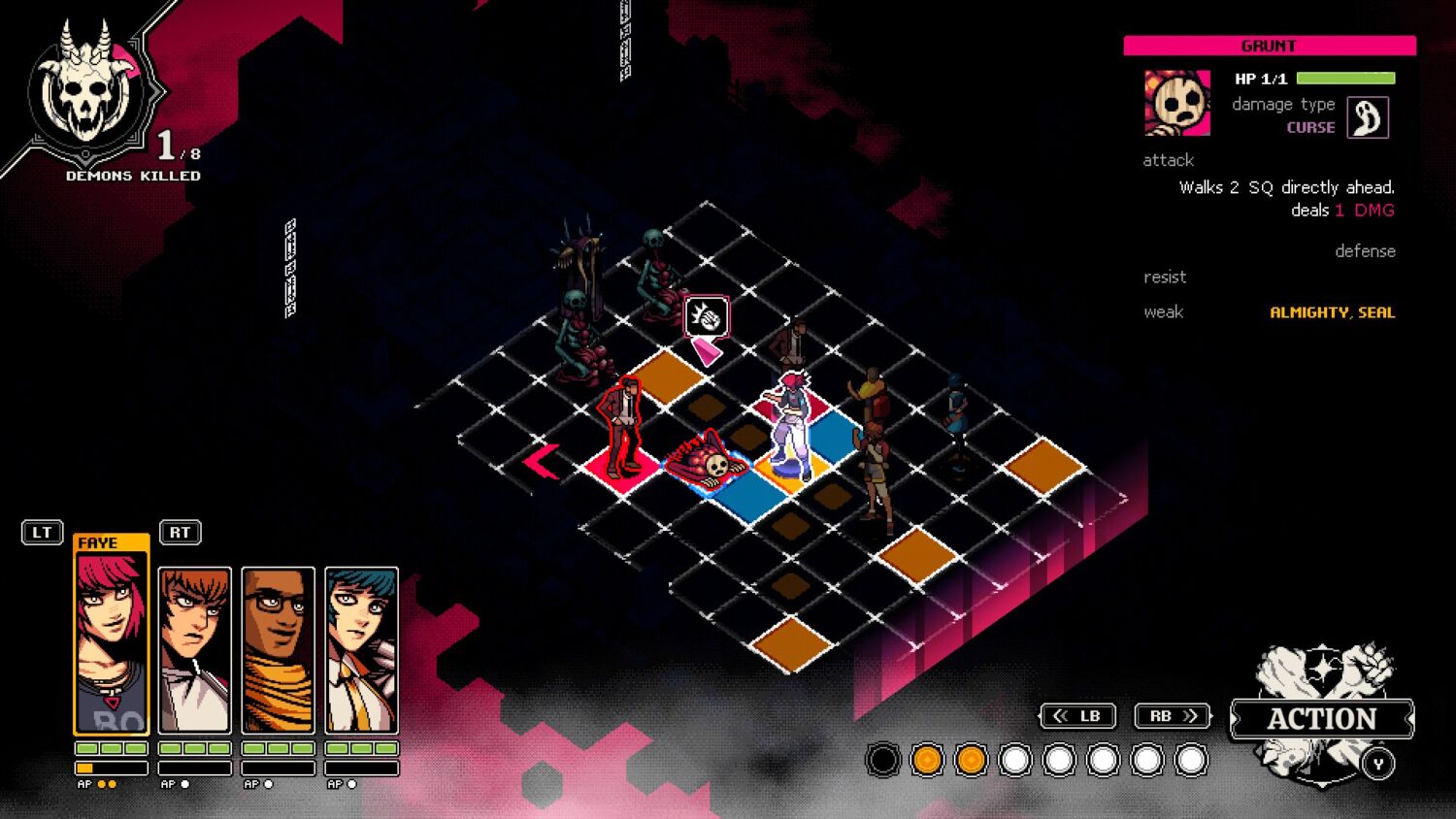
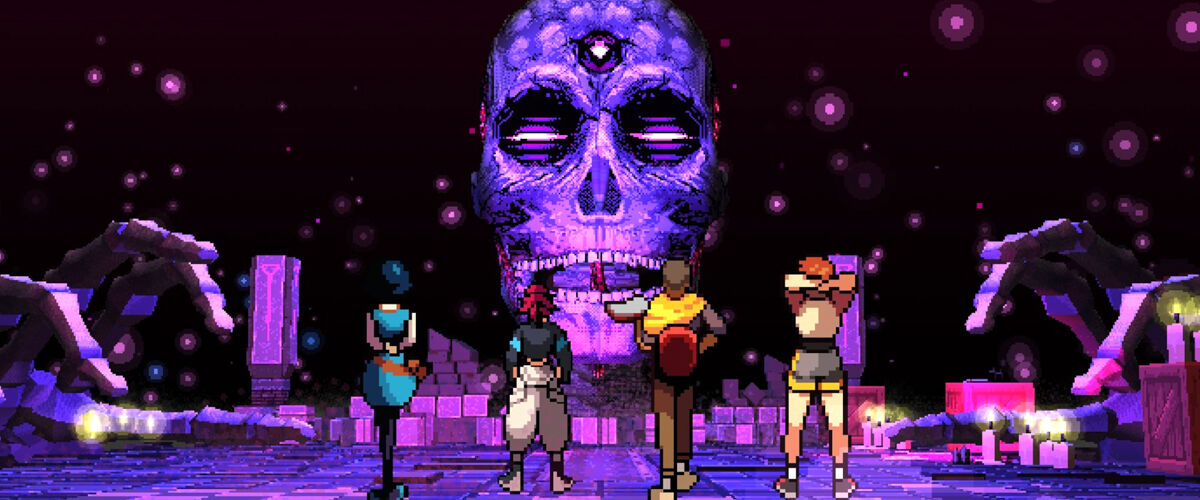
The final product is always a collision of both worlds, and Demonschool, the forthcoming isometric RPG from indie outfit Necrosoft and published by the Singapore-headquartered Ysbryd Games, proves to be no exception. A marriage of tactical grid-based combat and social elements, it puts players in the role of university student Faye, as she navigates school life on a mysterious island and defeats demons, possessed enemies, and more in between the human and demon worlds with her misfit companions.
The premise draws an immediate connection to Atlus’ Shin Megami Tensei (1992), a spin-off within the wider Megami Tensei franchise, which includes the beloved Persona subseries, and creative director Brandon Sheffield has acknowledged the influence of 2009’s Devil Survivor on his passion project. Visually, though, its stylings actually lean into more obscure territory – tactical role-playing series Black/Matrix, from the now-defunct Japanese developer Flight-Plan, “that nobody knows about”.
“The art in that is really good at presenting structures and hard lines in an organic way, so no edges are ever sharp; they always decay so that it feels natural,” he shares with Geek Culture during the recent Tokyo Game Show 2025, adding that the earlier Japanese-only title was the team’s “guiding star” to creating 3D environments.
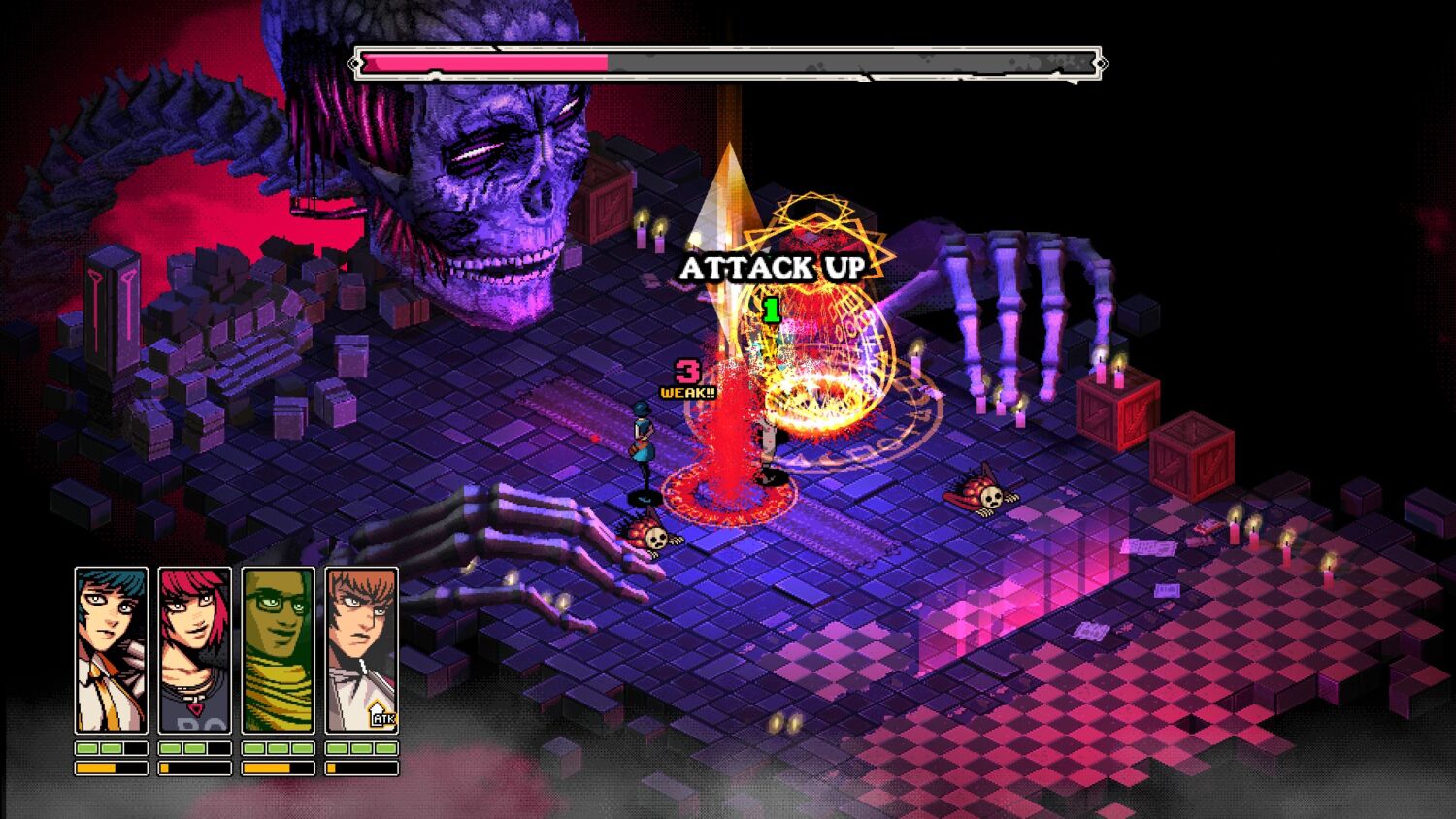
“Black/Matrix is a fully 2D game, but the backgrounds feature such a specific isometric perspective that it looks like they could have been drawn in 3D and with some really nice textures, whereas our game has 3D backgrounds, but we wanted it to present more like 2D, so we took the lessons from [Flight-Plan] and flipped them.”
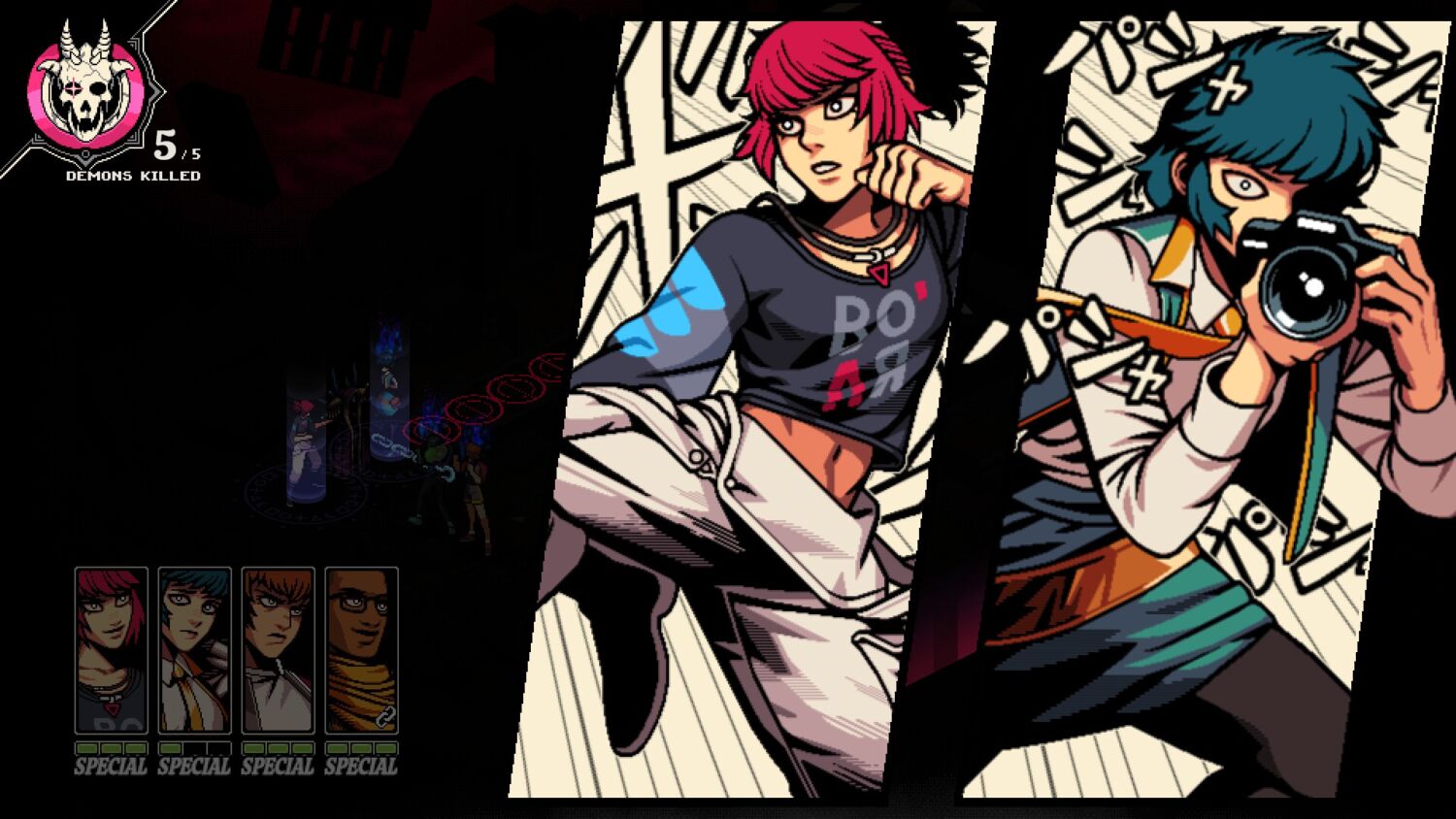
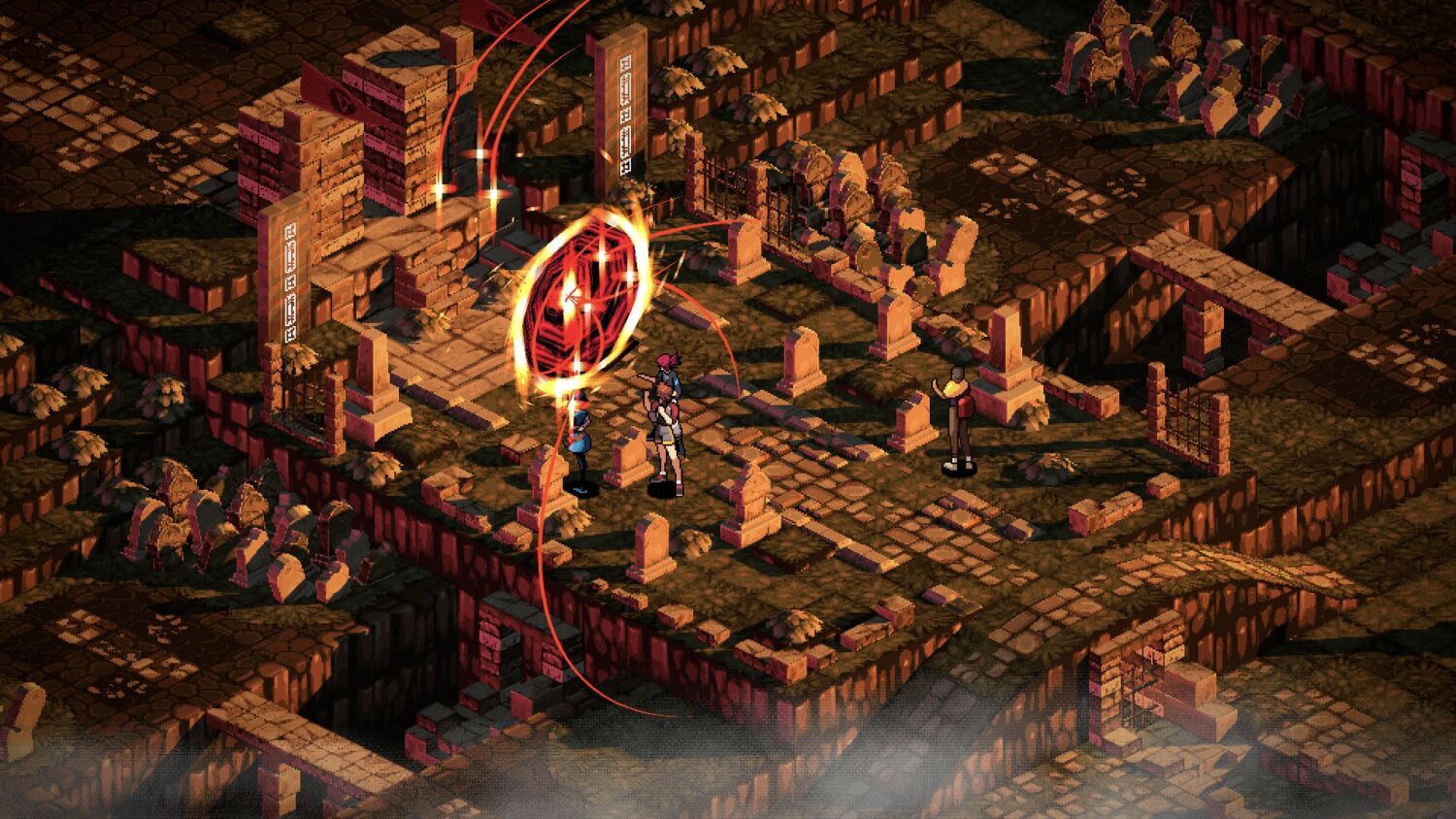
Putting everything together, Demonschool employs a 2D aesthetic and character sprites for the human world, a 3D switch-up for the demon world, and a hybrid mix between the two for the school as an indicator of supernatural breaches. Alongside the use of cross-hatching for shadows, traditionally done with shading, the purple, pink, blue and green lighting was pulled from Italian horror films, while Japanese horror manga – not quite Junji Ito, the mind behind iconic works like Uzumaki and Tomie, Sheffield clarifies – inspired the exaggerated eyelashes on the characters.
Ensuring a cohesive quality to the eclectic smorgasbord of art styles brings another challenge, but the game’s backdrop offers the perfect fix. Citing the Conan the Barbarian films, Sheffield highlights how various cultural mashups, from the Hare Krishna robes and Buddhist robes to Conan’s own Guatemalan shawl, work because the spiritual location is what “threads all of these together”.
Similarly, the school setting, which takes after the real world, serves as an international melting pot where it’s natural, and not strange, for different cultures to mix. The island is next, designed to “feel like you can explore the whole place, but are still limited”, and modelled after Japan, Taiwan, and Northern Europe – primarily Estonia and the Faroe Islands, a smaller territory with “unique, isolated cultural practices”.
“They have a different way of dressing, and their houses look a specific way, so all the houses in Demonschool are mimicking the Faroe Islands, whereas the school is closer to Japan, in between Japan and Taiwan,” explains Sheffield.
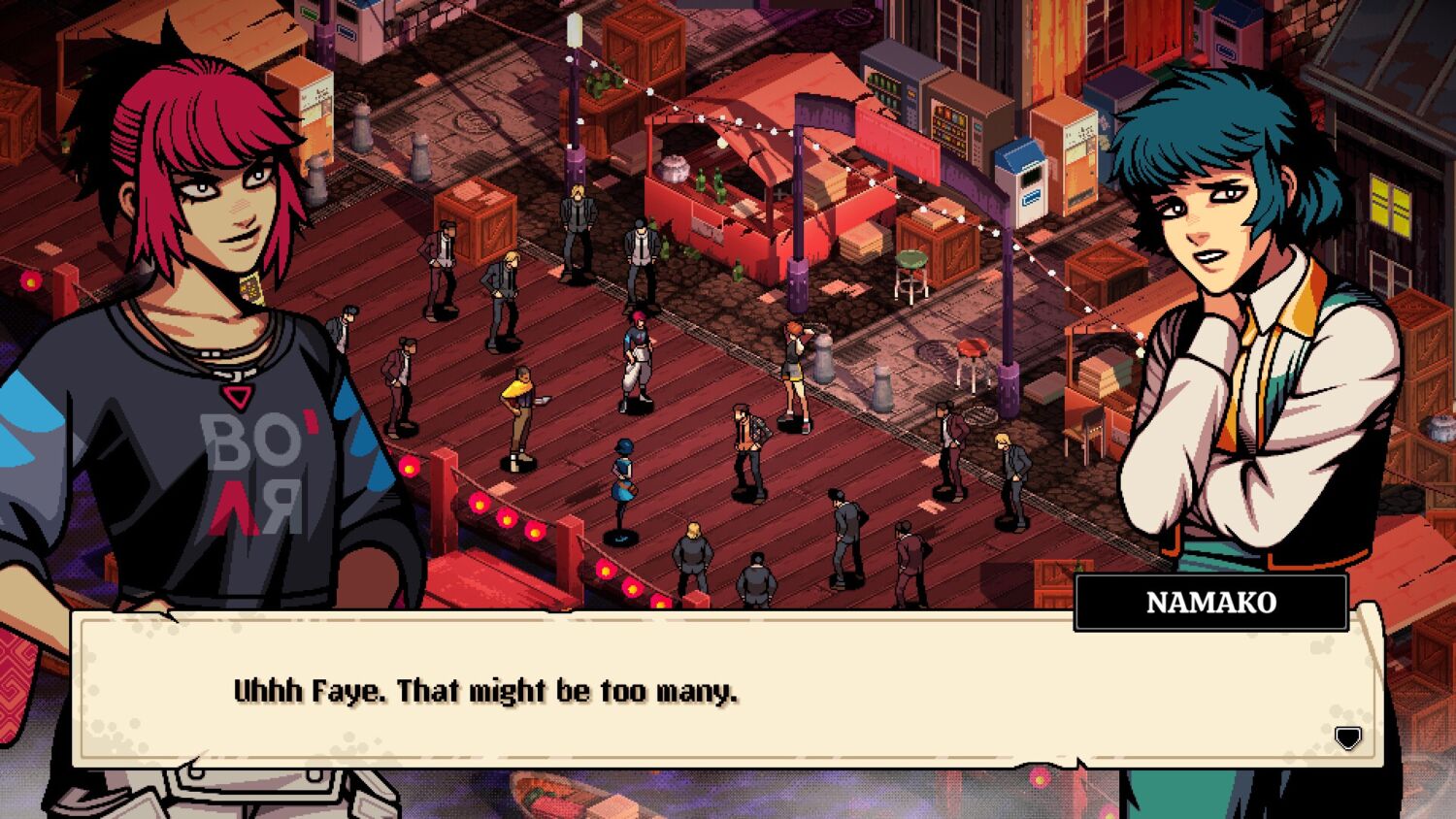
He continues, “Then, you have the town square, which is mostly European, and the docks with red lanterns and more of an Asian influence, so you just mix them all. But people don’t notice, because you have the concept of an island, and you can just smash whatever fits inside, and it works.”
In an ideal world, Demonschool would accommodate even more ideas, but the creative process only allows for this much ambition. While the forthcoming RPG has undergone plenty of tweaks over the years, including a raising simulator feature – referring to a type of gameplay where players raise, train, or build up a character – with Princess Maker and Nekoatsume influences, the battle system remained consistent from the start.
Despite the parallels to the turn-based strategy indie title Into the Breach, Sheffield credits Sega’s Valkyria Chronicles series as the driving force behind its planning and action phases, where players pick a character and map out their movement, repeat for the other party members, and launch an attack all at once (as opposed to the usual approach of taking turns individually), before handing over the baton to the demons. The core philosophy is rooted in simplicity: figure out how to make a small tactics grid, a familiar mechanic in games like Final Fantasy Tactics and Fire Emblem, and reduce the number of clicks needed to interact with anything.
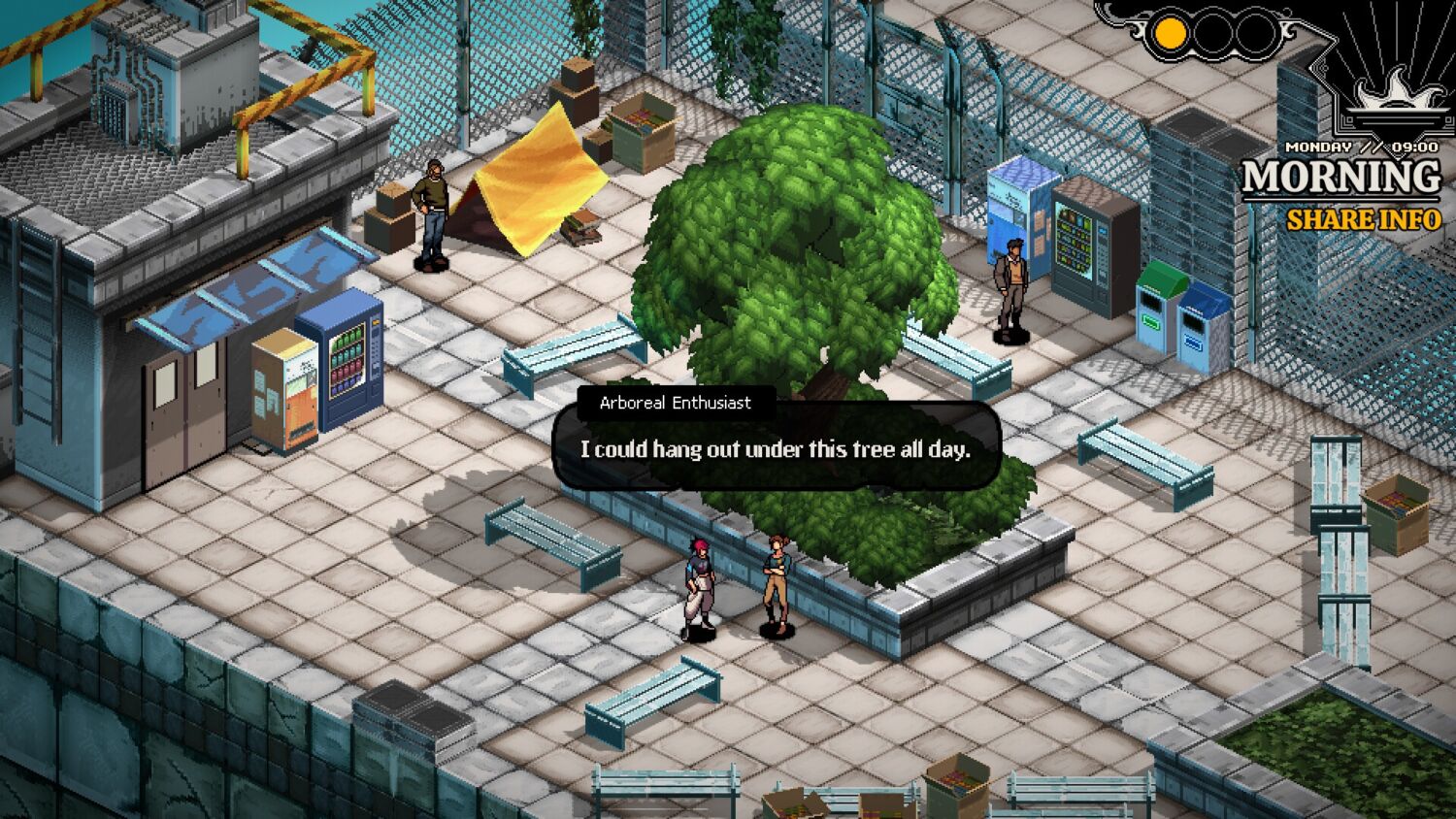
Straightforward as that sounds, a lot of detail went into crafting Demonschool. Engaging NPCs in a conversation during different parts of the day, for instance, triggers dialogue lines that change weekly in the game or whenever a major shift in the world occurs, and it’s as impressive as writing over 50 reviews of obscure films that players can read (and may not even notice) in the game via the school newsletter.
“They are all real,” Sheffield promises.
The dedication extends to the smallest of specifics, including only reviewing movies before 1999, when the title takes place, which has led to some amusing oversights during the development process.
“Here’s one that we made only in July – we realised finally that one of the characters has a pose where he’s looking at his smartphone, so we had to change it to a chunky phone,” the creative director recounts with a chuckle.
And just like a ripple in the water, the little things can build up to something bigger and bolder.
Demonschool releases for the PS5, PS4, Xbox Series X|S, Nintendo Switch, and PC on 19 November 2025.

Si Jia is a casual geek at heart – or as casual as someone with Sephiroth’s theme on her Spotify playlist can get. A fan of movies, games, and Japanese culture, Si Jia’s greatest weakness is the Steam Summer Sale. Or any Steam sale, really.