
After decades of watching Batman brood over Gotham, who knew that it would also be perversely refreshing to have the spotlight cast on the poor unfortunate souls destined to become his greatest enemies? Following critically acclaimed outings with Joker (2019) and The Penguin (2024), DC Studios has now dived deeper into Batman’s rogues’ gallery to unearth one of its oldest, strangest and most tragic villains, to bring us Clayface.
First introduced in Detective Comics #40 in 1940, Clayface has spent more than eight decades changing identities, appearances and origin stories. From Basil Karlo’s beginnings as a disgraced horror actor turned murderer to the monstrous, shape-shifting creature familiar to audiences of Batman: The Animated Series (1992-1995), DC’s man of a thousand faces has always occupied a particularly unsettling corner of Gotham’s criminal underworld. His greatest tragedy has often been his desperate desire to reclaim the humanity slipping through his fingers, making him an unusually fitting candidate for a standalone horror film, and the first body-horror cinematic foray for a comic book adaptation.
Fortunately, English horror filmmaker James Watkins has little interest in requiring audiences to memorise eighty-six years of comic-book continuity before entering the cinema. Gotham remains recognisably Gotham complete with passing references to its infamous criminal inhabitants (clown murals, anyone?), but the horrors unfolding here are perfectly capable of standing on their own two grotesquely deformed feet. Watkins, whose previous work includes the relentlessly uncomfortable Eden Lake (2008) and Speak No Evil (2024) approaches the material with a sensibility rooted firmly in the grimier traditions of horror cinema – echoes of David Cronenberg’s The Fly (1986) emerge through its fascination with bodily deterioration and the terrifying loss of physical identity, while Sam Raimi’s Darkman (1990) provides a fitting reference point for its disfigured protagonist and pulp-inflected revenge. Combined with the hardboiled atmosphere of mid-century crime thrillers and the lurid excesses of old-fashioned monster movies, those influences give Clayface a distinctly unpleasant personality that feels surprisingly at home.
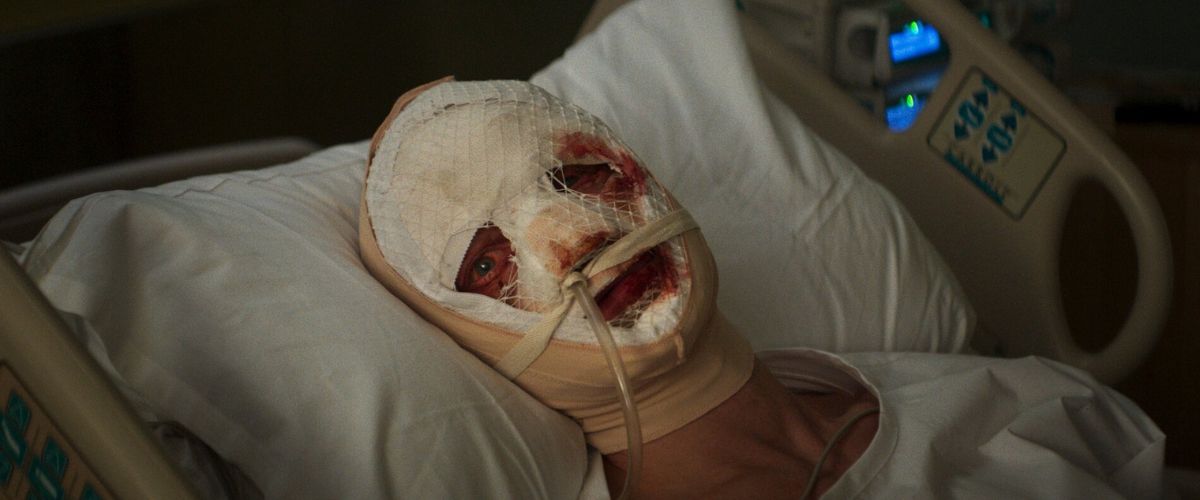
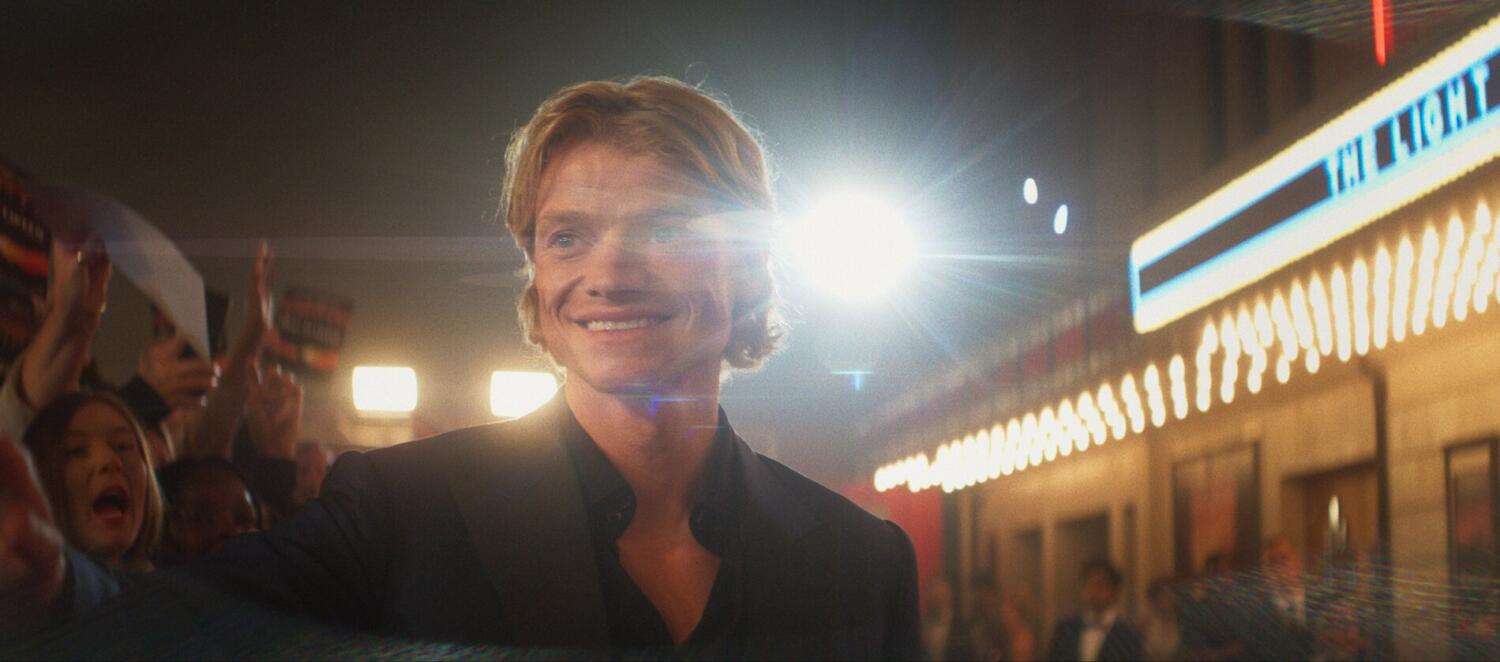
Working from a screenplay by horror veteran Mike Flanagan (Doctor Sleep, The Haunting of Hill House) and Hossein Amini (Drive), Watkins introduces Matt Hagen (Tom Rhys Harries, White Lines), a handsome and charismatic actor whose journey from Gotham’s rougher neighbourhoods to the silver screen has finally begun paying off. Sadly, one particularly ill-advised sexual encounter brings Matt into the orbit of Markos Szabo (David Dencik, No Time to Die), a ruthless Gotham crime lord. After discovering Matt in bed with his girlfriend, Markos arrives with several associates and a switchblade, and proceeds to carve up the actor’s face. For a man whose livelihood depends upon his appearance, the consequences are devastating – he gets recast, his agent and lawyer abandons him and the film industry suddenly wants nothing to do with him.
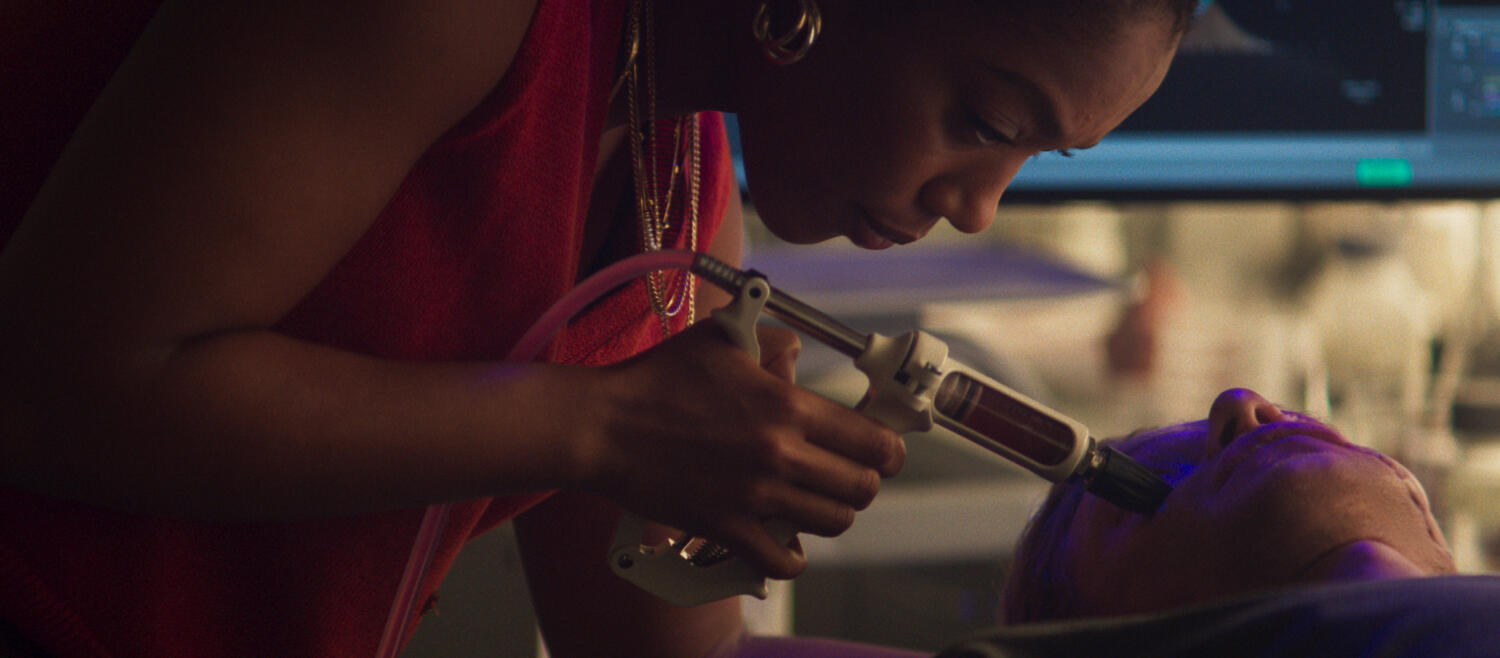
Desperation eventually leads him to Dr Caitlyn Corr (Naomi Ackie, Mickey 17), a scientist whose professional fortunes have taken a similarly disastrous turn. Having watched former collaborators appropriate her research, Caitlyn finds herself struggling to continue developing an experimental regenerative treatment built around microscopic nanocells capable of repairing damaged human tissue. Matt, meanwhile, has exhausted conventional medicine and possesses precisely the combination of desperation and recklessness required to volunteer for an untested procedure. Their arrangement offers both parties an opportunity to reclaim something stolen from them as Caitlyn hopes to prove her technology works, while Matt wants his face, career and former life back.
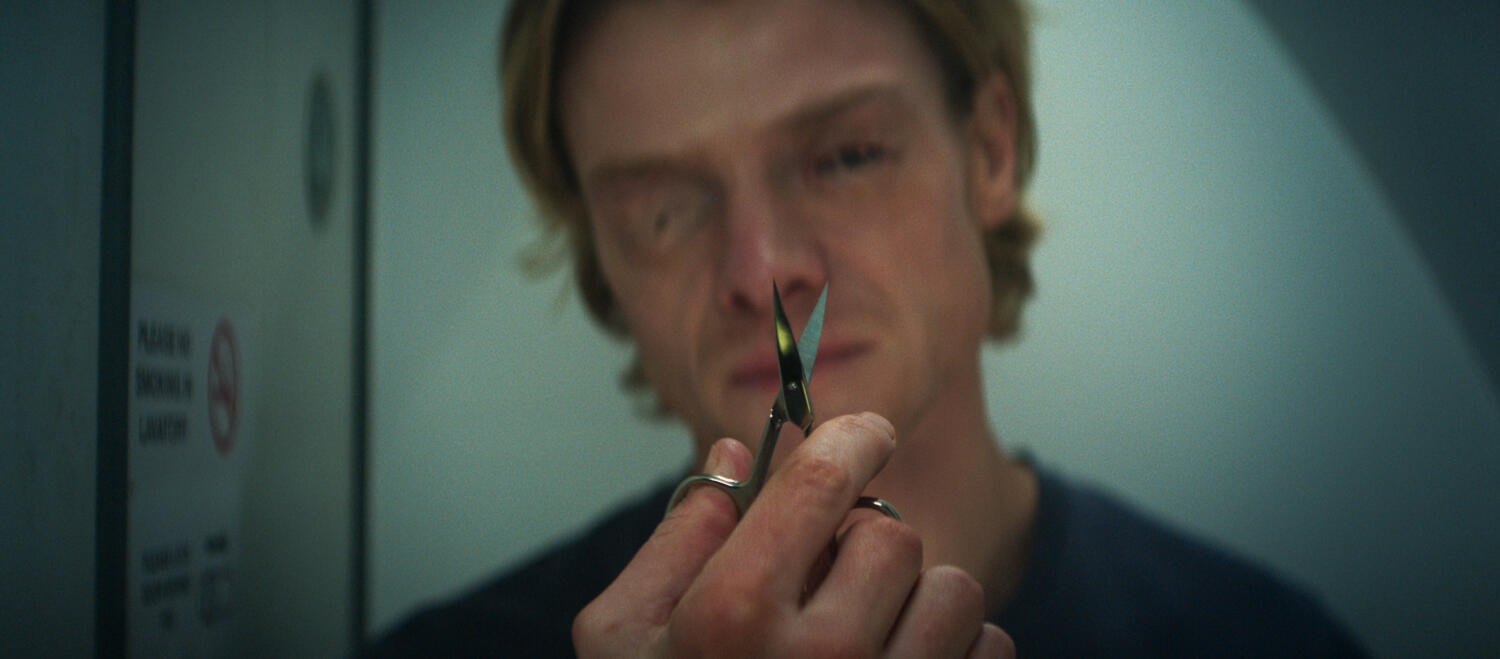
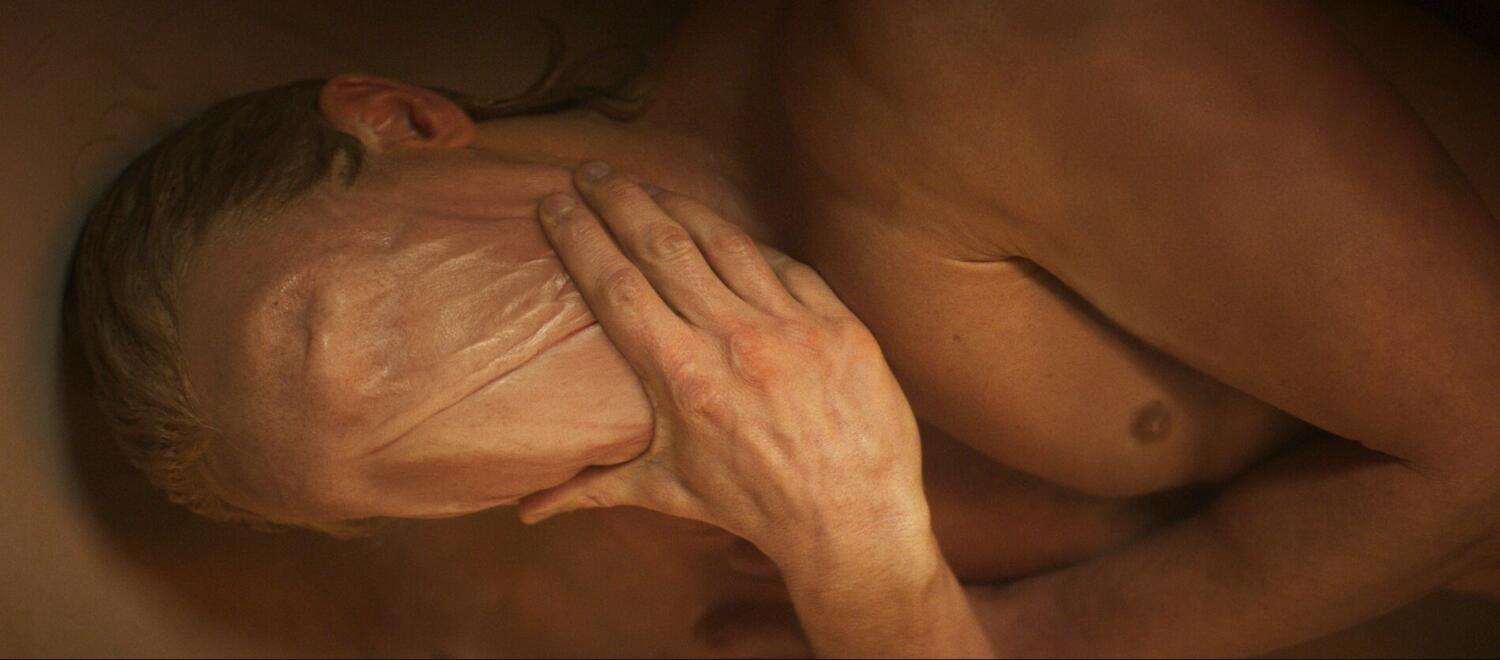
Naturally, Gotham’s answer to cutting-edge cosmetic surgery comes with some rather alarming complications. What follows is a steadily escalating parade of bodily indignities and one particularly excruciating sequence traps Matt inside an airplane lavatory during severe turbulence, just as his rapidly mutating skin begins creeping over his eyes. Armed with a pair of nail scissors, he attempts to cut away the excess flesh while the aircraft lurches violently around him. Watkins draws the ordeal out with almost sadistic patience, lingering on the scissors approaching Matt’s eyelids, the sickening resistance of skin beneath the blades and the awful possibility that one sudden jolt could turn an already unpleasant procedure into something considerably worse. Such moments owe much to the impressive collaboration between makeup designer Nicole Stafford (Hamnet) whose combination of elaborate prosthetics and digital transformations gives Matt’s deterioration a horribly convincing physical presence, and cinematographer Rob Hardy (Annihilation) who frequently brings the camera uncomfortably close to the damage.
For all the technical wizardry, however, the film’s greatest asset remains Rhys Harries, whose performance prevents Matt from disappearing beneath the mountain of prosthetics and computer-generated flesh. Early scenes establish a young actor whose vanity and ambition are understandable even when his arrogance makes him difficult to admire. Losing his face also means losing the identity he has spent years constructing, and Harries makes Matt’s growing desperation painfully apparent as each attempt to reclaim his former appearance only leaves him further removed from it. His developing relationship with Caitlyn provides some welcome respite from the escalating horrors, with Ackie bringing a sympathetic intelligence to a scientist increasingly troubled by the consequences of her own invention. Their tentative friendship edged with romantic possibility gives Matt something resembling an emotional anchor as his physical condition deteriorates.
Once Clayface abandons its comparatively restrained opening and embraces the gloriously ridiculous possibilities of its premise, the film culminates in its most entertaining extreme nightclub sequence where Matt finally tracks down Markos and unleashes his abilities upon a crowded dance floor. Surrounded by pounding music, flashing lights and unsuspecting revellers, he begins slipping between identities with increasingly murderous ingenuity, turning the very act of recognising another human face into a dangerous guessing game. Supporting performers briefly inherit the spotlight whenever Matt assumes their identities, lending the sequence a mischievous theatricality that makes particularly good use of the character’s acting background. Amid the flying limbs and collapsing bodies, there is even room for some wickedly timed humour, with the absurdity of a shapeshifting assassin loose inside a Gotham nightclub finally allowed to run gloriously out of control.
Perhaps the more interesting achievement lies in what Clayface suggests about the future of James Gunn and Peter Safran’s DC Universe. Following Superman (2025) and Supergirl (2026), audiences might reasonably have expected another adventure filled with familiar capes and carefully planted connections to the next instalment but Watkins has delivered a grimy, self-contained horror film that just so happens to occupy the same fictional universe as the Man of Steel, even as the film casually distances itself from any references to the Dark Knight. Gotham City and Coast City provide the geographical connections but little else demands any knowledge of DC continuity, allowing Clayface to operate comfortably as its own gruesome creation. Will audiences accustomed to conventional superhero entertainment embrace something this aggressively unpleasant?
The creative possibilities are certainly worth exploring – after all, DC Comics has spent decades filling its pages with tragic monsters, deranged scientists, supernatural oddities and criminals whose stories could comfortably sustain entire films without a Justice League member appearing to save the day. Clayface offers a glimpse of what happens when filmmakers are allowed to rummage through that considerable collection and emerge with something genuinely strange; and Watkins has fashioned a nasty entertaining throwback to the days when horror filmmakers delighted in pushing practical effects, audience endurance and basic human anatomy well beyond their recommended limits. Such freedom definitely feels welcome in a genre increasingly preoccupied with building enormous interconnected universes.
GEEK REVIEW SCORE
Summary
Tom Rhys Harries gives Matt Hagen’s tragedy real bite as one catastrophically bad day turns him into a walking body-horror nightmare, while director Watkins gleefully stretches, tears and reshapes him into some of the most grotesque imagery the DCU has attempted yet.
Overall
7.3/10-
Story - 7/10
7/10
-
Direction - 7.5/10
7.5/10
-
Characterisation - 7/10
7/10
-
Geek Satisfaction - 7.5/10
7.5/10

Natalie is a big fan of anything related to movies, TV shows, and anime — you name it. When she’s not reading or being a dedicated cinephile, she’s probably playing gacha and tabletop games, or daydreaming of Caleb from Love and Deepspace.

 Kevin Low

 Si Jia