This interview has been edited for clarity.
There’s a comfort in revisiting beloved classics, even if the experience doesn’t quite feel the same as before. Familiar elements have a fresh sheen of paint, and the world may be bigger, but traces of old charm will still linger beneath the surface, marking a collision between nostalgia and novelty.
It’s a toss-up between a beat-by-beat adaptation and expanded storytelling for revival projects, and Square Enix’s Final Fantasy VII Remake trilogy, which began with the eponymous 2020 title, leans into the latter. Among its major tweaks are the combat system, more fleshed-out side characters, and new plot devices – an experience further refined in its sequel FFVII Rebirth, taking the form of open-world exploration, a dizzying selection of mini-games, and timeline deviations.
When Final Fantasy VII Revelation closes out Cloud’s journey next year, the remake project will be 10 years in the making, coming 30 years after the original, and some gear-shifting is in store. For starters, Vincent Valentine and Cid Highwind, who both appeared in the 1997 original, can now jump into combat as playable party members, while the latter’s airship, the Highwind, offers an additional travel option with the ability to skydive and deploy parachutes on the way down (think the initial jump-off phase in battle-royale shooter Apex Legends).
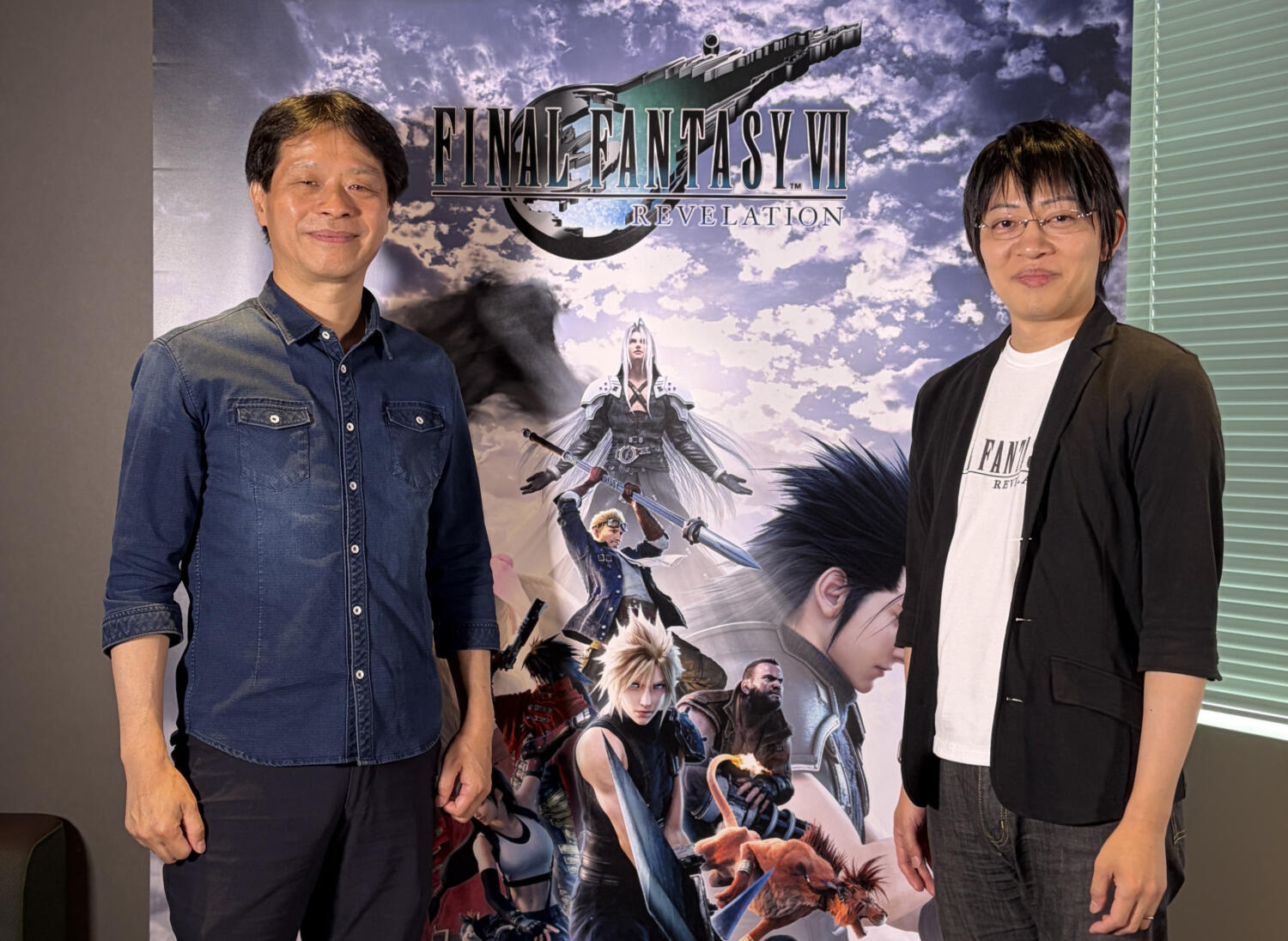
The touch of verticality adds variety to gameplay, but was also designed with the game’s massive scale in mind. Speaking to Southeast Asia at Square Enix’s Shibuya office in Tokyo, director Naoki Hamaguchi explains how each entry in the trilogy tackles a different approach: a story-driven and a free-exploration focus for the first two, in that order, and scope for the upcoming capper.
“One of the main visions was how to make it new, [and] how we’re going to make it fresh. That was definitely one thing we wanted to focus on, and one thing for Revelation is the scale – everything was being scaled up from Remake to Rebirth and finally to Revelation, which is the biggest yet,” he shares. “Unlike Rebirth with very sprawling maps, we wanted to make self-contained zones where there was verticality with everything, and not just expansive fields.”
As glimpsed in a separate 50-minute preview of Final Fantasy VII Revelation, that’s quite the understatement. Taking place at the start of Chapter 4, the build includes a 15-to-20-minute tutorial on board the Highwind and other possible routes in Wutai, Mideel, Costa de Sol, and Gold Saucer, culminating in an admittedly overwhelming experience. The brevity made comparisons across the board a little challenging, especially in terms of combat; even so, it left high hopes and optimism in its wake after the initial sensory overdose wore off.
First, players are guided through the core mechanics on Cid’s airship – the FITS or Function Integrated Suitwear, combat system, grappling gun movement, and MAI (Multifunctional Assisted Intelligence), Chadley’s new female replacement. Both Queen’s Blood and Piko the Chocobo also return, with a new boss called Shadowblood Beast added to the fan-favourite card game. The bigger-than-expected space presumably serves as the hub of operations and is fitted with poles connecting the upper and lower floors, while the slight bustle gives it a lived-in feel.
After completing the tutorial, it was time to check out Mideel, marking the first instance of piloting in the hands-on session. The Highwind is easy to control, if a little unwieldy, and it feels liberating to be in the skies, even with the scattered, overlapping icons on the mini-map that can confuse navigation. Jumping off the airship reveals a breathtaking, albeit intimidating, bird’s-eye view of the terrain, but the inability to adjust mid-air positioning feels slightly awkward and is only available after deploying the parachute.
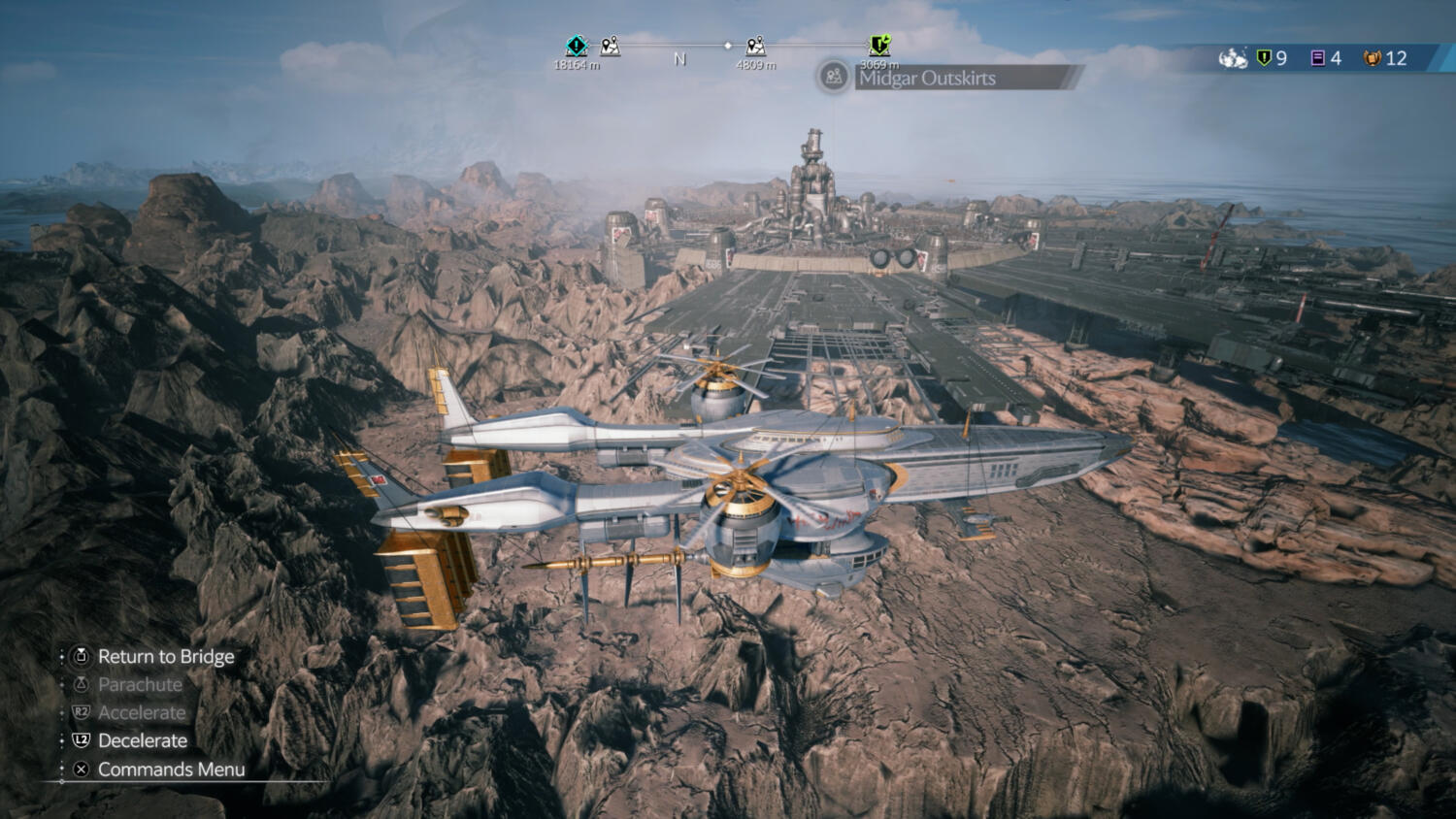
It certainly helps that this arrangement is temporary. According to Hamaguchi, the skydiving element grows more convenient as players level up, unlocking useful features such as icons popping up on the ground below, the option to skip the dive sequence, and the ability to call on Piko to join them upon landing. Returning to the Highwind is similarly fuss-free, too, allowing quick travel from any point in a region.
Still as adorable as ever, the yellow Chocobo appears to be the only feathered companion used for traversal in Final Fantasy VII Revelation. Unlike the different coloured species in Rebirth, each tied to a unique movement skill, Piko is an all-in-one arsenal of various manoeuvres, from scaling walls and swimming to air-dashing. Riding Piko into battle is now an option, and its Whirlwing and Chocomagic abilities, which can be upgraded alongside stamina, let it attack foes in combat encounters, akin to a fourth member of the party.
Every Chocobo is their own, uh, person, however. The “Her Chocobeau” quest, for instance, centres on a lovesick, runaway Chocobo (hence the wordplay) searching for her romantic interest – an idea of the interesting personalities to encounter in the game. As with its predecessor, progression involves detecting and tracking down a target with Piko’s keen sense of smell, as well as combat.
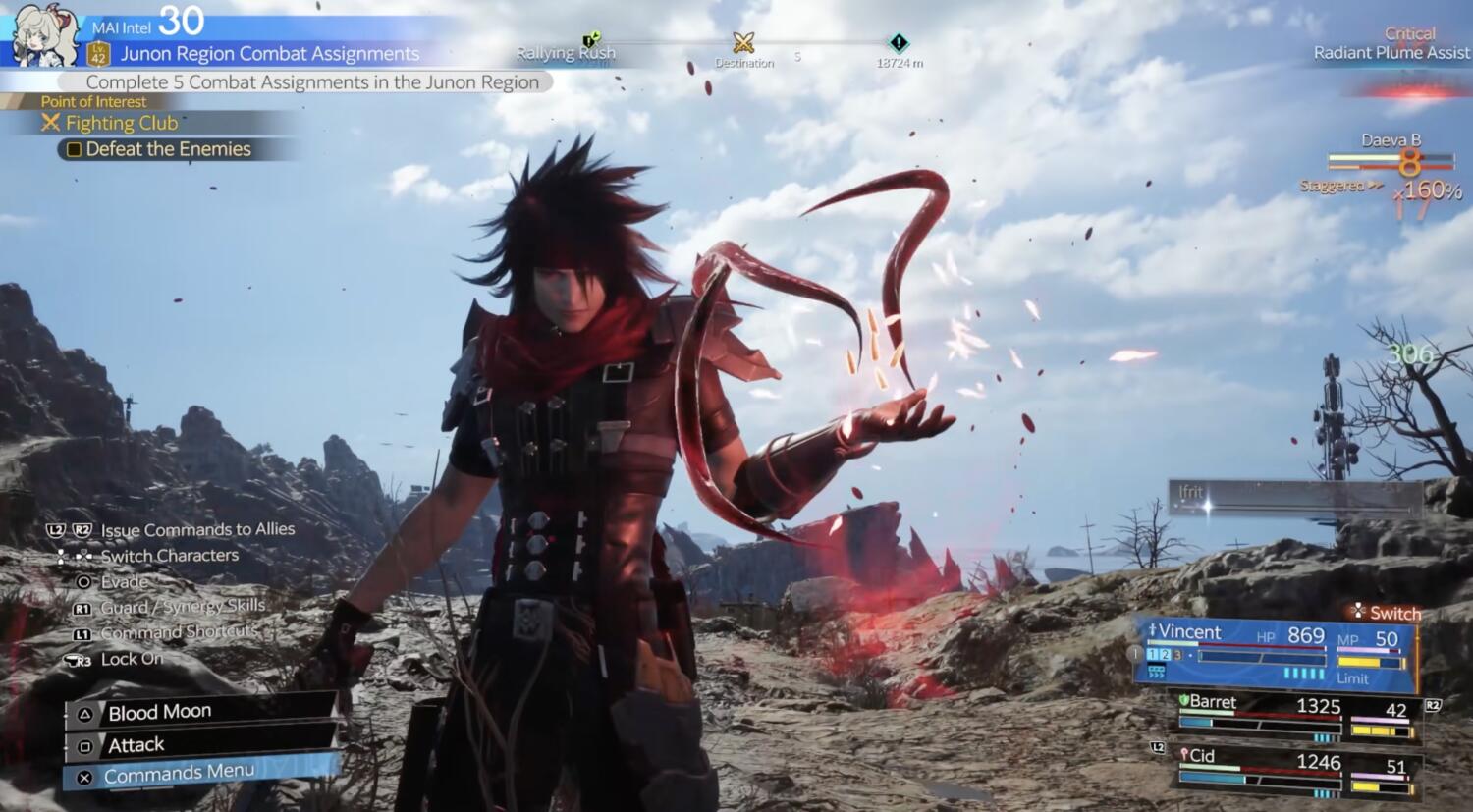
Because the party in the preview build is fairly high-levelled, common enemies were easily eliminated with a few hits, and there wasn’t a proper opportunity to unleash new Synergy Abilities and Summons or check out the FITS system in depth. For what it’s worth, the overall flow, from character-switching to chaining combos, feels as seamless and satisfying as before, with Cid and Vincent bringing two distinct play styles.
Those who’ve played the original will know Cloud and Tifa are off on their own (no spoilers here!), leaving the pair with Yuffie, Barrett, Red XIII, or Cait Sith, which still offers plenty of customisation. The issue, then, isn’t variety, but how to make the newest party additions stand out from the rest of the crew, prompting a heavier emphasis on timing.
Hamaguchi highlights, “With Cid and Vincent especially, the way they play is different in the sense that it’s not so much a fighting game, but the combos you have to create and the timing of the button inputs are very important.”
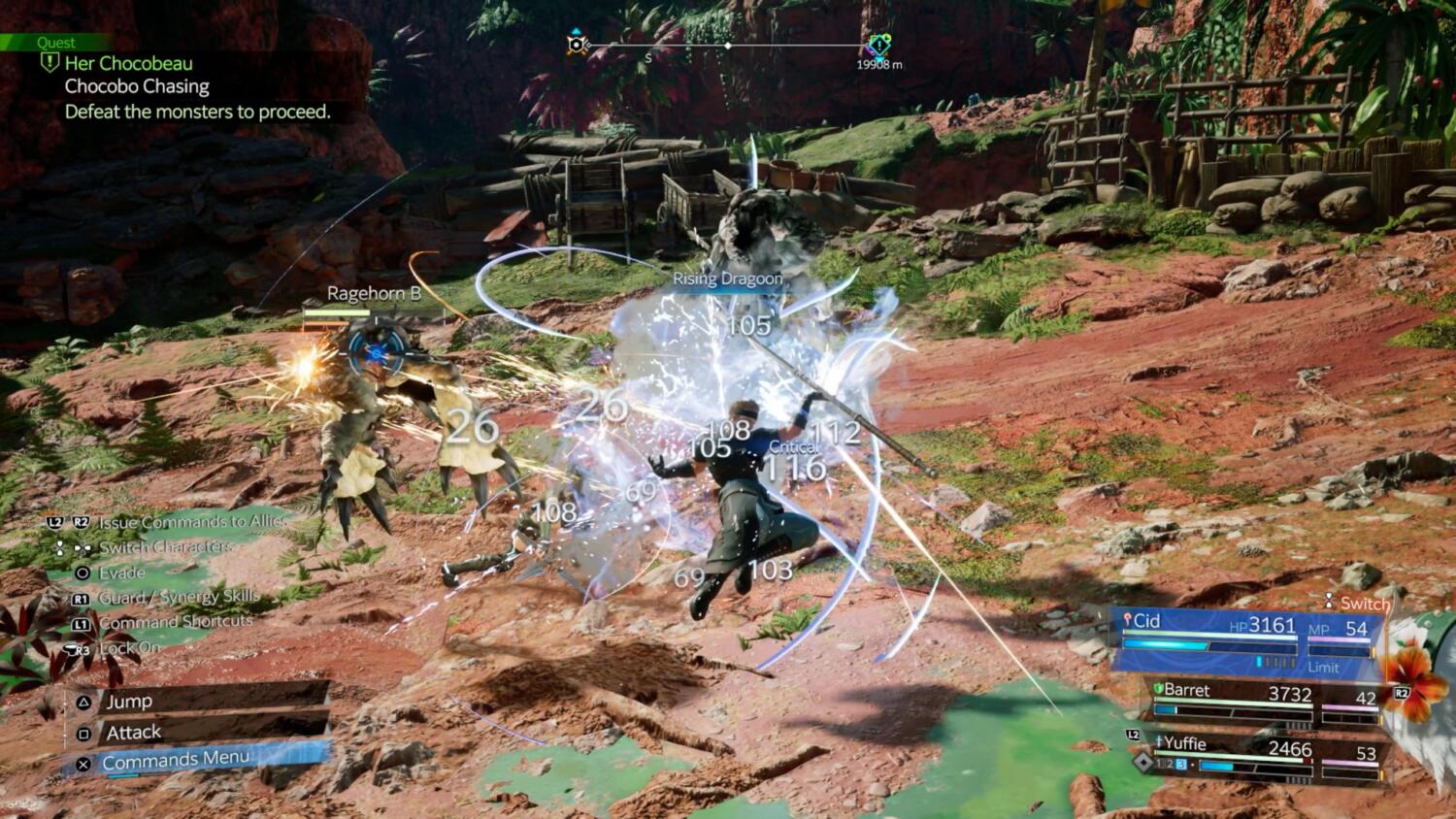
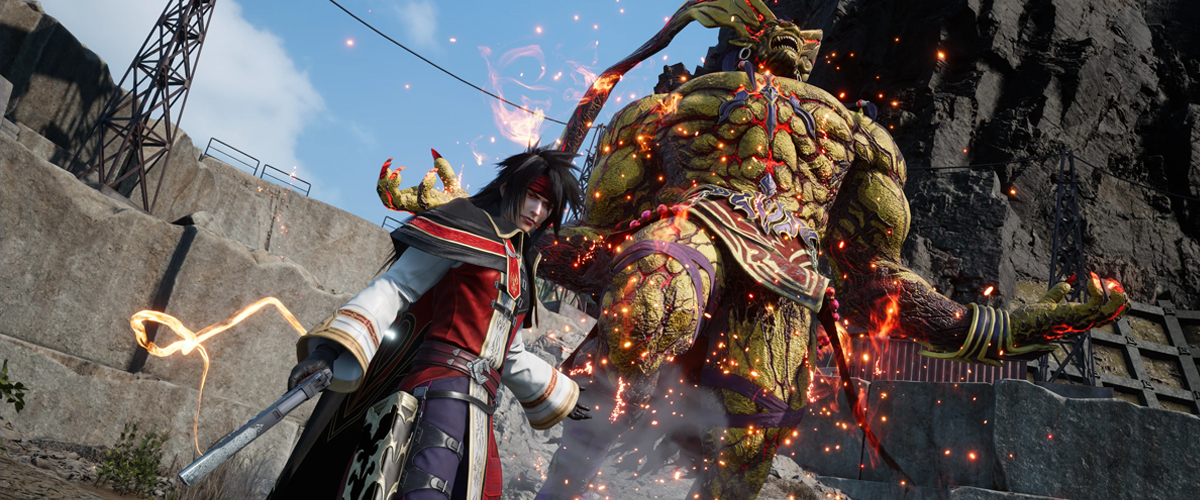
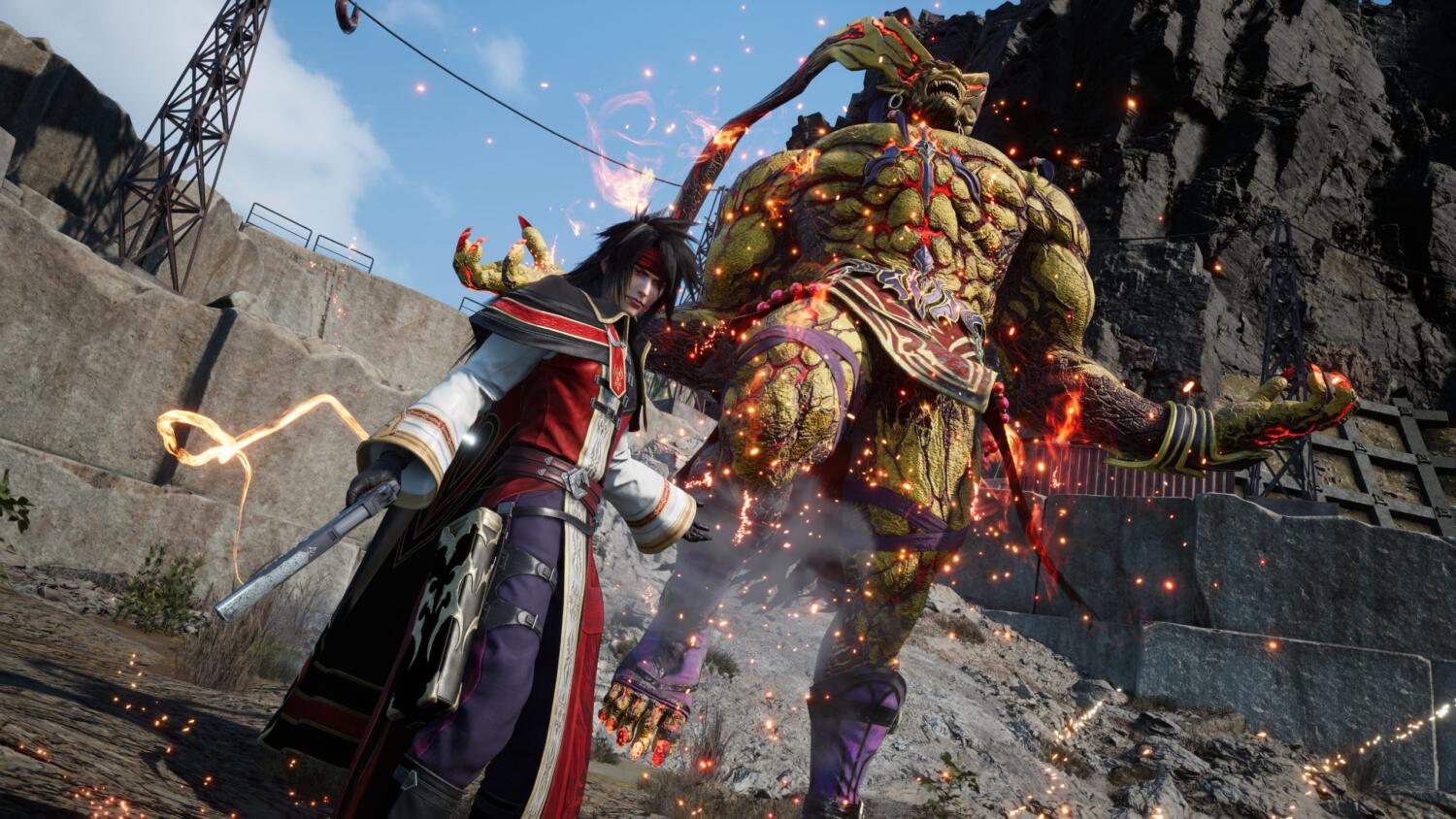
Fundamentally, though, Cid and Vincent bring two distinct play styles. The former has more weight behind his attacks, and the spear range allows for a safer, grounded experience, while his red-caped counterpart rewards risk and works well with fast-paced aggression. In the base Gunslinger Mode, Vincent’s iconic pistols trigger a gameplay loop of unloading bullet barrages, dealing area-of-effect damage, and accumulating Stagger on targets. His Galian Beast transformation is now a regular ability in Final Fantasy VII Revelation, unlike in the original, which required a Limit Break, turning his attacks into close-combat strikes. Pressing the triangle button at the right time, indicated by a red glow, unleashes even stronger hits, but don’t get carried away, as staying too long in this form will increase Chaos level to 3 and, in turn, reduce max HP.
If Vincent sounds similar to Yuffie, that’s because he shares shades of the latter’s design. As Hamaguchi explains, both can either become melee-focused fighters or pull back and fight from a distance – the former Turk with his guns, and Yuffie with her Throwing Star. Cid’s fighting style, meanwhile, is rooted in Red XIII’s combo-heavy approach, albeit with a flip of the script.
“We looked at Red XIII, who is mainly ground-based but can create a lot of different combo attacks,” the 45-year-old adds. “So we took the reverse of that idea with Cid, who’s very airborne and can create a lot of combo attacks in midair.”
As someone who enjoys faster-paced, aggressive characters, Vincent was the preferred choice of the two, but the FITS system also allows players with other preferences to play in a way that, well, fits them. A twist on the series’ traditional Jobs mechanic, it changes a party member’s appearance and combat capabilities based on their outfit, bringing more versatility to battle strategy instead of delegating them to a particular role – Aerith, for instance, was designated as the unofficial healer previously.
Final Fantasy VII Revelation features four options to explore, all themed after classic Final Fantasy classes: Warrior, which enhances offensive capabilities; defensive magic specialist Black Mage; Knight, which tanks damage and provides defensive buffs for the party; and Summoner, unleashing combos with synchronised summoned entities. SP, or Skill Points, are needed to enhance a FITS, and each will grant passive perks, such as HP or MP Up, alongside unique abilities and Synergy Skills.
While the workings may bring Final Fantasy XIII: Lightning Returns to mind, Hamaguchi clarifies that the team didn’t take much inspiration from it, as that was “really about adapting to situations on the fly.” Rather, the objective was to make each character role more fluid, and simply expanding the existing Materia or weapon selection wouldn’t be enough.
“With sequels, you have an established battle system that was widely praised, so it comes to the point where, well, how do you change it? Do you make it simpler? But then you come to the point where, ‘Oh no, I prefer the previous version instead,’” he expresses.
“The focal point then became: how do we add to this and improve the user experience? For Revelation, our goal was to further expand on this battle system by providing unique customisation roles or unique abilities to do so.”
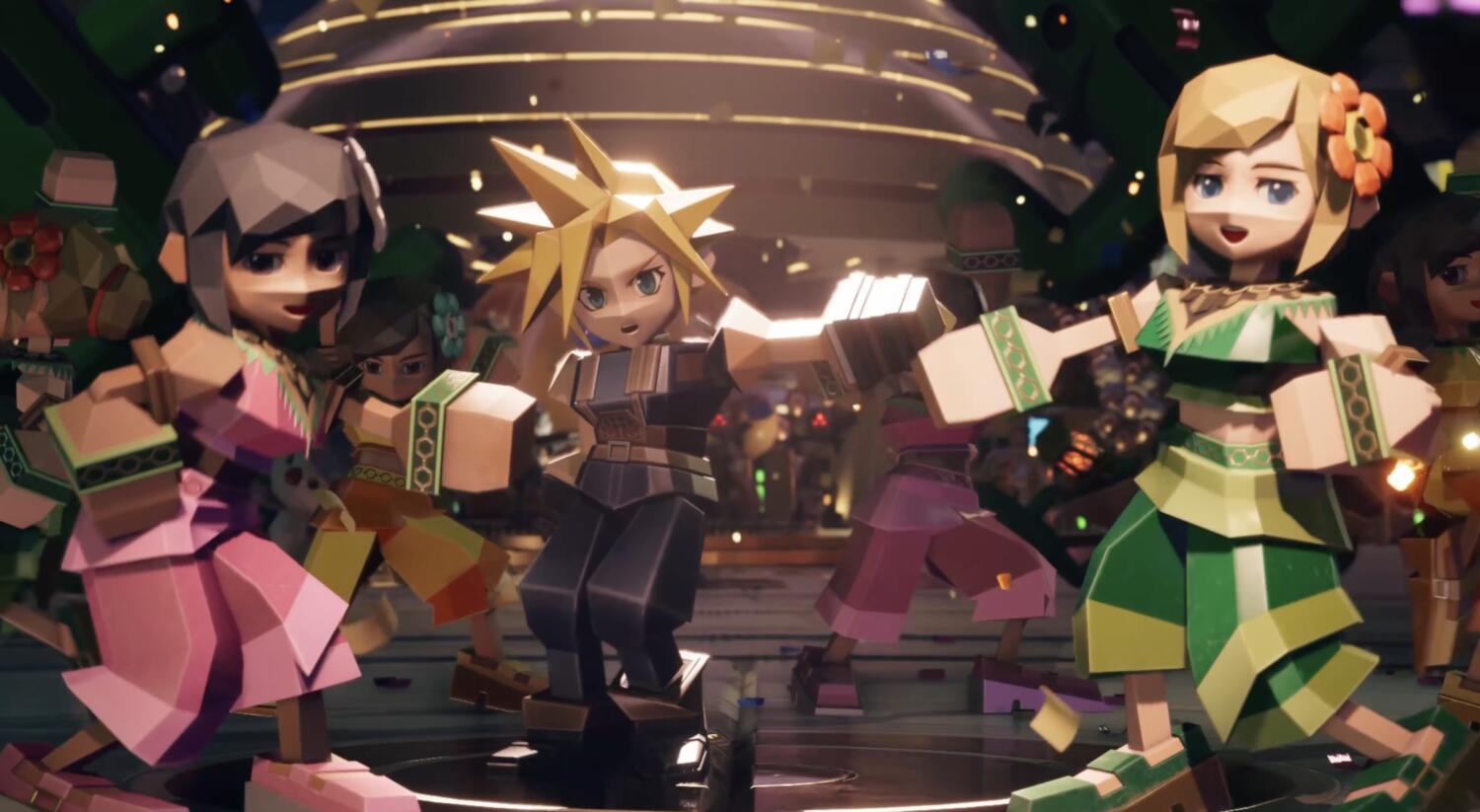
Like before, the world offers more than just combat encounters. After taking the Highwind, FITS system and new party additions out for a spin in Mideel, it was time to take a break from the action. The Gold Saucer is back in business, now overrun by 32-bit troublemaking ruffians who have issued a challenge: defeat them on the snowboarding boards, the racetrack, and Queen’s Blood, and they will stop causing trouble. Naturally, the first activity to check out is the newly added snowboarding, but don’t expect too much, for it only features basic mid-air tricking and stance swapping.
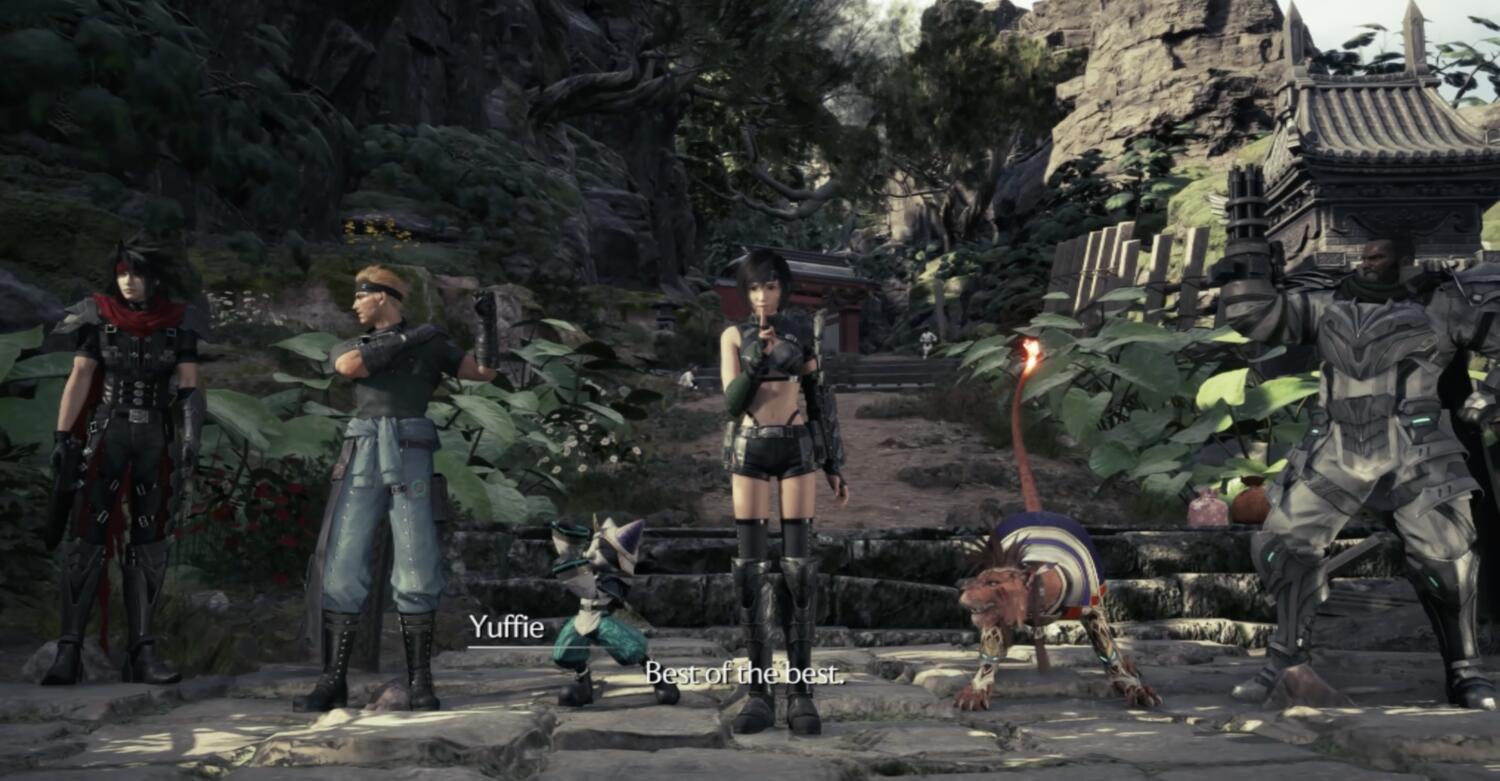
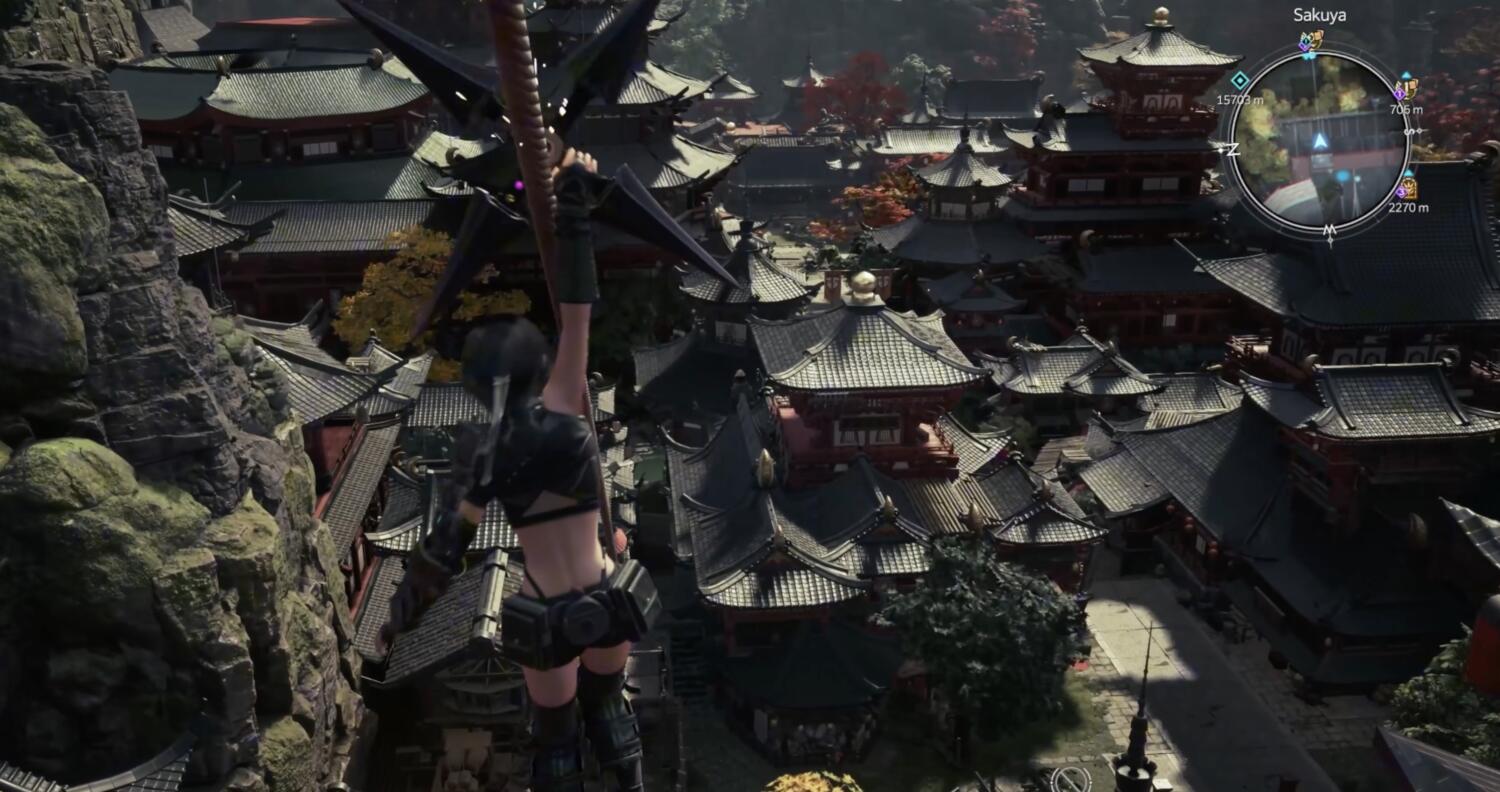
In contrast, the last 15 to 20 minutes of the preview teases plenty to be excited about. The main questline takes players to Wutai, a striking picture of pagodas, cliffs, and ornate rooftops that sets itself apart from the lush landscapes of Mideel, with the grappling gun serving as a convenient way to zip around. Traversal is smooth, although the UI pop-ups can be a little messy, and familiar faces like Glenn make a return. There’s also a fun cutscene where Yuffie introduces the party and describes Vincent as the “brooding cape guy,” serving as a reminder that the characters, as well as their dynamics, are what keeps the heart beating.
The team has extended their synergy to other areas, too, including combat. Because the bulk of combat in the remake trilogy involves switching between characters in real time and their different loadouts on the fly, there’s a need to balance dynamism and accessibility, and Hamaguchi explains why ‘3’ is, and continues to be, the magic number:
“There’s a simplicity about having three characters because it’s mapped to, let’s say, the L and R buttons, so when you press the L button, you know which character is going to be next because they’re the person to your left, so to speak. But with four playable characters on screen, things get a little messy.”
For producer Yoshinori Kitase, the enduring popularity of the characters has always stayed with him in the years since he directed the 1997 classic. Alongside this trilogy project, other spin-offs include 2022’s Crisis Core: Final Fantasy VII Reunion, a remaster of the 2007 original, the FFVII: Ever Crisis mobile game, the Advent Children animated movie, and the Traces of Two Pasts novel. Who’s to say that fate won’t repeat itself?
“When we created the original Final Fantasy VII, we really thought, like, okay, we’re done now, we can move on, but the characters were so popular and so lasting,” says the 59-year-old coyly.
“While we’re putting our all into Revelation and making sure it’s the best quality, and we can confidently say that it’s the end of the series, who knows what’s going to happen with the fan reaction and how people come to enjoy this series and this finale.”
Indeed, the forthcoming sequel will conclude Cloud’s journey, but it also gives two others a chance to tell their story: Vincent and Sephiroth. The two fan-favourites are getting their own DLC post-launch, and it’d be interesting to see how the team pulls that off – first, though, all eyes are on the game as it shoots for the moon yet again. Whether the third time continues to be the charm remains to be seen, and while the brief preview couldn’t paint an accurate picture of its potential, anticipation is rolling in waves.
Final Fantasy VII Revelation is set to release on 8 April 2027 for Nintendo Switch 2, PS5, PC, and Xbox Series X|S.

Si Jia is a casual geek at heart – or as casual as someone with Sephiroth’s theme on her Spotify playlist can get. A fan of movies, games, and Japanese culture, Si Jia’s greatest weakness is the Steam Summer Sale. Or any Steam sale, really.
 Kevin Low