
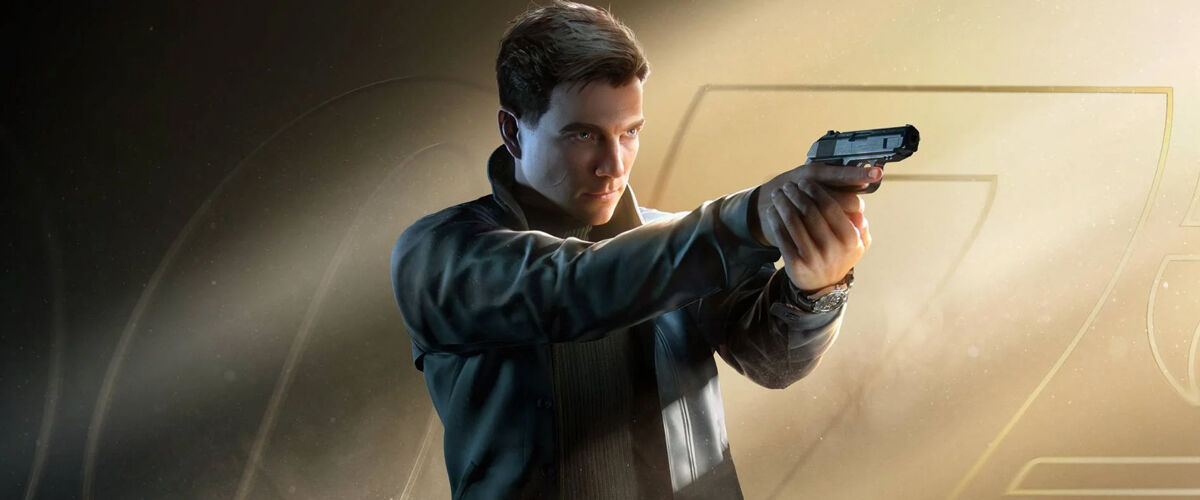
There are few certainties in life – taxes, death, and James Bond’s love for a martini, shaken, not stirred. The fictional British spy from Ian Fleming’s series of novels, first created in 1953, has seen various iterations over the years, from the early days of actor Sean Connery’s depiction in the 1960s and Daniel Craig’s takeover post-2002, to one of the best-selling Nintendo 64 games of all time, Parker Brothers’ James Bond 007.
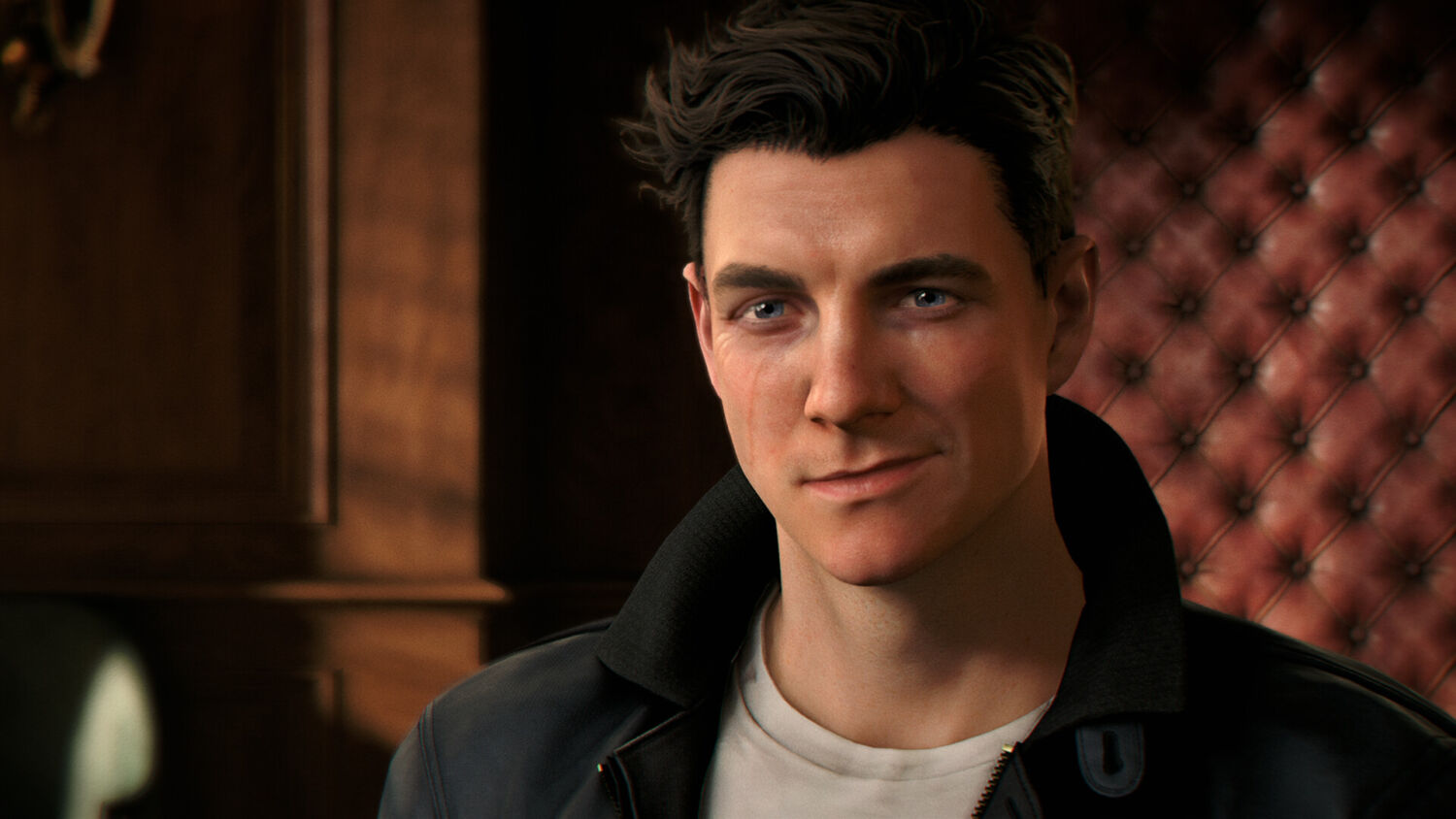
Interestingly, none of these stories delved into his backstory proper (which, to be fair, maintains the air of mystery for a secret agent), creating an opportunity for 007 First Light to plug the gap. Hailing from the creative minds behind the Hitman franchise, IO Interactive, this outing carries the rakish charm befitting the character, with a refreshing riff on the familiar that establishes a solid framework for its own standalone universe. There are some wrinkles to its bespoke suit, but the balanced mix of cinematic and spycraft action, as well as humour and heart, proves that the first major Bond video game title in more than a decade has earned the licence to thrill.
It’s immediately clear that the studio knows its stuff, starting with the vertical scar running down Bond’s right cheek – a description from his literary origins that was largely absent from the film adaptations. Here, players are introduced to a new, younger version of him as a Royal Navy aircrewman on a clandestine retrieval operation in Iceland, who becomes the sole survivor of an ambush by a private military group. Determined to finish the mission, he gets intercepted by an MI6 instructor through in-ear communication, and after a display of his sharp, whip-fast instincts, is recruited and fast-tracked to the newly revitalised Double-0 programme (despite his penchant for breaking rules).
The opening segment is pretty standard fare, set up as an obligatory tutorial covering stealth, parkour, shooting, and combat basics. What comes next is clever, however, featuring a wet-behind-the-ears Bond in training camp, and presented through a film-like montage that builds on gameplay mechanics and introduces the other characters, including his closest friends, Monroe and Cressida, as well as his grizzly mentor John Greenway, while skipping the tedium of undergoing the entire process over and over again. Both sequences come up to around three hours, which can run a little long for some.
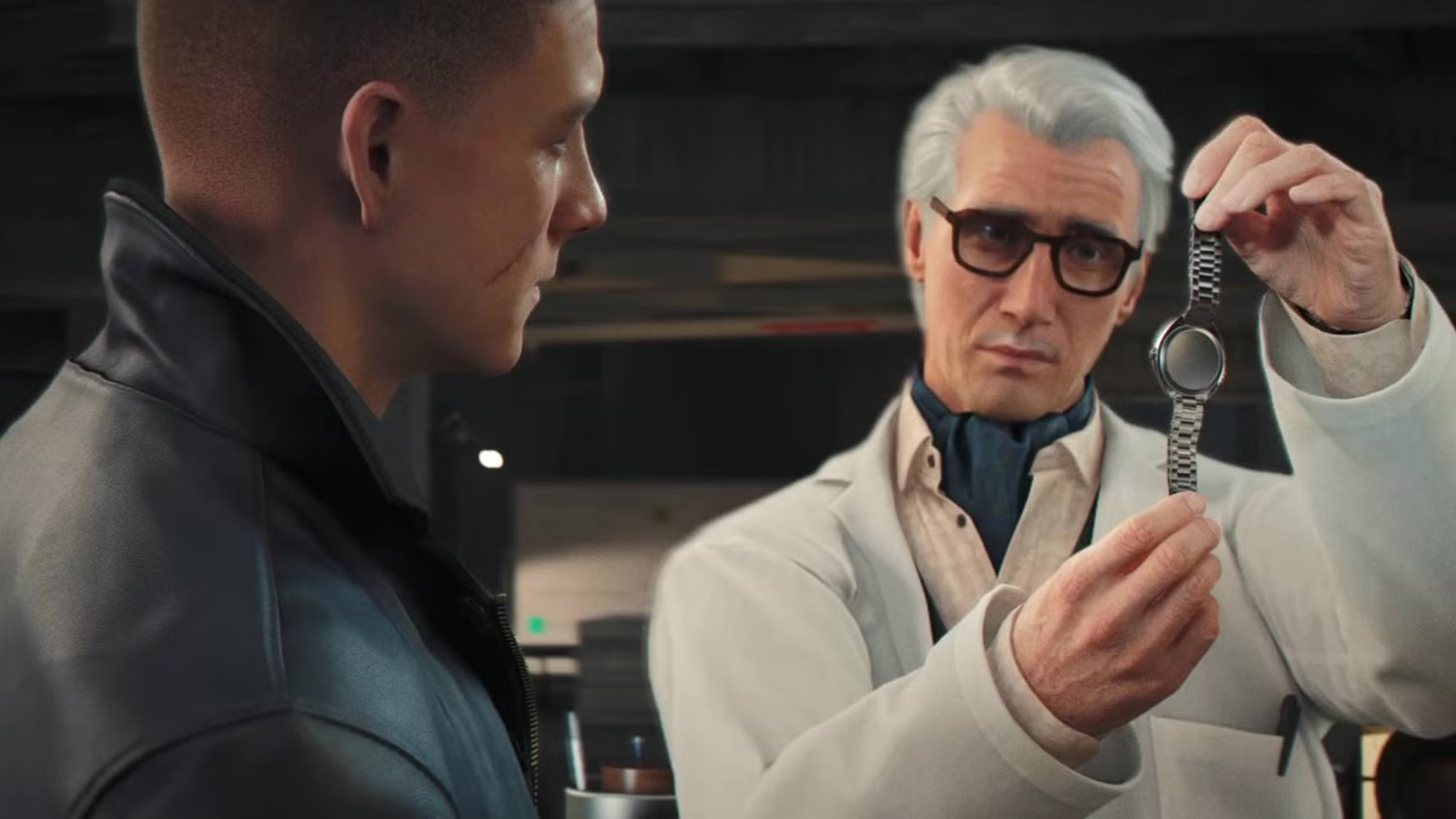
Once field-ready, Q-Lab initiates the gadget fun. Similar to Bond, old company takes on a new shine in 007 First Light, with Q (played by Scottish actor Alastair Mackenzie) cutting a patient, fatherly figure, a fresher-faced, still-no-nonsense M (Priyanka Burford) navigating and harbouring her own uncertainties, and Moneypenny (Kiera Lester) balancing her straight-laced personality with lighthearted dynamics with Bond. It’s Q, M, and Moneypenny as fans have never seen, and a stellar reimagination at that.
As its name suggests, Q’s fully functional lab is where the senior spy and his team test and store various weapons, equipment, vehicles, and outfits – a place that evokes wonder and awe, especially on the first visit. There’s no shortage of cool inventions on display (and to toy around with, sometimes), from a floating, electricity-shooting cube and a motorcycle with a flamethrower to a red telephone booth, serving as a neat nod to 1995’s GoldenEye. A shooting range, meanwhile, lets players check out different firearms and take a swing at beating the high score.
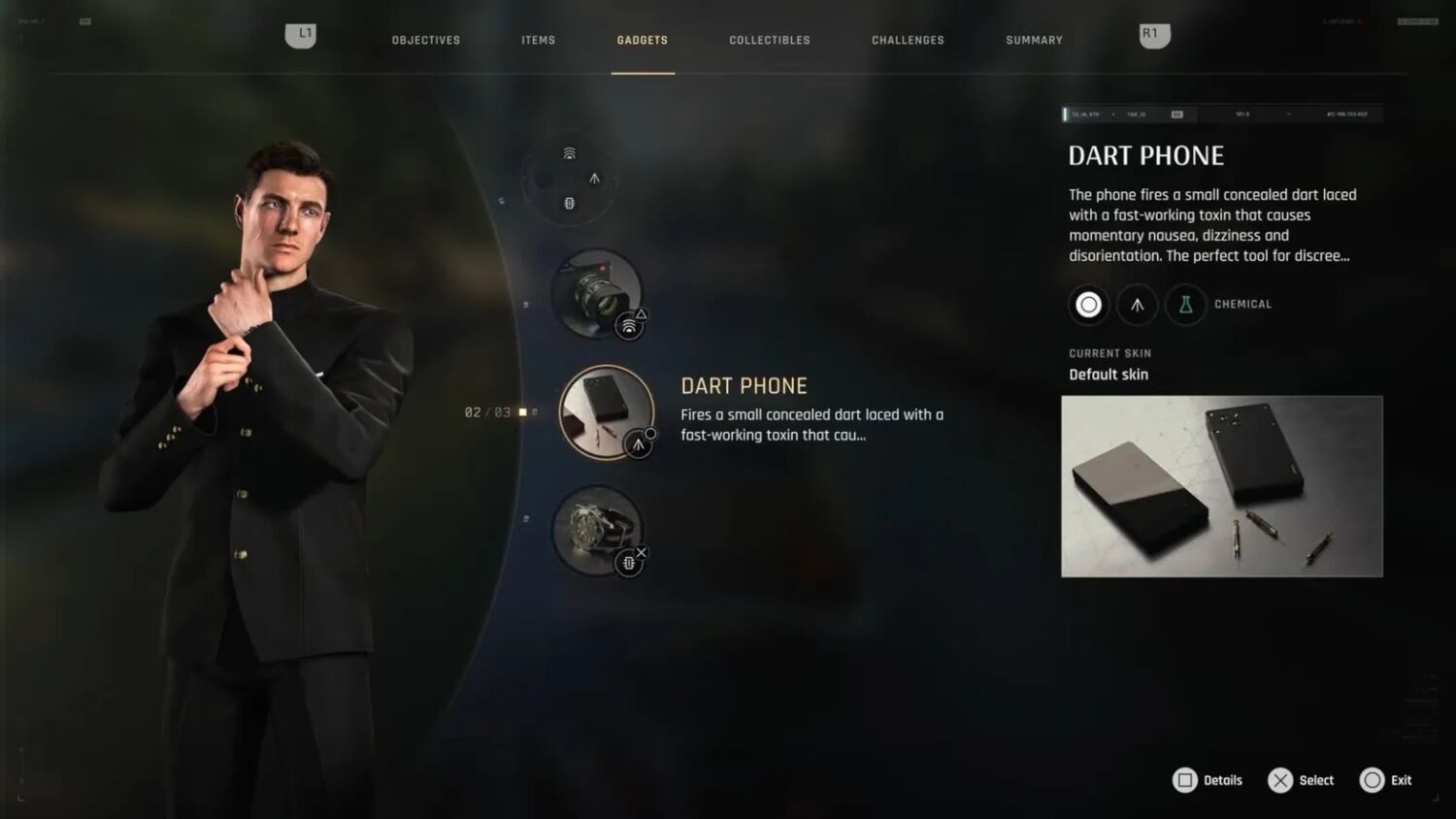
These devices are the aces up Bond’s sleeve, but not all of them can be brought along for missions. In addition to the base Q-Watch, which scans the surroundings for threats and objects of interest, hacks electronic equipment, and sets off distractions, there are several others to choose from, each tailored for specific purposes. The laser strap, for instance, inflicts temporary blindness and slices through padlocks, while the dart phone leaves targets feeling sick and disoriented. In situations where going loud is necessary, the missile pen, available later in the game, wipes out hostile targets by firing a mini-missile at them.
Unlike the role-playing playbook, 007 First Light doesn’t have an upgrade system of any sort, whether it’s a skill tree or stat boosts, so selecting the right gadgets for one’s play style proves crucial. It won’t take long to settle on a preferred loadout, either – with merely seven gadgets in total, there isn’t much room for mix-and-matching. Instead of a cooldown, usage is determined by the amount of stored electronic and chemical charges, refilled by picking up stray batteries and similar resources.
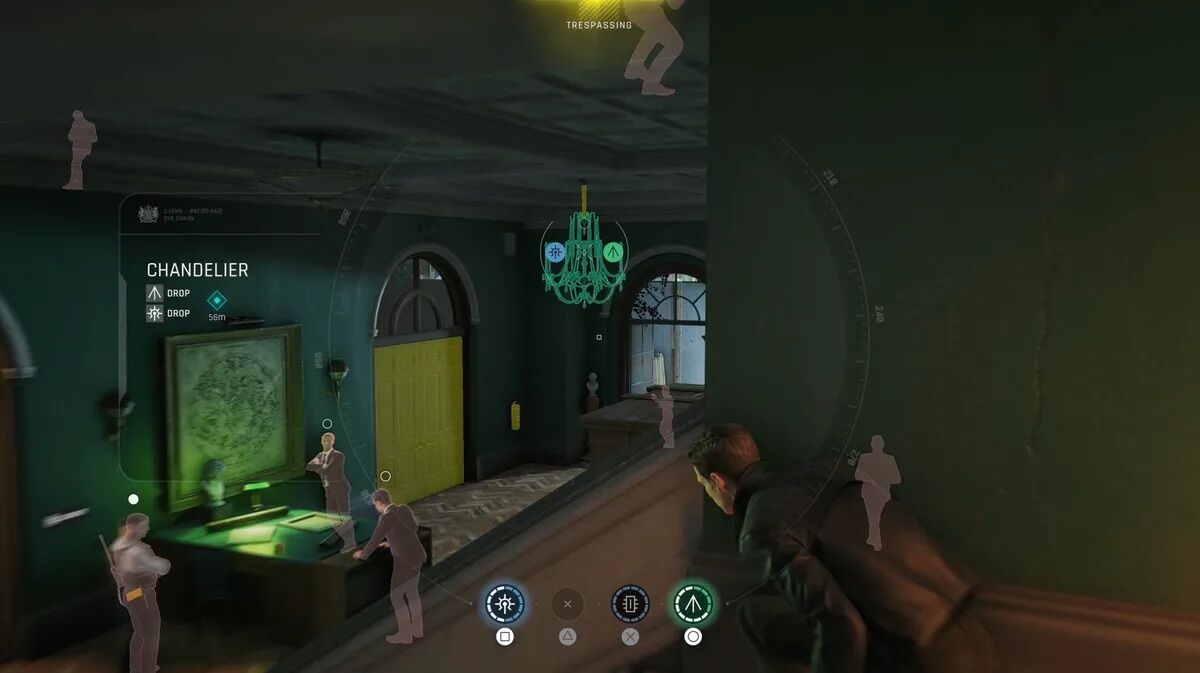
Embarking on missions is when the Hitman influence bubbles up to the surface. The story takes Bond across the globe, from a packed club in London and a swanky resort in Slovakia to the frigid tundra of Antarctica, with no fixed path or order to complete the objectives, often involving sneaking into restricted areas. To that end, players will have to gather intel, work out the best or most confident approach, and find a way through successfully.
The difference here is the reduced flexibility in carrying out the process. There’s a pattern to the gameplay structure, where chasing leads is a loop of eavesdropping on conversations, trailing a target, and pickpocketing items from distracted subjects that can grow a little repetitive or predictable over time. In a welcome and smart workaround, 007 First Light introduces elements unique to each mission, such as disarming laser traps onboard a ship and taking up various requests or jobs to make some quick money at a black market in Mauritania. Occasionally, a femme fatale tries to derail Bond through flirting and seduction, too.
Also new to IO Interactive’s repertoire is the Bluff system, which puts Bond’s smooth-talking sensibilities to good use. Spending points from the Instinct metre – gained by performing silent takedowns and clean kills, completing mission objectives, or eavesdropping – allows the player to talk their way past low-level enemies without raising suspicion, proving handy for de-escalating tension and escaping in a pinch. It’s an ingenious implementation of the suave and charming personality a spy would cultivate, as opposed to a hitman, even if some of the fake excuses given aren’t always convincing.
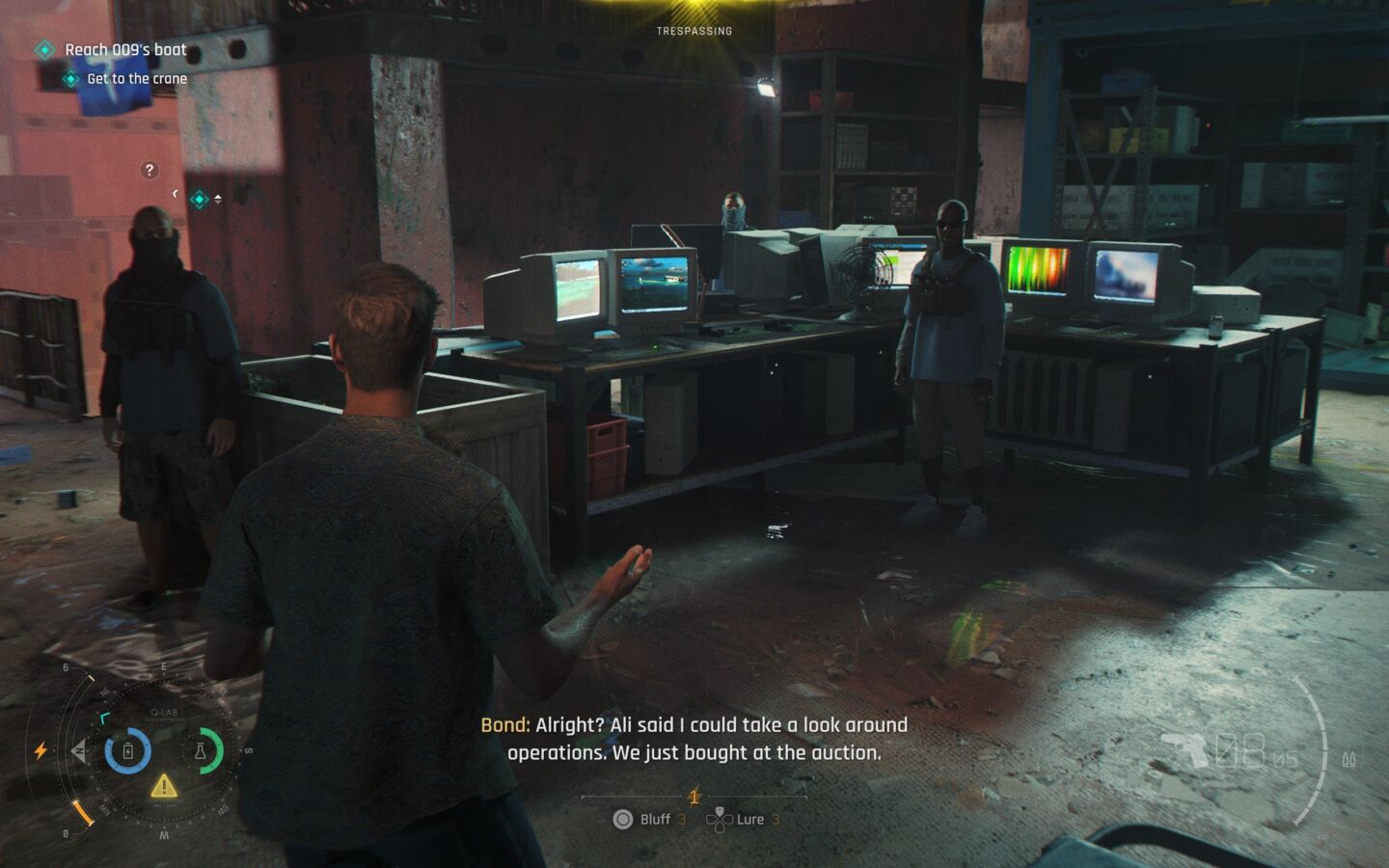
That’s not to say that brute force is prohibited. While the espionage ideal features a mix of gadget use, sneaking, and bluffing, there will be situations where head-on confrontation is required, starting with hand-to-hand combat. Alongside basic punching, kicking, and blocking, Bond’s skillset includes well-timed dodges, parries, and counterattacks to reduce reliance on button-mashing. The execution is far from robust, and the manoeuvres are clumsy at times, but it’s a remarkable step up from the Hitman titles and works well for the most part.
Then there’s the firearms component, parked under the Licence to Kill mechanic. Since 007 First Light leans into stealth and infiltration, shooting is only permitted when the enemy shows lethal intent to eliminate Bond, opening the floor to run-and-gun, especially in the later stages of the game. As with close-quarters fighting, don’t expect much depth to the mechanics, although various gun types are available for swapping and throwing (yes, you read that right) mid-battle, from handguns to semi-auto weapons to sniper rifles. Shootouts also feel less consistent in terms of enjoyment, straddling between exhilarating at its most grand and frustrating at its lowest points.
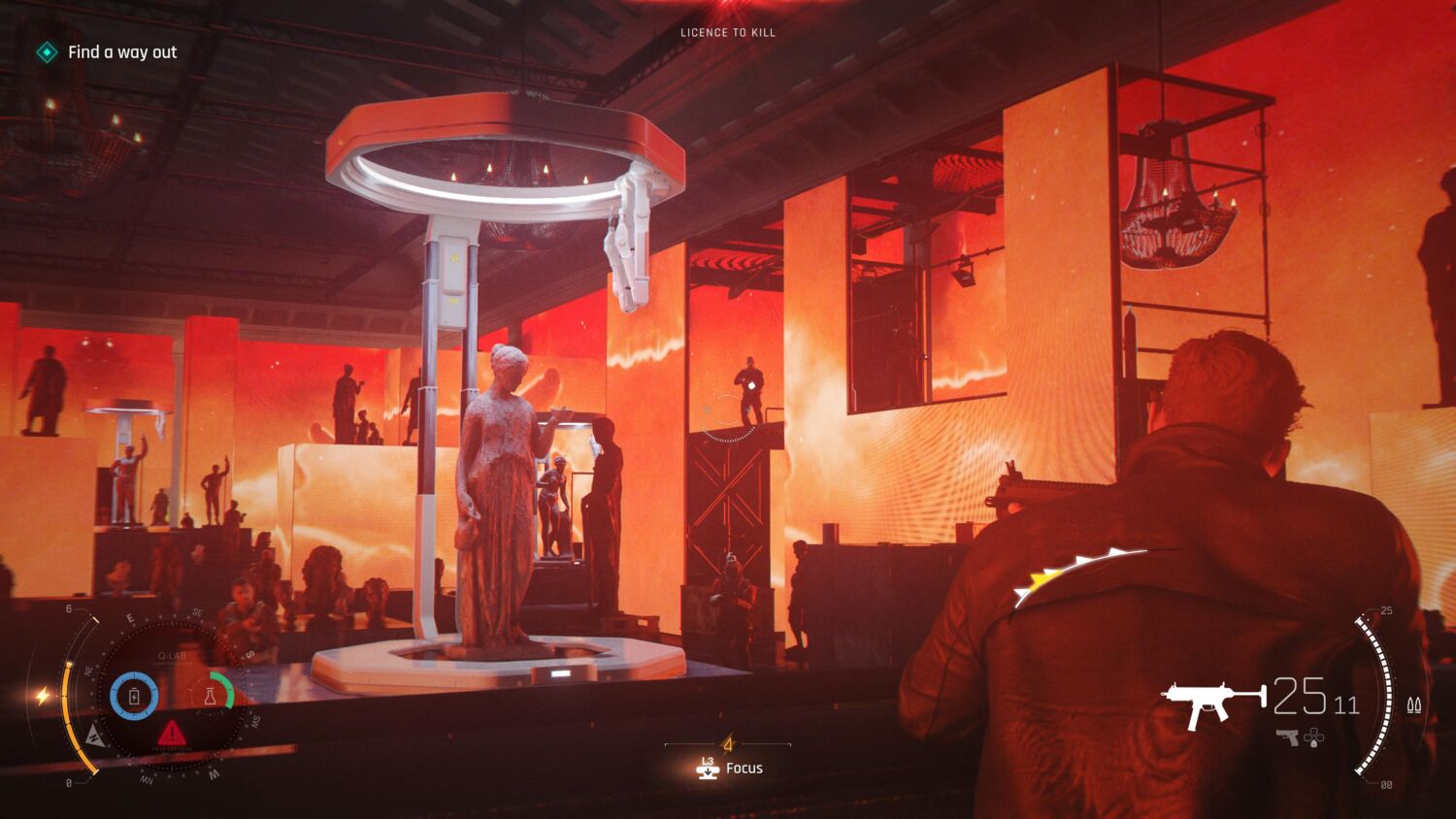
In the latter’s case, large-scale showdowns with plenty of particle effects, usually triggered by multiple on-screen explosions, are the biggest culprit, resulting in frame rate drops and performance issues on less powerful hardware (this review was done on a laptop running an RTX 4060 graphics card). Certain environments make it difficult to spot hostiles in the thick of the action, even if the Focus ability is activated for slow-motion shooting or when Q-Watch highlights all of their silhouettes.
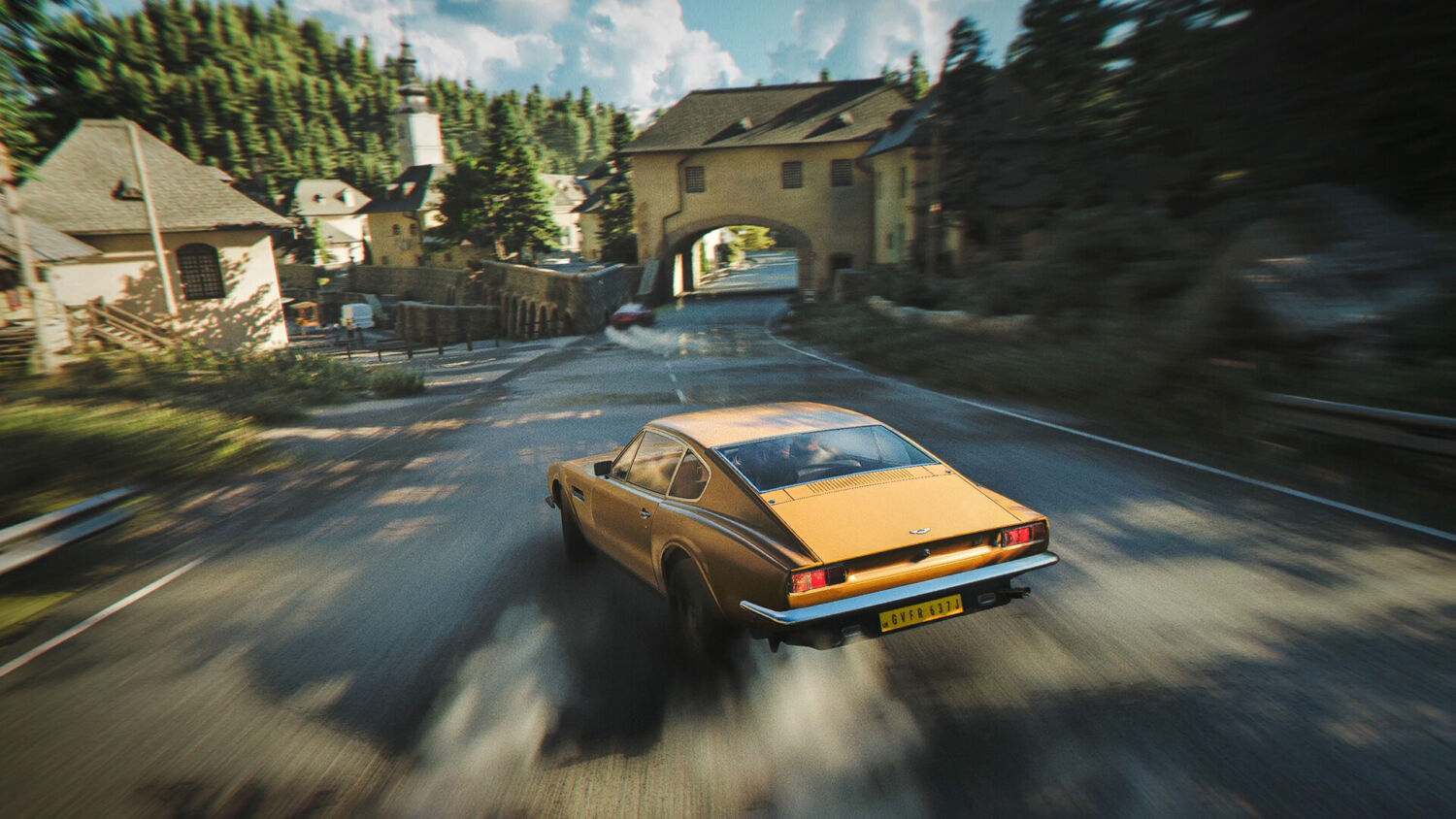
The weakest implementation is the driving segments, however. 007 First Light features vehicle chases as part of its missions, and the controls are often imprecise and sloppy, making navigation more tedious than it needs to be. There are other rough edges of a smaller scope, including inconsistent enemy behaviour – the AI can swing from correctly deducing Bond’s hiding spot to inspecting an unconscious body and attributing it to a strong wind (it was, in fact, not the wind) – and uneven pacing across the chapters, as well as repetitive boss fights and the inability to hide bodies or drag them out of sight, which is a little antiquated for a game requiring stealth acumen.
Some characters, especially Gemma Chan’s Dr Selina Tan, also come across as underutilised, but their interaction with one another and individual nuance offer compensation. Patrick Gibson slips into the role of a young Bond perfectly, playing up his charm and scrappiness that mellow into emotional vulnerability during serious moments, complemented by witty one-liners that occasionally miss the mark. His interactions with Moneypenny, akin to the teasing dynamics between good friends, as well as with Monroe and Cressida, further add to the human touch.
The shining example of growth here is Bond and Greenway’s relationship. In a standout portrayal, Lennie James (The Walking Dead series) breathes life into the latter as a hardboiled-sceptic-turned-reluctant-mentor-figure who gets to bask in a fair bit of the spotlight. It will take a while to warm up to Greenway, and 007 First Light ensures the payoff proves rewarding.
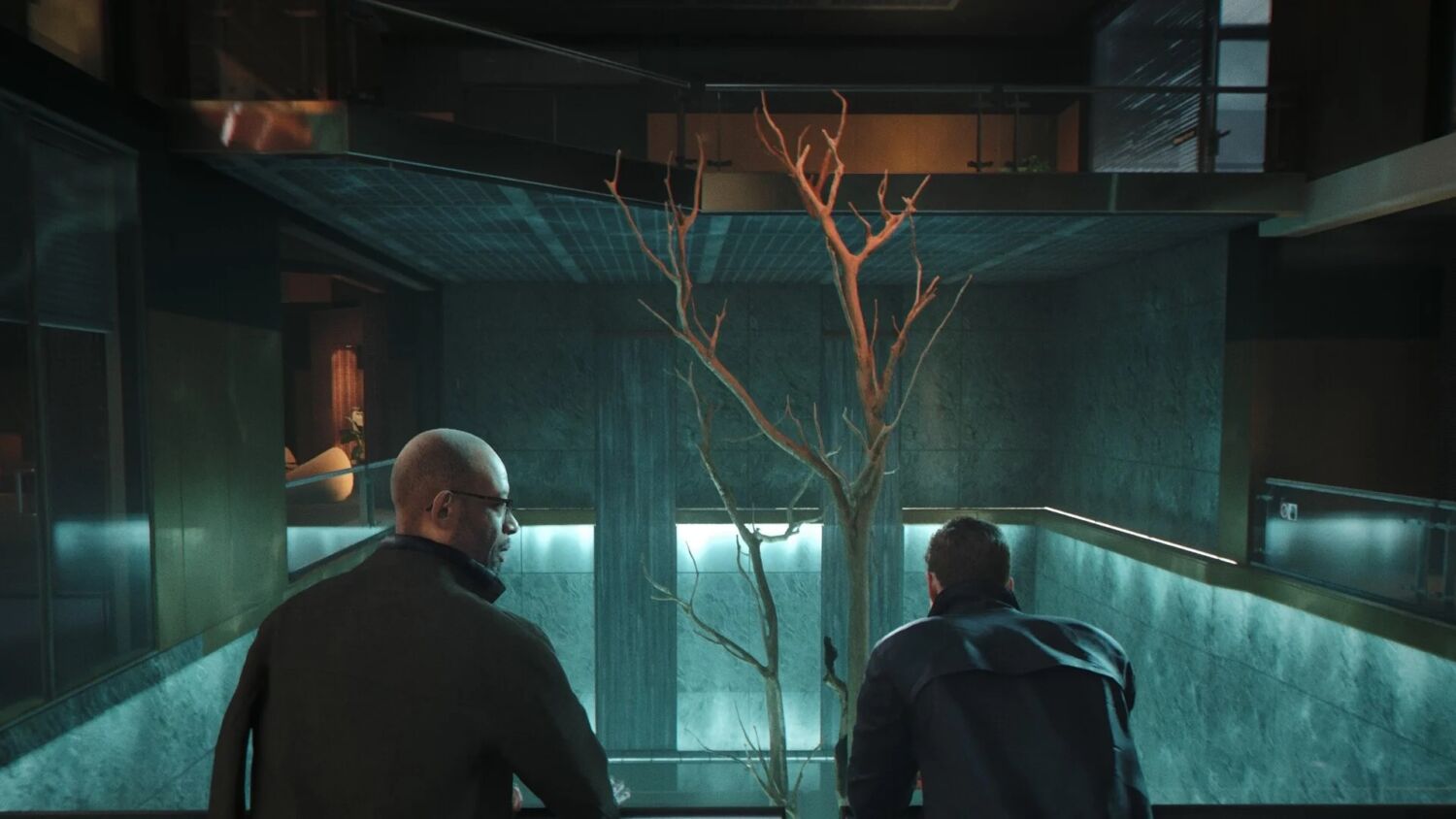
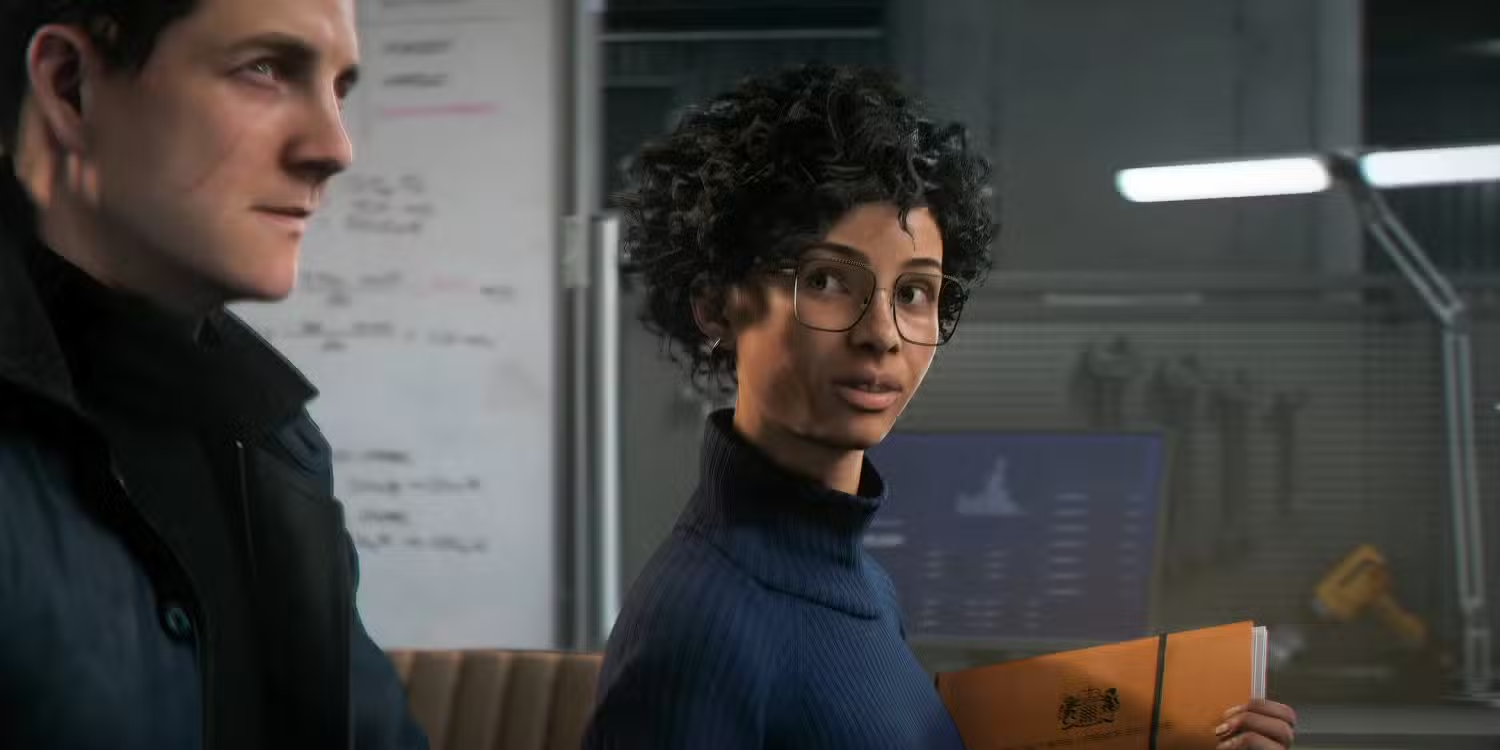
What’s perhaps the most surprising is the overarching narrative. Going by the threadbare storytelling in the Hitman titles, it’s reasonable to think that IO Interactive’s expertise lies elsewhere. Yet, the studio has defied expectations by spinning an intricate web of political intrigue and plot twists that are more relevant to this digital world than ever. It’s the kind of writing that works perfectly for a Bond adventure, sprinkled with several clichés and familiar tropes.
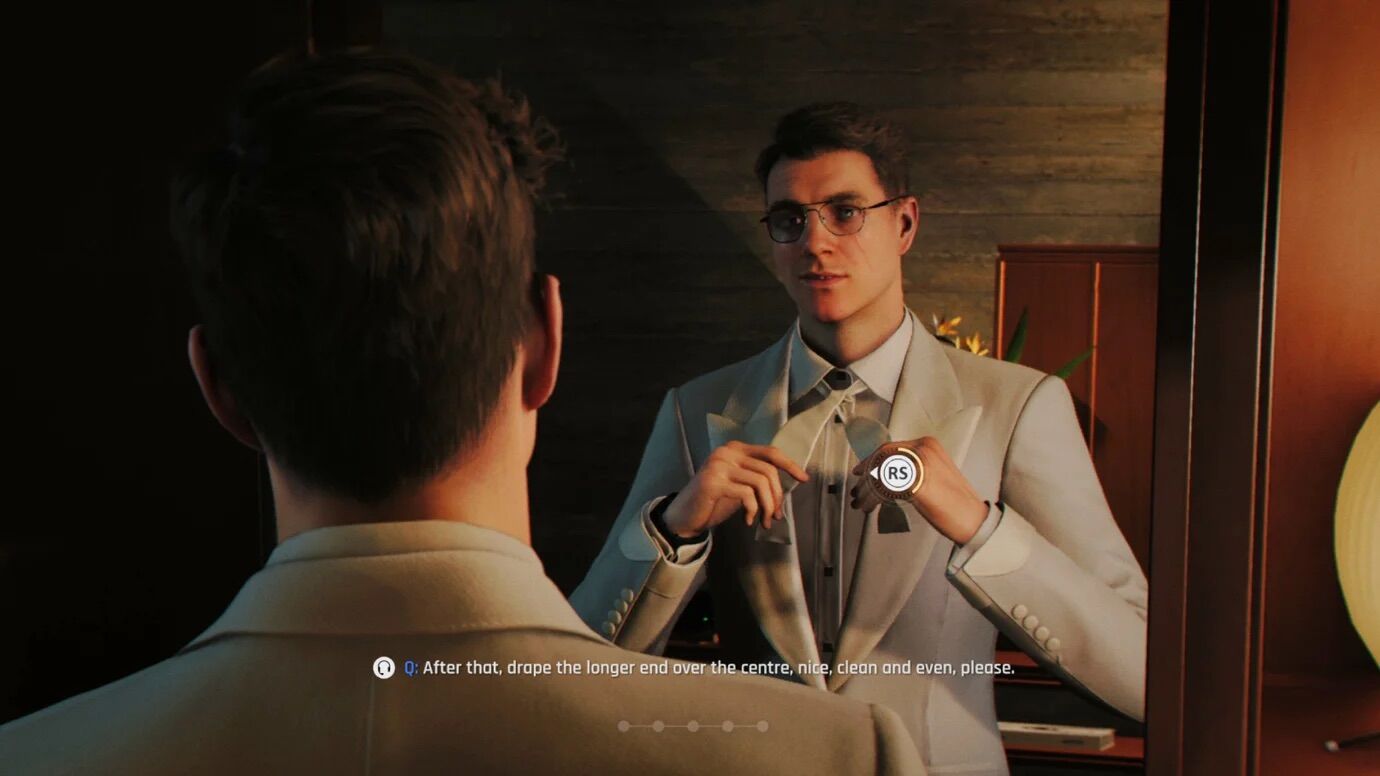
Minor as they are, credit should be given for the user interface (UI) elements. Between the clean look and smooth transition from an animated cutscene to the title card for each mission, the game delivers eye candy on all fronts. Locale variety keeps the sights fresh, and there’s always anticipation that follows the initial exploration. The human models, meanwhile, pair detailed facial expressions with natural movements. Very rarely, though, certain special effects, such as a pile of fire in Q-Lab, have rough edges and unnatural rendering.
Good things come to those who wait, and 007 First Light is all dressed to impress. Not only does it stir the blood by shaking up the established Hitman formula, but it also stands as the best Bond adventure in a long time, comparable to or even above the standards of the much-lauded GoldenEye. IO Interactive’s latest explores territory that no other has quite done before, and it’s all the better for it – alongside a clear respect for the source material, the blend of different play styles, espionage setpieces, and refreshing character reinterpretations all serve as compelling entertainment, topped off with globetrotting fun.
James Bond is back, baby.
GEEK REVIEW SCORE
Summary
The gaming beacon of light for Bond after decades, 007 First Light is proof that fortune favours the bold. In telling a memorable and enjoyable origin story, it has earned the licence to thrill with the promise of future outings, anchored by a well-crafted narrative, strong characterisation, and action-combat thrills.
Overall
8.7/10-
Gameplay - 8.5/10
8.5/10
-
Story - 9/10
9/10
-
Presentation - 9/10
9/10
-
Value - 8/10
8/10
-
Geek Satisfaction - 9/10
9/10

Si Jia is a casual geek at heart – or as casual as someone with Sephiroth’s theme on her Spotify playlist can get. A fan of movies, games, and Japanese culture, Si Jia’s greatest weakness is the Steam Summer Sale. Or any Steam sale, really.

 Kevin Low

 Yong Le