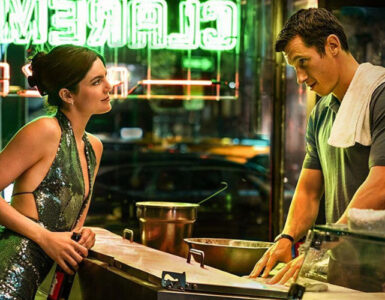
Humans fear the unknown, but there’s also a sense of thrill and curiosity that comes with the territory. It’s what drove director Steven Spielberg to first explore the dangers of the sea in Jaws (1975), followed by a fascination with aliens in 1977’s Close Encounters of the Third Kind and 1982’s E.T. the Extra-Terrestrial. Further fuelling that compunction, he examined de-extinction in 1993’s Jurassic Park, despite the perilous dangers, allowing the famed auteur to make his mark in a broad category of blockbusters.
Marking the 79-year-old visionary’s long-awaited return to the sci-fi genre is Disclosure Day, which asks a deceptively simple question: how would the world handle the reality if it were discovered that Earth is housing visitors from space amid a major global crisis? And at a ripe time, too, considering the recent release of the United States UFO files by the Trump administration, and the need for empathy and understanding in an increasingly chaotic real world.
The latter, in particular, shouldn’t come as a surprise for those who’ve followed the filmmaker’s career. The human touch has always been one of his greatest assets, and that hasn’t changed here, with his re-teaming with frequent collaborators – scriptwriter David Koepp (Jurassic Park, Indiana Jones and the Kingdom of the Crystal Skull) and composer John Williams (The Indiana Jones series and Saving Private Ryan), preserving staples established over the decades. Despite his age, Spielberg shows that he still has the chops, despite the occasional messy execution.
Starting on a parallel track, Disclosure Day first introduces Daniel Kellner (Josh O’Connor, Challengers), a cybersecurity specialist on the payroll of a government shadow agency, WARDEX, who goes rogue after stealing a powerful device of alien origin and video evidence that he was paid to protect. The decision stems from a belief that people have a right to know about the division’s secret trove of alien visitations and UAP (unidentified anomalous phenomena, another term for ‘UFO’) crashes that dates back to the Nixon administration beginning in 1969.
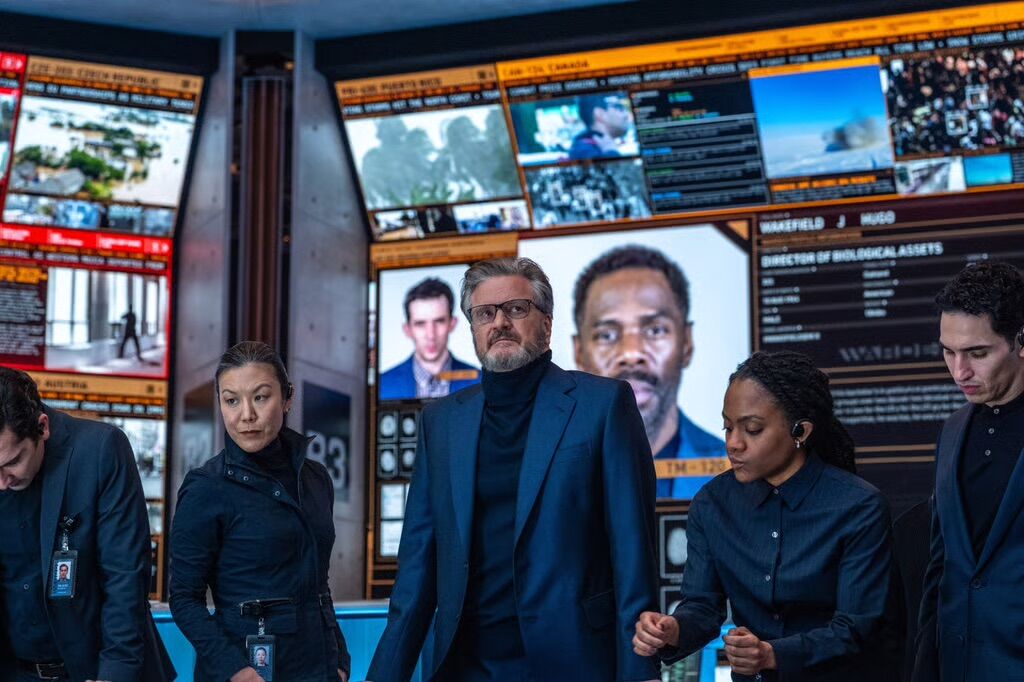
Holding onto 78 years of documentation puts him in the sight lines of relentless WARDEX head Noah Scanlon (Colin Firth, The King’s Speech), with fellow defector Hugo Wakefield (Colman Domingo, Euphoria) instructing him on where to go or what to do. As his girlfriend, Jane (Eve Hewson, Bridge of Spies) also becomes embroiled in the struggle, but there’s a part of her past that remains unknown to Daniel.
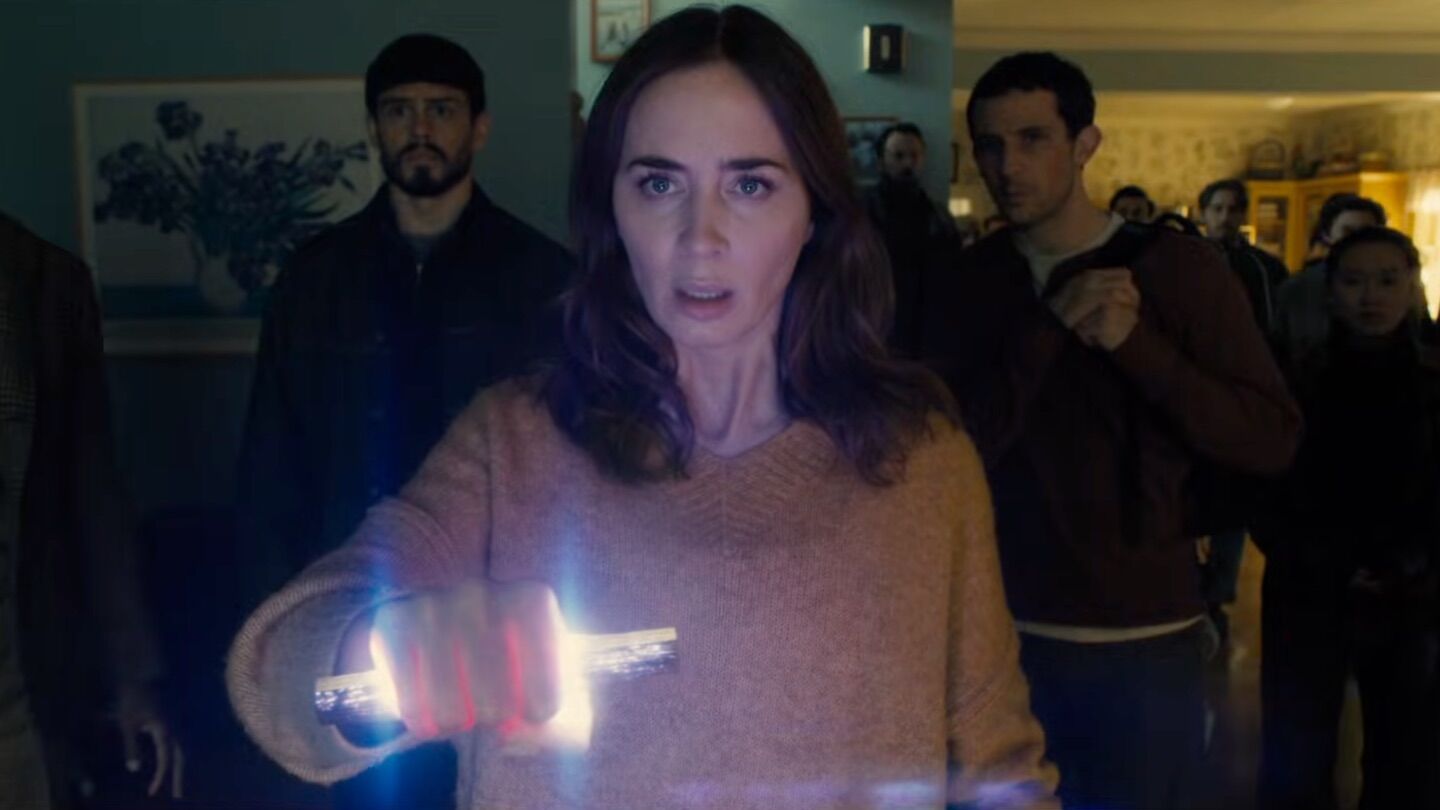
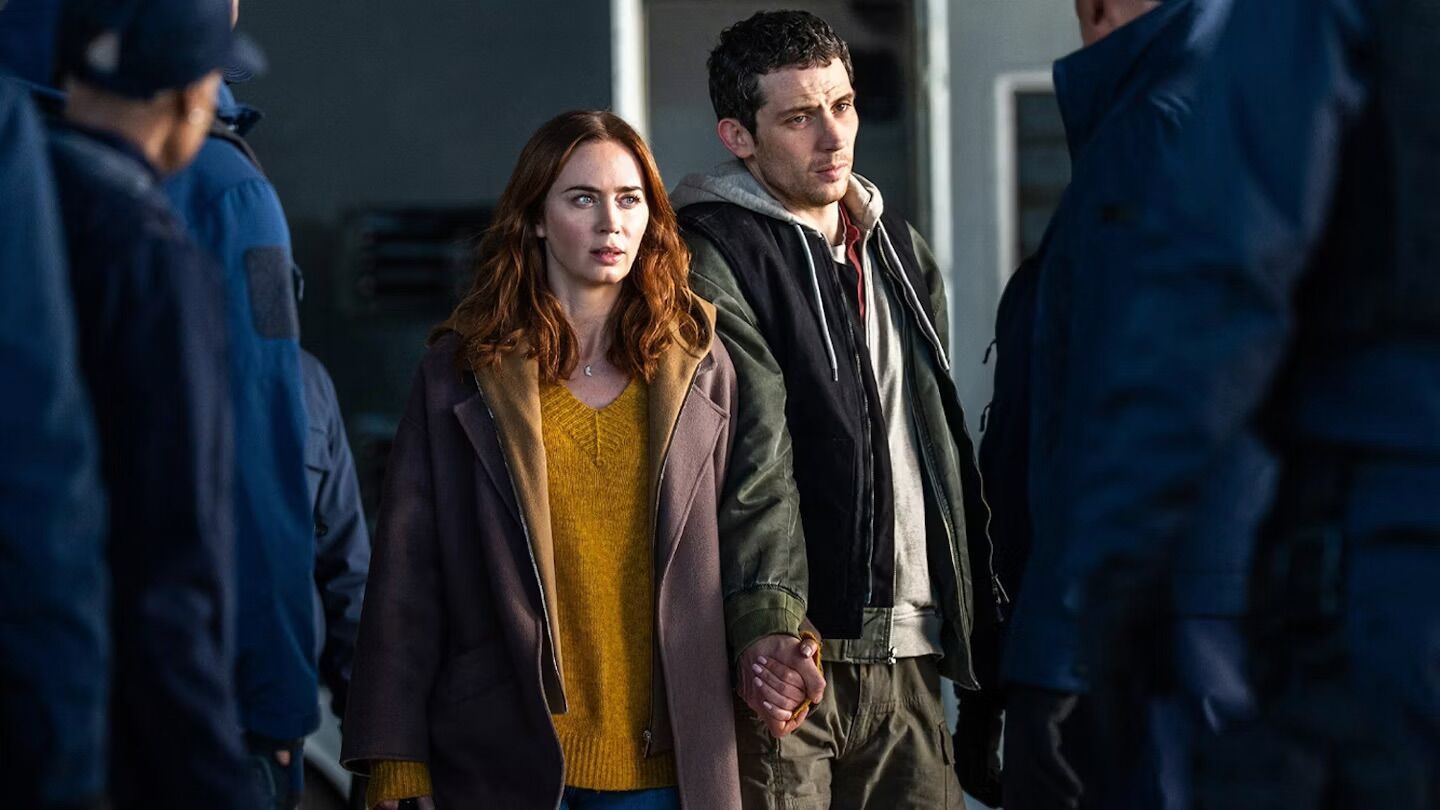
The other half of the central narrative follows Margaret Fairchild (Emily Blunt, The Devil Wears Prada 2), a weather presenter in Kansas City who suddenly develops the ability to speak foreign languages and understand individuals on a psychic level after a cardinal flies into her home. This seemingly innocuous encounter would later spark a workplace crisis, where she speaks in a series of incomprehensible tongue clicks while on-air, and then faints.
When an MRI reveals that Margaret is perfectly healthy and Daniel easily translates her incomprehensible message transmitted live earlier on TV, it becomes increasingly clear that the pair share a special connection – one that drives Disclosure Day forward. With Scanlon tracking them using the telepathetic capabilities of the alien device, Daniel and Margaret will have to race against time to expose the truth.

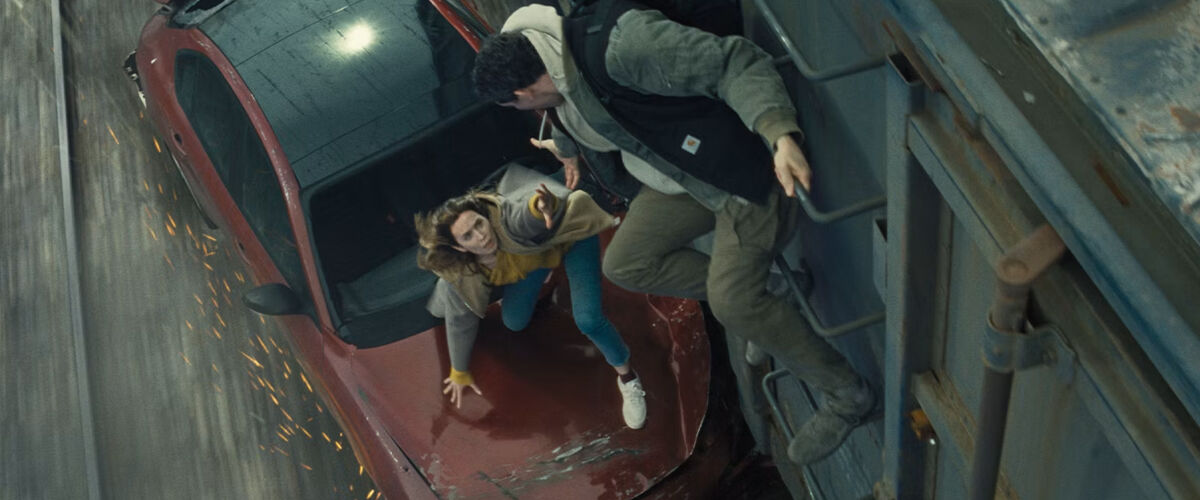
It’s a high-octane ride, but the edges are softer than standard thriller-genre fare. Chase sequences, be it on foot or in vehicles, get the blood pumping, and the tension plays out well from its build-up stage to the climax. A standout scene, for instance, involves a nail-biting near-collision with high-speed trains in opposite directions, with smooth, agile camerawork and esteemed composer John Williams’ stellar score elevating the tight action in such moments.
The mellower bits are conveyed through human drama and philosophical exploration. The former is founded on compassion, ranging from the ethical ramifications of torturing and abusing extraterritorial beings to Margaret’s ability to influence others empathetically – the word comes from ‘empaths’, used in psychology to describe individuals with a higher-than-usual level of empathy, and in a paranormal context, refers to people who can sense the thoughts, feelings, and energy of those around them and provide healing or comfort with this ability. Then, there’s Hugo, whose poised, cool-headed demeanour belies a surprisingly tender heart.
Like many of Spielberg’s films, entertainment only accounts for part of the experience. The 145-minute film asks questions that share thematic similarities to his 2002 sci-fi neo-noir adventure Minority Report, such as the conflict between individual liberty and social safety and the power of the narrative, alongside more relevant, familiar ones here: would knowing the truth divide or unite us? How would the existence of new non-human entities affect religion? What right does someone have to play God and decide that the human race needs to know?

Some are executed better than others – the cautionary messaging for faith, in particular, can be a little didactic and direct – and it certainly helps that a strong ensemble cast carries the weight of its storytelling ambition effectively. Starting with the major side characters, Wyatt Russell (Thunderbolts*) strikes the right balance between a supportive husband and believing that Margaret is losing her bearings, frustrated by her strange actions and the lack of an explanation. He also brings the humour to their interactions, with Domingo effortlessly oozing the charm and confidence of a leader who knows what he’s doing.
A silent standout, Hewson lends gravitas and intensity to someone struggling to reconcile her own religious beliefs with the consequences of exposing concealed knowledge to the public. Firth is a menace, wielding his character’s fierce intelligence and relentless drive like a lethal weapon. The greatest highlight of Disclosure Day, however, is the exceptional leading performances that anchor the 145-minute runtime.
In O’Connor, audiences find sincerity and conviction amid a concoction of emotions, including worry, agitation, and bewilderment, which is matched by Blunt’s verve as she flits through a volatile chain of events, whether it’s being hilariously dramatic, speaking Korean and Russian, having a panic attack (depicted with great accuracy, to boot), or confronting her childhood trauma.
The cast’s all-around magnetism almost makes it easy to ignore the occasional stumbles along the way. For one, the dialogue can be cheesy and cliché, while its on-the-brink-of-war setting, as well as genre tropes like aliens presenting as animals, have been explored so often that they lose novelty. Certain character actions raise eyebrows at various points, and the CGI effects appear stiff – saved by a particularly clever panning shot that starts at the eye of a deer and transitions into an alien lifeform. The MacGuffin-sized third act is its biggest offender, exacerbated by the missed opportunity to flesh out some of the film’s more interesting ideas.
It’s a personal thing, but Disclosure Day gives too much credit to humans when it comes to handling the truth, and perhaps that’s the whole point. Nobody needs more cynicism with the current state of the world, and the optimism and human empathy that the movie delivers is a welcome beacon of light. For Spielberg fans, it also represents a return to his classic sci-fi roots, topped off with familiar hallmarks that have defined the genre.
GEEK REVIEW SCORE
Summary
While not the filmmaker’s best, of which there have been many, Disclosure Day carries the quintessential spirit of a Spielberg film – a sense of wonder, emotional sincerity, and dynamic visual storytelling – that’s effectively brought to life by a strong cast.
Overall
8.5/10-
Story - 8/10
8/10
-
Direction - 8.5/10
8.5/10
-
Characterisation - 8.5/10
8.5/10
-
Geek Satisfaction - 9/10
9/10

Si Jia is a casual geek at heart – or as casual as someone with Sephiroth’s theme on her Spotify playlist can get. A fan of movies, games, and Japanese culture, Si Jia’s greatest weakness is the Steam Summer Sale. Or any Steam sale, really.
 Natalie
 HSALS
HSALS