
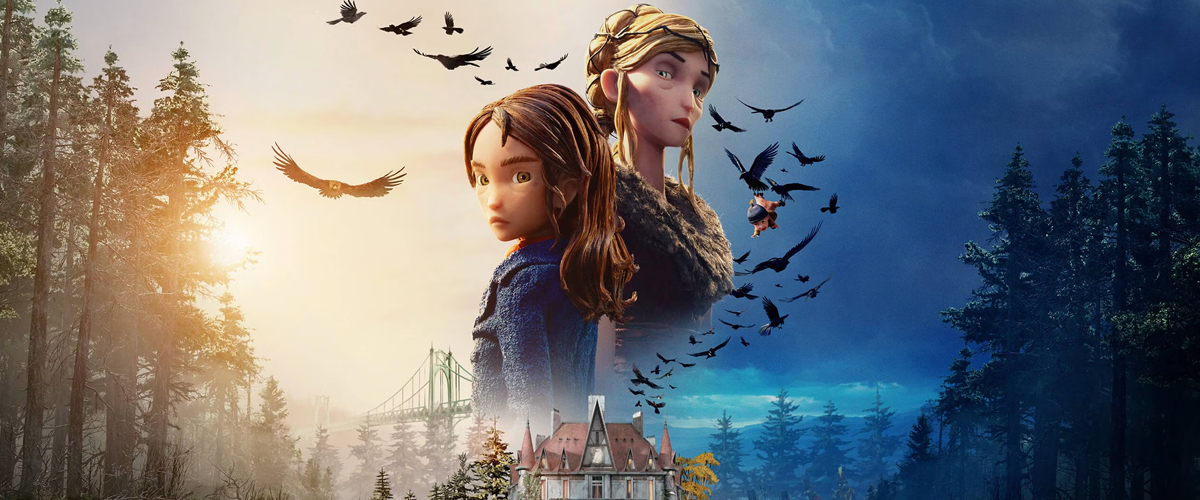
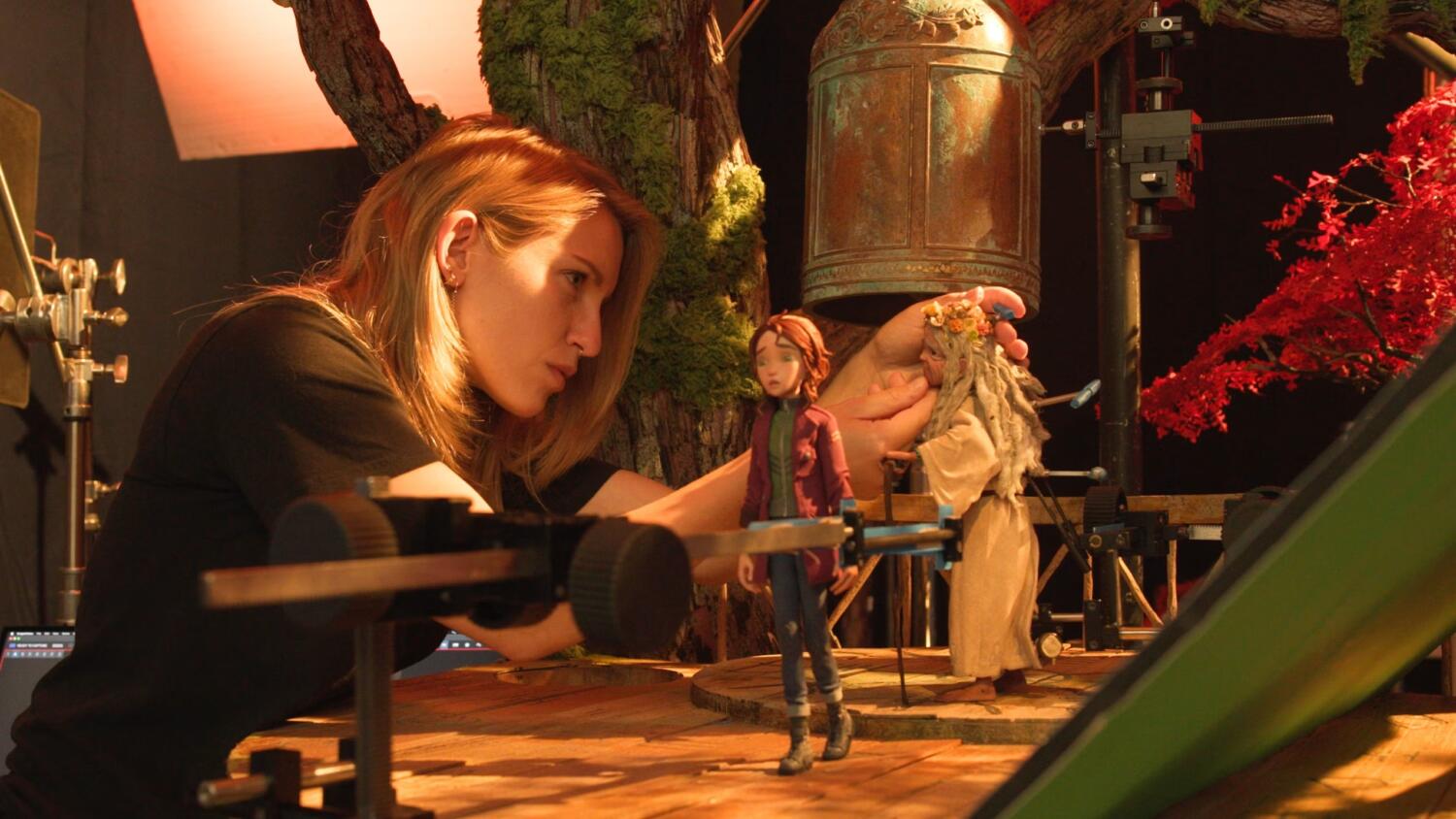
In the world of animation, stop-motion is a form of rebellion. Where the world shuns and at times punishes imperfections, the traditional craft embraces them unabashedly, with slight jitters, fingerprints on clay, and other blemishes serving as deliberate reminders of human labour. It trades digital 3D models and key frames for physical items, from puppets to paper cutouts, and manual hand movement, creating each frame of animation separately from the other.
This handcrafted quality matters even more amid the pervasive presence of generative AI and shortcuts, and Wildwood, the latest spectacle from stop-motion specialist Laika Studios, helmed by CEO Travis Knight (Bumblebee, Masters of the Universe), oozes similar defiance. Building on niche expertise dating back to 2009’s Coraline, it has made history as the longest stop-motion animated film by runtime to date (131 minutes) and shattered its previous Guinness World Record with around 142,000 individual 3D-printed face components, pushing ambition to greater heights.
The figure is but a fraction of 16 years in the making, and the final product marks another notch on the belt. An animated tour de force, the dark-fantasy epic celebrates vivacious detail and visually arresting set pieces while exploring grief and loss, marrying fluid motion with seamlessly integrated practical and CG craft. Narrative and characterisation pitfalls occasionally break the spell, especially when realism and magic collide, though they do little to hamper the overall sense of awe and passion.
Based on the book written by Colin Meloy, better known as the singer of indie rock band The Decemberists, and illustrated by his wife, Carson Ellis, Knight’s Wildwood follows teenager Prue (Peyton Elizabeth Lee, Doogie Kameāloha, M.D.) and her classmate Curtis (Jacob Tremblay, Orion and the Dark) as they travel into an enchanted forest called the Impassable Wilderness in search of her infant brother, Mac, after a murder of crows kidnaps him (Alfred Hitchcock’s The Birds, anyone?). Inside this hidden worls, the pair stumble upon the dowager governess Alexandra (Carey Mulligan, The Great Gatsby), a powerful sorceress with her own motivations, who is waiting to put her own scheme in motion.
Don’t be fooled by the whimsical premise – it holds the studio’s first PG-13 rating, so there’s no shying away from mature elements, and the opening sequence immediately drives that home with jarring implications, a precursor to the brutal violence of a land embroiled in war, including beheaded enemies, dismembered body parts, gushing blood, and a burning battlefield with bloodied corpses. Grief and trauma play a central role, and it doesn’t take long for the thematic duality to surface. Oh, and expect jump scares now and then, too.
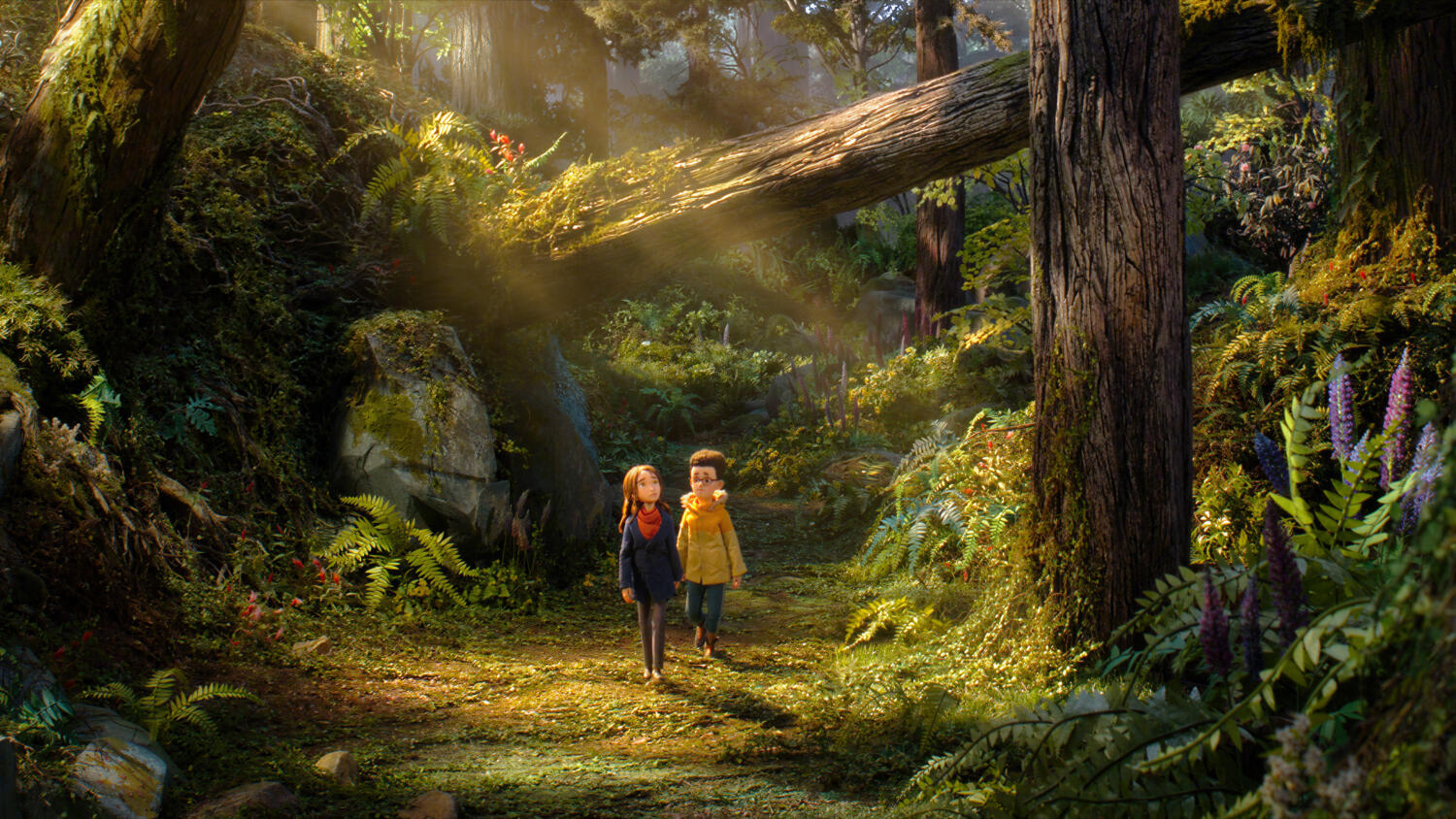
Paying homage to Laika’s home turf, the film’s Portland setting brims with the charm of its real-world counterpart. Hipster culture is prevalent, alongside defining city characteristics such as cobblestone streets, bikers, and Powell’s City of Books, and a cheeky nod to the stereotype of unicycling bagpipers in Darth Vader masks. The lively quirkiness stands in stark contrast to The Impassable Wilderness, a reimagining of Forest Park, initially blanketed in foggy mystery, danger, and unnerving disquiet.
Prue and Curtis are also as different as they come. The former is fiercely independent, sarcastic, and stubborn (or strong-willed, depending on how you look at it), while her accidental companion is nerdy and awkward, the archetype of tabletop RPG enthusiasts. It’s a realistic enough portrayal – like Prue, most 13-year-olds think they have the world figured out and are eager to grow into their own person – and both Lee and Tremblay’s voice work conveys the different shades of their respective characters well, bringing a natural synergy to their reluctant partners-turned-trusted-friend dynamic, albeit one-sided in the beginning. Alone, however, each suffers from a diminished sense of identity, with Prue’s personality defined by little else beyond the objective to retrieve her brother and right her mistakes, and Curtis’ growth is partially impeded by building his motivations around Prue, despite a zero-to-hero arc.
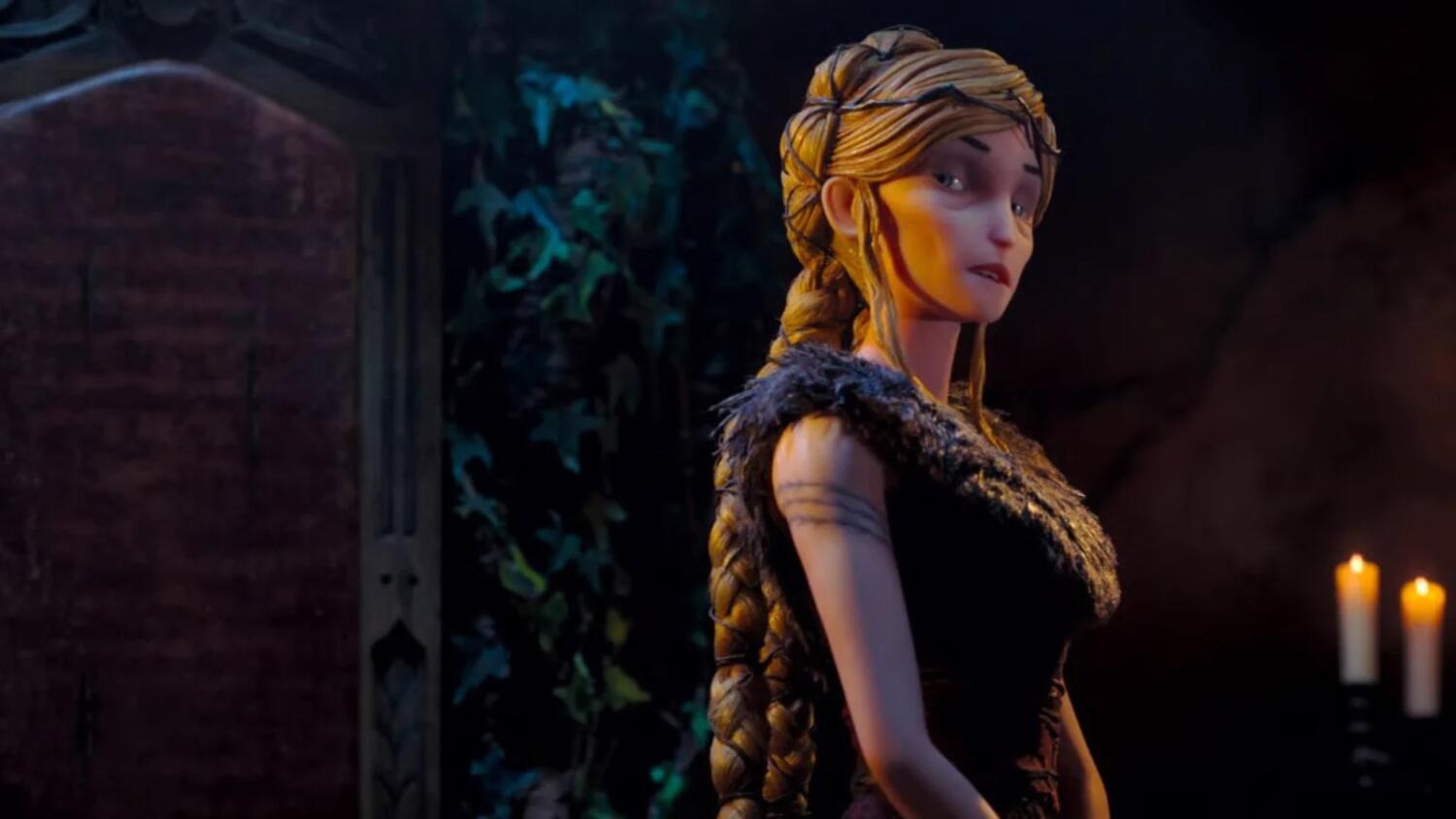
Wildwood may centre on the teenage pair, but it’s also a poignant, painfully human study in parenthood. Doubling on purposeful juxtaposition, the film draws a parallel between Prue’s parents (Maya Erskine and Jake Johnson) and Alexandra that adds depth to the latter’s backstory, even if it comes a bit too late. While Mulligan oscillates smoothly between the sorceress’ sorrow and her menacing, anger-tinged jagged edges, the impetus isn’t quite as convincing and borders on flimsy. What’s more intriguing is Alexandra’s relationship with grief and Prue’s parents confronting their past actions; after all, the road to hell is paved with good intentions.
Here, the road to ambition presents its fair share of narrative hurdles. In its ambitious scope, the fantasy pic packs in too many ideas, which can make the storytelling feel loose or unevenly paced, and it relies heavily on convenience at certain points. The final act is perhaps the most trite, with a full-on war featured prominently in fantasy worlds, though this pulls from the source material and is, thus, no fault of its own. Despite its flaws, Wildwood is sincere in its thematic exploration, has plenty of heart, and puts in a commendable effort to convey emotional weight when the situation calls for it.
Joining Prue and Curtis on their journey is a smorgasbord of magical creatures, foes and allies alike, including the majestic if intimidating General (Angela Bassett), the giant eagle leader of the Avian Principality, the wise Owl Rex (Richard E. Grant), a rage-filled coyote soldier (Tom Waits), another dastardly turncoat coyote soldier (Charlie Day), and the wise-cracking, helpful rat Septima (Awkwafina). The diverse cast extends to the humans, too, running the gamut from haughty bureaucrats (Jermaine Clement, Marc Evan Jackson) and the formidable leader of a bandit posse, Brendan (Mahershala Ali), to the fierce, loyal bandit Naimh (Amandla Stenberg) and the wizened mystic Iphigenia (Tantoo Cardinal).
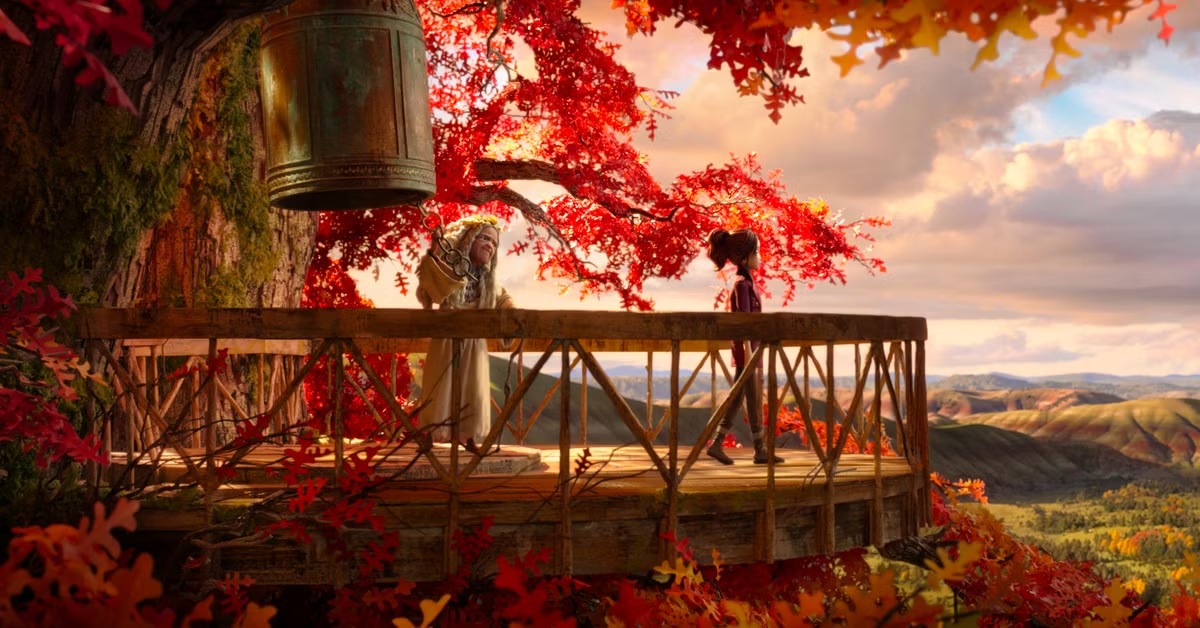
It’s a charming mix that feels right at home in the magical setting, brimming with personality quirks and playful subversions of conventions – at one point, Septima swims casually in a bowl of stew, while turtles are assigned to deliver packages labelled with an “urgent” sticker in the governor’s office. These colourful touches not only make the woods come to life in a way which complements the Portland-inspired reality, but also help Prue to confront her beliefs (“And here you are, talking to an owl in a waistcoat,” replies Owl Rex, after the teenager denies the existence of magic), and demonstrate how harmony and tension can cohabit. Still, some characters could benefit from more screen time.
Further fleshing out the world is the endless stream of eye candy. Laika’s technical prowess is only to be expected as one of the heavyweights in the animation industry; yet it’s one thing to know and another to watch it unfold. From start to finish, Wildwood paints a breathtaking canvas of 132 handmade landscapes and 233 character puppets, with details so intricate it’s easy to forget that the entire film is stop-motion. The individual feathers on the wings of General and Owl Rex, for instance, are clearly outlined, and even the nitty-gritty, right down to tears and a drop of blood on ivy, shows no lack of care. Each setting, from Prue’s cosy home and the verdant expanse of the forest to a dungeon with hanging cages, has its own distinctive visual identity, accompanied by clever, intuitive imagery, such as gothic trappings to convey the evil motif.
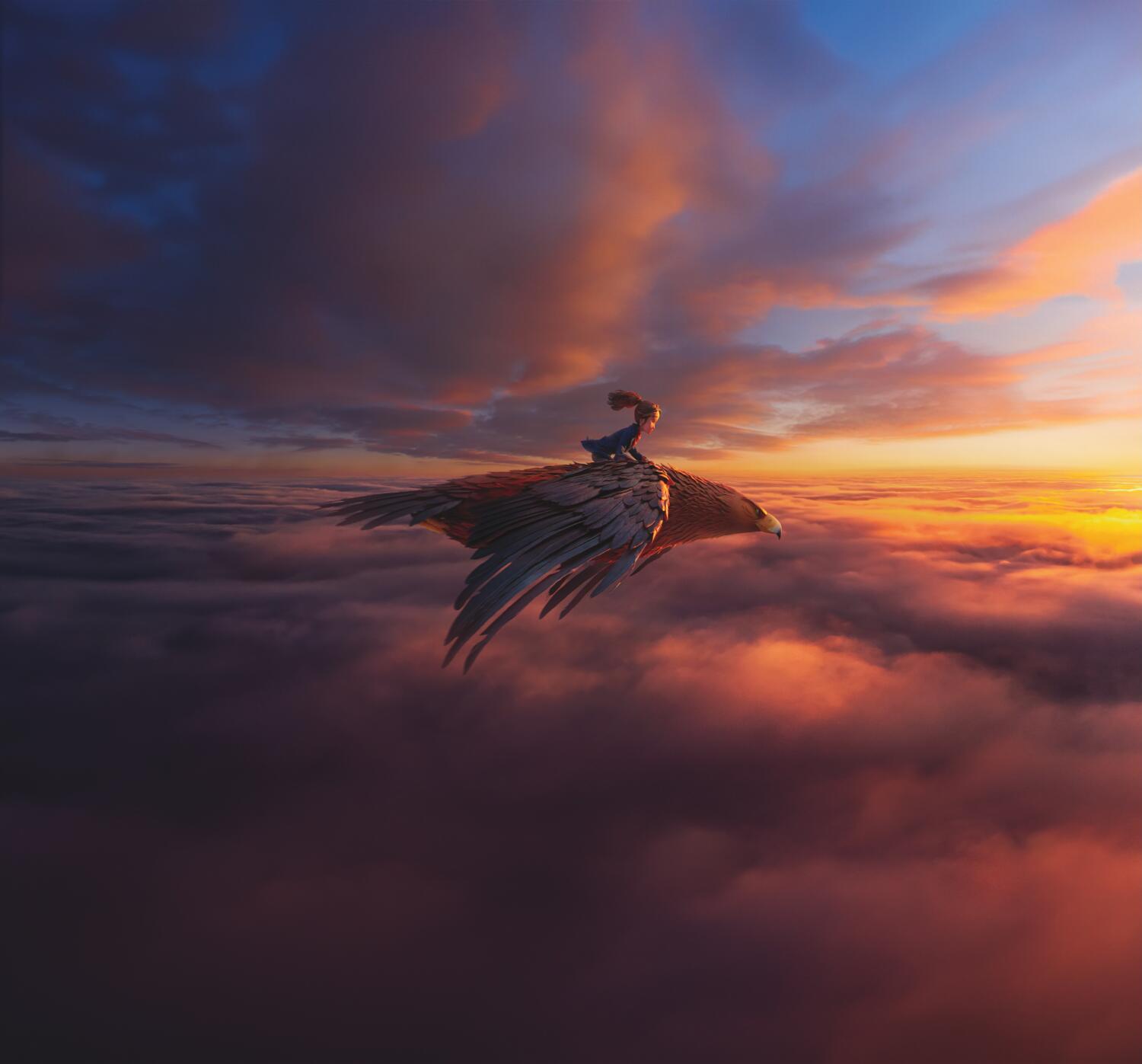
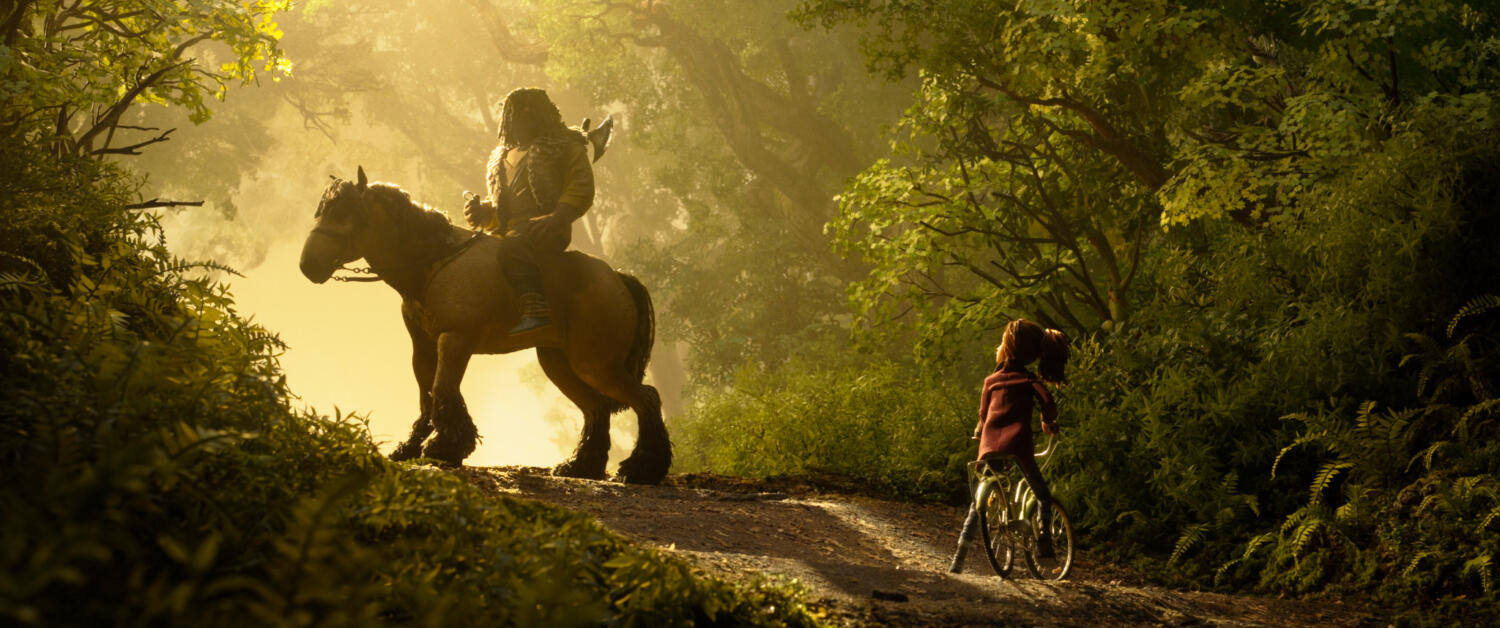
An early chase scene is adequate to build anticipation for action set pieces – as Prue chases the crows and Mac into the Impassable Wilderness on her bicycle, her flailing limbs and erratic movement convey a natural sense of panic, while near-misses with danger can be tense and anxiety-inducing. All of this culminates in an epic, large-scale battle sequence that makes it difficult, even impossible, to tear the eye away from the screen, featuring seamlessly blended digital embellishments from Weta FX, best known for its work on The Lord of the Rings film trilogy.
The visual marvel is topped off with an impressive score, swinging between epic, sweeping instrumentals and chanting for high-climax moments, and an idyllic, pastoral-tinged arrangement during lulls. When the credits roll, beautiful illustrations also adorn the screen, followed by a brief behind-the-scenes look at the production. It may be a small act, but it only cements Laika’s continued passion for and commitment to the craft, which is commendable in itself.
In bringing together a world of two halves – imagination and reality, parenthood and coming-of-age, beautiful and brutal magic, and stop-motion and special effects – Wildwood occasionally struggles to carry the weight of its storytelling ambitions. Just like the medium it honours, however, the imperfections are easy to live with, especially since its intentions are sincere and firmly rooted in the human touch. Visual presentation is where the magic blooms, with incredible detail, stunning landscapes, and heart-thumping action proving that handmade art forms are still here to stay.
GEEK REVIEW SCORE
Summary
A heartfelt ode to stop-motion, Wildwood is an arresting canvas of colour and character with plenty of heart that more than makes up for its narrative shortcomings.
Overall
8.9/10-
Story - 8/10
8/10
-
Direction - 9.5/10
9.5/10
-
Characterisation - 8.5/10
8.5/10
-
Geek Satisfaction - 9.5/10
9.5/10

Si Jia is a casual geek at heart – or as casual as someone with Sephiroth’s theme on her Spotify playlist can get. A fan of movies, games, and Japanese culture, Si Jia’s greatest weakness is the Steam Summer Sale. Or any Steam sale, really.
 Kevin Low

 Natalie