This interview has been edited for clarity.
As the world’s most popular miniature wargame, Warhammer 40,000 is backed by a wealth of lore that has only grown over the years. Largely credited with establishing the groundwork for the grimdark genre of speculative fiction, the tabletop adventure now counts video game spin-offs among its ranks, including the Space Marine and Dawn of War series.
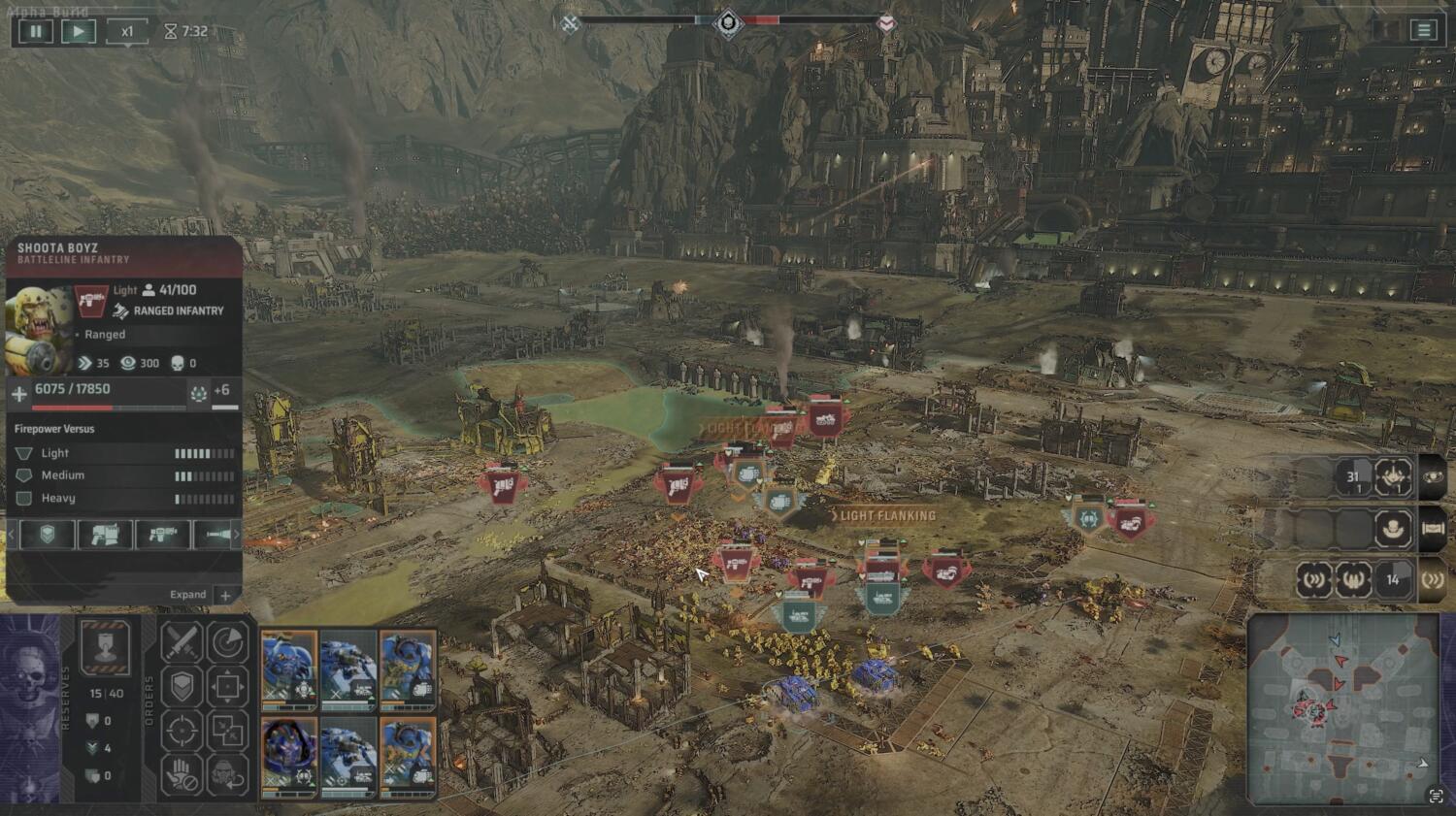
The latter, in particular, is a natural match for its tactical nature, turning dice-rolling action into a real-time strategy (RTS) romp. As fans would know, however, war never ends in the grim darkness of the far future, and it will spill over into the world of Total War next, marking the first-ever collision of the franchises. As with Warhammer I and II (which, for the uninitiated, are set in a different high-fantasy setting with swords and magic), Total War: Warhammer 40,000 steps away from the usual historical backdrop and ancient civilisations, bringing with it a sci-fi flavour.
It’s not the most conventional genre assimilation, compounded by each of their decades-long worldbuilding efforts, and Creative Assembly took the opportunity to adapt the best part of the tabletop role-playing game (TTRPG) experience for its own world: telling personalised stories tailored to each player.
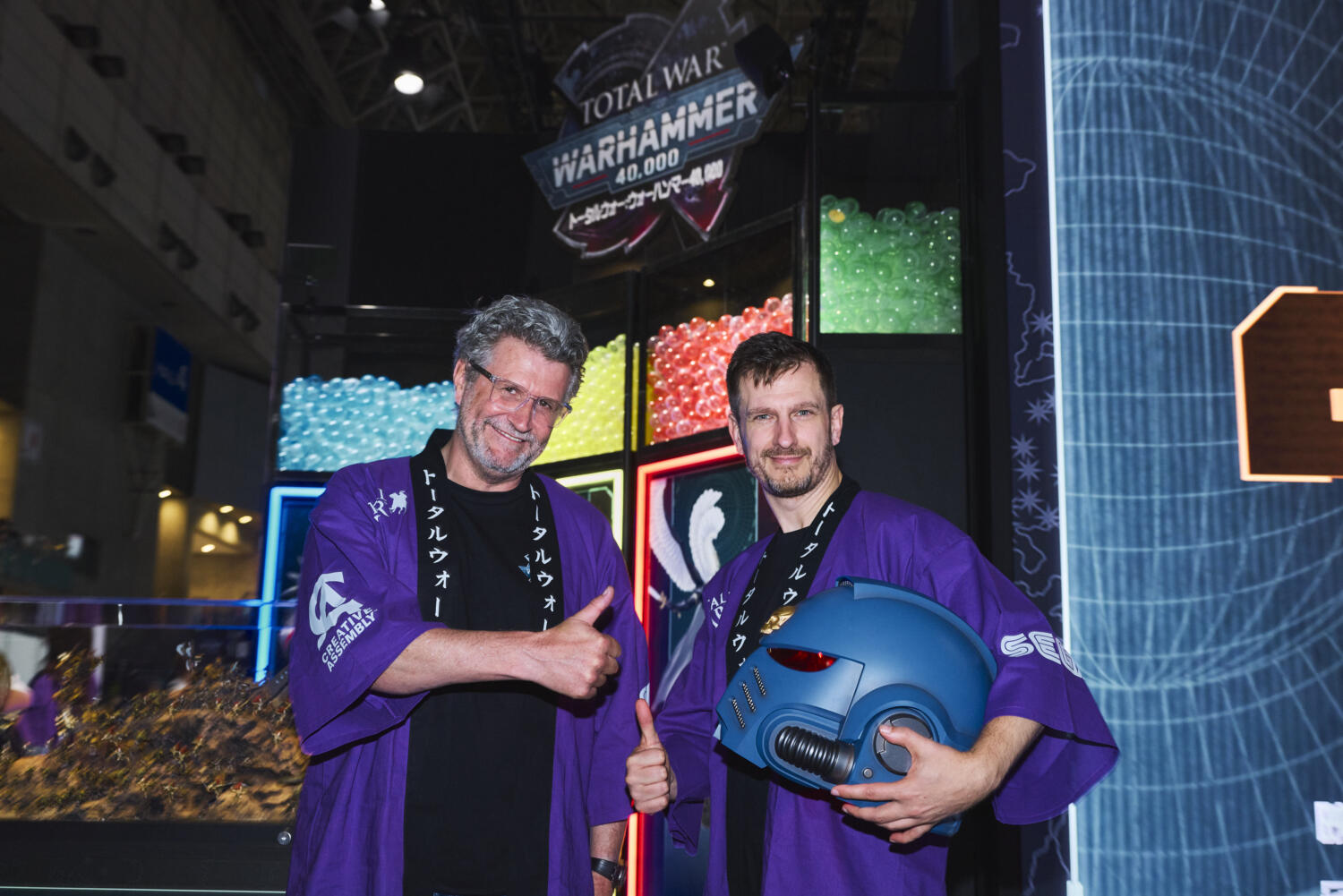
“With that comes a little RPG element – not just the historical characters and their lore in the game – but you, as a new player, if you come in, [you can be] who you want to be, tell your own story and your own experience in the 41st Millennium, because you can create your own warlord and faction as you’re unlocking more customisation pieces,” explains game director Attila Mohasci to Southeast Asian media during Tokyo Game Show (TGS) 2026. “You’re telling the stories, not just gameplay.”
The other core element involves creating a sense of identity. Customisation has always been integral to Warhammer 40,000, with model parts representing an individual soldier, vehicle, or monster, and players adding their bespoke touches by assembling and painting them. To preserve this tradition, the forthcoming Total War title will feature full customisation – a first in franchise history.
A separate 90-minute hands-on preview at Sega’s Tokyo office gave a sneak peek at the selection of colour schemes, emblem designs, multi-part naming using prefixes and suffixes, and accessory details, limited to the Space Marines. The other three allegiances, Astra Militarum, Orks, and Aeldari, were locked, but it’s safe to assume that the options will be equally, if not more, comprehensive.
“It’s part of the hobby itself. If you’re coming from a tabletop background or have any knowledge about Warhammer 40,000, [then] you’ve probably seen the customisation screen or did the painting yourself, getting things out of the sprue, and oh god, doing the primer,” Mohasci highlights with a slight grimace.
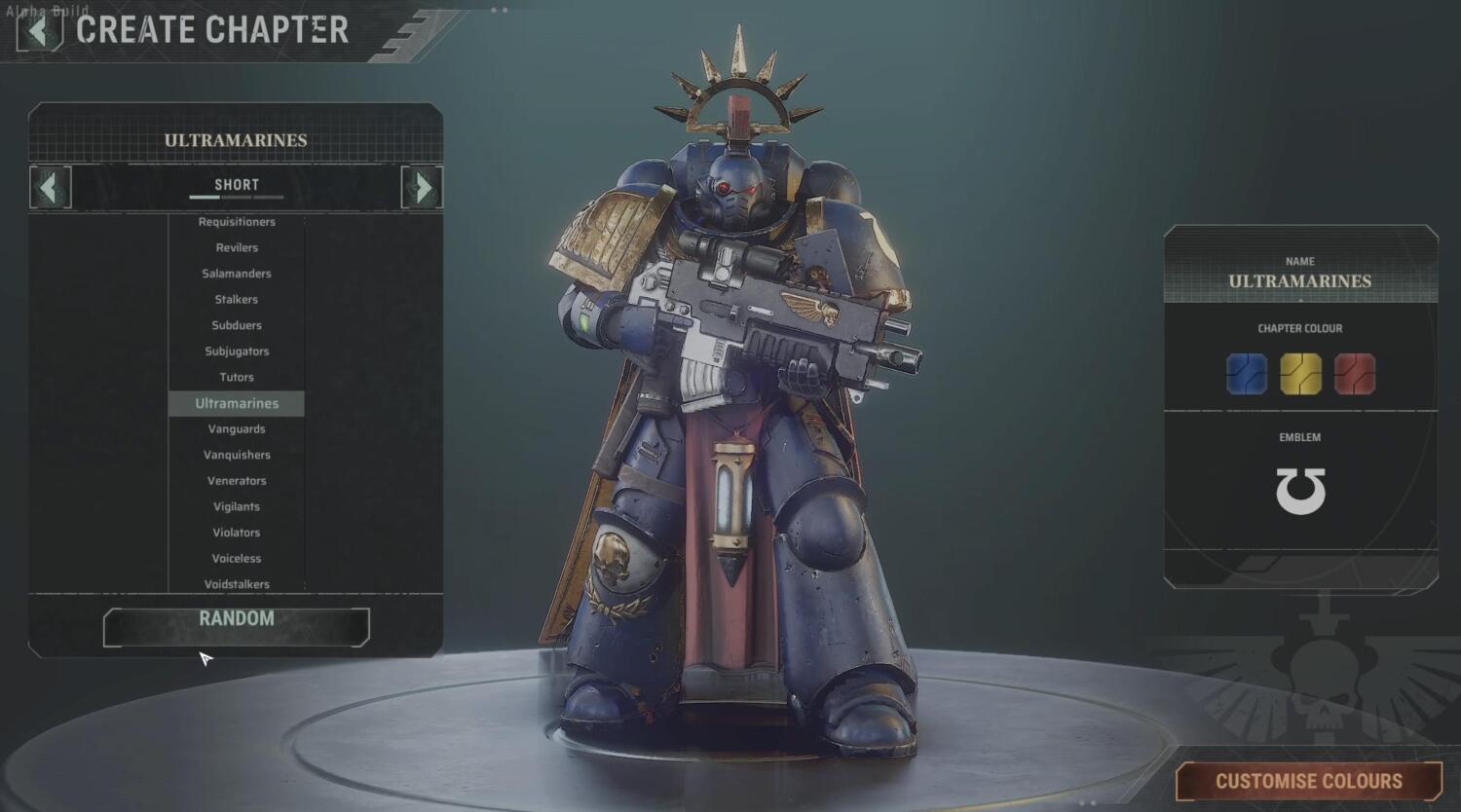
“It has its own thing, but for newcomers, the RPG element lets them put themselves in the 41st Millennium. We ask the question, ‘Who do you want to be?’”
The TTRPG influence extends to the battlefield, where moving units around evokes the real-world feeling of physically positioning miniatures on a playing field. As before, a yellow range indicator shows the maximum distance an army or individual unit can travel in a single turn, and the autoresolve option still appears in the pre-battle screen. What’s new in Total War: Warhammer 40,000 are the ability for units to strafe and take cover, a reinforcements system for deploying troops and dropping pods mid-battle, and dynamic weapon switching, among other additions.
It’s familiar territory for veterans, but first-timers may find the mechanics and information display understandably overwhelming. After all, the franchise is known for a steep learning curve, combining turn-based strategy, resource management, and real-time tactical combat, with a focus on flanking manoeuvres and formations, unlike most of its ilk. Coupled with the density of Warhammer 40,000 lore and a first foray into console platforms, accessibility has never been more important.
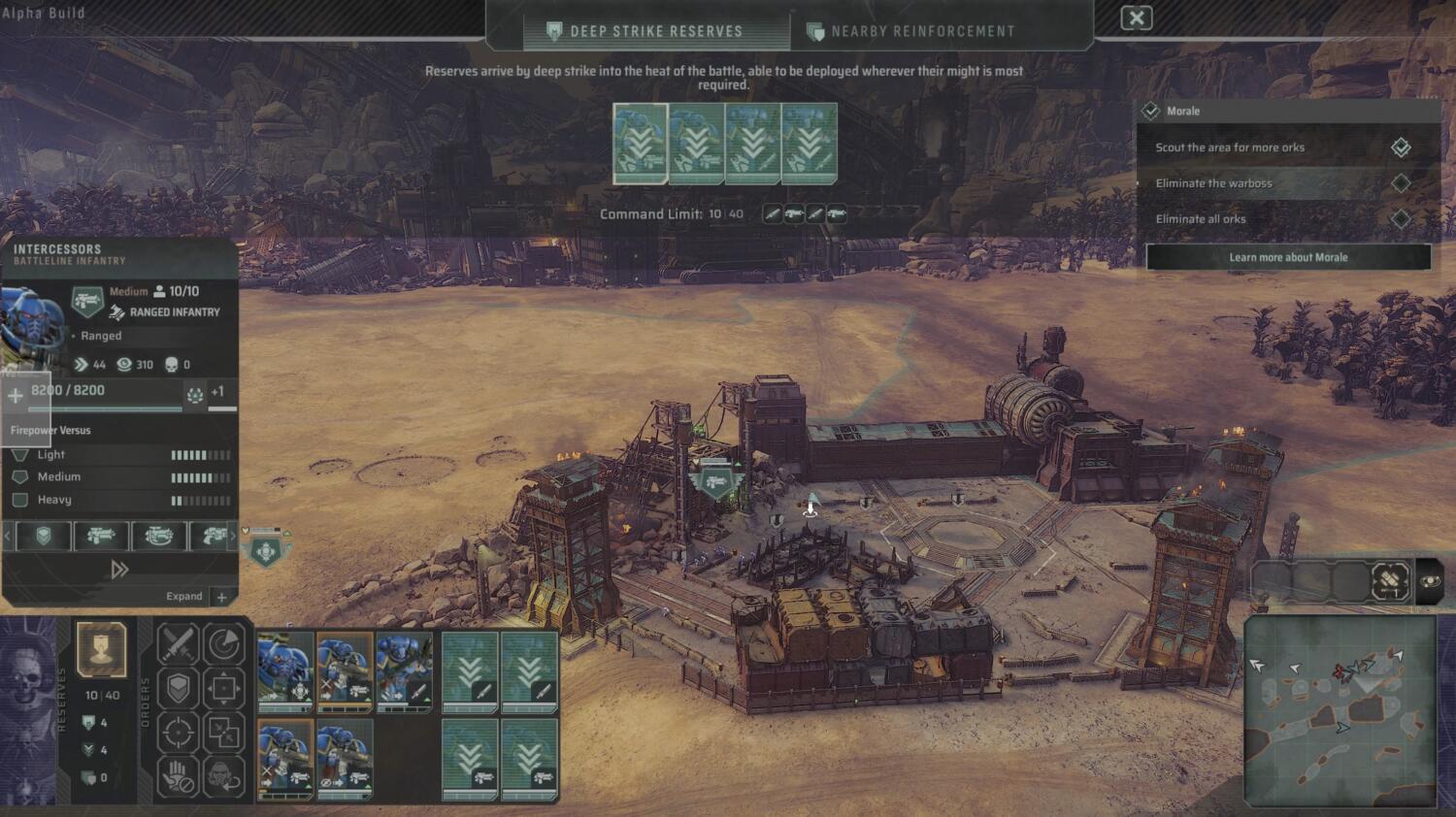
The challenge, however, was balancing complexity with approachable gameplay. Depth remains key for longtime enthusiasts, and removing any quintessential Total War element was out of the question. Drawing from the dedicated prologue campaign in Warhammer III, Total War: Warhammer 40,000 features a tutorial covering the basics of gameplay, which were easy to pick up and made the transition to the opening campaign level less intimidating, even if the controls still took this total newcomer some time to grasp – especially since not everything was taught from the get-go. Fortunately, all the pieces quickly clicked into place once the muscle memory kicked in.
“Stick [the two IPs] together, and you’ve got this complex soup. How do we bring players on that journey, one step at a time, and allow them to build confidence? It’s really about bringing it in layers, and onboarding is part of it,” expresses studio director and self-proclaimed “test subject for accessibility” within the team, Gareth Edmonson, adding that players will “learn more” from the process than without.
There’s truth to it, as the preview suggests. After failing the campaign level on the first try, where players are tasked to “slay the Orc filth and capture the relay station,” recruiting an optional unit pre-battle, deploying the right type of troops in combat, and tactically launching strikes to wipe out the horde of orcs ended in victory. The overall experience of learning and starting over was surprisingly more palatable and rewarding than expected, and a second, higher-difficulty campaign was also included for those looking for a challenge. To nobody’s surprise, the latter run didn’t go well (rest in peace, my trusty Space Marines).
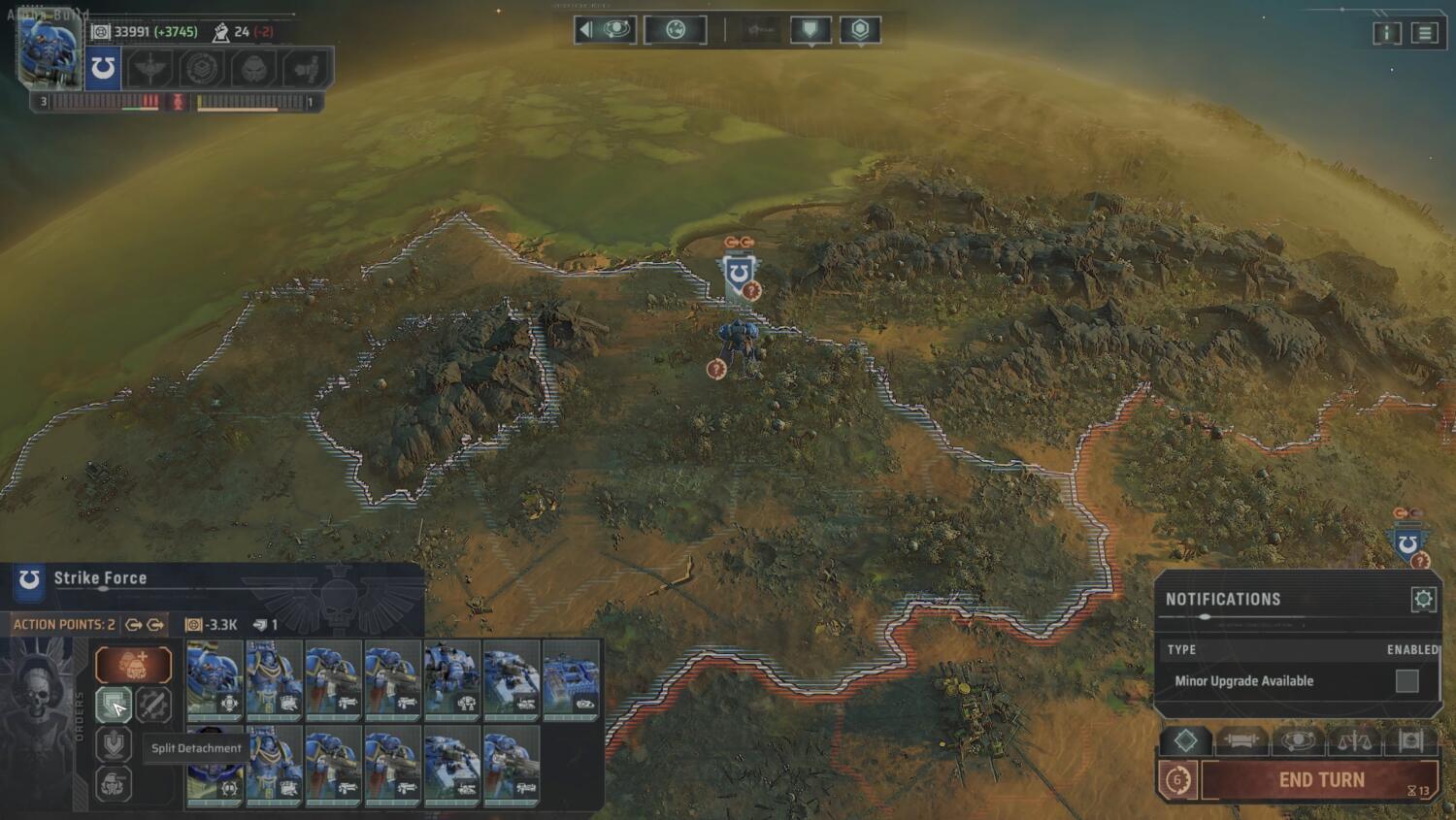
Then, there’s the matter of deciding the jump-off point. It’s a common conundrum for established franchises, and the hurdle was more present with Warhammer 40,000, backed by 39 years of history. The list of considerations was inevitably extensive, ranging from the starting faction to whether to focus on one or multiple planets, and had to be faithful to the source material – not just for a few years, but for as long as the game lives.
Edmonson shares, “It’s a huge undertaking. The universe, the lore, the IP is so vast, so there are huge debates for the long term. Where do we start? Because we can’t do everything at once; it’s too big and intimidating. Then, you put a stake in the ground and go, ‘Okay, this is where we’re going to start.’ We’re going to be making this game and adding to it forever, well into my retirement.”
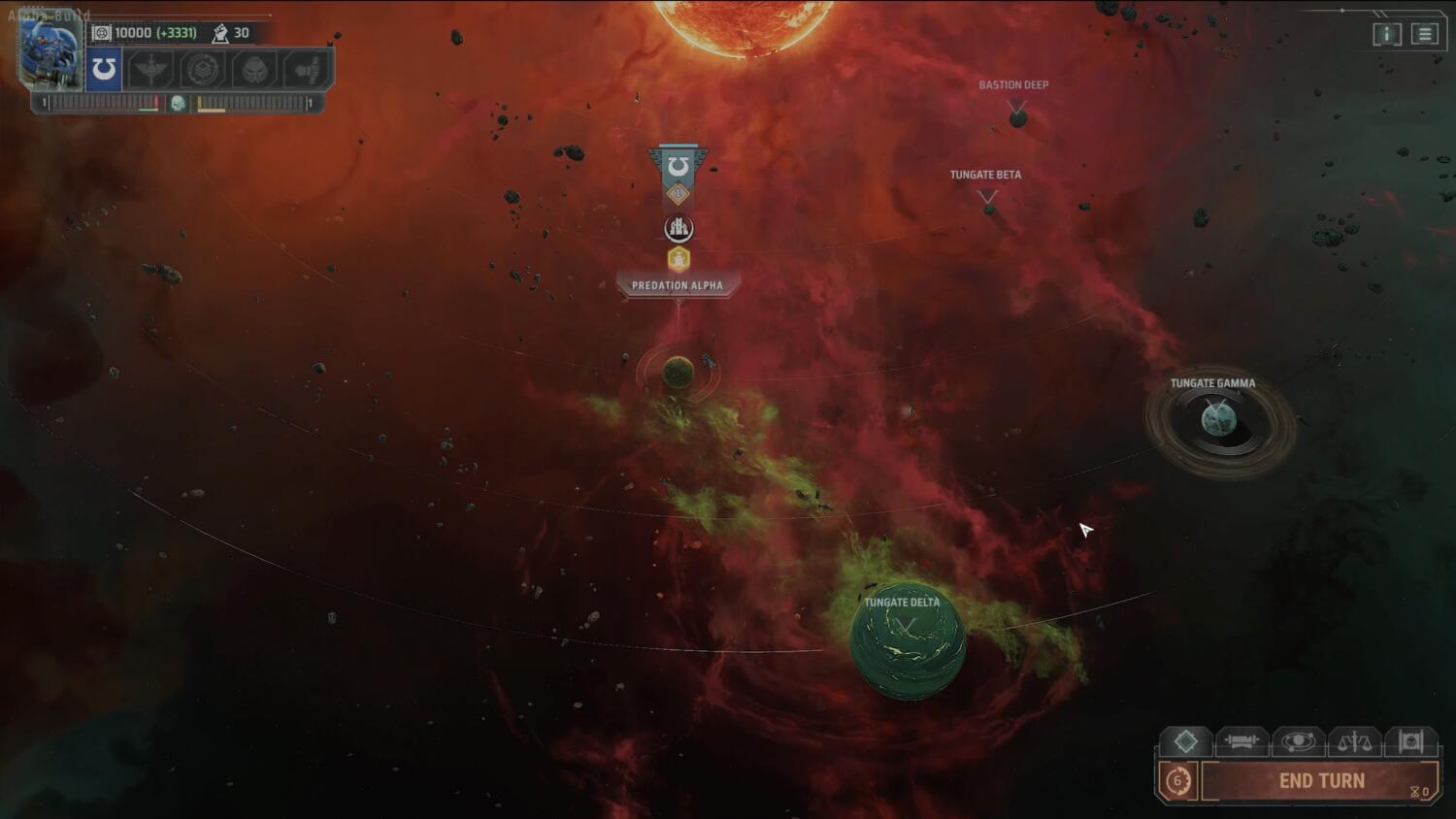
“You can’t have all the factions that are coming in the future on one planet, [because] that’s not authentic and all of this is very important to us,” continues Mohasci. “So, we decided to really lean into the scale of both IPs, and when you talk about scale, it’s not just one planet for the campaign, but multiple planets in one star system.”
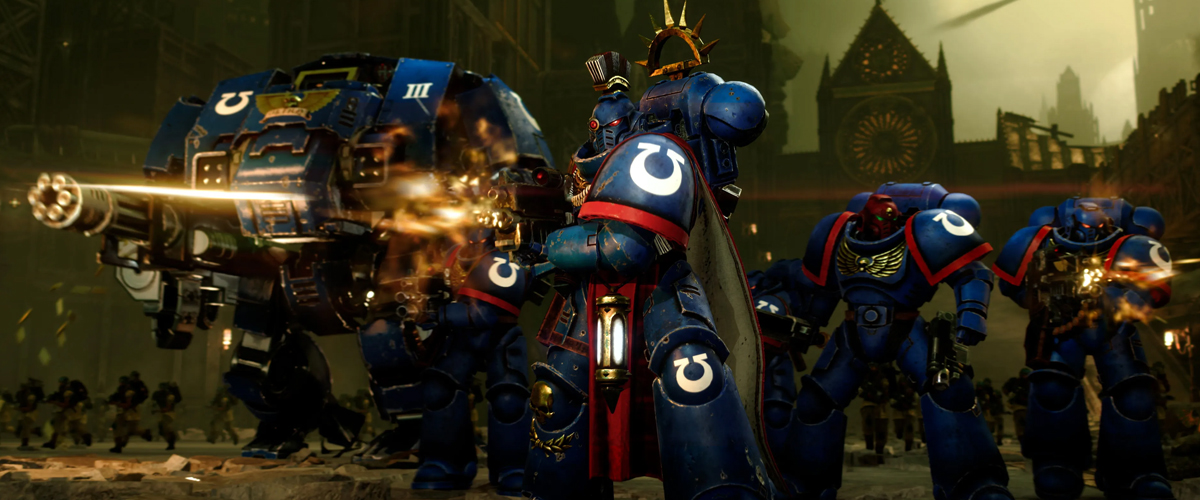
The team ultimately settled on the Era Indomitus period after years of debate for several reasons, including a very rich lore, larger-than-life characters, and the representation of humanity’s struggle against the Green Tide. After selecting the Space Marines as the starting faction, the next step was to translate their defining traits into gameplay, a feat made possible by their new Wargame engine, such as showing the stark difference in strength between these elite, genetically altered super-soldiers and, say, the Astra Militarum.
“They are from the human perspective, so if you look at it, you could be that soldier on the battlefield, and they give you the contrast, like, ‘Oh yeah, the Space Marines are that much taller than a human being, got it.’” Mohasci elaborates. “For the Astra Militarum, their one-liner is, ‘You are there to hold the line. Casualties are expected,’ so we went through this with all the factions and broke it down to strengths and weaknesses. The overall philosophy is: once we had their motto, how can we push it to the extreme?”
Indeed, ‘extreme’ is the key word for Total War: Warhammer 40,000. As the franchise’s first console entry to date, a lot of trial and error and hard work went into adapting RTS gameplay for a new control scheme, partially helped by previous experience with Halo Wars 2. Fast forward to now, and some of the hardcore PC gamers on the team have become converts, including main battle designer Dave Petry, who even had fewer casualties on his console playthrough.
The level of chaos will be pushed to new heights, too. Destruction was rife in the preview build, with bloodied corpses strewn about the battlefield, a Stompa knocking down a scaffolding before exploding, and ranged units launching a barrage of attacks. Comparing the action to the unexpected nature of die-rolling gameplay in TTRPGs, where “the craziest thing can happen if the dice aren’t giving what you want,” Mohasci enthuses:
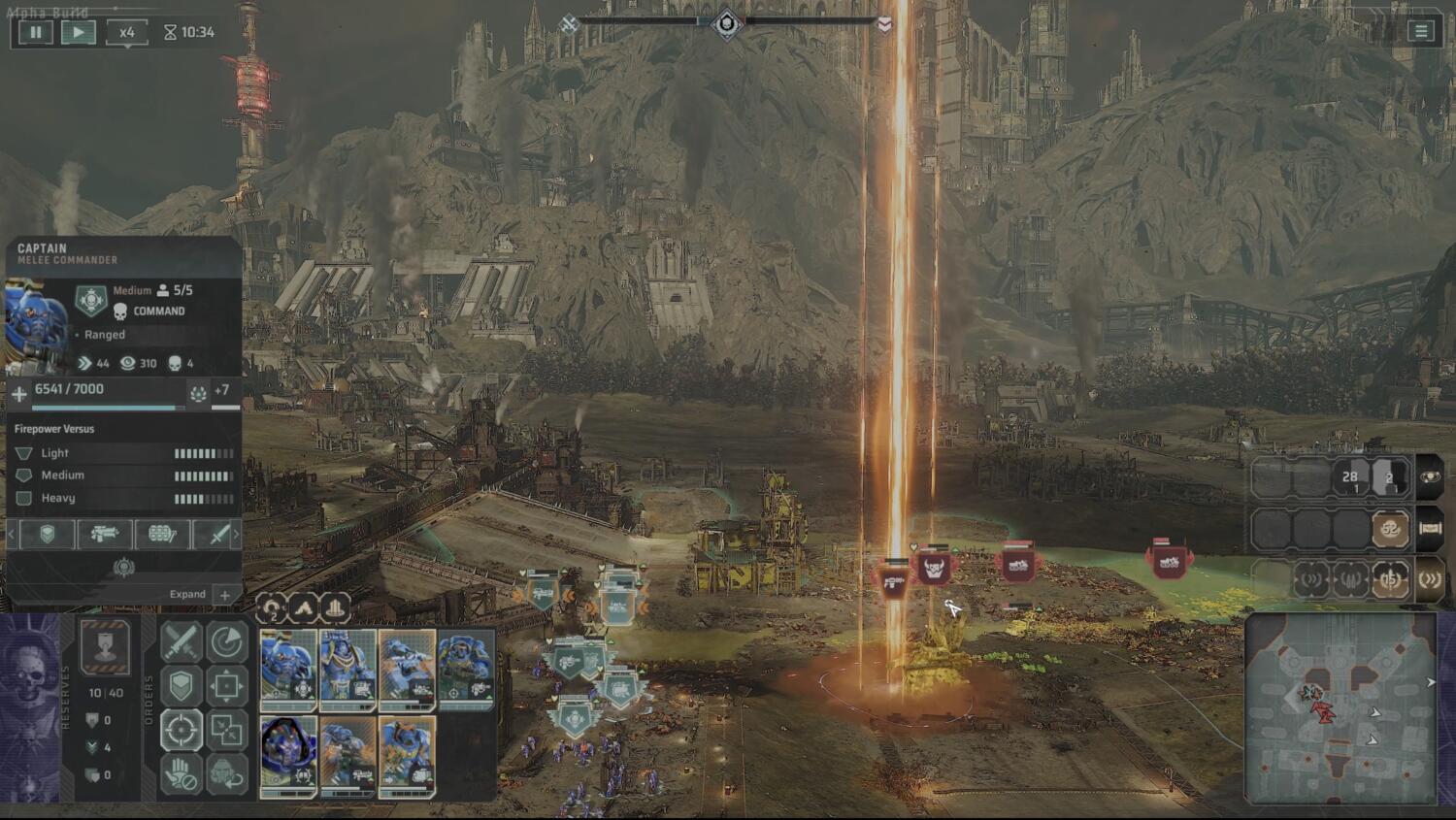
“We want to capture the chaotic nature of dying and the gameplay itself. When you see flying orcs and [land on] critical failure, you die, and they fly away. But they can hit the building, which collapses and falls on whoever is there. You always think about how to create [these unique experiences] again.”
For Edmonson, wreaking havoc is all part of the fun. The Librarian special ability offers a taste of how foes can be defeated with dramatic flair, described as “like a whirlwind that sucks the orcs in, chops them up, and then throws them out,” allowing for a more versatile mix of magic, melee attacks, and ranged weapons.
“I love the spectacle of the battle,” exclaims the studio director. “When you’re calling in your thunderbolt that’s laying down, calling in cluster balls, blowing stuff up, and you see the orcs flying, I love all that. It’s genuine fun.”
The final piece of the puzzle is asymmetry. While the historical Total War titles are more rooted in symmetry due to largely similar technology and weapons, the fantasy setting of Warhammer better accommodates varied play styles and sub-systems, and the shift will continue well into Warhammer 40,000.
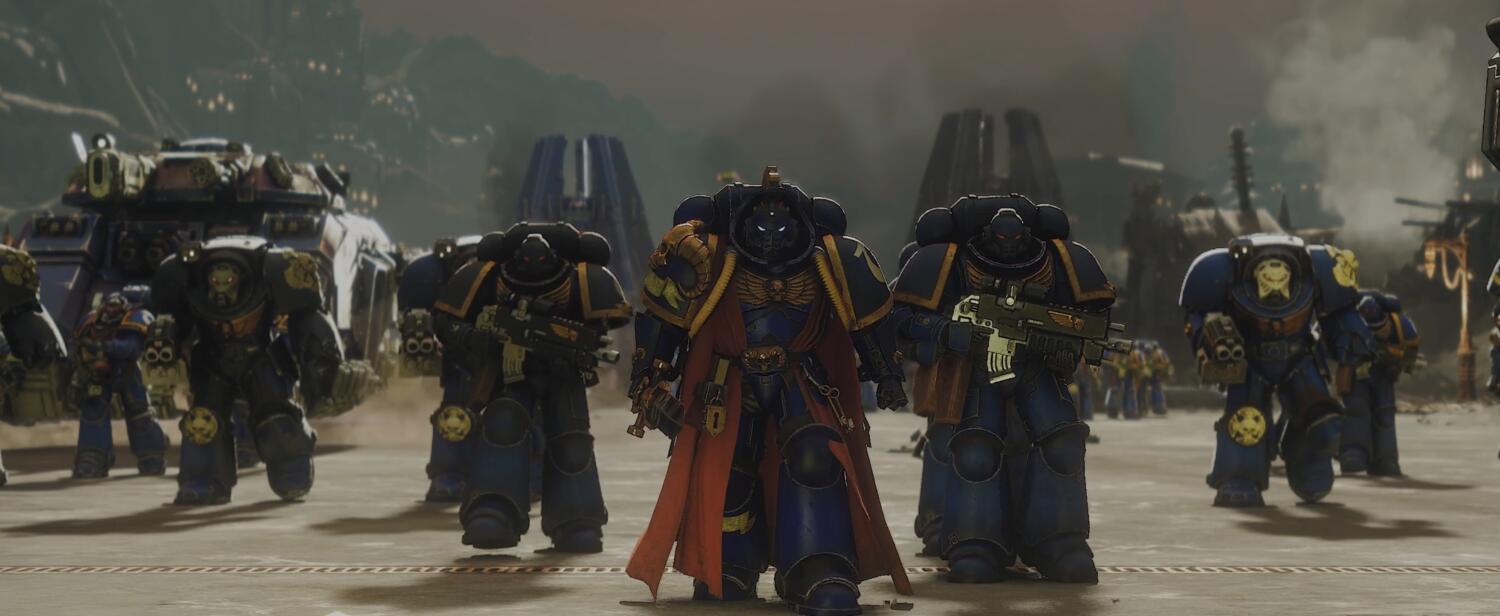
“I’m pretty sure that players will be smarter than us and come up with brilliant ideas on how to make a one-type army extremely viable. It’s difficult, but it’s always worth it,” Mohasci points out. “One of the biggest lessons from Warhammer is asymmetry, something our players really enjoy, and so we’ll just sit back, lean into that fully, and go as far as it gets.”
Total War: Warhammer 40,000 comes to PC, PS5, and Xbox Series X|S in 2027.

Si Jia is a casual geek at heart – or as casual as someone with Sephiroth’s theme on her Spotify playlist can get. A fan of movies, games, and Japanese culture, Si Jia’s greatest weakness is the Steam Summer Sale. Or any Steam sale, really.
 Kevin Low